European equity markets traded slightly higher on Friday, though investor sentiment remained cautious as fighting in the Middle East continues and markets await key U.S. labor market data.
At 08:05 GMT, Germany’s DAX rose 0.7%, France’s CAC 40 gained 0.3%, and the U.K.’s FTSE 100 advanced 0.2%.
Despite the modest rebound, the region’s major stock indices are still heading toward weekly declines of roughly 5%, which would mark the steepest drop since April of last year.
Volatile week for global markets
Equity markets have experienced a turbulent week as investors try to assess how long the Middle East conflict might last and what the broader economic consequences could be.
The war has now entered its seventh day with no indication of easing.
U.S. Secretary of Defense Pete Hegseth stated late Thursday that “the amount of firepower over Iran and over Tehran is about to surge dramatically”, while Israel earlier Friday said it had started a “broad-scale” wave of attacks against infrastructure targets in Tehran.
Iran, in retaliation, has targeted Israel, the Gulf states, Cyprus, Turkey and Azerbaijan, broadening the conflict to neighboring countries.
U.S. President Donald Trump, speaking with Reuters in a telephone interview, also said the United States must have a role in deciding who will be the next leader of Iran after airstrikes killed Supreme Leader Ayatollah Ali Khamenei last week.
This follows Mojtaba Khamenei, the son of Iran’s slain supreme leader, emerging as a frontrunner to succeed him, suggesting the Iranian regime was not about to buckle under pressure.
Eurozone growth data ahead
Away from geopolitical developments, investors are also looking ahead to upcoming economic data from the eurozone.
Figures due later are expected to show eurozone gross domestic product expanding by 0.3% quarter-on-quarter and 1.3% year-on-year in the final quarter of last year.
However, attention is likely to focus on the release of the U.S. monthly nonfarm payrolls report later in the day.
Economists expect the U.S. economy to have added 59,000 jobs in February, following an increase of 130,000 in January. The unemployment rate is projected to remain unchanged at 4.3%.
Corporate updates in focus
Investors are also digesting the latest batch of corporate results as the earnings season gradually winds down.
Deutsche Lufthansa (TG:LHA) reported record annual revenue for 2025 but posted only a narrow operating margin, with the German airline barely breaking even and management refraining from providing a detailed profit outlook for 2026 due to uncertainty linked to the Middle East conflict.
IMI (LSE:IMI) unveiled a £500 million share buyback after the British engineering group recorded its fifth consecutive year of mid-single-digit organic revenue growth.
Comet Holding (TG:EZP1) cut its dividend by roughly two-thirds after free cash flow plunged 80% in 2025. The Swiss semiconductor equipment firm cited a weaker dollar and an unfavorable product mix as factors that pressured margins despite modest sales growth.
Spie (EU:SPIE) reported record annual profit as revenue at the French technical services group surpassed €10 billion for the first time in 2025.
Oil prices heading for strong weekly gains
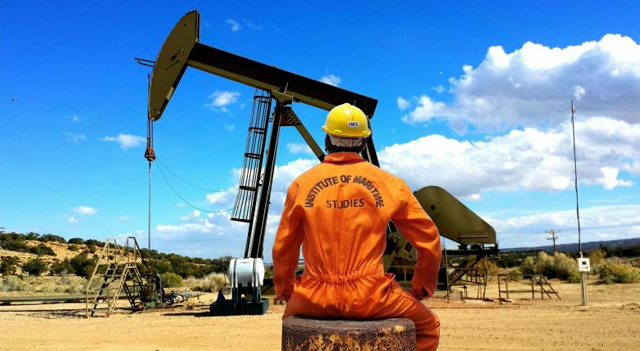
Oil prices were broadly stable on Friday but remained on course for significant weekly gains as escalating tensions in the Middle East heightened concerns about potential supply disruptions.
Brent crude futures rose 0.3% to $85.68 per barrel, while U.S. West Texas Intermediate crude gained 0.1% to $81.06 per barrel.
Over the previous four trading sessions since the outbreak of the conflict, Brent has climbed 18%, while WTI has advanced 21%.
In an effort to ease supply concerns, the United States announced it would allow the sale of Russian oil to India for a 30-day period.
However, the measure has done little to calm the oil market, as traders remain worried that the conflict could disrupt shipping through the Strait of Hormuz—a narrow passage between Iran and Oman through which roughly 20% of the world’s oil supply flows.