Author: Fiona Craig

  • Seraphim Space Portfolio Builds Pace as Space Funding Environment Improves

    Seraphim Space Portfolio Builds Pace as Space Funding Environment Improves

    Seraphim Space Investment Trust (LSE:SSIT) reported accelerating momentum across its portfolio in its January 2026 update, with a number of investee companies landing significant commercial and defence-related wins, fresh funding rounds, and key technical breakthroughs. Portfolio businesses including ICEYE, LeoLabs, D-Orbit, Voyager Technologies, Xona, Tomorrow.io, Pixxel and Astroscale continue to advance capabilities spanning SAR imaging, space domain awareness, in-orbit manufacturing and servicing, and commercial Earth observation.

    The update also points to a broader recovery in the global space investment cycle. Seraphim’s Space Index recorded a record level of funding activity during 2025, alongside landmark industry developments such as the proposed $1.25tn SpaceX–xAI merger. Against this backdrop, SSIT has been increasing its own market profile through expanded media engagement, industry events, and enhanced investor-facing content via platforms such as Curation Connect, reinforcing its role as a core participant in the rapidly scaling space economy.

    Despite the operational progress, the trust’s outlook continues to be constrained by weak earnings quality and limited cash generation, even as it maintains a notably conservative balance sheet. From a technical perspective, the share price trend remains strong but appears stretched. Valuation metrics also look demanding, with a high earnings multiple and no stated dividend, though these concerns are partly balanced by a steady stream of positive portfolio news led by major defence-related contract awards.

    More about Seraphim Space Investment Trust Plc

    Seraphim Space Investment Trust Plc is a London-listed investment company dedicated to the SpaceTech sector. It focuses on early- and growth-stage businesses developing satellite constellations, in-orbit services, Earth observation capabilities, and space-based data and infrastructure, targeting applications across defence, climate monitoring, connectivity, and emerging space-enabled digital services worldwide.

  • Panther Metals Secures £1.19m to Push Canadian Assets and North American Listing

    Panther Metals Secures £1.19m to Push Canadian Assets and North American Listing

    Panther Metals (LSE:PALM) has completed a £1.19m fundraising after a heavily oversubscribed placing of 1.7m new shares priced at 70p. The issue represents roughly 24.3% of the company’s existing share capital and was completed at a small discount to the prevailing market price. The placing attracted strong demand from both new and existing institutional investors, bolstering the company’s balance sheet ahead of a proposed dual listing in North America.

    The capital raised will be directed toward accelerating drilling at the Wishbone VMS discovery within the Obonga Project, progressing feasibility studies at the Winston tailings project for the recovery of multiple high-value metals, and carrying out magnesium-focused metallurgical test work on Dotted Lake core samples. A portion of the proceeds will also be allocated to general working capital.

    Management views the financing as a key enabler to fast-track development across its Canadian portfolio, reinforcing an exploration-driven growth strategy while improving Panther Metals’ positioning within the critical minerals and gold exploration sectors.

    From a market perspective, the company’s outlook continues to be weighed down by its pre-revenue status, ongoing losses, and cash burn, resulting in a valuation profile dominated by negative earnings metrics and the absence of dividend visibility. These factors are partially offset by supportive technical signals, including a strong trend relative to moving averages, although an overbought RSI suggests near-term caution.

    More about Panther Metals Plc

    Panther Metals plc is a London-listed mineral exploration company focused on base, precious, and critical metals projects in Canada, with a particular emphasis on Ontario. Its asset portfolio includes the Obonga Project targeting volcanogenic massive sulphide and critical minerals, the Dotted Lake gold project near the Hemlo mining camp, and the Winston tailings project, all located within established mining regions supported by strong infrastructure.

  • Shell names PwC as incoming auditor, ending EY mandate in 2027

    Shell names PwC as incoming auditor, ending EY mandate in 2027

    Shell (LSE:SHEL) announced on Friday that it has appointed PricewaterhouseCoopers (PwC) as its next external auditor, with the firm set to assume the role from 2027 after the conclusion of a formal tender process.

    PwC will replace EY, whose audit work at the energy group has come under scrutiny. In December, the UK’s Financial Reporting Council opened an investigation into EY’s audit of Shell’s 2024 accounts, focusing on possible breaches of audit partner rotation requirements.

    Shell had already flagged regulatory issues last July, disclosing that rules obliging listed companies to rotate lead audit partners every five to seven years, as well as enforce cooling-off periods before partners can return to the same client, had not been fully complied with.

    At the time, the company said it would need to restate its 2023 and 2024 annual reports after EY failed to meet U.S. Securities and Exchange Commission standards on partner rotation. Shell emphasized that the revisions would be technical in nature and would not affect the underlying financial results.

  • Wall Street Seen Opening Firmer as Investors Eye Bargains After Tech Rout: Dow Jones, S&P, Nasdaq

    Wall Street Seen Opening Firmer as Investors Eye Bargains After Tech Rout: Dow Jones, S&P, Nasdaq

    U.S. equity futures were pointing to a higher open on Friday, signaling a potential rebound after stocks slid sharply over the past several sessions.

    Some investors appear ready to step back into the market, picking up shares at cheaper valuations following the recent technology-driven selloff that dragged the Nasdaq to its lowest close in more than two months. Still, trading could be relatively quiet after the U.S. Labor Department postponed the release of its highly anticipated monthly jobs report until next Wednesday.

    Any upside may be restrained by lingering unease over heavy spending on artificial intelligence, alongside a steep premarket drop in Amazon (NASDAQ:AMZN). The e-commerce and cloud computing giant was down about 8.5% ahead of the opening bell after reporting slightly weaker-than-expected fourth-quarter earnings and unveiling capital expenditure plans for 2026 that far exceeded market expectations.

    “All the hyperscalers are competing to win the AI race, for which the prize could be significant,” said Russ Mould, investment director at AJ Bell. “However, investors are being asked to countenance enormous amounts of cash going out the door in service of this goal.”
    He added, “With the exact direction and trajectory of artificial intelligence still uncertain there is understandable concern that this money could be wasted.”

    Wall Street suffered broad losses on Thursday, extending the choppy tone seen a day earlier. Technology shares led the decline, with the Nasdaq sliding to its weakest close in over two months.

    Although the major indices pared some losses before the close, they still finished decisively lower. The Nasdaq fell 1.6%, the S&P 500 dropped 1.2%, and the Dow Jones Industrial Average also lost 1.2%.

    Pressure on tech stocks was compounded by a sharp fall in Qualcomm (NASDAQ:QCOM). The chipmaker sank 8.5% after delivering better-than-expected fiscal first-quarter results but issuing disappointing guidance for the current quarter.

    Alphabet (NASDAQ:GOOG), the parent of Google, also weighed on sentiment. While it recovered from earlier lows, the stock still ended down 0.5% after the company reported solid fourth-quarter results but flagged a substantial increase in capital spending planned for 2026.

    Recent sessions have seen technology stocks retreat sharply as investors reassess stretched valuations and the longer-term returns from AI-related investments.

    On the economic side, data from the Labor Department showed first-time claims for U.S. unemployment benefits jumped far more than expected in the week ended January 31. Initial claims rose to 231,000, up from 209,000 the prior week and well above forecasts for around 212,000, marking the highest level since early December.

    A separate report also showed U.S. job openings unexpectedly fell in December to their lowest level in more than five years.

    Sector performance was broadly negative on Thursday. Gold mining shares tumbled alongside a drop in bullion prices, sending the NYSE Arca Gold Bugs Index down 6.3%. Software and computer hardware stocks also sold off heavily, with their respective indices falling more than 4%.

    Oil service stocks weakened as crude prices slid, while financials, retailers and pharmaceutical names also posted notable declines, leaving most major sectors under pressure by the end of the session.

  • European Markets Rebound as Stocks Climb Despite Mixed Economic Data: DAX, CAC, FTSE100

    European Markets Rebound as Stocks Climb Despite Mixed Economic Data: DAX, CAC, FTSE100

    European equities pushed higher on Friday, regaining ground after ending the previous session largely in negative territory.

    Germany’s DAX advanced about 0.5%, while the UK’s FTSE 100 rose 0.2% and France’s CAC 40 edged 0.1% higher as investors weighed fresh economic data alongside company-specific news.

    On the macro front, figures from Destatis showed German industrial production fell sharply in December, sliding 1.9% month on month after a 0.2% increase in November. The decline was significantly steeper than expectations for a modest 0.2% drop. On an annual basis, output contracted by 0.6%, reversing a 0.5% rise recorded the previous month.

    In France, data from the customs office indicated a widening trade gap at the end of the year. The country’s foreign trade deficit increased to €4.8 billion in December from €4.0 billion in November, exceeding forecasts for a shortfall of around €4.1 billion, as imports outpaced exports.

    At the stock level, Vinci (EU:DG) shares jumped after the infrastructure and construction group reported full-year results that exceeded market expectations. Vinci posted net income attributable to shareholders of €4.90 billion for 2025, or €8.65 per share, up from €4.86 billion, or €8.43 per share, a year earlier.

    By contrast, Metlen Energy & Metals (LSE:MTLN) came under heavy pressure after warning that its 2025 EBITDA is now expected to be around 25% lower than previously targeted, despite what it described as solid performance across its core business divisions.

  • Flowtech Fluidpower Secures Shareholder Backing for Fundraise, Acquisition and Capital Restructure

    Flowtech Fluidpower Secures Shareholder Backing for Fundraise, Acquisition and Capital Restructure

    Flowtech Fluidpower (LSE:FLO) has received shareholder approval for a package of resolutions that unlocks fresh funding, clears the path for a planned acquisition and reshapes its capital base.

    Flowtech Fluidpower said all proposals were passed at its general meeting, enabling the company to move ahead with a £9 million institutional placing alongside a £0.6 million retail offer. The enlarged share capital is expected to be admitted to trading on AIM on 9 February 2026.

    The vote also satisfies the final shareholder condition linked to Flowtech’s proposed acquisition, which is expected to complete once the placing proceeds are received. In parallel, investors approved a capital reorganisation that will subdivide each existing 50p ordinary share into a 5p voting ordinary share and a 45p deferred share. Following the reorganisation, Flowtech will have approximately 81.4 million ordinary shares in issue, a step intended to simplify the group’s capital structure and support future fundraising and growth initiatives.

    From a market standpoint, Flowtech’s shares continue to reflect underlying financial pressures, particularly around profitability and recent revenue trends. Technical indicators remain bearish, but recent corporate developments are seen as supportive, pointing to improving revenue momentum and a stronger sales pipeline. Valuation metrics remain challenging, however, given the company’s negative earnings profile and lack of dividend support.

    More about Flowtech Fluidpower

    Flowtech Fluidpower is an AIM-quoted specialist distributor and engineering services provider focused on hydraulics, pneumatics and process engineering solutions. The group serves industrial customers across the UK, Ireland and the Benelux, supplying components, systems and technical expertise to a broad manufacturing and processing client base.

  • Oil rebounds but remains on course for first weekly drop in weeks as U.S.–Iran talks loom

    Oil rebounds but remains on course for first weekly drop in weeks as U.S.–Iran talks loom

    Oil prices rose on Friday, recovering part of the losses from the previous session, but were still set to record their first weekly decline in almost two months as easing supply concerns and diplomatic developments weighed on sentiment.

    Brent crude futures climbed 78 cents, or 1.2%, to $68.33 a barrel by 06:58 GMT, while U.S. West Texas Intermediate crude added 80 cents, or 1.3%, to $64.09 a barrel.

    Even with the rebound, Brent was heading for a weekly loss of about 3.3% and was down roughly 4.8% from the highs reached in late January. WTI was also on track to fall around 1.8% for the week and remained about 3.4% below last month’s near six-month peak, which followed warnings from U.S. President Donald Trump of possible action against Iran.

    Markets remained cautious amid uncertainty over the agenda for talks between the United States and Iran scheduled to take place in Oman later in the day. Tehran has signalled it wants discussions confined to nuclear issues, while Washington is pressing to broaden the talks to include Iran’s ballistic missile programme and its backing of armed groups across the region.

    “The two sides remain well apart, leaving tensions elevated,” ANZ analyst Daniel Hynes said in a note. “This should see the geopolitical risk premium remain in place.”

    Any renewed escalation could pose risks to global oil supplies, as roughly 20% of the world’s oil consumption moves through the Strait of Hormuz between Oman and Iran. Major exporters including Saudi Arabia, the United Arab Emirates, Kuwait and Iraq rely on the route, as does fellow OPEC member Iran.

    However, analysts noted that a reduction in geopolitical risk could expose weaker market fundamentals. “We think that geopolitical fears will give way to weak fundamentals,” Capital Economics analysts said in a note, citing a rebound in Kazakhstan’s oil output that could help drive prices toward $50 a barrel by the end of 2026.

  • Gold, silver claw back modest gains after turbulent week

    Gold, silver claw back modest gains after turbulent week

    Gold and silver prices turned higher during Asian trading on Friday, attracting some bargain hunting after a volatile week marked by sharp swings and heavy losses.

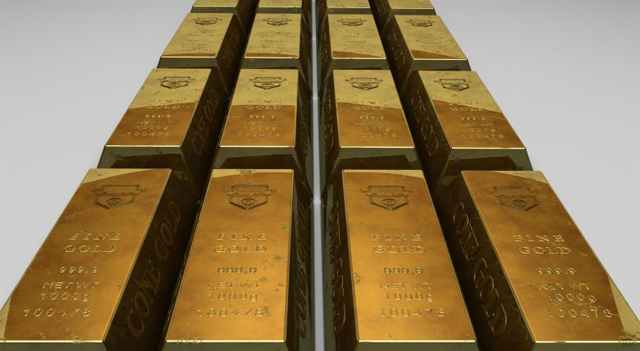
    Silver continued to lag and was still on course for a weekly drop of roughly 14%, having largely erased a recent rebound. Gold, while also heading for a weekly decline, held up relatively better but was still trading around $800 an ounce below the record highs reached last week.

    Easing geopolitical concerns also weighed on demand for safe-haven assets, with signs of cooling tensions between Iran and the U.S. ahead of planned talks in Oman later in the day.

    Gold set for modest weekly fall after rebounding from near one-month low

    Spot gold slipped 0.9% to $4,825.31 an ounce by 22:56 ET (03:56 GMT), while April gold futures fell 1% to $4,842.44 an ounce.

    On a weekly basis, spot gold was down about 0.9%, after struggling to sustain levels above $5,000 an ounce. Still, prices remained comfortably above a near one-month low touched earlier in the week.

    “The selloff in the gold market was a little bit more contained due to greater liquidity and less aggressive positioning by investors,” ANZ analysts wrote in a note.

    Silver heads for steep weekly loss as rebound loses momentum

    Spot silver rose 2.8% to $72.9655 an ounce, while silver futures were down 5.1% at $72.760 an ounce.

    Silver prices had plunged as much as 16% on Thursday before paring some of those losses by the close. Even so, the metal was down around 14% for the week, following an almost 18% collapse from record highs seen last week.

    “We continue to reiterate that 70–90 region now represents a critical stabilisation zone; sustained failure to hold above this area may risk deeper correction towards USD 58/60 levels,” OCBC analysts said in a note. “But should prices hold up in this range, then bullish momentum may rebuild at some point later.”

    Other precious metals remained under pressure as well. Spot platinum fell 1.8% to $1,953.17 an ounce and was down nearly 10% for the week, following a steep 22% drop last week.

    The broader metals complex has been under sustained selling pressure since last week, initially triggered by U.S. President Donald Trump’s nomination of Kevin Warsh as the next Federal Reserve chair to succeed Jerome Powell.

    Warsh is widely viewed as less dovish, a perception that has supported a rebound in the U.S. dollar and weighed on metal prices. The greenback was heading for its strongest weekly performance since early October, with weaker labor market data doing little to slow its advance.

  • Bitcoin rebounds off 16-month low but remains set for sharp weekly drop as crypto rout persists

    Bitcoin rebounds off 16-month low but remains set for sharp weekly drop as crypto rout persists

    Bitcoin staged a modest rebound during Asian trading on Friday after touching its weakest level in 16 months, but the move was not enough to offset heavy losses over the week, as a risk-off backdrop and uncertainty around U.S. monetary policy continued to pressure cryptocurrency markets.

    The broader tone in crypto remained fragile after major corporate holder Strategy Inc (NASDAQ:MSTR) reported a dramatically wider fourth-quarter loss on Thursday, driven largely by the fall in the value of its Bitcoin holdings.

    Bitcoin was last up around 5% at $66,145 by 01:48 ET (06:48 GMT), recovering from an intraday low near $60,187. Even with the bounce, the world’s largest cryptocurrency has now shed more than half of its value from the record high reached in October and has given up all gains made since Donald Trump’s election victory in late 2024.

    Bitcoin faces third straight weekly decline

    Despite Friday’s recovery, Bitcoin was on track for a third consecutive weekly loss and was down close to 16% over the period.

    Recent weeks have seen a broad retreat from higher-risk assets, with pressure on crypto intensifying after Trump named Kevin Warsh as his preferred candidate to lead the Federal Reserve. Warsh has previously criticised the Fed’s asset-purchase programmes, prompting concerns that monetary policy could remain tighter for longer under his leadership.

    Expectations of a smaller central bank balance sheet have weighed on speculative assets, and investors have responded by cutting exposure to risk-sensitive markets. The selloff in U.S. technology shares—often closely correlated with crypto price moves—has added to the downside pressure.

    Strategy’s losses deepen as Bitcoin weakens

    Strategy Inc (NASDAQ:MSTR) said its fourth-quarter loss widened to $12.4 billion, compared with a loss of $670.8 million a year earlier, highlighting the impact of Bitcoin’s prolonged weakness.

    The company has struggled as Bitcoin failed to regain momentum following a sharp selloff in late October, which unsettled broader markets. As of February 1, Strategy held 713,502 Bitcoins at a total cost of $54.26 billion, or an average of $76,052 per coin.

    With Bitcoin trading below that average purchase price, investors have grown increasingly concerned that the company could be forced to liquidate part of its holdings to meet debt obligations. Strategy, led by long-time Bitcoin advocate Michael Saylor, has funded its accumulation largely through debt issuance and share sales.

    Altcoins mirror Bitcoin but weekly losses mount

    Other cryptocurrencies followed Bitcoin higher on Friday but remained under pressure on a weekly basis.

    Ether rose nearly 5% to around $1,917, yet was still down roughly 22% for the week. XRP and BNB posted daily gains of about 7% and 3%, respectively, but both were nursing weekly losses of around 20%.

    Solana was heading for a weekly decline of roughly 24%, while Cardano was down about 13.5%. Among meme tokens, Dogecoin was off around 13% for the week, while $TRUMP had fallen by roughly 23%.

  • Amazon spending surge, Stellantis rethink, Bitcoin slump – markets in focus: Dow Jones, S&P, Nasdaq, Wall Street Futures

    Amazon spending surge, Stellantis rethink, Bitcoin slump – markets in focus: Dow Jones, S&P, Nasdaq, Wall Street Futures

    U.S. equity futures edged lower on Friday as selling pressure in technology stocks lingered. E-commerce heavyweight Amazon (NASDAQ:AMZN) unveiled an aggressive increase in capital spending, while automaker Stellantis (NYSE:STLA) announced a major shift in strategy away from electric vehicles. Bitcoin (COIN:BTCUSD) extended its decline, and oil markets remained cautious ahead of expected talks between the United States and Iran.

    Amazon flags major jump in capital investment

    Amazon (NASDAQ:AMZN) was among the final big technology groups to report earnings after Thursday’s Wall Street close, and it echoed peers by signalling a substantial ramp-up in investment aimed at expanding its artificial intelligence capabilities.

    Chief executive Andy Jassy said the company plans to commit $200 billion to AI-related investment in 2026, representing a more than 50% increase in capital expenditure this year. The scale of the spending plans unsettled investors, sending Amazon shares sharply lower in after-hours trading.

    The announcement reinforced the view that Big Tech remains firmly committed to heavy AI investment. The four leading hyperscalers—Amazon, Microsoft, Google and Meta—are now expected to collectively spend more than $630 billion this year.

    On the results side, Amazon reported fourth-quarter 2025 earnings of $1.95 per share on revenue of $213.39 billion, up 13.6% year on year, narrowly missing profit expectations. Amazon Web Services delivered revenue of $35.6 billion in the December quarter, with sales growth of 24%, its strongest pace in 13 quarters.

    Although AWS accounts for only around 15% to 20% of total revenue, it generates more than 60% of Amazon’s operating profit.
    “Amazon delivered a slightly mixed picture with strong overall revenue growth and a standout boost from the cloud unit’s much anticipated reacceleration picking up greater speed,” Emarketer principal analyst Sky Canaves said.

    U.S. futures dip as Wall Street braces for a weak week

    U.S. stock futures moved lower early Friday, extending recent losses as Amazon’s post-earnings slide added pressure to the broader tech sector. At 03:35 ET, S&P 500 futures were down 0.2%, Nasdaq 100 futures fell 0.4%, and Dow futures slipped 0.1%.

    The main Wall Street indices closed sharply lower on Thursday. The Nasdaq Composite dropped 1.6%, the S&P 500 fell 1.2%, and the Dow Jones Industrial Average lost more than 500 points. The Nasdaq is heading for its worst weekly decline since early April, down about 4%, while the S&P 500 has fallen roughly 2%. The Dow is broadly flat for the week.

    Further earnings are due later Friday, including reports from Under Armour (NYSE:UAA), Biogen (NASDAQ:BIIB), AutoNation (NYSE:AN) and Philip Morris (NYSE:PM). The closely watched U.S. jobs report, initially scheduled for Friday, has been postponed to next week following the resolution of the federal government shutdown.

    Separately, figures from Challenger, Gray & Christmas showed that announced job cuts by U.S. employers jumped in January to their highest level for the month in 17 years.

    Stellantis books large charge in “strategic shift”

    Stellantis (NYSE:STLA) said it will take a charge of roughly €22 billion ($26.5 billion) related to a reassessment of its electric vehicle strategy, resulting in a preliminary loss of between €19 billion and €21 billion in the second half of 2025.

    The automaker said most of the write-downs stem from revisions to its product roadmap, reflecting sharply lower assumptions for EV demand.
    “The charges announced today largely reflect the cost of over-estimating the pace of the energy transition that distanced us from many car buyers’ real-world needs, means and desires,” said Stellantis CEO Antonio Filosa in a statement.

    The Franco-Italian group described the move as a “strategic shift” as it adapts to high costs and slower-than-expected EV sales. Stellantis, alongside other major European manufacturers such as Volkswagen, has also called for subsidies to support car production in the EU amid pressure from U.S. tariffs and increasing competition from China.

    Bitcoin slides toward steep weekly losses

    Bitcoin weakened further on Friday, putting the world’s largest cryptocurrency on track for a sharp weekly decline as appetite for risk continued to fade. Bitcoin dropped more than 9% to around $64,730, after earlier falling to a 16-month low near $60,100.

    The digital currency was heading for a third consecutive weekly loss and was down more than 20% over the week. It has now lost over half its value from the record high reached in October and has erased all gains made since President Donald Trump’s election victory in late 2024.

    Bitcoin has been dragged lower by a broader retreat from speculative assets, with selling pressure intensifying after Trump nominated Kevin Warsh as his preferred candidate to chair the Federal Reserve. Warsh has previously opposed the Fed’s asset-purchase programmes, and expectations of a leaner central bank balance sheet have weighed on crypto markets.

    Adding to the negative tone, major corporate holder Strategy (NASDAQ:MSTR) reported a significantly wider fourth-quarter loss on Thursday, largely due to declines in the value of its Bitcoin holdings.

    Oil rebounds, but weekly losses remain likely

    Oil prices rose on Friday but were still heading for their first weekly decline in almost two months, as investors awaited the outcome of U.S.–Iran talks later in the day. Brent crude gained 1.3% to $68.38 a barrel, while U.S. West Texas Intermediate rose 1.4% to $64.19.

    Despite the bounce, Brent was set to finish the week down 3.3% and WTI lower by around 1.8%, with U.S. and Iranian officials due to meet in Oman amid heightened tensions in the Middle East. Markets have been hoping that dialogue between Washington and Tehran could help ease tensions and reduce the risk of a broader conflict, prompting traders to strip some geopolitical risk premium out of oil prices this week.

    However, uncertainty persists after reports of disagreement over the scope of the talks, with Iran rejecting U.S. calls to include its missile programme and saying discussions would be limited to nuclear issues. Iran is a major oil producer and sits alongside the Strait of Hormuz, one of the world’s most critical shipping routes for crude.