Author: Fiona Craig

  • Oil Prices Retreat as OPEC+ Expands Production and Global Supply Outlook Improves

    Oil Prices Retreat as OPEC+ Expands Production and Global Supply Outlook Improves

    OPEC+ Decision Weighs on Crude

    Oil prices moved more than 1% lower on Monday after OPEC+ approved another increase in production quotas from August, while improving export flows through the Strait of Hormuz reinforced expectations of rising global crude supplies.

    Brent crude fell $1.02, or 1.41%, to $71.10 a barrel by 07:56 GMT after posting a modest gain on Friday. U.S. West Texas Intermediate (WTI) crude declined 80 cents, or 1.16%, to $67.89 a barrel. WTI did not settle on Friday because U.S. markets were closed for the Independence Day holiday.

    Rising Output Adds Pressure

    Oil prices had remained broadly stable last week after several weeks of declines as traders monitored diplomatic developments between the United States and Iran and assessed the recovery of oil exports from the Gulf region.

    On Sunday, OPEC+ members, including Russia, agreed to raise collective production targets by an additional 188,000 barrels per day beginning in August, extending similar increases implemented in June and July.

    Although conflict involving Iran had previously disrupted tanker traffic through the Strait of Hormuz, improving shipping conditions are now expected to allow more of the planned production to reach international markets.

    Analysts See Weak Pricing Environment

    PVM analysts said producers are continuing to increase supply despite weaker market conditions.

    “They are selling into a falling market, offering little hope of an imminent price recovery,” the firm said.

    It added, “However, lower oil prices will undoubtedly stimulate demand further down the line.”

    Data showed Gulf crude exports climbed by more than three million barrels per day in June compared with May, surpassing 10 million barrels daily, although shipments remain around 40% below levels recorded before the conflict.

    Demand Forecasts Revised Lower

    ANZ now expects global oil demand to contract by 1.5 million barrels per day in 2026 after a sharper-than-anticipated slowdown during the second quarter.

    The bank said, “We now expect global oil demand to contract by 1.5 million barrels per day in 2026, reflecting a sharper-than-expected downturn in Q2, when year-on-year declines could reach 4 million bpd based on preliminary data.”

    It added, “However, we expect demand losses to moderate in the second half of the year as supply improves and some deferred consumption returns.”

    Elsewhere, Abu Dhabi National Oil Company sold around 16 million barrels of crude through its latest spot tender at wider discounts, highlighting increased spot market availability.

    Meanwhile, exports from Russia’s western ports reached record levels in June and are expected to remain elevated in July as refinery disruptions continue to redirect crude toward export markets.


  • Wall Street Futures Climb Ahead of Services Data as Oil and Gold Ease: Dow Jones, S&P, Nasdaq

    Wall Street Futures Climb Ahead of Services Data as Oil and Gold Ease: Dow Jones, S&P, Nasdaq

    Investors Prepare for a Busy Week of Economic Events

    U.S. stock index futures traded modestly higher on Monday as markets reopened after the Independence Day holiday, with investors looking ahead to a packed schedule of economic releases and comments from Federal Reserve officials.

    As of 07:01 GMT, futures on the S&P 500 rose 0.3%, Nasdaq 100 futures gained 0.9%, while Dow Jones futures were little changed.

    Attention has shifted to this week’s economic calendar after softer U.S. employment figures released last week reduced expectations of further near-term interest rate increases.

    Services Sector Data Takes Centre Stage

    The Institute for Supply Management will publish its June non-manufacturing PMI later on Monday, providing an important update on the health of the U.S. services sector.

    Economists expect the index to edge down to 54.2 from 54.5 in May. A reading above 50 would continue to signal expansion in the sector, which accounts for the majority of U.S. economic activity.

    The release follows last week’s weaker manufacturing survey, which pointed to slower industrial momentum despite continued investment linked to artificial intelligence.

    OPEC+ Decision Pushes Oil Lower

    Crude prices slipped after OPEC+ announced another increase in production targets beginning in August.

    Brent crude traded around $71.86 a barrel, down approximately 0.4%, while U.S. West Texas Intermediate eased about 0.2% to $68.63.

    The additional output, together with signs of improving shipping conditions through the Strait of Hormuz, has strengthened expectations of more comfortable global oil supplies during the coming months.

    Gold Slips as Dollar Recovers

    Gold prices weakened as the U.S. dollar rebounded from recent lows, reducing demand for the precious metal.

    The recent rally in bullion had been supported by weaker U.S. jobs data, which encouraged investors to scale back expectations for additional Federal Reserve tightening.

    Market participants continue to balance softer labour market trends against persistent inflation pressures when assessing the outlook for U.S. interest rates.

    Foxconn Delivers Strong Quarterly Growth

    Foxconn (USOTC:FXCOF), officially Hon Hai Precision Industry, reported second-quarter revenue of T$2.513 trillion, a 39.8% increase from a year earlier and well above market expectations.

    The company credited continued investment in artificial intelligence infrastructure for driving demand across its cloud and networking businesses, while also reporting solid growth in consumer electronics. Management nevertheless warned that geopolitical uncertainty remains an important risk for the business.

  • European Stocks Hold Near Record Highs as Investors Await Fed Minutes and Central Bank Signals: DAX, CAC, FTSE100

    European Stocks Hold Near Record Highs as Investors Await Fed Minutes and Central Bank Signals: DAX, CAC, FTSE100

    Markets Pause Following Strong Rally

    European equity markets traded little changed on Monday, remaining close to record highs after a strong performance last week. Investors adopted a more cautious approach ahead of several important central bank speeches and a series of economic releases expected to provide fresh direction for global markets.

    The pan-European STOXX 600 remained close to its all-time high, supported by growing expectations that easing inflation and a softer U.S. labour market could reduce pressure for additional interest rate increases.

    Germany’s DAX, France’s CAC 40 and the UK’s FTSE 100 all traded broadly flat in early dealings.

    Falling Inflation Expectations Continue to Support Equities

    European shares ended last week at record levels, with both the STOXX 600 and Euro Stoxx 50 reaching new highs. Germany’s DAX outperformed, helped by strong gains in major industrial companies, including Siemens, and a widening market rally that extended beyond technology stocks.

    Investor sentiment also benefited from weaker-than-expected U.S. employment data, which strengthened expectations that the Federal Reserve could adopt a less aggressive approach to monetary tightening.

    Lower oil prices have also eased concerns over energy-driven inflation after geopolitical tensions in the Middle East pushed crude prices higher earlier in the year.

    Cyclical sectors such as industrials, manufacturing and financials attracted strong investor inflows throughout the previous week.

    Attention Turns to Central Banks

    The main focus for investors now shifts to Wednesday’s publication of the minutes from the Federal Reserve’s latest policy meeting.

    Markets expect the minutes to retain a relatively hawkish tone, reflecting policymakers’ earlier projections that at least one further interest rate increase could still be delivered this year. However, those forecasts were made before the recent decline in crude oil prices, which may improve the inflation outlook.

    Investors will also closely follow comments from Federal Reserve Governor Christopher Waller, European Central Bank President Christine Lagarde, and ECB Executive Board members Isabel Schnabel and Philip Lane for further guidance on the interest rate outlook.

    Economic Data to Test Recovery Momentum

    This week’s economic calendar will also provide fresh insight into the strength of the Eurozone economy.

    Key releases include retail sales and producer price inflation for May across the euro area, together with Germany’s industrial production figures.

    The data will help investors assess whether manufacturing activity is beginning to recover and whether consumer demand is showing signs of stabilisation.

    easyJet Leads Individual Movers

    Among individual companies, easyJet (LSE:EZJ) was one of the strongest performers, rising almost 10% after agreeing in principle to support Castlelake’s proposed takeover offer.

  • Eurozone Bond Yields Steady as German 10-Year Bund Retreats from Recent High

    Eurozone Bond Yields Steady as German 10-Year Bund Retreats from Recent High

    Markets Pause Ahead of Key Economic Data

    Eurozone government bond yields were little changed on Monday, with Germany’s benchmark 10-year Bund yield easing after reaching its highest level in two weeks. Investors adopted a cautious stance as they awaited a busy week of economic releases and central bank communications expected to shape interest rate expectations.

    The German 10-year Bund yield slipped from last week’s peak of 2.95% to around 2.91%, while the policy-sensitive two-year Bund remained broadly unchanged, reflecting limited trading activity before several important macroeconomic events.

    Lower Oil Prices and Softer Inflation Support Bonds

    Monday’s consolidation followed the first weekly increase in Eurozone government bond yields since early June, when benchmark yields rose by roughly eight basis points.

    The bond market has been supported by declining energy prices and weaker-than-expected Eurozone inflation data. Brent crude traded near $71.66 per barrel as hopes of renewed Middle East peace talks reduced supply concerns, helping to limit upward pressure on government bond yields.

    At the same time, the yield curve has continued to flatten as investors reassess the outlook for monetary policy.

    Focus Turns to Federal Reserve and ECB Signals

    Fixed-income markets are largely holding positions ahead of Wednesday’s release of the minutes from the U.S. Federal Reserve’s June policy meeting.

    Although recent U.S. labour market data have pointed to slower economic momentum and strengthened expectations that interest rates may peak sooner than previously anticipated, investors expect the minutes to maintain a relatively hawkish tone, reflecting policymakers’ earlier projections for at least one additional rate increase this year.

    Attention in Europe will also centre on comments from several European Central Bank officials, including President Christine Lagarde and Chief Economist Philip Lane.

    Busy Week for Eurozone Economic Indicators

    Markets will also monitor a series of important economic releases, including Eurozone retail sales, producer price data and Germany’s industrial production figures for May.

    The data are expected to provide further insight into whether manufacturing activity across the euro area is beginning to recover after an extended period of weakness.

  • European Defense Stocks Rally as NATO Warns Industry Is Struggling to Meet Demand

    European Defense Stocks Rally as NATO Warns Industry Is Struggling to Meet Demand

    European defense shares posted strong gains on Monday after NATO Secretary-General Mark Rutte said the alliance’s growing military spending is stretching the capacity of defense manufacturers ahead of this week’s NATO summit in Ankara, Turkey.

    Italy’s Fincantieri SpA (BIT:FCT) led the sector higher, jumping 12.84% to €12.30 by 08:30 GMT. Other major defense names also advanced, including Leonardo SpA (BIT:LDO), Saab AB (TG:SDV1), Indra Sistemas (TG:IDA), Hensoldt AG (TG:HAG), Rheinmetall AG (TG:RHM), Thales (EU:HO), Dassault Aviation SA (EU:AM) and Safran SA (EU:SAF).

    NATO Shifts Focus from Commitments to Implementation

    Speaking to The Wall Street Journal ahead of the summit, Rutte said NATO has entered a new phase in its defense spending programme.

    “A year ago was all about promises” of additional military spending, he said. This year, “it’s about delivery,” reflecting the alliance’s focus on turning commitments into operational capability.

    According to NATO, military expenditure by member states excluding the United States rose 20% last year compared with 2024, reaching $574 billion. Data from the Stockholm International Peace Research Institute showed Germany increased defense spending by 24% to $114 billion, with Berlin aiming to raise that figure to around $180 billion by 2029.

    Production Capacity Becoming a Constraint

    Rutte warned that the rapid increase in defense orders is putting significant pressure on manufacturers, noting that around $300 billion worth of weapons has already been ordered from U.S. suppliers.

    “We are basically reaching the absorption-capacity level,” he said, identifying limited industrial production and difficulties recruiting and training military personnel as the two principal constraints.

    U.S. Ambassador to NATO Matthew Whitaker also argued that Europe’s defense industry would benefit from greater consolidation, saying higher military budgets must result in additional equipment rather than higher costs.

    Summit Expected to Generate New Defense Contracts

    TD Cowen said this week’s NATO summit will focus on military spending, industrial production capacity and continued support for Ukraine, with U.S. President Donald Trump expected to press allies on burden-sharing and implementation of NATO’s target of spending 5% of GDP on defense.

    The broker expects fresh investment announcements and new defense contracts linked to the summit, developments that could further support U.S. foreign military sales, which are already running at record levels.

    TD Cowen also identified drones and counter-drone technologies as the most attractive area for future defense spending, citing a lasting shift in modern warfare and the growing need to protect critical infrastructure.

    The NATO summit takes place on 7-8 July in Ankara, alongside a dedicated defense industry forum where officials are expected to announce new contracts, preliminary agreements and joint-production initiatives.

  • Airbus Targets 900 Aircraft Deliveries Internally After Strong June Performance

    Airbus Targets 900 Aircraft Deliveries Internally After Strong June Performance

    June Delivery Momentum Lifts Internal Expectations

    Airbus (EU:AIR) is reportedly aiming to deliver around 900 aircraft in 2026 under an internal performance target, following a strong June in which the aircraft manufacturer handed over 89 commercial jets, according to industry sources.

    Despite the improved momentum, Airbus has not altered its official full-year guidance and continues to forecast 870 aircraft deliveries for the year.

    China Catch-Up and Supply Improvements Support Output

    Sources said June’s performance was driven by Airbus accelerating deliveries that had previously been delayed to Chinese customers. Production has also benefited from an easing in engine supply constraints, allowing more aircraft to be completed and delivered.

    The stronger monthly performance has raised internal confidence that deliveries could exceed the company’s published target if production continues to improve during the second half of the year.

    Company Declines to Comment

    Airbus did not respond to requests for comment regarding the reported internal delivery objective. Bloomberg reported on Friday that the European aircraft manufacturer had delivered approximately 90 aircraft during June, broadly in line with the figures cited by industry sources.

  • FTSE 100 Opens Higher as Investors Monitor Ukraine, Iran and OPEC+ Supply Decisions

    FTSE 100 Opens Higher as Investors Monitor Ukraine, Iran and OPEC+ Supply Decisions

    UK equities traded modestly higher on Monday as investors assessed geopolitical developments in Ukraine and Iran alongside the latest OPEC+ production decision and a busy domestic news agenda. Market participants also kept a close watch on political developments ahead of a key NATO summit and fresh UK economic data.

    As of 07:15 GMT, the FTSE 100 was up 0.26%. Germany’s DAX slipped 0.02%, while France’s CAC 40 gained 0.30%. Sterling eased 0.11% against the U.S. dollar to $1.3338.

    Ukraine and Iran Remain in Focus

    Russian President Vladimir Putin and U.S. President Donald Trump held a telephone conversation lasting almost 90 minutes on Sunday, according to Russia’s foreign ministry, marking their fourth discussion this year.

    The ministry said Trump “reaffirmed his readiness to facilitate the earliest possible cessation of hostilities” in Ukraine and described the talks as “businesslike and highly constructive.”

    Separately, Ukrainian President Volodymyr Zelensky said he had a “very good call” with Trump on Saturday, adding, “There is a real prospect to put an end to this war, and America’s resolve is decisive.” The discussions came ahead of a NATO summit opening in Turkey on Tuesday, which Trump is expected to attend.

    Meanwhile, Iran began a 12-hour funeral procession in Tehran for the country’s late Supreme Leader, Ayatollah Ali Khamenei, marking the third day of national mourning.

    His successor, Mojtaba Khamenei, has not appeared publicly since the 28 February airstrike that killed his father. Iranian officials have said he was injured in the attack and has communicated only through written statements. Public life across Tehran has been heavily disrupted during the mourning period, which is scheduled to conclude with Ayatollah Khamenei’s burial in Mashhad on Thursday.

    UK Political and Oil Market Developments

    In UK politics, Makerfield MP Andy Burnham, widely viewed as a potential successor to Prime Minister Keir Starmer, ruled out calling an early general election if he were to become prime minister.

    “No. As I said in my speech on Monday, I’m going to work to the 2024 manifesto,” Burnham said in response to a question on Reddit. He also indicated he would seek to move Labour towards electoral reform in its next manifesto.

    Conservative leader Kemi Badenoch criticised Burnham’s decision to answer questions on Reddit rather than holding a traditional media briefing, urging him to “face a proper press conference.”

    Elsewhere, seven OPEC+ members—Saudi Arabia, Russia, Iraq, Kuwait, Kazakhstan, Algeria and Oman—agreed to increase combined oil production by 188,000 barrels per day from August, marking the fifth consecutive monthly output increase.

    Brent crude futures for September delivery fell 0.42% to $71.82 a barrel, while U.S. WTI crude for August delivery slipped 0.32% to $68.47. Gold futures for August rose 0.91% to $4,162.51 an ounce, although spot gold declined 0.60% to $4,150.56.

    UK Corporate Round-Up

    easyJet (LSE:EZJ) agreed in principle to support a proposed £5.5 billion takeover by U.S. investment firm Castlelake at £6.90 per share, a transaction that could significantly reshape the European airline sector.

    Ocado (LSE:OCDO) confirmed that founder Tim Steiner will remain chief executive until the start of 2028 before moving into a Founder role through 2029 as part of a planned leadership succession.

    ITV (LSE:ITV) agreed to sell its Media and Entertainment division to Sky in a deal worth up to £1.6 billion, allowing ITV Studios to become a standalone content production business while adding Love Productions to its portfolio.

    Separately, the Society of Motor Manufacturers and Traders reported that UK new car registrations increased by around 11% year on year in June, with battery electric vehicles accounting for 30% of all new registrations.

  • Close Brothers Falls After RBC Cuts Rating on Renewed Motor Finance Uncertainty (CBG)

    Close Brothers Falls After RBC Cuts Rating on Renewed Motor Finance Uncertainty (CBG)

    Shares in Close Brothers Group (LSE:CBG) dropped more than 5% on Monday after RBC Capital Markets downgraded the stock to “sector perform” from “outperform” and reduced its price target to 470p from 625p, pointing to fresh uncertainty surrounding the Financial Conduct Authority’s motor finance redress scheme.

    Judicial Review Delays Add to Regulatory Uncertainty

    RBC noted that Close Brothers shares finished at 439.80p on 3 July, valuing the lender at approximately £658 million.

    The broker said it was “surprised” that the Upper Tribunal approved a judicial review of the FCA’s proposed motor finance redress scheme. The decision, confirmed last week, means the case is now unlikely to be heard until either December 2026 or February 2027, extending the timetable by at least three months compared with the FCA’s previous expectation that proceedings would not begin “before Oct’26.”

    RBC also argued that the Court of Appeal’s decision last Tuesday to permit motor finance mass omnibus claims “scans negatively.” Despite the legal developments, the FCA has maintained its position that, should the redress scheme proceed, compensation payments would begin during 2027.

    Potential Financial Impact Remains Significant

    According to RBC, Close Brothers currently holds a £320 million provision based on the FCA’s existing proposal and is not expected to alter that figure for now. However, the regulator has instructed firms to prepare for a complaints-led process, including “making the necessary provisions and ensuring appropriate capital is maintained.”

    The FCA has estimated that abandoning the current redress scheme could increase administrative costs for lenders by around £6.3 billion. RBC estimates Close Brothers’ share of that burden could reach approximately £200 million, equivalent to around 230 basis points of its Common Equity Tier 1 capital.

    Dividend Expectations Reduced

    RBC believes the prolonged regulatory uncertainty is likely to result in Close Brothers postponing any dividend announcement alongside its fiscal 2026 results. As a result, the broker has removed its previous forecast for a 5p dividend from its financial estimates.

    The analysts also said Close Brothers is expected to generate the weakest value creation among 50 European banks over the next three years, adding that “we believe the shares could drift from here.”

    Valuation Scenarios and Key Risks

    RBC’s revised 470p price target is derived from a linear residual income model using the average of its adjusted 2027 and 2028 forecasts, discounted back to fiscal 2026 with a cost of equity assumption of 13.75%.

    The broker’s upside case values the shares at 700p, assuming the company’s cost of equity falls to levels comparable with larger UK banking peers. Its downside scenario of 250p assumes the FCA’s motor finance review has a more severe financial impact than currently expected.

    RBC highlighted several risks that could affect its investment case, including litigation outcomes, further pressure on net interest margins, a UK recession leading to higher defaults among small and medium-sized businesses, execution risks surrounding cost reduction initiatives, and the possibility that Close Brothers fails to secure approval for an internal ratings-based capital approach.

  • Market Open: easyJet Takeover Terms, ITV Sky Deal

    Market Open: easyJet Takeover Terms, ITV Sky Deal

    Markets opened steady as easyJet backed Castlelake’s takeover terms and ITV agreed a £1.6bn Sky deal, while Brent crude edged lower.

    Market Overview

    UK markets opened little changed, with the FTSE 100 broadly flat, while the Euronext 100 and Germany’s DAX edged higher. Investors continued to monitor developments surrounding Ukraine and Iran alongside expectations for upcoming Federal Reserve minutes and comments from central bank policymakers. European equities remained close to record levels despite a cautious tone. Oil prices softened after OPEC+ agreed to raise output targets. US markets were closed on Friday for the Independence Day holiday.

    In commodities, copper strengthened while gold, Brent crude and natural gas all edged lower. Bitcoin fell against sterling. Currency markets were broadly steady, with sterling little changed against the US dollar, euro, Swiss franc, Japanese yen and Australian dollar.


    Market Numbers

    FTSE 100: Up (0.00%), 10,679.38

    Euronext 100: Up (0.03%), 1,939.03

    DAX: Up (0.13%), 25,811.91


    In the Headlines

    Takeover Terms – easyJet (LSE:EZJ)

    easyJet has agreed in principle to support a recommended £6.90-per-share takeover proposal from Castlelake, subject to due diligence and final documentation. The agreement represents a significant step towards a potential acquisition, although no firm offer has yet been made.

    Strategic Restructure – ITV (LSE:ITV)

    ITV has agreed to sell its Media business to Sky in a transaction valued at up to £1.6 billion, allowing ITV Studios to operate as a standalone global content company. The deal reshapes the UK broadcasting landscape while enabling ITV to focus on content production and return capital to shareholders.


    Currencies (vs GBP)

    USD: Unchanged (0.00%), $1.3353

    CHF: Unchanged (0.00%), Fr.1.0733

    EUR: Unchanged (0.00%), €1.1675

    JPY: Unchanged (0.00%), ¥215.5955

    AUD: Up (0.02%), $1.9249

    Bitcoin (BTC/GBP): Down, £47,218.88


    Commodities

    Copper: Up

    Gold: Down

    Brent Crude: Down

    Natural Gas: Down

  • easyJet Supports Proposed £6.90-a-Share Takeover Terms from Castlelake (EZJ)

    easyJet Supports Proposed £6.90-a-Share Takeover Terms from Castlelake (EZJ)

    easyJet (LSE:EZJ) has reached agreement in principle on the principal financial terms of a recommended cash offer from U.S. investment firm Castlelake, L.P. to acquire the shares it does not already own at £6.90 per share. The proposal also includes a partial unlisted share alternative for eligible shareholders.

    Following discussions with its advisers, the easyJet board said it would be prepared to recommend a formal offer to shareholders if Castlelake submits a firm bid on the agreed financial terms and the remaining transaction conditions are successfully negotiated.

    Offer Remains Subject to Further Conditions

    The potential acquisition remains conditional on several customary requirements, including the completion of satisfactory due diligence and agreement on definitive transaction documentation. As a result, there is no certainty that a binding offer will ultimately be made.

    The UK Takeover Panel has extended Castlelake’s “put up or shut up” deadline until 5.00 pm on 3 August 2026. In the meantime, the company has advised shareholders not to take any action until further announcements are issued.

    If completed, the transaction could significantly reshape easyJet’s ownership structure while supporting the airline’s long-term strategy, including continued investment in fleet modernisation.

    Outlook Supported by Improving Fundamentals

    easyJet’s outlook continues to benefit from improving profitability, a strong balance sheet and an attractive valuation, supported by a relatively low price-to-earnings ratio and dividend yield. Technical indicators also remain positive, although recent share price gains suggest momentum may be becoming stretched.

    Management’s latest earnings commentary was broadly encouraging, highlighting strong liquidity and confidence in medium-term targets. However, the company continues to monitor cost inflation and demand trends, which remain important factors for near-term performance.

    More about easyJet

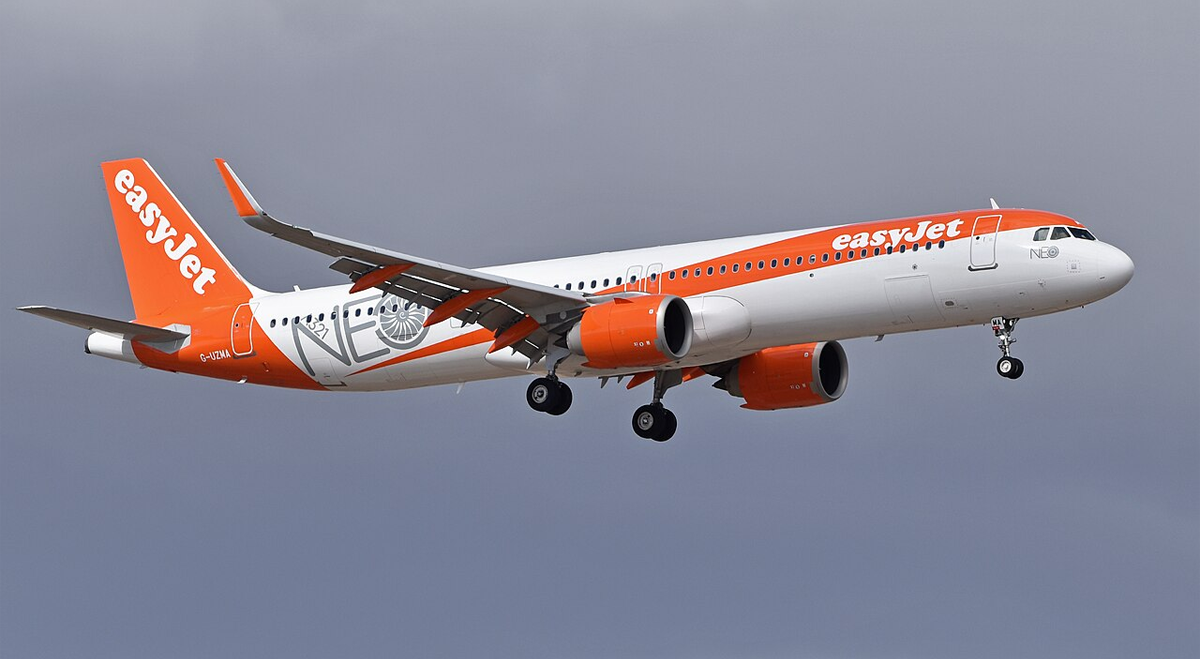
    easyJet plc is one of Europe’s largest low-cost airlines, operating an extensive network of short-haul leisure and business routes across the continent. The company continues to invest in fleet renewal to improve operating efficiency, reduce emissions and strengthen its competitive position within the European aviation market.