
Author: Fiona Craig

  • Fusion Antibodies plc Issues H1 Update and Reaches Key Strategic Milestones

    Fusion Antibodies plc Issues H1 Update and Reaches Key Strategic Milestones

    Fusion Antibodies plc (LSE:FAB) has released its unaudited financial results for the first half of fiscal 2026, reporting lower revenues compared with the same period last year but noting an improvement relative to the second half of 2025. Enhanced gross margins indicate greater operational efficiency. A notable development during the period was the granting of a U.S. patent for its OptiMAL® library design, marking a significant step forward for the company’s intellectual property strategy.

    The company also advanced its partnership with the National Cancer Institute, which plans to use the OptiMAL® platform in upcoming projects. Additionally, Fusion secured new business, including a stable cell line development agreement with a U.S. biotechnology firm and several antibody humanization contracts, further reinforcing its market position. Looking ahead, management expects stronger results in the second half of the year, supported by a healthy order pipeline and the planned December launch of OptiMAL®.

    The financial outlook remains weighed down by ongoing losses and cash flow challenges. While some technical indicators point to an improving trend, negative valuation metrics continue to pose headwinds. The absence of earnings call details and corporate event updates limits further forward-looking clarity.

    About Fusion Antibodies

    Founded in 2001 as a spin-out from Queen’s University Belfast, Fusion Antibodies is a Belfast-based contract research organization specializing in antibody engineering for therapeutic and diagnostic uses. Its services span antibody generation, development, production, characterization, and optimization. With a global client base that includes eight of the world’s top ten pharmaceutical companies, the firm focuses on accelerating drug development through advanced technologies and scientific innovation.

    This content is for informational purposes only and does not constitute financial, investment, or other professional advice. It should not be considered a recommendation to buy or sell any securities or financial instruments. All investments involve risk, including the potential loss of principal. Past performance is not indicative of future results. You should conduct your own research and consult with a qualified financial advisor before making any investment decisions.
    Some portions of this content may have been generated or assisted by artificial intelligence (AI) tools and been reviewed for accuracy and quality by our editorial team.

  • Norcros Posts Solid H1 Results and Expands Through Key Acquisition

    Norcros Posts Solid H1 Results and Expands Through Key Acquisition

    Norcros (LSE:NXR) has delivered a strong performance in the first half of the fiscal year, supported by targeted strategic actions and market share gains despite a difficult operating environment. The company has finalized the purchase of Fibo Holding AS, a move aimed at broadening its product portfolio and strengthening its market position. Management reaffirmed that full-year profit targets remain on track, with further expansion planned in both the RMI and Housebuilding sectors.

    The company’s financial outlook highlights ongoing pressures on profitability and leverage, tempered in part by constructive technical indicators. A relatively high P/E ratio points to potential overvaluation, though a steady dividend yield helps balance investor sentiment. A lack of earnings call and corporate event disclosures has limited additional insights into future performance.

    About Norcros

    Norcros is a leading group of bathroom brands known for sustainable, design-driven products across the UK, Ireland, Scandinavia, South Africa, and selected export markets. Its portfolio focuses on mid-premium ranges that emphasize quality, innovation, and environmental responsibility, all backed by a strong customer service model. Through a mix of strategic acquisitions and organic growth, Norcros has secured its status as the UK and Ireland’s top bathroom products group, with well-known brands such as Triton, Merlyn, and Fibo forming its core portfolio.

    This content is for informational purposes only and does not constitute financial, investment, or other professional advice. It should not be considered a recommendation to buy or sell any securities or financial instruments. All investments involve risk, including the potential loss of principal. Past performance is not indicative of future results. You should conduct your own research and consult with a qualified financial advisor before making any investment decisions.
    Some portions of this content may have been generated or assisted by artificial intelligence (AI) tools and been reviewed for accuracy and quality by our editorial team.
  • Gold Breaks Above $4,200 — Yardeni Sees Room for an Even Bigger Rally

    Gold Breaks Above $4,200 — Yardeni Sees Room for an Even Bigger Rally

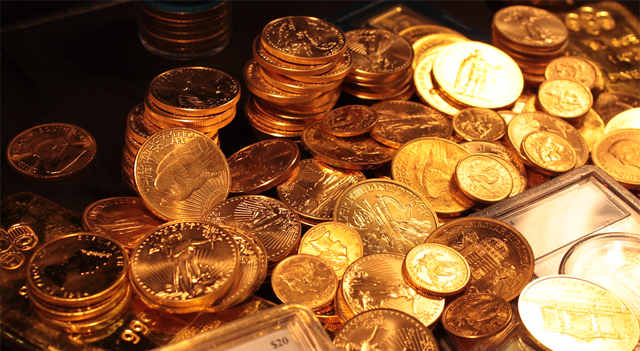
    The surge in gold prices may just be getting started. Analysts at Yardeni Research believe the yellow metal could soar as high as $10,000 per ounce before the end of the decade — or possibly sooner — if the current rally extends.

    On Wednesday, gold pushed through the $4,200/oz mark for the first time ever, lifted by expectations of imminent U.S. interest rate cuts and renewed U.S.-China trade tensions, which have boosted demand for safe-haven assets.

    As of 06:09 ET (10:09 GMT), spot gold was trading 1.3% higher at $4,197.04 per ounce after touching a record $4,200.11 earlier in the session. U.S. December Gold Futures climbed 1.2% to $4,213.54/oz.

    The metal has now advanced for eight consecutive weeks and remains on track for another weekly gain. Yardeni analysts expect prices to reach $5,000/oz as early as next year if momentum holds.

    The rally gained traction following remarks by Jerome Powell on Tuesday, which investors took as dovish. Powell noted that the U.S. economy “may be on a firmer trajectory than some expected,” but cautioned that “a notably softer labor market is emerging.” He also stressed that there is “no risk-free path” for monetary policy and that future decisions would be made “meeting by meeting.”

    His comments strengthened bets on rate cuts at the Fed’s October and December meetings, sending Treasury yields lower and weakening the dollar — a combination typically supportive of gold.

    Tensions between the U.S. and China added more fuel to the rally. Donald Trump floated the idea of cutting certain trade ties with China, including cooking oil imports, in response to reduced Chinese purchases of U.S. soybeans. Both countries also imposed reciprocal port fees this week, further escalating their tariff standoff.

    “Investors seeking protection from mounting geopolitical risks have been heading for the hills to mine for gold,” the Yardeni strategists said in a note.

    They emphasized that gold’s appeal has grown compared to riskier assets like Bitcoin. “Risk-off investors may increasingly be concluding that gold is a better protection for geopolitical risks than is Bitcoin. The former has been around since the beginning of history and widely viewed as a hedge against risk, while the latter has a short history and has behaved mostly as a risk-on speculative vehicle,” they wrote.

    This content is for informational purposes only and does not constitute financial, investment, or other professional advice. It should not be considered a recommendation to buy or sell any securities or financial instruments. All investments involve risk, including the potential loss of principal. Past performance is not indicative of future results. You should conduct your own research and consult with a qualified financial advisor before making any investment decisions.
    Some portions of this content may have been generated or assisted by artificial intelligence (AI) tools and been reviewed for accuracy and quality by our editorial team.

  • Dow Jones, S&P, Nasdaq, Futures, Wall Street Set to Open Higher on Strong Earnings from Big Banks

    Dow Jones, S&P, Nasdaq, Futures, Wall Street Set to Open Higher on Strong Earnings from Big Banks

    U.S. stock index futures pointed to a positive open on Wednesday, with equities poised to extend gains after a choppy session the day before. The upbeat tone was fueled by better-than-expected quarterly results from major financial institutions.

    A strong earnings response from Bank of America (NYSE:BAC) and Morgan Stanley (NYSE:MS) was expected to provide early momentum to Wall Street.

    Shares of Bank of America climbed 4.1% in premarket trading after the lender delivered third-quarter results that topped analyst forecasts on both revenue and earnings. Morgan Stanley also gained 3.9% premarket after its own earnings beat expectations.

    U.S.-listed shares of ASML Holding (NASDAQ:ASML) were trading sharply higher ahead of the opening bell. The Dutch semiconductor equipment manufacturer posted mixed third-quarter results but said it expects “2026 total net sales to exceed 2025.”

    In contrast, Abbott Laboratories (NYSE:ABT) shares could face pressure after reporting weaker-than-expected third-quarter revenues.

    Traders are also watching for any statements from Donald Trump on U.S.-China trade relations, a key market driver in recent days.

    Tuesday’s session was marked by heavy volatility. After a steep early selloff, stocks staged a partial rebound before retreating again in the afternoon.

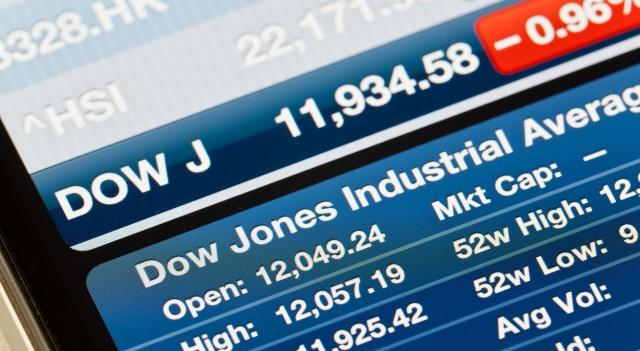
    The Dow Jones Industrial Average finished up 202.88 points, or 0.4%, at 46,270.46, recovering from a drop of more than 600 points earlier in the day. The S&P 500 slipped 0.2% to 6,644.31, while the Nasdaq Composite lost 0.8% to 22,521.70.

    The late-day pullback followed a post on Truth Social in which Trump accused China of an “economically hostile act” for reducing soybean purchases and threatened to cut trade ties involving cooking oil and other goods.

    Earlier in the day, markets had come under pressure amid renewed trade concerns. A spokesperson for Ministry of Commerce of the People’s Republic of China defended Beijing’s export controls on rare earths, saying, “The U.S. has long overstated national security, abused export controls, and adopted discriminatory practices against China.”

    They added, “In particular, since the Madrid trade talks between China and the U.S., the U.S. has continued to impose a series of new restrictive measures on China, which have seriously harmed China’s interests and seriously undermined the atmosphere of the bilateral trade talks.”

    The spokesperson reiterated that China is ready to “fight to the end” in a trade war but stressed that “the door is open” to negotiations.

    Beijing also announced sanctions against five U.S.-based subsidiaries of Hanwha Ocean, accusing the shipping company of aiding Washington’s restrictions on China’s maritime sector.

    Financial earnings helped offset some of the early selling pressure. Wells Fargo (NYSE:WFC) jumped 7.2% after posting stronger-than-expected results and raising its profitability outlook. Citigroup (NYSE:C) also gained 3.9% after an earnings beat, though JPMorgan Chase (NYSE:JPM) declined despite solid results.

    Airline stocks were among the session’s strongest performers, with the NYSE Arca Airline Index soaring 4.2%. Housing names also rallied, as the Philadelphia Housing Sector Index climbed 2.5%. Banking, networking and telecom shares posted solid gains, while semiconductor and computer hardware stocks weakened again late in the day.

    This content is for informational purposes only and does not constitute financial, investment, or other professional advice. It should not be considered a recommendation to buy or sell any securities or financial instruments. All investments involve risk, including the potential loss of principal. Past performance is not indicative of future results. You should conduct your own research and consult with a qualified financial advisor before making any investment decisions.
    Some portions of this content may have been generated or assisted by artificial intelligence (AI) tools and been reviewed for accuracy and quality by our editorial team.
  • DAX, CAC, FTSE100, European Stocks Rise as French Markets Lead Gains on LVMH Rally

    DAX, CAC, FTSE100, European Stocks Rise as French Markets Lead Gains on LVMH Rally

    European equities advanced on Wednesday, with France’s outperforming regional peers after (EU:MC) — the luxury group behind Louis Vuitton and Christian Dior — surprised investors with a return to sales growth in the third quarter.

    French markets lead amid upbeat data

    The reported that French consumer inflation rose as expected in September, reaching its fastest pace in eight months. The consumer price index climbed 1.2% year-on-year, up from 1.0% in August and matching preliminary estimates released on September 30. It marked the highest inflation reading since January, when prices had risen by 1.7%.

    Regional performance

    The gained 0.6% after a 0.4% drop on Tuesday, supported by broad sector strength. France’s jumped 2.3%, leading the advance, while Germany’s edged up 0.1%. The U.K.’s lagged, slipping 0.3%.

    LVMH lifts luxury sector

    LVMH shares surged after the company posted stronger-than-expected quarterly revenue, driven by renewed demand in China. The upbeat results sparked a rally across the luxury sector, with peers , , and all advancing between 5% and 8%.

    Corporate highlights

    • Asetek soared after announcing a long-term supply agreement with a leading PC gaming brand for high-end liquid cooling products built on its Ingrid platform.
    • Rexel (EU:RXL) climbed in Paris following higher third-quarter sales, reflecting solid demand in the electrical equipment segment.
    • ASML Holding (EU:ASML) gained after the Dutch semiconductor equipment maker reported net orders that exceeded analyst expectations.
    • PageGroup (LSE:PAGE) rose sharply after posting a steady third-quarter performance despite ongoing economic uncertainty.
    • British Land (LSE:BLND) rallied as the property group lifted its full-year earnings per share guidance, supported by stronger interim profits and gains in portfolio values.

    Not all good news

    On the downside, Aurubis (TG:NDA) tumbled after major shareholder sold €500 million ($582 million) in bonds exchangeable for a 7.6% stake in the German copper producer, sparking selling pressure on the stock.

    This content is for informational purposes only and does not constitute financial, investment, or other professional advice. It should not be considered a recommendation to buy or sell any securities or financial instruments. All investments involve risk, including the potential loss of principal. Past performance is not indicative of future results. You should conduct your own research and consult with a qualified financial advisor before making any investment decisions.
    Some portions of this content may have been generated or assisted by artificial intelligence (AI) tools and been reviewed for accuracy and quality by our editorial team.
  • FTSE 100 slips as pound strengthens; British Land shines while PageGroup struggles

    FTSE 100 slips as pound strengthens; British Land shines while PageGroup struggles

    U.K. equities edged lower on Wednesday as sterling continued to gain ground against the U.S. dollar, weighing on exporters, even as broader European markets advanced on optimism over potential political progress in France.

    By 12:08 GMT, the FTSE 100 was down 0.4%, while GBP/USD rose 0.2% to 1.33. Elsewhere in Europe, Germany’s DAX inched up 0.1% and France’s CAC 40 rallied 2.3%.

    British Land rallies, PageGroup slides

    Shares of British Land Company (LSE:BLND) climbed after the property group posted an 8.4% increase in underlying profit to £155 million for the six months ending September 30, and reaffirmed its full-year targets. Earnings per share rose slightly to 15.4 pence from 15.3 pence a year earlier, supported by stronger portfolio values and rental growth during the first half of fiscal 2026.

    Entain (LSE:ENT) also traded higher after reporting a 6% increase in net gaming revenue for the third quarter, with online operations leading the way. Retail revenue grew 3% at constant currency, while group revenue excluding the U.S. climbed 5%. The company reiterated its full-year underlying profit guidance of between £1.10 billion and £1.15 billion.

    In contrast, PageGroup (LSE:PAGE) came under pressure after reporting a 6.7% decline in like-for-like net fees to £187.8 million in Q3. Stronger results in the U.S. and parts of Asia weren’t enough to offset softer European demand. Gross profit from permanent placements fell 6.4% to £133.1 million, while temporary placements slipped 7.5% to £54.7 million. PageGroup expects full-year 2025 EBIT to align with market estimates of £21.5 million.

    Rathbones Group (LSE:RAT) gained slightly after reporting a 3.7% increase in funds under management and administration to £113 billion at the end of September, up from £109 billion in June.

    Jupiter Fund Management (LSE:JUP) posted net inflows of £0.3 billion in the third quarter, its second consecutive quarter of positive flows. Assets under management grew 7% during the quarter to £50.4 billion, up 11% year-on-year.

    Rank Group (LSE:RNK) had a strong start to fiscal year 2025/26, with like-for-like net gaming revenue climbing 9% to £210.2 million in Q1. Digital operations were the standout, rising 13% to £61.6 million, led by a 15% increase in the U.K. market.

    Pets at Home Group (LSE:PETS) and CVS Group (LSE:CVSG) jumped more than 5% and 4% respectively after the Competition and Markets Authority proposed sweeping reforms to the veterinary industry.

    Meanwhile, Capita (LSE:CPI) reached a £14 million settlement with the Information Commissioner’s Office over a March 2023 cyberattack, down from an initially proposed £45 million penalty.

    U.K. news roundup: bonus rule changes, tax warnings and Royal Mail fine

    British cloud company Nscale has struck a deal worth up to $14 billion with Microsoft (NASDAQ:MSFT), according to the Financial Times. The firm is also preparing for a potential IPO in late 2026.

    In regulatory updates, the Prudential Regulation Authority and the Financial Conduct Authority announced that the bonus deferral period for senior bankers will be halved from eight to four years starting October 16. The FCA also unveiled plans to simplify capital rules for investment firms, eliminating outdated banking provisions and cutting legal text by 70%.

    Waymo, a subsidiary of Alphabet Inc. (NASDAQ:GOOGL), revealed plans to launch its fully autonomous ride-hailing service in London in 2026.

    Royal Mail was fined £21 million by the Ofcom regulator after failing to meet delivery targets for the 2024/25 financial year, with only 77% of First Class mail delivered on time versus a 93% goal.

    U.K. Finance Minister Rachel Reeves indicated that her November 26 budget will include both tax increases and spending cuts as part of efforts to stabilize public finances.

    This content is for informational purposes only and does not constitute financial, investment, or other professional advice. It should not be considered a recommendation to buy or sell any securities or financial instruments. All investments involve risk, including the potential loss of principal. Past performance is not indicative of future results. You should conduct your own research and consult with a qualified financial advisor before making any investment decisions.
    Some portions of this content may have been generated or assisted by artificial intelligence (AI) tools and been reviewed for accuracy and quality by our editorial team.

  • Dollar Weakens After Powell’s Remarks; Euro Gains as Markets Watch Political Developments

    Dollar Weakens After Powell’s Remarks; Euro Gains as Markets Watch Political Developments

    The U.S. dollar slipped on Wednesday, giving back part of its recent strength after comments from Jerome Powell reinforced expectations for interest rate cuts, while the euro firmed as political developments in France lent support to the currency.

    At 04:25 ET (08:25 GMT), the Dollar Index — which tracks the greenback against six major currencies — was down 0.3% at 98.545, paring some of the gains of more than 2% made over the past month.

    Dollar pulls back after Powell speech

    The greenback moved lower following Powell’s Tuesday address, during which the Federal Reserve Chair kept the door open to additional rate reductions, noting that the U.S. labor market “remained in the doldrums.”

    Markets are now pricing in a 25-basis-point cut at the October 28–29 Fed meeting, another in December, and three more in 2026, according to LSEG data.

    “Risk sentiment improved throughout Tuesday – boosted by strong U.S. bank earnings – before Powell’s speech added dovish-sounding headlines: slower payrolls, tolerable inflation, and a possible QT rollback,” analysts at ING Group said in a note.

    “That said, the overall policy stance remains broadly unchanged from September. Fed pricing is steady at 48bp of easing for the rest of the year, and we doubt that will shift much before new inflation and jobs data arrive.”

    Later in the day, investors will turn their attention to the Fed’s Beige Book, one of the few key economic releases available amid the prolonged U.S. government shutdown.

    Euro strengthens ahead of no-confidence vote

    In Europe, EUR/USD traded 0.3% higher at 1.1637 after a similar gain in the previous session, supported by political developments in France. Prime Minister Sébastien Lecornu, who was reappointed last Friday, presented the 2026 budget bill on Tuesday and pledged to postpone the government’s controversial pension reform — a central demand of the Socialist Party. In response, the Socialists said they would not support the no-confidence motion.

    With Socialist backing, the government’s chances of passing the budget have improved, even though the parliamentary balance remains fragile.

    “If Lecornu survives the no-confidence vote, EUR/USD could edge higher and potentially build strong support around 1.1600,” said ING.

    GBP/USD climbed 0.2% to 1.3350, with the pound recovering from Tuesday’s dip after data showed wage growth cooling.

    Yen and yuan gain ground

    USD/JPY fell 0.4% to 151.30, helped by fading bets on looser fiscal policy under Sanae Takaichi. The Liberal Democratic Party leader now faces a leadership challenge after its coalition partner Komeito withdrew its support.

    Meanwhile, USD/CNY edged down 0.2% to 7.1263, with the yuan supported by a stronger midpoint fix from the People’s Bank of China. Trade tensions continued to simmer after Beijing condemned U.S. President Donald Trump’s threat to impose 100% tariffs on Chinese goods. China’s commerce ministry said it was prepared to “fight to the end” if necessary.

    Inflation figures released Wednesday showed a deeper-than-expected fall in consumer prices in September and a third straight year of deflation in producer prices. While core inflation rose to a 19-month high, signs of a broader recovery remained limited.

    AUD/USD rose 0.5% to 0.6518, with the Australian dollar benefiting from the dollar’s weakness.

    This content is for informational purposes only and does not constitute financial, investment, or other professional advice. It should not be considered a recommendation to buy or sell any securities or financial instruments. All investments involve risk, including the potential loss of principal. Past performance is not indicative of future results. You should conduct your own research and consult with a qualified financial advisor before making any investment decisions.
    Some portions of this content may have been generated or assisted by artificial intelligence (AI) tools and been reviewed for accuracy and quality by our editorial team.

  • Luxury Sector Rallies as LVMH Delivers First Quarterly Sales Growth of the Year

    Luxury Sector Rallies as LVMH Delivers First Quarterly Sales Growth of the Year

    Luxury stocks climbed on Wednesday after LVMH (EU:MC) signaled a rebound in demand, lifting sentiment across the industry.

    LVMH shares surged 12% to over €599 in morning trading following stronger-than-expected third-quarter sales. Peers Hermès (EU:RMS), Kering (EU:KER), Richemont (BIT:1CFR), Burberry (LSE:BRBY) and Moncler (BIT:MONC) also rose between 5% and 8%, reflecting renewed optimism among investors.

    The group posted a 1% increase in sales for the quarter, its first year-to-date growth, helped by stronger demand in China. The result offered a boost to the wider luxury sector, which has struggled with a slowdown in discretionary spending throughout the year.

    Analysts at JPMorgan Chase & Co. commented: “We anticipate the luxury sector to also be strong today, with positive commentary on most nationalities boding well for a generally better luxury reporting season, especially for companies/brands that went into this more favourable backdrop with strong brand momentum.”

    LVMH highlighted that trends in Asia excluding Japan — a key region influenced by Chinese consumers — showed a “noticeable” improvement over the first nine months of the year. “Mainland China turned positive in Q3,” said Chief Financial Officer Cecile Cabanis on a call with analysts.

    Cabanis also cautioned that “headwinds remain in the fourth quarter,” citing currency fluctuations and macroeconomic uncertainty, though she reiterated the group’s confidence in the ongoing creative repositioning of its brands. She added that financial progress would “take time” with “gradual sequential improvement.”

    Fashion and leather goods, including the powerhouse brands Louis Vuitton and Dior that generate the bulk of LVMH’s profit, recorded a 2% year-on-year decline in Q3 sales. Still, this represented a notable recovery from the 9% drop reported in the second quarter, suggesting a potential inflection point for the division.

    The luxury industry overall remains under pressure after the post-pandemic boom faded. Years of aggressive price increases at flagship houses like Louis Vuitton and Dior boosted margins but have also softened demand, particularly among more price-sensitive consumers.

    Adding to the challenges are broader economic headwinds, including tariffs imposed by U.S. President Donald Trump, continued stress in China’s property market, and rising jewelry production costs linked to the surge in gold and silver prices.

    This content is for informational purposes only and does not constitute financial, investment, or other professional advice. It should not be considered a recommendation to buy or sell any securities or financial instruments. All investments involve risk, including the potential loss of principal. Past performance is not indicative of future results. You should conduct your own research and consult with a qualified financial advisor before making any investment decisions.
    Some portions of this content may have been generated or assisted by artificial intelligence (AI) tools and been reviewed for accuracy and quality by our editorial team.

  • Oil Prices Extend Losses as Traders Focus on Oversupply Risks and Rising U.S.-China Trade Tensions

    Oil Prices Extend Losses as Traders Focus on Oversupply Risks and Rising U.S.-China Trade Tensions

    Oil prices continued to decline on Wednesday, adding to the previous session’s losses as investors digested warnings of a looming supply glut and renewed trade frictions between the world’s two biggest energy consumers.

    Brent crude futures slipped 9 cents, or 0.14%, to $62.30 a barrel by 06:40 GMT, while U.S. West Texas Intermediate futures eased 3 cents, or 0.05%, to $58.67. Both benchmarks had ended Tuesday at their lowest levels in five months.

    The International Energy Agency warned on Tuesday that the oil market could face an oversupply of up to 4 million barrels per day in 2026 — a larger surplus than previously expected — as OPEC+ producers and other suppliers increase output while demand remains weak.

    “The market is focusing on excess supply amid mixed demand signals. Ebbing geopolitical risks and escalating trade tensions are also adding further pressure on prices,” said Emril Jamil, a senior oil analyst at LSEG.

    Tensions between United States and China have intensified over the past week, with both countries imposing new port fees on vessels carrying goods between them. The additional costs are expected to weigh on trade flows and economic growth.

    “The focus will remain on the recent re-escalation in trade tensions between the US and China and the risks it brings to the global economy,” said Tony Sycamore, a market analyst at IG Group.

    The dispute escalated after Beijing announced tougher export controls on rare earth minerals, while U.S. President Donald Trump threatened to raise tariffs on Chinese imports to 100% and tighten software export restrictions starting November 1.

    “Beyond U.S.-China trade relations and the progress of talks, the key for oil prices now is the degree of oversupply, reflected in changes in global inventories,” said Yang An, analyst at Haitong Futures.

    Traders are also closely monitoring U.S. inventory data for signs of demand trends. A preliminary Reuters poll showed that crude stockpiles likely rose by about 200,000 barrels in the week ending October 10, while gasoline and distillate inventories may have declined.

    The weekly industry report from the American Petroleum Institute is due at 4:30 p.m. EDT (2030 GMT) on Wednesday, followed by official figures from the U.S. Energy Information Administration at 10:30 a.m. EDT (1430 GMT) on Thursday. Both reports were pushed back one day due to the Columbus Day/Indigenous Peoples’ Day holiday.

    This content is for informational purposes only and does not constitute financial, investment, or other professional advice. It should not be considered a recommendation to buy or sell any securities or financial instruments. All investments involve risk, including the potential loss of principal. Past performance is not indicative of future results. You should conduct your own research and consult with a qualified financial advisor before making any investment decisions.
    Some portions of this content may have been generated or assisted by artificial intelligence (AI) tools and been reviewed for accuracy and quality by our editorial team.

  • Gold Hits New All-Time High Near $4,200 as Traders Bet on Fed Easing and U.S.-China Trade Strains Intensify

    Gold Hits New All-Time High Near $4,200 as Traders Bet on Fed Easing and U.S.-China Trade Strains Intensify

    Gold prices surged to another record high during Asian trading on Wednesday, extending their winning streak to a third straight session. The rally was fueled by growing expectations of upcoming U.S. interest rate cuts and escalating trade tensions between Washington and Beijing, which drove investors toward safe-haven assets.

    Spot gold climbed 1.1% to $4,186.84 per ounce at 02:05 ET (06:05 GMT), after reaching a record peak of $4,193.6 earlier in the session. U.S. December Gold Futures gained 1% to $4,203.27. The precious metal has posted strong gains for eight consecutive weeks and is on track for another solid weekly performance if the momentum holds.

    Dovish Fed signals and trade frictions boost demand

    The rally accelerated after Federal Reserve Chair Jerome Powell made remarks on Tuesday that were widely seen as dovish. Powell said the U.S. economy may be on a firmer trajectory than some expected, but cautioned that a notably softer labor market is emerging. He added that there was “no risk-free path” for policy and emphasized that future decisions would be made “meeting by meeting.”

    His comments reinforced expectations of Fed rate cuts in both October and December, pushing Treasury yields lower and weakening the U.S. dollar — a combination typically supportive for gold.

    Trade tensions also added fuel to the rally. President Donald Trump suggested ending certain trade ties with China, specifically targeting cooking oil imports, in response to Beijing’s reduction in U.S. soybean purchases. The tariff dispute intensified further after both countries imposed reciprocal port fees on shipping companies this week.

    “Gold and silver are two of the best-performing commodities this year, with prices up by more than 55% and 80% YTD, respectively, supported by the Fed’s policy easing, the central bank’s purchases and geopolitical tensions, which have fuelled demand for safe-haven assets,” ING analysts said in a recent note.

    Broader metals market climbs; China inflation data in spotlight

    Other precious and base metals also moved higher Wednesday, benefiting from a weaker dollar. Silver gained 1.4% to $52.12 per ounce after hitting a record $53.6 in the previous session. Platinum Futures rose 1.4% to $1,687.20 per ounce.

    Benchmark Copper Futures on the London Metal Exchange added 0.7% to $10,667.50 a ton, while U.S. Copper Futures increased 0.8% to $5.04 a pound.

    Fresh data from China showed consumer prices fell 0.3% year-on-year in September, easing slightly from a 0.4% decline in August. Producer prices dropped 2.3% from a year earlier, compared with a 2.9% fall the previous month.

    The figures highlight ongoing deflationary pressures in the world’s second-largest economy and are likely to raise expectations for additional government stimulus in the months ahead.

    This content is for informational purposes only and does not constitute financial, investment, or other professional advice. It should not be considered a recommendation to buy or sell any securities or financial instruments. All investments involve risk, including the potential loss of principal. Past performance is not indicative of future results. You should conduct your own research and consult with a qualified financial advisor before making any investment decisions.
    Some portions of this content may have been generated or assisted by artificial intelligence (AI) tools and been reviewed for accuracy and quality by our editorial team.