Author: Fiona Craig

  • XP Power Reports Stronger Orders and Margin Gains as Restructuring Reduces Debt

    XP Power Reports Stronger Orders and Margin Gains as Restructuring Reduces Debt

    XP Power (LSE:XPP) recorded a sharp recovery in order intake during 2025, with bookings rising 28% at constant currency to £225.9 million. The improvement reflects a reduction in customer destocking across industrial technology and healthcare markets, alongside a gradual pickup in semiconductor equipment demand.

    Group revenue declined 4% at constant currency to £230.1 million, with the weakness largely confined to the first half of the year. Trading conditions improved in the second half, delivering 7% sequential revenue growth as end markets began to stabilise.

    Adjusted operating profit fell 20% at constant currency to £17.3 million, as lower volumes weighed on overall earnings. However, restructuring measures and margin initiatives drove a 170-basis-point improvement in adjusted gross margin. Operating profit strengthened materially in the second half, rising from £4.8 million in H1 to £12.5 million in H2.

    Balance sheet metrics improved significantly. Net debt was reduced to £41.5 million, cutting leverage to 1.2 times adjusted EBITDA following robust cash generation and a share placing. During the year, the company streamlined its operations, completed a new manufacturing facility in Malaysia, exited the RF market and indicated that recovering demand should help offset the impact of U.S. export restrictions to China through 2026.

    Management highlighted 24 new product launches, improved supply chain performance and rising customer satisfaction as structural positives. The shift of manufacturing capacity from China to Malaysia, combined with tighter inventory discipline and cost control, is intended to support gross margins in the mid-40% range once markets normalise and to reinforce the group’s competitive standing in its core sectors.

    From an investment standpoint, XP Power presents a mixed picture. Strong cash generation and improving gross margins are positive factors, but declining revenue, continued losses and previously elevated leverage temper the outlook. Technical indicators suggest the shares are in an uptrend, though potentially overbought in the near term. Valuation remains constrained by negative earnings and the absence of dividend yield data.

    More about XP Power

    XP Power is a Singapore-headquartered designer and manufacturer of power control solutions used in semiconductor production equipment, industrial technology systems and healthcare devices. The company integrates its products into blue-chip OEM platforms, generating multi-year revenue streams.

    It operates manufacturing facilities in Vietnam, North America and Germany, serving customers across Europe, North America and Asia. Listed on the London Stock Exchange’s Main Market as part of the FTSE SmallCap index, XP Power specialises in IP-rich solutions that convert grid electricity into the precise power formats required by complex equipment. While representing a relatively small portion of total system cost, its components are critical to performance and reliability in demanding environments.

    The group also maintains a global sales and support network spanning more than 20 locations, enabling close collaboration with customers throughout design cycles and supporting long-term partnerships across semiconductor, industrial and medical markets.


  • Kier Group Confirms Remuneration Committee Leadership Transition

    Kier Group Confirms Remuneration Committee Leadership Transition

    Kier Group plc (LSE:KIE) has outlined a forthcoming change in board responsibilities, confirming that Non-Executive Director Margaret Hassall will retire and relinquish her role as Chair of the Remuneration Committee on 29 May 2026. She will be replaced by Anne Baldock, a fellow Non-Executive Director who joined the board in July 2025 and currently chairs the Remuneration Committee at Pantheon Infrastructure plc.

    The succession plan is designed to ensure stability in the company’s governance framework, particularly in relation to executive compensation oversight. Chair Matthew Lester acknowledged Hassall’s contribution in reinforcing Kier’s remuneration policies during her tenure. Baldock’s appointment brings additional experience in remuneration governance, reinforcing the board’s emphasis on aligning leadership incentives with long-term corporate performance.

    Maintaining robust oversight of pay structures is expected to support Kier’s broader strategic objectives across the UK infrastructure and construction sectors, where disciplined execution and stakeholder confidence are critical.

    From a market perspective, Kier’s recent earnings call and solid financial delivery have been central to its equity performance. Constructive technical indicators and a valuation viewed as reasonable provide additional support, although elevated leverage levels remain a point of consideration for investors.

    More about Kier Group plc

    Kier Group plc is a major UK-based infrastructure services, construction and property development group. The company focuses on delivering essential national infrastructure through integrated design-and-build expertise and project management capabilities, drawing on specialist technical skills to manage complex, large-scale projects sustainably.

  • Insig AI Secures Enterprise Licence Agreement and Expands Client Reach

    Insig AI Secures Enterprise Licence Agreement and Expands Client Reach

    Insig AI (LSE:INSG) has entered into a new enterprise licence and revenue-sharing agreement with an existing customer, enabling deployment of its Generative Intelligence Engine to streamline document processing and analytical workflows. The £60,000 contract not only adds immediate revenue but also provides Insig AI with direct access to the client’s wider customer network, creating a potential new route to market.

    Under the arrangement, the company’s AI platform will be integrated more extensively into the client’s operations to automate document handling and generate structured analytical outputs. Crucially, Insig AI now has the right to engage with the client’s broader customer base, offering an opportunity to secure further contracts and scale recurring revenues.

    The deal reflects increasing institutional interest in AI-driven document intelligence solutions. If the company succeeds in converting this expanded access into additional enterprise agreements, it could strengthen its competitive positioning and accelerate commercial traction.

    Despite the strategic progress, Insig AI’s financial profile remains under strain. The business continues to report losses, negative operating and free cash flow, and notably negative shareholders’ equity. Technical indicators also signal weakness, with the share price trading below key moving averages and momentum indicators such as MACD remaining negative. Valuation support is limited given the negative earnings profile and absence of dividend yield visibility.

    More about Insig AI PLC

    Insig AI plc is a London-listed provider of artificial intelligence and machine learning-based analytics solutions for enterprise customers. Its flagship Generative Intelligence Engine transforms unstructured client documents into structured, machine-readable data, delivering auditable insights and customised recommendations designed to automate workflows and enhance consistency across reporting and analysis processes.

  • Intertek Posts Record 2025 Results and Upgrades 2026 Growth Outlook

    Intertek Posts Record 2025 Results and Upgrades 2026 Growth Outlook

    Intertek (LSE:ITRK) delivered record earnings in 2025, reporting revenue of £3.43 billion, representing 4.3% growth at constant currency. The performance was supported by like-for-like expansion across most business lines and a rise in adjusted operating margin to 18.1%.

    Adjusted operating profit increased 9.3% at constant currency, marking a third straight year of double-digit growth in earnings per share. Return on invested capital exceeded 21%, reflecting disciplined capital allocation and operational efficiency.

    Cash generation remained a highlight, with cash conversion reaching 110%. During the year, the group deployed £300 million into capital expenditure and acquisitions, focusing on higher-margin segments to strengthen its portfolio. Shareholders benefited from total returns of £602 million, including dividends and the completion of a £350 million share buyback programme.

    Management stated that progress under its AAA strategy is running ahead of its 2023–25 objectives. For 2026, the company guided to mid-single-digit like-for-like revenue growth, additional margin improvement and continued strong cash flow, signalling confidence in sustained quality-led expansion and reinforcing its position in risk-based quality assurance markets.

    From an investment standpoint, Intertek’s robust financial results and active capital management — including strategic acquisitions and significant buybacks — represent core strengths. However, recent technical indicators point to bearish momentum in the shares, which may create short-term volatility. Valuation appears balanced, supported by a reasonable dividend yield.

    More about Intertek

    Intertek Group PLC is a global provider of Total Quality Assurance solutions, operating more than 1,000 laboratories and offices across over 100 countries. The company delivers assurance, testing, inspection and certification services focused on quality, safety and sustainability throughout clients’ operations and supply chains worldwide.

  • Johnson Service Group Expands Margins and Shareholder Returns as 2025 Profit Climbs

    Johnson Service Group Expands Margins and Shareholder Returns as 2025 Profit Climbs

    Johnson Service Group (LSE:JSG) delivered solid progress in 2025, posting a 4.3% increase in revenue to £535.4 million. Growth was supported by steady organic gains across its HORECA and workwear divisions, alongside pricing initiatives and operational efficiencies.

    Adjusted operating profit rose 16.4% to £72.5 million, pushing the operating margin up to 13.5%. Adjusted EBITDA margin strengthened to 31.2%, while leverage remained conservative at 0.95x, reflecting disciplined balance sheet management despite ongoing investment.

    The company rewarded shareholders with a 20% uplift in its full-year dividend and executed £55 million in share buybacks in early 2026. This brings cumulative repurchases since 2022 to £90.3 million. Net debt increased to £159.2 million, primarily due to capital expenditure and capital returns, but management emphasised that the balance sheet remains robust.

    Executives highlighted stable customer volumes despite macroeconomic pressures, continued reductions in energy intensity and sustained operational improvements. Looking ahead, the Group expects further progress in 2026 and is targeting an adjusted operating margin of at least 14%.

    From an investment perspective, the company’s improved profitability and constructive tone in its earnings commentary stand out as key positives. The ongoing buyback programme adds further support to shareholder value. Although technical signals appear neutral, current valuation levels underpin a favourable medium-term outlook.

    More about Johnson Service

    Johnson Service Group is a UK-based provider of textile services, operating mainly in the hotel, restaurant and catering (HORECA) and workwear segments. The company supplies, launders and maintains linen and specialist garments for hospitality and industrial clients, with a focus on service reliability, operational efficiency and disciplined investment to reinforce its market position.

  • Harvest Minerals Bolsters Board with Appointment of Industry Veteran Mark Reilly

    Harvest Minerals Bolsters Board with Appointment of Industry Veteran Mark Reilly

    Harvest Minerals (LSE:HMI) has strengthened its board with the addition of Mark Reilly as a non-executive director. Reilly brings more than 30 years of leadership experience spanning mining, energy, technology and professional services, enhancing the company’s governance and strategic capabilities as it advances its growth agenda.

    Reilly has held senior roles at companies listed on both the ASX and AIM markets, building expertise in corporate governance, capital markets engagement, cross-border expansion and financial restructuring. His experience is expected to contribute to Harvest’s corporate development initiatives and expand its investor outreach efforts.

    Among his previous achievements, Reilly led the international expansion of IODM Limited’s accounts receivable technology platform and played a key role in advancing resource projects in Africa during his time at Forte Energy. These credentials align with Harvest’s ambitions as a growth-oriented resources company. Chairman Brian McMaster noted that the appointment should reinforce delivery of the company’s strategy and strengthen stakeholder engagement, potentially enhancing Harvest’s standing in the organic fertiliser market and improving access to funding.

    Despite the strategic addition to the board, Harvest’s financial profile remains under pressure. The company has reported significant losses, a sharp decline in margins and a return to cash outflows, alongside increasing leverage. While technical indicators show some resilience — with the share price trading above key moving averages and momentum appearing neutral — valuation metrics remain weak due to ongoing losses and the absence of a dividend.

    More about Harvest Minerals

    Harvest Minerals Limited is an AIM-listed producer of organic fertiliser with operations in Brazil, supplying nutrient solutions to the agricultural sector. Listed within the mining segment of the London Stock Exchange, the company focuses on utilising its mineral resource base to meet rising demand for sustainable fertiliser products in major farming regions.

  • Pebble Beach Systems Updates Board as Kestrel Appoints New Representative

    Pebble Beach Systems Updates Board as Kestrel Appoints New Representative

    Pebble Beach Systems Group (LSE:PEB) has confirmed a forthcoming board transition following a request from its largest shareholder, Kestrel Partners. Non-executive director Chris Errington, who has represented Kestrel on the board, will step down from both Kestrel and Pebble on 31 March 2026. He will be succeeded by Kestrel’s managing partner, Oliver Scott, pending customary regulatory checks. Scott is also expected to take over as chair of the company’s remuneration committee, further solidifying Kestrel’s role as a 24.24% shareholder.

    The incoming director brings substantial experience from board positions across publicly listed UK technology businesses. His appointment is anticipated to enhance governance and strategic guidance as Pebble continues supporting leading broadcast and streaming customers. The move highlights Kestrel’s ongoing, hands-on engagement as a long-term technology investor, particularly in matters relating to leadership structure and executive compensation — areas likely to attract attention from other investors.

    From a market perspective, Pebble Beach Systems’ equity profile reflects encouraging technical momentum and recent corporate developments that may support expansion. Nonetheless, financial metrics remain a constraint. The company reports negative net income and a negative price-to-earnings ratio, factors that temper valuation appeal. Future performance will depend on management’s ability to capitalise on operational cash flow strengths while executing on its refreshed governance framework.

    More about Pebble Beach Systems

    Pebble Beach Systems Group, operating under the Pebble brand, is an international software provider specialising in automation, integrated channel management and virtualised playout solutions for the broadcast and streaming sectors. Established in 2000, the company serves Tier 1 broadcasters and streaming platforms worldwide. Its systems are deployed in more than 70 countries and currently manage approximately 2,000 live on-air channels globally.

  • Hamak Strategy Moves to Secure Akoko Gold Project Following Due Diligence Completion

    Hamak Strategy Moves to Secure Akoko Gold Project Following Due Diligence Completion

    Hamak Strategy Limited (LSE:HAMA) has wrapped up its due diligence review of the Akoko Gold Project, located within Ghana’s highly prospective Ashanti gold belt, and is now progressing toward completing the acquisition. The company has secured an exclusive option over a shallow oxide resource that management believes could underpin a low-capex, heap-leach mining operation.

    Akoko currently contains a non-JORC compliant inferred and indicated resource estimated at approximately 252,659 ounces grading 0.58 grams per tonne. To advance the project toward internationally recognised reporting standards, Hamak intends to undertake 4,250 metres of reverse circulation drilling alongside metallurgical testing. The objective is to convert the existing resource into a JORC-compliant estimate and evaluate potential gold recoveries.

    An independent Preliminary Economic Assessment (PEA) will also be commissioned to analyse anticipated capital expenditure, operating costs, production forecasts and revenue potential. The company aims to complete this body of work by the end of 2026. At that point, Hamak will determine whether to exercise its exclusive option to acquire Akoko, which implies a purchase price of roughly US$10 per ounce.

    Management characterises the project as a potentially low-cost expansion opportunity at a time of historically strong gold prices. If technical and economic studies confirm viability, the acquisition could strengthen the group’s asset portfolio and offer meaningful upside for shareholders.

    However, Hamak’s broader investment profile remains weighed down by limited financial traction. The company currently reports no revenue, continues to post operating losses, and generates negative cash flow. While short-term technical indicators have shown some improvement, valuation metrics remain constrained by a negative price-to-earnings ratio and the absence of dividend payments.

    More about Hamak Gold Limited

    Hamak Strategy Limited is a UK-listed exploration company targeting gold opportunities across Africa. In addition to its mineral exploration activities, the group maintains a digital asset treasury approach, allocating part of its reserves to Bitcoin and other cryptoassets. This hybrid model provides exposure to both gold exploration upside and the price volatility and regulatory risks associated with cryptocurrency holdings.

  • Building a multi‑platform industrial gas and carbon management powerhouse

    Building a multi‑platform industrial gas and carbon management powerhouse

    In the evolving landscape of North American energy, few companies have repositioned themselves as boldly—or as deliberately—as U.S. Energy Corp. (NASDAQ:USEG).

    What once resembled a traditional exploration and production company is now transforming into something far more ambitious: a vertically integrated industrial gas and carbon management platform positioned at the crossroads of energy security, helium supply, and long‑duration decarbonization.

    It’s a story about scale, timing, and strategy—one that investors are only beginning to appreciate.

    A company reinventing itself at the right moment

    Over the past 18 months, U.S. Energy has undergone a stealthy and profound evolution. The driving force behind that transformation is a management team with deep domain expertise—not just in oil and gas, but in helium, carbon capture, complex project development, and capital markets strategy. Their collective backgrounds, as outlined on the company’s website, represent decades of developing unconventional assets, building infrastructure, and monetizing industrial gas opportunities.

    This team hasn’t simply added new assets to the portfolio—they’ve reshaped the company’s identity. Their vision is clear: build a platform capable of producing oil, advancing helium, and scaling carbon capture and utilization, all anchored by one world‑class geological resource. Few emerging companies have positioned themselves so directly in the flow of both traditional energy demand and the accelerating push for industrial decarbonization.

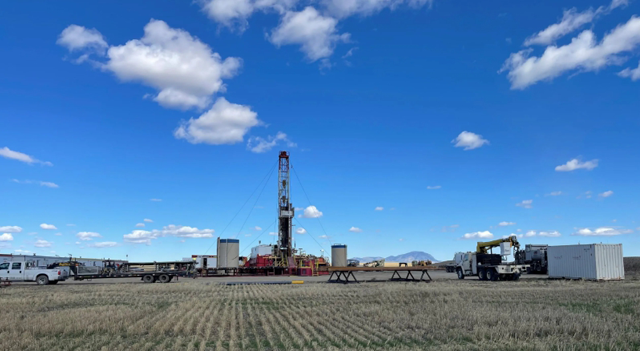
    Industrial Gas Processing Plant. © U.S. Energy Corp

    The centre of gravity: Kevin Dome

    Much of U.S. Energy’s long‑term opportunity revolves around a massive geologic structure in Montana known as Kevin Dome. Through a series of strategic transactions, the company has assembled approximately 32,000 acres across this dome—a land position large enough to support multiple decades of industrial gas development and carbon management operations at its Big Sky Carbon Hub.

    Independent evaluations have affirmed what management already believed: Kevin Dome is a rare, resource-rich asset containing an estimated 1.3 trillion cubic feet of naturally occurring CO₂ and 2.3 billion cubic feet of helium. In a world increasingly defined by critical mineral scarcity, industrial gas shortages, and tightening decarbonization expectations, this combination is uniquely valuable.

    But U.S. Energy’s strategy is not to commercialize these resources in isolation. Instead, the company is building an interconnected platform—one in which helium production, CO₂ capture, utilization, and sequestration, and enhanced oil recovery work together to maximize both cash flow and optionality.

    “Over the past 18 months, we have deliberately built what we believe is one of the most compelling industrial gas, energy, and carbon management platforms in the country,” the company’s CEO, Ryan Smith said in a news release. “From assembling a rare, large-scale resource position at Kevin Dome, to advancing Montana’s first Monitoring, Reporting, and Verification (MRV) submissions, securing a purpose-built plant site, and finalizing our processing facility design, our team has consistently delivered against key milestones.”

    Kevin Dome isn’t just a resource. It’s the foundation for a vertically integrated energy and industrial gas ecosystem.

    A deliberate, de‑risking march forward

    While many early‑stage resource stories hinge on future potential, U.S. Energy has already executed several key milestones that materially reduce the project’s risk profile.

    One of the most important was the submission of two MRV plans to the U.S. Environmental Protection Agency—the first such submissions ever made in the State of Montana. Once approved, these plans would place the company among the largest 20 carbon capture, utilization, and storage projects in the United States, giving U.S. Energy early‑mover regulatory positioning in a sector dominated by large industrial players.

    At the same time, the company already has three producing industrial gas wells online. These wells are expected to supply steady, low‑decline volumes for the initial phase of gas processing—meaning early operations do not require additional drilling. In an industry where capital intensity can quickly spiral, this is a meaningful advantage.

    The company also completed final engineering and design for its proposed gas processing facility and, in January 2026, acquired a 32-acre site strategically located for power access, road logistics, and offtake pathways. Securing this land reduces construction risk and ensures ample room for future expansion as helium, CO₂ management, and energy operations scale.

    Individually, each of these achievements is notable. Collectively, they represent the creation of a highly differentiated platform—one built to generate durable cash flow while participating in multi‑decade industrial gas and carbon management demand.

    A new type of energy company for a new energy era

    The emerging USEG story is less about any single commodity and more about the convergence of several powerful trends:

    • The growing need for domestic helium to support semiconductor fabrication, aerospace, defence, and healthcare
    • The push for CO₂ capture, utilization, and storage as U.S. industry accelerates decarbonization
    • The durability of oil demand, especially in high‑value applications supported by enhanced oil recovery
    • The rise of integrated, vertically controlled energy‑gas‑carbon hubs—a model previously reserved for far larger corporations

    U.S. Energy is positioning itself not just as a producer, but as a platform—a multi‑segment operator capable of capturing full-cycle value from extraction to processing to long-duration carbon management.

    For investors, this represents a rare opportunity: exposure to a diversified industrial gas and energy company still in the early stages of its growth curve, yet already well‑advanced in its de‑risking.

    To keep up with the latest developments from the company, visit usnrg.com.

    Part 2 takes the story deeper

    This first installment set the stage by focusing on the strategic foundation, leadership, and milestones that define U.S. Energy’s transformation. In Part 2, we’ll dive deeper into the 2026 development plan, the roadmap for Kevin Dome commercialization, and the upcoming catalysts that could reshape the company’s value trajectory over the next 12–24 months.

  • Wall Street poised for losses as U.S.-Iran tensions shake investor confidence: Dow Jones, S&P, Nasdaq, Futures

    Wall Street poised for losses as U.S.-Iran tensions shake investor confidence: Dow Jones, S&P, Nasdaq, Futures

    U.S. equity futures signaled a sharply weaker start to trading on Monday, pointing to further declines after stocks posted losses in each of the previous two sessions.

    Market sentiment deteriorated following coordinated military strikes by the United States and Israel on Iran over the weekend that resulted in the death of Iranian Supreme Leader Ayatollah Ali Khamenei.

    Regional tensions intensified further after Israel launched additional air attacks on Hezbollah positions in Beirut and other parts of Lebanon in response to projectiles fired into northern Israel from Lebanese territory.

    President Donald Trump indicated that hostilities with Iran could continue for as long as four weeks, fueling concerns that the conflict may expand across the broader Middle East.

    The escalation has pushed crude oil prices sharply higher, reviving fears that inflationary pressures could strengthen again.

    “Scenes in the Middle East have caused widespread nervousness across financial markets,” said Dan Coatsworth, head of markets at AJ Bell. “The U.S. attacks on Iran have caused oil prices to soar amid fears of disruptions to supplies, pushing up costs for businesses and consumers.”

    He added, “If the issues persist then the market will start to worry about new inflationary pressures and that could lower expectations for near-term interest rate cuts.”

    Stocks had already declined notably on Friday, extending Thursday’s sell-off, with technology shares leading losses and the Nasdaq continuing to underperform.

    Despite recovering somewhat from session lows, the major indices still closed firmly lower. The Dow Jones Industrial Average dropped 521.28 points, or 1.1%, to 48,977.92, the Nasdaq Composite fell 210.17 points, or 0.9%, to 22,688.21, and the S&P 500 slipped 29.98 points, or 0.4%, to 6,878.88.

    For the week, the Dow lost 1.3%, the Nasdaq declined 1.0%, and the S&P 500 edged down 0.4%.

    Additional pressure came from fresh economic data showing U.S. producer prices rose more than anticipated in January. The Labor Department reported that its producer price index for final demand increased by 0.5% following a downwardly revised 0.4% gain in December.

    Economists had forecast a 0.3% increase compared with the earlier estimate of a 0.5% rise for the prior month.

    On a yearly basis, producer price growth slowed slightly to 2.9% in January from 3.0% in December, while economists had expected a decline to 2.8%.

    “For the past month the market has been worried about AI disruption and its impact on the labor market, so inflation hasn’t been top of mind,” said Chris Zaccarelli, Chief Investment Officer for Northlight Asset Management.

    He continued, “But this morning’s inflation readings could give the Fed another reason to be more patient with rate cuts and wait until the second half of the year before making any changes.”

    The stronger-than-expected inflation data, combined with concerns over AI-related job losses, has raised fears that the economy could face stagflationary conditions.

    Adding to worries about technological disruption, Block (XYZ) announced plans to cut nearly half of its workforce.

    Block Chief Financial Officer Amrita Ahuja said the company sees an “opportunity to move faster with smaller, highly talented teams using AI to automate more work.”

    Airline stocks were among the worst performers, sending the NYSE Arca Airline Index down 5.0% to its lowest closing level in nearly a month.

    Financial stocks also came under heavy pressure, with the KBW Bank Index and the NYSE Arca Broker/Dealer Index falling 4.9% and 3.0%, respectively.

    Software and semiconductor shares also declined noticeably, while pharmaceutical, retail and telecommunications stocks posted gains during the session.