Author: Fiona Craig

  • RWS Holdings Launches New Growth Strategy Despite Profit Decline

    RWS Holdings Launches New Growth Strategy Despite Profit Decline

    RWS Holdings plc (LSE:RWS) has released its interim results for the six months ended March 31, 2025, reporting a modest decrease in revenue and a notable drop in pre-tax profit. The decline was primarily attributed to non-operational factors and shifts in the company’s business mix. In response to these headwinds, RWS has introduced a refreshed growth strategy designed to boost earnings quality and drive sustainable expansion.

    The new strategy emphasizes a streamlined market approach, the establishment of regional sales teams, and a focus on a tech-first service offering. As part of this initiative, RWS has acquired intellectual property from Papercup to strengthen its AI-powered dubbing capabilities. By leveraging artificial intelligence and integrating more closely with client workflows, the company aims to transition toward more stable and recurring revenue streams.

    While the company faces some pressure from revenue and cash flow constraints, its strong financial foundation and favorable valuation indicators support a cautiously optimistic outlook. Recent strategic moves, including acquisitions and technological investments, reflect growing confidence in the company’s forward trajectory, despite mixed technical signals.

    About RWS Holdings

    RWS Holdings plc provides comprehensive content and language solutions, combining advanced technology with human expertise. The company serves a broad range of industries through services in localization, language technology, and intellectual property support. Its mission is to be the preferred partner for enterprises seeking scalable and intelligent content solutions.

  • Greatland Gold Raises £6.7 Million Through Retail Share Offering

    Greatland Gold Raises £6.7 Million Through Retail Share Offering

    Greatland Gold (LSE:GGP) has successfully secured £6.69 million through a conditional retail share placement, reflecting strong investor interest. The new ordinary shares will be dual-listed on the London Stock Exchange and the Australian Securities Exchange, a strategic move that broadens the company’s market visibility and may attract a more diverse investor base.

    Despite concerns over its current financial condition and relatively high valuation, Greatland Gold continues to show promise. Technical analysis and recent corporate developments point to potential growth opportunities. The company’s long-term success will depend heavily on its ability to move from exploration activities to full-scale production, which could help stabilize its financial outlook.

    Company Overview: Greatland Gold

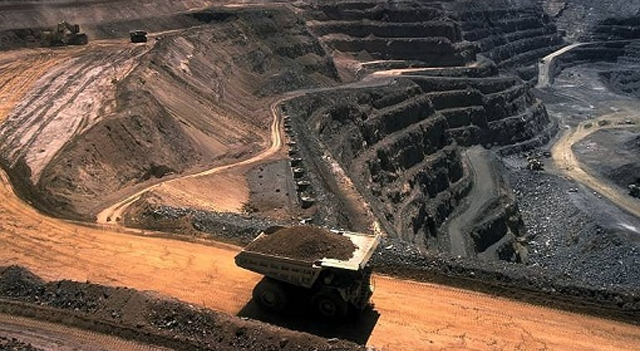
    Greatland Gold is a mining firm focused on gold and copper, trading on the London Stock Exchange’s AIM Market. Its primary operations are located in Western Australia, including key assets like the Telfer mine and the Havieron gold-copper project. The company is aiming to build a large-scale, sustainable mining presence in the mineral-rich Paterson Province.

  • Ashtead Group Posts Record Rental Revenue Amid Strategic Expansion

    Ashtead Group Posts Record Rental Revenue Amid Strategic Expansion

    Ashtead Group PLC (LSE:AHT) has released its full-year audited and fourth-quarter unaudited financial results for the fiscal year ending April 30, 2025. While overall revenue saw a modest 1% decline due to reduced sales of used equipment, the company reached a new milestone in rental revenue, which grew by 4%. Additionally, adjusted EBITDA rose by 3%, underscoring the strength of Ashtead’s core operations.

    The group allocated $2.4 billion toward capital expenditures to support its continued growth initiatives and reported an impressive free cash flow of $1.8 billion—one of the highest in its history. Ashtead continues to benefit from favorable trends in the non-residential construction sector and large-scale infrastructure projects. The company’s Sunbelt 4.0 strategy is a central pillar of its expansion, with 61 new locations added under this plan.

    Looking ahead, Ashtead is preparing to transition its primary stock market listing to the United States by early 2026, a move aligned with its long-term growth objectives and market presence.

    Financially, Ashtead remains in robust shape, demonstrating strong profitability and effective cash flow management. Its ongoing investments and active share repurchase program further strengthen its competitive position. While the company faces minor headwinds in certain market segments, its overall outlook remains optimistic.

    About Ashtead Group

    Ashtead Group PLC is a major player in the equipment rental industry, primarily operating under the Sunbelt Rentals brand. The company provides a comprehensive range of rental equipment and services to customers across construction, industrial, and specialized markets. It has a strong operational footprint in North America and the United Kingdom.

  • DAX, CAC, FTSE100, European Markets Edge Higher Amid Geopolitical Tensions and G7 Focus

    DAX, CAC, FTSE100, European Markets Edge Higher Amid Geopolitical Tensions and G7 Focus

    European equity markets advanced on Monday, buoyed by investor optimism surrounding the G7 summit underway in Canada, where leaders are tackling key issues including international security, economic stability, and cooperation in emerging technologies. The ongoing conflict in the Middle East is also expected to dominate the agenda.

    The Israel-Iran confrontation has now entered its fourth day, marked by continued missile exchanges. Iranian strikes on Tel Aviv, Haifa, and Petah Tikva have reportedly left at least five people dead, injured dozens more, and disrupted vital infrastructure, including a local power station.

    Investors are also closely monitoring upcoming interest rate decisions from major central banks this week, with policy announcements due from the Federal Reserve, the Bank of Japan, and the Bank of England.

    Across the region, the French CAC 40 led gains with a rise of 1.1%, followed by Germany’s DAX climbing 0.6%, and the FTSE 100 in the UK up by 0.5%.

    Among individual movers, Entain (LSE:ENT) saw a significant boost after the sports betting and gaming giant raised its full-year earnings guidance for BetMGM, its U.S.-based joint venture.

    Spectris (LSE:SXS) shares rallied sharply after the precision measurement firm disclosed it had rejected a second acquisition bid from private equity firm KKR, signaling confidence in its standalone value.

    Kering (BIT:1KER), the luxury conglomerate behind Gucci, also traded higher on speculation that former Renault CEO Luca de Meo is poised to take over as the company’s new chief executive.

    Conversely, Renault (EU:RNO) shares slid after Nissan executive Ivan Espinosa confirmed plans to scale back the company’s stake in the French automaker, raising concerns over the future of the alliance between the two carmakers.

  • Dow Jones, S&P, Nasdaq,Wall Street Set for Rebound After Geopolitical Jitters Spark Sell-Off

    Dow Jones, S&P, Nasdaq,Wall Street Set for Rebound After Geopolitical Jitters Spark Sell-Off

    U.S. stock futures were pointing higher early Monday as markets appeared poised to bounce back from Friday’s sharp decline, which was triggered by escalating tensions in the Middle East.

    Futures tied to the Dow Jones Industrial Average, S&P 500, and Nasdaq Composite all suggested a stronger start to the trading week, with investors likely eyeing discounted entry points following last week’s geopolitical-driven downturn.

    The sell-off on Friday followed Israeli airstrikes on Iranian military targets, including facilities reportedly tied to nuclear and ballistic missile programs. Iran retaliated by launching over 100 drones toward Israel. The attacks resulted in the deaths of at least three senior Iranian military officials and raised fears of broader regional instability, leading to a spike in oil prices on concerns about potential supply disruptions.

    Despite continued hostilities between Israel and Iran over the weekend, investors seemed to be betting on containment of the conflict.

    “Despite a weekend of violence between the two countries, investors showed no signs of panicking, judging by movements in financial markets on Monday,” said Russ Mould, investment director at AJ Bell. He also cautioned, “The Middle East conflict remains a fluid situation and there is the potential for markets to still experience sudden jolts if the tension escalates further.”

    In addition to geopolitical developments, market participants are closely watching this week’s G7 summit in Canada, where world leaders are expected to discuss global trade issues. Investors are particularly interested in whether the talks yield progress ahead of the expiration of President Donald Trump’s 90-day pause on reciprocal tariffs, set to end early next month.

    The Federal Reserve is also in focus, with its upcoming policy decision expected later this week. While no rate change is anticipated, traders will be parsing the Fed’s statement and updated projections for insights into the central bank’s outlook on interest rates and inflation.

    On Friday, all three major indexes fell sharply. The Dow Jones sank 769.83 points, or 1.8%, to 42,197.79. The Nasdaq lost 255.66 points, or 1.3%, closing at 19,406.83, while the S&P 500 dropped 68.29 points, or 1.1%, to end at 5,976.97.

    That decline erased gains from earlier in the week and pushed the indexes into negative territory for the week. The Dow ended down 1.3%, the Nasdaq slipped 0.6%, and the S&P 500 fell 0.4%.

    Amid the geopolitical turmoil, former President Donald Trump weighed in on the escalating conflict via Truth Social, urging Iran to return to the negotiating table.

    “There has already been great death and destruction, but there is still time to make this slaughter, with the next already planned attacks being even more brutal, come to an end,” Trump said. “Iran must make a deal, before there is nothing left, and save what was once known as the Iranian Empire. No more death, no more destruction, JUST DO IT, BEFORE IT IS TOO LATE.”

    Elsewhere in the market, investors brushed off an encouraging update on consumer sentiment. The University of Michigan’s index for June surged to 60.5 from May’s reading of 52.2, well above the 53.5 economists had expected.

    Despite the better-than-expected sentiment data, market weakness was widespread on Friday. Airline stocks were hit especially hard, with the NYSE Arca Airline Index sinking 4.3% to its lowest level in over a month. Semiconductor and computer hardware stocks also took a hit, with related indexes down more than 2.5%.

    Sectors including housing, networking, and financials also underperformed, while energy and gold stocks managed to buck the trend and finish higher as investors sought refuge in commodities.

  • Will the world face another oil crisis?

    Will the world face another oil crisis?

    Whenever tensions in the Middle East flare up, one of the first things that comes to mind is the 1973 oil embargo. Back then, all Arab members of OAPEC, along with Egypt and Syria, announced that they would stop supplying oil to countries that supported Israel during the Yom Kippur War.

    Now, with the Iran-Israel missile exchange, the primary concern in the media coverage is again how much the oil market might suffer. But this time, the fear is slightly different: instead of an export embargo, Tehran could try to blockade the Persian Gulf, perhaps by laying mines. 

    To put it in context, around 20 million barrels of oil and oil products pass through the Strait of Hormuz every day—about a fifth of the world’s supply. Therefore, if tensions escalate and Iran mines the strait, energy prices could skyrocket, causing global inflation to rise and, consequently, the S&P 500 to fall.

    The good news is that the scenario is unlikely. Much of the oil flowing through the strait heads to China, a supporter of Iran, and neutral countries like India. Blocking the passage would mainly hurt allies and neutral partners, not Israel or its key backer, the United States.

    Furthermore, such a move would backfire on Iran itself. Its major ports are in the Gulf, so closing the strait would cut off crucial export revenues. And let’s not forget: a global oil crisis could drag the U.S. into direct military involvement. Gulf states would likely step up, siding more openly with the U.S. 

    In short, although Iran could disrupt maritime traffic through the Strait of Hormuz, the chances of that happening are slim. The markets seem to agree: oil, together with gold (XAUUSD) and the dollar – both considered safe havens and risk-off benefactors – have already begun to retreat.

  • Rare Earth Supply Risks: Is Tesla China’s Real Target?

    Rare Earth Supply Risks: Is Tesla China’s Real Target?

    China has recently granted rare earth export licenses to GM (NYSE:GM), Ford (NYSE:F), and Stellantis (BIT:STLAM) but notably excluded Tesla (NASDAQ:TSLA), raising concerns that Tesla may be deliberately targeted amid ongoing trade tensions and CEO Elon Musk’s outspoken foreign policy views.

    According to Wells Fargo, citing expert Dr. Gracelin Baskaran, Tesla and Rivian are still awaiting export licenses. This may reflect China’s strategy to support domestic EV manufacturers while limiting access for foreign rivals.

    China dominates nearly 100% of the global supply of seven critical heavy rare earth elements (REEs), essential for electric vehicle engines and advanced manufacturing. Although the U.S. auto sector is the largest consumer, its usage is only a small fraction of global production—about 6,600 tons out of 390,000 tons produced last year.

    China’s April restrictions left automakers with just 2–3 months of buffer stocks, which are now running low. While some U.S. automakers have managed to continue operations through furloughs, Wells Fargo warns this is “a Band-Aid, not a solution.” Supply risks may persist for two to five years as new production capacity outside China develops.

    For now, China’s selective licensing and monitoring of end-use means Tesla and other manufacturers still waiting for access could face ongoing pressure until global rare earth supply chains become more diversified.

  • European Stocks Rise Slightly Ahead of Central Bank Meetings and G7 Summit

    European Stocks Rise Slightly Ahead of Central Bank Meetings and G7 Summit

    European equities nudged higher on Monday as investors weighed the ongoing Middle East conflict alongside a busy week of central bank meetings and the upcoming Group of Seven summit in Canada.

    By 03:05 ET, Germany’s DAX index was up 0.4%, France’s CAC 40 also gained 0.4%, and the U.K.’s FTSE 100 increased 0.2%.

    Middle East Tensions Persist

    Israel and Iran continued exchanging missile strikes and air raids over the weekend, following Israel’s large-scale airstrikes targeting Iranian military and nuclear sites on Friday.

    While the conflict has unsettled markets and pushed oil prices higher, investors generally do not expect the fighting to spread regionally. Notably, concerns about Iran closing the Strait of Hormuz—a vital shipping lane—remain low, as such a move could escalate U.S. involvement.

    Central Banks in Focus

    Rising energy prices add complexity to the Federal Reserve’s policy decisions this week, as it balances a cooling labor market against persistent inflation above target levels.

    Since easing last December, the Fed has kept rates at 4.25%-4.50% and is widely expected to maintain this range in Wednesday’s announcement. Market participants will closely watch for any signals on potential rate cuts or the impact of ongoing U.S. trade policy uncertainties under the Trump administration.

    It’s a busy week globally: the Bank of Japan is expected to hold rates steady Tuesday, with the Bank of England and Norway’s Norges Bank likely to follow later in the week. Meanwhile, Sweden’s Riksbank is forecast to cut rates, and the Swiss National Bank may return to negative rates amid a strong franc.

    G7 Summit Outlook

    Leaders of the Group of Seven nations gather in Canada this week amid heightened tensions due to U.S. tariffs on allies. Canadian Prime Minister Mark Carney, chairing the summit, emphasized priorities including peace and security, strengthening critical mineral supply chains, and job creation. Key topics will likely include the Middle East conflict, Ukraine, and trade tensions.

    Corporate Highlights

    Luxury goods group Kering (EU:KER) is reportedly appointing Luca de Meo as its new CEO, following his five-year tenure leading Renault (EU:RNO), according to French newspaper Le Figaro.

    In the gaming sector, Entain plc (LSE:ENT) announced that its U.S. sports betting joint venture BetMGM has raised its revenue and earnings forecasts for the year, buoyed by strong growth in iGaming and online sports betting.

    Oil Prices Rise on Middle East Risks

    Oil prices continued to climb Monday amid concerns over potential supply disruptions linked to the Israel-Iran conflict.

    At 03:05 ET, Brent crude futures gained 1% to $74.97 per barrel, while U.S. West Texas Intermediate crude increased 1.1% to $72.05 per barrel. Both benchmarks surged more than 7% on Friday, reaching their highest levels since January, as fears of broader regional conflict grew.

  • Oil Prices Climb Amid Escalating Israel-Iran Tensions and Supply Concerns

    Oil Prices Climb Amid Escalating Israel-Iran Tensions and Supply Concerns

    Oil prices gained ground in Asian trading on Monday, continuing a recent upward trend fueled by rising fears of supply interruptions amid escalating hostilities between Israel and Iran in the Middle East.

    Despite the gains, prices remained below the 4½-month peak reached on Friday, following Israel’s initial strikes against Iranian targets. Tehran responded over the weekend with missile attacks on Israeli cities.

    By 21:01 ET (01:01 GMT), Brent crude futures for August delivery had risen 0.5% to $74.59 per barrel, while West Texas Intermediate (WTI) crude climbed 0.6% to $71.66 per barrel.

    Conflict Intensifies; U.S. Role Under Scrutiny

    The weekend saw a rapid exchange of strikes between Israel and Iran, with both sides showing little willingness to de-escalate. Israel’s Friday attacks included strikes on Iran’s nuclear facilities, prompting retaliatory missile launches targeting major urban centers in Israel, including Tel Aviv.

    The flare-up has heightened expectations of tougher sanctions on Iranian oil exports and raised concerns about potential disruptions in the Strait of Hormuz—a critical shipping route for oil shipments to Asia and Europe.

    Attention is now turning to the potential for U.S. involvement. President Donald Trump indicated ongoing efforts toward a ceasefire but suggested the two nations might need to “fight it out” before any resolution is reached. He also issued warnings to Iran against targeting American assets in the region.

    The conflict caused Iran to pull out of nuclear negotiations with the U.S., which were slated for the weekend.

    Central Banks in Focus Amid Geopolitical Risks

    While the Middle East tensions are dominating near-term oil market dynamics, the week also features a series of key central bank meetings globally.

    The Bank of Japan will announce its decision on Tuesday, expected to hold interest rates steady, with investors watching closely for any new economic guidance.

    The U.S. Federal Reserve is set to maintain current rates on Wednesday, with market participants eager to hear if the Fed signals further rate cuts amid signs of easing inflation and a slowing economy.

    Later in the week, China’s central bank will set its benchmark lending rate, while the Swiss National Bank and Bank of England also prepare to announce their monetary policy decisions.

  • Dow Jones, S&P, Nasdaq, Energy and Defense Shares Climb Amid Ongoing Israel-Iran Tensions

    Dow Jones, S&P, Nasdaq, Energy and Defense Shares Climb Amid Ongoing Israel-Iran Tensions

    Stocks in the energy, defense, shipping, and travel sectors are expected to see heightened activity on Monday as tensions between Israel and Iran persist for a fourth day without signs of easing.

    Brent crude oil prices surged early in the session, rising as much as 5.5% to reach $78.32 per barrel, before giving back most of those gains. This volatility is likely to influence energy sector stocks such as Exxon Mobil (NYSE:XOM), Chevron (NYSE:CVX), ConocoPhillips (NYSE:COP), Occidental Petroleum (NYSE OXY), and EOG Resources (NYSE EOG).

    Shipping companies are also positioned for movement amid the conflict. In European trading, AP Moller-Maersk shares edged up 0.6%, while Hapag-Lloyd AG climbed 1.8%. U.S.-listed shipping firms potentially impacted include ZIM Integrated Shipping Services (NYSE:ZIM), Star Bulk Carriers (NASDAQ:SBLK), and Matson (NYSE:MATX).

    Defense contractors, which rallied on Friday due to expectations of increased military expenditure triggered by the conflict, are likely to remain in focus today. Key names to watch include Lockheed Martin (NYSE:LMT), Northrop Grumman (NYSE:NOC), RTX, General Dynamics (NYSE:GD), and L3Harris Technologies (NYSE:LHX).

    Conversely, airline stocks may experience downward pressure as rising oil prices typically translate into higher jet fuel costs, squeezing carriers’ profit margins. Companies such as Delta Air Lines (NYSE:DAL), United Airlines, American Airlines (NASDAQ:AAL), and Southwest Airlines (NYSE:LUV) could be affected.

    On Friday, travel shares fell while energy stocks gained ground following Israel’s military strikes against Iran.