Author: Fiona Craig

  • Triad Group Plc Reports Robust Growth and Key Strategic Wins

    Triad Group Plc Reports Robust Growth and Key Strategic Wins

    Triad Group Plc (LSE:TRD) has released its audited financial results for the year ended March 31, 2025, highlighting a period of strong growth and strategic progress. The company posted revenues of £21.4 million, reflecting a notable year-on-year increase. Gross profit margins also improved to 28.6%, while profit before tax reached £1.5 million.

    In response to increased demand, Triad has expanded its consultancy team, enabling the business to secure high-profile contracts with several major UK government departments. The firm has also strengthened its digital services portfolio, reinforcing its position as a dedicated consultancy provider. These developments have supported ongoing dividend payments to shareholders and affirmed the company’s evolution into a focused digital consultancy.

    Despite these achievements, Triad faces headwinds. There are concerns about declining revenue and profits in certain areas, and technical indicators point to bearish sentiment in the market. The company’s valuation appears stretched, driven by a high price-to-earnings ratio, though the dividend yield remains relatively solid. A recent positive development includes the vesting of Restricted Stock Units (RSUs), aligning executive incentives with long-term company performance—but this has not fully alleviated broader investor concerns.

    About Triad Group Plc

    Triad Group Plc is a UK-based consultancy firm specializing in digital services and transformation projects. With expertise spanning the public and private sectors—including government, law enforcement, and enterprise clients—Triad delivers independent, technology-agnostic solutions tailored to client needs.

  • SkinBioTherapeutics Secures Exclusive Deal with Superdrug and Raises £4.1 Million

    SkinBioTherapeutics Secures Exclusive Deal with Superdrug and Raises £4.1 Million

    SkinBioTherapeutics (LSE:SBTX) has taken a major step into mainstream retail by securing an exclusive partnership with UK high street giant Superdrug for its AxisBiotix™ line of products. This agreement marks a key commercial milestone as the company expands its footprint beyond direct-to-consumer channels.

    To fuel this expansion and advance product development, the company has successfully raised £4.1 million through a combination of share placing and subscriptions. In addition, SkinBioTherapeutics is planning a retail offer aimed at giving existing shareholders a chance to participate in the fundraising.

    The AxisBiotix-Ps supplement recently earned the National Psoriasis Foundation’s Seal of Recognition in the United States—an endorsement that is likely to boost its credibility and appeal within the American market.

    Despite recent progress, SkinBioTherapeutics continues to face financial challenges, including net losses and cash flow limitations. Technical analysis reflects a bearish trend, and valuation remains pressured by negative earnings. Nevertheless, the recent business developments may signal a turning point, offering a more optimistic outlook for the future.

    About SkinBioTherapeutics

    SkinBioTherapeutics plc is a biotechnology company focused on improving skin health, particularly through solutions targeting inflammatory skin conditions. The firm’s flagship products, including the AxisBiotix™ range of food supplements, are part of its broader strategy to deliver innovative, science-backed skincare solutions to global markets.

  • Wall Street Poised to Open Lower Amid Rising Middle East Tensions

    Wall Street Poised to Open Lower Amid Rising Middle East Tensions

    U.S. stock futures for the Dow Jones, S&P 500, and Nasdaq are signaling a sharply lower start to trading on Friday, as escalating geopolitical tensions weigh on investor sentiment. The downturn comes after modest gains in Thursday’s session.

    Concerns about a broader conflict in the Middle East intensified after Israel conducted airstrikes early Friday targeting Iranian nuclear and missile infrastructure. Reports indicate that at least three high-ranking Iranian military officials were killed in the strikes. In retaliation, Iran launched over 100 drones toward Israel, according to Israeli military sources.

    The flare-up has sparked fears of a larger regional war, triggering a spike in oil prices as markets brace for potential supply disruptions.

    Former President Donald Trump responded to the developments via a post on Truth Social, urging Iran to strike a nuclear agreement before violence escalates further. “There has already been great death and destruction,” Trump wrote, warning of even more severe attacks to come. “Iran must make a deal before there is nothing left… No more death, no more destruction.”

    Despite the looming tensions, Wall Street managed a recovery Thursday following an early dip. The Dow Jones gained 101.85 points (+0.2%) to close at 42,967.62, while the S&P 500 rose 23.02 points (+0.4%) to 6,045.26. The Nasdaq also climbed 46.61 points (+0.2%) to finish at 19,662.48, with both the Dow and S&P hitting three-month closing highs.

    The rebound was supported by fresh inflation data that showed producer prices rose just 0.1% in May, below economists’ expectations of 0.3%, according to the Labor Department. April’s figure was revised to a 0.2% decline.

    On an annual basis, the producer price index increased 2.6%, in line with projections and slightly above April’s 2.5% pace.

    “For the second straight day, inflation numbers came in softer than expected,” said Chris Zaccarelli, CIO of Northlight Asset Management. “This gives the Fed more flexibility to maintain its current stance without rushing into further tightening.”

    Investors remained cautious, however, amid ongoing uncertainty over U.S. trade policy. Details on the U.S.-China trade framework announced Wednesday remain sparse. President Trump told reporters that within two weeks, he plans to send letters to various trade partners outlining new tariff rates. He also suggested he may extend the current 90-day tariff freeze, set to expire early next month, though he doesn’t believe it will be necessary.

    Elsewhere in the market, gold stocks surged as precious metal prices jumped, lifting the NYSE Arca Gold Bugs Index by 1.5%. Utility stocks, typically sensitive to interest rates, also advanced, with the Dow Jones Utility Average rising 1.4%.

    Tech, pharma, and networking stocks showed strength, but airline stocks continued to slide, extending losses from the prior session.

  • DAX, CAC, FTSE100, European Shares Lower On Middle East Tensions

    DAX, CAC, FTSE100, European Shares Lower On Middle East Tensions

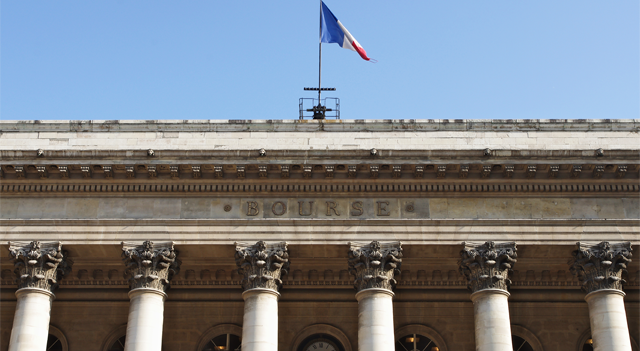
    European shares on the DAX, CAC and FTSE100 have moved lower on Friday as heightened Middle East tensions offset encouraging inflation data from Germany and France.

    Israel launched strikes against Iran, targeting nuclear facilities and ballistic missile factories as part of efforts “to damage Iran’s nuclear infrastructure, its ballistic missile factories and military capabilities.”

    The overnight strikes on the country killed at least three of its senior military leaders. Iran retaliated by launching more than 100 drones toward Israeli territory.

    In economic news, German consumer prices logged steady annual growth in May due to the continued decrease in energy prices, final data from Destatis showed today.

    The consumer price index climbed 2.1 percent from a year ago, the same rate of growth as posted in April. The rate matched the flash estimate released on May 30.

    Inflation based on the harmonized index of consumer prices softened to 2.1 percent from 2.2 percent in the previous month.

    Elsewhere, French consumer price inflation moderated slightly as initially estimated in May to the lowest level in more than four years amid a slowdown in costs for services and a continued fall in energy prices, the latest data from the statistical office INSEE showed.

    The consumer price index rose 0.7 percent on a yearly basis in May, slower than the 0.8 percent increase seen in April. That was in line with the flash data published on May 27. This was the lowest inflation rate since February 2021, when prices had risen 0.6 percent.

    The German DAX Index is down by 1.1 percent, the French CAC 40 Index is down by 0.8 percent and the U.K.’s FTSE 100 Index is down by 0.1 percent.

    Travel-related stocks slumped, with Lufthansa (TG:LHA), easyJet (LSE:EZJ), Wizz Air Holdings (LSE:WIZZ) and British Airways owner ICAG (LSE:IAG) falling 3-5 percent.

    Oil & gas giant BP Plc (NYSE:BP) rallied 3 percent and Shell (LSE:SHEL) added 1.7 percent as crude prices jumped more than 4 dollars a barrel on supply concerns.

    Technology group Ocado (LSE:OCDO) tumbled 3 percent after announcing that it has drawn down on a Letter of Credit under its deal with Kroger Co. (NYSE:KR), for $152 million, issued by the Bank of Nova Scotia.

    Oxford Instruments (LSE:OXIG) lost 4 percent despite reporting strong results for the fiscal year ended March.

  • AstraZeneca partners with CSPC in deal worth up to $5.33 billion

    AstraZeneca partners with CSPC in deal worth up to $5.33 billion

    AstraZeneca PLC (LSE:AZN) has entered into a collaboration agreement with CSPC Pharmaceutical Group to advance the discovery of novel oral drug candidates, according to an announcement on Friday.

    Under the terms of the agreement, CSPC will receive $110 million as an upfront payment. The deal also includes potential milestone payments of up to $5.22 billion.

    The partnership aims to strengthen AstraZeneca’s drug development pipeline by leveraging CSPC’s capabilities in discovering new oral therapeutic candidates.

    This collaboration represents a significant financial commitment from AstraZeneca, with the total potential value of the deal reaching $5.33 billion if all milestones are achieved.

    Both pharmaceutical companies will work together to identify and develop new oral medications, though specific therapeutic areas targeted by the collaboration were not disclosed in the announcement.

  • European stocks fall sharply after Israeli strikes on Iran; crude surges

    European stocks fall sharply after Israeli strikes on Iran; crude surges

    European stocks fell sharply Thursday, and crude prices soared, after Israel launched a series of strikes on Iran, igniting concerns over regional escalation and a hit to global growth.

    At 03:02 ET, the DAX index in Germany dropped 1.4%, the CAC 40 in France slipped 1.2%, and the FTSE 100 in the U.K. fell 0.5%, retreating from Thursday’s record closing high.

    Sentiment hit by Israel strike on Iran

    Israel launched a large-scale airstrike on Iran early Friday, hitting “dozens” of military and nuclear targets, while a state of emergency was declared across Israel amid warnings of an imminent missile and drone counter strike from Tehran.

    Iran’s state media also reported unconfirmed claims that Israel has killed Iran’s Revolutionary Guards Commander Hossein Salami.

    Iran pledged a “harsh” retaliation against both Israel and the United States, while U.S. Secretary of State Marco Rubio said that Israel carried out its military action against Iran independently, citing self-defense as the driving motive behind the strikes.

    The White House had earlier warned it would consider military measures should nuclear negotiations fail, with a key response deadline ending Thursday.

    The attacks reignited concerns over risks to Middle East oil flows and global growth, which exacerbated the already fragile sentiment driven by global trade uncertainties.

    Trump hints at new auto tariffs

    U.S. President Donald Trump added to those trade concerns on Thursday when he warned that he could raise auto tariffs soon, just a day after claiming that the U.S.-China trade deal was “done.”

    The president also said he will send letters to major U.S. trading partners in the next two weeks outlining his planned trade tariffs, ahead of a July 9 deadline to strike trade deals with his administration.

    German, French inflation subdued

    On the European economic data slate Friday, German inflation decreased to 2.1% in May, confirming preliminary data released earlier.

    The consumer prices in Germany, harmonized for comparison with other European Union countries, showed a year-on-year rise of 2.1% in May, down from the 2.2% increase recorded in April.

    Additionally, French consumer inflation retreated to 0.7% annually in May, from 0.8% the prior month, matching preliminary data and illustrating the lack of inflationary pressure in the eurozone’s second-largest economy.

    Fraport reports jump in passenger traffic

    In the corporate sector, Frankfurt Airport handled 5.6 million passengers in May 2025, up 1.8% from a year earlier, as Fraport (TG:FRA) worldwide reported overall traffic growth.

    Fraport on Friday said that cargo volumes at Frankfurt, including airfreight and airmail, rose 4.4% year-over-year.

    Crude surges after Israeli strikes

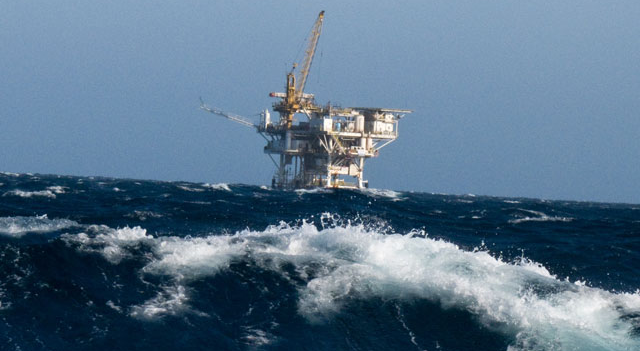
    Oil prices soared Friday after the Israeli strikes on Iran raised fears of a broader Middle East conflict and major supply disruptions from this oil-rich region.

    At 03:02 ET, Brent futures climbed 5.7% to $73.32 a barrel and U.S. West Texas Intermediate crude futures rose 6% to $72.13 a barrel.

    Both contracts hit their highest levels in almost five months, reflecting heightened geopolitical risk as investors feared any conflict could disrupt shipping routes or oil infrastructure across the Gulf.

    “This has elevated geopolitical uncertainty significantly and requires the oil market to price in a larger risk premium for any potential supply disruptions,” ING analysts led by Warren Patterson said in a note.

  • Apple’s iPhone sales surge 15% in April-May, top China market

    Apple’s iPhone sales surge 15% in April-May, top China market

    Apple (NASDAQ:AAPL)’s iPhone sales climbed to the number one position in China during May, while global sales increased 15% year-on-year across April and May, marking the tech giant’s strongest performance for this two-month period since the COVID-19 pandemic, according to data from Counterpoint Research.

    The global sales growth was mainly fueled by renewed expansion in Apple’s two largest markets — China and the United States, preliminary data showed.

    Apple benefited partly from tariff dodgers and recorded double-digit growth in several other regions including Japan, India, and Middle Eastern markets, Counterpoint Research reported.

    “Q2 iPhone performance looks promising at the moment, but as always, swings either way are dictated by two markets — the U.S. and China,” said Ivan Lam, Senior Analyst at Counterpoint Research.

  • Dow Jones, S&P, Nasdaq, Futures drop, oil surges after Israeli strikes on Iran – what’s moving the U.S. markets

    Dow Jones, S&P, Nasdaq, Futures drop, oil surges after Israeli strikes on Iran – what’s moving the U.S. markets

    U.S. stock futures point sharply lower on Friday as investors react to a ratcheting up in tensions in the Middle East. Israel carried out a large-scale airstrike on Iran early Friday, hitting “dozens” of military and nuclear targets, sending oil prices soaring. Elsewhere, the search continues for missing people after a fatal Air India crash that led to a decline in shares in Boeing (NYSE:BA) and other jet suppliers.

    Futures drop

    U.S. stock futures slumped while oil prices surged after Israel carried out a military strike on Iran. By 03:45 ET, the Dow futures contract had fallen by 449 points, or 1.3%, S&P 500 futures had dropped by 83 points, or 1.4%, and Nasdaq 100 futures had shed 318 points, or 1.5%.

    The prospect of escalating tensions in the Middle East—a critical hub for oil production—added to uncertainty for investors already grappling with heightened trade tensions that some fear could dent global growth.

    Still, global stocks have posted an near-continuous rally since early April, with traders largely hoping that President Donald Trump’s tariff agenda may not be as aggressive as originally thought. Following relatively benign consumer and producer price reports for May this week, equities on Wall Street gained on Thursday.

    Oil spikes after Israel strikes Iran

    Oil prices surged on Friday in the wake of Israel’s large-scale airstrike on Iran early Friday, which hit “dozens” of military and nuclear targets, according to media reports.

    “Following the preemptive strike by the State of Israel against Iran, a missile and UAV (drone) attack against the State of Israel and its civilian population is expected in the immediate timeframe,” Defence Minister Israel Katz said in a statement.

    At 03:02 ET, Brent futures climbed 5.7% to $73.32 a barrel and U.S. West Texas Intermediate crude futures rose 6% to $72.13 a barrel. Both contracts hit their highest in almost five months, as traders worried that any conflict could disrupt shipping routes or oil infrastructure across the Gulf.

    Reacting to a potential elevation in geopolitical risk, investors also shifted into perceived safe-haven assets like gold and the Swiss franc. The yield on the 10-year U.S. Treasury note, which moves inversely to prices, fell to a one-month low as well.

    Iran launched around 100 drones towards Israeli territory in response, an Israeli military spokesman said. Sirens and a state of emergency were declared across Israel amid warnings of an imminent missile and drone counter strike from Tehran.

    Iran’s state media confirmed reports saying that the strikes had killed Iran’s Revolutionary Guards Commander Hossein Salami, along with six nuclear scientists.

    Air India crash latest; Boeing slides

    Shares in Boeing lost more than 4% on Thursday, following a deadly crash of an Air India flight heading to London’s Gatwick Airport.

    Over 240 people were killed in the accident, Reuters reported, adding that rescue workers are continuing to search for missing people and aircraft parts.

    The plane—a Boeing 787-8 Dreamliner carrying some 242 people—crashed shortly after take-off from Ahmedabad in western India, in the world’s worst aviation disaster in years.

    One person survived after the jet crashed into a medical college hostel in Ahmedabad, causing dozens of deaths on the ground.

    GE Aerospace (NYSE:GE), whose GEnx-1B engines power the 787 Dreamliner, and Spirit AeroSystems (NYSE:SPR) also saw their share prices decline following the crash.

    Adobe results

    Adobe (NASDAQ:ADBE) raised its annual guidance after reporting better-than-expected fiscal second-quarter revenue, as its core digital media business continued to ride an artificial intelligence-led demand wave.

    For 2025, the company upgraded its guidance for adjusted per-share income to between $20.50 to $20.70 on revenue of $23.50 billion to $23.60 billion, up from a prior range for adjusted EPS of $20.20 to $20.50, and revenue of $23.30 billion to $23.55 billion.

    Digital media segment revenue is now expected to come in at between $17.45 billion and $17.50 billion, up from $17.25 billion to $17.40 billion previously.

    The Photoshop-owner reported second-quarter revenue of $5.87 billion, topping analysts’ average estimates of $5.8 billion.

    But shares in the company edged slightly lower in after-hours trading on Friday. Analysts at Vital Knowledge flagged that while investors “should come away relatively happy” with Adobe’s returns, its outlook “isn’t nearly as impressive” as cloud-computing group Oracle (NYSE:ORCL), which reported earlier this week.

    University of Michigan sentiment ahead

    Highlighting the economic calendar on Friday will be the University of Michigan’s survey tracking consumer sentiment and inflation expectations.

    Economists anticipate that the survey, which has shown signs of deterioration in recent months as Americans fret over the impact of Trump’s tariffs, will recover somewhat in June.

    “That would still leave it at a relatively subdued level, reflecting the still elevated inflation expectations component,” analysts at ING said in a note to clients.

    One-year inflation rate expectations are tipped to come in at 6.4%.

    Data this week has shown that overall price pressures in the U.S. were broadly contained in May, although analysts have flagged lingering concerns that the effect of Trump’s tariffs has yet to be fully felt.

  • Tesla Increases Prices for Model S and Model X in the U.S.

    Tesla Increases Prices for Model S and Model X in the U.S.

    Tesla (NASDAQ:TSLA) has raised prices for its Model S and Model X vehicles in the United States, as reflected on the company’s official website. The cost of the Model S AWD has gone up by $5,000, now retailing at $84,990, compared to the previous $79,990.

    The Model S Plaid also saw a similar price increase, climbing to $99,990 from $94,990. Meanwhile, the Model X range experienced identical $5,000 hikes for both the Model X AWD and Model X Plaid versions in the U.S. market.

  • Dundee Precious Metals to Acquire Adriatic Metals in $1.3 Billion Deal

    Dundee Precious Metals to Acquire Adriatic Metals in $1.3 Billion Deal

    On Friday, Dundee Precious Metals (TSX:DPM) unveiled its intention to purchase Adriatic Metals (LSE:ADT1) for approximately $1.3 billion. This transaction will grant Dundee full ownership of the Vareš mining project in Bosnia and Herzegovina, enhancing its asset base in the region.

    With this acquisition, Dundee Precious Metals anticipates boosting its production capacity to around 425,000 gold equivalent ounces by 2027, reflecting expected growth from integrating Adriatic’s operations.

    This move marks a significant strategic expansion for Dundee Precious Metals, aiming to solidify its foothold within the European mining industry through the addition of Adriatic’s valuable resources.