Author: Fiona Craig

  • Robinson Completes Sale of Walton Works Land as Part of Debt Reduction Strategy

    Robinson Completes Sale of Walton Works Land as Part of Debt Reduction Strategy

    Robinson plc (LSE:RBN) has finalised the disposal of roughly 1.3 acres of surplus land at its Walton Works site, marking another step in its plan to unlock value from non-core property assets. After the buyer covered final transaction costs totalling £412,335, the company received net proceeds of £616,665. The land had a book value of £540,000 at the end of 2025.

    The site had limited use, producing only about £7,000 in rental income during 2025. Robinson said the proceeds from the sale will be applied toward lowering its bank borrowings. The disposal forms part of a broader strategy to sell surplus property assets and use the funds to strengthen the balance sheet while continuing to invest in the group’s core packaging activities.

    Management reiterated that future proceeds from non-core property sales will similarly be directed toward debt reduction and supporting the expansion of its packaging operations. The approach reflects the company’s focus on streamlining its asset base while prioritising growth in its primary manufacturing business.

    Robinson’s overall outlook reflects a mixed financial picture. The group benefits from a solid balance sheet and positive operating cash flow, though recent earnings and free cash flow have shown some volatility. Valuation metrics remain attractive, supported by a low price-to-earnings ratio and a strong dividend yield, while technical indicators currently remain weak.

    More about Robinson

    Robinson plc is a UK-based manufacturer of custom packaging solutions, specialising in injection- and blow-moulded plastic packaging as well as rigid paperboard luxury packaging. The company supplies major fast-moving consumer goods brands across sectors including food, homecare, personal care and premium gifting.

    Robinson operates manufacturing facilities in the UK, Poland and Denmark and employs around 400 people. Alongside its packaging operations, the group continues to run a programme to dispose of surplus property assets as part of its ongoing effort to optimise its balance sheet and focus on core business growth.

  • Altona Rare Earths Expands U.S. Market Access With OTCQB Listing as Monte Muambe Advances

    Altona Rare Earths Expands U.S. Market Access With OTCQB Listing as Monte Muambe Advances

    Altona Rare Earths (LSE:REE), a London-listed exploration company focused on African critical minerals—including rare earth elements, fluorspar, gallium, copper and silver—is progressing development of its multi-commodity Monte Muambe project in Mozambique. The project holds a 25-year mining licence and is currently benefiting from U.S.-supported prefeasibility studies. Alongside this work, the company is pursuing commercial-scale fluorspar production and assessing the potential to recover gallium as a by-product, while also exploring copper-silver prospects in Botswana and reviewing additional project opportunities.

    The company has also obtained a secondary quotation on the OTCQB Venture Market in the United States under ticker ANRCF, a step intended to broaden its exposure to North American investors and connect more closely with the U.S. critical minerals supply chain. The move follows the award of a grant from the U.S. Trade and Development Agency and comes at a time when prices for rare earth elements and gallium remain strong. The dual listing supports Altona’s strategy to develop partnerships in the U.S. and integrate more closely with Western supply chains, while continuing resource definition and metallurgical testing at Monte Muambe to reduce project risk and enhance value.

    Altona is further evaluating downstream opportunities, ranging from mineral processing and separation to potential involvement in magnet manufacturing and other value-added activities linked to rare earths and gallium. Ongoing metallurgical studies and recent assay results from Monte Muambe are helping refine extraction methods for both fluorspar and gallium, with the potential to improve project economics. These efforts strengthen the company’s positioning within the growing global demand for secure critical mineral supply.

    Despite these operational developments, the company’s financial profile remains weak, with no revenue generation, continuing losses, persistent cash outflows and increasing leverage. However, technical indicators show positive momentum, with the share price trading well above key moving averages and supported by a positive MACD signal. Valuation metrics offer little support at present due to negative earnings and the absence of dividend data.

    More about Altona Rare Earths

    Altona Rare Earths is listed on the London Main Market and focuses on exploration and development of critical raw materials projects across Africa, including rare earth elements, fluorspar, gallium, copper and silver. Its flagship Monte Muambe project in Mozambique hosts multiple critical minerals and is backed by a 25-year mining licence, an initial JORC-compliant resource estimate and U.S. funding to support prefeasibility studies.

    In addition to rare earths, the company is advancing high-grade fluorspar targets at Monte Muambe, with plans to produce significant volumes of acid-grade material over a projected mine life of at least 12 years to serve clean energy and industrial sectors. Altona also owns the Sesana Copper-Silver Project in Botswana, located near existing mining operations, and continues to assess additional critical minerals opportunities aligned with its long-term growth strategy.

  • One of Africa’s most prolific gold districts — the Lake Victoria Gold Fields

    One of Africa’s most prolific gold districts — the Lake Victoria Gold Fields

    This is The Capital Compass. Today we’re heading to one of Africa’s most prolific gold districts — the Lake Victoria Gold Fields — to take a closer look at Cameo Resources (CSE:MEO) and its Katoro Project.

    This is a region that has attracted some of the world’s largest gold producers, and Cameo has assembled a significant land package right in the middle of that activity. After completing extensive preliminary work, the company has identified 80 high-priority drill targets — and is now preparing to test 10 to 15 of those in its upcoming drill program.

    Joining me now to walk us through the project, the targets, and what investors can expect next is Brian Thurston, Professional Geologist for Cameo Resources. Welcome to the Capital Compass.

    Brian: Hi Ricki, thanks for having me.

    Host: Brian, let’s start with the big picture. The Katoro Project is located in the Lake Victoria Gold Fields — a region that’s well known in the gold space. What makes this jurisdiction so important, and why is it such a compelling place to be exploring right now?

    Brian: Tanzania is Africa’s 3rd largest gold producer, producing nearly 50 TONS annually, with multiple Tier 1 producers as well as over 1m small scale artisanal miners. With a mining friendly government, the industry contributing to over 50% of the country’s total exports, it’s the ideal place to explore and potentially discover new Tier 1 deposits.

    Host: This area is home to several major gold producers. How important is it to be operating alongside established players, and what does that tell you about the geological potential of your ground?

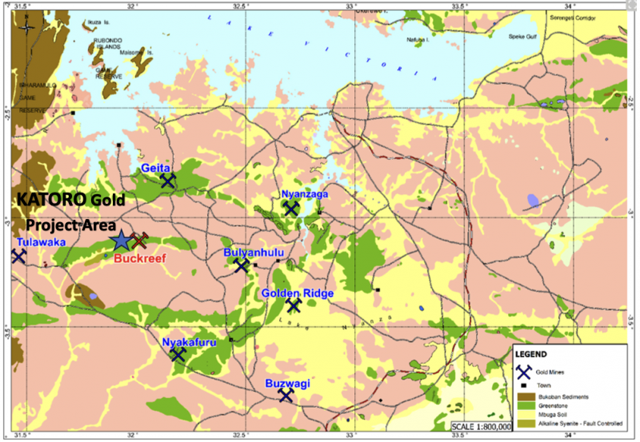
    Brian: Being in the mist of mining titans, such as Anglo’s Geita Mine, Barricks Bulyanhulu and North Mara mines, Perseus’ new Nyangaza mine, TRX’s Buckreef mine, amongst others, shows the potential for very large deposits and potential for new discoveries. We are along the same major fault line as Buckreef on our Eastern boundary and also another significant fault to our West, making our Kataro Project a very prospective area.

    Host: You’ve assembled a sizeable land package in the district and recently completed technical work that generated 80 high-priority drill targets. Can you walk us through what that work involved and what stands out to you about those targets?

    Brian: Our exploration team first started with an air-borne magnetic survey over the entire project, which identified numerous anomalous areas. Our Team then narrowed down 5 priority blocks, making up only 15% of the project, and completed Pole-Dipole Induced Polarity. The results identified conductivity zones as high as 250 mV/V, this is very exciting as it indicates the potential of semi-massive to massive sulphides over large areas. With this geophysical data, we were able to identify 80 high priority drill targets.

    Host: You’re now moving toward drilling 10 to 15 of the highest priority targets. What will this initial drill campaign focus on, and what would success look like in this first phase?

    Brian: Our first round of drilling will target these high conductivity zones first. We believe this area to have the potential to be similar to samples taken from a nearby active small scale mining operation, that came in as high as 238 g/t.

    (Location Katoro Gold Project of the Lake Victoria GoldField greenstone belts in north-western Tanzania. Source: Cameo Resources Inc.)

    Host: Finally, investors always want to know about timing. When do you expect drilling to begin, and when might we see the first results from this program?

    Brian: We just successfully completed our local discussions with the Village counsel and negotiations with the respective landowners for access and to ensure a smooth start to our drilling campaign, which we expect to commence at the end of March, with our first assays  in early April, at which point new results will be coming in on a weekly basis.

    Host: Brian, thank you for joining us and walking us through the Cameo Resources story.

    Brian: Thanks for having me and sharing our exciting story.

    For more information, visit cameoresourcesinc.com.

  • Upland Resources secures OTCQB listing to expand U.S. investor access

    Upland Resources secures OTCQB listing to expand U.S. investor access

    Upland Resources Limited (LSE:UPL) (USOTC:UPLLF) said its ordinary shares have been approved for trading on the OTCQB Venture Market in the United States, providing North American investors with a new way to access the company’s stock. Trading on the platform is scheduled to begin on March 18, 2026 under the ticker symbol UPLLF.

    The company’s shares will continue to trade on the London Stock Exchange’s Main Market under the ticker UPL.

    New access for U.S. investors

    The OTCQB listing will allow U.S.-based investors to trade Upland’s shares in U.S. dollars during U.S. market hours for the first time. The OTCQB quotation will function as a cross-trading platform alongside the company’s existing London listing.

    Upland said the move is intended to broaden its North American investor base and improve accessibility for U.S. investors interested in gaining exposure to its upstream oil and gas projects.

    The OTCQB Venture Market is operated by OTC Markets Group Inc. and is designed for developing companies seeking to expand visibility and access to U.S. capital markets.

    Expanding project portfolio

    Upland Resources focuses on developing oil and gas assets across Southeast Asia while also holding interests in projects in the United States.

    Through its partnership with Lost Soldier Oil and Gas, the company holds a participation interest in the Wild Mustang Federal Unit in Wyoming, which could become one of the largest new gas discoveries in the U.S. The project is targeting first commercial gas production in the fourth quarter of 2026.

    Upland also said it is engaged in discussions regarding additional upstream licensing opportunities across Southeast Asia, supported by a previously announced $100 million strategic funding commitment from Lost Soldier Oil and Gas.

    Supporting growth strategy

    The OTCQB listing comes as Upland seeks to increase engagement with North American investors while advancing its project portfolio.

    The company said the new trading venue complements its existing London listing and could help build momentum as it progresses toward key operational and development milestones.

    The approval follows earlier strategic announcements, including a framework agreement disclosed in November 2025 and the $100 million strategic funding commitment announced in January 2026.

    Management commentary

    Bolhassan Di, Chairman and CEO of Upland Resources Limited, commented:

    “The OTCQB approval reflects growing international recognition of what Upland is building. Our strategic focus is Southeast Asia, and the Wild Mustang project demonstrates the quality of the partnership underpinning that ambition. Today’s announcements – a new US trading venue give us an excellent platform from which to advance.”

  • Scotch Corner Designer Village targets £25.5m IPO to fund retail outlet development

    Scotch Corner Designer Village targets £25.5m IPO to fund retail outlet development

    Scotch Corner Designer Village is planning to raise £25.5 million through an initial public offering on the Aquis Exchange to help finance the next stage of construction of its planned outlet retail and leisure destination in North Yorkshire.

    The development will be located at Scotch Corner, a prominent junction on the A1(M) near Richmond, and is widely recognised as a key gateway between the North East, Yorkshire and the North West. The site is visible to traffic as far away as the M6 motorway, roughly 50 miles away.

    The project spans a 50-acre site with full planning permission for approximately 182,500 square feet of branded outlet retail units, cafés and restaurants, alongside landscaped public spaces. Initial groundworks have already been completed, with the village expected to open in autumn 2027.

    IPO to fund main construction phase

    The planned equity raise of £25.5 million will come from the issue of new shares in Scotch Corner Designer Village (SCDV) as part of its listing on the Aquis market. The funds will be used primarily to finance the main construction phase of the development.

    In addition to the IPO proceeds, the company is seeking £33.2 million through 14% secured mezzanine loan notes. The remainder of the project’s funding will be provided through £67 million in senior debt, which has already been secured.

    The founders will contribute the existing freehold site to the company at admission in exchange for shares valued at £16.5 million at the issue price of 250 pence per share, representing roughly 40% of the company. This reflects a modest discount to the £43.6 million valuation placed on the site by Savills after accounting for approximately £26 million of accrued debt.

    Development already largely pre-let

    Developers say the scheme is already about 70% pre-let, with a further 11% of space currently at heads-of-terms stage with prospective tenants.

    Outlet villages are regarded as one of the faster-growing segments within the retail sector, and the Scotch Corner project aims to establish a major outlet destination in the North of England. The site also offers scope for future expansion across both retail and leisure uses.

    The development sits within a catchment area of around 4.5 million people within a one-hour drive, while approximately 29 million vehicles pass through Scotch Corner each year.

    Brands confirmed for the village include M&S, Superdry, Tommy Hilfiger, Calvin Klein and Wagamama, alongside around 60 additional retailers and hospitality operators.

    Projected value and returns

    The scheme is expected to reach a gross development value of roughly £169 million at completion, including land earmarked for a second phase of expansion.

    Through the Aquis listing, the project aims to create £42 million in equity value, comprising £16.5 million contributed through the land and £25.5 million raised through the IPO. Phase one will be funded through the mezzanine facility arranged around the time of listing, together with the £67 million senior debt package.

    Developers estimate the project could generate an internal rate of return of around 21.75% per year over a 5.5-year period, with an equity multiple of 2.58 times — rising to 2.88 times when surplus income is included. The forecast assumes refinancing once the site becomes operational following the construction phase and a four-year stabilisation period.

    The project is expected to become free cash flow positive about 12 months after the IPO. Dividends to shareholders are projected to begin from 2027 and increase in line with rental income as the outlet village matures.

  • Wall Street seen lower as stronger inflation data clouds outlook before Fed decision: Dow Jones, S&P, Nasdaq, Futures

    Wall Street seen lower as stronger inflation data clouds outlook before Fed decision: Dow Jones, S&P, Nasdaq, Futures

    U.S. stock index futures indicated a modestly weaker open on Wednesday, suggesting markets could retreat after posting gains during the previous two sessions.

    Futures slipped following the release of fresh data from the Labor Department showing that producer prices in the United States rose significantly more than economists had expected in February.

    The producer price index for final demand increased by 0.7% during the month, after rising 0.5% in January. Economists had anticipated a smaller gain of 0.3%.

    The report also showed that the annual rate of producer price growth accelerated to 3.4% in February from 2.9% in the previous month. Analysts had expected the yearly rate to remain unchanged.

    The stronger inflation data, combined with the recent jump in crude oil prices tied to the conflict in the Middle East, could intensify concerns about the inflation outlook.

    At the same time, investors may remain cautious ahead of the Federal Reserve’s policy decision scheduled for later in the day.

    While the central bank is widely expected to keep interest rates unchanged, traders will be closely watching the latest economic projections from Fed officials.

    Following a recovery rally in the previous session, stocks advanced again early on Tuesday before losing momentum as the day progressed. Although the major averages retreated from their intraday highs, they still managed to end the session in positive territory.

    The benchmarks added to Monday’s gains, moving further away from the three-month closing lows recorded on Friday. The Nasdaq rose 105.35 points, or 0.5%, to finish at 22,479.53, the S&P 500 gained 16.71 points, or 0.3%, to close at 6,716.09, and the Dow edged up 46.85 points, or 0.1%, to 46,993.26.

    Early strength on Wall Street reflected traders’ efforts to look past the recent swings in oil prices, which have played a major role in shaping market sentiment in recent sessions.

    Stocks extended the rebound seen a day earlier even as crude prices recovered after Monday’s pullback.

    Oil climbed after Iran launched a series of attacks on the United Arab Emirates, targeting Dubai’s international airport and the Fujairah oil terminal, marking a significant escalation in the ongoing conflict.

    The Israeli military also said it had begun a “wide-scale wave of strikes” across Iran’s capital and intensified attacks on Hezbollah targets in Lebanon.

    Meanwhile, several U.S. allies — including Germany, Spain, Italy, Australia and Japan — declined President Donald Trump’s request to help secure the Strait of Hormuz, a crucial passage through which roughly one-fifth of the world’s energy shipments move.

    Investors appeared hesitant to make major moves ahead of the Federal Reserve’s monetary policy announcement.

    Oil services companies rallied alongside rising crude prices, pushing the Philadelphia Oil Service Index up about 3%.

    Airline stocks also posted strong gains, with the NYSE Arca Airline Index jumping 2.8% after several carriers raised their revenue outlook for the first quarter.

    Shares of computer hardware companies, oil producers and brokerage firms also moved higher during the session, while pharmaceutical stocks lagged behind.

    Eli Lilly (NYSE:LLY) weighed on the pharmaceutical sector, sliding 5.9% after HSBC Securities downgraded the drugmaker’s shares to Reduce from Hold.

  • European equities trade mixed ahead of Federal Reserve rate announcement: DAX, CAC, FTSE100

    European equities trade mixed ahead of Federal Reserve rate announcement: DAX, CAC, FTSE100

    European stock markets showed mixed movements on Wednesday as investors remained cautious ahead of the U.S. Federal Reserve’s interest rate decision expected later in the day.

    Market sentiment received some support from declining oil prices despite ongoing geopolitical tensions, including confirmation by Iran’s supreme national security council of the death of its security chief, Ali Larijani.

    In early trading, the U.K.’s FTSE 100 Index slipped 0.1 percent, while Germany’s DAX Index edged up 0.1 percent and France’s CAC 40 Index gained 0.5 percent.

    Shares of British insurer Prudential (LSE:PRU) dropped 2.2 percent even after the company reported a 12 percent increase in annual new business profit, raised its dividend and unveiled plans to return $1.3 billion in capital to shareholders in 2027.

    Oil and gas producer Ithaca Energy (LSE:ITH) declined nearly 6 percent after one-off charges weighed on its adjusted profit for 2025.

    Diploma (LSE:DPLM), which distributes industrial controls, seals and life sciences products, surged 17 percent after raising its guidance for fiscal year 2026.

    Barclays (LSE:BARC) shares advanced about 2 percent following the announcement of a new strategic partnership with software company Sage Group.

    In France, vaccine developer Valneva (EU:VLA) traded lower after reporting a wider net loss for fiscal year 2025.

    Technip Energies (EU:TE) rose 1.4 percent after the energy technology and engineering company announced a share buyback program worth up to 150 million euros.

    German hydrogen technology company Thyssenkrupp Nucera (TG:NCH2) fell 8 percent after cutting its full-year outlook.

    Meanwhile, meal kit provider HelloFresh (TG:HFG) plunged 7 percent after posting weaker-than-expected fourth-quarter core earnings and issuing a lower profit forecast for 2026.

  • Gold falls below $5,000/oz as investors await Fed decision

    Gold falls below $5,000/oz as investors await Fed decision

    Gold prices slipped below the $5,000-per-ounce threshold during Asian trading on Wednesday as investors grew cautious ahead of the Federal Reserve’s widely anticipated interest rate decision later in the day.

    The precious metal had briefly moved back above the $5,000 level earlier in the session but reversed direction as ongoing hostilities in the conflict involving the United States, Israel and Iran kept markets concerned about the war’s potential inflationary impact.

    Spot gold declined 0.4% to $4,987.09 at 01:18 ET (05:18 GMT), while gold futures dropped 0.4% to $4,990.44 per ounce.

    Other precious metals also moved lower. Spot silver fell 0.3% to $79.0345 per ounce, while platinum lost 0.6% to $2,116.40 per ounce.

    Safe-haven support limited despite Middle East tensions

    Escalating tensions in the Middle East provided only modest support for gold, which struggled to stay above $5,000 this week even as U.S. and Israeli forces continued strikes against Iran, prompting retaliatory responses from Tehran.

    The conflict showed little sign of easing after an Israeli airstrike earlier in the week killed Iranian security chief Ali Larijani. Oil prices remained above $100 per barrel amid continued worries about possible supply disruptions.

    Markets are increasingly concerned about the inflationary consequences of the conflict, especially as crude prices climbed toward levels not seen in nearly four years following disruptions to shipping through the critical Strait of Hormuz.

    Higher energy prices could push central banks toward a more hawkish stance. On Tuesday, the Reserve Bank of Australia raised interest rates and warned that the conflict could contribute to renewed inflationary pressure.

    Attention turns to Fed and other central banks

    Investors are now focusing on a series of central bank meetings scheduled over the coming days.

    The Federal Reserve will announce its latest policy decision later on Wednesday, followed by rate announcements from the Bank of Japan, the European Central Bank, the Swiss National Bank and the Bank of England later in the week.

    Markets broadly expect the Fed to keep rates unchanged, but attention will center on whether policymakers believe the conflict with Iran could fuel inflation and influence the future path of interest rates.

    According to CME FedWatch data, traders are now largely pushing back expectations for any Fed rate cuts until at least September.

    An extended period of elevated interest rates typically weighs on gold, as higher yields increase the opportunity cost of holding non-yielding assets.

    Although gold still retains some of its gains for the year, prices have pulled back sharply from the record high near $5,600 per ounce reached in late January.

  • Oil declines as Iraq restarts exports through Turkey

    Oil declines as Iraq restarts exports through Turkey

    Oil prices edged lower this morning after Iraq reached an agreement with Turkey that helped calm fears about crude supply disruptions caused by the blockade of the Strait of Hormuz.

    Brent crude was trading near $102 per barrel, down roughly 1%, after briefly slipping below the $100 threshold earlier in the session, while U.S. West Texas Intermediate (WTI) crude dropped to about $93.40 per barrel.

    The retreat in prices followed Iraq’s announcement that some of its oil exports would resume through a pipeline route to a Turkish port. The arrangement, reached with the authorities of Iraqi Kurdistan, allows shipments to bypass the Strait of Hormuz.

    In a statement, the state-owned company responsible for oil fields in northern Iraq confirmed “the start of operations at the Sarlo pumping station, with the resumption of pumping and export of oil from Kirkuk to the Turkish port of Ceyhan, with an initial export capacity of 250,000 barrels per day.”

    The Kurdistan Region’s Ministry of Natural Resources also said that pumping operations began at 6:30 a.m. local time (4:30 a.m. GMT) to export oil “through the Kurdistan pipeline to the Turkish port of Ceyhan.”

    After the war in the Middle East erupted on February 28 — following the joint Israeli-U.S. offensive against Iran — Iraq, a founding member of OPEC, halted all oil exports. The country typically ships around 3.5 million barrels per day, and authorities had been searching for alternative routes after Iran effectively rendered the Strait of Hormuz impassable.

    According to estimates cited by Bloomberg, however, the reopening of the pipeline will only partially restore export volumes to levels seen before the conflict.

    Meanwhile, reports suggest the United Arab Emirates may assist the United States with maritime transport operations in the Strait of Hormuz, potentially becoming the first country to respond positively to Donald Trump’s call for international support to secure the strategic shipping lane.

    Oil markets also reacted to fresh data on U.S. inventories released overnight, which showed a larger-than-expected increase in crude stockpiles.

    Figures from the American Petroleum Institute (API) revealed that inventories rose by 6.60 million barrels last week, compared with expectations for a decline of about 0.6 million barrels.

    The API report often signals a similar outcome in the official U.S. inventory figures published by the Energy Information Administration (EIA), which are due later today at 3:30 PM CET.

    Despite the latest drop in prices, analysts at OCBC believe crude will likely remain above $100 per barrel in the near term given the absence of clear signs that tensions between the United States and Iran are easing.

    The bank expects the $100 level to remain broadly stable through mid-2026, far above its earlier forecast of $70, before easing toward roughly $79 per barrel in early 2027.

    OCBC said the conflict has now entered its third week without any meaningful diplomatic breakthrough, leaving shipping through the Strait of Hormuz severely constrained and keeping global oil markets under pressure.

    “The ongoing paralysis of shipping is forcing Gulf producers to shut down production, raising the risk that temporary disruptions will turn into more lasting supply losses,” OCBC commodity analysts said.

    The bank added that mitigation measures — including alternative pipeline routes, releases of strategic petroleum reserves and continued Iranian exports — could offset up to 10 million barrels per day, but a prolonged disruption would still leave a considerable supply deficit.

    OCBC warned that oil markets may now be approaching what it called a “moderately severe” supply shock scenario, with risks tilted toward further price increases if tensions persist.

    Other banks and research firms have also revised their forecasts for Brent and WTI prices in response to the tensions surrounding the Strait of Hormuz.

    Barclays expects Brent to average about $85 per barrel in 2026, assuming shipping traffic through the strait normalizes within two to three weeks. If disruptions extend to four to six weeks, however, prices could climb toward $100 per barrel. ANZ has also lifted its forecast for the first quarter of 2026 to $100 from $90.

    Goldman Sachs forecasts Brent averaging $75 per barrel over the next three months and $71 over the next twelve months. BMI estimates prices will average $67 in the third quarter of 2026 and $69 in the fourth quarter.

    Citigroup sees Brent at $75 per barrel in the first quarter of 2026, $78 in the second and $68 in the third, while Bank of America expects prices to average about $80 in the second quarter of 2026 before falling toward $65 in 2027 as supply surpluses return.

    HSBC has also raised its projections, expecting Brent prices around $80 in 2026. UBS warned that a prolonged disruption to shipping through the Strait of Hormuz could push Brent above $100 per barrel, with prices above $120 likely to trigger significant demand destruction.

    In a more extreme scenario, Macquarie estimates that if the Strait were closed for several weeks, crude prices could surge to $150 per barrel or even higher.

  • Markets steady ahead of Fed decision as Iran conflict persists; Micron results due – key drivers today: Dow Jones, S&P, Nasdaq, Wall Street Futures

    Markets steady ahead of Fed decision as Iran conflict persists; Micron results due – key drivers today: Dow Jones, S&P, Nasdaq, Wall Street Futures

    U.S. equity futures were modestly higher early Wednesday as investors awaited the Federal Reserve’s latest interest rate decision while continuing to track developments in the conflict involving Iran. Oil prices eased slightly but remained above the $100-per-barrel mark, keeping concerns alive that renewed inflation pressures could delay any potential Fed rate cuts later this year. In corporate news, memory-chip maker Micron is scheduled to release earnings after the close, while athleisure retailer Lululemon issued weaker-than-expected annual guidance.

    Futures move higher

    Futures tied to the main U.S. stock indices advanced on Wednesday morning as traders positioned themselves ahead of the Fed’s policy announcement and monitored geopolitical developments.

    As of 04:18 ET, Dow futures were up 258 points, or 0.5%. S&P 500 futures rose 34 points, also 0.5%, while Nasdaq 100 futures gained 159 points, or 0.6%.

    Wall Street’s major averages ended the previous session in positive territory. Analysts at Vital Knowledge said reports that two senior Iranian figures had been killed, along with the resignation of a Trump administration official in protest over U.S. strikes in Iran, had raised hopes that a ceasefire could eventually materialize.

    Nonetheless, the Strait of Hormuz—one of the world’s most critical oil shipping routes, carrying roughly 20% of global supply—remains effectively closed due to threats of Iranian attacks on commercial vessels. President Donald Trump’s efforts to rally international backing to reopen the strait have largely failed.

    Uncertainty also surrounds how long U.S. military operations will continue. Trump reiterated on Tuesday that the conflict could end soon, though similar comments since the start of the joint U.S.-Israeli campaign against Iran in late February have yet to lead to a ceasefire.

    Oil retreats but remains elevated

    Pressure on Trump to find a diplomatic exit appears to be increasing, including criticism from within his own Republican Party. However, there have been few signs that the U.S. intends to scale back its military campaign.

    On Tuesday, U.S. forces struck Iran’s coastline near the Strait of Hormuz using 5,000-pound bombs, targeting cruise missile facilities capable of threatening ships passing through the waterway, according to the U.S. Central Command.

    Brent crude futures, the global benchmark, fell 1.3% to $102.10 per barrel, while U.S. West Texas Intermediate crude futures declined 2.3% to $93.25 per barrel. The drop came after crude shipments resumed through a pipeline linking Iraq’s Kirkuk oil fields with Turkey’s Ceyhan port, providing some relief to markets worried about supply disruptions.

    Even so, Brent remains far above its levels before the conflict began, pushing U.S. gasoline prices to their highest point since October 2023. Rising fuel costs could become a key issue ahead of the November midterm elections and may also contribute to broader inflationary pressures.

    Fed policy decision ahead

    Against this backdrop of geopolitical tensions and rising energy prices, the Federal Reserve is expected to announce its latest interest rate decision later Wednesday.

    Financial markets widely anticipate that the central bank will keep rates unchanged following its two-day policy meeting as officials assess the outlook for inflation and recent economic indicators suggesting the U.S. labor market could be weakening.

    Investors will be particularly focused on the press conference following the decision, led by Fed Chair Jerome Powell, who is expected to step down from the role in May. Powell may provide one of the earliest indications of how the Fed views the economic impact of the Iran conflict and the surge in oil prices.

    Before the war began, investors had been expecting a possible rate cut later in the year, perhaps in the second half. However, analysts at ING said the ongoing conflict could lead the Fed to postpone any move toward monetary easing.

    Micron earnings awaited

    Investors will also be watching results from Micron (NASDAQ:MU), which is scheduled to report earnings after the market closes on Wednesday.

    The company previously issued an optimistic adjusted profit outlook for its second quarter in December, driven by elevated memory chip prices amid persistent supply constraints.

    As large technology companies continue to expand investments in artificial intelligence, demand for advanced data centers and the high-performance memory chips they require has also increased.

    That trend could benefit Micron, whose chips are widely used in data center servers. The company projected fiscal second-quarter adjusted earnings of $8.42 per share, plus or minus $0.20—nearly double the analyst consensus cited by Reuters.

    Chief Executive Sanjay Mehrotra told investors last year that tight supply in the memory chip market is likely to persist beyond 2026. He also said Micron may only be able to meet between half and two-thirds of demand from some key customers.

    Lululemon forecast disappoints

    Shares of Lululemon Athletica (NASDAQ:LULU) fell in premarket trading Wednesday after the athletic apparel retailer issued revenue and earnings guidance for 2026 that came in below analyst expectations.

    The company also appointed a former Levi Strauss executive to its board of directors as speculation grows around a potential proxy contest.

    Although Lululemon said “almost all” of the costs related to U.S. import tariffs would be offset through a strategy aimed at increasing full-price sales, the company continues to face multiple headwinds.

    These include an extended search for a new chief executive, slowing consumer demand, and intensifying competition in the sportswear market.

    Lululemon expects annual revenue of between $11.35 billion and $11.50 billion, compared with analyst forecasts of $11.52 billion, according to LSEG data cited by Reuters. The company also projected annual earnings of $12.10 to $12.30 per share, below Wall Street estimates.