Author: Fiona Craig

  • Futures dip as oil advances, RBA hikes rates and Nvidia outlines massive AI chip demand: Dow Jones, S&P, Nasdaq, Wall Street

    Futures dip as oil advances, RBA hikes rates and Nvidia outlines massive AI chip demand: Dow Jones, S&P, Nasdaq, Wall Street

    U.S. equity futures moved lower early Tuesday as investors weighed rising geopolitical risks linked to Iran and potential disruptions to global energy supply. Oil prices climbed after fresh security incidents near the Strait of Hormuz, while gold edged higher ahead of a crucial Federal Reserve policy decision later this week. Meanwhile, the Reserve Bank of Australia raised interest rates, and Nvidia (NASDAQ:NVDA) CEO Jensen Huang predicted enormous future demand for artificial intelligence chips.

    Futures edge lower

    U.S. stock futures declined in early trading as markets monitored crude prices, which have remained above the $100-per-barrel mark amid the continuing conflict involving Iran.

    At 04:24 ET, Dow Jones futures were down 163 points, or 0.4%. S&P 500 futures fell 28 points, also 0.4%, while Nasdaq 100 futures dropped 124 points, or 0.5%.

    Wall Street’s main indices had finished the previous session higher, supported by hopes that a coalition of countries might assist the United States in reopening the Strait of Hormuz—a critical maritime route south of Iran that carries about one-fifth of the world’s oil shipments.

    While the United Kingdom and France said they would consider discussions with Washington, several other U.S. partners—including Germany and Japan—declined President Donald Trump’s request for assistance in reopening the strategic shipping lane.

    Trump previously suggested the United States might not require outside help to restore tanker traffic through the strait, though he noted that “numerous countries” had told him that “they’re on the way” to offering support.

    Oil prices gain

    Crude prices rose in early European trading Tuesday, highlighting ongoing concerns that maritime disruptions in the Strait of Hormuz could persist.

    Several container shipping companies have largely halted voyages through the narrow passage, citing safety concerns for crews and challenges securing insurance coverage. Iran has also warned that it will block vessels carrying goods that could benefit the United States or its allies.

    According to a report from the New York Times, a projectile struck a tanker anchored near a port in the United Arab Emirates early Tuesday. Citing the United Kingdom Maritime Trade Operations Center, the newspaper said the vessel, located near the port of Fujairah at the southern entrance of the strait, suffered only limited damage.

    Authorities in the UAE also reported that a drone had caused a fire at a major oil facility.

    In a separate development, Trump said he had requested that a planned meeting with Chinese President Xi Jinping next month be postponed. The U.S. president had previously warned the summit could be delayed if China did not use its influence to help reopen the strait. Iran, which exports oil to China, has continued allowing Chinese vessels to pass safely through the passage.

    Gold edges up

    Gold prices climbed in Asian trading as investors focused on oil market developments, the ongoing U.S.-Israel conflict involving Iran and several key central bank meetings scheduled for this week.

    The precious metal briefly slipped below $5,000 per ounce in the previous session. Increased demand for safe-haven assets has been offset by concerns that the conflict could intensify inflationary pressures, while a stronger U.S. dollar has also tempered gains.

    Gold has largely traded within a $5,000 to $5,200 per ounce range over the past three weeks.

    Market attention is now shifting to a series of central bank policy decisions this week, particularly the Federal Reserve’s meeting on Wednesday. The Fed is widely expected to keep interest rates unchanged as policymakers assess the potential inflation impact of the Iran conflict.

    The Bank of Canada will also meet on Wednesday, while the Bank of Japan, Swiss National Bank, Bank of England and European Central Bank are scheduled to announce interest rate decisions on Thursday.

    RBA raises interest rates

    The Reserve Bank of Australia raised its benchmark interest rate by 25 basis points on Tuesday, as expected, responding to a resurgence in inflation toward the end of 2025 and potential energy price shocks linked to Middle East tensions.

    The central bank lifted its policy rate to 4.1%, marking its second rate increase this year after a similar move in February.

    However, the decision revealed divisions among policymakers, with four of the nine members of the rate-setting board voting to keep rates unchanged.

    Speaking at a press conference following the announcement, RBA Governor Michele Bullock said all board members agreed that tighter policy was needed, but differed over the timing—a comment markets interpreted as hawkish.

    “Developments in the Middle East remain highly uncertain, but under a wide range of possible scenarios could add to global and domestic inflation,” the RBA said in a statement.

    Nvidia CEO forecasts $1 trillion in AI chip sales

    “This is the AI future. This is where AI wants to go.”

    Nvidia CEO Jensen Huang offered an upbeat vision for artificial intelligence during a widely watched keynote at a developer conference in California on Tuesday.

    Huang highlighted the rapid expansion of AI inference computing, which allows AI models to generate faster and more efficient responses to user queries. According to Huang, the technology has reached an “inflection” point, adding “[t]his is the secret sauce.”

    During the presentation, Huang introduced new server systems that combine Nvidia’s latest Vera Rubin architecture with a next-generation chip developed by Groq, a startup focused on AI inference whose leadership Nvidia secured through a $20 billion licensing agreement last year.

    The new platform is expected to deliver computing performance 350 times faster than Nvidia’s earlier Hopper graphics processing units.

    Against this backdrop, Huang projected that Nvidia could generate $1 trillion in AI chip sales by the end of 2027, compared with roughly $500 billion expected for the current year.


  • First Class Metals reports further visible gold at Roy prospect on Sunbeam project

    First Class Metals reports further visible gold at Roy prospect on Sunbeam project

    First Class Metals (LSE:FCM) has announced the discovery of additional visible gold within drill core from a second hole at the Roy prospect on its Sunbeam property in Ontario, providing further evidence of gold mineralisation along the targeted structure. The company has now completed its planned drilling campaign at Roy, which comprised 12 holes totalling 1,030 metres and confirmed the presence of the mineralised zone across a strike length exceeding 300 metres.

    Geological logging and sampling activities are continuing, with six drill holes logged so far and eight remaining to be cut and sampled. The first two holes have already been sent to Thunder Bay for laboratory assay. According to management, the drilling campaign has produced encouraging early results, with multiple occurrences of visible gold and its association with galena strengthening the exploration potential of the Roy structure and enhancing the overall prospectivity of the wider Sunbeam property for future gold development.

    More about First Class Metals Plc

    First Class Metals is a UK-listed exploration company focused on identifying economically viable metal deposits in Ontario, Canada, particularly within the prolific Hemlo gold district near Marathon. The company fully owns seven claim blocks covering more than 250 km² and holds options on three additional blocks. While its primary exploration focus is gold, the group is also investigating opportunities in base and critical metals, including through a joint venture project at West Pickle Lake.

  • European stocks subdued as oil climbs amid ongoing Iran conflict: DAX, CAC, FTSE100

    European stocks subdued as oil climbs amid ongoing Iran conflict: DAX, CAC, FTSE100

    European equity markets opened cautiously on Tuesday, with major indices struggling to gain momentum as oil prices moved higher following reports that several U.S. allies declined President Donald Trump’s request to assist in reopening a key maritime route near Iran.

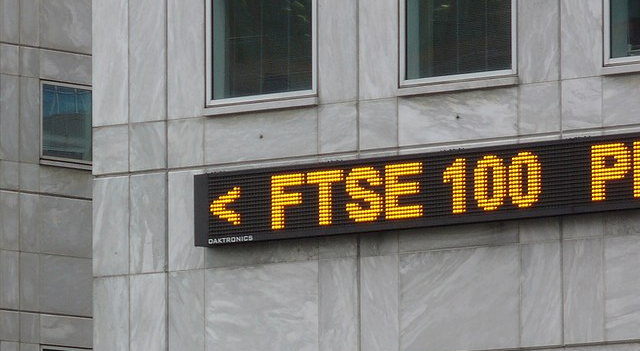
    At 08:03 GMT, the pan-European Stoxx 600 index slipped 0.1% to 598.08. Germany’s DAX declined 0.3%, France’s CAC 40 was broadly flat, while the UK’s FTSE 100 edged up 0.1%.

    Brent crude, the global oil benchmark, surged 3.3% to $103.58 in early European trading after Japan, Germany and Australia signaled they would not participate in U.S.-led efforts to restore shipping through the Strait of Hormuz. The strategic waterway handles roughly one-fifth of global oil shipments.

    Following the launch of joint U.S.-Israeli military strikes against Iran in late February, Tehran responded by threatening to target ships attempting to pass through the narrow strait, effectively disrupting traffic.

    As a result, several container shipping companies have suspended operations in the area, citing crew safety concerns and difficulties securing insurance coverage for voyages through the region.

    The jump in oil prices has heightened concerns about renewed global inflationary pressures, raising the possibility that central banks could reconsider the pace of interest rate cuts. With inflation risks increasing, both the European Central Bank and the U.S. Federal Reserve are widely expected to keep interest rates unchanged at their upcoming policy meetings this week.

  • IP Group shares surge 8% after Pfizer-linked obesity deal lifts 2025 NAV

    IP Group shares surge 8% after Pfizer-linked obesity deal lifts 2025 NAV

    IP Group (LSE:IPO) shares rose more than 8% on Tuesday after the UK-based science investor reported a 13% increase in net asset value per share for 2025, supported largely by gains tied to Pfizer Inc’s acquisition in the obesity drug sector.

    Net asset value per share climbed to 110.4 pence as of Dec. 31, 2025, up from 97.7 pence a year earlier. The increase followed the recognition of £128.2 million in licensing income after Pfizer agreed in November to acquire weight-loss drug developer Metsera in a deal worth up to $10 billion.

    The financial boost also triggered an unexpected accounting shift. In December, IP Group reclassified itself as an “investment entity” under IFRS 10 standards, changing the way its subsidiaries are consolidated within the group’s financial statements.

    That adjustment led to a technical breach of covenants tied to the company’s £120 million private placement. Noteholders defined qualifying cash as funds held solely at the parent company level, whereas IP Group had previously included cash held across the wider group structure.

    At the end of the year, the company held £87.8 million in cash equivalents and £123.2 million in deposits, but not enough of those funds were held directly by the parent entity.

    The group secured a waiver from noteholders and subsequently transferred cash to the parent company. However, the covenant breach required £119.7 million of borrowings to be reclassified from long-term to current liabilities.

    Despite posting a profit of £66.9 million compared with a loss of £207 million in 2024, and holding gross cash of £211 million, IP Group’s shares continue to trade at a steep discount to net asset value of nearly 47%.

    The stock ended 2025 at 58.6 pence versus a NAV of 110.4 pence. Management acknowledged the gap, noting that the company completed a £75 million share buyback during the year, retiring roughly 9% of its outstanding shares.

    Cash generated from portfolio exits totalled £68.1 million, significantly lower than the £183.4 million recorded in 2024. Meanwhile, companies within the portfolio collectively raised £914 million in funding over the course of the year.

    The group’s exposure to the Pfizer-related deal remains conditional. The £128.2 million valuation depends on royalty income linked to drug candidates including PF’3944, which has not yet completed Phase 3 clinical trials. IP Group’s sensitivity analysis indicates that the valuation could shift significantly depending on trial outcomes and discount rate assumptions.

    Chief Executive Greg Smith said the company remained confident it could achieve more than £250 million in portfolio exits between 2025 and the end of 2027.

    IP Group also revealed that it is partnering with Aberdeen to manage a portfolio of UK venture investments and said it has set aside an additional £30 million earmarked for future shareholder returns.

  • Ashtead Technology maintains FY26 outlook after strong FY25 performance

    Ashtead Technology maintains FY26 outlook after strong FY25 performance

    Ashtead Technology Holdings PLC (LSE:AT.) reported full-year 2025 revenue of £203.2m on Tuesday, a 21% increase year-on-year, as the subsea technology specialist reaffirmed its confidence in delivering further growth in 2026 while keeping a close watch on geopolitical developments in the Middle East.

    Adjusted earnings per share reached 49.4p for the year ended December 31, 2025, up 10% from 45.0p in the previous year. The revenue increase was supported by 3% organic growth and a 19% contribution from the acquisitions of Seatronics and J2 Subsea, partly offset by a 1% foreign exchange headwind.

    The results compare with revenue of £168.0m recorded in FY24, with adjusted EBITA rising to £59.1m and delivering a margin of 29.1%, close to the upper end of the company’s medium-term target range.

    Ashtead Technology generated around £20m in free cash flow during FY25 despite a roughly £5m working capital outflow. Proforma net debt to adjusted EBITDA improved to 1.3x from 1.6x, strengthening the company’s balance sheet and providing additional capacity for potential strategic investments. The board proposed a final dividend of 1.3p per share, representing an 8% increase from the prior year.

    “We delivered a strong performance in 2025, making significant financial, strategic and operational progress against a challenging and unpredictable geopolitical and market backdrop,” said Allan Pirie, Chief Executive Officer.

    During the year, Ashtead Technology completed the integration of its recent acquisitions and achieved synergies earlier than planned, while expanding its international footprint, with 33% of 2025 revenue generated outside Europe. The company invested £37m in capital expenditure to support the development of proprietary technologies and opened new facilities in the United States and Norway.

    Trading in the first two months of 2026 has been in line with management expectations. The company said it is monitoring the current situation in the Middle East closely, as tensions in the region have contributed to volatility in oil and gas markets and uncertainty around the timing of projects.

    Provided disruptions do not become prolonged or spread further, the board said it remains confident that the group will continue to make progress in 2026.

  • Essentra delivers results in line with forecasts but faces margin pressure

    Essentra delivers results in line with forecasts but faces margin pressure

    Essentra PLC (LSE:ESNT) reported full-year 2025 results on Tuesday broadly matching analyst expectations, posting revenue of £302.0m and adjusted earnings per share of 6.1p, although profitability was affected by tightening margins amid operational challenges.

    Revenue increased 2.5% at constant currency compared with the previous year, while reported revenue remained largely unchanged at £302.0m, slightly below £302.4m recorded in 2024. Each of the company’s geographic regions achieved growth on a constant currency basis, with EMEA rising 2.6%, the Americas up 2.0% and APAC increasing 3.1%.

    Adjusted operating profit declined to £32.0m from £40.1m a year earlier, with the adjusted operating margin narrowing to 10.6% from 13.3%.

    Gross margin fell to 43.7% from 45.3%, reflecting changes in the regional sales mix, including the impact of inflation in Turkey, and the company’s short-term focus on restoring service levels following the rollout of a new ERP system across EMEA. Higher labour and freight expenses were also incurred as the group worked to stabilise operations after backlog levels increased during the implementation of the system.

    “2025 was a year of good strategic progress delivered against a backdrop of subdued global industrial demand,” said Scott Fawcett, Chief Executive. “Essentra returned to modest revenue growth across all three regions, maintaining robust gross margins through a number of commercial and operational initiatives.”

    The company reported adjusted operating cash flow of £44.0m, representing a conversion rate of 137.5%. Net debt, excluding lease liabilities, declined to £60.7m from £68.2m, with leverage standing at 1.4 times adjusted EBITDA.

    Management said trading in the early part of 2026 supports confidence in meeting the board’s expectations for the year, with guidance left unchanged.

  • SThree shares drop 4% after Q1 net fees decline and CFO departure announcement

    SThree shares drop 4% after Q1 net fees decline and CFO departure announcement

    Shares in SThree Plc (LSE:STEM) fell more than 4% on Tuesday after the recruitment group reported lower first-quarter net fees and revealed that its chief financial officer will step down. Weak trading conditions across several European markets offset stronger growth in the United States and Japan.

    The global STEM-focused recruitment specialist recorded group net fees of £71.7 million for the three months ending Feb. 28, compared with £78.4 million during the same period last year, representing an 8% year-on-year decline.

    Regional performance varied significantly. Net fees in the Netherlands dropped 28% to £11 million, Germany fell 11% to £21.5 million, and the UK declined 17% to £5.8 million. By contrast, the United States posted an 8% increase to £19.5 million, while Japan delivered strong growth of 57%, reaching £3.3 million.

    Contract placements, which account for 83% of the group’s net fees, decreased 10% to £59.8 million. Fees from permanent placements remained unchanged at £11.9 million. The company reported a contractor order book of £152 million, down 7% compared with a year earlier.

    Looking at the business by sector, Technology generated 44% of total net fees, followed by Engineering at 30% and Life Sciences at 16%. Engineering fees declined 5% year-on-year, while Technology demand remained subdued, particularly in the Netherlands and Germany.

    The company’s workforce at the end of the period was 4% lower than at the close of the previous financial year. SThree held net cash of £51 million as of Feb. 28. A share buyback programme worth up to £20 million, launched in February, had repurchased £8 million in shares by March 16.

    SThree said it continues to expect fiscal 2026 results to align with the outlook issued on Sept. 16, 2025, with cost reductions anticipated to contribute from the second half of the year.

    Chief executive Timo Lehne said the first quarter began in line with expectations despite “geopolitical uncertainty and rapid technological change.”

    In a separate announcement, chief financial officer Andrew Beach confirmed he will step down from the board at the company’s annual general meeting on April 29 after nearly five years with the business. He will remain in his role until the release of the half-year results on July 21 to ensure a smooth transition.

    Damian Fehrenberg, currently Senior Vice President Finance USA, will take over as interim CFO from April 30 while the company conducts a search for a permanent successor with the support of external advisers.

    Beach said the completion of the firm’s Technology Improvement Programme made it “the right time” to consider his next career move.

    The company added that the resolution to reappoint Beach, which had already been included in the AGM notice, has now been withdrawn, while all other resolutions remain unchanged.

  • FTSE 100 rises in early trade as oil prices climb and sterling holds above $1.33

    FTSE 100 rises in early trade as oil prices climb and sterling holds above $1.33

    UK equities edged higher on Tuesday morning, building on the previous session’s gains, while the pound slipped slightly but remained above the $1.33 level. European markets traded with mixed momentum as oil prices rose amid renewed tensions in the Middle East.

    Investor attention this week is centred on upcoming central bank meetings and geopolitical developments. Jefferies expects both the Federal Reserve and the European Central Bank to maintain a cautious “wait-and-see” approach given ongoing uncertainty, while reiterating its view that the rate hikes priced into the short end of the European yield curve will gradually fade.

    At 08:31 GMT, the FTSE 100 was up 0.1%, while sterling weakened 0.05% against the dollar to $1.3314. On the continent, Germany’s DAX declined 0.3%, while France’s CAC 40 gained 0.09%.

    UK corporate updates

    Trustpilot Group PLC (LSE:TRST) reported fiscal 2025 results ahead of profit expectations and issued fiscal 2026 guidance above analyst forecasts, supported by stronger visibility in artificial intelligence search tools and continued expansion among enterprise customers.

    The online review platform generated revenue of $261.1 million for the year ending December 31, 2025, representing a 20% increase at constant currency from $210.7 million the previous year. Adjusted EBITDA reached $40.7 million, exceeding the company-compiled consensus of $38.5 million by 5.7%. Adjusted diluted earnings per share came in at 4.8 cents, compared with analyst expectations of 5.0 cents.

    Wickes Group PLC (LSE:WIX) announced full-year adjusted profit before tax of £49.9 million for the 52 weeks to December 27, 2025, surpassing analyst consensus of £48.2 million and representing a 14.4% rise from £43.6 million in the previous year. Revenue increased 5.9% to £1,636.2 million, compared with £1,544.5 million in 2024.

    Within the business, the retail division recorded revenue of £1,208.9 million, up 6.5%, while the Design & Installation segment grew 4.4% to £427.3 million. The company noted that improved productivity and operating leverage helped partly offset rising costs during the year.

    Ashtead Technology Holdings PLC (LSE:AT.) reported full-year 2025 revenue of £203.2 million on Tuesday, representing a 21% increase year on year, as the subsea technology group reaffirmed its confidence in delivering continued progress through 2026 while monitoring geopolitical developments in the Middle East.

    Adjusted earnings per share reached 49.4 pence for the year ended December 31, 2025, up 10% from 45.0 pence a year earlier. Revenue growth reflected 3% organic expansion and a 19% boost from the acquisitions of Seatronics and J2 Subsea, partly offset by a 1% foreign exchange headwind.

    Close Brothers Group plc (LSE:CBG) reported a decline in first-half profit as a smaller loan book reduced income, though cost discipline and improving credit quality helped offset the impact of the motor finance commission issue. Adjusted operating profit dropped 19% to £65.2 million for the six months to January 31, 2026.

    On a statutory basis, the lender recorded a pre-tax loss of £65.5 million after booking a £135 million provision in October related to potential motor finance redress, part of a wider industry issue linked to commission structures on car loans.

    Sthree Plc (LSE:STEM) said first-quarter net fees fell 8% and confirmed that its chief financial officer will step down, as weakness in European markets outweighed growth in the United States and Japan.

    The global STEM workforce consultancy reported group net fees of £71.7 million for the three months ended February 28, compared with £78.4 million in the same period last year.

    Travis Perkins PLC (LSE:TPK) reported a full-year net loss of £176 million for 2025, widening from a £77 million loss the previous year, marking the third consecutive year of substantial charges after recording £222 million in write-downs across its Merchanting and Toolstation operations.

    The company’s operating loss widened to £97 million from a profit of £2 million in 2024. Adjusted operating profit, excluding the charges, declined to £133 million from £152 million, though it exceeded RBC Capital Markets’ forecast of £128 million and market consensus of £132 million.

    Essentra PLC (LSE:ESNT) reported full-year 2025 results broadly in line with analyst expectations, with revenue of £302.0 million and adjusted earnings per share of 6.1 pence, although margins declined amid operational challenges.

    Revenue rose 2.5% at constant currency compared with the previous year, though reported revenue was broadly unchanged at £302.0 million versus £302.4 million in 2024. All regions recorded growth in constant currency terms, with EMEA up 2.6%, the Americas up 2.0%, and APAC up 3.1%. Adjusted operating profit declined to £32.0 million from £40.1 million, while adjusted operating margin fell to 10.6% from 13.3%.

    Boku Inc (LSE:BOKU) reported full-year 2025 results consistent with its January trading update, showing revenue growth of 30% to $128.8 million as the payments technology firm expanded across multiple markets.

    Growth was led by the EMEA region, where revenue rose 39% in the second half. Total Payment Volume increased 27% to $15.7 billion. Adjusted EBITDA rose 36% to $41.3 million, equating to a margin of 32.1%.

    Defence cooperation initiative

    Finland, the Netherlands and the United Kingdom announced Tuesday that they are exploring the creation of a new mechanism for joint defence financing and procurement, with the aim of launching the initiative by 2027.

    The three NATO members said the framework would pool demand, enable coordinated procurement, accelerate defence investment and expand the availability of critical capabilities such as munitions as they strengthen shared defence and security commitments.

    The proposal comes amid rising geopolitical tensions and security concerns, including Russia’s ongoing war in Ukraine, which the countries said is contributing to global instability and challenging the rules-based international order.

  • Empire Metals identifies high-grade titanium zone at Pitfield as major drilling programme ramps up

    Empire Metals identifies high-grade titanium zone at Pitfield as major drilling programme ramps up

    Empire Metals (LSE:EEE) has announced results from a late-2025 diamond drilling campaign at its Pitfield Project in Western Australia, confirming a near-surface high-grade titanium dioxide zone at the Thomas Prospect. The programme comprised eight diamond drill holes totalling 745 metres and returned thick mineralised intervals grading above the current resource average. Several intercepts approached 10% TiO₂ within the weathered cap, generating valuable geological, geochemical and metallurgical data that will help strengthen resource confidence and guide future mine planning.

    The company has now initiated a fully funded, large-scale drilling campaign for 2026, combining air core and reverse circulation methods. The programme is designed to complete 754 holes covering approximately 41,250 metres, with the goal of upgrading the Thomas resource to higher-confidence classifications while also expanding the Cosgrove resource. Drilling costs are being maintained below A$90 per metre, and the campaign is expected to conclude by mid-April, paving the way for an updated mineral resource estimate in the third quarter of 2026. Management believes the programme could significantly advance the Pitfield project toward development studies and strengthen Empire’s role within the global titanium supply chain.

    The company’s outlook is constrained by its early-stage financial profile, including a lack of revenue, widening losses and increasing cash burn. However, technical indicators remain supportive, with the share price trending above major moving averages and showing positive momentum signals. Empire also maintains a relatively conservative balance sheet with low leverage, though valuation remains limited by negative earnings and the absence of dividend support.

    More about Empire Metals

    Empire Metals Limited is an AIM-listed and OTCQX-traded natural resources exploration and development company. Its flagship asset is the Pitfield titanium project in Western Australia, where the company is advancing the Thomas and Cosgrove prospects. The project targets large-scale, near-surface titanium mineralisation with the potential to support future mine development and resource expansion.

  • Zotefoams posts record 2025 profits as global expansion strategy gathers pace

    Zotefoams posts record 2025 profits as global expansion strategy gathers pace

    Zotefoams (LSE:ZTF) reported record results for 2025, with revenue increasing 7% to £158.5m and adjusted operating profit climbing 26% to £22.8m. The improvement was supported by stronger margins, robust cash generation and the declaration of a higher final dividend. The group also strengthened its balance sheet while completing the acquisition of Overseas Konstellation Company, which broadened its European product portfolio and distribution channels. The transaction was funded without significantly weakening the company’s financial position, and leverage improved, leaving capacity for additional investment.

    The business continued to advance its “Expanding Beyond the Core” strategy, which targets organic revenue exceeding £230m and operating profit above £40m by 2029, with longer-term ambitions to surpass £300m in annual sales. Key initiatives included progress on a new manufacturing facility in Vietnam, additional production capacity in the United States, the launch of an innovation centre in South Korea and the integration of the OKC acquisition. Management also highlighted more balanced growth across transport, aerospace and industrial markets and reiterated confidence in delivering sustainable expansion with higher margins despite ongoing macroeconomic uncertainty.

    The company’s outlook is supported by positive corporate developments and strong cash flow generation, although profitability challenges and valuation concerns remain considerations. Strategic expansion and acquisitions provide growth opportunities, but a high P/E ratio and recent earnings volatility weigh on the overall assessment.

    More about Zotefoams

    Zotefoams plc is a London-based manufacturer specialising in advanced foam technologies for lightweight industrial and technical applications. Using proprietary nitrogen expansion processes, the company produces AZOTE and ZOTEK foams as well as T-FIT insulation products. Its materials serve a wide range of sectors globally, including transport, aerospace, packaging and industrial markets, with manufacturing operations in the UK, United States, Poland, Spain and China.