Author: Fiona Craig

  • Westminster Group Wins £220,000 Security Contract with Global Science Firm

    Westminster Group Wins £220,000 Security Contract with Global Science Firm

    Westminster Group Plc (LSE:WSG) has secured a contract exceeding £220,000 to deliver a cutting-edge personnel screening system for a major global science and chemicals company based in the UK. The deal adds to a recent string of technology-related wins and reinforces Westminster’s growing reputation as a trusted provider of advanced security solutions for high-risk and mission-critical environments.

    The new agreement reflects the company’s ongoing success in expanding its footprint in the security technology sector and demonstrates continued demand for its expertise in protecting sensitive facilities.

    About Westminster Group

    Westminster Group Plc is an international security and services provider with a presence in over 50 countries. The company specializes in delivering high-tech security systems, including surveillance, detection, tracking, and interception technologies. Westminster also offers long-term managed services at strategic sites such as airports and ports, along with consulting, training, and manpower solutions. Its clientele includes government agencies, NGOs, and multinational corporations across various industries.

  • Itaconix Unveils BIO*Asterix® to Target Sustainable Growth in Specialty Polymers

    Itaconix Unveils BIO*Asterix® to Target Sustainable Growth in Specialty Polymers

    Itaconix Plc (LSE:ITX) has launched BIO*Asterix®, a new range of bio-based functional materials aimed at replacing conventional fossil-derived monomers in products such as paints, coatings, and adhesives. This product line represents a major milestone in the company’s strategy to tap into the $2.6 billion butyl acrylate market across Europe and North America.

    To support the rollout, Itaconix has introduced a new ecommerce platform to reach a broader audience, particularly academic and industrial labs in North America. The initiative underscores the company’s commitment to improving sustainability, safety, and performance in everyday chemical applications while positioning itself for long-term growth in the specialty polymers space.

    While the company continues to face challenges related to profitability and cash flow, its strong equity position, ongoing innovation, and strategic product development offer reasons for cautious optimism. Despite current bearish market indicators and valuation pressures, BIO*Asterix® could be a catalyst for improved performance over time.

    About Itaconix

    Itaconix Plc is a pioneer in the development of plant-based specialty polymers, offering sustainable alternatives to fossil-fuel-derived chemicals. Its technologies are primarily focused on enhancing performance in paints, coatings, adhesives, and other consumer and industrial applications.

  • Windar Photonics Posts 2024 Results, Eyes Growth with Expanded Capacity and U.S. Momentum

    Windar Photonics Posts 2024 Results, Eyes Growth with Expanded Capacity and U.S. Momentum

    Windar Photonics Plc (LSE:WPHO) has published its financial results for 2024, reporting revenues of €4.6 million—a slight dip from the previous year—while achieving record product shipments totaling €5.8 million. The company highlighted strong progress in expanding its footprint, particularly in the North American market, where it secured key orders and introduced its new Nexus software platform.

    Although macroeconomic conditions impacted order timing, Windar remains confident in its long-term growth outlook. Recent equity raises have strengthened its financial position, enabling greater investment in technology and manufacturing. The company’s relocation to new facilities in Denmark is expected to increase production capacity fivefold, setting the stage for significant revenue growth in 2025.

    About Windar Photonics

    Windar Photonics Plc is a clean energy technology company specializing in LiDAR-based optimization systems for wind turbines. Its solutions are designed to boost energy output and prolong turbine lifespan by enhancing wind measurement and turbine alignment.

  • Shuka Minerals Secures Expanded Funding for Acquisition of Kabwe Zinc Mine

    Shuka Minerals Secures Expanded Funding for Acquisition of Kabwe Zinc Mine

    Shuka Minerals Plc (LSE:SKA) has confirmed a key milestone in its plan to acquire the Kabwe Zinc Mine in Zambia, along with Leopard Exploration and Mining Limited. The company has successfully secured an increased loan facility from Gathoni Muchai Investments Limited, which will support the completion of the acquisition and kickstart exploration and development activities at the site. The move marks a significant step in Shuka’s strategy to rejuvenate the historically rich Kabwe Mine and broaden its footprint across Africa’s mining sector.

    About Shuka Minerals Plc

    Shuka Minerals Plc is a growth-focused mining and development company with a strong emphasis on tapping into Africa’s vast mineral potential. The company is actively involved in acquiring and developing high-value mineral assets while promoting sustainable practices and local community engagement. Shuka currently operates a coal mine in Tanzania and is exploring further opportunities in Zambia, South Africa, and other resource-rich regions. It is listed on South Africa’s Alternative Exchange (AltX) and trades on London’s AIM market.

  • Mkango Resources Extends Deadline for Proposed Merger with Crown PropTech

    Mkango Resources Extends Deadline for Proposed Merger with Crown PropTech

    Mkango Resources Ltd (LSE:MKA) has extended the exclusivity period for its proposed merger with Crown PropTech Acquisitions, pushing the deadline to July 3, 2025. The extension provides both parties with additional time to finalize negotiations and complete documentation for the potential transaction. If completed, the business combination could significantly strengthen Mkango’s role in the rare earth magnet recycling and production sector.

    About Mkango Resources

    Mkango Resources is dual-listed on the AIM and TSX Venture Exchange. The company aims to become a key player in the global supply chain for recycled rare earth materials, including magnets, oxides, and alloys. Through its stake in Maginito Limited, Mkango is engaged in both short and long loop rare earth magnet recycling and manufacturing across facilities in the UK, Germany, and the U.S. Additionally, Mkango holds strategic interests in the Songwe Hill rare earth project in Malawi and a rare earth separation facility in Pulawy, Poland.

  • DAX, CAC, FTSE100, European Markets Show Mixed Moves Amid Global Trade Developments

    DAX, CAC, FTSE100, European Markets Show Mixed Moves Amid Global Trade Developments

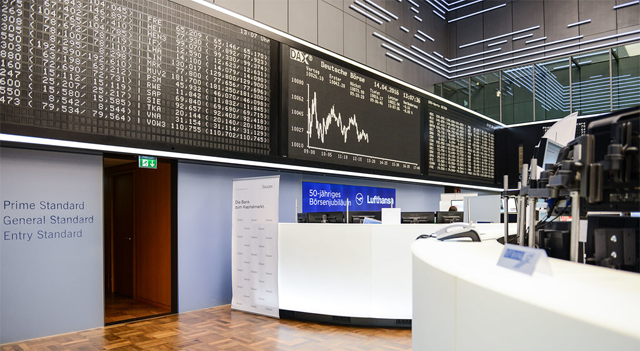
    European equities faced a lack of clear direction on Monday as investors closely monitor ongoing international trade discussions ahead of the looming July 9 deadline for U.S. reciprocal tariffs.

    Tensions eased somewhat after Canada decided to withdraw its previously planned Digital Service Tax (DST) targeting U.S. tech companies.

    Meanwhile, U.S. President Donald Trump criticized trade conditions involving automobiles between the U.S. and Japan, labeling them as imbalanced, and suggested that the 25% tariffs on imported Japanese cars might remain in place.

    In a related development, a new trade pact between the United States and the United Kingdom officially took effect today, lowering U.S. tariffs on British-manufactured cars and aircraft components.

    At midday, the French CAC 40 Index edged up slightly by 0.1%, whereas the U.K.’s FTSE 100 Index and Germany’s DAX Index each retreated by 0.2%.

    On the corporate front, Skanska AB (USOTC:SKSBF) saw its shares dip following the announcement of a significant investment, approximately SEK 700 million (about CZK 1.6 billion), in a residential development named D.O.K. Radlice situated in Prague’s Radlice neighborhood.

    Defense technology company Chemring (LSE:CHG) gained ground after revealing its plan to acquire Landguard Nexus Limited in a deal valued at up to £20 million.

    Shares of STMicroelectronics (NYSE:STM) and Infineon Technologies (TG:IFX) also rose, buoyed by J.P. Morgan placing both on a positive catalyst watchlist.

  • Dow Jones, S&P, Nasdaq, Wall Street Set for Gains as Trade Deal Optimism Drives Market Momentum

    Dow Jones, S&P, Nasdaq, Wall Street Set for Gains as Trade Deal Optimism Drives Market Momentum

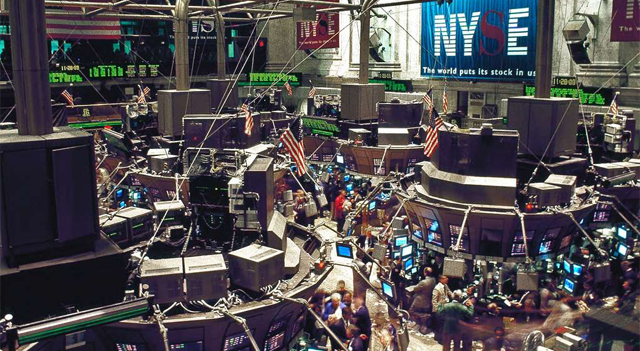
    U.S. stock futures are pointing toward a higher open on Monday, following a mostly positive yet volatile finish to last week’s trading session.

    Investor confidence is buoyed by optimism over potential trade agreements as the deadline for reciprocal U.S. tariffs approaches early next month.

    Further encouraging sentiment is Canada’s recent decision to scrap its digital services tax on U.S. tech companies—a tax originally slated to take effect today.

    This development comes after President Donald Trump announced last Friday that trade negotiations with Canada had ended due to the tax.

    “Rescinding the digital services tax will allow the negotiations of a new economic and security relationship with the United States to make vital progress and reinforce our work to create jobs and build prosperity for all Canadians,” stated Canadian Finance Minister Francois-Philippe Champagne.

    Friday’s trading session featured wide swings, with major indexes oscillating between gains and losses. Despite the turbulence, both the S&P 500 and Nasdaq closed at fresh record highs.

    By day’s end, the Dow surged 432.43 points (1.0%) to 43,819.27, the Nasdaq rose 105.55 points (0.5%) to 20,273.46, and the S&P 500 advanced 32.05 points (0.5%) to 6,173.07.

    Over the course of the week, the Nasdaq led with a 4.3% gain, while the Dow and S&P 500 rose 3.8% and 3.4%, respectively.

    The rally kicked off after President Trump hinted at a new deal with China.

    A White House official later clarified that the U.S. and China had reached “an additional understanding of a framework to implement the Geneva agreement.”

    China’s Ministry of Commerce confirmed that both parties “have confirmed the details of the framework,” with the U.S. agreeing to lift “restrictive measures” and China set to “review and approve” export control items.

    Commerce Secretary Howard Lutnick told Bloomberg that the administration expects to soon finalize agreements with ten major trading partners.

    However, the markets pulled back in afternoon trading after Trump said he was ending trade talks with Canada over its digital services tax on U.S. technology firms.

    “We will let Canada know the Tariff that they will be paying to do business with the United States of America within the next seven day period,” Trump posted on Truth Social.

    Economic data released by the Commerce Department showed consumer prices in May increased roughly as expected, though core inflation was slightly higher than forecasts.

    “Today’s release revealed a little more core inflation than expected based on CPI and PPI data, but not enough to concern anyone,” commented FHN Financial Chief Economist Chris Low.

    Additionally, a University of Michigan report showed consumer sentiment improved more than anticipated in June.

    Retail stocks performed strongly, lifting the Dow Jones U.S. Retail Index by 1.8% to its best close in over four months.

    Airline stocks also gained, with the NYSE Arca Airline Index up 1.5%.

    Conversely, gold stocks fell sharply, dragging the NYSE Arca Gold Bugs Index down 4.0% alongside the precious metal.

  • U.K. Defense Stocks Climb as Trade Agreement with U.S. Officially Begins

    U.K. Defense Stocks Climb as Trade Agreement with U.S. Officially Begins

    Shares of British defense companies edged higher on Monday as a new trade pact between the U.K. and the United States officially went into force, offering a boost to industries expected to benefit from improved market access and reduced tariffs.

    Among the top gainers, Rolls-Royce Holdings PLC (LSE:RR.) rose 2.2% as of 09:08 GMT, while Chemring Group PLC (LSE:CHG) gained 1.5%, and Qinetiq Group PLC (LSE:QQ.) advanced 2%. BAE Systems PLC (LSE:BAES) also traded up by approximately 1%.

    These moves build on prior gains made after the initial announcement of the agreement. Meanwhile, the broader FTSE 100 index was slightly lower, down 0.2% at the time of reporting.

    The newly implemented U.K.-U.S. trade agreement introduces a preferential tariff structure, most notably cutting U.S. import duties on British-built automobiles. Under the deal, the first 100,000 U.K.-made cars exported to the U.S. each year will face a 10% tariff, significantly down from the previous 27.5%. Any units beyond that threshold will be subject to a 25% rate.

    In a press release on Monday, the U.K. Department for Business and Trade noted: “The U.K. is the only country to have secured this agreement with the U.S., reducing car export tariffs from 27.5% to 10%, saving manufacturers hundreds of millions annually and safeguarding hundreds of thousands of jobs.”

    This trade accord is the first signed with the U.S. since President Donald Trump launched a strategy of reciprocal tariffs in April. The final terms were settled in May. The U.S. currently maintains a trade surplus in goods with the U.K., but automobiles remain Britain’s largest export to the U.S., making up 27.4% of all British vehicle exports in the past year.

    In addition to automotive benefits, the agreement also eliminates duties on aerospace products, providing support to one of the U.K.’s most prominent manufacturing sectors. However, some uncertainty remains regarding the treatment of British metal exports, which are not yet fully clarified under the new trade framework.

    As the deal takes effect, investors appear optimistic that defense and industrial exporters like RR., CHG, QQ., and BAES could capitalize on improved trade conditions and enhanced global competitiveness.

  • Dow Jones, S&P, Nasdaq, Stock Futures Rise as Canada Pulls Digital Tax, U.S. Senate Eyes Major Economic Bill

    Dow Jones, S&P, Nasdaq, Stock Futures Rise as Canada Pulls Digital Tax, U.S. Senate Eyes Major Economic Bill

    U.S. stock futures advanced on Monday, lifted by a surprise policy shift from Canada to scrap a controversial digital services tax. Meanwhile, the U.S. Senate, under Republican control, has kicked off deliberations on a far-reaching tax and spending proposal backed by former President Donald Trump. In Asia, Chinese manufacturing data showed a softer-than-expected contraction, helping ease concerns about global growth.

    Markets Open on a Positive Note

    Wall Street looked set for a stronger start to the week, with futures climbing across major indexes as investors cheered the Canadian government’s decision to withdraw a planned tax on tech giants’ digital revenues.

    By 03:30 ET (07:30 GMT), futures tied to the Dow Jones Industrial Average were up 250 points, or 0.6%. S&P 500 futures rose by 23 points (0.4%), while Nasdaq 100 futures added 109 points (0.5%).

    This comes after the S&P 500 and Nasdaq Composite both finished at record highs on Friday. The Nasdaq has officially entered a bull market, defined by a 20% gain from recent lows, reinforcing optimism in tech-heavy sectors.

    Investor sentiment was further buoyed by data showing a dip in consumer spending in May, even as inflation remains above the Federal Reserve’s 2% goal. The unexpected decline in spending raised hopes that the Fed might cut interest rates as early as September. Market odds now price in a 74% chance of a rate cut by then, though some expect action could come even sooner in July.

    Canada Withdraws Digital Services Tax

    In a surprise weekend decision, Canada announced it would no longer implement a planned digital services tax, which was slated to take effect Monday. The move, seen as an effort to break a trade stalemate with the U.S., removed a major source of friction between the two nations.

    The tax, which targeted tech companies with over $20 million in Canadian digital revenue, was meant to apply retroactively to 2022. Its repeal followed threats from President Trump to impose retaliatory tariffs on Canadian exports, calling the policy “unacceptable.”

    Ottawa now aims to reset the trade relationship, with talks between Canadian Prime Minister Mark Carney and President Trump scheduled ahead of a self-imposed July 21 deadline to strike a deal.

    U.S. Senate Debates Sweeping Economic Legislation

    In Washington, the Senate has opened formal debate on a major tax and spending bill championed by Trump, though internal divisions within the Republican Party and pushback from Democrats pose hurdles to quick passage.

    The proposal would extend key provisions from Trump’s 2017 tax cuts, while also increasing funding for defense and border security. The Congressional Budget Office projects the plan could add approximately $3.3 trillion to the national debt over the next ten years.

    Despite these concerns, the bill is expected to clear the Senate, possibly as early as Monday. Lawmakers hope to finalize the legislation and deliver it to President Trump for signature by July 4.

    China’s Factory Activity Shrinks, but Signs of Improvement Emerge

    Chinese manufacturing data for June indicated continued contraction, though at a slower pace than analysts had expected. The manufacturing purchasing managers’ index (PMI) came in at 49.7, slightly ahead of projections and up from 49.5 in May.

    This marks the third consecutive month of contraction in China’s manufacturing sector, largely due to weak international demand and lingering U.S. tariffs. However, the slight uptick in the PMI reflects modest gains in conditions following a May agreement between Washington and Beijing to cut tariffs on some goods.

    Efforts to solidify that agreement into a broader trade framework continued in June, raising hopes that improved bilateral relations will support Chinese exporters.

    Oil Prices Slip Amid Easing Middle East Tensions and OPEC+ Expectations

    Crude oil prices edged lower to start the week as geopolitical risk premiums faded and traders anticipated a potential output increase from OPEC+.

    At 03:35 ET, Brent crude futures were down 0.2% at $66.66 per barrel, while West Texas Intermediate (WTI) fell 0.4% to $65.26.

    Despite last week’s sharp decline—the steepest weekly drop since March 2023—both oil benchmarks remain on track to post a second straight monthly gain of over 5%.

    The OPEC+ alliance is due to meet on July 6, with markets widely expecting the group to approve another increase in production—the fifth such move since April’s decision to gradually unwind output curbs.

  • Dollar Weakens on Hopes for Rate Cuts; Euro Nears Multi-Year Peak

    Dollar Weakens on Hopes for Rate Cuts; Euro Nears Multi-Year Peak

    The U.S. dollar slipped on Monday, hovering near its lowest levels in years, as investors grew increasingly optimistic about potential trade agreements and the likelihood of the Federal Reserve easing interest rates soon.

    By 04:10 ET (08:10 GMT), the Dollar Index, which measures the greenback against a basket of six major currencies, declined 0.2% to 96.81, approaching its weakest point since March 2022. The index is on track for a sharp 2.6% drop over June.

    Trade Deal Progress Spurs Rate Cut Expectations

    Market sentiment has improved following announcements of key trade developments: the U.S. and China finalized a deal last week, and Canada scrapped its digital services tax to revive stalled negotiations.

    Furthermore, European Commission President Ursula von der Leyen reportedly expressed confidence in reaching a U.S.-EU agreement before the July 9 deadline, when new tariffs could take effect on both sides. The avoidance of these tariffs—which could drive inflation higher—may encourage the Federal Reserve to lower rates.

    Fed Chair Jerome Powell’s recent congressional testimony was viewed as dovish, suggesting rate cuts are likely if inflation does not surge due to tariffs this summer. According to CME Group’s FedWatch Tool, the probability of at least one quarter-point rate cut by September has climbed to 91.5%, up from 83% a week earlier.

    The Fed’s next policy meeting is in July; no meeting is scheduled for August. Investors also remain watchful of a major tax-cut and spending bill pending in the Senate, which could add $3.3 trillion to the national debt over ten years, per the Congressional Budget Office.

    European Currency Moves and Economic Data

    The euro edged up 0.1% to 1.1730 against the dollar, close to last Friday’s peak of 1.1754, the highest since September 2021, benefiting from dollar softness. Domestic economic factors had a more modest influence on the euro’s climb.

    German retail sales fell sharply by 1.6% in May compared to April, casting doubt on strong economic growth prospects for Europe’s largest economy this quarter. Meanwhile, upcoming inflation reports from Germany and Italy are expected to show a slight acceleration in eurozone inflation.

    Analysts at ING noted that while markets currently price in the European Central Bank’s first rate cut in December, there’s a growing risk of a more dovish adjustment sooner.

    The British pound dipped 0.1% to 1.3705 versus the dollar, just below last Thursday’s high of 1.3770—the highest level since October 2021. The UK economy grew 0.7% in Q1 2025, the fastest pace in a year, but the Bank of England forecasts slower growth of about 0.25% in Q2.

    Asian Market Highlights

    In Asia, the Japanese yen strengthened slightly, with USD/JPY falling 0.4% to 144.07, despite weaker-than-expected industrial production growth in May.

    The Chinese yuan also gained, with USD/CNY down 0.1% to 7.1654, near its strongest level since November. Recent PMI data showed China’s manufacturing sector contracted at a smaller-than-expected rate in June, while non-manufacturing activity improved. This points to some recovery in business conditions, helped by reduced tariffs following recent U.S.-China trade agreements. However, manufacturing still shrank for the third month in a row, reflecting ongoing pressure from high U.S. tariffs and sluggish domestic demand.