Author: Fiona Craig

  • Dow Jones, S&P, Nasdaq, Futures, AMD, OpenAI Partnership Sparks Early Optimism on Wall Street

    Dow Jones, S&P, Nasdaq, Futures, AMD, OpenAI Partnership Sparks Early Optimism on Wall Street

    U.S. stock futures pointed to a stronger open on Monday, signaling a positive start to the week after markets ended Friday’s session on a mixed note.

    Technology shares are expected to lead early gains, with Nasdaq 100 futures rising 0.9 percent in pre-market trading.

    Shares of Advanced Micro Devices (NASDAQ:AMD) surged 35.7 percent before the opening bell after the company revealed a 6-gigawatt partnership with OpenAI to power the AI firm’s next-generation infrastructure. The agreement covers several generations of AMD Instinct GPUs. As part of the deal, OpenAI received a warrant to purchase up to 160 million AMD shares, which will vest as performance milestones are met.

    Market sentiment also improved amid renewed enthusiasm for mergers and acquisitions. Fifth Third Bancorp (NASDAQ:FITB) announced plans to acquire Comerica (NYSE:CMA) in an all-stock deal valued at $10.9 billion. Comerica’s shares jumped 14.1 percent in pre-market trading. Under the terms, Comerica investors will receive 1.8663 Fifth Third shares per Comerica share, equating to $82.88 per share based on Fifth Third’s Friday closing price.

    Investors appear largely unfazed by the ongoing U.S. government shutdown, now in its sixth day, as lawmakers continue to struggle to agree on a temporary funding measure.

    Stocks had traded mostly higher last week, though Friday’s session saw a retreat from intraday highs. The Nasdaq slipped 63.54 points (0.3%) to 22,780.51, while the S&P 500 inched up 0.44 points to 6,715.79, and the Dow Jones Industrial Average gained 238.56 points (0.5%) to 46,758.28.

    Despite the uneven close, all three indexes posted solid weekly gains — the Nasdaq climbed 1.3 percent, while the Dow and S&P 500 each advanced 1.1 percent. Both the Dow and S&P 500 extended their winning streak to six sessions, finishing at record highs, supported by strength in UnitedHealth (NYSE:UNH), Travelers (NYSE:TRV), and Caterpillar (NYSE:CAT).

    Meanwhile, the Nasdaq’s weakness was partly driven by declines in several major tech names. Palantir (NASDAQ:PLTR) plunged 7.5 percent after a Reuters report cited a U.S. Army memo highlighting “fundamental security flaws” in the company’s battlefield communications modernization project.

    Tesla (NASDAQ:TSLA) dropped 1.4 percent, and Nvidia (NASDAQ:NVDA) slipped 0.7 percent after reaching a record high on Thursday.

    The broader market’s subdued tone reflected the uncertainty caused by the postponement of key economic data due to the shutdown — including the monthly jobs report.

    However, private data reinforced expectations that the Federal Reserve may continue cutting interest rates. Earlier in the week, ADP reported a surprise drop in private-sector employment, and the Institute for Supply Management (ISM) released weaker-than-expected data showing its services PMI fell to 50.0 in September from 52.0 in August — the breakeven level between growth and contraction. Economists had forecast a reading of 51.7.

    Most market sectors closed Friday with modest moves. Healthcare stocks outperformed, pushing the Dow Jones Health Care Index up 1.1 percent to its highest level in over six months. Telecom, banking, and airline shares also showed resilience, while retail and semiconductor stocks lagged behind.

    This content is for informational purposes only and does not constitute financial, investment, or other professional advice. It should not be considered a recommendation to buy or sell any securities or financial instruments. All investments involve risk, including the potential loss of principal. Past performance is not indicative of future results. You should conduct your own research and consult with a qualified financial advisor before making any investment decisions.

  • Five Key Market Developments to Track This Week

    Five Key Market Developments to Track This Week

    Markets this week remain focused on the ongoing partial shutdown of the U.S. federal government, which has delayed several critical economic releases ahead of an upcoming Federal Reserve policy meeting. Investors will also digest the minutes from the Fed’s September gathering, alongside earnings from major companies including Constellation Brands (NYSE:STZ) and Delta Air Lines (NYSE:DAL).

    U.S. Government Shutdown in Focus

    U.S. stock futures rose on Monday as traders monitored the continued federal shutdown in Washington and awaited both a Fed interest rate decision and the start of third-quarter earnings later this month.

    The partial government closure has pushed back key economic data releases, notably the highly anticipated nonfarm payrolls report.

    “The absence of official data has heightened attention on private economic indicators,” analysts at Vital Knowledge said in a note, noting that trackers of private employment and business activity have signaled “darkening storm clouds” and rising inflation.

    With the Fed poised to announce a fresh rate decision in October, the lack of government figures has taken on added significance. Despite the data gap, markets broadly expect additional rate cuts at upcoming policy meetings, according to CME’s FedWatch Tool.

    As the shutdown continues, political deadlock persists. A senior White House official warned on Sunday that mass layoffs of federal workers could begin if talks with congressional Democrats to end the shutdown are “absolutely going nowhere.”

    FOMC Minutes

    Traders will scrutinize the minutes from the Fed’s September meeting on Wednesday. During that session, the central bank cut interest rates for the first time since December, emphasizing support for the labor market over inflation concerns.

    Officials also signaled the potential for further cuts at the Fed’s remaining meetings in October and December, though the scope of future reductions in 2026 remains uncertain.

    “[A] cut is fully priced for this month, and the same is virtually true of December’s meeting,” ING analysts noted. “The much bigger debate is what happens in 2026. And the government shutdown — and the resulting data void — is unlikely to materially change that.”

    OpenAI DevDay

    Attention will also be on OpenAI’s developers’ conference this week. CEO Sam Altman teased over the weekend that the event will introduce “some new stuff” designed to help users “build” with artificial intelligence.

    Recently valued at $500 billion, OpenAI launched its AI video-generating app Sora in the U.S. and Canada. The tool allows users to create and share AI-generated videos, including those derived from copyrighted content.

    Tensions have surfaced, particularly in Hollywood, as OpenAI negotiates with copyright holders. Reports indicate at least one major studio plans to prevent its content from appearing in Sora.

    Constellation Brands Earnings

    Constellation Brands is set to report its August-quarter results after Monday’s close. The company fell short of both sales and profit estimates last quarter and continues to face the dual pressures of Trump-era aluminum tariffs and broader economic uncertainty, which have constrained consumer spending on beer and wine.

    A sweeping crackdown on immigration has also been cited as a factor affecting beer demand, particularly among Hispanic consumers. Analysts warn that these headwinds may intensify an already subdued demand environment.

    Delta Air Lines Earnings

    Delta Air Lines will release its latest quarterly results on Thursday, following a reaffirmation of its full-year and current-quarter guidance.

    In September, Delta revised upward the lower end of its third-quarter revenue forecast to a 2%-4% increase, compared with a prior range of 0%-4%. This reflects a generally more optimistic view of the U.S. travel sector after earlier-year turmoil linked to Trump’s import tariffs.

    Industry observers note that travelers took advantage of discounts and promotions during summer, and executives expect resilient demand could allow airlines to raise fares in the latter part of 2025.

    This content is for informational purposes only and does not constitute financial, investment, or other professional advice. It should not be considered a recommendation to buy or sell any securities or financial instruments. All investments involve risk, including the potential loss of principal. Past performance is not indicative of future results. You should conduct your own research and consult with a qualified financial advisor before making any investment decisions.

  • Bernstein Revises Long-Term Copper Forecast, Projects $10,000/t Price

    Bernstein Revises Long-Term Copper Forecast, Projects $10,000/t Price

    Bernstein has published an updated long-term outlook for copper, structured around four key themes that highlight the distinctive dynamics of the metal’s market.

    The analysis begins by framing how to think about copper markets, noting that in a free market, price acts as the balancing mechanism between supply and demand. According to Bernstein, “missing supply” essentially translates into “high copper prices.” Their models indicate that a significant supply gap may emerge after 2028, while the market remains roughly balanced today at around $10,000 per tonne.

    The firm highlights that copper mines exhibit left-skewed output distributions, meaning that negative events are more likely than positive ones. As a result, disruptions don’t simply average out and are critical for accurately forecasting market balances.

    Bernstein describes the copper balance as functioning more like “a mechanical watch rather than a see-saw,” with many small moving parts influencing overall stability. Despite well-documented mine outages at locations such as Grasberg, Kamoa Kakula, and Cobre Panama, the firm expects the copper market to remain reasonably balanced in the near term.

    On pricing, Bernstein observes that above-ground stockpiles can distort price signals for balancing supply and demand. Currently, the market is one standard deviation tighter than its long-term average. Their models suggest that a market half a sigma tighter could push copper to $16,000/t, while a half sigma looser could depress prices to $9,000/t.

    This content is for informational purposes only and does not constitute financial, investment, or other professional advice. It should not be considered a recommendation to buy or sell any securities or financial instruments. All investments involve risk, including the potential loss of principal. Past performance is not indicative of future results. You should conduct your own research and consult with a qualified financial advisor before making any investment decisions.

  • Natara Global Boosts Cash Offer for Treatt to 290p per Share

    Natara Global Boosts Cash Offer for Treatt to 290p per Share

    Natara Global has raised its recommended cash offer for Treatt (LSE:TET) to 290 pence per share, up 12% from its earlier proposal of 260 pence.

    The updated bid, described by Natara as final, values Treatt at around £174 million and represents a 29% premium over the company’s unaffected share price of 224 pence.

    Under this new valuation, the enterprise value to EBITDA multiple stands at 11.1x, based on projected 2026 EBITDA of £15.7 million.

    Natara emphasized that no further increases are planned unless a rival offer emerges or the Takeover Panel grants permission under exceptional circumstances.

    The Treatt Board has judged the revised terms to be fair and reasonable and will unanimously recommend that shareholders accept the offer.

    This content is for informational purposes only and does not constitute financial, investment, or other professional advice. It should not be considered a recommendation to buy or sell any securities or financial instruments. All investments involve risk, including the potential loss of principal. Past performance is not indicative of future results. You should conduct your own research and consult with a qualified financial advisor before making any investment decisions.

  • UK Construction Activity Contracts at Slowest Rate in Three Months

    UK Construction Activity Contracts at Slowest Rate in Three Months

    UK construction output continued to shrink in September, though the pace of decline eased to its slowest in three months, according to the latest S&P Global UK Construction Purchasing Managers’ Index (PMI) released Monday.

    The headline PMI edged up to 46.2 in September from 45.5 in August, marking its highest reading since June. Despite the improvement, the index remained below the neutral 50.0 mark for the ninth consecutive month, indicating that the sector is still contracting.

    Residential construction showed modest improvement with a PMI of 46.8, while civil engineering remained the weakest area at 42.9, though both segments experienced slower declines than in August. Commercial construction was the exception, seeing a slightly faster drop with a reading of 46.4.

    New orders continued to fall for the ninth straight month, but the decrease was minimal and the slowest in that period. Construction firms pointed to weak demand, economic uncertainty, and hesitant clients as ongoing obstacles to converting opportunities into contracts. Some companies, however, noted new wins linked to energy projects.

    Employment in the sector declined for the ninth consecutive month as firms continued hiring freezes and did not replace departing staff due to lower workloads, although some reported hiring more apprentices.

    Supply conditions improved slightly in September, with faster delivery times reflecting reduced pressure on supplier capacity. Purchasing of inputs fell for the tenth consecutive month.

    Cost pressures remained notable, with purchasing prices rising sharply during September. While inflation accelerated from August, it was still below the average seen in the first half of 2025. Companies cited higher wages and increased energy, raw material, and transport costs as main drivers.

    Business confidence stayed subdued, largely unchanged from August’s 32-month low. Some construction firms expressed optimism that infrastructure investment, energy sector demand, lower interest rates, and planning approvals could provide a boost, but these factors were tempered by concerns over the UK economic outlook, capital expenditure reductions, and client uncertainty ahead of the Autumn Budget.

    This content is for informational purposes only and does not constitute financial, investment, or other professional advice. It should not be considered a recommendation to buy or sell any securities or financial instruments. All investments involve risk, including the potential loss of principal. Past performance is not indicative of future results. You should conduct your own research and consult with a qualified financial advisor before making any investment decisions.

  • Dow Jones, S&P, Nasdaq, Wall Street, Futures Climb as U.S. Government Shutdown Persists – Market Movers

    Dow Jones, S&P, Nasdaq, Wall Street, Futures Climb as U.S. Government Shutdown Persists – Market Movers

    U.S. stock futures edged higher Monday as investors monitored an ongoing federal government shutdown that has delayed key economic data ahead of the Federal Reserve’s upcoming interest rate decision. A senior White House official warned that mass layoffs of federal employees could soon begin, as prospects for a deal between Democrats and Republicans to reopen the government remain limited. Meanwhile, Constellation Brands (NYSE:STZ) is set to report its latest quarterly earnings, and Japan’s ruling party selected hardline conservative Sanae Takaichi as its next leader.

    Futures Advance

    U.S. stock futures rose as traders weighed the impact of the prolonged government shutdown and anticipated the start of the third-quarter earnings season later this month.

    By 03:10 ET, Dow futures were up 86 points, or 0.2%, S&P 500 futures gained 20 points, or 0.3%, and Nasdaq 100 futures added 103 points, or 0.4%.

    On Friday, the main Wall Street indices were mixed, with the S&P 500 and Dow Jones Industrial Average closing at record highs, while the Nasdaq Composite edged down 0.3%. Applied Materials (NASDAQ:AMAT), which warned of a $600 million hit to its fiscal 2026 revenue, weighed on the tech-heavy Nasdaq.

    White House Warns of Federal Layoffs

    The partial government shutdown has delayed key economic reports, including the nonfarm payrolls data. Analysts at Vital Knowledge noted that private-sector indicators have shown “darkening storm clouds” and rising inflation pressures.

    “The absence of official data has also taken on more importance with the Fed set to unveil a fresh interest rate decision in October,” the analysts added. Last month, the Fed cut rates to support a weakening labor market, risking renewed inflation pressures. Despite missing government data, markets widely expect further rate cuts at the central bank’s next meeting, according to CME’s FedWatch Tool.

    A senior White House official cautioned Sunday that mass layoffs could start if President Donald Trump determines that negotiations with congressional Democrats to end the shutdown are “absolutely going nowhere.”

    Constellation Brands Earnings

    Constellation Brands will release its August-quarter results after Monday’s market close. The company missed sales and profit estimates in the previous quarter, affected by higher tariffs on aluminum under Trump and broader economic uncertainty, which has restrained consumer purchases of beer and wine.

    “These trends have threatened to compound a demand environment for the industry that was already tepid,” analysts said, citing immigration policy crackdowns as a potential factor impacting beer consumption among Hispanic consumers.

    Japan’s Takaichi Wins LDP Leadership

    In Asia, Japanese stocks led gains Monday, with the Nikkei hitting record highs after Sanae Takaichi, a fiscal dove, won the Liberal Democratic Party leadership election over the weekend. Takaichi is set to become Japan’s first female prime minister, with a parliamentary session scheduled for mid-October.

    “Takaichi was viewed as the most dovish among the five front-runners for LDP leadership,” analysts noted. She has advocated for increased fiscal spending and tax relief to support Japan’s fragile economy and is expected to discourage the Bank of Japan from further rate hikes.

    Oil Rises on Smaller-Than-Expected OPEC+ Output Increase

    Oil prices rebounded sharply Monday after last week’s losses, following OPEC+’s announcement of a modest 137,000 bpd production increase for November—matching October’s increment but far below the 500,000 bpd some had expected.

    “The decision provided relief to traders who had feared a flood of new barrels would overwhelm fragile demand,” analysts said. OPEC+, which has added over 2.7 million bpd this year, continues to unwind the pandemic-era production cuts gradually.

    This content is for informational purposes only and does not constitute financial, investment, or other professional advice. It should not be considered a recommendation to buy or sell any securities or financial instruments. All investments involve risk, including the potential loss of principal. Past performance is not indicative of future results. You should conduct your own research and consult with a qualified financial advisor before making any investment decisions.

  • Oil Prices Edge Up 1% as OPEC+ Announces Modest Production Increase

    Oil Prices Edge Up 1% as OPEC+ Announces Modest Production Increase

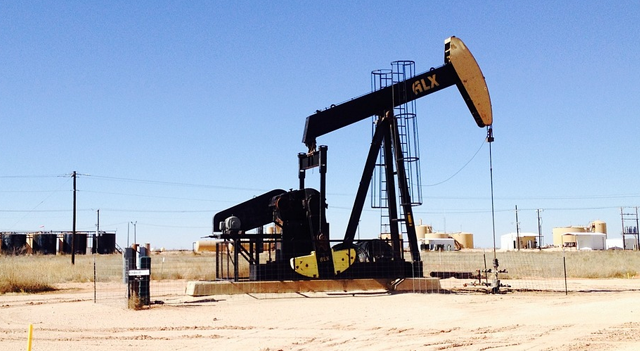
    Oil prices gained around 1% on Monday after OPEC+ unveiled a smaller-than-expected boost in production for November, easing some supply concerns, though a subdued demand outlook may limit further short-term gains.

    Brent crude futures rose 67 cents, or 1%, to $65.20 a barrel by 0625 GMT, while U.S. West Texas Intermediate crude increased 66 cents, or 1.1%, to $61.54.

    “The price jump has primarily been boosted by OPEC+’s decision for a lower-than-expected production hike next month as the group intended to buffer the recent slump in oil markets,” said independent analyst Tina Teng.

    On Sunday, OPEC+—comprising the Organization of the Petroleum Exporting Countries, Russia, and several smaller producers—announced a November production increase of 137,000 barrels per day (bpd), the same modest rise as in October, amid ongoing concerns about a potential supply glut.

    Ahead of the decision, sources noted that while Russia favored the 137,000 bpd increase to avoid further price pressure, Saudi Arabia had advocated for a higher boost—potentially double, triple, or quadruple—to regain market share faster.

    In the short term, analysts expect the upcoming refinery maintenance season in the Middle East to help cap prices.

    “Higher-than-usual refinery maintenance across the Middle East in Q4 will leave more crude available for shipment, further contributing to the prospect of strong export volumes,” said Sentosa Shipbrokers in a client report.

    Refiners in other regions may also scale back their crude intake during shutdowns.

    “As the shoulder season progresses… a ramp-up in refinery maintenance should create a significant surplus, spurring a selloff in oil,” BMI analysts noted in a client briefing.

    Concerns over weak demand fundamentals in Q4 add further restraint to the market.

    “With the absence of any fresh bullish catalysts and growing ambiguity on the demand outlook, oil prices are likely to stay capped despite OPEC+’s smaller-than-feared output hike,” said Priyanka Sachdeva, senior market analyst at Phillip Nova.

    “The reality is that the market is gradually shifting toward a phase of oversupply, with seasonal demand expected to taper off into winter and macro data offering little upside impulse,” she added.

    This content is for informational purposes only and does not constitute financial, investment, or other professional advice. It should not be considered a recommendation to buy or sell any securities or financial instruments. All investments involve risk, including the potential loss of principal. Past performance is not indicative of future results. You should conduct your own research and consult with a qualified financial advisor before making any investment decisions.

  • Airbus, Thales, and Leonardo Satellite Merger Talks Hit a Roadblock

    Airbus, Thales, and Leonardo Satellite Merger Talks Hit a Roadblock

    Efforts to form a major new European satellite manufacturer involving Airbus (EU:AIR), Thales (EU:HO), and Leonardo (BIT:LDO) have stalled, according to French newspaper La Tribune.

    The discussions, ongoing for several months, aimed to create a European venture better positioned to compete with Elon Musk’s SpaceX in satellite production. While momentum reportedly built last week, the talks ran into a significant obstacle.

    The primary sticking point concerns the allocation of workshare among the three aerospace firms, La Tribune reported. Thales and Leonardo, which co-own Thales Alenia Space—Airbus’ main competitor in satellite manufacturing—have requested more time to resolve these disagreements.

    If successful, the venture would represent a major consolidation in Europe’s space sector, as companies look to bolster their competitiveness amid rising international pressure.

    This content is for informational purposes only and does not constitute financial, investment, or other professional advice. It should not be considered a recommendation to buy or sell any securities or financial instruments. All investments involve risk, including the potential loss of principal. Past performance is not indicative of future results. You should conduct your own research and consult with a qualified financial advisor before making any investment decisions.

  • DAX, CAC, FTSE100, European Stocks Slide Amid Fresh Political Uncertainty in France

    DAX, CAC, FTSE100, European Stocks Slide Amid Fresh Political Uncertainty in France

    European equities fell on Monday, pressured by renewed political turmoil in France, which rattled domestic markets.

    France’s newly appointed Prime Minister Sebastien Lecornu unexpectedly resigned, just hours after naming a new cabinet, with both allies and opponents threatening to bring down his government. Lecornu, a close ally of President Emmanuel Macron, leaves the country facing heightened political instability in one of Europe’s largest economies.

    By 08:04 GMT, France’s CAC 40 had dropped 2.1%, while the pan-European Stoxx 600 fell 0.4%. Germany’s DAX slipped 0.2%, and the UK’s FTSE 100 was down 0.2%.

    Eurozone banks were among the hardest hit, led by French lenders such as BNP Paribas (EU:BNP), Societe Generale (EU:GLE), and Credit Agricole (EU:ACA).

    Energy stocks offered some relief, buoyed by rising oil prices after OPEC+ announced a smaller-than-expected output increase over the weekend. The technology sector also saw gains, helped by a more than 1% rise in shares of semiconductor giant ASML (EU:ASML).

    Shares of French kitchenware maker SEB (EU:SK) plunged more than 22% after it cut its annual sales and profit guidance, attributing the downgrade to weaker demand amid a “wait and see” approach among U.S. consumers and businesses.

    Meanwhile, British luxury carmaker Aston Martin (LSE:AML) indicated that it expects a deeper full-year loss due to sluggish demand in North America and the Asia-Pacific region, compounded by higher U.S. tariffs.

    This content is for informational purposes only and does not constitute financial, investment, or other professional advice. It should not be considered a recommendation to buy or sell any securities or financial instruments. All investments involve risk, including the potential loss of principal. Past performance is not indicative of future results. You should conduct your own research and consult with a qualified financial advisor before making any investment decisions.

  • AstraZeneca and Daiichi Sankyo’s Datroway Shows Survival Benefit in Metastatic Breast Cancer

    AstraZeneca and Daiichi Sankyo’s Datroway Shows Survival Benefit in Metastatic Breast Cancer

    AstraZeneca (LSE:AZN) and Daiichi Sankyo have reported that Datroway demonstrated a statistically significant improvement in overall survival for patients with metastatic triple-negative breast cancer (TNBC) who are ineligible for immunotherapy.

    The TROPION-Breast02 Phase III trial showed that the drug improved both overall survival and progression-free survival compared with chemotherapy as a first-line treatment. This represents the first therapy to show a survival benefit in this specific patient population.

    Around 70% of patients with metastatic TNBC are not candidates for immunotherapy, including those whose tumors do not express PD-L1 or who cannot receive it for other reasons. For these patients, chemotherapy has been the standard first-line therapy.

    “TROPION-Breast02 is the only trial ever to show an overall survival benefit in the first-line treatment of patients with metastatic triple-negative breast cancer for whom immunotherapy is not an option,” said Susan Galbraith, Executive Vice President of Oncology Haematology R&D at AstraZeneca.

    Ken Takeshita, Global Head of R&D at Daiichi Sankyo, added that Datroway is “the first antibody drug conjugate and the only therapy to significantly improve overall survival compared to chemotherapy” in this patient group.

    The safety profile was consistent with prior clinical trials. Detailed data will be presented at an upcoming medical meeting and shared with regulatory authorities.

    Datroway is a TROP2-directed antibody drug conjugate being jointly developed by AstraZeneca and Daiichi Sankyo. The companies are evaluating it across multiple stages of TNBC in three additional Phase III trials.

    TNBC represents about 15% of all breast cancer cases, with roughly 345,000 new diagnoses globally each year. It is the most aggressive form of breast cancer, with a median overall survival of just 12 to 18 months.

    This content is for informational purposes only and does not constitute financial, investment, or other professional advice. It should not be considered a recommendation to buy or sell any securities or financial instruments. All investments involve risk, including the potential loss of principal. Past performance is not indicative of future results. You should conduct your own research and consult with a qualified financial advisor before making any investment decisions.