Author: Fiona Craig

  • DAX, CAC, FTSE100, European Markets Slip as Investors Await Powell’s Jackson Hole Speech; Mixed Corporate and Economic Updates

    DAX, CAC, FTSE100, European Markets Slip as Investors Await Powell’s Jackson Hole Speech; Mixed Corporate and Economic Updates

    European equities traded lower on Thursday, with investors exercising caution ahead of Federal Reserve Chair Jerome Powell’s upcoming address at the Jackson Hole symposium, where markets hope to gain clarity on the outlook for interest rates later this year.

    On the economic front, fresh data offered a mixed picture. The Eurozone’s manufacturing PMI surprisingly ticked back into expansion territory in August, though activity in the services sector fell, according to the latest Purchasing Managers’ Index survey by HCOB.

    Across the Channel, the U.K. economy showed signs of resilience. Private sector activity grew at its fastest pace in a year, while government figures revealed that Britain’s budget deficit in July fell to its lowest level for the month in three years.

    By midday trading, the French CAC 40 was down 0.6%, Germany’s DAX slipped 0.3%, and London’s FTSE 100 eased 0.2%.

    On the corporate side, several stocks moved sharply following earnings and business updates:

    • Nicox (EU:ALCOX), the French ophthalmology company, jumped 10% after releasing encouraging results from the phase 3 Denali trial of NCX 470 in glaucoma patients.
    • Dutch insurer Aegon (EU:AGN) gained 7% as it reported a swing to a €606 million profit in the first half of 2025, compared to a €65 million loss a year earlier.
    • WHSmith (LSE:SMWH) plunged 37% after the British retailer cut its forecasts and announced an independent probe into what it described as “an overstatement” of profits in its U.S. division.
    • Engineering firm Renishaw (LSE:RSW) rose 9% following news that Group Finance Director Allen Roberts will retire at year’s end, closing out a 46-year tenure with the company.
    • Recruitment group Hays (LSE:HAS) slipped 4% after reporting a sharp drop in annual profit.
    • Norway’s second-largest oil and gas company Aker BP (TG:A3KQ02) advanced 3% after confirming a major oil discovery in the Yggdrasil field of the North Sea.

    Investors remain focused on Powell’s speech at Jackson Hole, which could set the tone for central bank policy in the months ahead.

    This content is for informational purposes only and does not constitute financial, investment, or other professional advice. It should not be considered a recommendation to buy or sell any securities or financial instruments. All investments involve risk, including the potential loss of principal. Past performance is not indicative of future results. You should conduct your own research and consult with a qualified financial advisor before making any investment decisions.

  • Dow Jones, S&P, Nasdaq, Wall Street Futures Slip as Rate Uncertainty and Weak Earnings Pressure Markets

    Dow Jones, S&P, Nasdaq, Wall Street Futures Slip as Rate Uncertainty and Weak Earnings Pressure Markets

    U.S. stock futures were pointing lower on Thursday, suggesting a sluggish open on Wall Street as investors remained cautious amid uncertainty surrounding interest rates and ahead of a critical speech from Federal Reserve Chair Jerome Powell at the Jackson Hole Symposium on Friday.

    Powell’s remarks are expected to play a key role in shaping expectations for the Fed’s September policy meeting, as markets attempt to gauge whether the central bank will move ahead with a rate cut.

    “Powell is likely to keep his cards close to his vest, emphasize that the Fed cares very much about their dual mandate and explain that they are data dependent and will need to see the jobs report (9/5) and the two inflation reports (9/10-9/11) before they can make a determination whether or not to cut interest rates on September 17th,” noted Chris Zaccarelli, Chief Investment Officer at Northlight Asset Management.

    Ahead of his address, CME Group’s FedWatch Tool showed markets pricing in a nearly 80% probability of a quarter-point cut next month.

    Still, Kansas City Fed President Jeffrey Schmid pushed back against that view in a CNBC interview, saying policymakers need stronger confirmation before acting. He commented the central bank must “have very definitive data to be moving that policy rate.” Schmid added, “In September, we’ll get around tables and we’ll collaborate and we’ll figure it out, but yeah, I think there’s a lot to be said between now and September.”

    Market sentiment also took a hit from Walmart (NYSE:WMT), which dropped 3.3% in premarket trading after posting weaker-than-expected second-quarter earnings.

    On Wednesday, stocks staged a partial recovery after a sharp morning sell-off. The Nasdaq ended down 142.10 points, or 0.7%, at 21,172.86, while the S&P 500 slipped 15.59 points, or 0.2%, to 6,395.78. The Dow Jones Industrial Average eked out a small gain of 16.04 points, closing at 44,938.31.

    Technology shares led the downturn for a second straight session, pressured by reports that the Trump administration is considering taking equity stakes in semiconductor manufacturers receiving CHIPS Act subsidies. White House Press Secretary Karoline Leavitt confirmed that Commerce Secretary Howard Lutnick was negotiating a deal to secure a 10% government stake in Intel (NASDAQ:INTC).

    “A positive spin on proceedings is that the stake taken by the US government may crowd in other investors and give them confidence to buy in,” said Danni Hewson, head of financial analysis at AJ Bell. “Meanwhile the government taking partial ownership of a company in exchange for grants which were already offered might well send shivers down the spine of other businesses which rely on the largesse of the US state.”

    While some bargain hunters stepped in later in the session, losses persisted across multiple sectors. Airline stocks slumped, dragging the NYSE Arca Airline Index down 2.3%. Housing stocks mirrored the weakness, with the Philadelphia Housing Sector Index also falling 2.3%.

    Additional declines were seen in computer hardware and steel names, whereas gold miners rallied on the back of higher bullion prices.

    This content is for informational purposes only and does not constitute financial, investment, or other professional advice. It should not be considered a recommendation to buy or sell any securities or financial instruments. All investments involve risk, including the potential loss of principal. Past performance is not indicative of future results. You should conduct your own research and consult with a qualified financial advisor before making any investment decisions.

  • M&S to Spend £340 Million on Automated Distribution Hub

    M&S to Spend £340 Million on Automated Distribution Hub

    Marks and Spencer Group PLC (LSE:MKS) has announced plans to invest £340 million in a new automated distribution center in Daventry, located in central England, as part of its strategy to double the scale of its food business.

    The facility, covering 1.3 million square feet, is expected to become operational in 2029, the company said Thursday.

    Alex Freudmann, managing director of M&S Food, commented: “This investment will boost capacity for future growth, lower our cost to serve over the long-term, and improve product availability.”

    The project is projected to generate 1,000 permanent roles on-site, in addition to approximately 2,000 positions during the construction phase.

    This investment comes as M&S continues to recover from a cyberattack in April, which forced the retailer to suspend online clothing orders and temporarily shut down several systems, disrupting food supplies and increasing waste and logistics expenses.

    In May, M&S estimated the attack would cut operating profit by around £300 million. Online clothing sales resumed on June 10 after a 46-day suspension, and the August 11 relaunch of click-and-collect services represents another milestone in the company’s recovery from the cyber incident.

    This content is for informational purposes only and does not constitute financial, investment, or other professional advice. It should not be considered a recommendation to buy or sell any securities or financial instruments. All investments involve risk, including the potential loss of principal. Past performance is not indicative of future results. You should conduct your own research and consult with a qualified financial advisor before making any investment decisions.
  • UBS Sees Potential in Emerging Market Currencies as Fed Rate Cuts Loom

    UBS Sees Potential in Emerging Market Currencies as Fed Rate Cuts Loom

    UBS believes certain emerging market currencies could present attractive opportunities despite the recent strength of the U.S. dollar, according to a note from the investment bank.

    The firm observed that gains in emerging market currencies have stalled since early July amid dollar strength. However, UBS remains optimistic, citing expectations for Federal Reserve rate cuts and the appealing yields available in many emerging markets.

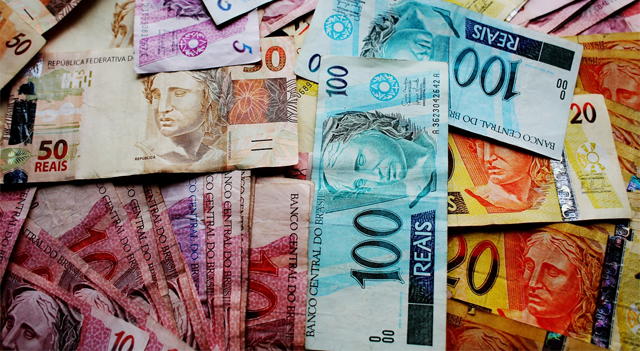
    The bank singled out the Brazilian real, Mexican peso, Indian rupee, South African rand, and Egyptian pound as currencies that may offer value for investors seeking diversified exposure. It also suggested that selling USD upside against pairs like USD/ZAR and USD/ILS could provide potential yield enhancement.

    UBS acknowledged that geopolitical risks remain high and likely to persist, with political instability increasingly influencing macroeconomic conditions. The bank also noted that the impact of tariffs on the dollar will depend on forthcoming decisions by both the U.S. administration and the Federal Reserve.

    According to UBS’s base case, the ongoing trade war is expected to weigh on the U.S. economy over the next few quarters, prompting the Fed to cut rates. This scenario would likely weaken the dollar and bolster carry trades. At the same time, UBS cautioned that sharp dollar declines or unexpected policy moves could negatively affect pro-cyclical currencies.

    This content is for informational purposes only and does not constitute financial, investment, or other professional advice. It should not be considered a recommendation to buy or sell any securities or financial instruments. All investments involve risk, including the potential loss of principal. Past performance is not indicative of future results. You should conduct your own research and consult with a qualified financial advisor before making any investment decisions.
  • Dollar Edges Up Ahead of Jackson Hole; Euro Gains on PMI Data

    Dollar Edges Up Ahead of Jackson Hole; Euro Gains on PMI Data

    The U.S. dollar inched higher on Thursday, hovering just below a one-week peak as investors prepared for the start of the Federal Reserve’s annual Jackson Hole symposium.

    At 04:40 ET (08:40 GMT), the Dollar Index, which measures the greenback against a basket of six major currencies, rose 0.1% to 98.114, following a climb to its strongest level since August 12 in the previous session.

    Fed Minutes Add Support

    The greenback received additional backing after Wednesday’s release of the Federal Reserve’s July meeting minutes, which showed most policymakers remain attentive to labor market trends and inflation. The two members who dissented against keeping interest rates steady last month were not joined by other board members.

    “Almost all participants viewed it as appropriate to maintain the target range for the federal funds rate at 4.25% to 4.50% at this meeting,” the minutes of the July 29-30 meeting said.

    The Fed has maintained the 4.25%-4.50% policy range throughout 2025, with some members, including Chair Jerome Powell, expressing concern that the Trump administration’s tariffs could rekindle inflation pressures. Weekly jobless claims, expected later in the session, are likely to show slight labor market deterioration following the weak payrolls data at the start of the month.

    Trading activity may remain muted on Thursday as market participants await three days of potentially market-moving developments from Jackson Hole.

    “We’re all waiting on tomorrow’s speech from Fed Chair Jerome Powell as to how significantly the Fed registered the substantial downward revisions to back-month job data,” said analysts at ING, in a note.
    “Before then …we’ll have a speech from the Fed’s Raphael Bostic. He’s recently been saying he could vote for a rate cut soon, although one rate cut this year is his preferred adjustment.”

    Euro Supported by PMI Figures

    In Europe, the euro edged up against the dollar, with EUR/USD gaining 0.1% to 1.1656. The currency was supported slightly by data indicating eurozone businesses saw new orders rise for the first time since May 2024 in August, driving overall activity to its fastest pace in 15 months despite persistent export weakness.

    The HCOB Flash Eurozone Composite Purchasing Managers’ Index, compiled by S&P Global, climbed to 51.1 in August from 50.9 in July, marking the third straight monthly improvement and the highest reading since May 2024. PMI readings above 50 indicate growth, while those below signal contraction.

    “EUR/USD is becalmed. It’s fair to say that the optimism over a potential ceasefire/peace deal in Ukraine is now fading,” said ING. “We may see another tight 1.1620-1.1670 trading range in EUR/USD today, with the biggest chance of a breakout remaining Powell’s speech tomorrow.”

    GBP/USD also gained 0.1% to 1.3466 following broadly positive U.K. activity readings. The U.K. Composite Purchasing Managers’ Index rose to 53.0 in August from 51.5 in July, above expectations of 51.6.

    Calm in Asian Markets

    In Asia, USD/JPY edged up 0.1% to 147.55, reflecting slower contraction in Japanese factory activity during August, approaching a return to growth. USD/CNY was slightly higher at 7.1769 after the People’s Bank of China kept benchmark loan prime rates unchanged.

    Elsewhere, AUD/USD slipped 0.1% to 0.64234, while NZD/USD held steady at 0.5822 after falling to its lowest level since mid-April following a 25-basis-point rate cut by the Reserve Bank of New Zealand.

    This content is for informational purposes only and does not constitute financial, investment, or other professional advice. It should not be considered a recommendation to buy or sell any securities or financial instruments. All investments involve risk, including the potential loss of principal. Past performance is not indicative of future results. You should conduct your own research and consult with a qualified financial advisor before making any investment decisions.

  • NextEnergy Solar Fund Sees NAV Slip 3.6% Amid Weaker Power Prices

    NextEnergy Solar Fund Sees NAV Slip 3.6% Amid Weaker Power Prices

    NextEnergy Solar Fund Limited (LSE:NESF) reported a net asset value (NAV) of 91.7p per share as of June 30, reflecting a 3.6% drop from the prior quarter.

    The decline was largely driven by lower power price assumptions, which reduced NAV by 2.2p per share, while adjustments to battery energy storage system (BESS) revenue expectations further shaved 0.9p per share. These effects were partly counterbalanced by updated inflation assumptions, adding 0.6p per share, and strong solar generation that exceeded budget forecasts by 7.6%, contributing another 0.5p per share.

    Total gearing, including preference shares, rose slightly to 48.5% from 48.4% in March 2025. The fund’s £205 million revolving credit facility is drawn to approximately £152.9 million, up from £144.9 million earlier in the year.

    NextEnergy Solar Fund reaffirmed its dividend guidance of 8.43p per share for fiscal 2026, expecting coverage of 1.1–1.3 times. Exceptional solar irradiation in the first quarter of FY26, 18.9% above budget, has already secured roughly 40% of the fund’s annual generation.

    The fund’s asset disposal program continues, with 100MW of solar capacity currently in a third-party sales process. Meanwhile, the share buyback initiative paused during the quarter and remains 58% completed, totaling £11.5 million.

    Looking ahead, about 91% of the fund’s FY26 revenue is already contracted, with roughly 70% secured for FY27, providing a strong foundation for near-term cash flow visibility.

    This content is for informational purposes only and does not constitute financial, investment, or other professional advice. It should not be considered a recommendation to buy or sell any securities or financial instruments. All investments involve risk, including the potential loss of principal. Past performance is not indicative of future results. You should conduct your own research and consult with a qualified financial advisor before making any investment decisions.

  • Gold slips as hawkish Fed minutes weigh ahead of Jackson Hole

    Gold slips as hawkish Fed minutes weigh ahead of Jackson Hole

    Gold prices eased in Asian trading on Thursday, as investors digested the Federal Reserve’s July meeting minutes, which highlighted lingering caution over interest rate cuts. The stronger dollar added further pressure, while market attention turned to Fed Chair Jerome Powell’s upcoming speech at the Jackson Hole Symposium on Friday.

    Spot gold fell 0.3% to $3,339.31 per ounce, and October gold futures dipped 0.2% to $3,381.62/oz by 01:20 ET (05:20 GMT). Trading this week has largely remained within a narrow range, reflecting uncertainty over U.S. monetary policy.

    Hawkish Fed minutes weigh on gold and metals

    The minutes from the Fed’s late-July meeting reinforced a cautious “wait-and-see” stance on rate cuts. While two policymakers had favored reducing rates in July, most members preferred holding steady, citing inflationary pressures from U.S. trade tariffs as a key risk.

    Officials also appeared willing to prioritize low inflation over immediate labor market cooling, suggesting the Fed may overlook July’s weak payroll numbers. Following the release, traders scaled back expectations of a September rate cut. CME FedWatch now shows a 78.4% chance of a 25-basis-point cut, down from near certainty earlier in August.

    Higher-for-longer interest rates tend to weigh on non-yielding assets like gold, increasing the opportunity cost of holding them. Nevertheless, gold has retained much of its 2025 gains, supported by safe-haven demand amid slowing global growth and geopolitical uncertainty. Recent market reactions also reflected skepticism that U.S. efforts to broker a Russia-Ukraine ceasefire will produce near-term results.

    Other precious metals remained relatively stable. Spot platinum fell 0.2% to $1,337.45/oz, while spot silver held steady at $37.91/oz. Industrial metals also showed mild declines, with London Metal Exchange copper futures down 0.2% at $9,719.45 per ton and COMEX copper futures falling 0.1% to $4.4287 per pound.

    Powell speech and economic data in focus

    Investors are now focused on Powell’s remarks at Jackson Hole for signals on the Fed’s policy path and potential responses to calls from the Trump administration for rate cuts. Ahead of the speech, a series of U.S. economic reports—including August’s purchasing managers index and initial jobless claims—will provide further insight into the health of the labor market and broader economy.

    This content is for informational purposes only and does not constitute financial, investment, or other professional advice. It should not be considered a recommendation to buy or sell any securities or financial instruments. All investments involve risk, including the potential loss of principal. Past performance is not indicative of future results. You should conduct your own research and consult with a qualified financial advisor before making any investment decisions.
  • Oil Prices Climb Further Amid Larger-than-Expected U.S. Stock Draw

    Oil Prices Climb Further Amid Larger-than-Expected U.S. Stock Draw

    Oil prices continued to rise in Asian trading on Thursday, supported by a sharper-than-anticipated drop in U.S. crude inventories, as traders assessed supply dynamics in light of potential developments in Russia-Ukraine diplomacy.

    By 21:52 ET (01:52 GMT), Brent crude futures for October delivery were up 0.5% at $67.20 per barrel, while U.S. West Texas Intermediate (WTI) crude rose 0.6% to $63.11 per barrel.

    U.S. inventories decline sharply

    Crude contracts jumped nearly 2% on Wednesday following the U.S. Energy Information Administration’s (EIA) weekly report, which revealed a much steeper reduction in stockpiles than analysts had expected. U.S. crude inventories dropped by roughly 6 million barrels, well above forecasts of a 1.8 million-barrel decrease.

    The decline reflected both strong export activity and continued refinery operations, pointing to tighter supply alongside sustained demand. Gasoline inventories also fell by 2.7 million barrels, surpassing expectations and signaling robust summer driving demand. Refinery utilization edged up to 96.6%, indicating active processing levels.

    Market participants interpreted the large inventory draw and strong product demand as evidence that U.S. fuel consumption remains resilient, helping to offset lingering concerns about global economic uncertainty. Earlier this week, the American Petroleum Institute reported a 2.4 million-barrel decrease in U.S. crude stocks for the week ending August 15.

    Eyes on potential Russia-Ukraine negotiations

    Traders are also closely monitoring possible diplomatic developments between Russia and Ukraine. President Donald Trump stated that he had spoken with Russian President Vladimir Putin after meeting Ukrainian President Volodymyr Zelenskiy and European leaders at the White House earlier in the week.

    Trump indicated he was working to facilitate a direct meeting between Moscow and Kyiv, potentially followed by a trilateral summit including the United States. Markets are watching for any signals that such talks could lead to a relaxation of Western sanctions on Russian crude exports.

    Russia remains a key global oil supplier, though Western sanctions have limited the flow of Russian crude to international markets since the start of the Ukraine conflict.

    This content is for informational purposes only and does not constitute financial, investment, or other professional advice. It should not be considered a recommendation to buy or sell any securities or financial instruments. All investments involve risk, including the potential loss of principal. Past performance is not indicative of future results. You should conduct your own research and consult with a qualified financial advisor before making any investment decisions.

  • DAX, CAC, FTSE100, European Shares Steady Ahead of Key Jackson Hole Event

    DAX, CAC, FTSE100, European Shares Steady Ahead of Key Jackson Hole Event

    European equities remained largely flat Thursday as investors prepared for the start of the highly anticipated Jackson Hole symposium and awaited regional economic data.

    By 07:40 GMT, Germany’s DAX inched up 0.1%, the U.K.’s FTSE 100 added 0.1%, while France’s CAC 40 slipped 0.2%.

    Market Eyes Jackson Hole Symposium

    The annual Jackson Hole meeting in Wyoming, organized by the U.S. Federal Reserve, begins later Thursday. Central bankers from across the globe will convene to discuss monetary policy, with market participants especially focused on Friday’s speech by Fed Chair Jerome Powell—his final address at the event. Investors hope to glean clues on a potential rate cut in September following softer-than-expected U.S. payroll data earlier this month.

    Powell will not be the only key speaker. ECB President Christine Lagarde and Bank of England Governor Andrew Bailey are also slated for panel discussions. Market-implied probabilities for a 25-basis-point Fed rate cut on September 17 currently stand at 80%, slightly down from 84% the previous day, yet still widely anticipated.

    Flash PMIs Highlight Eurozone Activity

    Economic data for the eurozone will also draw attention, with preliminary August purchasing managers’ index (PMI) readings scheduled for release across several countries, including Germany and the U.K.

    France’s flash figures, released earlier, signaled a near return to growth in business activity for the first time in a year. The HCOB France flash services PMI, compiled by S&P Global, rose to 49.7 in August—the highest since August 2024 and close to the 50-mark separating growth from contraction. Meanwhile, the manufacturing PMI advanced to 49.9, a 31-month high, up from 48.2 in July. The composite PMI, which combines services and manufacturing, reached 49.8, up from 48.6 the previous month, suggesting tentative stabilization in the eurozone’s second-largest economy.

    Corporate Earnings Updates

    Although earnings season is winding down, several corporate reports drew attention.

    • WH Smith (LSE: SMWH) revised its full-year profit forecast downward after identifying an overstatement of roughly £30 million due to early recognition of supplier income in its North American division.
    • Aegon (NYSE: AEG) posted a strong net profit for H1 2025, reversing a loss from a year earlier. The Dutch insurer announced it would double its share buyback program and raise its interim dividend by 19%, buoyed by growth in the U.S.
    • Finnish property firm Kojamo (TG:A3K31C) recorded slightly higher revenue in Q2 2025 but saw profitability decline due to continued valuation losses on its property portfolio.
    • Renishaw (LSE: RSW) projected full-year 2025 profits at the top of its guidance, easing concerns over U.S. tariffs and highlighting faster-than-expected cost savings delivery, even as its long-serving CFO prepared to step down.

    Oil Prices Continue Upward Trend

    Crude prices rose Thursday, extending recent gains on the back of strong demand indicators in the U.S., the world’s largest energy consumer.

    At 03:40 ET, Brent futures climbed 0.8% to $67.37 per barrel, while WTI crude advanced 1% to $63.33 per barrel. Both contracts had gained more than 1% in the previous session.

    The U.S. Energy Information Administration reported a 6 million-barrel decline in crude inventories last week, alongside a 2.7 million-barrel drop in gasoline stocks, surpassing expectations. This suggests robust summer driving demand, helping offset some concerns over global economic uncertainty.

    This content is for informational purposes only and does not constitute financial, investment, or other professional advice. It should not be considered a recommendation to buy or sell any securities or financial instruments. All investments involve risk, including the potential loss of principal. Past performance is not indicative of future results. You should conduct your own research and consult with a qualified financial advisor before making any investment decisions.
  • Dow Jones, S&P, Nasdaq, Wall Street Futures, Jackson Hole, Walmart, Meta AI Spending: Market Movers to Watch

    Dow Jones, S&P, Nasdaq, Wall Street Futures, Jackson Hole, Walmart, Meta AI Spending: Market Movers to Watch

    U.S. stock futures were largely flat Thursday as traders awaited the Federal Reserve’s Jackson Hole symposium and upcoming labor market data. Meanwhile, Walmart’s quarterly earnings release is attracting attention as a measure of U.S. consumer strength.

    Fed’s Jackson Hole Symposium Begins

    The Federal Reserve’s annual Jackson Hole meeting kicks off later Thursday in Wyoming, drawing central bankers from across the globe to discuss monetary policy.

    All eyes will be on Fed Chair Jerome Powell’s Friday speech—his final appearance at the event as chairman. Investors hope for insights on a possible September rate cut after recent payroll data came in weaker than anticipated.

    “Powell’s reaction function to recent stagflationary data will be key,” said analysts at Bank of America, in a note. “Will he be spooked by jobs revisions or lean into the labor supply slowdown?”

    Market expectations currently price in an 80% chance of a 25-basis-point cut on September 17, down slightly from 84% a day earlier. Powell may also seek to shape the narrative of his legacy, particularly in light of criticism from former President Donald Trump over the Fed’s reluctance to reduce rates this year. Trump’s influence on monetary policy has been a growing concern for markets.

    Futures Hold Steady Ahead of Jobs Data

    Ahead of key labor releases and the symposium, U.S. futures traded in narrow ranges. By 03:00 ET, S&P 500 futures were down 1 point (0.1%), Nasdaq 100 futures were up 12 points (0.1%), and Dow futures gained 50 points (0.1%).

    Major indices finished mixed on Wednesday, with the Dow eking out a small gain, while the S&P 500 and Nasdaq Composite fell. The S&P’s four-day losing streak highlights the pressure from tech stocks.

    Minutes from the Fed’s July 29–30 meeting showed most officials favor maintaining current rates. “Almost all participants viewed it as appropriate to maintain the target range for the federal funds rate at 4.25% to 4.50% at this meeting,” the minutes stated.

    Investors are also watching weekly jobless claims, July existing home sales, and the Philadelphia Fed business index, all due later Thursday.

    Walmart’s Q2 Results Under the Microscope

    Walmart (NYSE:WMT), the world’s largest retailer by revenue, reports its second-quarter earnings Thursday morning, providing insight into consumer trends. Analysts expect earnings of 74 cents per share, up nearly 11% year-on-year, and revenue of $176.16 billion, a 4% rise.

    While Walmart missed sales estimates last quarter, July retail data have supported confidence in spending trends. Its low-cost strategy and grocery dominance help shield it from economic uncertainty. According to LSEG data, Walmart has beaten estimates for 11 consecutive quarters, even as other consumer staples firms struggle.

    Still, management may adopt a cautious tone due to softening labor markets, rising inflation, and potential impacts from Trump-era tariffs.

    This week, other big-box retailers have also reported earnings. Home Depot (NYSE:HD) kicked off the week on Tuesday, while Target (NYSE:TGT) declined Wednesday after naming Michael Fiddelke as CEO and maintaining previously lowered annual guidance.

    Meta Halts AI Recruitment

    Meta Platforms (NASDAQ:META) confirmed late Thursday a Wall Street Journal report that it has paused hiring for its AI division, temporarily slowing the tech giant’s heavy AI recruitment and spending.

    A Meta spokesperson explained that the pause is “some basic organizational planning: creating a solid structure for our new superintelligence efforts after bringing people on board and undertaking yearly budgeting and planning exercises.”

    Meta is part of Wall Street’s “AI Hyperscalers,” investing heavily in AI research and data center capacity, with projected spending of up to $72 billion this year. Investors are increasingly concerned that elevated costs and stock-based compensation could affect overall returns. An MIT report released this week noted that 95% of AI ventures remain unprofitable, reinforcing doubts about large-scale AI investments.

    Crude Prices Climb on Strong U.S. Demand

    Oil prices rose Thursday, extending recent gains as U.S. demand remains robust. By 03:00 ET, Brent futures increased 0.3% to $67.30 per barrel, while West Texas Intermediate climbed 0.8% to $63.22 per barrel. Both contracts had gained more than 1% in the previous session.

    The U.S. Energy Information Administration reported last week’s crude inventories fell by 6 million barrels, while gasoline stocks dropped by 2.7 million barrels, signaling steady summer driving demand.

    Traders are also monitoring Ukraine peace negotiations. Any resolution could push oil prices lower, though ongoing delays and the persistence of Western sanctions on Russian crude continue to support the market, along with the threat of additional tariffs.

    This content is for informational purposes only and does not constitute financial, investment, or other professional advice. It should not be considered a recommendation to buy or sell any securities or financial instruments. All investments involve risk, including the potential loss of principal. Past performance is not indicative of future results. You should conduct your own research and consult with a qualified financial advisor before making any investment decisions.