Author: Fiona Craig

  • TruFin Posts Strong H1 2025 Results, Anticipates Beating Market Forecasts

    TruFin Posts Strong H1 2025 Results, Anticipates Beating Market Forecasts

    TruFin plc (LSE:TRU) has reported substantial revenue and profit growth for the first half of 2025, largely driven by the impressive performance of its gaming subsidiary, Playstack Ltd. Building on a series of successful game launches and encouraging pre-release metrics, the company expects to surpass market expectations for the full year, with Playstack well positioned for continued expansion.

    The outlook for TruFin reflects a marked financial recovery, underpinned by rising revenue, healthy cash flow, and a programme of strategic share repurchases. While technical indicators point to caution due to overbought conditions, the company’s moderate valuation offers a balanced mix of potential risks and rewards.

    About TruFin plc

    TruFin plc operates as a holding company for three technology-focused businesses serving specialised markets, including early payment services, invoice financing, and mobile game publishing. The company has been listed on AIM since February 2018.

    This content is for informational purposes only and does not constitute financial, investment, or other professional advice. It should not be considered a recommendation to buy or sell any securities or financial instruments. All investments involve risk, including the potential loss of principal. Past performance is not indicative of future results. You should conduct your own research and consult with a qualified financial advisor before making any investment decisions.


  • EnQuest Reaches Key Decommissioning Milestone with Heather Alpha Topsides Removal

    EnQuest Reaches Key Decommissioning Milestone with Heather Alpha Topsides Removal

    EnQuest PLC (LSE:ENQ) has achieved a significant step in its decommissioning programme, successfully removing the Heather Alpha topsides from the North Sea. The operation, carried out by the Pioneering Spirit heavy lift vessel, represents one of the largest single-lift projects in the region for 2025. More than 95% of the structure will be recycled, reflecting EnQuest’s dedication to safe, efficient, and environmentally responsible decommissioning practices. This milestone further demonstrates the company’s expertise in complex asset retirement and aligns with its broader strategy of sustainable energy asset management.

    From a market perspective, EnQuest benefits from attractive valuation indicators, such as a low price-to-earnings ratio and a strong dividend yield, suggesting it may be undervalued. Positive corporate developments, including strategic growth initiatives and solid operational achievements, also bolster its position. Nevertheless, challenges such as high debt levels and declining revenue weigh on its financial profile, while technical analysis points to a neutral sentiment among investors.

    About EnQuest PLC

    EnQuest PLC is an independent energy company with operations in the UK North Sea and South East Asia. The firm specialises in delivering innovative solutions during the energy transition, striving to be the preferred partner for the responsible stewardship of existing energy resources. EnQuest’s shares are listed on the London Stock Exchange.

    This content is for informational purposes only and does not constitute financial, investment, or other professional advice. It should not be considered a recommendation to buy or sell any securities or financial instruments. All investments involve risk, including the potential loss of principal. Past performance is not indicative of future results. You should conduct your own research and consult with a qualified financial advisor before making any investment decisions.

  • Admiral Group Delivers Impressive H1 2025 Results with 69% Surge in Profits

    Admiral Group Delivers Impressive H1 2025 Results with 69% Surge in Profits

    Admiral Group (LSE:ADM) has posted a strong first-half performance for 2025, recording a 69% year-on-year increase in pre-tax profit from continuing operations, which climbed to £521 million. Customer numbers grew by 10%, largely fuelled by gains in the UK insurance market, particularly within the motor and household segments. While the company experienced a modest decline in European policyholders, its disciplined approach to pricing and its focus on service quality supported a notable boost in profitability.

    The insurer also confirmed the planned divestment of its US motor insurance subsidiary, Elephant, to J.C. Flowers & Co., with the transaction expected to be finalised in the fourth quarter of 2025. Reflecting its strong financial results and ongoing commitment to rewarding shareholders, Admiral increased its interim dividend to 115.0 pence per share.

    Admiral’s record-breaking profitability, emphasis on technological innovation, and disciplined strategy underpin its strong market standing. While mixed technical signals and regulatory headwinds may pose challenges, the company’s overall outlook remains favourable.

    About Admiral Group

    Admiral Group is a leading name in the insurance sector, best known for its car and household insurance offerings. The company is committed to delivering competitive pricing and high-quality service across its operations, maintaining a strong footprint in both the UK and European markets.

    This content is for informational purposes only and does not constitute financial, investment, or other professional advice. It should not be considered a recommendation to buy or sell any securities or financial instruments. All investments involve risk, including the potential loss of principal. Past performance is not indicative of future results. You should conduct your own research and consult with a qualified financial advisor before making any investment decisions.

  • Augmentum Fintech PLC Publishes June 2025 Factsheet

    Augmentum Fintech PLC Publishes June 2025 Factsheet

    Augmentum Fintech PLC (LSE:AUGM) has issued its latest factsheet, reflecting data as of 30 June 2025. The document is now accessible on the company’s website and has also been filed with the National Storage Mechanism for public access. This update reflects Augmentum’s ongoing dedication to openness and offers investors and other stakeholders fresh details on its financial standing and strategic objectives, further cementing its role as a prominent force in fintech investment.

    About Augmentum Fintech PLC

    Augmentum Fintech PLC is recognised as one of Europe’s leading publicly traded funds specialising in financial technology. The company focuses on backing high-growth fintech innovators that are transforming the financial services industry. As the UK’s sole publicly listed investment vehicle dedicated exclusively to the fintech sector in both the UK and Europe, Augmentum provides entrepreneurial firms with long-term capital and strategic support, while enabling public market investors to participate in a predominantly private and rapidly expanding segment of the market.

    This content is for informational purposes only and does not constitute financial, investment, or other professional advice. It should not be considered a recommendation to buy or sell any securities or financial instruments. All investments involve risk, including the potential loss of principal. Past performance is not indicative of future results. You should conduct your own research and consult with a qualified financial advisor before making any investment decisions.

  • Oil Prices Hold Steady Ahead of Trump-Putin Meeting

    Oil Prices Hold Steady Ahead of Trump-Putin Meeting

    Oil prices traded mostly flat on Wednesday as markets digested recent U.S. inventory data ahead of a high-profile meeting between U.S. and Russian leaders later this week.

    At 08:55 ET (12:55 GMT), Brent crude for October edged up 0.1% to $66.15 per barrel, while West Texas Intermediate (WTI) crude slipped 0.1% to $63.14 per barrel. Both contracts had fallen on Tuesday after the American Petroleum Institute reported a 1.5 million-barrel increase in U.S. oil inventories for the week ending August 8, exceeding expectations of a 0.8 million-barrel draw.

    The API reading often foreshadows the official U.S. Energy Information Administration (EIA) inventory report, due later Wednesday, and raised concerns that U.S. fuel demand may be slowing as the summer travel season winds down.

    Trump-Putin Meeting in Focus

    The market is also closely watching the upcoming meeting in Alaska between U.S. President Donald Trump and Russian President Vladimir Putin on Friday, aimed at discussions on ending the Ukraine war.

    The talks come amid threats from Washington of additional sanctions on Russia’s oil sector, targeting major buyers like India and China. Trump had previously proposed a 50% tariff on Indian oil imports. On Tuesday, the White House signaled that a quick resolution to the conflict remains unlikely, hinting at prolonged ceasefire negotiations and more sanctions in the near term.

    Meanwhile, Russia maintained its stance on Ukraine, insisting on full withdrawal of Kyiv’s forces from key regions and abandonment of NATO ambitions, as outlined by President Putin last year. Russia currently controls 19% of Ukraine, including Crimea, Luhansk, over 70% of Donetsk, Zaporizhzhia, and Kherson, plus portions of Kharkiv, Sumy, Mykolaiv, and Dnipropetrovsk.

    Analysts at ING noted that “the outcome could remove some of the sanction risk hanging over the market.”

    Supply and Demand Outlook

    Recent reports from the EIA and OPEC indicate expected increases in oil output in the coming months, which has put additional pressure on prices. OPEC also slightly raised its global oil demand forecast for 2026.

    The International Energy Agency (IEA) on Wednesday lifted its oil supply growth forecast for 2025 but lowered its demand outlook, citing weak consumption across major economies. The Paris-based agency stated, “Oil market balances look ever more bloated,” highlighting subdued consumer confidence and limited prospects for a sharp demand rebound.

    Despite ongoing U.S. sanctions threats on Russia, rising production and lackluster demand have continued to weigh on crude prices throughout the year. In its latest report, OPEC+ projected higher global oil demand for next year while reducing supply growth estimates for the U.S. and other non-OPEC producers, suggesting a somewhat tighter market ahead.

    This content is for informational purposes only and does not constitute financial, investment, or other professional advice. It should not be considered a recommendation to buy or sell any securities or financial instruments. All investments involve risk, including the potential loss of principal. Past performance is not indicative of future results. You should conduct your own research and consult with a qualified financial advisor before making any investment decisions.
  • DAX, CAC, FTSE100, European Equities Climb as U.S. Inflation Data Fuels September Rate-Cut Expectations

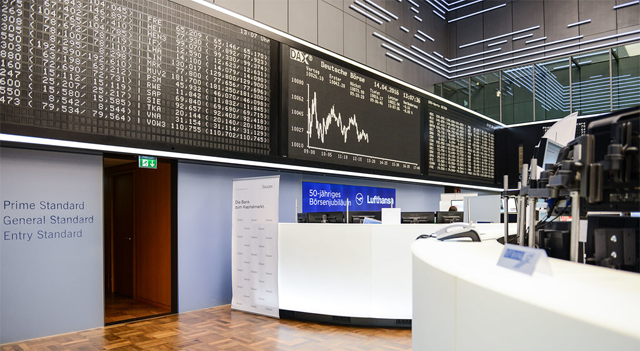
    DAX, CAC, FTSE100, European Equities Climb as U.S. Inflation Data Fuels September Rate-Cut Expectations

    European stock markets moved mostly higher on Wednesday after U.S. inflation data met forecasts, reinforcing market confidence that the Federal Reserve will lower interest rates in September.

    U.S. Treasury Secretary Scott Bessent has urged the Fed to keep the option open for a larger 50-basis-point cut next month, citing recent downward revisions to U.S. job growth.

    In regional economic updates, Germany’s federal statistics office, Destatis, confirmed that the country’s consumer price index rose 2.0% year-over-year in July, matching June’s increase and in line with the preliminary estimate released on July 31.

    By midday, the German DAX Index was up 0.8%, the French CAC 40 Index gained 0.5%, and the U.K.’s FTSE 100 Index added 0.2%.

    Notable movers:

    • RENK Group (TG:R3NK) rose 2.8% after the gearbox manufacturer posted stronger-than-expected second-quarter results.
    • Thyssenkrupp Nucera (TG:NCH2) slipped 2% as the hydrogen equipment supplier disclosed an unexpected quarterly loss.
    • E.ON (TG:EOAE) gained over 1% after reaffirming its full-year adjusted earnings guidance and reporting improved first-half performance.
    • TUI (TG:TUI1) advanced 2.6% following a quarterly earnings beat.
    • Persimmon (LSE:PSN) fell 3.3% as the British homebuilder flagged ongoing market headwinds and budget uncertainty.
    • Beazley (LSE:BEZ) tumbled 9% after the insurer cut its forecast for full-year premium growth.
    • Balfour Beatty (LSE:BBY) declined 3.6% despite posting strong first-half 2025 financial results.
    • Hill & Smith (LSE:HILS) surged more than 10% on the back of robust interim earnings.

    This content is for informational purposes only and does not constitute financial, investment, or other professional advice. It should not be considered a recommendation to buy or sell any securities or financial instruments. All investments involve risk, including the potential loss of principal. Past performance is not indicative of future results. You should conduct your own research and consult with a qualified financial advisor before making any investment decisions.

  • Dow Jones, S&P 500, and Nasdaq Futures Edge Higher as Rate Cut Hopes Support Market Momentum

    Dow Jones, S&P 500, and Nasdaq Futures Edge Higher as Rate Cut Hopes Support Market Momentum

    U.S. stock index futures signaled a slightly higher open on Wednesday, suggesting Wall Street could extend the robust rally seen in the prior session.

    Investors remain buoyed by expectations that the Federal Reserve will lower interest rates next month, following the release of consumer price inflation figures on Tuesday.

    The data, which largely aligned with economists’ forecasts, has strengthened the market’s view that the Fed will cut rates by at least 25 basis points in September. U.S. Treasury Secretary Scott Bessent has urged policymakers to keep the option of a larger, 50 basis point cut on the table, citing recent weakness in the labor market.

    According to CME Group’s FedWatch Tool, markets are now pricing in a 99.9% probability of a quarter-point rate reduction next month.

    President Donald Trump has also continued to pressure Fed Chair Jerome Powell for rate cuts and recently warned he may allow a “major lawsuit” over renovations at the central bank’s headquarters to proceed.

    Still, with no major U.S. economic releases scheduled for the day, trading activity could be more subdued. Attention will likely shift later in the week to reports on producer price inflation, retail sales, industrial production, and consumer sentiment.

    After Monday’s choppy trading ended in modest losses, stocks staged a sharp rebound on Tuesday. The major indices more than recouped prior declines, with the S&P 500 and Nasdaq closing at fresh record highs. The Nasdaq surged 296.50 points, or 1.4%, to 21,681.90, the S&P 500 climbed 72.31 points, or 1.1%, to 6,445.76, and the Dow Jones Industrial Average advanced 483.52 points, or 1.1%, to 44,458.61 — all finishing near their session peaks.

    The rally followed the Labor Department’s July consumer price index report, which showed a 0.2% increase after a 0.3% gain in June, matching expectations. Annual CPI growth remained at 2.7%, slightly below the forecasted uptick to 2.8%.

    Core CPI, which excludes food and energy, rose 0.3% in July after a 0.2% increase in June — also in line with forecasts. On an annual basis, core inflation accelerated to 3.1% from 2.9%, above the expected 3.0%.

    Despite the higher-than-expected core reading, traders remain confident that the data supports a September rate cut. “Although the Fed supposedly focuses more on the core number than on the headline number (in order to strip out the noisier components of inflation), we don’t believe that this report will deter the Fed from cutting rates next month,” said Chris Zaccarelli, Chief Investment Officer for Northlight Asset Management.

    Sector-wise, airline stocks soared, with the NYSE Arca Airline Index jumping 9.3% to its highest close in five months. Semiconductor shares also rallied, as the Philadelphia Semiconductor Index gained 3.0%. Strength was evident across multiple sectors, including steel, housing, banking, and computer hardware, as the broader market moved higher.

    This content is for informational purposes only and does not constitute financial, investment, or other professional advice. It should not be considered a recommendation to buy or sell any securities or financial instruments. All investments involve risk, including the potential loss of principal. Past performance is not indicative of future results. You should conduct your own research and consult with a qualified financial advisor before making any investment decisions.

  • DAX, CAC, FTSE100, European equities rise as global optimism continues after mild U.S. inflation

    DAX, CAC, FTSE100, European equities rise as global optimism continues after mild U.S. inflation

    European stock markets edged higher on Wednesday, following Wall Street gains after U.S. inflation data suggested a softer economic backdrop and raised expectations for easier monetary policy next month.

    At 07:05 GMT, Germany’s DAX added 0.4%, France’s CAC 40 climbed 0.3%, and the U.K.’s FTSE 100 rose 0.2%.

    Global sentiment buoyed by mild U.S. inflation

    Investor sentiment received a lift on Tuesday after U.S. consumer prices increased only 0.2% in July, with an annual rise of 2.7%—a pace considered moderate enough to keep the door open for a potential Federal Reserve rate cut in September.

    According to CME’s FedWatch tool, markets now assign roughly a 94% chance of a 25-basis-point reduction next month, up from 86% a day earlier and 57% a month ago. The news helped push the S&P 500 and the tech-heavy Nasdaq Composite to fresh record closes on Wall Street.

    This positive momentum extended to Asia, with Japan’s Nikkei also hitting a new high, and the optimism carried into European trading.

    German inflation remains controlled

    In Europe, July data confirmed that German consumer prices rose 0.3% month-on-month, translating into a 2.0% annual increase, suggesting that inflation remains contained in the eurozone’s largest economy. Analysts note that inflation rates in major markets appear to be in a “Goldilocks” zone—not too hot to trigger aggressive central bank action, yet not too low to stall growth.

    The European Central Bank had cut its key rate to 2% over the past year but held steady last month, projecting that inflation would remain near target in the medium term and reducing the need for immediate policy moves.

    Corporate earnings continue to roll in

    Quarterly results continued to shape market sentiment, even as earnings season nears its end.

    • E.ON (TG:EOAE) saw first-half group earnings rise 13%, citing increased investment and stronger operational performance.
    • RENK Group (TG:R3NK) reported second-quarter results that exceeded expectations, benefiting from steady European defense spending.
    • Vestas Wind Systems (TG:A3LFGK) noted a 44% year-on-year drop in second-quarter turbine orders, as some clients delayed purchases amid policy uncertainty.
    • Tui (TG:TUI1) lifted its full-year EBIT growth outlook after posting record third-quarter earnings, driven by strong performance in its Hotels & Resorts and Cruises segments.

    Oil prices steady ahead of Trump-Putin meeting

    Crude markets were mostly flat on Wednesday, as investors awaited a high-profile meeting between U.S. President Donald Trump and Russian President Vladimir Putin.

    As of 03:05 ET, Brent crude futures dipped 0.1% to $66.09 a barrel, and U.S. West Texas Intermediate futures fell 0.1% to $63.11 a barrel. The Alaska meeting, scheduled for Friday, is expected to focus on the Ukraine war, which has been ongoing since February 2022 and has disrupted global energy markets.

    Meanwhile, U.S. oil inventories, the world’s largest, rose by 1.52 million barrels last week, according to the American Petroleum Institute. Official data from the U.S. Energy Information Administration, due later in the day, may provide further insight into fuel demand as the summer travel season concludes.

    This content is for informational purposes only and does not constitute financial, investment, or other professional advice. It should not be considered a recommendation to buy or sell any securities or financial instruments. All investments involve risk, including the potential loss of principal. Past performance is not indicative of future results. You should conduct your own research and consult with a qualified financial advisor before making any investment decisions.
  • Gold Prices Hold Steady as Fed Rate Cut Hopes Persist, Investors Eye Trump-Putin Summit

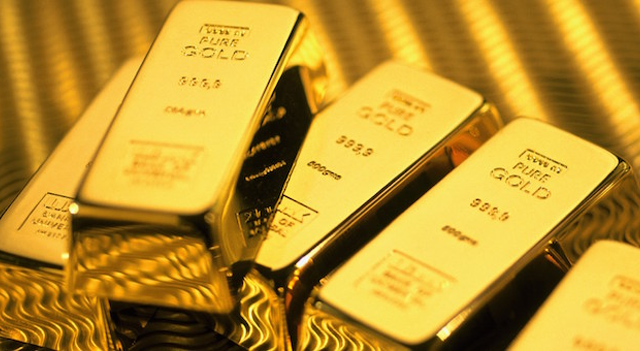
    Gold Prices Hold Steady as Fed Rate Cut Hopes Persist, Investors Eye Trump-Putin Summit

    Gold remained largely steady in Asian trading on Wednesday, buoyed by modest U.S. inflation data that fueled expectations of a Federal Reserve rate cut, while markets turned their attention to an upcoming U.S.-Russia meeting.

    Spot gold traded mostly unchanged at $3,348.87 per ounce, with December gold futures also muted at $3,398.42/oz as of 01:59 ET (05:59 GMT).

    Earlier in the week, gold had dipped sharply after President Donald Trump confirmed that gold bars would not be subject to tariffs, easing concerns about supply disruptions.

    U.S. Inflation Data Boosts Odds of Fed Rate Cut

    Tuesday’s release showed the U.S. consumer price index (CPI) rose 0.2% in July compared to June, down from a 0.3% increase the previous month. The annual inflation rate slowed to 2.7%, nearing the Federal Reserve’s 2% target.

    Economists noted that the data indicate easing inflationary pressures, strengthening the case for a potential reduction in the Fed’s benchmark interest rate at its September meeting.

    Lower rates reduce the cost of holding non-yielding assets like gold, making bullion more appealing to investors. Current market pricing implies more than a 90% chance of a September rate cut.

    Trump-Putin Meeting in Focus

    Geopolitical developments tempered gold’s upward momentum, with traders closely monitoring the planned Friday summit between Trump and Russian President Vladimir Putin in Anchorage.

    The talks are expected to address the Ukraine conflict. Analysts say a constructive outcome could lessen demand for gold as a safe-haven asset, whereas any signs of failed negotiations or rising tensions might spur investors back into bullion.

    Trump’s extension of the U.S.–China tariff truce by another 90 days also reduced gold’s safe-haven appeal.

    Other Metals Remain Muted

    Precious metals broadly showed limited movement on Wednesday, mirroring a subdued U.S. dollar following a sharp decline in the previous session.

    Platinum futures were largely unchanged at $1,351.00/oz, while silver futures gained 0.5% to $38.24/oz.

    On the copper front, London Metal Exchange copper futures inched up 0.1% to $9,842.65 per ton, while U.S. copper futures remained flat at $4.519 per pound.

    This content is for informational purposes only and does not constitute financial, investment, or other professional advice. It should not be considered a recommendation to buy or sell any securities or financial instruments. All investments involve risk, including the potential loss of principal. Past performance is not indicative of future results. You should conduct your own research and consult with a qualified financial advisor before making any investment decisions.

  • Oil prices remain cautious ahead of U.S. inventories and Trump-Putin talks

    Oil prices remain cautious ahead of U.S. inventories and Trump-Putin talks

    Oil markets hovered near two-month lows in Asian trading on Wednesday as investors awaited a high-profile meeting between U.S. President Donald Trump and Russian President Vladimir Putin later this week.

    Attention also turned to U.S. crude stockpiles, after industry figures revealed an unexpected increase in inventories in the world’s largest oil-consuming nation.

    Crude showed little reaction to slightly weaker-than-expected U.S. consumer inflation data, which left market expectations largely unchanged for a Federal Reserve rate cut in September.

    Brent crude for October delivery held steady at $66.13 a barrel, while West Texas Intermediate (WTI) futures dipped 0.1% to $62.41 per barrel by 21:39 ET (01:39 GMT).

    U.S. inventories rise unexpectedly, API data shows

    According to the American Petroleum Institute (API), U.S. crude stocks climbed by 1.5 million barrels in the week ending August 8, in contrast to forecasts for a 0.8 million barrel draw.

    Such API readings often signal the trends that official data will later confirm, and this increase fueled concerns that U.S. fuel demand may be softening as the busy summer travel season winds down.

    The U.S. Energy Information Administration (EIA) is scheduled to release its weekly inventory report later Wednesday, with analysts anticipating a modest draw of 300,000 barrels.

    Both the EIA and OPEC, in their separate monthly reports, projected higher oil output in the months ahead—a factor weighing on prices this week. OPEC also slightly raised its forecast for global oil demand in 2026.

    Rising supply and muted demand have weighed on crude prices throughout 2025, and looming U.S. sanctions against Russia have done little to arrest the decline.

    Trump-Putin summit in focus

    U.S. President Trump and Russian President Putin are set to meet in Alaska on Friday to discuss ways to end the conflict in Ukraine.

    The summit comes amid Washington’s threats of stricter sanctions on Russia’s energy sector, including potential tariffs targeting major buyers such as India and China. Trump had previously proposed a 50% tariff on Indian oil imports.

    The White House on Tuesday tempered expectations for a rapid resolution to the Ukraine conflict, signaling the possibility of protracted ceasefire negotiations and additional restrictions on Russian crude in the coming weeks.

    This content is for informational purposes only and does not constitute financial, investment, or other professional advice. It should not be considered a recommendation to buy or sell any securities or financial instruments. All investments involve risk, including the potential loss of principal. Past performance is not indicative of future results. You should conduct your own research and consult with a qualified financial advisor before making any investment decisions.