Author: Fiona Craig

  • Avacta Reports Encouraging Early Results in Salivary Gland Cancer Study

    Avacta Reports Encouraging Early Results in Salivary Gland Cancer Study

    Avacta Group plc (LSE:AVCT) has shared encouraging clinical data from its ongoing Phase 1b trial of AVA6000 (FAP-Dox), reporting a partial tumor response in a patient with metastatic salivary gland cancer. This marks a significant milestone in the study’s dose expansion phase and highlights the potential of AVA6000 as a targeted treatment option for a rare cancer type with limited therapeutic alternatives.

    The result is particularly noteworthy given the absence of a widely accepted standard of care for salivary gland cancer, underlining the importance of developing innovative treatments. Avacta plans to release full results from the earlier Phase 1a portion of the trial later in 2025. The company is also expected to provide further updates on its clinical programs and corporate strategy during its upcoming Annual General Meeting.

    About Avacta Group plc

    Avacta is a clinical-stage biotechnology company advancing a new class of precision oncology therapies. Through its proprietary pre|CISION® platform, the company is developing tumor-targeted drug candidates that activate potent chemotherapy agents within the tumor microenvironment, helping to minimize harm to healthy tissues. Avacta’s pipeline includes both pre|CISION® peptide drug conjugates and Affimer®-based drug conjugates, offering potential advantages over conventional antibody drug approaches in cancer treatment.

  • ECR Minerals Accelerates Queensland Gold Exploration with New Drilling Programs

    ECR Minerals Accelerates Queensland Gold Exploration with New Drilling Programs

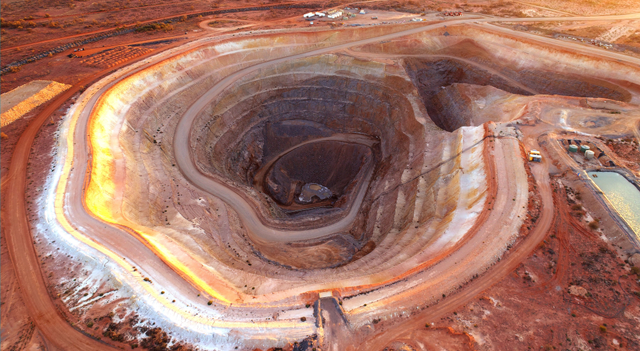
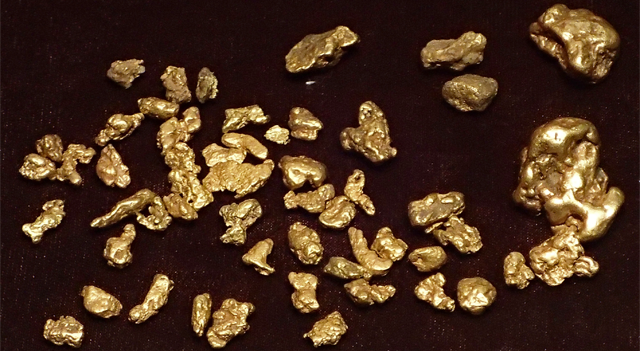
    ECR Minerals (LSE:ECR) is ramping up its exploration efforts in Queensland, Australia, with new developments at its Blue Mountain and Lolworth gold projects. At Blue Mountain, the company is preparing to deploy a drilling rig alongside a bulk sampling campaign aimed at evaluating gold extraction efficiency and assessing near-term revenue prospects—a key milestone in advancing toward potential production.

    Meanwhile, preparations are underway at the Lolworth project for a focused drilling program targeting areas identified for high-grade gold mineralization. ECR has emphasized cost-effective exploration strategies to maximize returns and resource identification while keeping capital expenditure in check.

    These initiatives mark a significant step forward in ECR’s broader strategy to scale operations across its Australian assets. The company’s exploration advancements position it well for long-term growth and underscore its commitment to enhancing shareholder value through disciplined resource development.

    About ECR Minerals

    ECR Minerals is a gold-focused exploration and development company with a portfolio of Australian assets. Operating through subsidiaries ECR Minerals (Australia) Pty Ltd and ECR Minerals (Queensland) Pty Ltd, the company holds interests in key regions including Bailieston, Creswick, and the Lolworth Range. ECR is actively pursuing both exploration and near-term production opportunities, with a long-term vision centered on asset growth and strategic partnerships.

  • XPS Pensions Group Delivers Robust FY2025 Results and Expands Strategic Reach

    XPS Pensions Group Delivers Robust FY2025 Results and Expands Strategic Reach

    XPS Pensions Group Plc (LSE:XPS) has posted strong financial results for the fiscal year ending March 31, 2025, highlighting substantial growth and strategic progress. Excluding the National Pensions Trust (NPT), group revenue rose by 18%, while adjusted EBITDA surged by 27%, underscoring the company’s operational momentum.

    Key segments saw impressive performance: administration revenues increased by 30%, and the actuarial and consulting divisions posted a 14% uptick. Additionally, the recent acquisition of Polaris Actuaries and Consultants Limited has bolstered XPS’s presence in the insurance consulting space, aligning with the firm’s broader strategy to diversify and scale its offerings.

    Looking ahead, XPS is optimistic about capitalizing on evolving market dynamics and regulatory reforms. The company aims to expand its potential client base, targeting an addressable market of £4 billion by deepening its footprint in the insurance consultancy sector.

    XPS’s performance is further supported by strong financial health, compelling valuation metrics, and favorable technical trends. The firm’s strategic initiatives—ranging from acquisitions to enhanced stakeholder engagement—continue to reinforce its leadership in the pension services space, making it a notable player for investors to watch.

    About XPS Pensions Group Plc

    XPS Pensions Group is a UK-based consultancy and administration firm specializing in services for pension schemes and insurance companies. Serving over 1,300 pension schemes and advising on £1 billion+ asset portfolios for 86 clients, XPS combines deep sector knowledge with advanced technology solutions. The company also manages pension administration for approximately 1.2 million members across the UK.

  • Capital Limited Secures New Contracts and Expands International Presence

    Capital Limited Secures New Contracts and Expands International Presence

    Capital Limited (LSE:CAPD) has announced a series of major contract wins that mark a key expansion in its global operations. Among the highlights is a three-year contract to provide borehole drilling services at the Reko Diq copper-gold project, a deal that introduces a new revenue stream and deepens the company’s collaboration with mining giant Barrick.

    The company also revealed multiple exploration drilling agreements across several African nations, including Côte d’Ivoire, Mali, and Gabon. These contracts come amid heightened exploration activity, largely fueled by sustained strength in gold prices.

    In addition to its drilling operations, Capital’s laboratory division, MSALABS, continues to grow. It recently launched a new facility in Nevada and has secured both contract renewals and fresh agreements in Mauritania and Namibia, reflecting growing demand for its analytical services in key mining regions.

    From a financial standpoint, Capital Limited remains on stable footing, with an attractive dividend yield contributing to investor appeal. Technical indicators remain positive, bolstered by the firm’s recent contract momentum. However, challenges remain in improving profitability margins, and recent executive changes may introduce some uncertainty.

    About Capital Limited

    Capital Limited is a mining services provider focused on drilling and laboratory support for the global mining sector. With a strong presence in emerging markets, the company plays a critical role in enabling exploration and development activities at major mining sites, including the high-profile Reko Diq project.

  • Shares of AstraZeneca and GSK Slip After Trump Signals Possible Drug Import Tariffs

    Shares of AstraZeneca and GSK Slip After Trump Signals Possible Drug Import Tariffs

    Stocks of AstraZeneca (LSE:AZN) and GlaxoSmithKline (LSE:GSK) declined on Wednesday following comments from U.S. President Donald Trump about the potential introduction of tariffs on imported pharmaceuticals.

    AstraZeneca shares fell by 1.2%, while GlaxoSmithKline saw a similar 1.2% drop during London trading. Other pharmaceutical companies, including Roche, Sanofi (NASDAQ:SNY), as well as Indian firms Sun Pharma and Dr. Reddy’s Laboratories, also experienced downward pressure.

    Speaking at a campaign event, Trump emphasized the need to bring pharmaceutical manufacturing back to the United States and warned that “significant” tariffs on drug imports could be imposed shortly.

    Earlier in April, similar statements had sparked a notable sell-off in the sector, wiping approximately £14 billion off the market value of UK-listed pharmaceutical companies.

    Industry groups such as PhRMA and BIO warned that imposing such tariffs might violate World Trade Organization regulations and could disrupt global supply chains. Additionally, the European Union, China, and South Korea have formally opposed the proposed measures.

    GlaxoSmithKline has responded by ramping up its manufacturing investments in the U.S. and expanding AI-based efficiency initiatives, while AstraZeneca said it is closely monitoring ongoing geopolitical developments.

    Until now, pharmaceutical products have largely been exempt from major U.S. tariffs. The Office of the U.S. Trade Representative declined to provide any comment on the potential introduction of new duties.

  • Dow Jones, S&P, Nasdaq, U.S. Markets Poised for Slight Gains Despite Middle East Uncertainty and Fed Decision Ahead

    Dow Jones, S&P, Nasdaq, U.S. Markets Poised for Slight Gains Despite Middle East Uncertainty and Fed Decision Ahead

    U.S. stock index futures were slightly higher early Wednesday, hinting at a modest rebound following Tuesday’s broad decline. Futures tied to the Dow Jones Industrial Average, S&P 500, and Nasdaq 100 each pointed to a positive open as traders attempted to shake off the previous session’s jitters.

    The market’s cautious optimism comes even as geopolitical anxieties remain elevated, particularly surrounding the escalating conflict between Israel and Iran. Tensions intensified after Iran’s Supreme Leader, Ayatollah Ali Khamenei, warned of severe consequences if the U.S. intervenes militarily, following former President Donald Trump’s public demand for Iran’s “unconditional surrender.”

    Despite these headwinds, trading activity is expected to remain measured ahead of the Federal Reserve’s policy announcement this afternoon. While the Fed is widely anticipated to hold interest rates steady, investors will closely scrutinize Chair Jerome Powell’s comments and the central bank’s updated projections for insights into the future rate path.

    Markets fell sharply on Tuesday, reversing Monday’s gains. The Nasdaq Composite dropped 0.9% (−180.12 points) to close at 19,521.09, while the S&P 500 lost 0.8% (−50.39 points) to settle at 5,982.72. The Dow Jones Industrial Average declined 0.7% (−299.29 points), ending the session at 42,215.80.

    The sell-off was partly driven by profit-taking after Monday’s rally, which had been supported by speculation of a possible de-escalation in the Middle East. However, Trump’s abrupt departure from the G7 summit and his social media statements sparked renewed concerns over deeper U.S. involvement in the region.

    Responding to reports that French President Emmanuel Macron claimed he had left the G7 to work on peace efforts, Trump posted, “He has no idea why I am now on my way to Washington, but it certainly has nothing to do with a Cease Fire. Much bigger than that.” A follow-up post demanding Iran’s surrender intensified investor fears.

    Economic data also contributed to the day’s losses. The U.S. Commerce Department reported a sharper-than-expected decline in retail sales, which fell 0.9% in May, following a revised 0.1% dip in April. Economists had projected a milder 0.6% decline. Excluding vehicle-related sales, retail activity slipped 0.3%, missing forecasts of a slight gain.

    Airline stocks, which had rallied earlier in the week, were hit hard, with the NYSE Arca Airline Index tumbling 3.8%. The housing sector also took a hit, as the Philadelphia Housing Sector Index dropped 2.5%.

    Broader weakness was seen across several industries, including pharmaceuticals, telecommunications, and healthcare. In contrast, energy stocks advanced alongside rising oil prices, reflecting the market’s sensitivity to developments in the oil-rich Middle East.

    With both geopolitical and monetary policy uncertainties looming, markets are expected to remain volatile in the short term.

  • DAX, CAC, FTSE100, European Stocks Mixed Performance On Middle East Tensions, Central Bank Decisions

    DAX, CAC, FTSE100, European Stocks Mixed Performance On Middle East Tensions, Central Bank Decisions

    European stocks are turning in a mixed performance on Wednesday, with Middle East tensions, regional inflation data and central bank decisions in focus.

    Amid escalating tensions between Iran and Israel, the Strait of Hormuz, a critical global oil route, has become a focal point of concern. Investors remain worried that disruption of oil flows through this narrow strait could hit global economy hard.

    In economic news, U.K. consumer price inflation softened in May largely due to easing transportation cost, data from the Office for National Statistics revealed.

    The consumer price index registered an annual increase of 3.4 percent, slightly slower than the 3.5 percent rise seen in April. However, inflation was slightly above forecast of 3.3 percent.

    The annual inflation rate in Austria edged down to 3.0 percent in May 2025 from 3.1 percent in the previous month, matching preliminary estimates.

    Elsewhere, Sweden’s central bank has cut its key policy rate to 2 percent and said there was a small chance of further easing later this year if economic weakness persists.

    Later in the day, the Federal Reserve is widely expected to leave rates unchanged, but investors will scrutinize updated economic projections for clues to future moves.

    While the U.K.’s FTSE 100 Index is up by 0.2 percent, the French CAC 40 Index is down by 0.1 percent and the German DAX Index is down by 0.3 percent.

    BP Plc (LSE:BP.) and Shell (LSE:SHEL) were moving higher as oil prices held near five-month highs amid fears the U.S. may join Israel’s offensive against Iran.

    Plane maker Airbus (EU:AIR) rallied over 3 percent after an announcement that it would increase shareholder returns in the coming years.

  • Dow Jones, S&P, Nasdaq, U.S. Markets Preview: Israel-Iran Conflict Enters Sixth Day, Fed Decision Looms

    Dow Jones, S&P, Nasdaq, U.S. Markets Preview: Israel-Iran Conflict Enters Sixth Day, Fed Decision Looms

    Stock Futures Rise

    U.S. stock futures edged higher on Wednesday amid escalating tensions in the Middle East and anticipation of the Federal Reserve’s interest rate decision. By 03:30 ET, Dow futures were up 0.2%, S&P 500 futures rose 0.3%, and Nasdaq 100 futures gained 0.3%.

    Recent Market Moves

    On Tuesday, major indexes fell due to renewed Israel-Iran fighting and weak U.S. retail sales data. The S&P 500 dropped 0.8%, Nasdaq 0.9%, and Dow 0.7%. Volatility spiked to the highest level since late May.

    Oil Prices

    After a 4% jump on Tuesday driven by supply concerns amid the conflict, oil prices retreated slightly. Brent crude was down 0.3% to $76.20/barrel; WTI dipped 0.3% to $73.02/barrel.

    Middle East Conflict

    Israel’s air force struck Iranian nuclear and weapons sites as part of efforts to curb Iran’s missile and nuclear programs. The conflict has intensified since last Friday, with reciprocal missile attacks and casualties reported. U.S. President Trump demands “unconditional surrender” from Iran and asserts U.S. air superiority, though the role of U.S. military involvement remains under debate.

    Federal Reserve Outlook

    The Fed is widely expected to keep rates steady at the conclusion of its meeting, monitoring tariff impacts on inflation and growth. The Fed’s updated “dot plot” forecasts will be closely watched; markets currently price in the next rate cut around September. Rising oil prices could complicate inflation dynamics and temper easing expectations.

    Crypto Regulation

    The U.S. Senate passed bipartisan legislation creating a regulatory framework for stablecoins, requiring issuers to back tokens with liquid assets and disclose reserves monthly. This marks a significant milestone for cryptocurrency regulation.

    Bank Capital Rule Adjustment

    According to Bloomberg, U.S. regulators plan to ease the enhanced supplementary leverage ratio (ESLR) for major banks like JPMorgan and Goldman Sachs, reducing capital buffer requirements to ease constraints on Treasury trading.

  • European Stocks Steady Ahead of Fed Rate Decision; U.K. Inflation Cools

    European Stocks Steady Ahead of Fed Rate Decision; U.K. Inflation Cools

    European markets held steady on Wednesday as investors cautiously weighed ongoing tensions between Israel and Iran alongside the upcoming conclusion of the U.S. Federal Reserve’s policy meeting.

    At 07:05 GMT, Germany’s DAX index dipped 0.1%, France’s CAC 40 gained 0.2%, and the U.K.’s FTSE 100 rose 0.1%.

    Israel-Iran Conflict Raises Market Unease

    The conflict between Israel and Iran entered its sixth day amid heightened geopolitical tensions. A Wall Street Journal report revealed that U.S. President Donald Trump convened senior advisers to discuss options, including potential strikes on Iran. Trump demanded Tehran’s “unconditional surrender” and claimed U.S. control over Iranian airspace, fueling fears of broader regional escalation.

    Fed Meeting Nears Conclusion

    Investors remain cautious ahead of the Federal Reserve’s two-day meeting wrap-up. While a rate hold is widely expected, markets will closely scrutinize Chair Jerome Powell’s remarks and updated economic forecasts, especially given signs of cooling U.S. retail sales and increased recession risks. Currently, markets anticipate two rate cuts by year-end, though this outlook could shift post-meeting.

    U.K. Inflation Moderates

    U.K. inflation slowed in May as consumer prices rose 3.4% year-on-year, slightly down from April’s 3.5%. Services inflation—a key focus for the Bank of England—fell to 4.7% from 5.4%, aligning with forecasts. The BoE is expected to keep rates steady on Thursday after a May rate cut to 4.25%, with two more 0.25% cuts priced in by year-end.

    Other Highlights

    • Sweden’s Riksbank will announce its interest rate decision later Wednesday.
    • UBS was downgraded to “underweight” by Morgan Stanley due to capital uncertainties and weaker earnings prospects.
    • Oil prices eased slightly, with Brent crude down 0.1% to $76.38 and WTI crude down 0.1% to $73.21, retreating from a 4% surge amid supply disruption fears in the Strait of Hormuz.
  • Oil Price Moves from Israel-Iran Conflict Likely to Shape Stock Market Direction – Citi

    Oil Price Moves from Israel-Iran Conflict Likely to Shape Stock Market Direction – Citi

    Citigroup analysts say the trajectory of oil prices will be a key factor driving stock market performance in the near term as investors monitor escalating violence in the Middle East.

    In a client note, Citi highlighted that geopolitical flare-ups like the Israel-Iran conflict generally cause only short-lived impacts on equities unless they trigger sustained spikes in energy prices. The firm noted that if tensions continue to escalate, sectors likely to outperform include European energy stocks, traditional defensive sectors, and markets such as Switzerland and the UK.

    The analysts pointed out that before the recent escalation, global equity valuations had priced in an average level of “geoeconomic risk,” suggesting some resilience to shocks.

    On Wednesday, oil prices eased slightly, retracing part of the previous day’s 4% gain, as markets balanced concerns over potential crude supply disruptions against an impending U.S. Federal Reserve interest rate decision.

    • Brent crude futures slipped 0.3% to $76.20 a barrel but remained above the $76 level for a second day.
    • West Texas Intermediate (WTI) crude also fell 0.3%, settling near $73.02 per barrel by early U.S. trading.

    U.S. stock futures were trading higher amid the cautious sentiment.

    Meanwhile, Israel’s air force announced strikes targeting centrifuge and weapons manufacturing facilities near Tehran, part of an ongoing campaign aimed at curbing Iran’s nuclear weapons and missile programs.

    The conflict has intensified since Israel’s airstrikes on Iranian nuclear sites last Friday, sparking retaliatory missile attacks and casualties on both sides.

    U.S. involvement remains a critical focus. Former President Donald Trump has demanded an “UNCONDITIONAL SURRENDER” from Iran, describing Iran’s Supreme Leader Ayatollah Khamenei as an “easy target” and indicating U.S. support for Israel’s air dominance over Iran.

    U.S. Vice President J.D. Vance clarified that Trump’s military actions would be aligned with American interests, though the president could still decide to take further steps to prevent Iran’s uranium enrichment.