Category: Market News

  • London Bitcoin Company Builds Momentum at Blackstar as High-Grade Gold Results Point to Wider Nevada Potential

    London Bitcoin Company Builds Momentum at Blackstar as High-Grade Gold Results Point to Wider Nevada Potential

    London Bitcoin Company (LSE:BTC) is building an increasingly compelling exploration story in Nevada, with the company’s Blackstar project delivering high-grade gold results and providing further encouragement that the mineralisation could form part of a broader system.

    The company recently reported surface assay results at Blackstar of more than 16 grams per tonne gold, one of its strongest results to date. While a single high-grade result is naturally only one piece of the exploration puzzle, London Bitcoin Company believes the wider pattern emerging across the project could prove considerably more significant.

    Speaking about the project, CEO Hewie Rattray highlighted the consistency of results being generated across both the western and eastern corridors, as well as the presence of silver mineralisation.

    “Our initial results demonstrated at the surface were over 16 grams per tonne, which is really significant.”

    For an exploration company, the potential importance of such a result lies not simply in the headline grade, but in what it may reveal about the underlying geological system. London Bitcoin Company is now focused on determining whether the high-grade mineralisation at Blackstar can be connected to a larger, coherent mineralised structure.

    Turning High-Grade Results Into Drill Targets

    The company is preparing to remobilise its field teams in late August, with the next phase of work designed to build a clearer understanding of the highest-priority targets.

    The objective is to move the most compelling targets towards a drill-ready stage, potentially providing an important catalyst for the project as the exploration programme advances.

    Importantly, the company is not approaching Blackstar in isolation. Results from the western and eastern corridors are helping London Bitcoin Company develop a broader geological picture, while the additional silver mineralisation provides another element for the exploration team to consider.

    The coming months could therefore be particularly important as the company moves from surface exploration and geological interpretation towards more advanced target definition.

    A Growing Nevada Exploration Portfolio

    Blackstar forms part of a rapidly assembled portfolio of exploration assets across Nevada, one of the world’s most established jurisdictions for gold mining and exploration.

    For London Bitcoin Company, Nevada offers several strategic advantages, including established mining infrastructure, a long history of mineral exploration and an experienced local exploration industry.

    With multiple projects within its portfolio, the company’s strategy is now shifting towards prioritisation — identifying which assets have the strongest geological signals and the greatest potential to generate meaningful value.

    Rattray explained that the next stage will be focused on proving which of the company’s assets have the potential to become genuinely significant projects.

    Fresh assay results are expected across the Nevada portfolio going into September, alongside potential permitting developments. At the same time, London Bitcoin Company intends to continue advancing its highest-quality targets towards drilling, while also evaluating other potential value-creation routes, including royalties or vending opportunities.

    Creating Value Through Exploration

    The strategy provides London Bitcoin Company with multiple potential avenues for advancing its portfolio.

    Projects demonstrating the strongest geological evidence can be progressed towards drilling, while other assets could potentially be monetised through partnerships, royalties or transactions.

    The company also intends to continue selecting and staking additional opportunities across Nevada and Arizona, giving it the potential to expand its portfolio while maintaining a focus on assets that demonstrate strong geographical and geological signals.

    That approach could prove important as the company seeks to balance exploration upside with disciplined capital allocation.

    Blackstar Could Be an Important Catalyst

    The immediate focus, however, remains firmly on Blackstar.

    The combination of a greater-than-16g/t surface gold result, consistent results across multiple corridors and the presence of silver gives the company a strong foundation from which to undertake the next phase of exploration.

    The key question now is whether these surface indications can be demonstrated to represent a larger mineralised system — something that further fieldwork, target definition and ultimately drilling will help determine.

    With field teams expected back on the ground in late August and further assay results potentially arriving into September, London Bitcoin Company is entering an active period for exploration.

    For investors, the story is therefore moving beyond a single high-grade assay result. The focus is increasingly on whether Blackstar can develop into a larger discovery opportunity and, more broadly, whether London Bitcoin Company’s growing Nevada portfolio can produce multiple assets capable of creating value.

    With exploration accelerating and the company continuing to build its pipeline of opportunities across Nevada and Arizona, the coming months could provide a series of important milestones for London Bitcoin Company and its shareholders.


  • European gas climbs above €61 as Hormuz deadlock revives supply concerns

    European gas climbs above €61 as Hormuz deadlock revives supply concerns

    European natural gas prices extended their sharp advance on Tuesday, with growing uncertainty over Middle East diplomacy intensifying concerns about LNG supplies ahead of the winter heating season.

    Benchmark Dutch front-month gas futures climbed as high as €61.80 per megawatt-hour after surging 8% in the previous session. British wholesale contracts moved higher alongside them, approaching 151.5 pence per therm as traders rebuilt a sizeable geopolitical risk premium into European energy prices.

    Hormuz stalemate puts LNG flows back in focus

    The latest rally followed fading expectations that diplomatic efforts could quickly ease tensions in the Persian Gulf.

    Sentiment deteriorated after negotiations encountered a major political obstacle, with U.S. President Donald Trump demanding that Tehran provide direct financial compensation for lives lost in regional conflicts.

    Trump’s demand followed a draft proposal involving Iran and Oman. Tehran has maintained that commercial transit through the Strait of Hormuz will remain restricted until Washington satisfies additional conditions.

    Continued disruption through the strategic waterway is affecting physical liquefied natural gas flows, with Qatar-origin LNG cargoes facing significant delays or diversions.

    European gas storage trails seasonal norms

    The disruption is particularly important for Europe because utilities are trying to rebuild inventories ahead of winter.

    European Union underground gas storage facilities were less than 57% full by mid-August, substantially below the five-year average of roughly 71% for this point in the year.

    That gap increases the importance of LNG imports during the remaining injection season and leaves European gas markets more exposed to prolonged disruption in the Persian Gulf.

    Summer heat adds pressure to European inventories

    Europe’s storage challenge has also been compounded by intense summer temperatures across central and southern parts of the continent.

    Strong air-conditioning demand has increased electricity consumption, requiring power generators to burn more natural gas that might otherwise have been available for storage injections.

    The combination of lower-than-normal inventories and uncertainty surrounding LNG shipments has therefore tightened the market at a sensitive point in Europe’s seasonal supply cycle.

    Europe faces stronger competition for LNG cargoes

    European buyers are also competing with Asian importers for uncommitted spot LNG cargoes, adding another source of support for prices.

    With alternative supplies attracting bids from multiple regions, an extended disruption to Persian Gulf shipping could keep European buyers competing aggressively for available cargoes.

    Until normal physical flows through the Strait of Hormuz are restored, European gas contracts are likely to remain highly responsive to developments in negotiations between Washington and Tehran.

  • Market Open: Bellway Completions, Seeing Machines Royalties

    Market Open: Bellway Completions, Seeing Machines Royalties

    UK markets open flat as Bellway lifts completions, Seeing Machines reports record royalties and Brent crude remains sensitive to Iran tensions.

    Market Overview

    The FTSE 100 opened broadly unchanged, up 0.001 per cent at 10,862.85, while the Euronext 100 was also effectively flat at 1,972.91 and Germany’s DAX edged 0.01 per cent higher to 26,327.10. European markets remained cautious as renewed US-Iran tensions and uncertainty over the Strait of Hormuz kept energy risks in focus, while softer UK retail sales added pressure domestically. Overnight in the US, the Nasdaq closed lower at 26,605.36 and the S&P 500 also declined to 7,753.11, with investors looking ahead to US inflation data and assessing elevated technology valuations.

    Commodity markets were softer at the open, with copper, gold, Brent crude and natural gas all declining from their previous closes. Oil nevertheless remained supported by fading hopes of a US-Iran agreement and continuing concerns over flows through the Strait of Hormuz. Bitcoin rose against sterling. Currency moves were limited, with the US dollar, Swiss franc, euro and Japanese yen strengthening marginally against sterling, while the Australian dollar weakened slightly.


    Market Numbers

    FTSE 100: Up (0.001%), 10,862.85
    Euronext 100: Up (0.001%), 1,972.91
    DAX: Up (0.01%), 26,327.10
    NASDAQ: Down, 26,605.36
    S&P 500: Down, 7,753.11


    In the Headlines

    Higher completions and cash – Bellway (LSE:BWY)
    The housebuilder reported a 10.8% increase in housing completions to 9,695 homes, while housing revenue rose to £3.14 billion and net cash strengthened to £157.7 million. Stronger cash generation is supporting continued share buybacks, although Bellway remains cautious over subdued demand and housing market conditions.

    Record automotive royalties – Seeing Machines (LSE:SEE)
    The driver and occupant monitoring technology group reported adjusted revenue growth of 45%, with automotive production volumes rising sharply and royalty revenue more than doubling. The improved revenue mix helped Seeing Machines achieve a profitable second half and move closer to full-year breakeven, supported by growing automotive adoption and European driver-monitoring requirements.


    Currencies (vs GBP)

    USD: Up (0.001%), $1.3511
    CHF: Up (0.001%), Fr.1.0942
    EUR: Up (0.01%), €1.1702
    JPY: Up (0.001%), ¥215.0305
    AUD: Down (-0.01%), $1.9151
    Bitcoin (BTC/GBP): Up, £47,442.65


    Commodities

    Copper: Down
    Gold: Down
    Brent Crude: Down
    Natural Gas: Down

  • Oil Prices Surge Over 2% as Iran Deal Setback Keeps Hormuz Supply Risks Elevated

    Oil Prices Surge Over 2% as Iran Deal Setback Keeps Hormuz Supply Risks Elevated

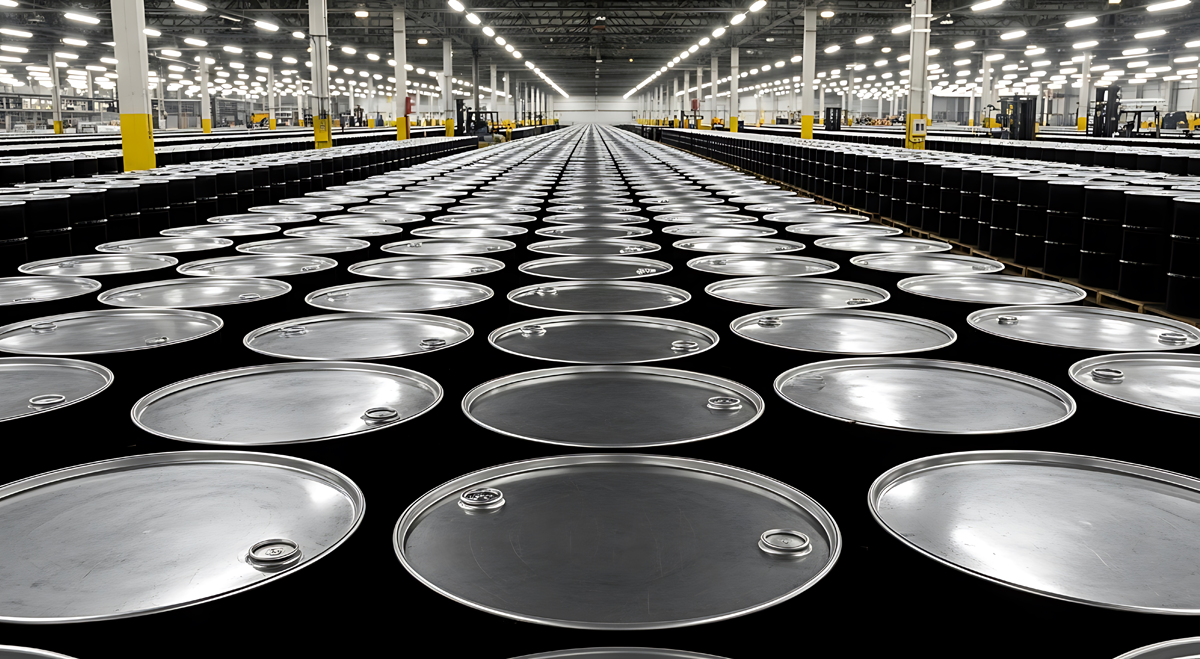
    Oil prices extended their rally on Tuesday, reaching their highest levels in more than a week as diminishing prospects for a U.S.-Iran peace agreement increased uncertainty over when the Strait of Hormuz could fully reopen.

    Brent crude futures climbed $1.92, or 2.19%, to $89.64 a barrel by 0805 GMT. U.S. West Texas Intermediate futures advanced $1.91, or 2.33%, to $84.04 a barrel, putting both benchmarks at their highest levels since July 31.

    The gains followed a surge of more than 5% for both contracts on Monday. The rally accelerated after President Donald Trump responded to Iran’s conditions for a peace agreement by demanding that Tehran provide compensation for people killed in wars, attacks and protests.

    Those demands have added another complication to negotiations aimed at ending the conflict and restoring normal shipping through the Strait of Hormuz.

    Trump later said the United States controlled the strait and had cleared Iranian mines from the strategically important energy route.

    Hormuz shipping data points to continued supply disruption

    Restrictions on shipping remain a central factor supporting crude prices.

    “There’s no clear path to a solution and to a full reopening of the strait at this point in time and that’s adding renewed upside pressure on prices,” Saxo Bank head of commodity strategy Ole Hansen said, adding that meaningful supply disruption remains in place.

    Only six vessels travelled through the Strait of Hormuz on Monday, according to shipping data, well below the 10-day average of approximately 11 vessels.

    Barclays analysts said net exports of crude and refined petroleum products through the waterway averaged 3 million barrels per day during the week ending August 7. That compares with 4.4 million bpd in the preceding week.

    The scale of the disruption is particularly significant because around one-fifth of daily global oil and liquefied natural gas supplies passed through the Strait of Hormuz before the Iran conflict began in late February.

    Saudi refinery delay adds another regional supply concern

    Oil markets are also monitoring developments elsewhere in the region after Saudi Aramco postponed the restart of its 400,000-barrel-per-day Jazan refinery until August 30.

    The delay followed two attacks on the facility on Sunday that were claimed by the Houthis.

    “The chokehold risk around both the Strait of Hormuz and the Bab el-Mandeb remains highly significant. Even intermittent restrictions or the threat of further incidents keep insurance costs elevated and force longer shipping routes … hence energy flows look likely to stay constrained near term,” said Tim Waterer, chief market analyst at KCM Trade.

    The combination of shipping restrictions and threats to regional energy infrastructure is keeping transportation costs and supply risks elevated.

    ADNOC continues spot crude tenders

    Abu Dhabi National Oil Company, or ADNOC, is meanwhile offering another cargo of spot crude through a tender as the UAE state producer works to move supplies from inside the Strait of Hormuz.

    The latest sale represents ADNOC’s eighth such tender since the beginning of June.

    With diplomatic negotiations yet to provide a clear route towards reopening the strait and other regional shipping corridors facing disruption risks, crude markets remain highly sensitive to developments affecting Middle Eastern energy flows.

  • Gold Rally Extends to Two-Month High as U.S. Inflation and Hormuz Risks Drive Demand

    Gold Rally Extends to Two-Month High as U.S. Inflation and Hormuz Risks Drive Demand

    Gold remained close to its highest level in more than two months on Tuesday as buying momentum continued despite a firmer dollar, rising Treasury yields and stronger energy prices.

    At 00:56 ET (04:56 GMT), XAU/USD rose 0.4% to $4,407.79 an ounce, while gold futures climbed 1.1% to $4,467.59. XAG/USD declined 0.5% to $65.41 an ounce, while XPT/USD increased 0.2% to $1,761.10.

    U.S. inflation becomes the next test for gold

    Bullion’s advance gained momentum on Friday, when it jumped 2.4% following an unexpected contraction in U.S. nonfarm payrolls for July. Gold extended that strength on Monday, closing around $4,390 after gaining 1.11%, its highest daily finish in almost 10 weeks.

    The move has come despite several market forces that would normally work against the precious metal. The U.S. dollar, Treasury yields and energy prices have all strengthened, yet gold has continued to attract buyers.

    Tony Sycamore, senior market analyst at IG, pointed to several possible drivers, including buying from investors who missed the earlier decline towards $4,000, speculative short-covering and renewed demand for safe-haven assets.

    The next major test comes from U.S. inflation figures, with the consumer price index scheduled for Wednesday followed by producer prices on Thursday.

    Markets currently assign a 52% probability to a September interest-rate increase and an 81% chance of a December hike, according to CME FedWatch.

    That outlook matters for bullion because higher interest rates typically make non-yielding assets such as gold relatively less attractive.

    Hormuz dispute keeps geopolitical risk elevated

    Uncertainty surrounding the Strait of Hormuz is providing another source of support for safe-haven demand.

    Iran said it was nearing a final agreement with Oman over new shipping lanes through the strategically important waterway, although Tehran maintained that Washington must meet further conditions before traffic can resume.

    Prospects for a breakthrough have been complicated by stalled U.S.-Iran negotiations and President Donald Trump’s demand for compensation from Iran.

    The resulting uncertainty has helped push oil prices higher again, increasing concerns that elevated energy costs could feed through to inflation. Persistent energy-driven price pressures could make it more difficult for the Federal Reserve to consider easing monetary policy.

    China’s gold purchases strengthen underlying demand

    Chinese demand is also contributing to the supportive backdrop for bullion.

    The People’s Bank of China increased its gold holdings in July by the largest amount since October 2023, pointing to continued demand from the official sector.

    The U.S. Dollar Index, meanwhile, was little changed near 99.8 after strengthening alongside crude prices.

    Sycamore said gold’s rebound from its June low of $3,942 has brought an important technical resistance area back into view.

    Downtrend resistance sits around $4,460, while the 200-day moving average provides another potential barrier near $4,495.

    The $4,460 to $4,500 range could initially restrict the rally, according to Sycamore. A sustained move through that zone, however, could provide scope for a broader recovery towards $5,000.

  • Wall Street Futures Steady as Iran Tensions Lift Oil and Intel Completes $20 Billion Share Sale: Dow Jones, S&P, Nasdaq

    Wall Street Futures Steady as Iran Tensions Lift Oil and Intel Completes $20 Billion Share Sale: Dow Jones, S&P, Nasdaq

    U.S. equity futures showed little movement on Tuesday as markets balanced another increase in oil prices against major developments in artificial intelligence and semiconductors, with upcoming inflation figures also keeping investors cautious.

    At 03:05 ET (07:05 GMT), Dow futures slipped 51 points, or 0.1%, while futures tracking the S&P 500 and Nasdaq 100 were broadly unchanged.

    Stocks had finished lower in the previous session after prospects for reopening the Strait of Hormuz deteriorated, sending crude prices higher. The renewed energy rally raised concerns that more expensive fuel could add to inflationary pressures and make the monetary policy outlook more difficult for central banks.

    Treasury yields also moved higher, creating another headwind for equities.

    Nvidia financing plan puts AI spending back under the spotlight

    Nvidia (NASDAQ:NVDA) confirmed an extensive AI infrastructure arrangement involving financial groups including Apollo, BlackRock, Goldman Sachs and KKR.

    The initiative is designed to mobilise more than $500 billion in third-party capital for infrastructure needed to support the continued expansion of artificial intelligence.

    Nvidia shares declined more than 2% after the Financial Times first reported the development.

    Vital Knowledge analysts described the move as another case of Nvidia “extending its balance sheet to drive AI infrastructure demand.”

    The reaction highlights growing sensitivity towards the scale of spending required to support the AI boom. Questions around the sustainability of these investments have weighed on technology sentiment in recent weeks, despite broadly resilient quarterly results from S&P 500 companies.

    Iran reparations dispute reduces hopes for rapid agreement

    Geopolitical risk remains another major consideration for markets after U.S. President Donald Trump rejected fresh demands from Iran, reducing expectations for an imminent breakthrough in peace negotiations.

    Tehran’s proposals included a demand for the United States to pay reparations for damage caused during the conflict, which has continued for more than five months.

    Trump said Iranian negotiators had not previously raised the issue and argued that Iran should instead compensate Washington “for all of the people that they have killed and gravely wounded with their roadside bombs and many conflicts.”

    The continued diplomatic deadlock has kept the Strait of Hormuz effectively closed, restricting an important route for global energy supplies. Before fighting began in late February, roughly one-fifth of global oil and liquefied natural gas moved through the waterway.

    Brent crude futures rose another 1.8% to $89.34 a barrel as traders responded to the reduced likelihood of a near-term agreement.

    Riot Platforms rallies after Anthropic identified as data centre customer

    Riot Platforms (NASDAQ:RIOT) surged more than 20% in after-hours trading after Anthropic was reportedly identified as the customer behind Riot’s previously announced data centre contract.

    Bloomberg reported that the AI company agreed to pay $9.1 billion under a long-term arrangement securing computing capacity as it expands infrastructure for its Claude products.

    The contract covers 191 megawatts at Riot’s Rockdale campus in Texas and is scheduled to run until June 2048.

    Riot expects $9.1 billion of revenue from the initial contract period. Two five-year extension options could potentially increase total sales to as much as $16.1 billion.

    Intel expands equity raise to $20 billion

    Intel Corporation (NASDAQ:INTC) completed an upsized $20 billion stock offering as the semiconductor manufacturer seeks additional financial capacity for its manufacturing plans.

    The company priced 210.5 million common shares at $95 each, representing a 2.6% discount to its previous closing price. Underwriters also received a 30-day option covering up to another 31.6 million shares.

    Intel had initially targeted proceeds of $15 billion before increasing the offering. The company said the funds would be available for general corporate purposes.

    Intel shares declined more than 4% on Monday. The stock has nevertheless risen sharply this year as investors assess the company’s plans for substantial spending on manufacturing facilities and advanced chip packaging as it competes with foundry rivals including TSMC.

    RBA pauses after 75 basis points of rate increases

    The Reserve Bank of Australia kept its benchmark interest rate at 4.35%, matching market expectations after recent inflation figures showed signs of moderation.

    The decision was unanimous and follows a cumulative 75 basis points of rate increases this year.

    A softer-than-expected second-quarter consumer inflation reading had strengthened expectations for the RBA to hold rates, while policymakers also lowered their inflation projections for the end of 2026.

    The central bank nevertheless warned that headline and underlying inflation remain high and could stay elevated in the near term.

    Fuel costs associated with the Iran conflict were highlighted as an important source of inflationary pressure, meaning policymakers have not ruled out further interest-rate increases.

  • European Stocks Stall Near Records as Hormuz Tensions and Oil Rally Test AI Momentum: DAX, CAC, FTSE100

    European Stocks Stall Near Records as Hormuz Tensions and Oil Rally Test AI Momentum: DAX, CAC, FTSE100

    European equities hovered around the flatline near record highs as renewed Middle East tensions and another jump in crude oil prices tempered market momentum, while a volatile earnings season increased scrutiny of elevated technology and artificial intelligence valuations.

    The pan-European Stoxx Europe 600 Index was little changed, remaining just below its all-time highs. Energy stocks outperformed as crude prices climbed to their highest levels since July 31, while capital-goods companies, media stocks and technology suppliers lagged.

    Hormuz negotiations keep markets on edge

    The subdued performance across European markets reflects growing sensitivity to developments surrounding the Strait of Hormuz.

    Stocks have repeatedly responded positively to preliminary reports of progress in Gulf diplomatic negotiations, only for geopolitical risk to return when discussions encounter political obstacles.

    The latest setback followed U.S. President Donald Trump’s response to an Iranian draft proposal with Oman concerning new transit coordinates through the Strait of Hormuz.

    Trump pushed for more stringent terms, including demands that Tehran provide direct financial compensation for lives lost in regional conflicts, attacks and protests. The tougher position represents an escalation in rhetoric that could complicate mediation efforts being pursued by Muscat and Qatar.

    Brent crude subsequently moved towards multi-week highs above $84 a barrel, adding another source of uncertainty for European investors.

    Higher oil prices add pressure during earnings season

    The increase in energy costs comes as markets are already dealing with substantial individual stock volatility during the second-quarter earnings season.

    European corporate results have produced solid headline beats overall, with healthcare, power infrastructure and defence among the areas providing support.

    Technology companies and industrial suppliers, however, are facing greater scrutiny. Mixed results from major global hardware companies have triggered pronounced moves throughout semiconductor supply chains.

    Investor attitudes towards artificial intelligence spending are also becoming more selective. Markets are showing greater reluctance to reward large capital expenditure commitments to AI infrastructure when there is limited visibility over how quickly those investments will translate into revenue.

    That shift is adding pressure to a technology sector that has been a major contributor to this year’s equity rally.

    Investors await U.S. inflation data

    Rapid sector rotations are making the environment more difficult for fund managers, who are balancing inflation risks from higher energy prices against signs of slowing global economic growth.

    Attention is now turning to Wednesday’s U.S. Consumer Price Index report.

    Following last week’s unexpected contraction in U.S. payrolls, investors are looking for clearer evidence that underlying inflation is slowing sufficiently to allow central banks in the United States and Europe to keep monetary policy unchanged through the autumn.

    Until there is greater clarity on inflation and shipping through the Strait of Hormuz, European equity markets could remain particularly sensitive to geopolitical headlines, energy prices and company earnings.

  • FTSE 100 Slips as U.S.-Iran Tensions and Weak UK Retail Sales Weigh

    FTSE 100 Slips as U.S.-Iran Tensions and Weak UK Retail Sales Weigh

    UK equities moved modestly lower on Tuesday as renewed tensions between the United States and Iran combined with disappointing British retail sales data to dampen investor sentiment.

    As of 03:23 ET (07:23 GMT), the FTSE 100 was down 0.08%. Germany’s DAX declined 0.06%, while France’s CAC 40 fell 0.07%. Sterling was unchanged against the dollar at $1.3501.

    Geopolitical risk remained firmly in focus after the Washington Post reported that U.S. President Donald Trump used a decoy operation when leaving Turkiye following the NATO summit on July 8 because of a potential Iranian threat.

    According to the report, Trump was covertly transferred by catering truck to a smaller C-32A aircraft, while the traditional Air Force One continued its journey carrying journalists and some White House personnel.

    A U.S. official described the situation as involving a “credible threat” from Iran.

    A White House spokesperson defended the security measures, saying “there are many enemies of America who have their sights on him, and we use every tool at our disposal to address those threats.”

    Tensions surrounding the Strait of Hormuz also remained elevated. Trump told reporters on Monday that the U.S. Navy has “100 per cent control” of the strategically important waterway, describing the blockade as “infallible” and a “steel wall.”

    Iran’s Revolutionary Guard Corps, meanwhile, maintained that the Strait would remain a “theatre of war” until Washington meets Tehran’s conditions, including financial restitution.

    Trump also reiterated his demand for reparations in a Truth Social post, saying Iran should provide compensation for the “last five month Military Conflict.”

    In a separate post, he said Iran “should be responsible for the damages and death caused to the people of Lebanon, Syria, Yemen, and Gaza.”

    Weak retail data adds pressure on UK stocks

    Domestic economic data provided another headwind after UK retail sales growth slowed considerably in July.

    Total sales increased 1.3% year on year, according to BRC-KPMG data, compared with growth of 2.5% a year earlier and below the 12-month average of 1.8%.

    Food sales increased 3.8%, helped by the closing stages of the World Cup, but non-food sales declined 0.7%.

    “Consumer demand has struggled in the heat, leaving retailers facing a challenging start to the second half of the year,” said Helen Dickinson, chief executive of the British Retail Consortium.

    Dickinson added that “household budgets remain stretched” and called on the government to reduce business rates and regulatory costs.

    IGD chief executive Sarah Bradbury also warned that “pressures are building across the food supply chain” because of the Middle East conflict and hot weather, creating a risk of “higher food costs” heading into autumn.

    Oil prices climb as Middle East risks remain in focus

    Energy markets reflected the continued geopolitical uncertainty, with Brent crude rising 2.15% to $89.62 a barrel and U.S. WTI gaining 2.24% to $83.95.

    Gold prices were softer. Gold futures slipped 0.02% to $4,418.82, while spot gold declined 0.65% to $4,360.46.

    UK stocks in focus

    Bellway (LSE:BWY) highlighted uncertainty around near-term housing demand as higher construction costs and moderating consumer demand weighed on the outlook. The housebuilder indicated that operating profit was likely to come in at the lower end of its guidance range.

    IHG (LSE:IHG) reported higher second-quarter RevPAR, supported by demand from affluent travellers and activity associated with the 2026 Soccer World Cup.

    With geopolitical uncertainty pushing oil prices higher and domestic retail data pointing to softer consumer demand, investors are balancing external risks against company-specific developments as the FTSE 100 trades close to flat.

  • International Workplace Group Shares Fall as Investors Weigh Cost Cuts and Cash Flow Pressure

    International Workplace Group Shares Fall as Investors Weigh Cost Cuts and Cash Flow Pressure

    International Workplace Group (LSE:IWG) shares fell sharply on Tuesday despite the flexible-workspace operator reaffirming its full-year and medium-term outlook, as investors focused on weak first-half cash generation and the potential impact of recently introduced cost reductions.

    IWG shares were down 5.17% at 175.90 pence after the company reported cash flow before corporate activities of negative $55 million for the first half.

    The group expects overhead costs to fall significantly during the second half, with cost-cutting measures introduced in response to a more uncertain macroeconomic environment expected to make a greater contribution to performance through the remainder of 2026 and into subsequent periods.

    Management also maintained its medium-term targets, indicating that it continues to see its broader strategy progressing despite geopolitical tensions and wider economic uncertainty.

    IWG had previously outlined steps to control costs as it navigates the more challenging backdrop while continuing to expand its flexible-workspace operations.

    At its first-quarter trading update, the company reported accelerating centre signings and openings, increased enquiries from enterprise customers, higher sales and positive pricing trends.

    The group continues to expect adjusted EBITDA of between $585 million and $625 million for 2026. It is also targeting growth of at least 4% in company-owned revenue and recurring management-fee income of $80 million.

    Over the medium term, IWG is aiming to generate at least $1 billion of adjusted EBITDA while retaining its investment-grade credit rating.

    Cost reductions become a key focus for IWG

    The share-price decline suggests investors are placing particular emphasis on cash generation despite management maintaining its earnings targets.

    The expected reduction in overheads could become increasingly important during the second half if IWG is to improve cash performance while continuing to invest in expanding its network.

    The company has been shifting towards a more capital-light growth model, with recurring management fees forming a larger part of its strategy alongside expansion of its flexible-workspace footprint.

    Cost discipline, improving profitability and stronger cash conversion are therefore likely to remain important measures of progress as IWG works towards its medium-term financial objectives.

    More about International Workplace Group

    International Workplace Group is a global provider of flexible offices, coworking spaces and workplace solutions.

    The company operates brands including Regus and Spaces and is expanding its network while pursuing a more capital-light business model.

    Its strategy combines new centre growth, recurring management-fee income and tighter cost management as the group seeks to improve profitability and progress towards its medium-term earnings targets.

    International Workplace Group shares trade on the London Stock Exchange under the symbol IWG.

  • Seeing Machines Moves Towards Profitability as Automotive Royalties Reach Record Levels

    Seeing Machines Moves Towards Profitability as Automotive Royalties Reach Record Levels

    Seeing Machines (LSE:SEE) reported a sharp improvement in FY2026 trading, with strong growth in automotive production volumes and royalty revenue helping the company achieve a profitable second half and move close to breakeven for the full year.

    Adjusted revenue increased 45% to $76.3 million, supported by a significant expansion in the company’s automotive business. Production volumes incorporating Seeing Machines technology climbed 195% to 4.49 million units during the year.

    Adjusted automotive royalty revenue more than doubled as the growing number of vehicles using the company’s driver and occupant monitoring technology translated into higher recurring income.

    The changing revenue mix also strengthened margins. Higher-volume, higher-margin automotive royalties became a larger contributor relative to hardware sales, helping Seeing Machines reach profitability during the second half.

    Cash flow also turned positive in H2, representing another important step as the company works towards establishing sustainable profitability and cash generation.

    More than 8.2 million vehicles now incorporate Seeing Machines technology. The installed base provides the company with growing exposure to automotive production volumes as existing programmes scale and additional vehicles equipped with its monitoring systems enter production.

    Regulatory developments provide another potential growth driver. Newly effective European Union requirements for driver monitoring systems are increasing the importance of technologies capable of assessing driver attention and behaviour.

    Seeing Machines is also expanding its automotive programmes with manufacturers in Europe and Japan, while continuing to pursue opportunities through its Guardian commercial fleet technology and emerging autonomous mobility applications.

    The combination of accelerating royalty revenue, improved margins and positive second-half cash flow suggests the company’s financial model is beginning to benefit from greater scale. Continued growth in vehicle production volumes could further increase the contribution from automotive royalties.

    However, the broader financial position still carries risk. Seeing Machines remains loss-making on a full-year basis, with a negative net margin and negative operating cash flow continuing to weigh on overall financial quality.

    Technical indicators provide a more supportive signal, with the shares trading above major moving averages and momentum ranging from neutral to positive.

    Valuation remains more difficult to support through traditional earnings measures while the company remains unprofitable, resulting in a negative P/E ratio, while no dividend yield is available.

    More about Seeing Machines

    Seeing Machines is an Australia-headquartered technology company specialising in computer vision and artificial intelligence systems designed to improve transport safety.

    Its technology uses AI algorithms, embedded processing and optical systems to monitor drivers and vehicle occupants, including assessing driver attention and cognitive state.

    The company serves automotive manufacturers, commercial fleet operators and emerging autonomous mobility markets through its driver and occupant monitoring technologies.

    Seeing Machines shares trade on AIM under the symbol SEE.