Category: Market News

  • Shell Reports Strong Q2 Earnings as Cash Generation Supports ARC Acquisition

    Shell Reports Strong Q2 Earnings as Cash Generation Supports ARC Acquisition

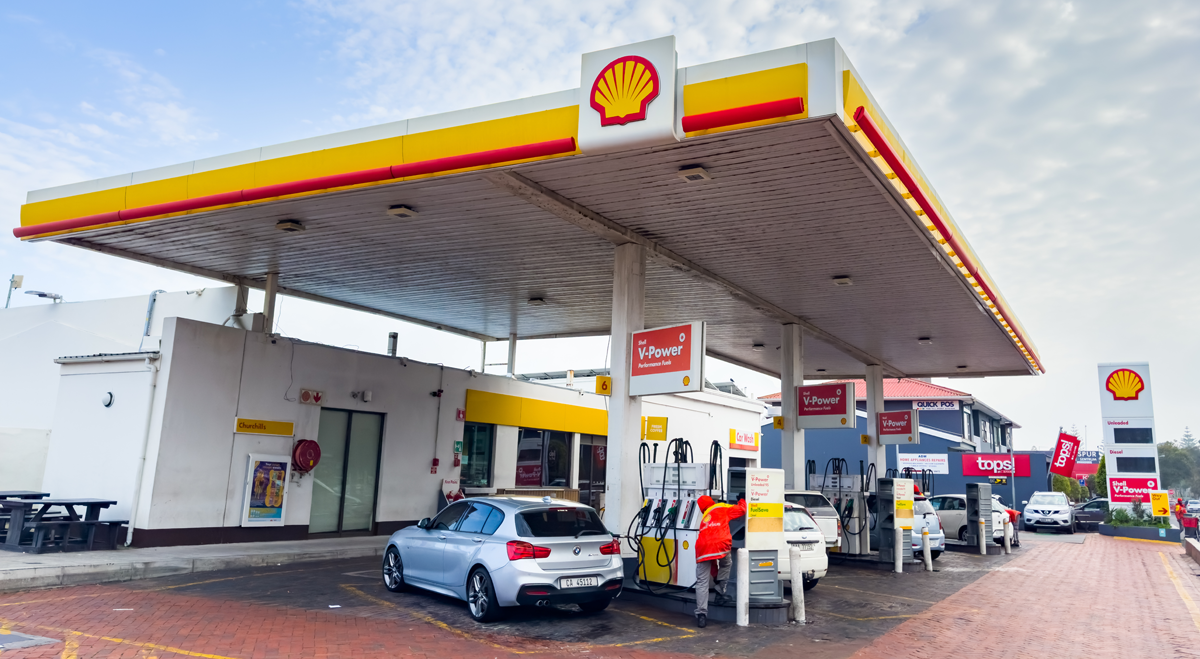
    Shell plc (LSE:SHEL) delivered a strong financial performance in the second quarter of 2026, with higher earnings and cash flow helping reduce debt while funding major strategic investments and continued shareholder returns. The energy group benefited from stronger commodity prices, solid trading across liquefied natural gas (LNG) and crude oil, improved refining and chemicals margins, and ongoing cost savings.

    For the quarter, income attributable to shareholders reached $10.8 billion, while operating cash flow totaled $21.4 billion. Net debt fell to $41.8 billion, reducing gearing to 18.7%. During the first half of the year, Shell generated free cash flow of $20.5 billion, allowing the company to return $5.2 billion to shareholders during the quarter through dividends and share buybacks. Shell also announced a new share repurchase programme worth $4.2 billion.

    Portfolio Reshaping Continues

    Alongside its financial results, Shell continued to reshape its portfolio through targeted acquisitions and asset sales. The company agreed to acquire ARC Resources in a deal valued at approximately $13.6 billion, strengthening its position in Canada’s Montney shale basin and expanding its integrated gas operations.

    At the same time, Shell agreed to sell its interests in the Na Kika platform and the Coulomb tieback project in the Gulf of Mexico for $1.7 billion. Management said the transactions reflect its strategy of focusing capital on higher-return assets while recycling proceeds from mature operations to strengthen long-term growth and improve balance sheet efficiency.

    Strong Cash Flow Supports Capital Returns

    For the first six months of 2026, Shell generated operating cash flow of $27.5 billion and free cash flow of $20.5 billion. The company attributed the performance to stronger oil and gas prices, robust trading activity and continued structural cost reductions, which have now reached $5.8 billion since 2022.

    Cash capital expenditure totaled $8.4 billion during the first half, while the company maintained its dividend and expanded shareholder distributions through a renewed buyback programme consisting of $3.0 billion in new repurchases and an additional $1.2 billion previously deferred.

    Investment Outlook

    Shell’s investment case continues to be supported by healthy profitability, strong cash generation and a disciplined approach to capital allocation. The company’s valuation remains attractive, with a relatively modest price-to-earnings ratio and a dividend yield of around 3.5%. However, softer revenue trends, moderating free cash flow momentum and weaker technical indicators suggest investors may continue to monitor near-term performance closely, despite management’s positive outlook on cost reductions, shareholder returns and the strategic benefits of the ARC Resources acquisition.

    About Shell

    Shell plc (LSE:SHEL) is one of the world’s largest integrated energy companies, operating across oil and gas exploration and production, liquefied natural gas, refining, chemicals, trading and energy marketing. The company is focused on generating strong cash flow, improving operational efficiency and delivering consistent returns to shareholders through dividends and share buybacks.

    As part of its long-term strategy, Shell continues to optimise its global portfolio through selective acquisitions and divestments. Recent moves include expanding its Canadian shale gas business through the acquisition of ARC Resources while disposing of mature offshore assets in the Gulf of Mexico. The company aims to strengthen its integrated gas portfolio, maintain financial discipline and support long-term growth through targeted investment and capital recycling.

  • Alien Metals JV Completes Elizabeth Hill Drilling to Support Resource Upgrade

    Alien Metals JV Completes Elizabeth Hill Drilling to Support Resource Upgrade

    Alien Metals (LSE:UFO) announced that joint venture partner West Coast Silver has completed its first-half 2026 diamond drilling programme at the Elizabeth Hill Silver Project in Western Australia’s Pilbara region. Alien retains a 30% interest in the project as well as an equity investment in West Coast Silver.

    The campaign consisted of 14 diamond drill holes covering a total of 2,015.7 metres. Drilling focused on extending mineralisation below the historic mine workings, testing areas to the north and west of the existing resource, and carrying out infill drilling within the current resource model.

    High-Grade Results Support Future Growth Plans

    Earlier assay results from the programme returned several high-grade silver intersections, including 3 metres grading 524 grams per tonne silver, with 1.5 metres grading 1,039 grams per tonne. These results continue to demonstrate the project’s potential as one of Australia’s highest-grade silver deposits.

    All remaining drill core samples have now been submitted for laboratory analysis, with results expected during August. The new data will contribute to an updated JORC-compliant mineral resource estimate and support economic studies assessing future development opportunities. Additional drilling is planned for the second half of 2026 as the joint venture looks to further expand the resource and strengthen the project’s long-term production potential.

    Investment Outlook

    Alien Metals continues to face challenges associated with its exploration-stage business model, including the absence of revenue, ongoing operating losses and continued cash outflows. Technical indicators also remain weak, with the shares trading below key moving averages alongside negative momentum signals. While the company’s valuation provides some support, the lack of a dividend and its early-stage development profile continue to weigh on the overall investment outlook.

    About Alien Metals Ltd

    Alien Metals Ltd is an AIM-listed mineral exploration and development company focused on advancing a diversified portfolio of mining assets across Australia. Its projects include the Georgina Basin iron oxide copper-gold (IOCG) project in the Northern Territory, multiple iron ore assets in Western Australia’s Pilbara region, and precious and base metals projects such as Elizabeth Hill and Munni Munni. The company holds a 30% joint venture interest in the Elizabeth Hill Silver Project together with an equity stake in West Coast Silver.

    Beyond silver, Alien’s principal iron ore asset is the Hancock Iron Ore Project in the central Pilbara, which hosts a JORC-compliant resource of 8.4 million tonnes grading 60% iron. The company is targeting production of 2 million tonnes per year over a ten-year mine life, supported by access to major transport infrastructure and export facilities at Port Hedland. Alien also maintains interests in the Brockman and Vivash iron ore projects, alongside a 30% stake in the Munni Munni project through its joint venture with GreenTech Metals, providing exposure to iron ore, silver and platinum group metals across key Australian mining regions.

  • LSEG Delivers Record First-Half Performance and Upgrades Full-Year Outlook

    LSEG Delivers Record First-Half Performance and Upgrades Full-Year Outlook

    London Stock Exchange Group (LSE:LSEG) reported record results for the first six months ended June 30, 2026, with total income excluding recoveries increasing 8.4% on an organic constant currency basis. Growth was supported across its Data & Analytics, FTSE Russell, Risk Intelligence and Markets businesses. Adjusted EBITDA climbed 14.1%, with the adjusted EBITDA margin improving by 320 basis points, while adjusted earnings per share rose 17.2% as subscription revenue growth, operating efficiencies and strong cash generation continued to drive performance.

    AI Strategy and Markets Business Fuel Growth

    LSEG continued to expand its “LSEG Everywhere” strategy by making AI-ready data available through multi-cloud platforms and direct integration into customers’ AI environments. The company also broadened the rollout of AI Search within Workspace and strengthened integration with Microsoft Copilot, extending AI-powered capabilities to more users.

    The Markets division delivered double-digit growth during the period while advancing several strategic initiatives, including the development of Private Securities Markets, preparations for the planned LSE 24 launch and a digital securities depository project in partnership with HSBC. Shareholder returns also remained a priority, with £2.1 billion of share buybacks completed, a further £1.35 billion authorized, and the interim dividend increased by 17%.

    Guidance Raised Following Strong First Half

    Following its first-half performance, LSEG increased its financial outlook for 2026. The group now expects organic constant currency total income growth of between 7.0% and 7.5%, while forecasting EBITDA margin expansion of around 100 basis points. Equity free cash flow is expected to reach at least £2.7 billion.

    Management believes the combination of proprietary financial data, global market infrastructure and regulatory expertise positions LSEG to play an increasingly important role as financial institutions accelerate the adoption of artificial intelligence. The company expects its AI-focused products and technology investments to strengthen customer relationships while supporting long-term growth across its businesses.

    Investment Perspective

    LSEG’s outlook is supported by strong underlying financial performance, expanding margins, healthy revenue growth and an improving earnings outlook. Significant share buybacks and robust free cash flow also strengthen the investment case. However, the shares continue to trade at a premium valuation, recent cash flow trends have shown some variability, and technical indicators suggest positive short-term momentum alongside a less favorable longer-term trend.

    About London Stock Exchange Group

    London Stock Exchange Group plc (LSE:LSEG) is a global provider of financial market infrastructure, data and analytics solutions. Its portfolio includes the London Stock Exchange, FTSE Russell, Risk Intelligence and a wide range of subscription-based financial data and analytics services, with an increasing emphasis on AI-ready datasets and cloud-based delivery.

    The group’s products support trading, investment management, risk analysis and regulatory compliance for banks, asset managers and institutional investors around the world. By expanding AI-powered capabilities within its Workspace platform and collaborating with major technology providers including Microsoft, Amazon and Google, LSEG aims to integrate advanced data and analytics more deeply into customers’ day-to-day workflows.

  • MYCELX Expects Stronger Second Half as Water Treatment Projects Gather Pace

    MYCELX Expects Stronger Second Half as Water Treatment Projects Gather Pace

    MYCELX (LSE:MYX) reported unaudited first-half 2026 revenue of approximately $2.1 million, compared with $1.7 million in the same period last year, supported by paid trials, equipment leases and recurring filter media sales. The company expects a much stronger performance during the second half, driven by the delivery of a $3.9 million REGEN system for the Permian Basin and continued growth in leasing and media revenue.

    Management said around 80% of its projected full-year revenue target of $11 million has already been secured through booked, contracted or recurring business, providing improved revenue visibility. Cash on hand totaled $500,000 at the end of June, with a further $1.1 million received during July. MYCELX is also reviewing financing alternatives to support additional equipment investment for Permian projects while expanding a pipeline of opportunities across U.S. produced water, PFAS treatment and Middle East operations.

    Operations Expand Across Key Growth Markets

    During the first half, MYCELX completed its third offshore produced water treatment installation in the Gulf of Mexico and is preparing to deploy its first large-scale project for a Permian Basin water midstream operator. The company is also pursuing further offshore and onshore contracts, with increasing filter media demand expected to strengthen recurring revenue as additional systems come online.

    In PFAS treatment, MYCELX has secured a three-month validation project with a landfill operator in Minnesota. A successful outcome could lead to permanent installations both at the site and at similar facilities. Across the Middle East, the company continues to identify opportunities for new installations and retrofit projects, although management noted that regional geopolitical conditions may influence project timing. Even so, the company believes recent commercial progress has reinforced its competitive position in its target markets.

    Investment Considerations

    The company’s outlook continues to be weighed down by ongoing negative operating and free cash flow, despite the improvement in revenue and profitability achieved during 2025. From a technical perspective, the shares remain above their longer-term moving averages but are trading below the 20-day average, presenting a mixed picture. Valuation also remains demanding due to a relatively high price-to-earnings ratio, while the company currently offers no dividend yield.

    About MYCELX Technologies

    MYCELX Technologies Corporation develops proprietary water treatment solutions for the oil and gas industry as well as a range of industrial applications. Its modular treatment systems and specialist filter media are designed for produced water treatment in both offshore and onshore environments, while the business is also expanding into PFAS remediation and industrial wastewater treatment across the United States and the Middle East.

    The company serves oil producers, midstream water operators, municipal authorities and industrial customers, with a strategy focused on increasing recurring revenue through long-term projects and consumable media sales. Its core markets include the Permian Basin, offshore Gulf of Mexico operations, Middle Eastern energy projects and the growing U.S. PFAS remediation sector.

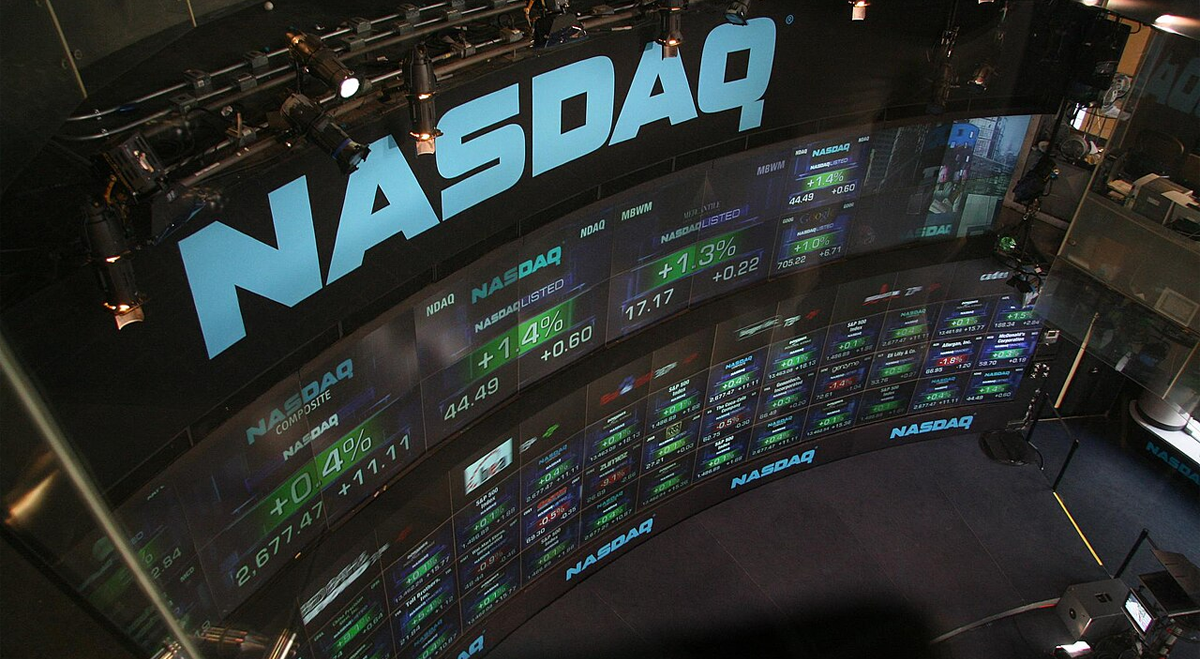
  • U.S. Futures Hold Near Flatline as Markets Await Fed Decision and Tech Earnings: Dow Jones, S&P, Nasdaq, Wall Street

    U.S. Futures Hold Near Flatline as Markets Await Fed Decision and Tech Earnings: Dow Jones, S&P, Nasdaq, Wall Street

    U.S. equity futures traded close to unchanged on Wednesday as investors refrained from making major moves ahead of the Federal Reserve’s latest policy announcement and a series of high-profile corporate earnings releases.

    Markets broadly expect the central bank to leave interest rates unchanged, although traders continue to price in the possibility of an unexpected quarter-point increase.

    According to CME Group’s FedWatch Tool, there is a 64.2% probability that the Fed keeps rates on hold, while the likelihood of a 25-basis-point increase stands at 35.8%.

    Attention will also focus on the Fed’s policy statement, although investors expect less forward guidance under Federal Reserve Chair Kevin Warsh’s streamlined communication approach.

    Meta and Microsoft Results Could Shape Market Sentiment

    Investors are also waiting for quarterly earnings from Meta Platforms (NASDAQ:META) and Microsoft (NASDAQ:MSFT), which are scheduled for release after Wednesday’s market close.

    The reports are expected to provide fresh insight into artificial intelligence spending and could influence investor appetite for large-cap technology stocks following recent valuation concerns.

    Dow Outperforms Despite Weakness in Technology

    Wall Street ended Tuesday with mixed results after another volatile trading session.

    The Dow Jones Industrial Average gained 537.24 points, or 1.0%, to close at 52,747.32, marking its third consecutive advance.

    The S&P 500 edged 0.2% higher to 7,428.78, while the Nasdaq Composite slipped 0.2% to finish at 24,876.91.

    Earnings Drive Diverging Sector Performance

    Sherwin-Williams (NYSE:SHW) climbed 8.3% after posting stronger-than-expected quarterly earnings and raising its full-year guidance.

    Coca-Cola (NYSE:KO) also advanced 5% after delivering quarterly results that exceeded forecasts and improving its outlook for the year.

    Technology stocks remained under pressure, however, with semiconductor companies leading the declines.

    The Philadelphia Semiconductor Index dropped 4.5% for a fourth consecutive session, reaching its lowest closing level in more than two months.

    The NYSE Arca Computer Hardware Index also lost 2.5%, while oil services companies weakened as crude prices continued to fall.

    Defensive Industries Offer Support

    Healthcare stocks provided a bright spot, with the NYSE Arca Pharmaceutical Index rising 2.3% to a record closing high.

    Telecommunications, airlines and homebuilding companies also posted gains, helping to offset weakness across the broader technology sector.

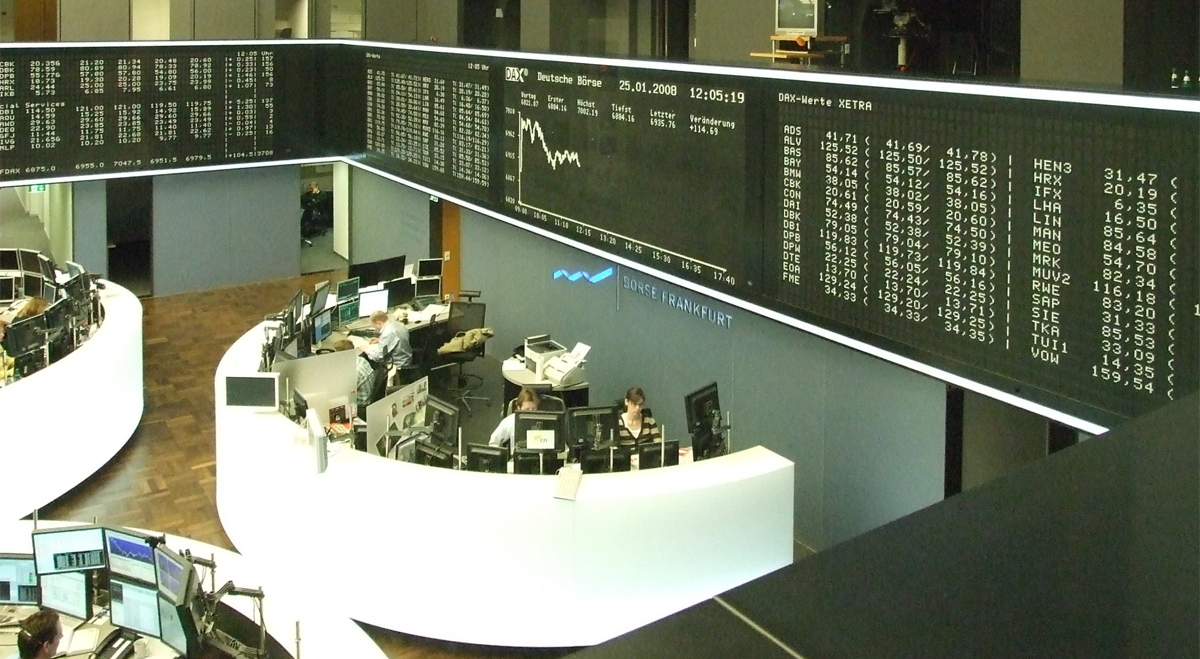
  • European Stocks Trade Cautiously as Middle East Tensions Weigh on Sentiment: DAX, CAC, FTSE100

    European Stocks Trade Cautiously as Middle East Tensions Weigh on Sentiment: DAX, CAC, FTSE100

    European equities traded with little direction on Wednesday after joint military strikes by the United States and Saudi Arabia in Iraq heightened fears that conflict in the Middle East could escalate further.

    Investors also remained cautious ahead of quarterly earnings from major U.S. technology companies and the Federal Reserve’s interest rate decision, both scheduled for later in the day.

    The French CAC 40 fell 0.8%, while Germany’s DAX and the UK’s FTSE 100 each edged 0.1% higher.

    Corporate Earnings Drive Individual Stocks

    Logitech International shares dropped 7.2% after the Swiss computer peripherals manufacturer warned that a temporary shutdown at one of its suppliers’ factories could reduce third-quarter sales by as much as $200 million.

    Wealth manager UBS (NYSE:UBS) gained 3.3% after reporting better-than-expected second-quarter earnings and announcing plans to repurchase $3 billion of its own shares over the next year.

    Mining group Rio Tinto (LSE:RIO) rose 1.3% after posting a 47% increase in first-half profit.

    Commodity trader Glencore (LSE:GLEN) advanced 2.8% as first-half earnings from its trading division doubled compared with the previous year.

    Strong Results Lift Consumer and Banking Stocks

    Greggs (LSE:GRG) jumped 12% after the UK bakery chain reported a stronger-than-expected 19.7% increase in first-half 2026 pre-tax profit.

    Reckitt Benckiser (LSE:RKT), the maker of Dettol, climbed 5.3% after delivering what it described as a strong second quarter while maintaining its full-year guidance.

    Standard Chartered (LSE:STAN) added 3.7% after announcing higher quarterly earnings alongside a $1 billion share buyback programme.

    Mixed Performance Across Continental Europe

    French spirits producer Remy Cointreau (EU:RCO) declined 3.6%, despite reporting first-quarter sales that exceeded expectations and reaffirming its annual targets.

    Danone (EU:BN) fell 4.5% even after publishing solid first-half financial results.

    Belgian chemicals company Solvay (EU:SOLB) gained 3.4% after second-quarter core earnings came in ahead of market forecasts.

    Italian energy major ENI (BIT:ENI) advanced 4.2% after increasing the size of its share buyback programme following strong second-quarter results.

    Industrials Lead the Gainers

    Electrolux (LSE:0GQ1) surged 24% after the Swedish appliance manufacturer reported quarterly profit well above expectations.

    Deutsche Bank (TG:DBK) rallied 5% after delivering a record second-quarter profit.

    BASF (TG:BAS) climbed 4% after announcing plans to begin a €1 billion share buyback programme in August.

    Utility company RWE (TG:RWE) rose 2% after upgrading its earnings outlook for both 2026 and 2027.

  • Gold Gains Slightly Before Fed Announcement Despite Inflation Concerns

    Gold Gains Slightly Before Fed Announcement Despite Inflation Concerns

    Gold traded modestly higher on Wednesday as a weaker U.S. dollar supported bullion ahead of the Federal Reserve’s policy announcement, although rising oil prices and renewed geopolitical tensions continued to fuel inflation worries.

    Spot gold (XAU/USD) added 0.3% to $4,038.71 an ounce by 04:52 ET (08:52 GMT), while U.S. gold futures eased 0.03% to $4,037.65 an ounce.

    The metal had retreated by more than 1% on Tuesday after a stronger dollar reduced its appeal.

    Fed Meeting Dominates Market Attention

    The U.S. Dollar Index slipped 0.1% but remained close to a one-month high.

    Investors overwhelmingly expect the Federal Reserve to keep interest rates unchanged at the conclusion of its meeting later on Wednesday.

    CME Group’s FedWatch Tool indicates a 68% probability that rates will remain unchanged, compared with a 32% chance of a 25-basis-point increase. Markets also continue to price in a strong possibility of a September rate hike.

    Higher borrowing costs typically reduce demand for gold because it offers no yield.

    Geopolitical Risks Support Safe-Haven Demand

    Fresh military developments in the Middle East remained a key focus after the U.S. military intercepted Iranian ballistic missiles aimed at American forces.

    Iran later said it had targeted U.S. military facilities in Jordan, while Iraq’s Popular Mobilization Forces accused U.S. and Saudi forces of launching airstrikes against its positions.

    Saudi Arabia also reported intercepting drones targeting oil facilities and blamed Iran-backed militias.

    The renewed confrontation helped lift crude oil prices by more than 4%, increasing concerns over future inflation.

    ING analysts said: “Higher oil prices amid a re-escalation in the Middle East will weigh on gold in early morning trading, reigniting inflation concerns.”

    Economic Data Also in Focus

    Investors are now awaiting the U.S. PCE inflation report and July employment figures for additional clues on the direction of Federal Reserve policy.

    Silver rose 1.4%, platinum slipped 0.5%, while copper prices weakened modestly.

  • Oil Surges as Renewed U.S.-Iran Conflict and Falling Inventories Boost Crude Prices

    Oil Surges as Renewed U.S.-Iran Conflict and Falling Inventories Boost Crude Prices

    Oil prices climbed more than 3% on Wednesday after renewed military action involving the United States, Saudi Arabia and Iran heightened concerns over global crude supplies, while declining U.S. oil inventories added further support to the market.

    By 08:24 GMT, Brent crude futures had risen $3.04, or 3.6%, to $87.13 a barrel. U.S. West Texas Intermediate (WTI) crude advanced $2.80, or 3.5%, to $82.06 a barrel.

    According to UBS analyst Giovanni Staunovo, “Renewed military strikes in the Middle East and Iranian officials reiterating that they want to control shipping activity through the Strait of Hormuz amid depressed oil flows through the Strait are lifting oil prices again.”

    Fresh Military Action Raises Supply Risks

    Oil markets reacted after the United States and Saudi Arabia carried out strikes against Iran-backed groups in Iraq, blaming them for recent drone attacks on Saudi energy infrastructure.

    The military operation followed the interception of Iranian ballistic missiles aimed at U.S. forces stationed in the region, adding to fears that the conflict could expand further.

    Diplomatic progress also stalled after an Iranian official told Reuters that Tehran had rejected Oman’s proposal for joint regional oversight of the Strait of Hormuz, dimming hopes for an agreement that could restore normal shipping through one of the world’s most important energy routes.

    Shipping Through Hormuz Remains Limited

    Only a handful of commodity vessels crossed the Strait of Hormuz during the week, highlighting the continued disruption to Gulf trade.

    Meanwhile, shipping through the Bab el-Mandeb Strait increased, with five vessels passing through on Wednesday after 39 made the journey on Tuesday, the busiest day since July 19, before Yemen’s Iran-backed Houthi movement announced a blockade targeting Saudi Arabia.

    DBS Bank expects oil markets to remain highly volatile.

    Suvro Sarkar, Head of Energy Research at DBS Bank, said: “We believe Brent oil prices will continue to whipsaw in the $80-$100 per barrel range in the near term as the conflict ebbs and flows in the Middle East.”

    He added that geopolitical tensions have worsened despite earlier indications from U.S. President Donald Trump that diplomatic efforts could resume.

    “This series of stop-start negotiations means a complete removal of the Strait of Hormuz blockade is not achieved, and oil prices could see higher floor of around $80 per barrel even under a de-escalation scenario.”

    Lower U.S. Stockpiles Support the Rally

    Crude prices also found support after market sources, citing American Petroleum Institute data, reported that U.S. oil inventories declined by around 3.3 million barrels during the week ended July 24.

    Traders are now awaiting official inventory figures from the U.S. Energy Information Administration later on Wednesday.

    Further bullish sentiment came from expectations that OPEC+ may suspend planned production increases for three months beginning in October after completing the scheduled return of previously withheld output.

  • Markets Hold Steady Before Fed Announcement as Microsoft and Meta Earnings Take Center Stage: Dow Jones, S&P, Nasdaq, Wall Street Futures

    Markets Hold Steady Before Fed Announcement as Microsoft and Meta Earnings Take Center Stage: Dow Jones, S&P, Nasdaq, Wall Street Futures

    U.S. stock index futures traded little changed on Wednesday as investors awaited two major market catalysts: the Federal Reserve’s latest interest rate decision and quarterly earnings from artificial intelligence leaders Meta Platforms (NASDAQ:META) and Microsoft (NASDAQ:MSFT). At the same time, renewed conflict in the Middle East drove oil prices higher, adding to investor caution.

    Futures Remain Near Unchanged

    As of 03:20 ET (07:20 GMT), futures on the Dow Jones Industrial Average and Nasdaq were broadly flat, while S&P 500 futures edged up 0.2%, or 13 points.

    Wall Street finished Tuesday with mixed performances. The Dow Jones Industrial Average gained 1.03% and the S&P 500 rose 0.21%, while the Nasdaq Composite slipped 0.22% as weakness in semiconductor stocks weighed on technology shares.

    The Philadelphia Semiconductor Index extended its decline for a fourth consecutive session, falling to its lowest level since May.

    Pressure on chipmakers intensified after reports highlighted increasing competition from Chinese semiconductor producers. Investor sentiment was also dampened after Alphabet raised its capital expenditure plans last week and SK Hynix (NASDAQ:SKHY) reported record operating profit that still fell short of lofty market expectations.

    The developments have intensified questions about whether massive artificial intelligence investments will deliver the level of earnings growth investors have priced into leading technology companies.

    John Higgins, Chief Economic Adviser at Capital Economics, said: “The share prices of some of the global tech giants at the heart of the AI revolution have come under pressure amid a variety of concerns, raising the question of whether the wheels are falling off the AI stock market train.”

    Investors Await the Federal Reserve

    Attention is now firmly focused on the Federal Reserve’s policy decision, scheduled for later today following the conclusion of its two-day meeting.

    Officials continue to weigh the impact of higher energy prices and sustained AI-related investment on inflation. While June inflation figures came in below expectations, renewed fighting in the Middle East briefly pushed oil above $100 per barrel, while technology companies continue to invest aggressively in artificial intelligence infrastructure.

    The U.S. labor market has also remained relatively stable, with hiring and layoffs showing limited movement.

    Although higher interest rates could help reduce inflation, they also risk slowing economic growth and employment.

    According to analysts at BofA Securities, today’s outcome could hinge on Federal Reserve Chair Kevin Warsh.

    They said: “Warsh faces a difficult choice. Not hiking could challenge the Fed’s credibility on inflation. But raising rates would go against his framework of looking through supply shocks.”

    CME FedWatch data indicated markets were pricing roughly a 70% probability that rates would remain unchanged between 3.50% and 3.75%, while the likelihood of a quarter-point increase remained just under one-third.

    Markets are also expecting limited forward guidance after Warsh indicated he does not intend to provide investors with a detailed roadmap for future policy decisions.

    Meta Investors Look for AI Returns

    Meta Platforms (NASDAQ:META) is scheduled to release quarterly earnings after Wednesday’s closing bell.

    The results will offer investors another opportunity to assess whether the company’s heavy artificial intelligence spending is beginning to generate stronger financial returns.

    Earlier this year, Meta increased its projected 2026 capital expenditure to between $125 billion and $145 billion, compared with previous guidance of $115 billion to $135 billion.

    The company has also warned that increased regulatory scrutiny in Europe and the United States could create a “material loss” related to “youth-related issues” and “additional trials scheduled for this year.”

    Microsoft Faces High Expectations

    Microsoft (NASDAQ:MSFT) will also report after the market closes as investors assess whether its substantial AI investments are translating into stronger growth.

    The software company plans to invest approximately $190 billion during fiscal 2026, underscoring the fierce competition among leading technology firms.

    Investors will pay particular attention to Azure cloud revenue, where analysts forecast constant-currency growth of between 39% and 40%.

    Even if Microsoft achieves those expectations, Azure would still trail the growth rate recently reported by Google’s cloud division.

    Oil Extends Rally

    Oil prices advanced after fresh military strikes involving the United States, Saudi Arabia and Iran-backed groups renewed concerns over global energy supplies.

    The escalation followed the interception of Iranian ballistic missiles aimed at U.S. forces in Jordan, ending a brief period of calmer trading in energy markets.

    Iran also rejected an Omani proposal concerning control of the Strait of Hormuz, reducing hopes for renewed diplomatic negotiations.

    By 03:17 ET (07:17 GMT), Brent crude had risen 3.5% to $87.01 per barrel, while West Texas Intermediate crude climbed 3.8% to $82.27 per barrel.

  • European Stocks Edge Higher as Strong Corporate Results Counter Fed and Geopolitical Concerns: DAX, CAC, FTSE100

    European Stocks Edge Higher as Strong Corporate Results Counter Fed and Geopolitical Concerns: DAX, CAC, FTSE100

    European equity markets traded slightly higher on Wednesday as a strong round of earnings from major banks, luxury groups and mining companies helped offset growing concerns over Middle East tensions, rising oil prices and uncertainty surrounding the U.S. Federal Reserve’s policy decision.

    The pan-European STOXX 600 index gained 0.1% in early trading.

    Among the major regional benchmarks, Germany’s DAX advanced 0.2%, France’s CAC 40 climbed 0.3%, London’s FTSE 100 added 0.4%, while Spain’s IBEX 35 traded broadly unchanged.

    Banking stocks were among the strongest performers. Standard Chartered (LSE:STAN) raised its full-year income guidance after stronger wealth management activity helped deliver better-than-expected earnings, sending its shares 3% higher. UBS (NYSE:UBS) also reported second-quarter net profit above market forecasts, while Spain’s CaixaBank (TG:48CA) exceeded quarterly earnings expectations.

    Luxury and consumer-focused companies also supported the market. Kering (EU:KER) surged 9% after Gucci posted a smaller-than-anticipated decline in quarterly sales. Eyewear group EssilorLuxottica (EU:EL) gained 2.2% after reporting first-half profit ahead of expectations, while mining company Rio Tinto (LSE:RIO) rose 2.5% after delivering its strongest first-half earnings in four years. Pharmaceutical group GSK (LSE:GSK) also advanced after improving its full-year margin outlook and announcing a $2.5 billion restructuring programme.

    Despite the positive earnings season, broader market sentiment remained cautious. Government bond yields stayed elevated as investors prepared for the Federal Reserve’s interest rate announcement later in the day.

    Although policymakers are widely expected to leave benchmark interest rates unchanged, money markets continue to assign roughly a one-in-three probability to either an unexpected rate increase or a more hawkish policy outlook, reflecting persistent inflation pressures, newly introduced trade tariffs and higher energy costs.

    Investor confidence weakened overnight after joint U.S. and Saudi military strikes targeted Iran-backed groups in Iraq following recent drone attacks on Saudi oil infrastructure.

    Responding to the accusations, Tehran said attributing the attacks to Iran was a “major miscalculation,” prompting investors to seek safer assets. Brent crude oil climbed more than 3% after Iranian ballistic missiles were intercepted in regional airspace, renewing concerns about potential supply disruptions and sustained energy inflation.

    Technology stocks also remained under pressure in Europe, mirroring sharp declines across Asian semiconductor companies after artificial intelligence memory chip producer SK Hynix (NASDAQ:SKHY) reported quarterly operating profit below expectations.

    The weaker results from the key AI supplier reignited concerns over elevated valuations across the technology sector, rising capital expenditure commitments and whether major technology companies can continue exceeding increasingly demanding earnings expectations.

    The pressure on semiconductor stocks comes ahead of closely watched quarterly earnings from Microsoft (NASDAQ:MSFT) and Meta Platforms (NASDAQ:META), both scheduled to report later in the day.

    As a result, geopolitical uncertainty and weakness across technology stocks continued to temper investor enthusiasm despite a strong flow of corporate earnings across European markets.