Category: Market News

  • St. James’s Place Delivers Strong First-Half Performance with Profit Ahead of Expectations

    St. James’s Place Delivers Strong First-Half Performance with Profit Ahead of Expectations

    St. James’s Place (LSE:STJ) reported first-half 2026 results that came in ahead of market expectations, with adjusted profit after tax reaching £224 million, approximately 14% above analyst forecasts.

    During the first six months of the year, the wealth manager generated net inflows of £2.7 billion, broadly in line with consensus estimates. Funds under management increased to £240.8 billion, exceeding analyst expectations by around 2%, while the client retention rate improved by 10 basis points year over year to 95.4%.

    The company also announced a £128 million share buyback programme, consisting of a £45 million ordinary repurchase alongside an additional £83 million buyback funded through the release of a provision. St. James’s Place maintained its interim dividend at the level anticipated by the market.

    At 30 June, the business employed 4,951 advisers, an increase of 17 compared with the end of 2025 but one fewer than a year earlier. Management reaffirmed its expectation that adviser numbers will remain broadly stable over the full year.

    Adjusted profit also benefited from a lower effective tax rate of 19%, compared with 23% during the same period last year. Operating expenses remained well managed, although the company noted that a greater proportion of planned investment spending will fall in the second half of 2026.

    During the period, St. James’s Place introduced changes to the timing of partner remuneration, moving from annual to monthly payments. The company said the adjustment would not affect the parent company’s profit and loss account, stating, “this change will not affect the parent company’s profit and loss statement, as market risk is hedged and there is no net interest income benefit from retaining cash for a year.”

    Elsewhere, pension inflows were below historical levels, while unit trust and ISA products continued to attract healthy investor demand throughout the first half.

  • Greggs Reports Higher Profit and Market Share as Value Strategy Continues to Deliver

    Greggs Reports Higher Profit and Market Share as Value Strategy Continues to Deliver

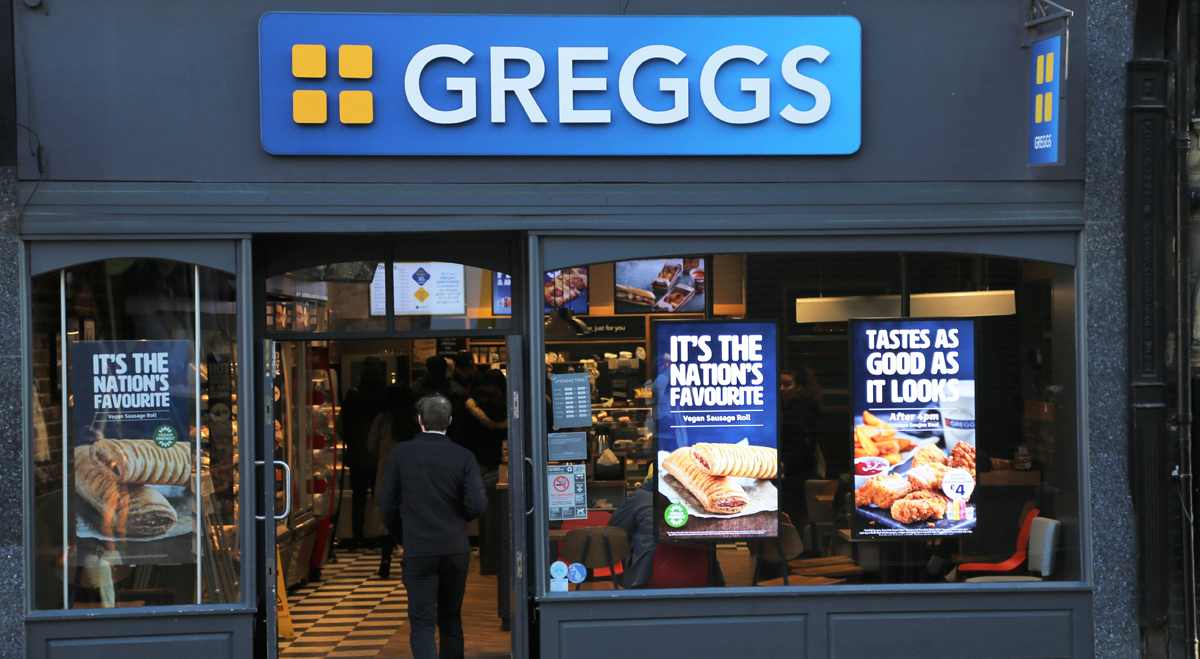
    Greggs (LSE:GRG) reported strong interim results for the 26 weeks ended 27 June 2026, with total sales increasing 7.2% year over year to £1.10 billion and operating profit rising almost 23% to £86.5 million. The food-to-go retailer also increased its share of customer visits to 8.7%, despite an overall decline in the wider food-to-go market, demonstrating the continued appeal of its value-focused offering during a challenging period for consumer spending.

    The company’s growth was supported by higher like-for-like sales across both company-operated and franchised stores, continued estate expansion and increasing sales through grocery retail partners including Tesco and Iceland. During the first half, Greggs opened a net 34 new shops, introduced its smaller “bitesize Greggs” store format, expanded trials of “Greggs Express” self-service locations and launched its first international travel hub outlet in Tenerife. The company’s digital loyalty programme also continued to strengthen customer engagement and repeat visits.

    Greggs is continuing to invest in its long-term growth strategy through major supply chain and logistics projects, including new national distribution centres in Derby and Kettering that are designed to support an estate of up to 3,500 UK stores. At the same time, management is pursuing operational efficiencies, reducing planned capital expenditure for 2026 to approximately £180 million while maintaining a target return on capital employed of around 20%, creating the potential for additional shareholder returns over time.

    Product innovation also remains a key growth driver. During the period, Greggs expanded its menu with new offerings including the Chicken Roll, additional hot food and pizza options, refreshed salad selections and a wider drinks range featuring iced beverages and Matcha. These initiatives are intended to strengthen the brand’s position as a leading destination for convenient food-to-go while supporting like-for-like sales growth and reinforcing its reputation for affordable, high-quality products.

    Greggs’ outlook continues to be supported by a resilient operating model and an attractive valuation, although management noted softer earnings quality during 2025, including pressure on margins, earnings per share and free cash flow, alongside gradually increasing leverage. Technical indicators remain generally positive despite mixed momentum, while the company expects sales growth to continue even as supply chain investment and inflationary pressures are likely to limit profit expansion in the near term.

    About Greggs plc

    Greggs plc is one of the UK’s largest food-to-go retailers, offering a wide range of freshly prepared bakery products, hot meals, snacks and beverages through a nationwide network of company-owned and franchised stores. In addition to its traditional retail estate, the company has expanded its presence through supermarket partnerships and new store formats designed to improve convenience and accessibility.

    The business focuses on providing affordable, ready-to-eat food throughout the day, serving millions of customers with products ranging from baked goods and sandwiches to pizzas, salads and hot drinks. Continued investment in digital services, menu innovation and supply chain infrastructure supports Greggs’ strategy of expanding its market share while delivering long-term sustainable growth.

  • Aberdeen Group Reports Higher Profit and Capital Generation as Interactive Investor Delivers Strong Growth

    Aberdeen Group Reports Higher Profit and Capital Generation as Interactive Investor Delivers Strong Growth

    Aberdeen Group (LSE:ABDN) reported a 21% increase in adjusted operating profit to £151 million for the first half of 2026, supported by modest revenue growth and continued cost discipline. Net capital generation rose 47% to £163 million, while the group’s capital position strengthened, with total capital coverage improving to 229%. Management reaffirmed its full-year guidance, targeting at least £300 million in adjusted operating profit and approximately £300 million in net capital generation for 2026.

    Interactive investor was the strongest-performing division during the period, with adjusted operating profit rising 18% to £84 million and net operating revenue increasing 22%. The platform attracted record net inflows of £6.8 billion, while customer numbers grew 14% to 525,000 and cash balances increased significantly. Although the business continued investing in technology and brand development, it also improved operating efficiency relative to assets under administration, reinforcing Aberdeen’s strategy of expanding its presence in the UK direct-to-consumer investment market.

    The Adviser division generated adjusted operating profit of £41 million, broadly unchanged from the previous year, on slightly higher revenue. However, it continued to experience difficult net flow conditions, recording £1.3 billion of net outflows despite stronger gross inflows. To address this, the company appointed a new chief executive for the business, aiming to convert recent improvements in customer service and product offerings into stronger commercial performance. Client satisfaction also improved during the period, as reflected by higher net promoter scores.

    Within the Investments division, adjusted operating profit increased 9% to £38 million as cost savings and transformation initiatives more than offset a modest decline in net operating revenue. Investment performance also improved, with 86% of assets outperforming their benchmarks over three years, comfortably exceeding the company’s 70% target. The business experienced net outflows of £5.6 billion, excluding liquidity products, largely due to withdrawals from lower-margin equity strategies. These were partly offset by inflows into fixed income and real assets, while recent acquisitions are expected to contribute more meaningfully to earnings during the second half of the year.

    Looking ahead, Aberdeen expects interactive investor to continue growing in line with customer acquisition while maintaining improving cost efficiency. The Adviser business is forecast to deliver broadly stable profitability in the second half as efforts continue to restore positive net flows, while the Investments division is expected to benefit from acquisitions and improved market conditions. Management continues to target medium-term annual growth in net capital generation of between 5% and 10%, supported by the group’s recent return to the FTSE 100 and strengthening operational momentum.

    Aberdeen’s outlook is underpinned by improving profitability, stronger cash generation, low leverage and a healthier balance sheet. Positive technical indicators also support the investment case, while the company’s valuation remains attractive thanks to a modest price-to-earnings ratio and an appealing dividend yield. Continued pressure on adviser flows, potential margin compression and near-term investment outflows remain the principal risks.

    About Aberdeen Group

    Aberdeen Group PLC is a UK-based asset and wealth management company operating across retail investing, financial advice and institutional investment management. Its core businesses include interactive investor, a digital investment platform serving individual investors, an Adviser division supporting financial advisers, and an Investments business managing multi-asset, fixed income, real assets and specialist investment strategies for clients around the world.

    The company focuses on growing assets under management and administration, improving investment performance and increasing capital generation, with particular emphasis on expanding its direct-to-consumer business and specialist investment capabilities. Its recent return to the FTSE 100 reflects its scale within the UK financial services sector.

    Aberdeen generates recurring income through platform subscriptions, investment management fees and treasury activities while maintaining a disciplined approach to cost management and capital allocation. The group’s strategy combines operational efficiency, balance sheet strength and targeted investment to support sustainable long-term growth and consistent shareholder returns.

  • Glencore Increases Copper Production and Maintains 2026 Guidance as Trading Business Performs Strongly

    Glencore Increases Copper Production and Maintains 2026 Guidance as Trading Business Performs Strongly

    Glencore (LSE:GLEN) delivered a solid operational performance during the first half of 2026, with own-sourced copper production increasing 15% year over year to 397,000 tonnes. The improvement was driven by stronger mining rates and higher ore grades at its African Copper operations, together with improved grades at the Antamina mine in Peru. Production of cobalt, zinc, gold and steelmaking coal declined during the period, largely reflecting regulatory restrictions, mine closures and production curtailments, while nickel and silver output remained broadly stable. Chrome and energy coal production also recorded modest decreases.

    The company left its full-year 2026 production guidance unchanged for copper, zinc and nickel, effectively upgrading its like-for-like outlook for copper and zinc following the sale of the Kidd mine in Canada in June. Guidance for energy coal production was increased slightly, while expectations for steelmaking coal were revised modestly lower. Glencore also reported a significant reduction in copper net unit cash costs despite higher input expenses linked to supply chain disruption arising from tensions in the Middle East. Its Marketing division is expected to deliver approximately $3.3 billion in adjusted EBIT for the first half, highlighting the continued strength of its global commodity trading business despite changing pricing conditions across coal and metals markets.

    Glencore’s outlook reflects improving revenue and earnings, although profitability continues to be affected by relatively thin margins, increasing leverage and weaker free cash flow conversion. Technical indicators remain supportive, with the shares continuing to trade above key moving averages and maintaining positive momentum. While the company’s valuation remains relatively demanding and dividend yield is modest, management’s reaffirmed production guidance, continued growth in copper output and resilient Marketing performance provide a positive backdrop despite ongoing operational and cash flow risks.

    About Glencore

    Glencore is one of the world’s largest diversified natural resources companies, with operations spanning the production, processing and marketing of metals, minerals and energy products. The group produces commodities including copper, zinc, nickel and coal, while also operating one of the world’s largest commodity marketing businesses, with significant exposure to African and South American copper operations and global energy markets.

    Its portfolio combines wholly owned mining assets with joint venture operations, supplying essential raw materials for industries such as steel production, power generation and manufacturing. Through its Marketing division, Glencore captures value by trading commodities across different regions and markets, allowing the company to benefit from price, quality and logistical differences while balancing earnings between production and trading activities.

  • Jadestone Energy Progresses Vietnam Growth Projects Despite Lower First-Half Production

    Jadestone Energy Progresses Vietnam Growth Projects Despite Lower First-Half Production

    Jadestone Energy (LSE:JSE) delivered a mixed performance during the first half of 2026, balancing progress on key growth projects and stronger commodity pricing against lower production and higher operating costs. Average production declined to 15,281 barrels of oil equivalent per day (boepd), compared with 20,368 boepd in the same period last year, primarily due to cyclone-related disruption at the Stag field and delays to the restart of the CWLH fields. The financial impact was partly offset by business interruption insurance proceeds, strong operational performance in Malaysia and contributions from the Akatara project.

    The company continued to make significant progress on its strategic development projects, particularly the Nam Du/U Minh gas project in Vietnam. Government approval of the field development plan and the signing of a gas sales agreement have positioned the project for reserve bookings and a final investment decision later this year. Jadestone also completed an oversubscribed bond refinancing, providing additional financial flexibility to support future growth initiatives. In Malaysia, an infill drilling campaign at the East Belumut field increased production by more than three times while being completed at more than 20% below budget.

    Jadestone is also advancing operational improvements at its Montara asset, where planned upgrades are expected to reduce greenhouse gas emissions by approximately 45% compared with 2026 levels while supporting additional production. These initiatives reflect the company’s strategy of combining disciplined cost management with targeted investment to strengthen its position as a growing Asia-Pacific energy producer.

    Although improved operating cash flow has strengthened the business, Jadestone’s outlook continues to be influenced by financial challenges, including negative shareholders’ equity and relatively high leverage. These concerns are partly offset by positive technical momentum in the shares and an attractive valuation based on a relatively low price-to-earnings ratio.

    About Jadestone Energy plc

    Jadestone Energy plc is an independent oil and gas producer focused on the Asia-Pacific region, with producing assets and development projects across Vietnam, Malaysia, Indonesia and offshore Australia. The company specialises in extending the life and improving the performance of mature producing assets while pursuing organic growth through new developments and selective acquisition opportunities.

    Its portfolio includes crude oil, condensate, liquefied petroleum gas (LPG) and natural gas production, benefiting from favourable regional pricing dynamics. Jadestone’s long-term strategy centres on strengthening its balance sheet, increasing production through projects such as Nam Du/U Minh in Vietnam, and improving operational efficiency while reducing emissions across its existing asset base.

  • Rio Tinto Increases Earnings and Dividend as Productivity Improvements Drive Strong First Half

    Rio Tinto Increases Earnings and Dividend as Productivity Improvements Drive Strong First Half

    Rio Tinto (LSE:RIO) reported a strong first-half performance for 2026, with copper equivalent production increasing 3% and underlying EBITDA rising 28% to $14.8 billion. The improvement was supported by higher production across several key commodities and continued progress at major growth projects, including the Simandou iron ore development and new lithium operations. Strong operating performance also lifted free cash flow by 75% to $3.8 billion, enabling the company to increase its interim ordinary dividend by 43% to $3.4 billion. Underlying earnings also rose 43%, while return on capital employed reached 17%.

    Management said productivity initiatives continued to deliver significant benefits, with $870 million in savings already achieved and an annualised run rate of $1.8 billion targeted by the end of the year. The company is also pursuing plans to unlock between $5 billion and $10 billion through portfolio optimisation and infrastructure initiatives. During the period, Rio Tinto achieved several operational milestones, including its first shipments of high-grade iron ore from Simandou, continued development of replacement mines in the Pilbara, and initial lithium production from the Fénix 1B and Sal de Vida projects.

    The group also continued advancing its decarbonisation strategy through a range of initiatives, including trials of battery-electric haul trucks, renewable energy projects across the Pilbara and Queensland, and agreements involving biofuels and bio-pellets designed to reduce Scope 1 and Scope 2 emissions. These investments form part of Rio Tinto’s broader strategy to improve operational efficiency while lowering the environmental impact of its mining operations.

    Rio Tinto’s outlook remains supported by strong financial performance, healthy production growth and improving operational efficiency. However, management noted that margin pressure, higher debt levels and softer free cash flow conversion continue to present challenges in the current commodity cycle. Technical indicators remain constructive, reflecting positive price momentum, while the company’s valuation continues to benefit from an attractive dividend. Management also highlighted opportunities from productivity improvements and expanding copper production, although weaker iron ore markets, safety performance, debt levels and short-term production headwinds remain areas of focus.

    About Rio Tinto

    Rio Tinto is one of the world’s largest mining and metals companies, producing a diversified range of commodities including iron ore, copper, aluminium and lithium. The group operates large-scale mining assets across multiple continents and focuses on supplying the raw materials required for global infrastructure, industrial development and the energy transition.

    The company continues to invest in long-life, high-quality assets while expanding its exposure to commodities that are expected to benefit from increasing demand linked to electrification and renewable energy. Alongside disciplined capital allocation and shareholder returns, Rio Tinto is investing in productivity improvements and lower-carbon technologies to strengthen its long-term competitiveness and support more sustainable mining operations.

  • Aston Martin Improves Margins and Liquidity as Valhalla Deliveries Drive First-Half Growth

    Aston Martin Improves Margins and Liquidity as Valhalla Deliveries Drive First-Half Growth

    Aston Martin (LSE:AML) reported significantly stronger financial performance for the first half of 2026, supported by a 21% increase in wholesale vehicle deliveries and a sharp rise in sales of its high-value Specials portfolio, including more than 220 Valhalla hypercars. Revenue increased 38% to £629 million, while gross profit climbed 68% and gross margin improved to 34%, reflecting the benefits of the company’s transformation programme, lower manufacturing costs and sustained demand for its ultra-luxury vehicles.

    Despite the operational improvements, Aston Martin remained loss-making during the period, with its adjusted loss before tax widening to £207 million as higher financing costs, including the impact of U.S. dollar debt revaluations, weighed on earnings. However, operating losses narrowed, adjusted EBITDA returned to positive territory with a margin of 10%, and free cash outflows during the second quarter were significantly reduced. The company also strengthened its financial position by securing £550 million of new debt financing, increasing pro forma liquidity to approximately £340 million while maintaining its full-year guidance despite ongoing macroeconomic and geopolitical uncertainty.

    Although operational momentum has improved, Aston Martin’s investment outlook continues to be affected by persistent net losses, negative operating profit, continued cash outflows and elevated debt levels relative to equity. Technical indicators also remain weak, with the shares trading below key moving averages and momentum remaining negative, although near-oversold readings suggest selling pressure may be easing. Valuation also remains challenging as the company continues to report negative earnings and does not currently pay a dividend.

    About Aston Martin Lagonda Global Holdings plc

    Aston Martin Lagonda Global Holdings plc is a UK-based manufacturer of ultra-luxury, high-performance sports cars and SUVs. Its model range includes the Vantage, DB12, DBS and Vanquish sports cars, alongside luxury SUVs and exclusive limited-production Specials. The company serves customers across the UK, the Americas, Europe, the Middle East and Africa, and the Asia-Pacific region, with an increasing emphasis on high-margin bespoke vehicles and personalised products.

    The company’s current product portfolio is one of the broadest in its history, supported by new derivatives such as the DB12 S and the limited-edition Vanquish 25. Exclusive models including the Valhalla hypercar are becoming an increasingly important part of Aston Martin’s strategy, supported by strong customer demand, high brand visibility and an order book that extends into late 2026.

  • Severfield Maintains FY27 Outlook as Data Centre Contracts Strengthen Order Book

    Severfield Maintains FY27 Outlook as Data Centre Contracts Strengthen Order Book

    Severfield plc (LSE:SFR) said trading at the beginning of FY27 has been in line with expectations, with the company maintaining guidance for underlying pre-tax profit of between £12 million and £15 million. A series of new contract wins, particularly in the data centre sector across the UK, Germany and Sweden, has increased the group’s UK and European order book to £534 million, providing strong revenue visibility for the current financial year and beyond.

    The company said Continental Europe now represents almost one-third of its regional order book, supported by an increasing proportion of higher-quality projects that are expected to deliver stronger margins over time. Management reiterated that FY27 will remain a transition year, with first-half profitability continuing to be affected by legacy lower-margin contracts before newer, higher-margin projects make a more significant contribution during FY28.

    Severfield also reported a positive start to the year for its Indian joint venture, JSSL, which increased both revenue and production while expanding its order book to £327 million. Growth has been driven by additional data centre projects and repeat business linked to JSW’s investment programmes. Management believes the strengthening pipeline in India will allow JSSL to make an increasingly important contribution to group earnings and profitability over the medium term ahead of the company’s half-year results in November.

    Although recent financial performance has been impacted by net losses and weaker profitability, the company’s operational outlook has improved thanks to a growing order book and increasing exposure to higher-margin work. Technical indicators also remain supportive, with the shares trading above key moving averages and maintaining positive momentum. However, valuation remains constrained while the company continues to report losses, and the absence of a dividend yield provides limited additional support.

    About Severfield

    Severfield plc is one of Europe’s leading structural steel specialists, providing the design, fabrication and construction of large-scale steel structures across the UK and continental Europe. The company operates six fabrication facilities with a combined annual production capacity of approximately 150,000 tonnes and employs around 1,800 people. Its projects span a range of sectors, including data centres, commercial developments and major infrastructure.

    The group also has a significant presence in India through its joint venture with JSW Steel, JSSL, which operates two fabrication facilities and is expected to increase annual production capacity to more than 224,000 tonnes by the end of FY27. This international footprint supports Severfield’s long-term strategy of expanding its presence in high-growth markets while delivering increasingly complex structural steel projects.

  • Sage Delivers Double-Digit Revenue Growth as Cloud and AI Strategy Continues to Gain Momentum

    Sage Delivers Double-Digit Revenue Growth as Cloud and AI Strategy Continues to Gain Momentum

    Sage (LSE:SGE) reported total revenue of £2.062 billion for the nine months ended 30 June 2026, an increase of 11% compared with the same period last year, as demand from both new and existing small and medium-sized business customers remained strong. Growth was recorded across all major regions, with North America delivering a 14% increase in revenue, the UK and Ireland growing 10%, and Europe advancing 7%. The performance was supported by continued momentum for Sage Intacct alongside stable demand for Sage 50, Sage 200 and Sage X3.

    Cloud solutions continued to drive the company’s expansion, with Sage Business Cloud revenue rising 15% to £1.762 billion and cloud-native revenue increasing 25% to £794 million. Recurring revenue reached £2.002 billion, while subscription-based products accounted for 84% of total revenue. Management said trading strengthened further during the third quarter, helped by the continued rollout of artificial intelligence capabilities across its software platform. The company reaffirmed its expectation of delivering organic total revenue growth of more than 9% for the full year, alongside further improvements in operating margins as the business continues to scale.

    The latest results highlight Sage’s ongoing transition towards an AI-powered, cloud-first subscription model, strengthening its position in the market for finance, accounting, payroll and HR software for small and medium-sized businesses. Continued growth in recurring revenue and cloud-based products demonstrates increasing customer adoption and supports the company’s strategy of building a more predictable, higher-margin business with global scale.

    Sage’s outlook remains supported by strong financial performance, continued revenue momentum, expanding margins and healthy cash generation. Management also maintained its positive full-year guidance, reflecting confidence in the group’s growth trajectory. While the company’s valuation remains balanced, supported by a reasonable price-to-earnings ratio and a consistent dividend yield, technical indicators remain mixed, with the share price still trading below its 100-day and 200-day moving averages.

    About Sage Group plc

    Sage Group plc is a leading provider of accounting, financial management, payroll and human resources software for small and medium-sized businesses. Listed on the FTSE under the ticker SGE, the company offers a portfolio of cloud-based and AI-enabled solutions, including Sage Intacct, Sage 50, Sage 200 and Sage X3, serving customers across North America, the UK and Ireland, and Europe.

    The company’s strategy is centred on expanding its cloud-native subscription platform while helping businesses simplify financial management, workforce administration and regulatory compliance. Through ongoing investment in artificial intelligence and digital innovation, Sage aims to improve productivity, automate workflows and strengthen connections between businesses, employees, financial institutions and government agencies. The company also supports initiatives focused on digital inclusion, economic opportunity and environmental sustainability.

  • PayPoint Delivers Solid First Quarter as Restructuring Progress Supports Long-Term Strategy

    PayPoint Delivers Solid First Quarter as Restructuring Progress Supports Long-Term Strategy

    PayPoint (LSE:PAY) reported a steady start to FY27, generating first-quarter net revenue of £39.5 million despite a difficult comparison with the prior year and a subdued consumer spending environment. Group net revenue declined 6.4%, but management said the company’s restructuring programme has now been largely completed, with early improvements in accountability, operational efficiency and product focus already becoming evident. Performance remains in line with internal expectations, with a stronger contribution anticipated during the second half of the financial year.

    Network Services generated net revenue of £21.6 million as parcel volumes continued to adjust following the new InPost agreement and weaker store-to-store traffic. However, retailer engagement improved, customer service performance strengthened through significantly shorter call waiting times, and businesses including Retail Technology and Digital Content recorded growth. Digital Payments & Open Banking increased net revenue to £3.2 million, supported by higher transaction volumes and the acquisition of Aperidata in June, which enhances the group’s real-time financial assessment capabilities and strengthens its offering across PayByBank and variable recurring payment solutions.

    Merchant Services reported net revenue of £7.7 million as the company continued its planned transition towards a more focused sales strategy targeting higher-value merchants. While the overall merchant base became more selective, Merchant Rentals and Business Finance both delivered growth, and the average value processed per merchant increased. Love2shop also recorded encouraging operational performance despite net revenue easing to £7.0 million because of revenue timing differences. Billings rose to £44.9 million, supported by double-digit growth in its business division, the launch of a new employee benefits proposition, a successful “Thank You Teacher” campaign and wider in-store distribution through major retail partners.

    PayPoint also reaffirmed its commitment to shareholder returns, confirming a final dividend of 20.0p per share, 2% higher than the previous year, to be paid in two instalments. The company has continued its share buyback programme, which has already returned £50 million to shareholders and reduced the number of shares in issue by 17.7%. A third tranche is now underway, with total buybacks expected to reach £30 million during FY27. Management also announced a Capital Markets Day on 29 September 2026, where it plans to present its simplified investment strategy, outline expected business synergies and discuss growth opportunities over the next three years.

    The company’s outlook continues to benefit from improving operating performance and recovering cash generation, although higher leverage and a reduction in shareholders’ equity remain factors to monitor. PayPoint’s valuation remains attractive, supported by a relatively low price-to-earnings ratio and a strong dividend yield, while positive technical indicators provide additional support as the shares continue to trade above key moving averages.

    About PayPoint

    PayPoint Group is a UK-listed technology, payments and retail services company that provides essential payment infrastructure for millions of consumer and business transactions every day. Through its four operating divisions—Network Services, Digital Payments & Open Banking, Love2shop and Merchant Services—the company delivers payment solutions, parcel services, rewards, gifting products and merchant services through a network of more than 30,000 convenience stores and over 65,000 partner locations.

    The group works with retailers, financial institutions, government organisations, fintech companies and corporate customers, offering services that include bill payments, parcel collection and delivery, banking solutions, Open Banking technology, Confirmation of Payee services, digital payment platforms and employee reward programmes. Its broad portfolio positions PayPoint as a key provider of payments and retail technology across the UK market.