Category: Market News

  • DAX, CAC, FTSE100, European Stocks Reach Record High as U.S. Shutdown Nears Resolution

    DAX, CAC, FTSE100, European Stocks Reach Record High as U.S. Shutdown Nears Resolution

    European equities climbed to fresh all-time highs on Wednesday, buoyed by optimism that the longest U.S. government shutdown in history could soon end, as lawmakers prepared for a decisive vote in the House of Representatives.

    Investor sentiment was further supported by softer inflation data out of Germany, easing concerns about price pressures in Europe’s largest economy.

    According to final figures from Destatis, German consumer prices rose 2.3% year-on-year in October, down slightly from 2.4% in September and fully in line with preliminary estimates.

    “The continued above-average rise in service prices was a driving force behind inflation,” said Destatis President Ruth Brand.

    Meanwhile, EU-harmonized inflation also slowed to 2.3% from 2.4% in the prior month, matching expectations.

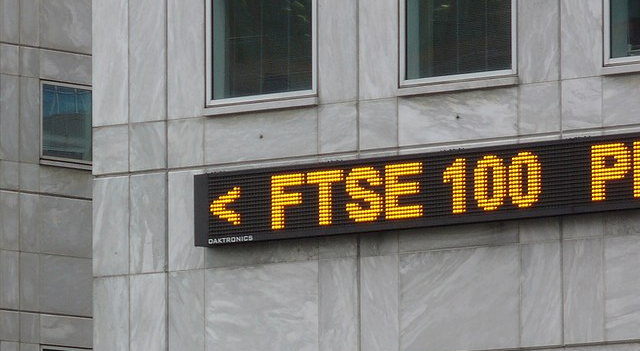
    In regional markets, both the French CAC 40 and German DAX gained 1.3%, reaching record levels, while the UK’s FTSE 100 was little changed.

    Among individual movers, LEG Immobilien (TG:LEG) rose 1.6% after reporting solid nine-month results and reaffirming that it remains on track to meet its full-year guidance.

    RWE (TG:RWE) jumped 3.3% after the German energy producer posted better-than-expected nine-month earnings, while Infineon (TG:IFX) gained 1% after raising its 2026 sales target for the AI power supply division.

    In the healthcare and agribusiness sector, Bayer (TG:BAYN) advanced 2.4% after its third-quarter adjusted profit exceeded market forecasts.

    Elsewhere, Swiss Life (TG:SLW) slipped 2.3% following mixed nine-month results, while ABN AMRO (EU:ABN) climbed 2.4% after announcing an agreement to acquire NIBC Bank from private equity firm Blackstone.

    In London, BAE Systems (LSE:BA.) rose around 1% after the defense contractor reaffirmed its annual outlook, while Taylor Wimpey (LSE:TW.) fell 3.2% as the average weekly number of private sales per site dropped 11% during the key autumn period.

    Meanwhile, Edenred (EU:EDEN) plunged 8.2% after the French voucher company warned of a reduction in its 2026 profit guidance, dampening sentiment in the financial services sector.

  • Dow Jones, S&P, Nasdaq, Wall Street Futures Rise as Tech Stocks and Shutdown Hopes Boost Sentiment

    Dow Jones, S&P, Nasdaq, Wall Street Futures Rise as Tech Stocks and Shutdown Hopes Boost Sentiment

    U.S. stock futures were higher early Wednesday, suggesting a stronger open on Wall Street as investors looked past recent volatility and focused on renewed optimism in the technology sector and signs that the U.S. government shutdown could soon end.

    Nasdaq 100 futures gained 0.6%, pointing to tech-led strength at the open.

    Advanced Micro Devices (NASDAQ:AMD) jumped 6.5% in premarket trading after CEO Lisa Su forecast average annual revenue growth of more than 35% over the next three to five years. Su also said AMD aims to capture a “double-digit” share of the data center AI chip market, currently dominated by Nvidia (NASDAQ:NVDA).

    Nvidia’s stock also rebounded in premarket trading after a sharp drop on Tuesday dragged down the broader tech index.

    Investors were further encouraged by political developments in Washington, where the House of Representatives is expected to vote later today on legislation to end the longest government shutdown in U.S. history. The Senate passed the bill on Monday, extending funding for most federal agencies until January 30, and President Trump is expected to sign it once approved.

    Tuesday’s session saw a split performance across the major U.S. indexes. The Dow Jones Industrial Average climbed 559 points, or 1.2%, to 47,927.96, while the S&P 500 added 14 points, or 0.2%, to 6,846.61. Meanwhile, the Nasdaq Composite fell 59 points, or 0.3%, to 23,468.30, weighed down by weakness in high-growth tech names.

    The mixed results reflected investor caution following a volatile stretch for equities, with some traders warning of potential overvaluation in the technology sector after weeks of sharp gains.

    Earlier this week, stocks had rallied on optimism surrounding a resolution to the record-long shutdown, as markets regained momentum following last week’s sell-off. Still, valuation concerns and uncertainty about the economic fallout from the shutdown remain in focus.

    Among individual movers, Nike (NYSE:NKE), Merck (NYSE:MRK), and Amgen (NASDAQ:AMGN) helped propel the Dow higher, while Nvidia slipped 3% on Tuesday after SoftBank sold its entire $5 billion stake in the chipmaker.

    With tech shares bouncing back and a potential end to the shutdown in sight, traders are cautiously positioning for another day of modest gains on Wall Street.

  • Global Wine Production Stays Below Average for Third Year as Climate Volatility Persists, OIV Reports

    Global Wine Production Stays Below Average for Third Year as Climate Volatility Persists, OIV Reports

    Global wine production increased modestly in 2025, but volumes remained below the long-term average for a third straight year as vineyards around the world grappled with increasingly erratic weather patterns, according to the International Organization of Vine and Wine (OIV).

    In its preliminary estimates, the OIV placed global wine output at 232 million hectolitres (mhl), marking a 3% increase from 2024, yet still 7% lower than the five-year average.

    “If you look at the causes for the lower production of the last three years, the major part is really the climatic variations that we’ve seen across both hemispheres,” OIV Director General John Barker told Reuters. “Some regions have had heat and drought, and then they’ve had torrential rains or unexpected frosts. And the fact that it’s really the third year in a row where we’re seeing these sorts of effects is quite striking.”

    Europe Hit Hard, Italy Returns to the Top

    In Europe, France posted its smallest grape harvest since 1957, while Spain’s output dropped to a 30-year low due to adverse weather. Italy, however, reclaimed its title as the world’s largest wine producer, with an 8% year-on-year increase in output, supported by more favourable growing conditions.

    The United States, ranked fourth globally, is projected to produce 21.7 mhl of wine — up 3% from the previous year but still 9% below the five-year average and well below historical highs.

    Southern Hemisphere Sees Partial Recovery

    Production in the Southern Hemisphere rebounded 7% after three consecutive annual declines, driven by gains in South Africa, Australia, New Zealand, and Brazil, which helped counterbalance weaker harvests in Chile. Despite the rebound, total output across the region remained 5% below average, the OIV said.

    Market Balance Amid Weak Demand

    The OIV noted that modest global growth could help stabilize inventories amid tepid demand in mature markets, reduced consumption in China, and ongoing uncertainty in global trade flows.

    “Low output can be very difficult for individual producers and regions … but from a macroeconomic perspective, it’s a positive, because it really makes sure that production and consumption are more or less aligned,” Barker added.

    The organization plans to revise its estimates later this year.
    (One hectolitre equals approximately 133 standard bottles of wine.)

  • IEA Warns Oil and Gas Demand May Keep Rising Until 2050, Undermining Climate Targets

    IEA Warns Oil and Gas Demand May Keep Rising Until 2050, Undermining Climate Targets

    Global demand for oil and gas could continue to rise until 2050, the International Energy Agency (IEA) said on Wednesday, signaling a major shift from its previous outlook that envisioned a rapid transition toward cleaner energy sources. The agency now believes the world is unlikely to meet its long-term climate goals under current policies.

    The IEA — often viewed as the energy policy adviser to developed economies — has faced growing political pressure over the years. Under President Donald Trump, the U.S. pushed the agency to emphasize fossil fuel security and expansion, urging American producers to increase output. Conversely, during the Joe Biden administration, the IEA forecasted that “global oil demand would peak this decade” and warned that “no more investment in oil and gas was needed if the world wanted to achieve its climate target.”

    Trump’s Energy Secretary Chris Wright criticized those projections, calling them “nonsensical.” The IEA, which receives funding from its member countries — with the U.S. as the largest contributor — plays a central role in shaping global energy policy through its research and data.

    Existing Policies Drive Long-Term Growth Outlook

    In its World Energy Outlook 2025 released Wednesday, the IEA said that under its “current policies scenario,” global oil demand is projected to reach 113 million barrels per day by 2050, roughly 13% higher than 2024 levels. The agency also expects total energy demand to increase by 90 exajoules by 2035, representing a 15% rise from today’s consumption.

    The “current policies” scenario focuses solely on existing regulations and excludes aspirational climate targets. The IEA had previously stopped using this model in 2019, opting instead for projections aligned with a clean energy transition and net-zero commitments. However, this year’s report abandoned the “pledges scenario,” citing insufficient data from countries on new climate goals for 2031–2035.

    In the stated policies scenario, which includes announced but not fully implemented measures, the IEA estimates that oil demand will peak around 2030 before stabilizing. The agency stressed that its scenarios are not forecasts but rather frameworks for exploring “a range of possible outcomes under different assumptions.”

    LNG Expansion Accelerates Amid Surging Energy Needs

    The IEA report highlighted a sharp increase in final investment decisions for liquefied natural gas (LNG) projects in 2025. Roughly 300 billion cubic meters of new LNG export capacity is expected to begin operations by 2030, marking a 50% rise in available supply.

    Under the current policies scenario, global LNG demand could climb from 560 bcm in 2024 to 880 bcm in 2035 and reach 1,020 bcm by 2050, driven by growing electricity needs — particularly from data centers and AI technologies.

    The report also noted that global investment in data centers could reach $580 billion in 2025, surpassing the $540 billion spent annually on oil supply, underscoring the tech sector’s rising energy appetite.

    Climate Goals at Risk as Global Temperatures Surge

    The IEA included a “net zero” pathway showing how emissions could theoretically fall to net zero by 2050, but warned that this remains increasingly unlikely without large-scale carbon capture and removal technologies.

    Over 190 nations committed during the 2015 Paris Climate Agreement to limit global temperature increases to no more than 1.5°C (2.7°F) above pre-industrial levels. However, the IEA report indicates that in all scenarios, the world exceeds 1.5°C of warming, with temperatures only declining under the net zero model if carbon removal technologies are successfully deployed.

    The findings suggest that despite political pledges and renewable energy progress, fossil fuels will remain a dominant force in the global energy mix for decades — posing a major challenge to achieving international climate ambitions.

  • Dollar Inches Higher as Traders Eye End of U.S. Shutdown and Await Fresh Data

    Dollar Inches Higher as Traders Eye End of U.S. Shutdown and Await Fresh Data

    The U.S. dollar ticked slightly higher on Wednesday, with market activity subdued as traders awaited confirmation of the government’s reopening after the country’s longest-ever federal shutdown.

    At 04:40 ET (09:40 GMT), the Dollar Index, which measures the greenback against six major peers, rose 0.2% to 99.470.

    Dollar Regains Ground After Labor Data Shock

    The greenback clawed back some of its previous session’s losses, following weaker employment figures from ADP, which reported that U.S. firms shed jobs in late October. The data heightened concerns over the labor market’s resilience — a key focus for Federal Reserve officials ahead of next month’s policy meeting.

    “The dollar was briefly hit yesterday after private sector payroll firm, ADP, suggested that 11k jobs had been lost per week through October. This report used a different methodology from its recent release, showing +42k jobs created that same month. Yet the dollar did not stay offered for long and has come back a little bid overnight,” analysts at ING noted.

    Expectations for a 25-basis-point rate cut at the Fed’s December 10–11 meeting rose to 61.9%, up from 57.8% the previous day, according to the CME FedWatch Tool.

    Optimism over a resolution to the U.S. shutdown also lent the dollar some stability. The Senate passed a bill earlier in the week to reopen the government, which now awaits a vote in the House of Representatives.

    “If approved, that means the U.S. government can reopen, perhaps on Friday, and that the September NFP jobs report (potentially USD negative) can be released early next week,” ING added.

    Euro and Pound Slip as European Data Disappoints

    In Europe, the euro edged lower, with EUR/USD down 0.1% to 1.1573 after German inflation eased slightly to 2.3% in October, confirming preliminary figures. In September, harmonized inflation had stood at 2.4% year-on-year.

    The British pound also weakened, with GBP/USD falling 0.2% to 1.3124 following softer-than-expected U.K. unemployment data for September. Political uncertainty added to the pressure, amid speculation that Prime Minister Keir Starmer could face a leadership challenge after this month’s budget.

    “Even though Starmer’s approval ratings are very poor, his removal would create some doubt about the future of Chancellor Rachel Reeves and add some risk premium to U.K. asset markets,” said ING.

    Yen Falls to Nine-Month Low, Aussie Inches Higher

    In Asia, the USD/JPY climbed 0.4% to 154.73, with the yen hitting a nine-month low as investors favored risk assets and anticipated looser fiscal policy under new Prime Minister Sanae Takaichi.

    “One factor thought to be keeping USD/JPY supported is direct investment into the US. These potential flows have brought USD/JPY to psychological resistance at 155, where Japanese verbal intervention is picking up,” said ING.

    Meanwhile, USD/CNY edged slightly higher to 7.1177, while the Australian dollar advanced 0.2% to 0.6538 after a senior Reserve Bank of Australia official noted growing debate over whether the current 3.6% cash rate was sufficiently restrictive to curb inflation.

    Overall, the dollar maintained a cautious upward bias, supported by improving risk sentiment and expectations of a near-term end to the U.S. government shutdown.

  • Gold Prices Ease After Two-Day Rally as Investors Weigh U.S. Reopening and Fed Outlook

    Gold Prices Ease After Two-Day Rally as Investors Weigh U.S. Reopening and Fed Outlook

    Gold prices retreated slightly in Asian trading on Wednesday, pausing after a two-day recovery as optimism about an imminent end to the record-long U.S. government shutdown boosted risk appetite. At the same time, renewed strength in the dollar and uncertainty surrounding the Federal Reserve’s next policy moves put pressure on the precious metal.

    By 23:42 ET (04:42 GMT), spot gold fell 0.5% to $4,108.36 per ounce, while December gold futures edged down 0.1% to $4,114.30 per ounce. In the broader precious metals market, platinum slipped 0.2% to $1,583.90, and silver dipped 0.3% to $51.11, both pulling back after strong gains earlier in the week.

    U.S. House Vote to End Shutdown in Focus

    Risk sentiment improved this week after the U.S. Senate passed a bill to restore government funding and end the 42-day shutdown — the longest in U.S. history. The legislation now moves to the House of Representatives, which is expected to approve it on Wednesday before sending it to President Donald Trump for his signature.

    Optimism over the government’s reopening has lifted equity and risk-driven markets, reducing demand for traditional safe havens such as gold. However, the metal continues to hold comfortably above the $4,000 per ounce level, supported by lingering uncertainty around U.S. monetary policy and trade developments.

    Fed Policy and Economic Data Awaited

    Investors are closely watching the Federal Reserve’s next move, as policymakers remain divided on whether to lower interest rates again in December. According to the Wall Street Journal’s Nick Timiraos, a lack of recent economic data — delayed by the shutdown — has widened disagreements within the Fed over the need for further easing.

    The reopening of the government is expected to unlock a wave of postponed economic reports, giving markets more clarity on growth and inflation trends. Still, near-term expectations for monetary easing have fluctuated, with gold prices softening as traders reassess the likelihood of another rate cut.

    The CME FedWatch Tool showed markets now pricing in a 62.4% chance of a 25-basis-point cut at the Fed’s December 10–11 meeting, up from 57.8% the previous day.

    Even as optimism about the U.S. reopening boosts broader sentiment, the interplay between economic data, policy uncertainty, and dollar strength is likely to dictate gold’s next move in the days ahead.

  • Oil Prices Dip Slightly as Markets Eye U.S. Government Reopening

    Oil Prices Dip Slightly as Markets Eye U.S. Government Reopening

    Oil prices slipped modestly in early Asian trading on Wednesday, as investors weighed optimism over the potential end of the record-long U.S. government shutdown against ongoing concerns about oversupply in global crude markets. A stronger U.S. dollar also added pressure, limiting any short-term rebound in prices.

    By 20:21 ET (01:21 GMT), Brent crude futures for January delivery were down 0.2% at $65.04 per barrel, while West Texas Intermediate (WTI) crude slipped 0.2% to $60.85 per barrel.

    U.S. Government Reopening Vote in Focus

    The U.S. Senate passed a funding bill on Tuesday to reopen the government, and the Republican-led House of Representatives is expected to vote on the measure Wednesday. If passed and signed by President Donald Trump, the legislation would end a 42-day shutdown — the longest in U.S. history.

    Expectations of a government reopening provided modest support to oil prices, as the prolonged shutdown had disrupted travel and reduced demand for fuel. Shortages of air traffic controllers and safety personnel led to widespread flight cancellations across major airports, compounding the drag on consumption.

    Supply Glut Concerns and Sanctions Risks Persist

    Crude prices gained some traction on Tuesday after reports that Russia’s Lukoil declared force majeure at one of its Iraqi oilfields, underscoring the reach of new U.S. sanctions imposed on Russia’s major energy companies last month. These measures are expected to tighten global supply in the near term, partially offsetting concerns of a growing surplus.

    However, sentiment in the oil market remains cautious. Despite occasional rebounds, prices have trended lower throughout 2025 amid fears of a significant oversupply developing into 2026. Analysts point to the OPEC+ alliance’s steady production increases and sluggish demand from key importers — particularly China — as major factors behind the bearish outlook.

    With global inventories continuing to rise and demand growth showing little momentum, traders remain skeptical that the recent geopolitical and policy developments will be enough to shift the market’s downward trajectory in the near term.

  • Dow Jones, S&P, Nasdaq, Wall Street Futures, Markets Lifted as U.S. House Prepares to Vote on Shutdown Deal; Cisco and Chevron Earnings in Focus

    Dow Jones, S&P, Nasdaq, Wall Street Futures, Markets Lifted as U.S. House Prepares to Vote on Shutdown Deal; Cisco and Chevron Earnings in Focus

    U.S. equity futures edged higher early Wednesday, buoyed by optimism that the House of Representatives will soon approve a funding bill to reopen the federal government after more than 40 days of closure. Republican leaders expressed confidence the measure will pass following its earlier approval by the Senate, marking what could be the end of the longest shutdown in U.S. history.

    If the bill is enacted, it will unlock a wave of delayed economic data critical for Federal Reserve policymakers, who remain divided on future rate decisions. Investors are also turning their attention to key corporate updates from Cisco Systems (NASDAQ: CSCO) and Chevron (NYSE:CVX), both of which could influence market sentiment later in the week.

    U.S. Futures Tick Higher

    At 02:39 ET, Dow futures rose 78 points (+0.2%), S&P 500 futures climbed 25 points (+0.4%), and Nasdaq 100 futures advanced 170 points (+0.7%).

    Wall Street finished Tuesday on a mixed note as cautious sentiment lingered. A revenue guidance cut from CoreWeave weighed on AI-related stocks, while ADP’s employment data hinted at a slowdown in labor market momentum.

    Nevertheless, optimism remains. Analysts at Vital Knowledge observed that investors continue to “stay invested” in anticipation of a potential year-end rally.

    Congress Nears Vote to Reopen Government

    The House is expected to vote later today on a bipartisan agreement that would fund most U.S. federal agencies through January 30. Confidence in a resolution grew earlier this week after the Senate passed the legislation with backing from eight Democrats, ending a prolonged stalemate with President Donald Trump’s Republican Party.

    If approved, Trump is expected to sign the measure swiftly. Reopening the government would allow the release of key macroeconomic indicators — including the monthly jobs report — that have been postponed during the shutdown. Such data will play a crucial role in shaping expectations for future monetary policy.

    Fed Debate Over December Rate Decision

    The Wall Street Journal reported that Federal Reserve officials remain split ahead of the December policy meeting on whether to lower interest rates again, following two consecutive 25-basis-point cuts in September and October.

    At the heart of the debate are concerns over employment and inflation. Some Fed members argue that deeper cuts could help revive job creation and investment, while others caution that easing too aggressively risks reigniting inflationary pressures. With a lack of recent data due to the shutdown, consensus within the central bank remains elusive, the WSJ noted.

    Cisco Earnings in Spotlight

    Cisco Systems will report earnings after the closing bell, offering investors an update on how AI-related investments are shaping its growth. CEO Chuck Robbins said in August that AI infrastructure orders “had surpassed $800 million in Cisco’s fiscal fourth quarter,” lifting full-year totals “to more than $2 billion.”

    He also highlighted that the “sovereign AI opportunity” will accelerate in the second half of fiscal 2026, positioning Cisco as a “core system provider for these significant AI training and inference cluster build outs […] integral to their development and eventual hyperscaling.”

    Consensus estimates from Bloomberg call for adjusted earnings of $0.98 per share on revenue of $14.77 billion.

    Chevron Investor Day Set to Outline Post-Hess Strategy

    Oil giant Chevron (NYSE:CVX) is also under the spotlight as it holds its Investor Day in New York, where CEO Mike Wirth is expected to outline the company’s next growth phase following its $55 billion acquisition of Hess earlier this year — one of the largest industry deals in recent memory.

    The transaction includes Hess’s 30% stake in the ExxonMobil-CNOOC consortium operating the prolific Stabroek offshore block in Guyana, which has yielded discoveries exceeding 11 billion barrels of oil. Analysts estimate total recoverable resources at roughly 20 billion barrels, reinforcing the strategic importance of the acquisition.

    “We continue to believe Chevron paid a full price for Hess,” analysts at Wolfe Research wrote. They added that “addressing this and a relatively mature shale portfolio in acquired assets will be key issues at the upcoming Investor Day.”

    Analysts also expect questions about Chevron’s Kazakhstan operations, which could contribute around 18% of the company’s free cash flow in 2025 and approximately 20% between 2026 and 2030.

  • Pound Weakens on Soft U.K. Labour Data and Rising Political Uncertainty

    Pound Weakens on Soft U.K. Labour Data and Rising Political Uncertainty

    The British pound slipped against the euro on Wednesday, with EUR/GBP climbing above 0.88 after the release of weaker-than-expected UK unemployment figures for September.

    According to analysts at ING, the currency has struggled to regain ground despite ongoing concerns about the accuracy of the Labour Force Survey data, which was temporarily suspended in 2023 for quality reassessment.

    Political risks are also weighing on sentiment, with reports suggesting that Prime Minister Keir Starmer could face a leadership challenge following the upcoming budget later this month.

    Although Starmer’s approval ratings remain weak, ING noted that any potential leadership change “could create uncertainty regarding Chancellor Rachel Reeves’ position and potentially add risk to UK asset markets.”

    The pound is already under strain from a policy mix of tighter fiscal conditions and a more accommodative monetary stance. ING added that heightened political uncertainty “could push the EUR/GBP exchange rate to new yearly highs in the 0.8870/0.8900 range.”

  • Avon Technologies Delivers Strong FY2025 Results, Surpassing Market Expectations

    Avon Technologies Delivers Strong FY2025 Results, Surpassing Market Expectations

    Avon Technologies (LSE:AVON) announced its preliminary results for fiscal year 2025 on Wednesday, reporting performance that exceeded market forecasts. Pretax earnings and earnings per share both came in 5% above estimates, underscoring another year of solid execution.

    The company generated sales of $314 million, representing a 13.8% year-on-year increase at constant exchange rates. EBITA rose 30.8% to $40.3 million, with margins improving by 130 basis points to 12.8%. Orders for the period totaled $352 million, down 3.6% from last year, while the closing backlog climbed 16.2% to $263 million. Adjusted basic earnings per share advanced 35.1% to 91.2 cents, supported by the rise in EBITA.

    Net debt grew 15.2% to $50.1 million, mainly due to increased receivables related to Team Wendy shipments for the U.S. Department of Defense, which were subsequently reabsorbed. The leverage ratio improved to 0.86x from 0.91x in fiscal 2024, reflecting a stronger financial position.

    By division, Team Wendy delivered sales of $145.1 million, up 12.1% year-on-year, with Department of Defense revenue rising 15.4% on higher deliveries of ACH Gen II and EXFIL helmets. The division’s order backlog ended the year at $146 million, down 4.8%, as shipments outpaced new orders. Avon Protection sales increased 15.9% to $168.8 million, with backlog surging 62.5% to $117 million, including $10.3 million in new rebreather orders.

    Looking ahead, management expects “above-market” growth in fiscal 2026, noting that the closure of the Irvine facility will lead to a “significant” improvement in margins for Team Wendy.

    For the upcoming year, the company projects high single-digit sales growth, EBITA margins between 14% and 16%, free cash conversion above 80%, and a reduction in transformation costs of over 60% to approximately $6 million. Avon has already met several medium-term goals two years ahead of schedule and maintains a robust balance sheet to support ongoing expansion and potential strategic acquisitions.