Category: Market News

  • Foresight Group Expands Assets and Retail Inflows as Core Earnings Meet Expectations

    Foresight Group Expands Assets and Retail Inflows as Core Earnings Meet Expectations

    Foresight Group (LSE:FSG) reported an increase in assets under management to £14.0 billion and funds under management to £10.0 billion for the year ended 31 March 2026. Growth was supported by record retail fundraising of £630 million and continued development of the firm’s regional private equity platform. Both the real assets and private equity divisions expanded during the period, although Foresight Capital Management experienced net outflows. In Australia, strong asset realisations contributed performance fees but also reduced overall AUM.

    The company expects core EBITDA before share-based payments to align with market forecasts, supported by a high proportion of recurring revenue and long-term capital commitments that provide earnings stability. Foresight continues to advance its flagship energy infrastructure fund, FEIP II, toward its €1.25 billion fundraising target. At the same time, it is implementing a three-year £50 million share buyback programme. Around £9.6 million was repurchased in FY26, with the remaining amount scheduled for FY27 and FY28 as part of active capital management in response to what management considers an undervalued share price.

    Overall financial performance remains solid, supported by strong operating metrics and shareholder-focused actions such as buybacks and director share purchases. However, technical indicators currently suggest bearish momentum in the share price, which tempers the otherwise constructive outlook.

    More about Foresight Group Holdings Ltd.

    Foresight Group Holdings Limited is a FTSE 250-listed investment manager specializing in real assets and growth capital. Founded in 1984, the firm operates across the UK, Europe, and Australia, offering institutional and retail investors access to private and listed funds focused on energy transition, decarbonisation, nature recovery, and financing for small and medium-sized enterprises.

  • ImmuPharma Gains Shareholder Approval and Funding to Advance P140 and Kapiglucagon Programs

    ImmuPharma Gains Shareholder Approval and Funding to Advance P140 and Kapiglucagon Programs

    ImmuPharma (LSE:IMM) has received strong shareholder support for its latest capital raise, with more than 88% of votes backing resolutions that enable a £6 million Lanstead subscription alongside a £468,000 WRAP retail offering. The company stated that the new funding strengthens its financial position and supports its strategy of progressing the P140 autoimmune platform and the Kapiglucagon program aimed at treating type 1 diabetes.

    Management is focusing on securing a value-accretive partnership for P140 during the year. Recent patent developments, additional supportive study results, and an upcoming scientific publication are expected to enhance the asset’s commercial prospects. The financing structure allows the company to benefit from potential future share price gains while extending its cash runway to at least the second half of 2028. This longer funding horizon is intended to provide greater leverage in licensing discussions while also enabling faster progress on Kapiglucagon and selective investment in earlier-stage pipeline opportunities.

    The company has also initiated an accelerated two-year development strategy for Kapiglucagon, supported by the newly approved capital. ImmuPharma plans to provide regular updates as the program advances toward potential partnering discussions. According to the board, these initiatives position 2026 as a year focused on execution, with milestones across both P140 and Kapiglucagon seen as important drivers of potential shareholder value.

    The investment outlook is currently constrained by weak financial fundamentals, including minimal revenue, ongoing operating losses, sustained cash burn, and negative equity. Technical indicators present a mixed but slightly supportive picture relative to the 200-day average. Valuation analysis remains difficult given the company’s losses and the lack of dividend yield data.

    More about ImmuPharma

    ImmuPharma PLC is a London-listed biotechnology company specializing in drug discovery and development. Its research focuses on treatments for autoimmune and metabolic diseases. The company’s core technology platform, P140, targets autoimmune disorders, while Kapiglucagon is being developed as a therapy for type 1 diabetes, placing ImmuPharma within specialized, high-value therapeutic segments.

  • Seraphim Space Trust Reports Strong Portfolio Progress as SpaceTech Emerges as Core Infrastructure

    Seraphim Space Trust Reports Strong Portfolio Progress as SpaceTech Emerges as Core Infrastructure

    Seraphim Space Investment Trust (LSE:SSIT) delivered a robust update for the month, reflecting significant progress across its SpaceTech portfolio. ICEYE stood out after exceeding €250 million in 2025 revenue while generating more than €100 million in EBITDA and building a €1.5 billion order backlog—signals that space-based capabilities are increasingly becoming vital infrastructure for defence and security. Meanwhile, Xona secured $170 million in Series C financing to expand its low Earth orbit navigation constellation, driving a positive revaluation for SSIT. Additional payload deployments aboard SpaceX’s Transporter-16 mission further highlight the continued rollout of commercially viable space technologies.

    Portfolio companies are also gaining traction in defence and connectivity markets. HawkEye 360 raised additional funding and secured a European defence agreement valued at up to $75 million. ALL.SPACE strengthened its position through new certifications and strategic partnerships that support advanced communications systems. Other developments include Voyager winning a NASA contract, Pixxel announcing partnerships related to Earth observation data and orbital debris removal, Astroscale progressing its debris-removal mission, and AST SpaceMobile finalizing an agreement with Orange. Several SSIT-backed companies were also recognised on Fast Company’s list of most innovative businesses, reinforcing the accelerating commercialisation of the space sector—an environment further energized by SpaceX preparing what could become a record-setting IPO.

    Despite these operational positives, the investment case remains tempered by weak financial quality indicators. The trust continues to post negative operating cash flow and experiences earnings volatility driven largely by valuation adjustments. However, its balance sheet remains conservatively positioned with no debt. From a technical perspective, the stock continues to trend upward with solid momentum, although indicators suggest the shares may be approaching stretched levels. Valuation analysis remains limited due to the absence of meaningful P/E ratio and dividend yield metrics.

    More about Seraphim Space Investment Trust Plc

    Seraphim Space Investment Trust Plc is a London-listed investment vehicle focused on the SpaceTech industry. It invests in companies developing satellite constellations, Earth observation platforms, communications networks, navigation technologies, and in-orbit services. Through this strategy, the trust offers public market investors diversified exposure to space-based infrastructure and data businesses that support defence, security, climate monitoring, and global connectivity markets.

  • The AI Boom Needs More Silver, and Investors are Taking Notice

    The AI Boom Needs More Silver, and Investors are Taking Notice

    As artificial intelligence drives the scale and growing power consumption of data centers, the long-term demand outlook for industrial silver is on the rise.

    But silver supply is falling short, and silver mining companies prepared to meet demand are strong candidates for growth-oriented investments.

    Silver is the metal best suited to power an electrifying, digitizing world. As data centers and AI proliferate, silver is crucial to the mission-critical task of keeping servers and spaces cool and running seamlessly.

    With its superior conductive qualities, silver is essential to industrial processes ranging from solar power to manufacturing of electric vehicles and everyday electronics.

    AI and the Growth of Data Center Infrastructure

    The world’s digital infrastructure is skyrocketing. Since 2000, total global information technology power capacity has increased by about 53 times, or 5,252 percent, from .93 gigawatts to nearly 50 gigawatts, according to the Silver Institute.

    Looking ahead, nearly 100 GW of new data centers are projected to come online between 2026 and 2030, doubling global capacity at a 14 percent CAGR, according to JLL’s 2026 Global Data Center Outlook.

    Hyperscalers — the cloud service providers operating massive data centers to support their workloads and data volume – are investing $7 trillion through 2030 to scale their data centers with the hardware, processors, memory, storage, and energy essential to operations, reports McKinsey.

    Driven by increasingly powerful AI functions and applications, global electricity consumption from data centers is expected to double, from 448 terawatt hours (TWh) in 2025 to 980 TWh by 2030, according to Gartner.

    Silver: Playing a Critical Role in AI Infrastructure

    Information technology’s hunger for power correlates directly to increased demand for silver, which is essential to servers, circuit boards, connectors, switches, and power systems, reports the Silver Institute.

    According to Oxford Economics’ “Silver: The New Metal,” silver is essential to data centers for its:

    • Highest electrical conductivity. Conductivity minimizes power loss across connectors and circuits – a must for data-center servers consuming huge quantities of electricity and expected to perform at 99.999 percent critical uptime.
    • Excellent thermal conductivity. Silver-based thermal materials stabilize temperature ranges for heat-sensitive servers while reducing energy demands for cooling.
    • High corrosion resistance. Silver resists degradation from high electrical loads and fluctuating temperatures.

    AI’s power to drive other technological advancements will continue boosting silver demand “far beyond” data centers, adds Oxford Economics. Autonomous vehicles, robotics, and edge computing devices need silver-rich fuses, switches, and sensors.

    Industrial Demand for Silver Is Reaching Record Levels

    Silver is irreplaceable in industry, which consumes 59 percent of global silver output. A world running on electronics and electrifying its energy production needs silver for its superior electrical conductivity, durability, and versatility.

    In addition to the global IT infrastructure, the Silver Institute notes that major consumers of industrial silver include:

    Silver Supply Is Struggling to Keep Pace

    In a world clamoring for silver, demand outpaces supply. Steady mine production of 844 million ounces in 2025 is still short by 150 million ounces in 2026, or about 15 percent of total need , according to the Silver Institute.

    Currently, silver mining generates from 70 percent to 75 percent of supply, while silver recycled from such sources as industrial waste and jewelry provides the rest, according to the World Silver Survey 2025.

    Silver produced as a byproduct of lead/zinc mining constitutes the largest share of global supply, at 29.4 percent , but production remains flat. Production from primary silver mines is a close second, at 27.8 percent, with worldwide production on the decline, even amid a sustained supply deficit.

    Why Investors Are Looking at Silver

    Investors turn to silver for its assurances of long-term growth and its responsiveness to economic cycles. Long-term demand is healthy due to silver’s indispensability to manufacturing and the digitization of the global economy.

    Silver’s stability makes it a safe haven and a hedge for investors protecting their portfolio values amid uncertain macro economic environments and global strife.   

    According to the latest World Silver Survey, 2024 was “an exceptionally good year for silver,” with a 21 percent intra-year price increase, a 59 percent trough-to-peak rally, and robust fundamentals underscored by silver’s fourth consecutive structural deficit.

    Why Some Investors Prefer Silver Mining Companies

    Investors gain exposure to silver through equity options that diversify their portfolios, hedge against uncertainty, and yield promising returns. They can buy physical silver through their individual retirement accounts, buy into silver-based exchange-traded funds (ETF) and mutual funds, or invest directly in mining stocks.

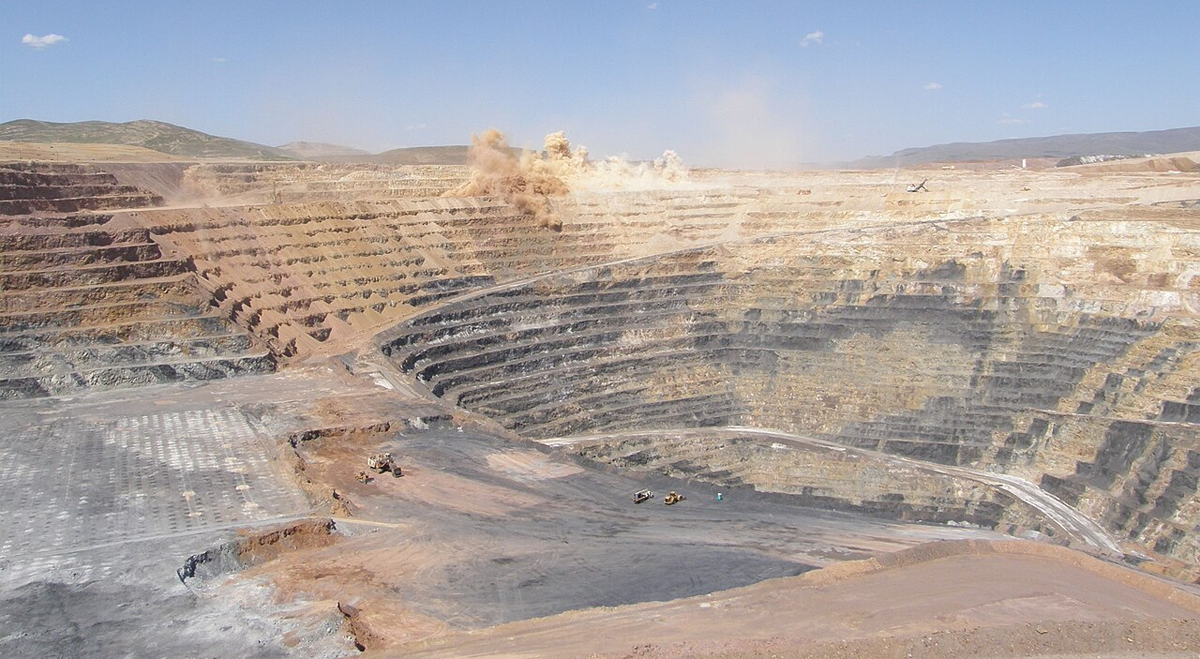
    Stock in mining companies gives investors a direct line to silver production. Silver mining companies create value through growth in exploration, development, and production. Silver mining companies can offer higher upside in strong silver markets, and may return capital back to investors through dividend and share buyback programs.

    Silver mining companies offer advantageous operational leverage through their relatively fixed costs in relation to strong silver prices. The value of silver is on the rise, topping $100 per ounce in late 2025 and above $70 as of late March 2026, while production costs remain stable.

    Why Silvercorp

    As the silver deficit continues, mining companies poised to contribute significant quantities to supply are ripe for investment. Leading players include Silvercorp, a profitable, undervalued silver producer positioned for growth.

    Silvercorp (TSX:SVM) (AMEX:SVM), a Canadian mining company, is an established silver producer with best-in-class operations, producing about 7.5 million ounces of silver equivalent, plus about 90 million pounds of lead and zinc per year at their mines in China.

    Silvercorp offers a trailing 12-month all-in sustaining cost of less than $14 per ounce, net of by-products. Silver production from Silvercorp’s flagship Ying Mining District is increasing with mine optimization and development of the Kuanping satellite mine. Plus, a sizeable resource base supports extension of its Ying and Gaocheng (GC) reserve life of approximately 15 years.

    In addition, Silvercorp’s diversified pipeline of actionable growth projects in Ecuador, and Kyrgyzstan is in or entering construction. By 2027, they will begin enhancing global metal supply, including substantial amounts of copper, gold and silver, at low all-in sustaining costs. 

    Silvercorp presents compelling value for investors in peer-leading margins, return on equity, and leverage to silver. The industry-leading company trades at a discount to peers, selling below market value on multiple metrics that include a 0.6x P/NAV – the price-to-net asset value that compares market price to market value of underlying assets and reaches as high as +2x among peers.

    Silvercorp is well covered by institutional brokers, with buy and outperform recommendations from most research analysts. Its highly liquid stock trades about $90 million daily across the US and Canada.

    More information on Silvercorp, trading on the NYSE American and TSX as SVM, can be found at www.silvercorpmetals.com/welcome.

  • U.S. stocks poised for gains after ceasefire agreement involving U.S., Israel and Iran: Dow Jones, S&P, Nasdaq, Wall Street Futures

    U.S. stocks poised for gains after ceasefire agreement involving U.S., Israel and Iran: Dow Jones, S&P, Nasdaq, Wall Street Futures

    U.S. equity futures indicate a strong start for markets on Wednesday, with major indexes expected to open significantly higher as investors react to geopolitical developments in the Middle East.

    Sentiment has improved after reports that the United States, Israel and Iran have agreed to a two-week ceasefire, a move that is likely to spark buying interest when trading begins.

    In a post on Truth Social late Tuesday, President Donald Trump said he would halt bombing and military attacks against Iran for two weeks, provided Tehran agrees to the full, immediate and safe reopening of the Strait of Hormuz.

    Trump also said Washington had received a 10-point proposal from Iran that he believes represents a “workable basis on which to negotiate,” adding that the two-week pause could provide enough time to finalize and implement a broader agreement.

    Iranian Foreign Minister Abbas Araghchi later signaled that Tehran would reopen the Strait of Hormuz for the same two-week period if attacks against Iran are stopped.

    The development triggered a sharp drop in oil prices, with U.S. crude futures plunging more than 17 percent and falling well below the $100-per-barrel level.

    “The positive market reaction is understandable as a two-week ceasefire raises hope for a complete end to the conflict,” said Dan Coatsworth, head of markets at AJ Bell.

    “The ceasefire gives the world a moment to breathe and take stock of events,” he added. “Unfortunately, there is no guarantee that everything will return to normal.”

    Stocks had begun Tuesday’s session under pressure but recovered through the afternoon, with the main indexes rebounding from their intraday lows before ending the day with mixed results.

    The Nasdaq added 21.51 points, or 0.1 percent, to close at 22,017.85, while the S&P 500 edged up 5.02 points, or 0.1 percent, to 6,616.85. The narrower Dow Jones Industrial Average slipped 85.42 points, or 0.2 percent, finishing at 46,584.46.

    Equities strengthened late in the session after Pakistani Prime Minister Shehbaz Sharif called on President Donald Trump to extend the deadline for Iran to reopen the Strait of Hormuz by two weeks in order to “allow diplomacy to run its course.”

    In a message posted on X, Sharif also urged Iran to reopen the Strait of Hormuz for the same period as a “goodwill gesture.”

    “We also urge all warring parties to observe a ceasefire everywhere for two weeks to allow diplomacy to achieve conclusive termination of war, in the interest of long-term peace and stability in the region,” Sharif said.

    While the responses from Trump and Iran to Sharif’s proposal remain unclear, the statement helped calm investor fears about a further escalation after the president’s latest warnings.

    Trump had previously threatened to strike Iran’s power plants and bridges if Tehran did not reach an agreement and reopen the Strait of Hormuz by 8 p.m. ET.

    Escalating his rhetoric, Trump wrote in a Truth Social post, “A whole civilization will die tonight, never to be brought back again. I don’t want that to happen, but it probably will.”

    The president also suggested that a “different, smarter, and less radicalized” leadership is now governing Iran and hinted that a dramatic change could occur.

    “WHO KNOWS?” Trump wrote, adding to market uncertainty. “We will find out tonight, one of the most important moments in the long and complex history of the World.”

    Among sectors, networking stocks posted strong gains during Tuesday’s session, pushing the NYSE Arca Networking Index up 2.4 percent to a record closing level.

    Oil service companies also performed well, with the Philadelphia Oil Service Index rising 1.7 percent.

    Transportation and semiconductor stocks also saw notable strength, while housing and telecom shares were among the day’s weaker performers.

  • European equities rally as Middle East ceasefire lifts sentiment: DAX, CAC, FTSE100

    European equities rally as Middle East ceasefire lifts sentiment: DAX, CAC, FTSE100

    European stock markets surged on Wednesday after news of a two-week ceasefire in the Middle East reduced concerns about potential disruptions to global oil supplies and helped ease inflation worries.

    Brent crude prices dropped about 14 percent, moving closer to $90 per barrel amid expectations that energy shipments through the Strait of Hormuz may soon resume.

    On the economic front, data from Destatis showed that German factory orders rebounded in February, although the recovery was weaker than analysts had anticipated and came before the outbreak of the Iran conflict.

    Orders at German factories rose 0.9 percent month over month in February, reversing the sharp 11.1 percent drop recorded in January, with the increase largely supported by strong demand in the automotive sector.

    Compared with the same period a year earlier, total factory orders were up 3.5 percent in February following a 0.3 percent increase in January.

    In the United Kingdom, house prices fell 0.5 percent in March on a monthly basis, reversing the 0.3 percent rise seen in February, according to figures released by mortgage lender Halifax. The decline reflected rising inflation expectations linked to the Iran conflict, which has also reduced expectations for interest rate cuts.

    On an annual basis, house price growth slowed to 0.8 percent in March from 1.2 percent in February.

    In equity markets, Germany’s DAX Index climbed 4.9 percent, France’s CAC 40 Index advanced 4.6 percent and the U.K.’s FTSE 100 Index gained 2.8 percent.

    Banking stocks led the rally, with Commerzbank (TG:CBK), Deutsche Bank (TG:DBK), BNP Paribas (EU:BNP) and Credit Agricole (EU:ACA) posting strong gains.

    German biotechnology firm Evotec (TG:EVT) also jumped after reporting 2025 results that met expectations and reaffirming its outlook.

    French rail manufacturer Alstom (EU:ALO) moved sharply higher after securing a European signaling contract worth around €295 million.

    Spirits producer Remy Cointreau (LSE:RCO) also advanced significantly after announcing internal organizational changes.

    Pharmaceutical company GSK (LSE:GSK) gained in London after receiving regulatory approval in China for Exdensur, the first ultra-long-acting biologic treatment for chronic rhinosinusitis with nasal polyps.

  • Michelin signals soft Q1 as volumes fall and pricing, FX weigh on sales

    Michelin signals soft Q1 as volumes fall and pricing, FX weigh on sales

    Michelin (EU:ML) said Wednesday that its first-quarter 2026 performance is expected to start the year on a weak footing, with tyre shipments declining, pricing turning negative and currency pressures continuing to weigh on results.

    The French tyre manufacturer reported that sell-in volumes dropped in the “low-to-mid single digit” percentage range during the first quarter. This decline came despite easier year-on-year comparisons, suggesting that demand remains subdued across several core segments, including passenger and light truck tyres, commercial vehicles and the company’s Beyond Road agricultural division in North America.

    Michelin noted that replacement tyre demand showed some stability, with the consumer segment returning to “modest growth.” However, this improvement was not enough to counterbalance softer conditions in other parts of the business.

    Pricing, which supported earnings in 2025 with a positive contribution of about 3%, moved into negative territory during the quarter. The shift reflects contract indexation mechanisms that automatically adjust prices in line with declining raw material costs, as well as limited scope to pass on U.S. tariff-related expenses in an increasingly competitive market environment.

    Product mix remains a partial positive factor, supported by stronger demand for premium Michelin-branded tyres and larger formats measuring 18 inches and above.

    Foreign exchange movements continue to create headwinds. Michelin said currency pressure in the quarter was “comparable to” that experienced in the fourth quarter of 2025, when FX effects reduced revenue by €346 million, or 4.9% of net sales. The company noted that a one-cent movement in the dollar-euro exchange rate has an impact of roughly €30 million on operating income.

    Management did not provide additional detail on how the Middle East conflict might affect operations, saying that no supply shortages have been observed so far but that the situation continues to be monitored closely.

    Further information on input cost trends — including raw materials, energy and freight — will be released together with first-quarter sales results on April 29.

    Michelin reaffirmed its full-year volume outlook, expecting a gradual improvement through 2026. Sell-in volumes are projected to become “slightly positive” in the second quarter and improve more noticeably in the second half, with the company targeting modest growth for the full year.

    Analysts at Barclays, which rates Michelin “underweight” with a €25 price target compared with a previous closing price of €29.22, said the update was “consistent with recent communication” but warned that the combination of weaker volumes, price-mix pressure and foreign exchange effects represents a triple headwind that is unlikely to ease before the middle of the year.

    Shares in the company were up 4.7% at 10:07 GMT.

  • Oil plunges after Trump announces Iran ceasefire and pledges support for Hormuz shipping

    Oil plunges after Trump announces Iran ceasefire and pledges support for Hormuz shipping

    Oil prices fell sharply on Wednesday after U.S. President Donald Trump agreed to a two-week ceasefire with Iran and said Washington would help address shipping congestion in the Strait of Hormuz.

    Brent crude futures — the international oil benchmark — dropped 13.6% to $94.40 per barrel by 05:15 ET (09:15 GMT). U.S. West Texas Intermediate crude futures fell even more steeply, declining 15.8% to $95.20 per barrel.

    Trump said Tuesday evening that he had agreed to pause military operations against Iran for two weeks, just hours before an 8:00 p.m. Eastern deadline requiring Tehran to reopen the Strait of Hormuz or risk severe strikes on vital infrastructure. Earlier, Trump had warned that the United States would destroy Iran’s “civilization” if his demands were not met.

    The president said the United States had already accomplished its primary military objectives and added that Iran had put forward a multi-point proposal that could serve as the foundation for a broader agreement.

    Iran also indicated a conditional readiness to reduce tensions, saying safe passage through the Strait would be possible during the ceasefire period provided hostilities end and vessels coordinate their movements with Iranian authorities.

    The breakthrough followed urgent diplomatic negotiations, with Pakistan playing a significant mediating role in encouraging both sides to pull back from the edge of escalation.

    Markets had been closely monitoring Trump’s deadline, as many expected it could trigger a major intensification of the conflict. In the hours leading up to the cutoff, oil prices had surged to multi-month highs amid fears that potential U.S. strikes might severely disrupt Middle East energy supply routes.

    Earlier in the day, Trump had warned that failure by Iran to comply could bring consequences where “a whole civilization could die.”

    Trump pledges help to ease Hormuz shipping congestion

    In a social media post on Wednesday, Trump said the United States would assist in reducing the backlog of tanker traffic in the Strait of Hormuz. He also expressed confidence that the ceasefire would hold, describing the moment as “a big day for world peace.”

    Tanker movements through the strait — which carries about 20% of the world’s oil supply — have effectively been halted for weeks due to the threat of Iranian attacks on ships attempting to pass through the waterway. Media reports also indicate that Iran has been developing a framework to charge fees for certain vessels crossing the strait.

    Concerns have grown that a prolonged closure of the passage could disrupt critical global energy supplies. Analysts say investors will be closely watching whether oil shipments begin to normalize, as reports suggest some vessels remain uncertain about whether the route is safe.

    “For markets, the most critical issue remains the status of the Strait of Hormuz. The framework appears to allow the full passage of oil tankers through the Strait, but the terms under which this would occur remain unclear,” said Neil Shearing, Group Chief Economist at Capital Economics, in a note.

  • Gold reaches three-week high after Trump announces Iran ceasefire

    Gold reaches three-week high after Trump announces Iran ceasefire

    Gold prices rose to their highest level in three weeks on Wednesday as the U.S. dollar weakened following President Donald Trump’s announcement of a two-week ceasefire with Iran, halting planned strikes on the country’s civilian infrastructure.

    Spot gold gained 2.7% to $4,832.51 per ounce by 02:36 ET (06:36 GMT), marking its strongest level since March 19.

    U.S. gold futures also climbed 2.7% to $4,857.25 per ounce.

    Other precious metals followed the upward move. Silver jumped 6% to $77.38 per ounce, while platinum advanced 4.2% to $2,044.60 per ounce.

    Trump pauses military action against Iran for two weeks

    In a social media message, Trump said the United States would suspend military operations against Iran for a two-week period, noting that Washington had already achieved its main military objectives.

    The statement came less than two hours before a deadline of 8:00 p.m. ET that investors had been watching closely as a potential flashpoint for a wider escalation.

    Earlier in the day, Trump warned that “a whole civilization will die tonight” if Iran failed to meet U.S. demands.

    The ceasefire was secured following last-minute diplomatic efforts led by Pakistan and is conditional on Iran guaranteeing the safe reopening of the Strait of Hormuz, a crucial route for roughly 20% of global oil shipments.

    Iran also signaled that it could reduce tensions during the ceasefire period, saying safe passage through the Strait would be possible if hostilities stop and vessels coordinate movements with Iranian authorities.

    Trump also said on Wednesday that the United States would assist in easing the congestion of tanker traffic that has built up in the Strait.

    Oil falls sharply, dollar weakens

    Financial markets reacted quickly to the developments. Oil prices dropped more than 15%, risk assets rallied and the U.S. dollar came under pressure.

    The U.S. Dollar Index slipped nearly 1% during Asian trading on Wednesday, making bullion cheaper for investors using other currencies.

    Although gold is typically viewed as a safe-haven asset, it struggled last month as oil prices surged sharply. The rise in energy costs fueled inflation concerns and strengthened expectations that the U.S. Federal Reserve might keep interest rates higher for longer.

    Investors are now looking ahead to the U.S. March consumer price index (CPI) report due on Friday, which is expected to offer the first clear indication of how the recent spike in energy prices is feeding into inflation.

    Economists expect headline inflation to have accelerated on a monthly basis, driven largely by higher fuel prices, which could complicate the outlook for Federal Reserve policy.

    In industrial metals, benchmark copper futures on the London Metal Exchange rose 2.8% to $12,691.33 per ton, while U.S. copper futures gained 2.7% to $5.74 per pound.

  • Futures soar, oil retreats after U.S.-Iran ceasefire deal — what’s moving markets: Dow Jones, S&P, Nasdaq, Wall Street

    Futures soar, oil retreats after U.S.-Iran ceasefire deal — what’s moving markets: Dow Jones, S&P, Nasdaq, Wall Street

    Futures tracking the major U.S. stock benchmarks surged after the United States and Iran agreed to a temporary ceasefire in their conflict that has stretched beyond a month. Tehran’s commitment to allow safe tanker traffic through the Strait of Hormuz helped calm concerns about disruptions to global energy supply, pushing crude prices sharply lower. Gold rebounded as the U.S. dollar weakened, while Shell (NYSE:SHEL) trimmed its first-quarter gas production outlook and warned that the conflict continues to cloud the market outlook.

    Futures jump

    U.S. equity futures rallied strongly early Wednesday as investors reacted positively to the ceasefire agreement, which reduced the risk of a broader and economically damaging war in the Middle East.

    At 03:19 ET, Dow futures had climbed 1,076 points, or 2.3%. S&P 500 futures rose 168 points, or 2.5%, and Nasdaq 100 futures advanced 799 points, or 3.3%.

    In the previous session, Wall Street’s main indices had traded cautiously as investors awaited a U.S. deadline for Iran to reopen the Strait of Hormuz or face possible military strikes. On Tuesday, President Donald Trump warned that the United States would wipe out Iran’s “civilization” if his demands were ignored, a remark that triggered debate over whether it was rhetorical pressure or a serious warning.

    An agreement mediated by Pakistan was eventually reached at the last minute, a development that markets welcomed. Global equities rallied and oil prices dropped, while U.S. Treasuries gained as investors revived expectations that the Federal Reserve could still cut interest rates later this year. Earlier, many rate-cut bets had faded due to fears that a war-driven energy shock could fuel inflation.

    Analysts at Vital Knowledge wrote that companies that had benefited from the conflict — including energy producers, commodity chemicals firms and defense contractors — “will probably suffer aggressive profit taking” now that tensions have eased. Meanwhile, consumer discretionary stocks “should see the biggest rally.”

    Attention shifts to ceasefire details

    Trump said on social media that the deal followed discussions with Pakistani leaders, who have recently acted as intermediaries between Washington and Tehran. After Islamabad urged him to reconsider the Tuesday 8 p.m. ET deadline, Trump agreed to halt planned strikes against Iran for two weeks.

    Iranian Foreign Minister Abbas Araghchi said Tehran would “cease their defensive operation” and permit “safe passage” through the Strait of Hormuz, provided maritime traffic is coordinated with the Iranian military. Pakistan’s Prime Minister Shehbaz Sharif has invited U.S. and Iranian representatives to Islamabad for talks scheduled for Friday.

    Israel, which launched a joint offensive against Iran alongside the United States in late February, supported the decision, according to a statement from the office of Prime Minister Benjamin Netanyahu. However, the statement did not mention Lebanon, where the Iran-backed group Hezbollah has been targeted by Israeli forces.

    Even with the ceasefire, analysts at BCA Research cautioned that “[a] near-term reprieve in the Iran conflict will not erase medium-term and strategic tensions.”

    Oil falls back below $100

    Crude prices slid sharply after the ceasefire announcement, dropping below the $100-per-barrel threshold but remaining well above levels seen before the conflict erupted.

    By 03:44 ET, Brent crude — the global benchmark — had fallen more than 13% to $94.85 per barrel. U.S. West Texas Intermediate crude dropped 14.8% to $96.23 per barrel.

    Before hostilities began in late February, Brent had been trading near $70 per barrel. After the conflict erupted, prices surged to roughly $120 at one stage, sparking fears that higher energy costs could stoke inflation and slow global economic growth.

    One of the central drivers of the spike was the Strait of Hormuz, the narrow shipping lane along Iran’s southern coast that carries about one-fifth of the world’s oil supply. Tehran effectively blocked the route, severely disrupting energy shipments worldwide.

    Asian economies — which depend heavily on oil shipments through the strait — were especially exposed. Meanwhile, strikes on energy facilities in Persian Gulf countries also disrupted natural gas flows to Europe. Although the United States exports more oil than it imports, American consumers still saw higher gasoline prices as global crude costs surged.

    Analysts at ING said markets will now watch closely whether tanker traffic through the Strait of Hormuz begins to normalize.

    “[A] significant pick-up in volume would weigh further on oil prices and reverse the stagflationary investment trends witnessed in markets over the last month,” they wrote.

    Gold rebounds as dollar weakens

    Gold prices climbed to their highest level in nearly three weeks as markets reassessed geopolitical risk following the ceasefire news.

    Spot gold rose 2.4% to $4,818.63 an ounce by 03:57 ET (07:57 GMT), after earlier reaching its strongest level since March 19. U.S. gold futures for June delivery advanced 3.4% to $4,843.57 per ounce.

    Despite its reputation as a safe-haven asset, gold struggled for much of the conflict. The surge in oil prices intensified inflation worries and boosted expectations that the Federal Reserve might keep borrowing costs higher for longer — typically a negative factor for non-yielding assets such as gold.

    Instead, investors initially favored the U.S. dollar, which made gold more expensive for buyers using other currencies. But with hopes growing that tensions in the Middle East may ease, the dollar weakened on Wednesday, with an index tracking the currency against a basket of peers falling by more than 1%.

    Shell trims gas outlook, cites uncertainty

    Even as markets respond to the ceasefire, analysts warn that the economic effects of the conflict could linger for months.

    Oil major Shell (NYSE:SHEL) provided one example on Wednesday, cutting its forecast for first-quarter gas production and warning that short-term liquidity may take a hit — even though profits from oil trading are expected to increase.

    In its quarterly trading update, the company said working capital — a measure of short-term liquidity — is now expected to fluctuate between minus $10 billion and minus $15 billion, largely due to sharp swings in crude prices affecting inventories.

    Shell added that its financial outlook remains “subject to increased uncertainty” because of the evolving situation in the Middle East. Shares of the London-listed company fell by more than 6%.