Category: Market News

  • European stocks trade sideways as investors monitor Middle East diplomacy and AI earnings: DAX, CAC, FTSE100

    European stocks trade sideways as investors monitor Middle East diplomacy and AI earnings: DAX, CAC, FTSE100

    Markets hold steady ahead of major technology results

    European equities traded in a narrow range on Tuesday as investors remained focused on diplomatic efforts to reduce tensions between the United States and Iran while awaiting earnings from major U.S. technology companies for further signals on artificial intelligence-related demand.

    The French CAC 40 slipped 0.1%, Germany’s DAX traded marginally above flat, and the UK’s FTSE 100 edged 0.1% higher.

    Kier and mining stocks lead the gainers

    Construction and infrastructure specialist Kier Group (LSE:KIE) was among the session’s strongest performers after the company said it expects full-year revenue and profit to finish at the upper end of market expectations.

    Mining shares also advanced as stronger copper prices supported the sector. Anglo American (LSE:AAL), Antofagasta (LSE:ANTO) and Glencore (LSE:GLEN) all posted notable gains.

    Healthcare and industrial companies attract buyers

    Novartis (TG:NOT) moved higher after reporting second-quarter core operating profit ahead of market forecasts.

    Swedish engineering company Alfa Laval (TG:AA9) also traded higher after announcing a 35% increase in second-quarter order intake.

    Julius Baer (TG:JGE) gained despite reporting that first-half profit more than doubled.

    Recruiters and consumer stocks come under pressure

    On the downside, recruitment firm Sthree (LSE:STEM) fell sharply after reporting a 75% decline in first-half profit, reflecting weaker hiring activity in Germany and the Netherlands.

    Compass Group (LSE:CPG) also retreated despite delivering solid quarterly revenue growth.

    Swiss elevator manufacturer Schindler Holding (TG:SHR) dropped to a two-month low after second-quarter sales missed expectations.

    Meanwhile, watchmaker Swatch Group (LSE:0QM4) declined after first-half earnings came in below analysts’ forecasts.

  • Gold stays above $4,000 as easing Middle East tensions shift focus to the Federal Reserve

    Gold stays above $4,000 as easing Middle East tensions shift focus to the Federal Reserve

    Investors balance geopolitical risks against inflation expectations

    Gold prices extended their advance on Tuesday, holding above the key $4,000-an-ounce level as markets responded to renewed diplomatic initiatives between the United States and Iran that could reduce pressure on oil prices and soften inflation concerns ahead of the Federal Reserve’s next policy meeting.

    At 01:24 ET (05:24 GMT), spot gold (XAU/USD) rose 1% to $4,049.47 an ounce, while Gold Futures increased 1% to $4,054.35. Silver (XAG/USD) climbed 2.6% to $57.87 an ounce, and platinum (XPT/USD) gained almost 1% to $1,611.09.

    Diplomatic progress eases pressure from energy markets

    The precious metal strengthened as investors welcomed signs that Washington and Tehran could return to negotiations, helping offset concerns created by recent military escalation across the Middle East.

    Crude oil prices retreated after posting gains during the previous two sessions as reports of mediation efforts outweighed continued military exchanges and renewed threats from Yemen’s Iran-backed Houthi movement to block Saudi shipping.

    Reuters also reported that mediators have proposed a 10-day ceasefire following comments from a senior Iranian official, raising hopes that last month’s interim agreement could still provide a foundation for wider negotiations.

    Oil had recently climbed to its highest level in more than a month, fuelling expectations that higher energy costs could complicate the Federal Reserve’s inflation fight.

    Markets await Fed guidance

    Attention is now turning to next week’s Federal Reserve meeting, where policymakers are expected to keep interest rates unchanged while offering fresh guidance on inflation and monetary policy.

    Current market pricing suggests a 64% probability of a September rate increase.

    Afdhal Rahman, Executive Director, Wealth Advisory at OCBC, said gold’s strong rally has run into a more challenging macro backdrop as higher real yields, a stronger U.S. dollar and hawkish repricing of interest-rate expectations have weighed on investor demand.

    He added that renewed tensions in the Gulf could keep oil prices, inflation expectations and the U.S. dollar volatile in the near term, leaving gold under pressure until expectations for tighter monetary policy begin to ease, although sustained central bank buying should continue to provide longer-term support for bullion.

    Bullion remains resilient after second-quarter weakness

    Although gold suffered a 14% decline during the second quarter—its weakest quarterly performance since 2013—it has spent recent weeks consolidating around the $4,000-an-ounce level as investors continue to seek protection from geopolitical uncertainty.

  • Oil slips as diplomacy competes with rising Middle East shipping risks

    Oil slips as diplomacy competes with rising Middle East shipping risks

    Traders monitor conflict while awaiting US inventory data

    Oil prices traded lower on Tuesday as markets assessed ongoing diplomatic efforts between Washington and Tehran alongside growing concerns that escalating tensions could threaten vital shipping routes used by global energy exporters.

    At 04:53 ET (08:53 GMT), Brent crude futures fell 0.5% to $88.80 per barrel, while US West Texas Intermediate (WTI) crude declined 0.5% to $82.81 per barrel.

    Both benchmarks had ended Monday’s session higher, with Brent closing at $89.22 per barrel after a 1.3% gain and WTI settling at $83.23 following a 0.9% increase. Brent had briefly climbed above the $90 mark after renewed military activity in the Middle East over the weekend.

    Negotiations continue despite renewed attacks

    Diplomatic efforts remain active as international mediators seek to restore the fragile ceasefire framework agreed in June.

    Pakistani Prime Minister Shehbaz Sharif is holding discussions with Iranian Interior Minister Eskandar Momeni in Islamabad, while US Secretary of State Marco Rubio has indicated that Washington remains open to restarting negotiations.

    Nevertheless, military activity continued across the region. Reports from the United Kingdom Maritime Trade Operations centre said a tanker was struck near the Strait of Hormuz off the coast of Oman, forcing the crew to abandon the vessel. Iran’s Islamic Revolutionary Guards Corps later claimed responsibility.

    The United States also confirmed a tenth consecutive day of strikes against Iranian military targets, stating that the operations were intended to weaken Iran’s capability to threaten commercial shipping in the Strait of Hormuz.

    Bab al-Mandab joins Hormuz as a growing market concern

    Alongside uncertainty surrounding the Strait of Hormuz, investors are increasingly focused on the Bab al-Mandab Strait after Yemen’s Iran-backed Houthi movement threatened to block Saudi shipping.

    The strategic waterway connects the Red Sea with the Gulf of Aden and carries roughly 12% of global trade, including significant volumes of crude oil exports.

    “Vessels would have to take the much longer route through the Suez Canal and go around Africa. It’s yet to be seen how effective any blockade will be. But, clearly, this development will increase insurance costs,” ING analysts said.

    “Looking at oil price action this morning, the market is not convinced that this blockade will be successful.”

    Inventory reports remain the next catalyst

    Analysts believe geopolitical uncertainty continues to provide support for oil prices, although expectations that previous regional conflicts ultimately avoided prolonged supply disruptions have limited further gains.

    Markets now await the latest US crude inventory figures from the American Petroleum Institute, due later Tuesday, followed by official Energy Information Administration data on Wednesday.

  • US futures advance as investors assess Middle East conflict and await major AI earnings: Dow Jones, S&P, Nasdaq, Wall Street

    US futures advance as investors assess Middle East conflict and await major AI earnings: Dow Jones, S&P, Nasdaq, Wall Street

    Markets prepare for a crucial week of corporate results

    US stock index futures moved higher on Tuesday as investors looked ahead to a wave of earnings from leading technology companies while continuing to monitor developments in the Middle East and the outlook for artificial intelligence investment.

    As of 02:49 ET (06:49 GMT), Dow Jones futures were up 170 points, or 0.3%, S&P 500 futures had gained 39 points, or 0.5%, and Nasdaq 100 futures climbed 359 points, or 1.3%.

    The gains followed a weaker session on Wall Street, where concerns over the long-term sustainability of AI spending weighed on sentiment. Semiconductor stocks tied to artificial intelligence surrendered much of their earlier rally, with the sector finishing only 0.6% higher after posting gains of more than 3% during the session.

    Markets were also digesting increased competition from emerging Chinese AI developers, adding another layer of uncertainty to the sector.

    Meanwhile, President Donald Trump signed executive orders introducing a 50% tariff on a wide range of Canadian imports, including paper products, plywood and hockey sticks. The new duties are due to take effect within 30 days.

    Geopolitical uncertainty keeps investors cautious

    Risk appetite remained restrained after Yemen’s Iran-backed Houthi movement threatened to block Saudi shipping, raising concerns that the regional conflict could spread further and disrupt global energy supplies.

    The warning came as military exchanges between Washington and Tehran entered a tenth consecutive day despite continuing diplomatic contacts aimed at reducing tensions.

    Investors also remained focused on the Strait of Hormuz and the Bab al-Mandab Strait, two critical maritime routes whose disruption could have significant implications for global oil and liquefied natural gas exports.

    Oil holds above pre-war levels

    Crude prices eased slightly but continued to trade well above the levels seen before the conflict escalated.

    Brent crude slipped 0.1% to $89.17 per barrel, while US West Texas Intermediate gained 0.2% to $83.40.

    Before hostilities intensified in late February, Brent had been trading close to $70 per barrel. Renewed geopolitical instability has kept prices elevated despite earlier ceasefire efforts.

    Higher energy costs continue to raise concerns that inflation could remain stubborn, potentially influencing future monetary policy decisions.

    Earnings season gathers pace

    Investors are awaiting results from Charles Schwab (NYSE:SCHW), Danaher (NYSE:DHR), 3M (NYSE:MMM), Northrop Grumman (NYSE:NOC) and General Motors (NYSE:GM) before US markets open.

    After the closing bell, Interactive Brokers, Chubb and Capital One are also due to report.

    In Europe, Novartis (NYSE:NVS) exceeded expectations for second-quarter core operating profit as cost controls offset softer sales of Entresto. The company’s shares rose more than 1% in early trading.

    Attention will quickly turn to Alphabet (NASDAQ:GOOG), Tesla (NASDAQ:TSLA) and Texas Instruments (NASDAQ:TXN), whose quarterly reports later this week are expected to provide important signals about the pace of AI-related investment.

    Nvidia increases exposure to Nebius

    Nvidia (NASDAQ:NVDA) disclosed a 9.3% ownership stake in AI cloud infrastructure company Nebius (NASDAQ:NBIS), following its previous $2 billion investment.

    Regulatory filings showed the holding totals approximately 22.26 million shares, including shares associated with warrants that cannot be exercised before 11 September.

    Nebius shares gained around 5% in after-hours trading.

    Headquartered in Amsterdam, Nebius was created from the separation of Yandex and plans to build more than five gigawatts of AI computing capacity by 2030.

  • Airbus secures first Canadian order for U030 Flexrotor drone through Voyageur partnership (AIR)

    Airbus secures first Canadian order for U030 Flexrotor drone through Voyageur partnership (AIR)

    Voyageur becomes the first Canadian customer for the U030 Flexrotor

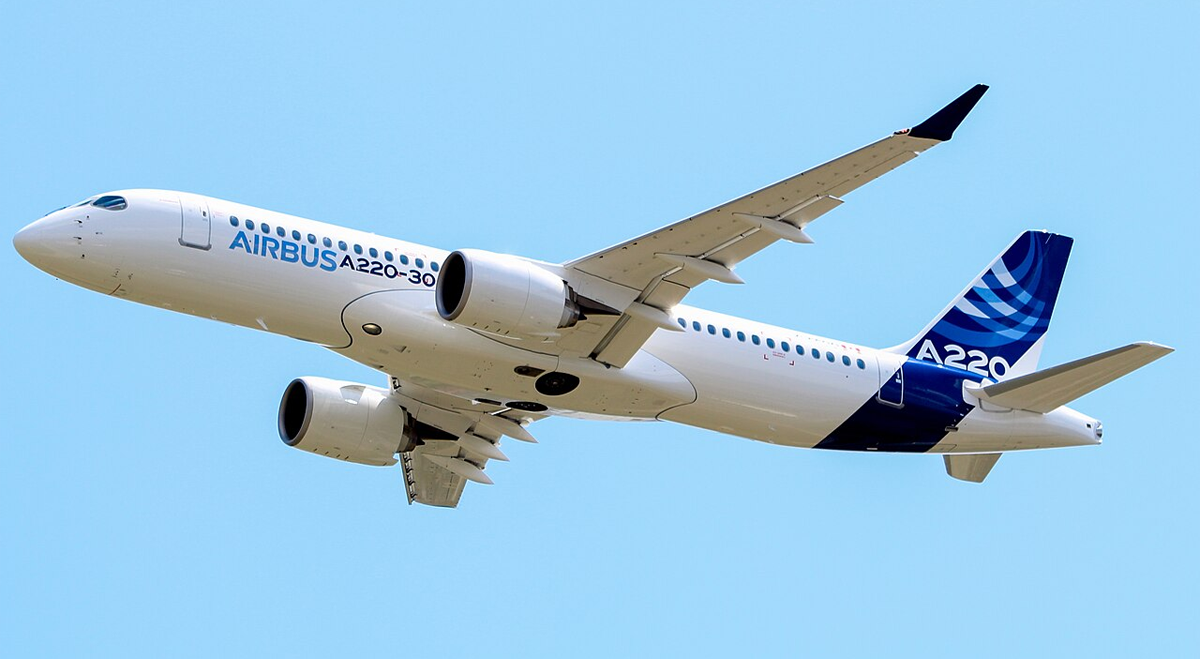
    Airbus Helicopters has signed its first Canadian sales agreement for the U030 Flexrotor uncrewed aerial system (UAS), with Voyageur Aviation becoming the launch customer for the platform in Canada.

    The agreement was announced during the Farnborough International Airshow on 21 July 2026 and marks another step in Airbus’ efforts to expand its presence in Canada’s defence and surveillance market.

    Agreement builds on earlier defence cooperation

    The purchase follows the memorandum of understanding signed by Airbus (EU:AIR) and Voyageur during the CANSEC defence exhibition in May 2026. That agreement established a framework for cooperation in support of Canada’s evolving defence requirements.

    The latest contract moves the partnership into its next phase by bringing the U030 Flexrotor platform to the Canadian market.

    U030 Flexrotor designed for long-endurance surveillance missions

    The U030 Flexrotor is a tactical vertical take-off and landing (VTOL) uncrewed aircraft developed for intelligence, surveillance, target acquisition and reconnaissance (ISTAR) missions.

    The aircraft has a maximum take-off weight of 25 kilograms and can remain airborne for more than 12 hours. It is capable of fully autonomous launch and recovery from a compact 3.7-metre by 3.7-metre operating area, both on land and at sea.

    “This purchase represents a significant advancement in Voyageur’s ISR strategy and an important first for the Canadian market,” said Cory Cousineau, President of Voyageur.

    Dwayne Charette, President of Airbus Helicopters in Canada, said the agreement reflects “Airbus’ commitment to delivering next-generation tactical capabilities to the region.”

  • UK defence stocks climb as John Healey takes over as finance minister

    UK defence stocks climb as John Healey takes over as finance minister

    Defence sector gains after cabinet reshuffle

    Shares in UK defence companies moved higher on Tuesday after newly appointed Prime Minister Andy Burnham named former defence secretary John Healey as the country’s new finance minister, prompting investors to reassess prospects for future military spending.

    By 10:03 GMT, Babcock International (LSE:BAB) had advanced 6.4%, Qinetiq (LSE:QQ.) gained 3.8%, while BAE Systems (LSE:BA.) rose 3%.

    Markets anticipate stronger defence investment

    Healey left his role as defence secretary in June after criticising the previous administration over military funding, arguing that the then-prime minister had been “unable” and the Treasury “unwilling” to provide the resources necessary to safeguard the country.

    According to Andrew Wishart, senior UK economist at Berenberg, Healey’s earlier resignation over defence spending “suggests that he will raise military expenditure,” although the question of how such increases would be financed “remains to be seen.”

    Fiscal pressures remain a key challenge

    Although Healey is regarded as a respected figure within the Labour Party, he now faces the difficult task of increasing funding for priorities such as defence while supporting economic growth, reducing welfare spending and remaining within the fiscal framework that Burnham has committed to maintaining.

    While he was not widely expected to become finance minister, investors welcomed the appointment, citing his previous experience as a junior Treasury minister under Gordon Brown between 2002 and 2007, together with senior roles held under successive Labour leaders.

    Earlier this month, Healey told the BBC that increased investment in defence could contribute to revitalising British industry and supporting a broader programme of reindustrialisation.

    Sterling also strengthened modestly following his appointment after earlier weakness triggered by Burnham’s comments suggesting there could be some flexibility in the UK’s fiscal rules.

    Canada expected to join GCAP programme

    The new government is also expected to announce an important defence initiative on Tuesday by inviting Canada to participate in the Global Combat Air Programme (GCAP), the next-generation fighter aircraft project currently led by the United Kingdom, Italy and Japan.

    The announcement is expected to coincide with the Farnborough International Airshow, one of the aerospace and defence industry’s leading annual events, where ongoing conflicts in Ukraine and the Middle East continue to drive demand for advanced military technologies, including combat drones, interceptor missile systems and artificial intelligence-enabled defence software.

    Canada is expected to join the programme as an observer, becoming the first country outside the three founding partners to participate in the GCAP initiative.

  • European natural gas prices remain elevated as Middle East shipping risks support market

    European natural gas prices remain elevated as Middle East shipping risks support market

    Gas markets stay close to multi-month highs

    European wholesale natural gas prices remained close to their highest levels in several months on Tuesday as renewed security concerns surrounding key Middle Eastern shipping routes continued to support prices despite ongoing diplomatic contacts between the United States and Iran.

    The Dutch front-month TTF contract, Europe’s benchmark for natural gas, traded around €59.3 per megawatt-hour (MWh), remaining close to the four-month high reached during the previous session. In the UK, the equivalent front-month wholesale gas contract rose 1.3% to 143.30 pence per therm, its strongest level since late March.

    Houthi announcement revives concerns over energy transport

    Risk premiums remained firmly embedded in European gas markets after Yemen’s Houthi movement announced a new naval blockade targeting Saudi Arabia.

    The development renewed concerns about the security of major maritime energy routes only days after a commercial vessel caught fire following an attack near the Strait of Hormuz.

    Although commercial shipping continues to move through the region under naval protection, tighter security measures and higher war-risk insurance costs have increased the expense of transporting energy cargoes.

    Diplomatic efforts fail to calm gas markets

    The latest escalation comes even as reports indicate that diplomatic communication between Washington and Tehran continues following nine consecutive days of military operations.

    While hopes of renewed negotiations briefly eased pressure on crude oil markets, natural gas traders remain cautious, recognising that any disruption in the Persian Gulf could significantly affect global liquefied natural gas (LNG) exports.

    The Strait of Hormuz remains one of the world’s most important energy chokepoints, carrying roughly 20% of global LNG shipments, the majority of which originate from Qatar.

  • European stocks trade cautiously as Houthi shipping threat overshadows diplomatic progress: DAX, CAC, FTSE100

    European stocks trade cautiously as Houthi shipping threat overshadows diplomatic progress: DAX, CAC, FTSE100

    Markets balance Middle East tensions with earnings and economic data

    European equities posted modest gains on Tuesday as investors weighed renewed security concerns surrounding key Middle Eastern shipping routes against signs that diplomatic engagement between the United States and Iran remains active. Market participants also turned their attention to a busy week of corporate earnings and economic releases across Europe.

    The pan-European STOXX 600 rose 0.2% in early trading. Germany’s DAX and France’s CAC 40 each advanced 0.2%, while Italy’s FTSE MIB outperformed with a 0.6% gain.

    New maritime security concerns return to focus

    Investor sentiment was tempered after Yemen’s Houthi movement announced plans to impose a fresh naval blockade targeting Saudi Arabia, reviving fears over the security of vital energy transport routes and the potential impact on global oil and shipping markets.

    The latest development came even as reports suggested diplomatic contacts between Washington and Tehran remain ongoing following recent military confrontations. As a result, financial markets continue to weigh the possibility of easing geopolitical tensions against the growing risks facing maritime trade.

    Earnings season and central bank outlook remain in focus

    Corporate results also shaped early trading, with Swiss pharmaceutical company Novartis (NYSE:NVS) reporting second-quarter sales that exceeded market expectations.

    Defensive sectors have attracted renewed investor interest as geopolitical uncertainty persists and attention shifts toward Thursday’s European Central Bank policy meeting, where markets will be watching closely for guidance on interest rates and the economic outlook.

    Economic indicators expected to guide markets

    Investors are also awaiting the latest Eurozone economic sentiment data, which could provide further insight into business confidence and the resilience of the regional economy.

    In the United Kingdom, fresh wage growth figures are due shortly after newly appointed Prime Minister Andy Burnham entered office, offering policymakers and the Bank of England updated information on labour market conditions and inflation pressures.

    London’s FTSE 100 traded 0.1% lower in early dealings.

    Wall Street earnings remain important for European sentiment

    Beyond Europe, investors are preparing for a series of earnings reports from major US technology companies, including Alphabet (NASDAQ:GOOG), Tesla (NASDAQ:TSLA) and Intel (NASDAQ:INTL), all scheduled to report later this week.

    Although European equity markets have fewer mega-cap technology companies than their US counterparts, many industrial groups and semiconductor equipment manufacturers remain closely linked to American technology investment.

    Any changes to capital spending plans for artificial intelligence or digital infrastructure announced by US technology leaders could have a significant impact on European technology shares.

    Company movers

    Among individual stocks, Mitie Group (LSE:MTO) surged 40% after agreeing to a takeover by OCS Group.

    Meanwhile, Wienerberger (TG:WIB) declined 7% following the release of its latest quarterly results.

  • Market Open: Marston’s Growth Target, Wickes Sales Growth

    Market Open: Marston’s Growth Target, Wickes Sales Growth

    FTSE 100 opens flat as investors watch Middle East tensions. Marston’s and Wickes lead headlines while Brent crude eases and copper gains.

    Market Overview

    The FTSE 100 opened marginally lower, while European markets were mixed as the Euronext 100 edged higher and Germany’s DAX gained at the open. Overnight, US markets finished weaker, with the Nasdaq closing at 25,508.07 and the S&P 500 ending at 7,443.28 as investors monitored renewed security concerns in the Middle East, including shipping risks around the Strait of Hormuz and their potential impact on energy markets. The FTSE 100 opened 0.001 per cent lower, the Euronext 100 rose 0.04 per cent and the DAX gained 0.10 per cent.

    Commodity markets remained in focus as geopolitical tensions continued to influence sentiment. Copper strengthened, while gold eased and Brent crude traded lower despite ongoing supply concerns. Natural gas edged higher. Against sterling, the US dollar and Swiss franc were little changed, the euro was steady, the Japanese yen and Australian dollar edged higher, while Bitcoin was higher.

    Market Numbers

    FTSE 100: Down (-0.001%), 10,524.25
    Euronext 100: Up (+0.04%), 1,902.53
    DAX: Up (+0.10%), 24,871.47
    NASDAQ: Down, 25,508.07
    S&P 500: Down, 7,443.28

    In the Headlines

    Trading update – Marston’s (LSE:MARS)
    Marston’s said trading has been supported by stronger customer demand during the World Cup period and outlined plans to accelerate growth. The update suggests trading momentum has improved despite a challenging consumer backdrop, providing reassurance over the group’s outlook.

    Retail update – Wickes (LSE:WIX)
    Wickes reported second-quarter sales growth and maintained its full-year expectations. The update indicates continued resilience in consumer demand across its home improvement business despite ongoing economic uncertainty.

    Currencies (vs GBP)

    USD: Down (-0.00%), $1.3431
    CHF: Down (-0.01%), Fr.1.0879
    EUR: Unchanged (0.00%), €1.1765
    JPY: Up (+0.00%), ¥218.244
    AUD: Up (+0.01%), $1.9187
    Bitcoin (BTC/GBP): Up, £49,235.60

    Commodities

    Copper: Up
    Gold: Down
    Brent Crude: Down
    Natural Gas: Up

  • FTSE 100 falls as Strait of Hormuz tensions offset ceasefire optimism

    FTSE 100 falls as Strait of Hormuz tensions offset ceasefire optimism

    UK stocks edge lower amid renewed Middle East uncertainty

    The FTSE 100 traded modestly lower on Tuesday as investors assessed reports of a proposed temporary ceasefire between the United States and Iran, while renewed attacks on commercial shipping in the Strait of Hormuz continued to fuel geopolitical uncertainty. Investors also digested stronger-than-expected UK labour market figures alongside an improvement in the government’s latest borrowing data.

    The FTSE 100 slipped 0.18%, while Germany’s DAX traded broadly flat and France’s CAC 40 gained 0.05%. Sterling strengthened 0.07% against the US dollar to $1.3444.

    Ceasefire proposal competes with escalating regional conflict

    According to reports, Qatar, Egypt and Pakistan have put forward a proposal for a 10-day ceasefire between Washington and Tehran, aimed at reopening the Strait of Hormuz and creating an opportunity for broader discussions on maritime security.

    However, uncertainty remained elevated after reports that Iran attacked a tanker in the Strait of Hormuz early on Tuesday, forcing the crew to abandon the vessel. The incident followed a tenth consecutive night of US airstrikes targeting Iran’s military capabilities linked to commercial shipping.

    Separately, Yemen’s Houthi movement announced a blockade of Saudi Arabia through the Bab al-Mandeb Strait, while Iran’s president declared the country had entered “full-scale war.” Meanwhile, diplomatic efforts continued, with Iran’s interior minister travelling to Pakistan for mediation talks.

    US President Donald Trump has yet to decide whether to support the proposed ceasefire or continue backing wider military operations alongside Israel, with officials suggesting the coming days will be critical.

    Government announces energy tax cut

    Domestically, newly appointed Prime Minister Andy Burnham announced that VAT on household electricity bills will be abolished from October 1, with the measure funded by cancelling the £1.8 billion Digital ID programme.

    “We’re taking immediate action to cut taxes on energy bills, put more money in people’s pockets and bring back hope,” Burnham said.

    Chancellor John Healey added that the policy would “help bring down inflation while supporting households in every postcode.”

    Government bond yields moved higher following the announcement.

    UK labour market remains resilient

    Fresh data from the Office for National Statistics showed the UK unemployment rate fell to 4.9% during the three months to May, outperforming forecasts of 5.0%.

    Employment increased by 148,000 over the quarter, comfortably ahead of economists’ expectations for an 80,000 gain, while the employment rate rose to 75.1%.

    Average weekly earnings increased by 4.3% year-on-year, slightly below the expected 4.5%, while regular pay excluding bonuses rose 3.4%, matching forecasts.

    Private sector regular pay growth stood at 2.9%, compared with 5.5% in the public sector, while job vacancies declined by 7,000 to 712,000 during the second quarter.

    Public borrowing declines in June

    The UK’s public finances also showed improvement, with public sector borrowing falling to £16.0 billion in June, a reduction of £7.9 billion compared with the same month last year and marginally below official forecasts.

    Borrowing for the financial year to date reached £57.6 billion, down £3.7 billion from a year earlier but still £2.7 billion above projections.

    Public sector net debt stood at 94.9% of GDP at the end of June, up 0.4 percentage points year-on-year and remaining close to levels last seen in the early 1960s.

    Commodities mixed as investors seek safety

    Oil prices eased despite ongoing geopolitical tensions, with Brent crude falling around 0.4% to $88.87 per barrel, while US WTI crude remained broadly unchanged near $82.46.

    Gold extended its rally as investors sought defensive assets, with futures climbing 1.6% to $4,078.52 an ounce and spot gold rising 1.7% to approximately $4,074.33.

    UK companies in focus

    Mitie Group (LSE:MTO) reported a 10% increase in first-quarter revenue, supported by contract wins, renewals and the acquisition of Marlowe. The company also agreed to a £3.1 billion takeover by OCS Group and suspended its £100 million share buyback programme.

    MONY Group (LSE:MONY) posted record first-half revenue and reiterated its full-year earnings guidance, with growth across its Insurance, Money and Home Services divisions helping offset weaker Cashback performance. Ongoing cost efficiencies and increased use of automation and artificial intelligence continued to support profitability.

    Compass Group (LSE:CPG) delivered 7.1% organic revenue growth during the third quarter as new business momentum accelerated into its target range. The catering group said it remains on course to achieve a fifth consecutive year of 4% to 5% net new business growth.

    Wickes Group (LSE:WIX) reported higher second-quarter revenue, driven by increased customer volumes and market share gains despite continued pricing pressure. The home improvement retailer maintained its fiscal 2026 profit guidance, supported by growth in its TradePro membership programme and digital sales.