Category: Market News

  • Netcall delivers strong FY26 growth as AI and cloud demand accelerate

    Netcall delivers strong FY26 growth as AI and cloud demand accelerate

    Netcall (LSE:NET) is expected to report a strong performance for FY26, with revenue rising 20% to £57.7 million and adjusted EBITDA increasing 23% to £12.1 million, in line with market expectations. The group’s results were supported by continued organic expansion, increasing subscription revenue and operating leverage, while total annual contract value (ACV) grew 27%, strengthening its recurring revenue profile.

    Cloud ACV increased 37% to £46.3 million during the year, while revenue from AI-related products almost tripled as customers increasingly moved from pilot programmes to live deployment across business workflows. The integration of Jadu has also progressed well, generating close to £1 million in cost synergies and creating additional cross-selling opportunities. Netcall ended the year with net cash of £21 million, strong cash generation and a record sales pipeline for FY27, supported by growing demand for cloud automation and AI solutions.

    The company continues to invest in its Liberty platform while pursuing selective acquisitions to expand its portfolio of higher-margin, subscription-based software services. This strategy further strengthens Netcall’s position in the enterprise automation and customer engagement software market and supports its long-term growth ambitions.

    Management said the expanding sales pipeline and broader AI capabilities provide confidence in future trading. The combination of recurring revenue growth, a strong balance sheet and rising customer adoption leaves the company well positioned to benefit from increasing enterprise investment in cloud-based automation and artificial intelligence technologies.

    Netcall’s outlook remains underpinned by strong revenue growth, healthy margins and a robust financial position with minimal leverage. However, slowing growth in net income and free cash flow presents a potential headwind. Technical indicators continue to point to positive momentum, although the shares appear significantly overbought, while the company’s relatively high valuation and modest dividend yield may temper investor enthusiasm.

    About Netcall

    Netcall is a UK-based enterprise software company that provides automation and customer engagement solutions through its AI-powered Liberty platform. The business helps around 700 organisations across sectors including healthcare, government and financial services digitise processes and improve customer interactions, with many NHS Acute Health Trusts and UK local authorities among its clients.

    The Liberty platform supports business-critical operations for organisations including Legal & General, Baloise and Santander. Netcall generates the majority of its revenue through subscription-based software, with growing cloud annual contract value providing recurring income and improved revenue visibility.

    Listed on AIM under the ticker NET, the company continues to expand its artificial intelligence and digital experience capabilities through targeted acquisitions. By combining workflow automation with customer engagement tools in a single platform, Netcall aims to simplify business operations while strengthening its position in the growing markets for cloud software and AI-enabled enterprise solutions.


  • Spire Healthcare to publish interim results on 9 September

    Spire Healthcare to publish interim results on 9 September

    Spire Healthcare Group plc (LSE:SPI) has confirmed it will release its interim results for the six months ended 30 June 2026 on 9 September 2026. The FTSE 250 healthcare provider operates one of the UK’s largest independent healthcare networks, offering hospital, clinic and workplace health services while maintaining a leading position in orthopaedics and NHS talking therapies.

    The upcoming results announcement is expected to provide investors with an update on the group’s financial performance, trading trends and operational progress during the first half of the year. The release may also offer further insight into patient demand across self-pay, private medical insurance, employer and NHS-funded services, as well as the continued impact of NHS outsourcing on the company’s growth strategy.

    Spire Healthcare’s outlook continues to be supported by consistent operational performance and dependable cash generation. However, relatively high leverage and narrow net profit margins remain challenges. From a market perspective, the shares continue to benefit from positive technical momentum, although elevated RSI levels could indicate that recent gains have become stretched. Valuation appears broadly balanced, supported by a modest dividend yield.

    About Spire Healthcare

    Spire Healthcare Group plc is one of the UK’s leading independent healthcare providers, operating 38 hospitals and more than 60 clinics across England, Wales and Scotland. The company works with more than 8,800 consultants to deliver care for self-pay, NHS, employer-funded and private medical insurance patients, and is the country’s largest private provider of hip and knee replacement procedures.

    In addition to its hospital network, Spire operates private GP services and a nationwide workplace health business supporting more than 1,400 employers. Its services span physical and mental healthcare, including musculoskeletal treatment, dermatology and NHS talking therapies, with 98% of inspected locations rated Good or Outstanding by UK healthcare regulators.

    With almost 100 clinical sites and a diversified revenue base across private, NHS and employer-funded contracts, Spire Healthcare has established a strong position in the UK independent healthcare market through its scale, specialist expertise and consistently high quality standards.

  • Rosebank Industries raises full-year outlook following strong acquisition performance

    Rosebank Industries raises full-year outlook following strong acquisition performance

    Rosebank Industries (LSE:ROSE) has upgraded its full-year expectations after newly acquired businesses MW Components and CPM delivered a stronger-than-anticipated start following their acquisitions. The group has also accelerated restructuring initiatives, reducing central and head office costs while committing $30 million to projects aimed at increasing production capacity and operational efficiency. At MW Components, the business is being reorganised into three independent divisions, with site rationalisation and head office closures expected to generate at least $15 million in annual savings. Meanwhile, CPM is streamlining its organisational structure, targeting annual cost reductions of at least $10 million while strengthening its aftermarket business through the acquisition of a distribution company.

    ECI continued to perform in line with management’s full-year expectations despite a 4% fall in revenue, reflecting the company’s planned withdrawal from lower-margin appliance and HVAC markets. Growth in higher-margin electrification and industrial operations reached 9%, helping adjusted operating margins improve to 16.1%. Supported by the performance of its recent acquisitions and ongoing operational improvements, Rosebank now expects adjusted operating profit and adjusted earnings per share for 2026 to exceed analyst forecasts. The company also believes the momentum at MW Components and CPM positions the group for continued earnings growth into 2027.

    About Rosebank Industries Plc

    Rosebank Industries Plc is a UK industrial group that acquires, develops and improves manufacturing and engineering businesses. Its portfolio includes MW Components, CPM and ECI, operating across markets such as precision components, springs, fasteners and industrial equipment.

    The group’s businesses serve a range of end markets, including electrification, industrial technology, appliances and HVAC. Rosebank’s strategy focuses on improving operational performance, driving efficiency gains and creating long-term value through the integration and enhancement of acquired businesses.

  • Tertiary Minerals reports encouraging copper continuity at Mushima North

    Tertiary Minerals reports encouraging copper continuity at Mushima North

    Tertiary Minerals plc (LSE:TYM) is an AIM-listed mineral exploration company focused on copper and associated metals within Zambia’s Iron-Oxide-Copper-Gold belt. Its Mushima North Project is centred on Target A1, a substantial near-surface silver-copper-zinc oxide prospect where the company is working to establish a JORC-compliant Mineral Resource to support future project development.

    The company has announced preliminary portable XRF results from the first 12 drill holes completed during its Phase 4 drilling campaign at Mushima North. The findings indicate that higher-grade copper mineralisation continues across the northern section of Target A1, reinforcing the existing silver-copper-zinc exploration target. Initial results include wide intervals of shallow copper-zinc mineralisation. While these measurements remain preliminary, they will be verified through certified laboratory assays alongside additional infill reverse circulation drilling as the company progresses toward defining a mineral resource.

    Tertiary Minerals continues to face financial challenges, with ongoing losses and cash outflows weighing on its overall outlook. However, the company maintains a debt-free balance sheet, providing some financial flexibility. Market sentiment also remains cautious due to weak technical indicators and a longer-term downward trend in the share price, while valuation metrics are constrained by the absence of earnings and dividend payments.

    About Tertiary Minerals

    Tertiary Minerals plc is an AIM-quoted exploration company specialising in copper and polymetallic mineral projects across Zambia’s Iron-Oxide-Copper-Gold province. Its flagship Mushima North Project, including the Target A1 prospect, is situated close to the historic Kalengwa copper-silver mine and is being advanced toward the definition of JORC-compliant mineral resources.

    The company has identified an exploration target of between 15 million and 30 million tonnes grading 40–60 g/t silver equivalent at Target A1. Ongoing reverse circulation drilling is designed to support the conversion of this exploration target into a formal mineral resource. Mushima North is owned through Copernicus Minerals Limited in partnership with Mwashia Resources Limited, aligning with Tertiary Minerals’ strategy of expanding its copper exploration portfolio in Zambia.

  • Orcadian Energy Positions Earlham Gigagrid at the Heart of the UK’s AI Infrastructure Revolution

    Orcadian Energy Positions Earlham Gigagrid at the Heart of the UK’s AI Infrastructure Revolution

    As artificial intelligence accelerates global demand for data centres, one challenge is becoming increasingly clear: the future of AI depends as much on energy infrastructure as it does on computing power. Orcadian Energy believes it has a compelling solution, bringing together natural gas production, low-carbon electricity generation, carbon capture and storage, and AI-driven data centre demand within a single integrated development.

    Speaking on The Watchlist, Orcadian Energy (LSE:ORCA) CEO Steve Brown outlined the company’s vision for the Earlham Gigagrid, a project designed to maximise the value of the company’s gas resources while helping address one of the UK’s fastest-growing infrastructure challenges.

    Turning Gas into Digital Infrastructure

    Brown explained that the concept is built around converting natural gas into reliable electricity before ultimately transforming that energy into computing power for AI applications.

    Rather than simply producing gas, Orcadian aims to capture significantly greater value by supplying the dependable energy increasingly required by hyperscale data centres.

    “People will end up thinking we’re really quite innovative,” Brown said, highlighting how the project combines reliable low-carbon power generation, carbon capture and storage, and rapidly expanding AI-driven demand into one integrated opportunity.

    An Energy-First Approach

    The data centre industry is undergoing a fundamental shift. Historically, operators selected sites based primarily on available land before securing power connections. Today, according to Brown, that model has reversed.

    The limiting factor is no longer land—it’s energy.

    As AI workloads continue to expand, access to reliable, affordable electricity has become the defining requirement for new data centre developments. Brown believes this shift creates a significant opportunity for Orcadian.

    The Earlham field offers both a secure energy source and access to the North Sea, providing natural cooling capabilities that are increasingly valuable for energy-intensive computing facilities.

    Decades of Offshore Expertise

    One of Orcadian’s strongest competitive advantages lies in its offshore engineering experience.

    For over 50 years, North Sea oil and gas operators have managed highly reliable, mission-critical microgrids on offshore platforms. Brown believes this expertise transfers naturally to powering next-generation AI infrastructure, where uninterrupted electricity is essential.

    Combined with the cooling benefits of the surrounding North Sea, offshore locations could become some of the most attractive environments for future data centre development.

    Building Shareholder Value

    Looking ahead, Brown identified several milestones that could unlock substantial value over the next 12 months.

    The immediate priority is securing new investment into the Earlham  Gigagrid subsidiary. Additional capital would allow the company to fully evaluate the development concept, work alongside the North Sea Transition Authority (NSTA), and advance detailed project planning.

    Once the development framework is established, Orcadian intends to engage with major hyperscale and next-generation data centre operators.

    Brown expressed confidence that the project’s unique combination of secure energy supply, low-carbon credentials and integrated infrastructure could attract significant industry interest.

    Positioned at the Crossroads of Three Powerful Growth Trends

    The Earlham Gigagrid project represents more than a conventional energy development. It sits at the intersection of three major structural trends shaping the global economy:

    • Explosive growth in AI and cloud computing.
    • Rising demand for secure, reliable energy infrastructure.
    • The transition towards lower-carbon power generation with integrated carbon capture.

    As governments and technology companies invest billions into AI infrastructure, projects capable of delivering dependable electricity are becoming increasingly valuable strategic assets.

    By leveraging existing offshore expertise while reimagining how energy can power the digital economy, Orcadian Energy is positioning itself at the forefront of an emerging market where energy security and artificial intelligence converge.

    For investors, the coming year could prove pivotal as the company advances the Earlham Gigagrid concept from vision to execution, with several potential catalysts capable of significantly enhancing long-term shareholder value.

    For more information visit https://orcadian.energy/

  • The FIFA World Cup is over — geopolitical escalation is coming?

    The FIFA World Cup is over — geopolitical escalation is coming?

    There was a theory that any major escalation between the U.S. and Iran would stay on hold until the FIFA Club World Cup was out of the way. Reality, however, had other plans — already on July 10, Trump declared the ceasefire with Iran effectively dead, and the U.S. has now been striking targets inside Iran for nine straight nights.

    Hence, oil prices are back above $85 per barrel, while gold (XAUUSD) is once again trying to hold the $4,000-per-ounce level.

    But could it be that things from here will only get worse now that the cup has ended?

    Could be the case as over the past week alone, at least three American service members have been killed, while the Pentagon is reportedly preparing to expand its military operations across the region.

    But if we look at the oil market, investors still don’t seem convinced that a major escalation is imminent — even amid reports that Yemen’s Houthi rebels have begun imposing a maritime blockade on Saudi Arabia.

    Now, if the situation does deteriorate, the world could face another wave of inflation, although temporary, but significant enough to force central banks to keep monetary policy tighter for longer.

    Thus, the fact that U.S. CPI fell 0.4% month-over-month in June, versus expectations of -0.1%, doesn’t necessarily mean inflation is getting back under control. July’s data could easily disappoint again. Meanwhile, Kevin Warsh has made it clear that bringing inflation back to 2% remains the Fed’s top priority and that policymakers won’t tolerate persistently elevated inflation.

    As for Europe, the ECB is widely expected to leave interest rates unchanged this week. Still, it could hint at a more hawkish stance should tensions continue to rise around one of the world’s key oil shipping routes.

    On the bright side, if markets do start getting nervous, we could always see another round of TACO from the U.S. president.

  • Wall Street futures edge higher as easing oil prices boost market sentiment: Dow Jones, S&P, Nasdaq

    Wall Street futures edge higher as easing oil prices boost market sentiment: Dow Jones, S&P, Nasdaq

    U.S. futures signal rebound after last week’s sell-off

    U.S. stock index futures traded higher on Monday, pointing to a positive start for Wall Street after markets ended last week with two consecutive sessions of heavy losses.

    Investors appeared willing to return to equities following the recent pullback, with technology shares expected to lead the recovery. Nasdaq 100 futures climbed 0.9%, reflecting renewed optimism after sharp declines across the sector.

    Falling oil prices lift investor confidence

    Market sentiment also improved as oil prices retreated from earlier highs. Brent crude briefly traded above $90 a barrel before easing after comments from Iran suggested there may still be room for diplomatic negotiations.

    Iranian Foreign Ministry spokesperson Esmail Baghaei said Tehran could pursue talks based on national interests after the United States carried out its ninth straight night of strikes against Iran.

    “Oil prices have pulled back from their overnight highs on reports that Iran has received new proposals for negotiations, raising hopes that diplomatic channels remain open despite the recent escalation in hostilities,” said Daniela Hathorn, Senior Market Analyst at Capital.com.

    She added, “While the conflict remains far from resolved, the prospect of renewed talks has eased immediate concerns over further disruptions to oil supply and shipping through the Strait of Hormuz.”

    Technology stocks remained under pressure last week

    Wall Street finished Friday sharply lower, extending losses as investors continued to reduce exposure to technology stocks.

    The Nasdaq dropped 361.70 points, or 1.4%, to 25,520.24. The S&P 500 lost 76.08 points, or 1.0%, to 7,457.69, while the Dow Jones Industrial Average fell 406.55 points, or 0.8%, to 52,146.42.

    Over the course of the week, the Nasdaq declined 2.9%, the S&P 500 fell 1.6% and the Dow slipped 0.9%.

    Netflix (NASDAQ:NFLX) was among the weakest performers after its shares dropped 7.3% despite reporting quarterly results that largely met expectations, as investors reacted negatively to its third-quarter outlook.

    Attention is now turning to earnings from Alphabet (NASDAQ:GOOGL), IBM Corp. (NYSE:IBM), Tesla (NASDAQ:TSLA) and Intel (NASDAQ:INTC), while elevated valuations across AI and semiconductor companies continue to be closely watched.

    “With sentiment brittle, investors are becoming increasingly wary of valuations in the AI and technology sector – most notably in the memory chip space where share prices have surged to unprecedented levels this year. AJ Bell investment director Russ Mould.

    Airlines, brokers and chipmakers led declines

    Friday’s surge in crude oil prices, driven by escalating Middle East tensions, weighed on several sectors across the market.

    Airline shares came under heavy selling pressure, pushing the NYSE Arca Airline Index down 3.5%, while the NYSE Arca Broker/Dealer Index lost 2.3%.

    Semiconductor stocks also weakened, sending the Philadelphia Semiconductor Index down 1.6% to its lowest closing level in nearly two months.

    Housing, software and retail stocks also finished lower, whereas oil producers and computer hardware companies outperformed.

  • European markets trade mixed as oil rally fuels inflation concerns: DAX, CAC, FTSE100

    European markets trade mixed as oil rally fuels inflation concerns: DAX, CAC, FTSE100

    European equities delivered a mixed performance on Monday after escalating tensions in the Middle East lifted Brent crude above $90 per barrel for the first time in a month, renewing concerns that higher energy prices could add to inflationary pressures, influence interest rate expectations and weigh on economic growth.

    Market participants are also preparing for earnings reports from major U.S. technology companies and this week’s European Central Bank policy meeting. The ECB is widely expected to keep interest rates unchanged after delivering its first rate increase in almost three years on June 11.

    German producer prices extend annual gains

    German government bond yields climbed to their highest level in two years after fresh data showed producer prices increased for a third consecutive month in June.

    According to Destatis, producer prices rose 1.8 percent year over year in June, easing from the 2.2 percent increase recorded in May.

    The latest increase marked the third straight month of annual growth, supported mainly by higher intermediate goods costs and rising energy prices.

    On a monthly basis, producer prices declined 0.3 percent, compared with economists’ expectations for a 0.2 percent decrease.

    FTSE falls while DAX and CAC advance

    The U.K.’s FTSE 100 Index fell 0.3 percent, while Germany’s DAX Index gained 0.2 percent and France’s CAC 40 Index added 0.4 percent.

    In company news, budget airline Ryanair (LSE:0A2U) declined after reporting a 34 percent fall in fiscal first-quarter profit, missing analysts’ expectations.

    Self-storage specialist Big Yellow Group (LSE:BYG) also traded lower after announcing first-quarter revenue growth of 3 percent.

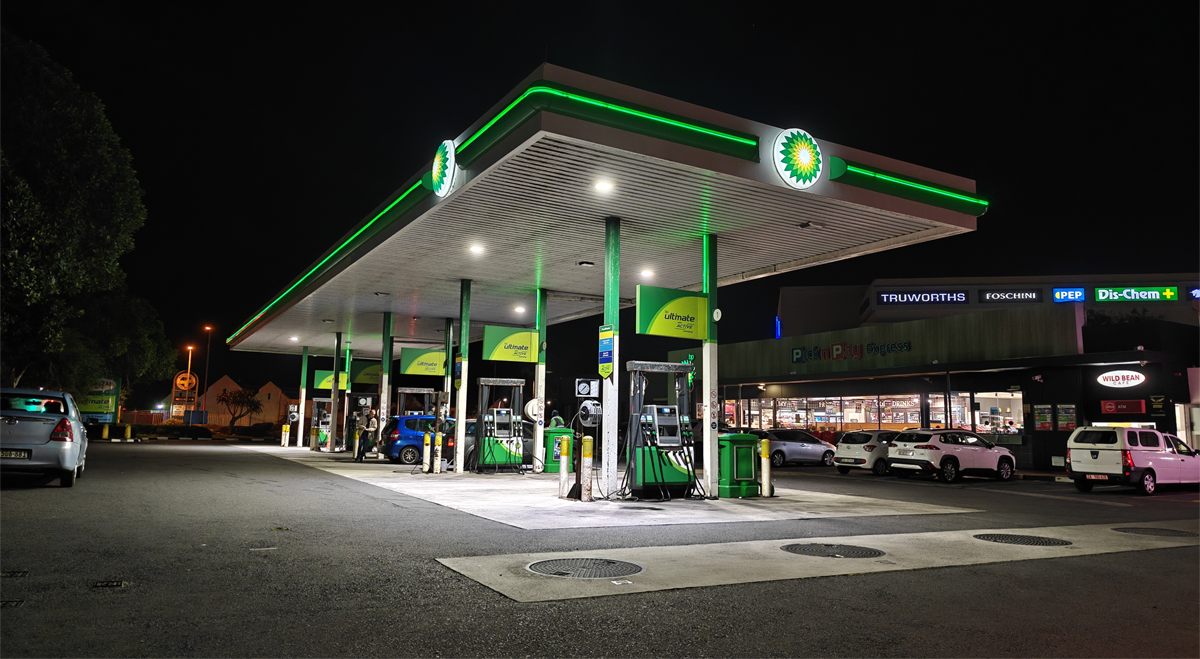
  • BP agrees to sell Austrian fuel station and EV charging business to volenergy

    BP agrees to sell Austrian fuel station and EV charging business to volenergy

    BP (LSE:BP.) has reached an agreement to divest its retail fuel, convenience and electric vehicle charging operations in Austria to volenergy AG as the energy group continues to simplify its downstream portfolio.

    The transaction forms part of BP’s broader strategy to focus investment on markets and businesses where it believes it can generate stronger long-term returns.

    Deal includes 250 BP-branded service stations

    The sale covers 250 BP-branded retail locations across Austria, including around 115 company-owned and franchise-operated sites. It also includes the company’s electric vehicle charging network and its associated fleet business.

    Although ownership will transfer to volenergy AG, the sites will continue operating under the BP brand through a licensing agreement once the transaction has been completed.

    BP will divest its entire stake in BP Retail Austria GmbH, subject to the required regulatory approvals. The agreement also includes the Austrian fleet business as well as BP’s interests in three non-operated joint ventures: Erdöl-Lagergesellschaft m.b.H., Autobahn – Betriebe Gesellschaft m.b.H. and TLM Tanklager Management GmbH in Linz.

    The companies did not disclose the financial value of the transaction.

    BP continues downstream portfolio reshaping

    “By concentrating our capital on the assets and markets where BP can be most competitive and best serve customers, we are strengthening our balance sheet and creating a stronger downstream portfolio,” said Richard Harding, interim EVP Downstream at BP.

    Melanie Milchram-Pinter, head of country Austria at BP, said the company has spent decades building its Austrian mobility and convenience business and believes volenergy AG is well placed to lead the next phase of its development.

    Transaction expected to close in 2026

    The sale is expected to be completed by the end of 2026, pending regulatory approval.

    The agreement follows BP’s previous disposals of its mobility and convenience businesses in Switzerland in 2022, Türkiye in 2024 and the Netherlands in 2025 as the company continues to streamline its international operations.

    BP confirmed that its aviation fuels business and Castrol operations in Austria are not part of the transaction.

  • Oil prices retreat after Brent briefly tops $90 on renewed Middle East tensions

    Oil prices retreat after Brent briefly tops $90 on renewed Middle East tensions

    Oil prices gave back part of their earlier gains on Monday after comments from an Iranian foreign ministry spokesperson raised the possibility of renewed talks with the United States based on Iran’s national interests.

    By 05:00 ET (09:00 GMT), Brent crude was trading 0.2% higher at $88.26 a barrel after earlier touching $90.75, its highest level in more than five weeks. U.S. West Texas Intermediate crude fell 0.4% to $82.18 a barrel.

    US-Iran conflict continues to support crude prices

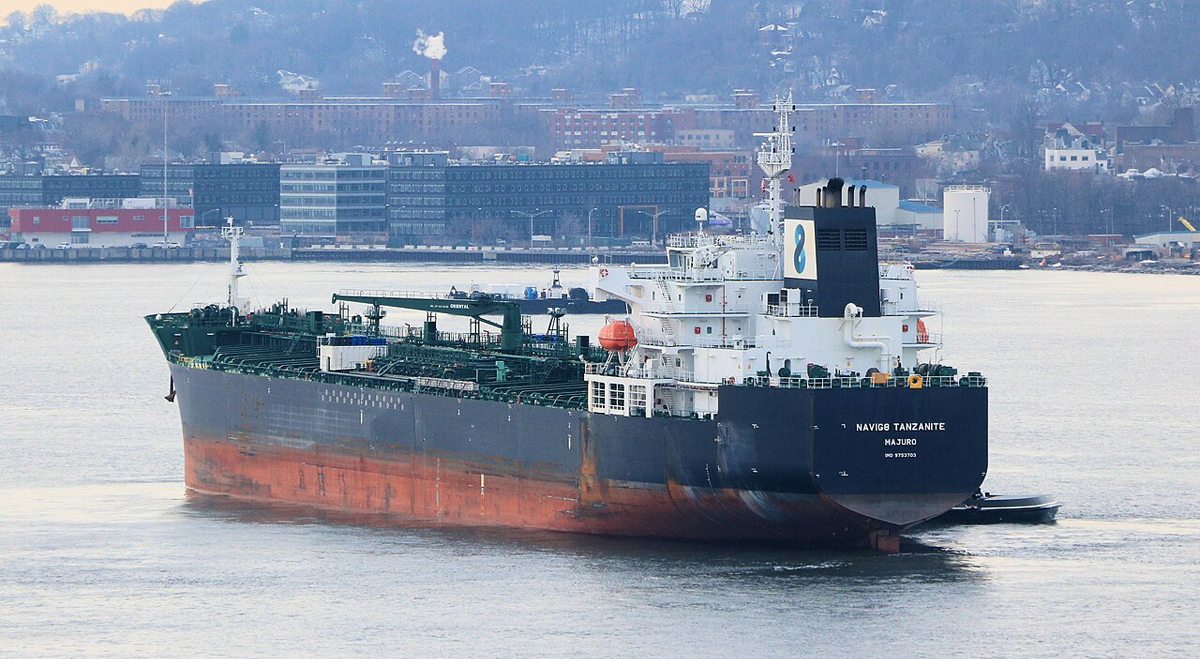
    The latest price swings came as the United States carried out military strikes against Iran for a ninth consecutive day, adding to concerns that shipping through the Strait of Hormuz could remain disrupted.

    Iran said two oil tankers had been struck and disabled, while the Islamic Revolutionary Guards Corps claimed responsibility for attacks targeting U.S. aircraft in Jordan as well as American military assets in Kuwait and Syria.

    Authorities in Bahrain also confirmed that emergency warning sirens had sounded on Monday morning.

    The renewed military exchanges have raised fresh questions over the security of one of the world’s most important energy shipping routes, with markets closely monitoring any threat to oil flows through the Strait of Hormuz.

    Supply outlook remains tight

    ANZ analysts said, “The supply narrative has become more bearish. The anticipated recovery in shipping has effectively stalled, with Strait of Hormuz transit volumes falling to single digits.”

    They added that although U.S. crude production has increased, it has not materially changed the overall market balance, while declining global inventories continue to support crude oil and refined fuel prices.

    Brent has remained highly volatile since fighting intensified in late February. Prices briefly surged above $110 a barrel before falling back towards $70 after the June ceasefire agreement. However, renewed hostilities have once again injected uncertainty into global energy markets.