Category: Market News

  • Raspberry Pi posts strong 2025 results as semiconductor growth and new products drive expansion

    Raspberry Pi posts strong 2025 results as semiconductor growth and new products drive expansion

    Raspberry Pi (LSE:RPI) reported robust financial results for 2025, with revenue increasing 25% year on year to $323.2 million and adjusted EBITDA also rising 25% to $46.4 million. The performance was supported by higher unit shipments and strong demand from both OEM partners and reseller channels, particularly in the United States and China.

    Profit before tax climbed 63% during the year, while earnings per share rose significantly. The company closed the year with $28.1 million in net cash after repaying $52.2 million of extended supplier payables, highlighting strong underlying cash generation even though the overall cash balance declined following the repayment.

    Operationally, Raspberry Pi shipped 7.6 million units in 2025. The company also continued expanding its semiconductor business, with chip volumes surpassing those of boards and modules for the first time. At the same time, the product portfolio broadened with 13 launches during the year. These included updates to the Raspberry Pi Connect IoT platform and, after the reporting period, the release of the AI HAT+2 designed to support more advanced artificial intelligence workloads.

    Management noted that the business remained resilient despite rising DRAM costs, supported by a strategy that includes diversifying suppliers, maintaining inventory buffers and applying flexible pricing. The company believes the current supply environment could allow it to increase market share, strengthen customer relationships and maintain strong momentum heading into 2026.

    Looking ahead, Raspberry Pi’s outlook is supported by strong revenue growth and a healthy balance sheet. However, the company faces pressure from narrowing margins and negative free cash flow. Technical indicators remain mixed to weak, with the share price trading below key longer-term moving averages and a negative MACD signal. Additionally, a relatively high price-to-earnings ratio and the absence of dividend income may weigh on investor sentiment.

    More about Raspberry Pi Holdings plc

    Raspberry Pi Holdings plc, headquartered in Cambridge, UK, is a full-stack engineering company specialising in high-performance, low-cost general-purpose computing platforms. Its product ecosystem includes semiconductor intellectual property, single-board computers, compute modules, microcontrollers, accessories and software. The company serves a diverse global customer base ranging from industrial and embedded system developers to educators, hobbyists and semiconductor partners, with more than 75 million units sold worldwide.

  • Empire Metals extends Eclipse licence sale to sharpen focus on Pitfield titanium project

    Empire Metals extends Eclipse licence sale to sharpen focus on Pitfield titanium project

    Empire Metals (LSE:EEE) has agreed to extend the deadline for completing the sale of its 75% stake in the Eclipse Mining Licence by one month, moving the target completion date to 30 April 2026. The extension was requested by the buyer to allow additional time to finalise due diligence work.

    As part of its evaluation, the purchaser has drilled 10 reverse-circulation holes covering a total of 514 metres. However, progress has been slowed by delays in receiving assay results, with laboratory turnaround times taking longer than expected.

    The buyer has already paid a non-refundable deposit of A$50,000. A further A$700,000 payment will be made upon completion of the transaction, subject to the outcome of the due diligence process. Empire said the proposed sale aligns with its strategy of divesting non-core assets in order to concentrate both financial and management resources on advancing its flagship Pitfield Titanium Project in Western Australia.

    The company believes sharpening its focus on Pitfield will strengthen its role within the global titanium supply chain. The project hosts a large, high-grade titanium resource and has produced encouraging processing results so far. If the Eclipse disposal is finalised, the proceeds and reduced operational distraction could help accelerate development at Pitfield while improving strategic focus and potential long-term returns for shareholders.

    Despite these strategic efforts, Empire’s outlook remains constrained by its early-stage financial profile. The company currently generates no revenue and continues to report operating losses alongside ongoing cash burn, increasing its reliance on external funding. Technical indicators also suggest weak momentum, with the share price trading below major moving averages. However, a relatively low-debt balance sheet provides some financial stability even though profitability has yet to be achieved.

    More about Empire Metals

    Empire Metals is an exploration and resource development company focused on advancing the Pitfield Titanium Project in Western Australia. The project hosts one of the world’s largest and highest-grade titanium resources, with a mineral resource estimate of 2.2 billion tonnes grading 5.1% TiO₂. Pitfield benefits from surface mineralisation, strong grade continuity and established infrastructure in the region.

    Processing trials at Pitfield have already produced a 99.25% TiO₂ high-purity product suitable for titanium sponge metal or pigment feedstock. Currently, only around 20% of the known mineralised footprint is included in the resource estimate, leaving significant potential for future expansion as global demand for titanium and other critical minerals continues to rise.

  • Peel Hunt upgrades FY26 outlook after strong deal flow and trading performance

    Peel Hunt upgrades FY26 outlook after strong deal flow and trading performance

    Peel Hunt (LSE:PEEL) has raised its financial outlook for the year ending 31 March 2026, stating that it now expects to generate more than £140m in full-year revenue and profits significantly above current market forecasts. The improved guidance follows the completion of several recent investment banking transactions and continued robust performance within the firm’s Execution Services division, highlighting the bank’s resilience within UK capital markets despite an uncertain economic backdrop.

    The company noted that geopolitical tensions, particularly the ongoing conflict in the Middle East, have heightened uncertainty and pushed energy prices higher. These developments may influence central bank policy as authorities reassess inflation risks, potentially affecting both the volume and timing of capital markets transactions. In response to the volatile environment, Peel Hunt said it will maintain a focus on supporting clients, controlling costs and managing capital allocation carefully. The firm also confirmed that it intends to release its preliminary FY26 results on 15 June 2026.

    Peel Hunt’s outlook reflects a balance between financial pressures and strategic momentum. While profitability constraints and leverage continue to weigh on financial performance, recent corporate activity signals progress in strengthening the business. Technical indicators suggest a relatively stable share price outlook, and valuation metrics appear moderate at present.

    More about Peel Hunt Limited

    Peel Hunt Limited is an international investment bank focused on advising and supporting UK mid-cap and growth companies. The firm provides a broad range of services including equity and private capital markets advisory, mergers and acquisitions, debt advisory, investor relations and corporate broking. Its platform is supported by research, institutional distribution and an execution services hub that delivers liquidity to UK capital markets from offices in London, New York, Copenhagen and Abu Dhabi.

  • Duke Capital forecasts record Q4 recurring revenue and strong exit performance

    Duke Capital forecasts record Q4 recurring revenue and strong exit performance

    Duke Capital (LSE:DUKE) has guided for record recurring cash revenue of £7.0 million in the fourth quarter of its 2026 financial year, representing an 8% increase compared with the same period last year and an improvement on the £6.8 million reported in the previous quarter. When including proceeds from the final tranche of deferred consideration linked to the exit of Fabrikat, total cash revenue for the quarter is expected to reach £8.5 million, highlighting the resilience of Duke’s investment model despite challenging macroeconomic conditions.

    The Fabrikat investment illustrates the firm’s ability to generate value through exits. Duke initially invested £6.2 million in the business in 2021 and received £3.2 million in distributions before the company was sold in March 2024. The full investment ultimately produced £11.4 million in total proceeds and delivered a five-year internal rate of return of 35%. Management pointed to the transaction as a demonstration of Duke’s capacity to deliver attractive returns from portfolio exits while continuing to expand its base of recurring revenue.

    The company believes its steadily growing recurring income stream reinforces its role as a reliable provider of alternative financing to small and medium-sized businesses across economic cycles. At the same time, Duke continues to pursue strategic acquisitions designed to expand its portfolio and support future income generation.

    From an outlook perspective, Duke Capital benefits from a relatively stable financial base and supportive technical indicators. Its acquisition strategy and strong dividend yield remain positive factors for investors. However, risks remain, including pressures on revenue growth and profitability, along with a relatively elevated price-to-earnings ratio that may limit valuation upside.

    More about Duke Capital

    Duke Capital Limited, listed on AIM under the ticker DUKE and headquartered in Guernsey, provides hybrid capital solutions to small and medium-sized business owners in Europe and North America. Its long-term “corporate mortgage” approach combines elements of both equity and debt, with the aim of preserving capital while generating consistent dividend income and capturing additional value from investment exits without relying on refinancing or short-term exit timelines.

  • Ariana Resources strengthens finances and advances Dokwe as Tavşan begins production

    Ariana Resources strengthens finances and advances Dokwe as Tavşan begins production

    Ariana Resources (LSE:AAU) has released its audited final results for 2025, marking a year of strategic development against a backdrop of volatile global markets and historically strong gold prices. During the year, the company completed its inaugural listing on the Australian Securities Exchange, achieving its largest capital raise to date. The new funding significantly strengthened its financial position and supported accelerated investment into the Dokwe Gold Project and other growth initiatives.

    Operational milestones included the successful commissioning of the Tavşan Gold Mine in Türkiye, which has now moved into commercial production. The mine is expected to deliver output broadly comparable to historical production levels from the Kiziltepe Mine while maintaining all-in sustaining costs around the industry average. Continued drilling at Tavşan is generating promising results, suggesting the potential to extend the site’s current eight-year mine life and support consistent production and cash flow from the Zenit operations.

    Exploration work at the Dokwe Gold Project in Zimbabwe intensified throughout 2025, with drilling campaigns, soil sampling and technical studies improving the company’s understanding of the mineralised system. These efforts strengthened the view that Dokwe could form part of a larger regional gold district. Ariana also introduced DetectORE technology at the site, enabling near real-time gold assay results. This innovation has improved drilling decision-making, boosted operational efficiency and helped lower exploration costs, highlighting the company’s increasingly data-driven development approach.

    The company also reinforced its strategic partnerships and governance framework. China’s Xinhai Group joined Ariana as both a shareholder and technical partner, supporting metallurgical test work and the definitive feasibility study at Dokwe. At board level, Michael Atkins joined as a director and Xinhai representative John Zhang is expected to follow, bringing additional financial, mining and processing expertise. Meanwhile, Erhan Şener retired after more than two decades overseeing the company’s Turkish operations.

    From a financial standpoint, Ariana finished 2025 with cash and cash equivalents of £5.4m, up sharply from £0.9m a year earlier. The increase was driven largely by proceeds from the ASX listing and investment from Xinhai. The company also reduced its RiverFort loan facility, which was later converted into equity after the year ended. The valuation of Ariana’s investment in Zenit rose to £17.5m, while capitalised exploration and evaluation assets climbed to £19.3m, mainly reflecting progress at Dokwe. These developments support the company’s long-term ambition to evolve into a diversified, multi-asset gold producer.

    Despite these advances, the company’s outlook remains constrained by weak underlying financial performance, including ongoing operating losses and structurally negative operating and free cash flow. However, Ariana maintains a relatively low-leverage balance sheet. Technical indicators appear supportive, with the share price trading above key moving averages and a positive MACD signal. Valuation remains moderate based on the available P/E ratio, though the absence of dividend yield data limits income-focused appeal.

    More about Ariana Resources

    Ariana Resources is a mineral exploration and development company focused on gold projects across Africa and Europe. Listed on AIM and the Australian Securities Exchange, the group holds producing assets in Türkiye through the Zenit Mining Operations and is advancing its flagship Dokwe Gold Project in Zimbabwe, alongside exploration interests in south-eastern Europe.

  • Even if tensions between Iran and the US end, the impact will linger

    Even if tensions between Iran and the US end, the impact will linger

    What was supposed to be a quick sprint is turning into a marathon. Despite ongoing talks, we’re already in week five of the U.S. “special operation” against Iran, and activity in the Strait of Hormuz remains well below normal levels.

    Thanks to TACO, markets haven’t panicked yet, but it’s fair to say they’re far from calm. Since the start of the year, the S&P 500 index has dropped nearly 8%, XAUUSD and XAGUSD remain under pressure, while yields on 30-year Treasury bonds have climbed to around 5%, driven by inflation fears linked to the conflict in the Middle East.

    And the worst may still be ahead. 

    If the U.S. launches ground operations against Iran, the conflict could escalate further, with the Houthis potentially stepping in to disrupt key routes in the Red Sea. That would put vital energy supplies beyond the Strait of Hormuz at risk and add more pressure to already fragile global supply chains.

    In the meantime, the macro backdrop is starting to crack. March data showed a synchronized slowdown in business activity across the U.S., Europe, Australia, Japan, and India, according to S&P Global.

    At the same time, cost inflation is picking up, raising the risk of stagflation. This means that while central banks will likely respond by tightening policy, they’ll do so carefully, aware of the growing downside risks.

    Even if an agreement between Iran and the U.S. is eventually reached, the impact on growth and inflation is already being felt, and central banks will have to factor that in.

    So, while markets might rally on news of a resolution, the negative effects won’t disappear overnight. Jumping fully into a “risk-on” mode immediately may not be the best move. That said, gold — which has struggled in recent weeks due to rate hike fears — could be one of the assets to benefit.

  • Early Bargain Buying Could Lift Wall Street After Last Week’s Drop: Dow Jones, S&P, Nasdaq, Futures

    Early Bargain Buying Could Lift Wall Street After Last Week’s Drop: Dow Jones, S&P, Nasdaq, Futures

    U.S. stock index futures are pointing to a stronger start on Monday, indicating that equities may attempt to recover some of the losses recorded during last week’s sharp decline.

    Part of the early strength could come from bargain hunters stepping in after the recent selloff, as some investors look to accumulate shares that have fallen to lower price levels.

    The downturn last week pushed the major U.S. indices to their weakest closing levels in more than eight months.

    Market sentiment may also get a boost from optimistic remarks by President Donald Trump regarding the ongoing conflict in the Middle East.

    In a Truth Social post earlier today, Trump said the United States had made “great progress” in discussions with a “new, and more reasonable, regime” aimed at ending military operations in Iran.

    At the same time, Trump warned that if an agreement is not reached soon, the United States will “conclude our lovely ‘stay’ in Iran by blowing up and completely obliterating all of their Electric Generating Plants, Oil Wells and Kharg Island (and possibly all desalinization plants!)”.

    Even so, gains could remain limited as crude oil prices continue to move higher amid ongoing concerns about the economic fallout from the Middle East conflict.

    Stocks posted sharp losses during Friday’s session, extending declines from the previous trading day. The major indices fell early in the session and continued sliding deeper into negative territory as trading progressed.

    Although the market recovered somewhat from the day’s lows toward the close, the main averages still ended the session with sizeable losses. The Nasdaq fell 459.72 points, or 2.2%, to 20,948.36, the Dow dropped 793.47 points, or 1.7%, to 45,166.64, and the S&P 500 declined 108.31 points, or 1.7%, finishing at 6,368.85.

    For the week overall, the Nasdaq lost 3.2%, the S&P 500 declined 2.1%, and the Dow slipped 0.9%. These declines pushed the major averages to their lowest closing levels in more than eight months.

    The continued rally in oil prices weighed on investor sentiment. Brent crude futures climbed back above $110 per barrel after rising by more than 5% during Thursday’s trading session.

    The extended rise in oil prices came despite President Trump extending by 10 days the pause on potential attacks against Iran’s energy infrastructure, moving the deadline to April 6.

    Trump said in another Truth Social post that negotiations with Iran were “going very well,” although Iranian state media reported that Tehran had “responded negatively” to a U.S. peace proposal.

    “Comments from Washington and Tehran about a potential peace process seem to come from parallel worlds, with the former indicating talks are going well while the latter effectively denies talks are even happening,” said AJ Bell investment director Russ Mould.

    “For now, fighting continues and the path out of the current crisis remains unclear,” he added. “Oil prices, probably the best indicator, remain elevated and have reached $110 per barrel again.”

    Mould also warned that if crude prices remain elevated for an extended period, fears of renewed inflationary pressure could intensify.

    Airline stocks were among the worst performers on Friday, sending the NYSE Arca Airline Index down 4.7%.

    Biotechnology, software, and computer hardware companies also experienced notable declines, contributing to the heavy losses in the technology-focused Nasdaq.

    Financial, retail, and healthcare stocks also moved significantly lower, while gold-related shares resisted the broader downturn as the price of the precious metal surged.

  • European Stocks Recover After Recent Losses: DAX, CAC, FTSE100

    European Stocks Recover After Recent Losses: DAX, CAC, FTSE100

    European equities traded mostly higher on Monday, rebounding after declines recorded in the previous two trading sessions.

    With the joint U.S.-Israeli military campaign in Iran entering its second month, French central bank governor François Villeroy de Galhau said the European Central Bank stands ready to intervene if necessary, though he emphasized that it is still too early to discuss the timing of potential interest rate increases.

    Oil markets also remained in focus, with Brent crude rising about 2% during European trading as efforts to resolve the month-long conflict in the Middle East have yet to produce meaningful progress.

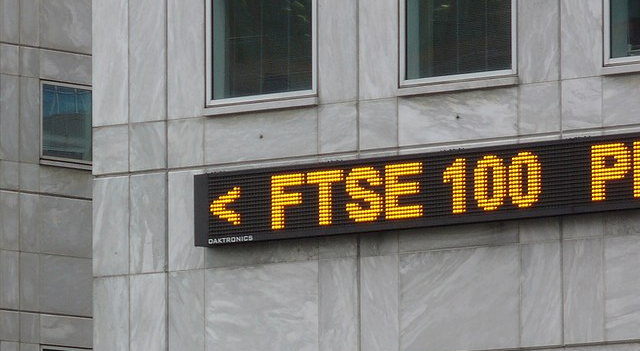
    Among the major indices, the U.K.’s FTSE 100 climbed 1.1%, while France’s CAC 40 and Germany’s DAX each advanced around 0.4%.

    Shares of Italian automaker Stellantis (BIT:STLAM) moved slightly higher after the company confirmed the extension and expansion of its long-standing collaboration with Palantir Technologies.

    GSK (LSE:GSK) also posted gains after its asthma treatment Exdensur received regulatory approval in China.

    Mining giant Rio Tinto (LSE:RIO) rose in London trading as well, after the company reported that three of its four Pilbara iron ore port terminals had resumed operations following the passage of Tropical Cyclone Narelle across Western Australia’s Pilbara region.

    By contrast, shares of INWIT (BIT:INW) declined after Telecom Italia decided not to proceed with renewing a mobile network agreement with the tower infrastructure group.

  • FTSE 100 rises as UK stocks gain; Trump cites Iran “progress” but warns of possible strikes

    FTSE 100 rises as UK stocks gain; Trump cites Iran “progress” but warns of possible strikes

    UK equities moved higher on Monday, lifted by strength in commodity-related shares, even as geopolitical uncertainty persisted with tensions in the Middle East continuing into another week.

    U.S. President Donald Trump said there had been “progress” in potential negotiations with Iran, but cautioned that Washington could carry out strikes against several targets if a deal is not reached soon.

    In a post on Truth Social, Trump said the United States was engaged in “serious discussions with A NEW, AND MORE REASONABLE, REGIME to end out Military Operations in Iran,” adding that “great progress has been made.”

    By 12:23 GMT, London’s benchmark FTSE 100 index was up more than 1%, while the British pound slipped 0.2% against the dollar to 1.3232. Elsewhere in Europe, Germany’s DAX rose 0.2% and France’s CAC 40 gained 0.4%.

    UK roundup

    Mortgage borrowing by UK households increased in February, with net borrowing reaching £4.8 billion, up from £4.2 billion in January, according to figures released Monday by the Bank of England. The total surpassed the previous six-month average of £4.5 billion.

    Net approvals for mortgages used to purchase homes rose to 62,600 in February from 60,200 a month earlier, although the figure remained slightly below the six-month average of about 63,500. Remortgage approvals also climbed, increasing to 41,200 from 38,500 in January.

    The annual growth rate for net mortgage lending ticked up to 3.4% in February, compared with 3.3% the previous month. Gross secured lending rose to £23.9 billion from £23.6 billion, while repayments declined to £18.4 billion from £18.8 billion.

    In corporate developments, shares of CVS Group Plc (LSE:CVSG) dropped more than 2% after the veterinary services provider said Chief Executive Officer Richard Fairman plans to step down for personal reasons. Fairman, who joined the company as chief financial officer in 2018 and became CEO in 2019, will remain in the role until a successor is appointed. The board said it will launch a search process to identify the next leader of the UK-listed group.

    Debenhams Group, previously known as Boohoo Group PLC (LSE:DEBS), reported adjusted EBITDA of £53 million for the fiscal year ending February 28, 2026. The result exceeded prior guidance of £50 million and represented a 36% year-on-year increase. The company also upgraded its outlook for fiscal 2027, forecasting double-digit growth in adjusted EBITDA.

    Separately, the UK government imposed a £390,000 ($516,000) penalty on Apple Inc.’s (NASDAQ:AAPL) subsidiary Apple Distribution International Ltd for breaching sanctions related to Russia. In a notice released Monday, authorities said the company made funds available to a sanctioned individual without the required licence through two payments carried out in 2022.

  • Wise rolls out everyday bank accounts in the UK with 3.26% interest

    Wise rolls out everyday bank accounts in the UK with 3.26% interest

    Wise Plc (LSE:WISE) has introduced everyday bank accounts for customers in the United Kingdom, offering a variable interest rate of 3.26% on account balances along with direct debit functionality for recurring payments, the London-based payments company said on Monday.

    The fintech group, which operates in the UK under an electronic-money license that permits payment services but not lending, is broadening its digital banking offering in a competitive market where rivals Monzo Bank Ltd. counts about 15 million personal and business users and Revolut Ltd. has around 13 million customers in the country.

    With the new accounts, customers will be able to store funds and earn interest, expanding Wise’s platform beyond its existing capabilities that allow users to hold, transfer and spend money in up to 40 currencies internationally using the mid-market exchange rate.

    “This is also what is very important to us: that our customers are not only spending but also holding and growing money with us,” Chief Finance Officer Emmanuel Thomassin said.

    To promote the launch and drive sign-ups, Wise is opening a temporary physical branch on London’s Oxford Street that will operate for two weeks.

    The company reported cross-border transaction volume of £47.4 billion in the quarter ended December 31, representing a 25% increase from a year earlier. Wise said its global active customer base reached 15.6 million in fiscal 2025, while total customer balances stood at £27.5 billion at the end of last year.

    According to Thomassin, more customers are moving to Wise from traditional tier-one banks to benefit from faster services, including payments that can be completed in under 20 seconds.