Category: Market News

  • BP Expects Lower Debt Despite $1bn in Impairment Charges (BP.)

    BP Expects Lower Debt Despite $1bn in Impairment Charges (BP.)

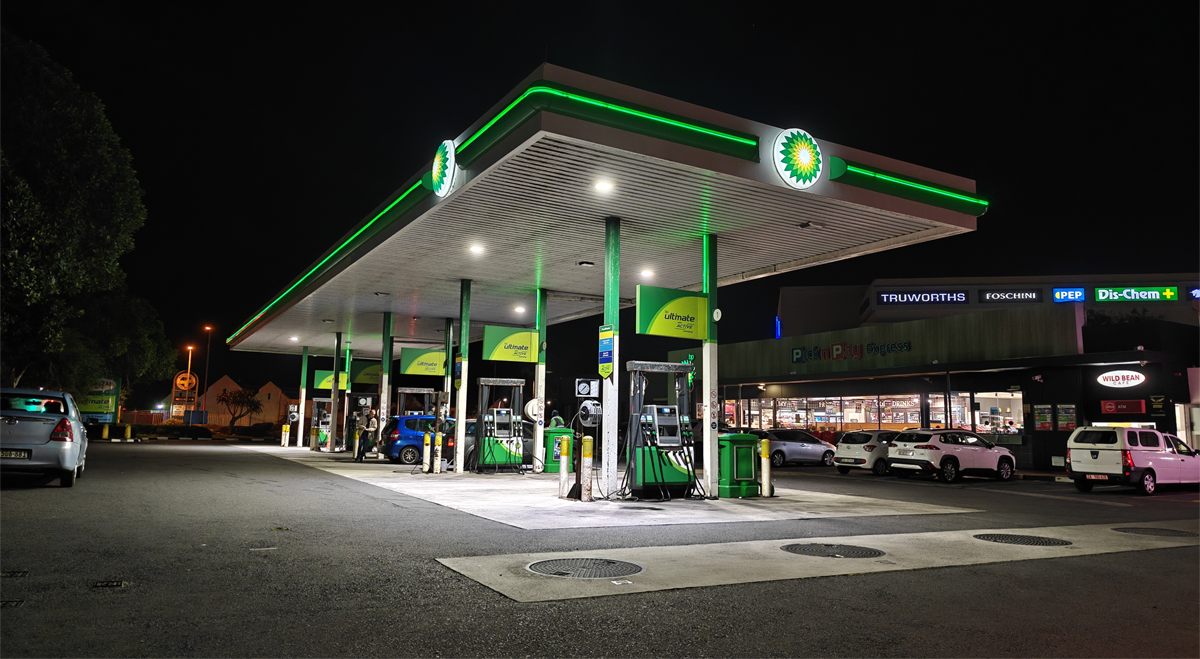
    BP PLC (LSE:BP.) expects stronger oil and gas prices to help offset lower production during the second quarter, while also projecting a significant reduction in net debt despite recording around $1 billion in impairment charges.

    In a trading update released ahead of its second-quarter results due early next month, the FTSE 100 energy company said net debt is expected to decrease by at least $2.3 billion from the $25.3 billion reported at the end of the first quarter. The reduction follows the repayment of €2.5 billion in hybrid bonds and a $1.1 billion payment relating to Gulf of America settlement obligations.

    The company expects improved commodity prices to provide a substantial boost to upstream earnings. Oil production and operations realisations are forecast to contribute between $1.8 billion and $2.1 billion compared with the previous quarter, while gas and low carbon energy realisations are expected to add a further $0.5 billion to $0.7 billion.

    BP’s customers and products division is also anticipated to deliver stronger performance, supported by seasonal increases in fuel demand, firmer fuel margins and improved refining margins. Together, these factors are expected to contribute between $1.2 billion and $1.4 billion.

    These gains are likely to be partially offset by lower production levels. Oil production and operations are expected to average between 1,420 and 1,450 thousand barrels of oil equivalent per day during the quarter, down from 1,541 thousand barrels in the first quarter. Refinery throughput is also forecast to decline due to scheduled maintenance and reduced activity at the Whiting refinery following a third-party incident in April.

    The company also expects exploration write-offs of approximately $0.5 billion, primarily related to the disposal of the Bay du Nord project in Canada. In addition, second-quarter results are expected to include post-tax impairment charges of around $1 billion, mainly associated with transition businesses within BP’s gas and low carbon energy segment.


  • Why markets largely shrug off rising Middle East tensions?

    Why markets largely shrug off rising Middle East tensions?

    The ceasefire between the US and Iran is showing cracks after the two sides exchanged strikes at least three times over the past week, prompting Iran’s Islamic Revolutionary Guard Corps (IRGC) to declare that the Strait of Hormuz will remain closed until further notice — or, more specifically, until the U.S. retreats from its positions.

    Naturally, oil jumped more than 8% over the week.

    That renewed pressure on US Treasuries as markets priced in the possibility that the Fed may have to keep rates higher for longer — or even hike again — sending the 10-year Treasury yield up to 4.56% from 4.37% and the 30-year yield to 5.06% from 4.87% over the past two weeks. Gold, meanwhile, slipped around 2.5%.

    And yet, the S&P 500 index still ended the week up more than 0.7%, while the Nasdaq added another 0.8%. How?

    On the one hand, investors don’t seem convinced that this will lead to a conflict on the scale of what we saw a couple of months ago. On the other hand, there is hope for another “TACO” call from the president, pulling back whenever markets start to wobble.

    Are markets underestimating the risks?

    Given that Republicans’ control of the U.S. Senate has weakened following Graham’s death, the White House has every incentive to prevent this conflict from dragging on. A prolonged period of uncertainty in the region would mean higher oil prices, higher gasoline prices, and ultimately angry voters.

    But of course, rationality doesn’t always prevail in geopolitics…

    All eyes will now be on Kevin Warsh’s appearance before the U.S. Senate on July 15. If he doubles down on his post-Fed meeting comments, that the central bank remains committed to bringing inflation back to 2% and that the inflation outlook has become more challenging, equity indices could also turn red.

  • Wall Street Futures Retreat as Rising Oil Prices and Geopolitical Risks Cloud Outlook: Dow Jones, S&P, Nasdaq

    Wall Street Futures Retreat as Rising Oil Prices and Geopolitical Risks Cloud Outlook: Dow Jones, S&P, Nasdaq

    Markets Prepare for a Cautious Start

    U.S. equity futures pointed to a weaker open on Monday, with investors expected to trim risk after last week’s gains as renewed conflict in the Middle East pushed oil prices sharply higher.

    The latest escalation between the United States and Iran has revived concerns over global energy supplies, creating fresh uncertainty for financial markets at the start of the week.

    Oil Extends Rally

    Crude prices advanced after the U.S. Central Command confirmed it had carried out another series of precision strikes against Iranian targets on Sunday.

    Iran responded with attacks on several Gulf countries, including Bahrain, Kuwait, Qatar, Jordan and Oman, increasing fears that regional instability could spread further.

    Conflicting statements from Washington and Tehran regarding the status of the Strait of Hormuz also added to market volatility, helping lift U.S. crude futures by more than 4%.

    Semiconductor Shares Under Pressure

    Technology stocks were also expected to weigh on sentiment following a sharp decline in SK Hynix (USOTC:HXSCL).

    The South Korean chipmaker’s U.S.-listed shares dropped more than 9% in premarket trading after surging over 13% during Friday’s Nasdaq debut, dragging broader semiconductor stocks lower.

    Focus Turns to Earnings and Inflation

    Investors are now looking ahead to a busy week of corporate earnings and important economic data that could determine the market’s next direction.

    Results are due from Bank of America (NYSE:BAC), Citigroup (NYSE:C), Goldman Sachs (NYSE:GS), JPMorgan Chase (NYSE:JPM), Wells Fargo (NYSE:WFC), Johnson & Johnson (NYSE:JNJ), UnitedHealth (NYSE:UNH) and Netflix (NASDAQ:NFLX).

    At the same time, markets are awaiting fresh U.S. inflation figures that may influence expectations for the Federal Reserve’s upcoming policy meeting.

    Daniela Hathorn, Senior Market Analyst at Capital.com, said, “Following stronger inflation readings earlier this year and a resilient labour market, investors are keen to determine whether underlying price pressures remain persistent despite the recent fall in energy prices.”

    She added, “A hotter-than-expected reading would reinforce the higher-for-longer narrative and could add further support to the dollar and bond yields. Conversely, a softer report would help offset some of the inflation concerns stemming from renewed geopolitical tensions and could provide equities with a much-needed boost.”

    Strong Weekly Performance Provides Support

    Despite Friday’s relatively subdued trading session, the major U.S. indices finished higher.

    The Dow Jones rose 0.3%, the Nasdaq gained 0.3% and the S&P 500 added 0.4%. Over the full week, the Nasdaq climbed 1.7%, while the S&P 500 and Dow Jones advanced 1.2% and 0.5%, respectively.

    Meta Platforms (META) led technology gains after Bank of America reaffirmed its Buy rating, while Nvidia (NASDAQ:NVDA) rose 4%. SK Hynix also impressed investors with a 13.1% gain during its first U.S. trading session.

    Sector Performance Diverges

    Biotechnology stocks were among Friday’s weakest performers, with the NYSE Arca Biotechnology Index falling 2.6%.

    Airline shares also struggled, while housing and oil service companies outperformed, supported by strength in the property market and energy sector.

  • European Markets Mixed as Investors Balance Geopolitical Risks and Earnings Outlook: DAX, CAC, FTSE100

    European Markets Mixed as Investors Balance Geopolitical Risks and Earnings Outlook: DAX, CAC, FTSE100

    Markets Look Beyond Middle East Tensions

    European equity markets traded in mixed territory on Monday as investors looked past escalating tensions in the Middle East and turned their attention to the start of the second-quarter earnings season.

    Attention is shifting toward Wall Street, where major U.S. financial institutions including Goldman Sachs (NYSE:GS) and JPMorgan Chase (NYSE:JPM) are scheduled to report quarterly results on Tuesday.

    Oil prices remained firmly higher after renewed missile exchanges between the United States and Iran heightened concerns over regional stability and the outlook for global crude supplies.

    Major European Indices Diverge

    London’s FTSE 100 slipped 0.2%, while France’s CAC 40 hovered around the flatline. Germany’s DAX outperformed its regional peers, edging 0.1% higher in early trading.

    Company News

    French carmaker Renault (EU:RNO) posted modest gains after England & Wales’ High Court of Justice dismissed all diesel emissions claims brought against the company.

    Shares in Stellantis (BIT:STLAM) moved lower despite the automaker reporting a 10% year-on-year increase in second-quarter vehicle shipments.

    Paints manufacturer AkzoNobel (EU:AKZA) advanced after rejecting a takeover proposal from Japan’s Nippon Paint for its decorative coatings business.

    German healthcare group Fresenius (TG:FRE) declined by more than 1% after reaffirming its full-year guidance for adjusted earnings growth.

    Among UK-listed stocks, recruiter PageGroup (LSE:PAGE) rallied almost 10% after delivering second-quarter gross profit ahead of market expectations.

    Building materials distributor Grafton Group (LSE:GFTU) also traded higher after reporting growth in first-half trading and reaffirming its full-year adjusted operating profit outlook.

    Property developer Derwent London (LSE:DLN) gained following the announcement of a new £100 million unsecured revolving credit facility agreed with Handelsbanken Plc.

  • AstraZeneca Downgraded by HSBC as Wainua Trial Miss Clouds Near-Term Outlook (AZN)

    AstraZeneca Downgraded by HSBC as Wainua Trial Miss Clouds Near-Term Outlook (AZN)

    Broker Cuts Rating Following Clinical Disappointment

    AstraZeneca (LSE:AZN) came under pressure on Monday after HSBC lowered its recommendation on the pharmaceutical giant to Hold from Buy and reduced its price target from 16,500p to 13,750p following the failure of the Phase 3 Wainua study to achieve its primary endpoint.

    “Wainua setback impairs our bull case, given the more difficult catalyst path ahead,” HSBC analyst Rajesh Kumar said.

    Shares fell 1.3% in London trading, while the company’s U.S.-listed stock declined 1.5% in premarket dealings.

    Delayed Growth Catalysts Shift the Risk Profile

    HSBC noted that its previous bullish stance had been supported by expectations for the CARDIO-TTR programme, which it believes represents a market opportunity worth more than US$5 billion.

    Although the broker still sees a route to annual peak revenue above US$80 billion by 2030, it believes that outlook now relies on a series of higher-risk clinical milestones that are not expected to materialise before 2027.

    Focus Moves to SERENA-4 and AVANZAR

    The investment bank also expressed caution over AstraZeneca’s next major clinical updates, particularly the SERENA-4 and AVANZAR studies due in the second half of 2026.

    HSBC said its own analysis leaves it “rather uncomfortable” about the prospects for both programmes.

    Kumar also warned that another string of unsuccessful trial outcomes could damage confidence in the company’s research engine.

    “if three trials fail in a sequence, the widely held view of Astra’s market-leading R&D platform might lose its shine,” he said.

    HSBC Sees Limited Upside in the Near Term

    According to HSBC, weaker-than-expected results from the remaining 2026 clinical catalysts could intensify concerns over AstraZeneca’s ability to replace revenue lost through major patent expiries expected in the early 2030s.

    The broker believes this could restrict further gains in the shares over the next six to nine months, leaving investors increasingly dependent on a stronger pipeline of catalysts in 2027.

    “We downgrade the stock to a Hold rating (from Buy) as we no longer find the risk-reward balance attractive, particularly with the remaining catalyst path for 2026 (SERENA 4, AVANZAR) skewed to downside risks,” Kumar concluded.

  • Global Chipmakers Retreat as SK Hynix Records Historic One-Day Drop

    Global Chipmakers Retreat as SK Hynix Records Historic One-Day Drop

    Semiconductor stocks came under widespread selling pressure on Monday after SK Hynix posted the largest single-day decline in its history, prompting investors to lock in gains following the company’s recent Nasdaq debut while renewed geopolitical tensions added to market caution.

    The weakness spread from Asian markets into Europe and U.S. premarket trading, highlighting growing concerns over lofty valuations in AI-related technology shares despite continued strength in long-term demand.

    SK Hynix Sparks Global Selloff

    SK Hynix shares slumped more than 15% in South Korea, setting a new record for the company’s biggest daily decline.

    The move followed a strong rally that saw the stock more than triple this year ahead of last week’s U.S. listing, encouraging investors to take profits.

    Samsung Electronics (USOTC:SSNHZ) also traded lower, helping push the KOSPI index down 9% and triggering a temporary 20-minute trading halt.

    European Semiconductor Sector Weakens

    Selling pressure extended across European technology stocks shortly after markets opened.

    ASMI (EU:ASM), ASML (EU:ASML) and Besi (EU:BESI) each fell between 1% and 2%, while STMicroelectronics (EU:STMPA) slipped around 1%.

    Infineon (TG:IFX) was among Germany’s weakest performers, declining roughly 2%.

    U.S. Chip Stocks Set for Lower Open

    U.S. semiconductor names also pointed to a weaker start.

    Western Digital (NASDAQ:WDC), Micron (NASDAQ:MU), SanDisk (NASDAQ:SNDK), Seagate (NASDAQ:STX), AMD (NASDAQ:AMD) and Intel (NASDAQ:INTC) all traded sharply lower ahead of the opening bell.

    Strong AI Outlook Meets Profit-Taking

    SK Hynix raised more than $26 billion through its American Depositary Receipt offering last week, with the shares priced at $149 before opening at $170 and ending their first trading session up 12.8%.

    “The current memory upcycle is tracking substantially stronger than expected, but our base case continues to assume normalisation in cycle dynamics, limiting upside at current levels,” said Lorraine Tan, a director at Morningstar.

    Although demand for high-bandwidth memory chips used in AI data centres remains robust, Monday’s decline suggests investors are becoming increasingly cautious after the sector’s remarkable gains this year.

  • Gold Steadies After Early Decline as Investors Balance Geopolitics and Fed Outlook

    Gold Steadies After Early Decline as Investors Balance Geopolitics and Fed Outlook

    Gold prices recovered from their lowest levels of the session on Monday as renewed geopolitical tensions increased demand for defensive assets, although expectations of higher U.S. interest rates continued to cap gains.

    The precious metal remained under pressure from rising Treasury yields and a stronger dollar, even as investors sought safety following the latest escalation between the United States and Iran.

    Precious Metals Remain Under Pressure

    At 01:05 ET (05:05 GMT), spot gold (XAU/USD) traded 1.54% lower at $4,057.76 an ounce, while Gold Futures fell 1.17% to $4,065.45 an ounce.

    Silver (XAG/USD) declined 2.80% to $58.19 an ounce, and platinum (XPT/USD) slipped 1.61% to $1,604.60 an ounce.

    Middle East Conflict Keeps Safe-Haven Demand Elevated

    Investor demand for defensive assets strengthened after the United States launched fresh strikes against Iranian targets over the weekend in response to an attack on a Cyprus-flagged cargo ship in the Strait of Hormuz.

    Iran subsequently announced that the strategic shipping corridor would remain closed “until further notice,” although U.S. officials rejected the claim, keeping uncertainty over regional stability elevated.

    Oil Rally Strengthens Inflation Concerns

    Crude prices remained more than 3% higher after giving back part of an earlier surge of nearly 5%.

    The possibility of prolonged disruptions to energy supplies has renewed concerns that inflation may remain stubbornly high, potentially forcing the Federal Reserve to maintain restrictive monetary policy for longer.

    Higher interest rates typically reduce the attractiveness of gold because the metal does not generate income.

    Minutes from the Fed’s June meeting showed that several policymakers continued to see justification for further tightening, while inflation remained a greater concern than labour market conditions.

    Inflation Data and Fed Signals Could Drive the Next Move

    Markets are now focused on Tuesday’s U.S. inflation report and Federal Reserve Chair Kevin Warsh’s congressional testimony.

    IG analyst Tony Sycamore said gold remains highly responsive to both inflation data and geopolitical developments.

    He noted that support around the $4,000 level remains intact, while a sustained move above $4,200-$4,220 could improve the technical outlook toward the 200-day moving average near $4,491.

    However, stronger-than-expected CPI data could strengthen the U.S. dollar and reinforce expectations of another interest-rate increase before year-end.

    The U.S. Dollar Index rose 0.3% on Monday, adding further headwinds for bullion.

  • Oil Prices Hold Strong Gains as Hormuz Tensions Keep Supply Risks in Focus

    Oil Prices Hold Strong Gains as Hormuz Tensions Keep Supply Risks in Focus

    Oil prices remained firmly higher during European trading on Monday after giving back part of an earlier rally of almost 5%, as renewed military action between the United States and Iran continued to fuel concerns over crude supplies moving through the Strait of Hormuz.

    By 03:43 ET (07:43 GMT), Brent crude futures were up 3.5% at $78.68 a barrel, while U.S. West Texas Intermediate (WTI) crude gained 3.5% to $73.89 a barrel. Both benchmarks had climbed close to 5% earlier in the session before easing slightly.

    Middle East Escalation Revives Supply Concerns

    The latest advance followed a fresh escalation in regional tensions after Iran widened its missile and drone attacks on Sunday to include Gulf states such as Qatar and the United Arab Emirates in response to recent U.S. military action.

    Tehran also announced that the Strait of Hormuz had been closed after a commercial vessel was struck, renewing fears over the security of one of the world’s most strategically important oil shipping routes.

    Although U.S. officials rejected the claim, President Donald Trump maintained that commercial shipping remained protected and that vessels could continue using the waterway.

    Shipping Activity Slows Despite Conflicting Claims

    While Washington insisted the Strait remained operational, shipping companies adopted a more cautious approach over the weekend.

    According to vessel-tracking data, only six ships passed through the Strait of Hormuz on Sunday, marking the lowest daily traffic in five weeks and highlighting growing concerns over maritime security.

    “Shipping operators are adopting a cautious approach and inbound movements have slowed under heightening security concerns,” ANZ analysts said in a note.

    Markets Question the Stability of the Ceasefire

    ANZ noted that crude prices had surrendered part of last week’s gains after both the United States and Iran initially appeared reluctant to broaden the conflict.

    The bank pointed to Washington’s decision not to target Iranian energy infrastructure directly and the start of diplomatic discussions late last week as signs of restraint.

    However, the renewed military action over the weekend and Iran’s latest declaration that the Strait of Hormuz was closed have once again raised doubts about the durability of last month’s interim agreement.

    Strategic Waterway Remains Critical for Global Oil Trade

    The Strait of Hormuz is the primary export route for crude shipments from Saudi Arabia, Iraq, Kuwait, the United Arab Emirates and other Gulf producers.

    Any prolonged disruption could force refiners—particularly across Asia—to secure alternative supplies while increasing freight and insurance costs throughout the energy market.

    Investors are also watching for any coordinated response from major oil-producing nations or the potential release of strategic petroleum reserves should supply disruptions become more severe.

    IEA Warns Supply Recovery Could Be at Risk

    Last week, the International Energy Agency (IEA) warned in its latest monthly report that renewed hostilities between the United States and Iran could threaten the expected recovery in global oil supplies if shipping through the Strait of Hormuz remains disrupted.

    The agency said worldwide oil supply increased by 4.1 million barrels per day in June after crude exports through Hormuz resumed, although production remained well below levels seen before the conflict.

    The IEA expects global supply to continue recovering in 2027, provided shipping through the strategic waterway continues to improve.

  • Oil Surge, Earnings Season and Chip Weakness Set the Tone for Global Markets: Dow Jones, S&P, Nasdaq, Wall Street Futures

    Oil Surge, Earnings Season and Chip Weakness Set the Tone for Global Markets: Dow Jones, S&P, Nasdaq, Wall Street Futures

    Global markets opened the week cautiously as renewed conflict between the United States and Iran sent crude prices sharply higher, pressured equity futures and shifted investor focus toward a crucial week of second-quarter earnings.

    At the same time, heavy selling in Asian semiconductor stocks has sparked debate over whether enthusiasm for artificial intelligence shares is beginning to cool, even as demand for advanced chips remains strong.

    Investors Respond to Geopolitical Risks

    U.S. equity futures traded mixed after another exchange of military strikes between Washington and Tehran heightened uncertainty over the global economic outlook.

    At 04:53 ET (08:53 GMT), S&P 500 futures were down 0.3%, Nasdaq 100 futures had fallen 1%, while Dow Jones futures edged up 0.03%.

    Technology stocks looked set to underperform following sharp losses among Asian chipmakers, while traders also prepared for a wave of quarterly earnings reports expected to provide fresh insight into corporate investment and AI-related spending.

    Hormuz Uncertainty Keeps Markets on Edge

    Attention remains focused on the Strait of Hormuz after conflicting statements from the United States and Iran regarding access to the strategic shipping route.

    U.S. Central Command said it had launched additional strikes against Iranian targets to reduce threats to commercial shipping, while President Donald Trump maintained that the passage remained open.

    Iran, however, continued to insist that the Strait had been closed.

    With roughly 20% of the world’s seaborne oil moving through the waterway, investors remain alert to any disruption that could intensify inflationary pressures and weigh on global growth.

    Oil Prices Extend Their Advance

    Energy markets continued to rally as geopolitical risks mounted.

    Brent crude gained 4.8% to $79.65 a barrel, while West Texas Intermediate rose 5% to $74.98 after both benchmarks had already posted strong gains during the previous week.

    Higher oil prices are generally supportive for energy producers but can increase costs for industries such as aviation, logistics and consumer discretionary businesses through higher fuel and transportation expenses.

    Semiconductor Sector Faces Profit-Taking

    Asian semiconductor stocks came under pressure, led by a near-14% decline in SK Hynix shares despite the company’s successful Nasdaq debut.

    The weakness pushed South Korea’s KOSPI index down more than 5%, temporarily triggering a trading halt.

    The decline appeared to reflect investor profit-taking ahead of earnings season rather than any deterioration in demand for AI hardware.

    Meanwhile, Taiwan Semiconductor Manufacturing Co. (NYSE:TSM) continued to demonstrate strong underlying demand, reporting a 36% year-on-year increase in second-quarter revenue to T$1.27 trillion.

    Corporate Results Become the Main Focus

    While geopolitical developments continue to dominate headlines, investors are increasingly turning their attention to second-quarter earnings.

    The upcoming results will be closely scrutinised to determine whether companies can continue delivering the earnings growth needed to support elevated market valuations, particularly across the technology sector.

  • European Gas Prices Hit One-Month High as Hormuz Tensions Raise LNG Supply Concerns

    European Gas Prices Hit One-Month High as Hormuz Tensions Raise LNG Supply Concerns

    European wholesale natural gas prices climbed sharply on Monday, reaching their highest level in more than a month after renewed conflict in the Middle East heightened concerns over global liquefied natural gas (LNG) supplies.

    Traders reacted to reports surrounding the Strait of Hormuz, a key shipping route for LNG exports, prompting another rise in energy prices across Europe.

    Benchmark Gas Contracts Move Higher

    The Dutch front-month gas contract, Europe’s benchmark, gained 3.5% in early trading to €50.37 per megawatt-hour.

    The equivalent UK contract also advanced, rising 4% as energy markets responded to the latest geopolitical developments.

    The gains followed a weekend of escalating military exchanges between the United States and Iran, increasing fears of potential supply disruptions.

    Strait of Hormuz Back in Focus

    The latest rally was triggered after Iran announced that the Strait of Hormuz had been “closed until further notice.”

    Although the U.S. Central Command said the strategic shipping corridor remained open to commercial traffic, the possibility of a prolonged disruption was enough to unsettle energy markets.

    The Strait of Hormuz is one of the world’s most important energy transport routes, carrying around one-fifth of global LNG trade, including a significant proportion of exports from Qatar.

    Geopolitical Risks Return to the Fore

    Recent weeks had seen gas prices ease as investors became more optimistic that diplomatic efforts would prevent a wider regional conflict.

    The renewed military escalation has reversed that sentiment, with analysts warning that volatility is likely to remain elevated while uncertainty persists.

    Storage Levels Increase Importance of Supply

    European countries are continuing to replenish gas storage ahead of the 2026/2027 winter heating season.

    However, storage facilities are currently around 47% full, below the 56% level recorded at the same point last year.

    Market participants warn that any prolonged reduction in LNG exports from the Gulf could intensify competition between Europe and Asia for available cargoes, placing further upward pressure on natural gas prices.