Category: Market Summary

  • European Stocks Edge Lower as Oil Prices Rebound: DAX, CAC, FTSE100

    European Stocks Edge Lower as Oil Prices Rebound: DAX, CAC, FTSE100

    European equities mostly declined on Wednesday as oil prices recovered following a sharp drop of more than 11% in the previous trading session.

    Benchmark Brent crude futures were up about 2.6% during European hours, while U.S. West Texas Intermediate (WTI) contracts climbed over 4% as the conflict involving Iran continued to intensify, with the United States and Israel carrying out air strikes against Iranian targets across the Middle East.

    On a relatively quiet economic calendar, data showed that inflation in Germany cooled in February in line with earlier estimates, largely due to a slower rise in food prices.

    Final figures from Destatis indicated that the consumer price index increased 1.9% year-on-year in February, matching the preliminary reading.

    The EU-harmonised inflation rate in Germany also edged down slightly, easing to 2.0% in February from 2.1% in January.

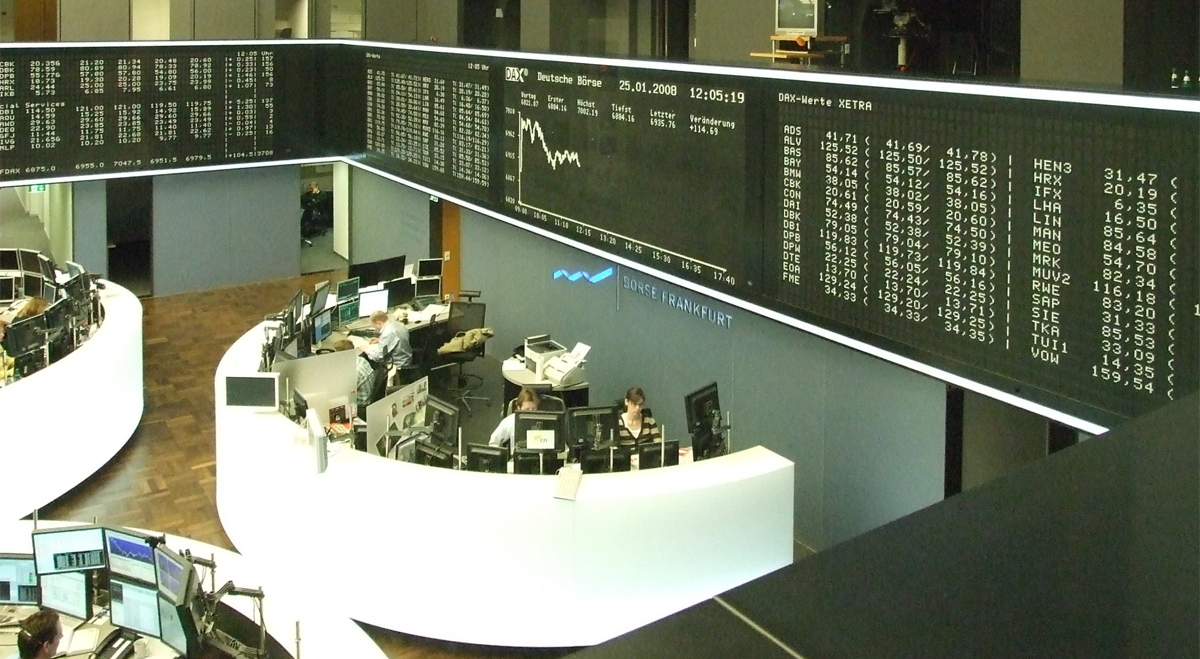
    Across European markets, Germany’s DAX index fell around 1.3%, while the UK’s FTSE 100 and France’s CAC 40 each declined roughly 0.7%.

    Shares of German consumer goods and adhesives producer Henkel (TG:HEN3) dropped sharply after the company released mixed results for the fourth quarter.

    Defense manufacturer Rheinmetall (TG:RHM) also declined significantly after issuing a 2026 sales outlook that fell short of market expectations.

    Promotional products distributor 4imprint (LSE:FOUR) also tumbled after announcing weaker-than-expected results for 2025.

    Insurance group Legal & General Group (LSE:LGEN) also slid despite reporting 2025 results broadly in line with forecasts and unveiling its largest-ever share buyback program, worth £1.2 billion.

    On the upside, German state-owned energy company Uniper (TG:UN0) advanced after posting strong financial results for the fourth quarter of 2025.

    Meanwhile, shares in British construction firm Balfour Beatty (LSE:BBY) surged after the company announced a £200 million share buyback and increased its full-year dividend following higher profits and a record order backlog.

  • Markets Monitor Oil Swings, Middle East Tensions and U.S. CPI Data; Oracle Lifts Outlook: Dow Jones, S&P, Nasdaq, Wall Street Futures

    Markets Monitor Oil Swings, Middle East Tensions and U.S. CPI Data; Oracle Lifts Outlook: Dow Jones, S&P, Nasdaq, Wall Street Futures

    U.S. equity futures traded slightly in negative territory on Wednesday as investors continued to track the uncertain course of the conflict in the Middle East. Oil prices fluctuated following reports that the International Energy Agency may consider a record release of emergency reserves. Markets are also awaiting key U.S. inflation figures later in the session, while Oracle issued a stronger revenue outlook supported by robust demand for artificial intelligence data centers.

    U.S. futures edge lower

    As of 04:51 ET, futures tied to major U.S. stock indexes were modestly down. Dow futures declined by 98 points, or 0.2%, S&P 500 futures slipped by 5 points, or 0.1%, and Nasdaq 100 futures fell by 20 points, or 0.1%.

    The previous session on Wall Street ended with mixed results. The Dow Jones Industrial Average and the S&P 500 both closed slightly lower, while the tech-heavy Nasdaq Composite managed a small gain.

    Investors spent much of the session focused on developments in the Middle East, where the United States warned it could launch its most intense wave of strikes against Iran since the start of its joint military campaign with Israel late last month.

    Despite the escalating rhetoric, equity markets remained relatively steady. Analysts at Vital Knowledge noted that investors appeared to look beyond the comments, while sentiment also received support from stronger-than-expected U.S. existing home sales data and upbeat Chinese trade figures. Technology shares performed particularly well, with semiconductor and chip component companies posting notable advances.

    IEA reportedly weighing record oil reserve release

    A major concern in the Iran conflict is the potential disruption of oil shipments through the Strait of Hormuz, a strategic maritime route that carries roughly one-fifth of the world’s crude supply.

    Fears that Tehran could attempt to block the passage have led to significant volatility in oil markets in recent days. Brent crude, the global benchmark, is currently trading near $90 per barrel after climbing to roughly $120 earlier in the week. Shipping activity through the strait has slowed sharply, as tanker operators worry about crew safety and face difficulties securing insurance coverage.

    “The current risk premium in oil prices, driven by threats to the Strait of Hormuz, highlights the severe fragility of global supply chains and the urgent need to develop massive, stable energy reserves,” said Robert Price, CEO of March GL.

    According to a Wall Street Journal report, the International Energy Agency is considering releasing strategic oil reserves on an unprecedented scale in an effort to stabilize prices after the surge caused by the Iran conflict.

    Officials familiar with the matter told the newspaper that the release could exceed the 182 million barrels made available by IEA member countries following Russia’s invasion of Ukraine in 2022. Member nations could decide on the proposal as soon as Wednesday.

    Trump warns of stronger action over mining reports

    U.S. President Donald Trump has warned that the United States could intensify attacks on Iran after reports suggested Tehran had deployed naval mines in the Strait of Hormuz.

    Following a CNN report that Iran had placed mines in the waterway—although not widely yet—Trump said on Tuesday that Iran would be struck “at a level never seen before” if the mines were not removed.

    The U.S. military said it had targeted 16 Iranian vessels suspected of laying mines near the strait. Gen. Dan Caine, chairman of the Joint Chiefs of Staff, added that storage facilities for naval mines had also been attacked.

    However, uncertainty remains over how long the conflict may continue. Trump has said the fighting will end only with Iran’s “unconditional surrender,” although a White House spokesperson indicated that Trump—not Iran’s leadership—would determine when Tehran had surrendered.

    On Wednesday, the United States and Israel exchanged strikes with Iranian targets across several locations in the Middle East.

    CPI data in focus

    Markets will also be closely watching the release of U.S. consumer inflation data for February.

    Economists expect the consumer price index to rise 2.5% year-over-year, slightly higher than January’s 2.4% increase. On a monthly basis, prices are projected to climb 0.3%, up from 0.2% previously.

    Core CPI, which excludes volatile components such as food and energy, is forecast to reach 2.5% annually and 0.2% month-on-month.

    Later this week, the core personal consumption expenditures price index for January will also be published. Analysts expect an annual increase of 3.1% and a monthly rise of 0.4%. This gauge is closely monitored because it is one of the Federal Reserve’s preferred measures of inflation.

    Importantly, the upcoming data largely reflects a period before the escalation of U.S. and Israeli military action against Iran. The resulting surge in oil prices has raised concerns that inflationary pressures could intensify globally, potentially prompting central banks to consider tightening monetary policy.

    Oracle beats estimates

    Oracle (NYSE:ORCL) reported quarterly results that exceeded expectations and issued an optimistic revenue forecast, driven by strong demand for cloud infrastructure used in artificial intelligence data centers.

    The company also increased its revenue guidance for fiscal 2027, sending its shares sharply higher in extended trading.

    Oracle reported adjusted earnings of $1.79 per share on revenue of $17.19 billion for the third quarter of fiscal 2026. Analysts had forecast earnings of $1.70 per share on revenue of $16.92 billion.

    Revenue in the cloud segment surged 44% year-over-year to $8.91 billion.

    Commenting on the results, Barclays analyst Raimo Lenschow said the report suggests “a clearer path ahead.”

  • European Stocks Slip as Oil Volatility and Middle East Tensions Weigh on Markets: DAX, CAC, FTSE100

    European Stocks Slip as Oil Volatility and Middle East Tensions Weigh on Markets: DAX, CAC, FTSE100

    European equities moved slightly lower on Wednesday as investors monitored developments in the conflict involving Iran and reacted to reports about a potential release of additional oil supplies.

    By 08:00 GMT, the pan-European Stoxx 600 index had declined 0.5%. Germany’s DAX dropped 1.0%, France’s CAC 40 fell 0.9%, and the U.K.’s FTSE 100 was down 0.6%.

    Markets in Europe followed a relatively steady lead from Asian trading, where investors responded to a Wall Street Journal report stating that the International Energy Agency was considering the largest release of strategic oil reserves in its history in an effort to curb rising crude prices.

    The news provided some relief after significant volatility in energy markets earlier in the week. The global Brent benchmark is now trading close to $90 per barrel after briefly approaching $120.

    At 04:04 ET, Brent crude futures were up 2.2% at $89.75 per barrel, while U.S. West Texas Intermediate futures rose 2.2% to $85.33 per barrel.

    Meanwhile, tensions in Iran remained elevated. The United States and Israel exchanged air strikes with Iran across the Middle East on Wednesday, while authorities in Tehran signaled readiness to suppress any internal unrest.

    Financial markets have largely been betting that U.S. President Donald Trump will seek a swift end to the confrontation. However, Trump has warned that Washington could launch strikes against Iran if the country attempts to disrupt oil shipments through the Strait of Hormuz, a vital maritime route through which roughly one-fifth of global crude supply is transported.

    Outside geopolitical developments, investors in Europe also examined fresh inflation figures from Germany, which showed harmonized consumer prices rising month-on-month in February as expected.

    Later in the day, U.S. inflation data will be closely watched by markets. Economists expect headline consumer prices to increase 2.4% year-on-year through February and 0.3% compared with the previous month.

  • Wall Street Futures Point Lower Amid Uncertainty Over U.S.-Iran Conflict: Dow Jones, S&P, Nasdaq

    Wall Street Futures Point Lower Amid Uncertainty Over U.S.-Iran Conflict: Dow Jones, S&P, Nasdaq

    U.S. stock index futures signaled a weaker open on Tuesday, indicating that markets may pull back after rebounding from an early decline to finish the previous session largely in positive territory.

    Ongoing uncertainty surrounding the conflict in the Middle East may continue to weigh on investor sentiment, particularly as crude oil prices recover some of their losses following a sharp overnight drop.

    April crude oil futures had plunged nearly 11% to a low of $84.43 per barrel before rebounding to trade back above $90.

    The sharp swings in energy markets reflect lingering uncertainty over the U.S. military campaign against Iran following recent remarks from President Donald Trump.

    Speaking at a press conference on Monday, Trump said the war with Iran could be resolved “very soon,” although he did not outline specific details about how the conflict might conclude.

    In a later message posted on Truth Social, Trump warned that Iran would be struck “twenty times harder” if it takes any action to disrupt oil shipments through the Strait of Hormuz.

    “We will take out easily destroyable targets that will make it virtually impossible for Iran to ever be built back, as a Nation, again — Death, Fire, and Fury will reign upon them — But I hope, and pray, that it does not happen!” Trump said.

    Echoing the president’s message, U.S. Defense Secretary Pete Hegseth said at a press briefing Tuesday morning that Iran is “badly losing,” but confirmed that the United States still plans to carry out its “most intense day of strikes” in Iran later today.

    U.S. equities had fallen sharply early Monday but later staged a strong recovery. The major indices rebounded from their lows and ended the session higher, led by gains in technology stocks.

    In late trading, the rally strengthened, with the Nasdaq climbing 308.27 points, or 1.4%, to 22,695.95. The S&P 500 rose 55.96 points, or 0.8%, to 6,795.99, while the Dow Jones Industrial Average gained 239.25 points, or 0.5%, to 47,740.80.

    Earlier in the session, the Dow had dropped as much as 1.9%, while both the Nasdaq and the S&P 500 slid up to 1.5%, marking their lowest intraday levels in more than three months.

    The late-session rebound followed reports that Trump told a CBS News reporter the U.S. conflict with Iran could be nearing its conclusion.

    CBS News Senior White House Correspondent Weijia Jiang posted on X that Trump told her, “I think the war is very complete, pretty much. They have no navy, no communications, they’ve got no Air Force.”

    According to Jiang, Trump also said the United States is “very far” ahead of his original estimate that the conflict might last four to five weeks.

    In a separate message, Jiang reported that Trump said he was considering taking control of the Strait of Hormuz, which contributed to a sharp drop in oil prices.

    Earlier in the day, the surge in crude oil prices had weighed on stocks. Oil briefly climbed above $100 per barrel for the first time since 2022 and approached $120 at its peak.

    The rally had been fueled by reports that major oil producers including Iraq, Kuwait and the United Arab Emirates were reducing output.

    With the Strait of Hormuz effectively closed amid Iranian threats against oil tankers, those countries are reportedly facing growing constraints on storage capacity.

    Technology shares helped drive the market’s recovery. Semiconductor stocks led the advance, with the Philadelphia Semiconductor Index jumping 3.9% after earlier falling as much as 2% to a two-month intraday low.

    Shares of computer hardware, networking and biotechnology companies also rallied during the session, helping push the tech-heavy Nasdaq higher.

    Airline stocks also rebounded strongly, lifting the NYSE Arca Airline Index by 1.8%. Earlier in the day, the index had dropped as much as 6.2% to its lowest intraday level in more than three months.

    Oil services and healthcare stocks also finished the session higher, although telecom stocks remained among the weaker performers.

  • European stocks rebound after three straight sessions of losses: DAX, CAC, FTSE100

    European stocks rebound after three straight sessions of losses: DAX, CAC, FTSE100

    European equity markets moved higher on Tuesday after closing lower for three consecutive sessions, as investors had been unsettled by fears that escalating tensions in the Middle East could drive inflation higher and slow economic growth.

    Market sentiment improved after U.S. President Donald Trump said the conflict in the Middle East could end quickly, triggering a drop in bond yields and a sharp decline in oil prices.

    At the same time, Iran’s Revolutionary Guards issued a warning that they would not allow “one liter of oil” to leave the region if U.S. and Israeli military strikes continue.

    Trump also warned in a social media post that, “If Iran does anything that stops the flow of Oil within the Strait of Hormuz, they will be hit by the United States of America TWENTY TIMES HARDER than they have been hit thus far.”

    Among major European indices, Germany’s DAX was up 1.8%, the U.K.’s FTSE 100 gained 1.3%, and France’s CAC 40 advanced 1.2%.

    Shares of French carmaker Renault (EU:RNO) climbed sharply after the company announced plans to significantly expand its international presence by 2030.

    German rival Volkswagen (TG:VOW3) also posted strong gains after stating it aims to achieve an operating margin of 8–10% by 2030.

    Fashion group Hugo Boss (TG:BOSS) surged as well after reporting annual operating profit for 2025 that exceeded expectations.

    Wind turbine maker Nordex Group (TG:NDX1) also rallied following the announcement of new orders from Wpd totaling nearly 280 megawatts.

  • Futures advance as Trump says Iran conflict could end “very soon” – key market drivers: Dow Jones, S&P, Nasdaq, Wall Street

    Futures advance as Trump says Iran conflict could end “very soon” – key market drivers: Dow Jones, S&P, Nasdaq, Wall Street

    U.S. stock futures moved higher on Tuesday while oil prices declined after President Donald Trump suggested that the conflict with Iran, now more than a week old, may conclude “very soon.” His remarks helped ease investor anxiety, although Iran has indicated it is prepared to continue the confrontation and has reportedly warned it could block oil shipments through the strategically vital Strait of Hormuz. Meanwhile, cloud-computing company Oracle (NYSE:ORCL) is scheduled to release its latest quarterly earnings after U.S. markets close.

    Futures move higher

    Futures tied to major U.S. equity indices climbed as investors reacted to signs that the fighting with Iran could soon wind down.

    At 04:11 ET, Dow futures were up 140 points, or 0.3%. S&P 500 futures gained 25 points, or 0.4%, and Nasdaq 100 futures rose 127 points, or 0.5%.

    Wall Street’s benchmark indices experienced sharp swings on Monday as markets responded to developments in the joint U.S.–Israeli military campaign against Iran.

    Early in the session, stocks dropped, oil prices surged and bond yields jumped after Mojtaba Khamenei was named Iran’s next supreme leader — a choice Trump called unacceptable. Mojtaba Khamenei is the son of former leader Ayatollah Ali Khamenei, reinforcing expectations that Iran’s leadership will maintain its hardline approach despite pressure from U.S. and Israeli airstrikes.

    Fears of a prolonged conflict in the Middle East and potential disruptions to critical oil flows intensified, raising concerns that a spike in global inflation could delay central bank policy easing and weigh on economic growth.

    Later in the day, markets stabilized. Stocks rebounded, oil retreated and bond yields gave back some gains after Trump said in an interview that the U.S. campaign against Iran was “very complete, pretty much.” The volatile session ultimately ended with all three major U.S. indices finishing in positive territory.

    “[I]nvestors remain more concerned about missing the rally that will likely accompany the first sign of de-escalation from the White House than they are about being caught long in the event of a further deterioration in Middle Eastern conditions,” analysts at Vital Knowledge said in a note to clients.

    Trump says Iran conflict over “very soon”

    Trump later stated that the war with Iran would end “very soon,” adding during a press conference that “major strides toward completing our military objective” had already been achieved.

    He also described the U.S. and Israeli strikes against Iran as a “tremendous success right now.”

    Still, the White House messaging included a note of caution. Trump said the United States “could go further, and we’re going to go further.”

    He warned that he would target Iran’s supreme leader if Tehran fails to comply with Washington’s demands and threatened to intensify military action if Iran attempts to disrupt oil shipments through the Strait of Hormuz — the key maritime route that carries roughly one-fifth of the world’s crude supply.

    Iranian officials, meanwhile, have reportedly responded by saying that not “one liter of oil” will be allowed to pass through the strait if the U.S. and Israel continue their attacks.

    Oil prices decline

    Oil prices fell on Tuesday, extending losses following a volatile session in which Trump also pointed to steps aimed at mitigating supply disruptions.

    Crude pared some of its earlier declines as uncertainty remained over when the conflict might end and Tehran’s tough stance on potential de-escalation kept markets cautious.

    Trump suggested the possibility of allowing certain waivers for oil exports from sanctioned producers — particularly Russia — to offset supply disruptions in the Middle East. At the same time, reports indicated that the Group of Seven nations are considering releasing emergency oil reserves to help stabilize global markets.

    By 04:39 ET, Brent crude futures had dropped 7.3% to $91.77 per barrel, while West Texas Intermediate futures fell 6.1% to $85.93 per barrel.

    Oil prices had surged to as high as $120 per barrel on Monday after U.S. and Israeli strikes on several Iranian energy installations marked an escalation in the conflict.

    Gold edges higher

    Gold prices rose modestly but remained within a narrow trading band as investors awaited further developments in the U.S.–Israel conflict with Iran.

    The precious metal gained as overall risk sentiment improved following Trump’s remarks about a potential end to the fighting and measures aimed at limiting the surge in oil prices.

    However, gold continued trading within the roughly $5,000 to $5,200 per ounce range seen over the past week, as traders weighed a series of uncertainties facing the global economy.

    Demand for gold has been partly restrained by concerns that higher oil prices could fuel inflation, potentially prompting central banks to maintain tighter monetary policy and strengthening the U.S. dollar — factors that typically weigh on gold demand among overseas buyers.

    The dollar edged slightly lower on Tuesday, suggesting that some inflation worries may be easing.

    Oracle earnings in focus

    In corporate news, Oracle will publish its quarterly earnings after the closing bell on Wall Street.

    Once considered a smaller player in the cloud industry, Oracle has gained increasing prominence through its partnership with OpenAI, which relies on the company’s infrastructure to power artificial intelligence models.

    However, investors have grown increasingly cautious about how Oracle plans to finance the massive investment required to build data centers for OpenAI and other major clients, including Meta Platforms. In December, the company said it expects capital spending to reach $50 billion during the current fiscal year, up from an earlier estimate of $35 billion.

    To help manage those costs, Oracle is reportedly considering cutting thousands of jobs, according to Bloomberg News. Bloomberg also reported that Oracle and OpenAI have abandoned plans to expand a large AI data center in Texas after extended negotiations over financing.

    Oracle shares, which peaked at around $328 in September, were trading at $151.56 ahead of Monday’s session. The stock has declined by more than 22% so far this year.

    “[S]entiment is still very cautious around Oracle,” the Vital Knowledge analysts said.

  • European stocks rally as oil declines after Trump signals Iran conflict may end soon: DAX, CAC, FTSE100

    European stocks rally as oil declines after Trump signals Iran conflict may end soon: DAX, CAC, FTSE100

    European equity markets moved higher at the open on Tuesday, tracking gains across Asian markets, after U.S. President Donald Trump indicated that the conflict involving Iran could conclude “very soon.”

    As of 08:05 GMT, the pan-European Stoxx 600 index was up 1.8%. Germany’s Dax advanced 2.1%, France’s CAC40 gained 1.9%, and the UK’s FTSE 100 rose 1.4%.

    Speaking at a press conference on Monday, Trump suggested that the U.S. military campaign in Iran could be nearing its end. However, he cautioned that attacks on Tehran could intensify if oil shipments were disrupted through the strategic Strait of Hormuz.

    Iranian leaders, for their part, said they would continue their military response and warned they would not allow oil shipments to pass through the strait, a route used to transport roughly one-fifth of the world’s oil supply.

    Oil prices, which swung sharply during the previous trading session as markets reacted to both escalation risks and hopes for de-escalation in the joint U.S.-Israeli offensive against Iran, moved lower.

    At 04:06 ET, Brent crude futures, the international benchmark, were trading at $90.84 per barrel, while U.S. West Texas Intermediate crude fell to $86.54 per barrel.

    Global government bond yields also edged lower, as the drop in oil prices helped ease concerns that a surge in crude costs could intensify inflationary pressures.

  • FTSE 100 Drops as Oil Surges Above $100 and Pound Holds Near $1.33

    FTSE 100 Drops as Oil Surges Above $100 and Pound Holds Near $1.33

    UK equities opened the week lower on Monday as rising geopolitical tensions in the Middle East pushed oil prices above $100 per barrel, weighing on investor sentiment across global markets. European equities also declined while the pound traded near $1.33 against the US dollar.

    As of 08:36 GMT, the FTSE 100 had fallen about 1.6%. The British pound weakened by roughly 0.8% against the dollar to $1.3306. Elsewhere in Europe, Germany’s DAX dropped around 2.3%, while France’s CAC 40 declined about 2.6%.

    Energy markets were a key driver of the negative sentiment. Brent crude futures climbed to approximately $104.31 by 08:41 GMT as investors reacted to the escalating conflict in the Middle East, raising concerns over potential disruptions to global oil supply.

    Experts weigh in

    Analysts at Jefferies noted that recent attention in financial markets has centred on European and UK interest rate expectations. Current market pricing suggests more than 1.5 rate hikes from the European Central Bank and fewer than one interest rate cut from the Bank of England in 2026.

    According to the firm, recent moves in short-term interest rate markets appear largely driven by position adjustments rather than a shift in inflation expectations.

    Jefferies maintains its base-case view that the ECB will keep policy unchanged this year. Even with oil prices climbing, analysts believe central banks are unlikely to react unless crude remains above $100 for a prolonged period and begins generating broader inflationary pressures.

    If oil prices fall back below $80 within roughly three months, the firm does not expect any meaningful impact on ECB policy decisions.

    UK round-up

    M&C Saatchi (LSE:SAA) said Monday that chief executive Zaid Al-Qassab will step down from his role and leave the board on 31 March 2026 by mutual agreement with the company.

    Current non-executive chair Dame Heather Rabbatts will take on the role of interim executive chair while the company conducts a formal search for a permanent CEO. During the transition period, she will work with senior leadership and an operating board formed from the company’s executive team to continue executing its growth strategy.

    Separately, GSK plc (LSE:GSK) announced a licensing agreement with Italian pharmaceutical group Alfasigma S.p.A., granting it worldwide exclusive rights to develop, manufacture and commercialise linerixibat.

    Linerixibat is an investigational ileal bile acid transporter (IBAT) inhibitor being studied for the treatment of cholestatic pruritus in patients with primary biliary cholangitis. The therapy is currently under regulatory review in multiple regions including the United States, European Union, United Kingdom, China and Canada.

    The drug has received Orphan Drug Designation in the US, EU and Japan, and has also been granted priority review in China for the treatment of cholestatic pruritus associated with primary biliary cholangitis.

  • Futures edge higher as Iran conflict continues; jobs report ahead — what’s moving markets: Dow Jones, S&P, Nasdaq, Wall Street

    Futures edge higher as Iran conflict continues; jobs report ahead — what’s moving markets: Dow Jones, S&P, Nasdaq, Wall Street

    U.S. stock futures posted modest gains on Friday as investors monitored ongoing fighting in the Middle East that has shown little sign of easing. Oil prices are heading for strong weekly advances as concerns grow over potential supply disruptions through the critical Strait of Hormuz shipping route. Meanwhile, markets are awaiting the release of the February U.S. employment report, while shares of Marvell Technology (NASDAQ:MRVL) surged after the company lifted its annual revenue outlook on strong artificial intelligence-driven demand for data centers.

    Futures tick up as Iran tensions persist

    U.S. equity futures moved slightly higher, although investor sentiment remained cautious as the conflict involving Iran entered its seventh day.

    By 03:06 ET, futures on the Dow Jones Industrial Average were up 50 points, or 0.1%. S&P 500 futures gained 8 points, or 0.1%, while Nasdaq 100 futures rose 65 points, or 0.3%.

    Wall Street’s major indices ended the previous session lower, pressured by rising oil prices as markets weighed the risk that supplies could be disrupted in the Strait of Hormuz, a narrow maritime passage south of Iran that serves as a key corridor for global energy shipments.

    U.S. crude oil prices have jumped nearly 21% since the United States and Israel launched joint strikes against Iran. Since then, the conflict has expanded across other parts of the Middle East and the Persian Gulf, raising fears that oil flows from one of the world’s most important producing regions could be affected.

    The average price of gasoline in the United States has climbed by 27 cents since the attacks began, reaching $3.25 per gallon, according to Reuters citing data from travel organization AAA.

    With fuel prices rising, some investors are increasingly concerned that a prolonged conflict could reignite inflationary pressures. That scenario could push back the timeline for potential interest rate cuts from the Federal Reserve later this year. U.S. Treasury yields have already moved higher, adding pressure on equity markets.

    Beyond the United States, the surge in crude prices has weighed on Asian stocks and currencies. South Korea has been particularly affected because it relies heavily on oil imports that pass through the Strait of Hormuz. The country’s Kospi index finished the session roughly flat but has fallen 10.56% over the past week. Major European equity benchmarks are also on track for their steepest weekly losses since last April.

    Oil set for strong weekly gains

    Oil markets remain on track for sizeable weekly increases as traders continue to worry that the conflict could disrupt shipping through the Strait of Hormuz, through which around 20% of the world’s oil supply travels.

    In an attempt to ease some of those concerns, the United States said it would allow Russian oil to be sold to India for a temporary period of 30 days.

    Analysts at ING said in a note: “While this might create some short-term downward pressure on prices, it does not fundamentally change the situation. A sustained decline in oil prices would require the restoration of normal oil flows through the Strait of Hormuz.”

    The U.S. Treasury Department is also expected to introduce measures designed to help contain energy prices through financial markets, Reuters reported.

    At the same time, there are few signs that the conflict will de-escalate in the near term. Israel carried out strikes on Hezbollah targets in Lebanon and also launched attacks on infrastructure in Tehran. Iran’s Revolutionary Guards responded with drone and missile attacks directed at Tel Aviv, according to media reports.

    Iran has also postponed naming a successor to Ayatollah Ali Khamenei, who was killed in U.S. and Israeli airstrikes, according to the New York Times. Mojtaba Khamenei, the son of the slain supreme leader, is widely viewed as the leading candidate to succeed him. However, U.S. President Donald Trump has described the possibility of his appointment as “unacceptable.”

    Nonfarm payrolls report ahead

    Although geopolitical developments have dominated market attention this week, investors will also turn their focus to the state of the U.S. economy on Friday with the release of the February employment report.

    Economists expect the U.S. economy to have added approximately 58,000 jobs last month, a slowdown from the 130,000 jobs created in January. The unemployment rate is forecast to remain unchanged at 4.3%.

    Federal Reserve policymakers have been closely monitoring the labor market, which has remained relatively resilient despite subdued hiring and layoffs. The central bank has kept interest rates unchanged while awaiting clearer signals about the direction of employment and inflation.

    Artificial intelligence developments could also influence how investors interpret the labor market data. Analysts and workers have increasingly warned that the spread of new AI technologies may lead to large-scale job cuts in white-collar sectors, as companies adopt the technology to boost efficiency and reduce costs. Those concerns intensified last week when Jack Dorsey’s payments company Block announced plans to reduce its workforce by about 40%.

    Marvell shares jump

    Shares of Marvell Technology surged more than 14% in after-hours trading after the semiconductor firm raised its full-year revenue outlook, citing robust demand for data center infrastructure tied to artificial intelligence.

    Major technology companies including Amazon and Microsoft are investing heavily in AI development and plan to spend billions expanding the data centers required to power and train AI models.

    Companies like Marvell, which develop networking and connectivity technologies that enable large-scale computer systems to move data efficiently, have been major beneficiaries of that spending boom.

    Chief Executive Matt Murphy told investors that Marvell now expects fiscal 2027 revenue to increase by more than 30% year over year to nearly $11 billion. Murphy added that the company’s data center business is expected to drive revenue growth in every quarter of fiscal 2027.

    Nvidia asks TSMC to halt China chip production — FT

    Nvidia (NASDAQ:NVDA) has asked leading contract chipmaker TSMC (NYSE:TSM) to stop producing chips intended for the Chinese market amid ongoing headwinds from U.S. export restrictions, the Financial Times reported on Thursday.

    According to the report, Nvidia has shifted manufacturing capacity at TSMC away from its H200 processors and toward its next-generation Vera Rubin hardware.

    The move suggests Nvidia no longer expects significant sales of the H200 chip in China, particularly given uncertainty surrounding U.S. export controls and increasing regulatory pressure from Chinese authorities.

    President Trump had previously indicated in December that Nvidia would be allowed to sell H200 chips in China. Although the H200 is an older processor, it remains the most advanced artificial intelligence chip Nvidia is currently permitted to export to the country under strict U.S. export regulations.

    However, sales in China have reportedly stalled as U.S. lawmakers push for tighter restrictions on the use of these chips. At the same time, Beijing has been encouraging domestic technology development in an effort to achieve full self-reliance in artificial intelligence and semiconductor capabilities.

  • European stocks edge higher but remain on track for steep weekly losses amid Middle East tensions: DAX, CAC, FTSE100

    European stocks edge higher but remain on track for steep weekly losses amid Middle East tensions: DAX, CAC, FTSE100

    European equity markets traded slightly higher on Friday, though investor sentiment remained cautious as fighting in the Middle East continues and markets await key U.S. labor market data.

    At 08:05 GMT, Germany’s DAX rose 0.7%, France’s CAC 40 gained 0.3%, and the U.K.’s FTSE 100 advanced 0.2%.

    Despite the modest rebound, the region’s major stock indices are still heading toward weekly declines of roughly 5%, which would mark the steepest drop since April of last year.

    Volatile week for global markets

    Equity markets have experienced a turbulent week as investors try to assess how long the Middle East conflict might last and what the broader economic consequences could be.

    The war has now entered its seventh day with no indication of easing.

    U.S. Secretary of Defense Pete Hegseth stated late Thursday that “the amount of firepower over Iran and over Tehran is about to surge dramatically”, while Israel earlier Friday said it had started a “broad-scale” wave of attacks against infrastructure targets in Tehran.

    Iran, in retaliation, has targeted Israel, the Gulf states, Cyprus, Turkey and Azerbaijan, broadening the conflict to neighboring countries.

    U.S. President Donald Trump, speaking with Reuters in a telephone interview, also said the United States must have a role in deciding who will be the next leader of Iran after airstrikes killed Supreme Leader Ayatollah Ali Khamenei last week.

    This follows Mojtaba Khamenei, the son of Iran’s slain supreme leader, emerging as ‌a frontrunner to succeed him, suggesting the Iranian regime was not about to buckle under pressure.

    Eurozone growth data ahead

    Away from geopolitical developments, investors are also looking ahead to upcoming economic data from the eurozone.

    Figures due later are expected to show eurozone gross domestic product expanding by 0.3% quarter-on-quarter and 1.3% year-on-year in the final quarter of last year.

    However, attention is likely to focus on the release of the U.S. monthly nonfarm payrolls report later in the day.

    Economists expect the U.S. economy to have added 59,000 jobs in February, following an increase of 130,000 in January. The unemployment rate is projected to remain unchanged at 4.3%.

    Corporate updates in focus

    Investors are also digesting the latest batch of corporate results as the earnings season gradually winds down.

    Deutsche Lufthansa (TG:LHA) reported record annual revenue for 2025 but posted only a narrow operating margin, with the German airline barely breaking even and management refraining from providing a detailed profit outlook for 2026 due to uncertainty linked to the Middle East conflict.

    IMI (LSE:IMI) unveiled a £500 million share buyback after the British engineering group recorded its fifth consecutive year of mid-single-digit organic revenue growth.

    Comet Holding (TG:EZP1) cut its dividend by roughly two-thirds after free cash flow plunged 80% in 2025. The Swiss semiconductor equipment firm cited a weaker dollar and an unfavorable product mix as factors that pressured margins despite modest sales growth.

    Spie (EU:SPIE) reported record annual profit as revenue at the French technical services group surpassed €10 billion for the first time in 2025.

    Oil prices heading for strong weekly gains

    Oil prices were broadly stable on Friday but remained on course for significant weekly gains as escalating tensions in the Middle East heightened concerns about potential supply disruptions.

    Brent crude futures rose 0.3% to $85.68 per barrel, while U.S. West Texas Intermediate crude gained 0.1% to $81.06 per barrel.

    Over the previous four trading sessions since the outbreak of the conflict, Brent has climbed 18%, while WTI has advanced 21%.

    In an effort to ease supply concerns, the United States announced it would allow the sale of Russian oil to India for a 30-day period.

    However, the measure has done little to calm the oil market, as traders remain worried that the conflict could disrupt shipping through the Strait of Hormuz—a narrow passage between Iran and Oman through which roughly 20% of the world’s oil supply flows.