Category: Market Summary

  • Futures climb while oil stays elevated amid Iran conflict — markets watch key data: Dow Jones, S&P, Nasdaq, Wall Street

    Futures climb while oil stays elevated amid Iran conflict — markets watch key data: Dow Jones, S&P, Nasdaq, Wall Street

    U.S. equity futures moved higher on Tuesday as investors approached the final trading session of the first quarter, helped by reports suggesting that President Donald Trump may be considering ending the military campaign against Iran even if the Strait of Hormuz remains largely blocked. Energy markets, however, remained tense after a Kuwaiti oil tanker caught fire near Dubai following what its owner described as an Iranian strike. Traders are also looking ahead to fresh U.S. labor market data and new inflation figures from the Eurozone.

    U.S. futures point higher

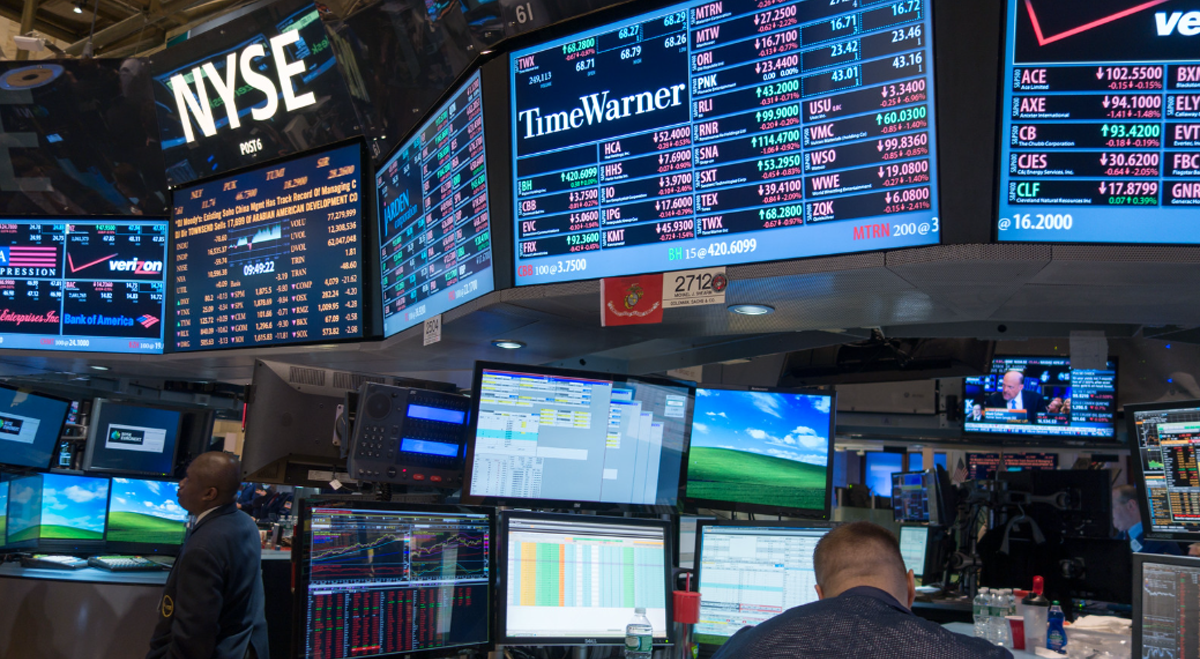
    U.S. stock futures were trading in positive territory early Tuesday as the conflict involving Iran continued to shape global market sentiment.

    At 03:29 ET, Dow futures were up 333 points, or 0.7%, S&P 500 futures had added 42 points, or 0.7%, and Nasdaq 100 futures rose 137 points, or 0.6%.

    Monday’s trading session on Wall Street ended unevenly. The S&P 500 and Nasdaq Composite both finished lower, while the Dow Jones Industrial Average managed a small gain.

    Earlier optimism had lifted equities after President Trump wrote on social media that negotiations with Iran were making “great progress.” At the same time, he reiterated that the United States could strike Iranian power plants and other key infrastructure if talks fail to reopen the Strait of Hormuz.

    “While Trump and the White House are trying to put a very positive spin on the state of negotiations, investors are paying much more attention to actual developments in the war,” analysts at Vital Knowledge said in a note to clients.

    Fighting in the Middle East has intensified in recent days, with continued air strikes and the involvement of Iran-aligned Houthi forces in Yemen. The widening conflict has heightened concerns over potential disruptions to global oil shipping routes. Tehran has also rejected Washington’s claims about progress in talks and largely dismissed a 15-point U.S. peace proposal.

    Trump reportedly considering ending Iran campaign without reopening Hormuz

    According to a report by the Wall Street Journal, Trump has told advisers he could wrap up the military campaign against Iran even if the Strait of Hormuz remains mostly closed.

    Officials cited by the newspaper said attempts to fully reopen the waterway would likely extend the conflict beyond the four-to-six-week timeframe initially envisioned by the administration. Instead, Washington may aim to scale down hostilities after achieving major objectives such as weakening Iran’s naval forces and limiting its missile arsenal.

    The U.S. would then attempt to persuade Iran diplomatically to restore access to the strait. If that approach fails, Washington may encourage European and Gulf allies to take the lead in reopening the key shipping route.

    The Strait of Hormuz has become a focal point of the U.S.-Israel confrontation with Iran. Tehran has effectively obstructed the channel using naval mines and missile strikes. The passage is critical to global energy markets, carrying roughly 20% of the world’s oil consumption.

    Oil holds above $110

    Disruptions to traffic through the strait have triggered a sharp rise in global energy prices over the past several weeks.

    Brent crude, the global benchmark, has surged above $110 per barrel, compared with around $70 before the conflict began. On Tuesday, May Brent futures were up 0.5% at $113.39 per barrel.

    Adding further pressure to prices, a Kuwaiti tanker caught fire near Dubai after what the vessel’s owner said was an Iranian attack. Since the conflict began in late February, Iran has targeted energy facilities across the Persian Gulf, raising fears of supply disruptions affecting countries in both Asia and Europe.

    Meanwhile, Iran’s parliament has reportedly approved an early proposal to impose a toll on ships transiting the Strait of Hormuz, according to the semi-official Fars news agency.

    “A toll or selective access through Hormuz would keep a persistent risk premium in oil, as flows could be curtailed at short notice, while higher insurance and freight costs lift delivery prices even without a full shutdown,” analysts at ING said in a note.

    JOLTS report in focus

    On the economic calendar, markets will be watching the latest Job Openings and Labor Turnover Survey (JOLTS) from the United States, widely viewed as a gauge of labor demand.

    Economists expect the report to show 6.89 million job openings in February, slightly lower than 6.946 million in January.

    Although the data largely covers a period before the escalation of tensions in the Middle East, it remains an important measure of labor market strength before the geopolitical shock. The report will also serve as a lead-in to Friday’s more comprehensive March nonfarm payrolls report.

    Officials at the Federal Reserve will closely monitor the employment data, particularly as inflation pressures begin to build. Employment and inflation remain the two key pillars guiding the Fed’s policy decisions.

    Eurozone inflation data ahead

    Investors are also awaiting Eurozone inflation figures for March, which could provide further insight into the economic consequences of the Middle East conflict.

    Europe relies heavily on natural gas imports from Gulf countries, especially Qatar, where production facilities have reportedly been targeted by Iranian air strikes.

    Officials at the European Central Bank (ECB) have indicated that rate hikes could be considered if higher energy costs revive inflation across the currency bloc. ECB President Christine Lagarde has said policymakers may still need to act even if price pressures prove temporary.

    Economists expect headline inflation to reach 2.6% in March, up from 1.9% in February. The ECB’s medium-term inflation target remains 2.0%.

    Expectations of a possible ECB rate increase have pushed European government bond yields higher in recent sessions, although they were largely stable ahead of Tuesday’s inflation release. Bond yields typically move in the opposite direction to bond prices.

  • European stocks trade cautiously as Iran war continues and inflation data approaches: DAX, CAC, FTSE100

    European stocks trade cautiously as Iran war continues and inflation data approaches: DAX, CAC, FTSE100

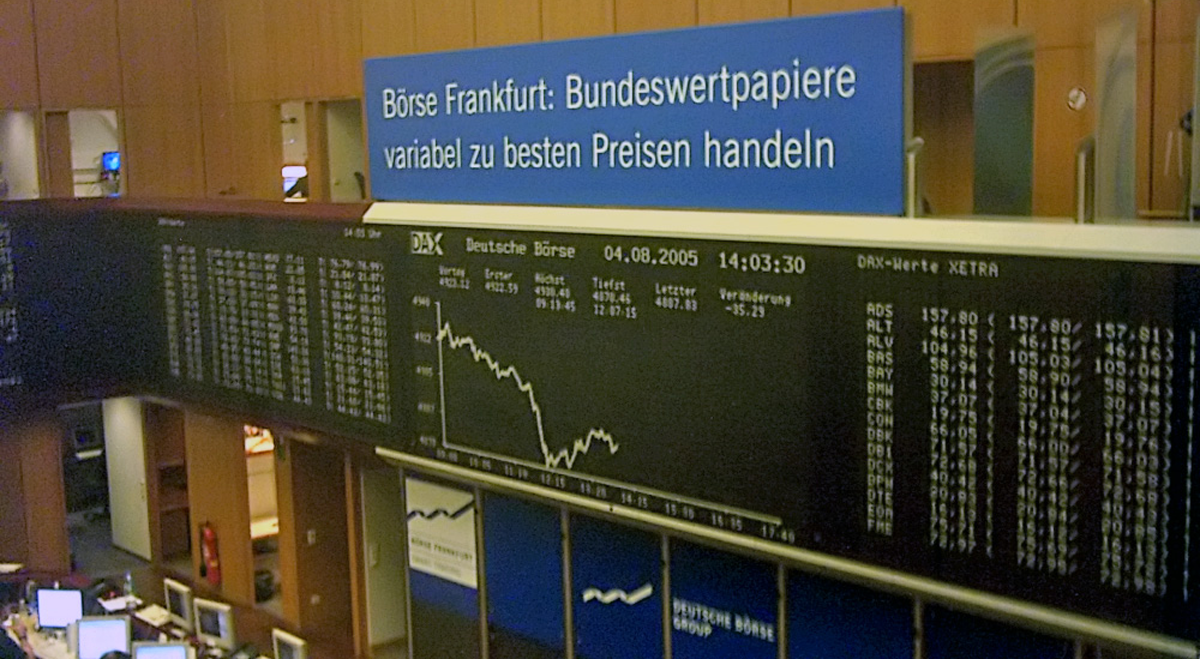
    European equity markets moved in a narrow range on Tuesday, hovering close to flat even as oil prices continued their sharp surge. Sentiment was somewhat supported by reports that U.S. President Donald Trump may be prepared to wind down the conflict with Iran even if the Strait of Hormuz remains largely closed.

    By 07:10 GMT, the pan-European Stoxx 600 index was up about 0.1%. Germany’s DAX had gained 0.2%, the UK’s FTSE 100 edged 0.1% higher, and France’s CAC 40 was broadly unchanged.

    According to a report from the Wall Street Journal, Trump has signaled openness to bringing the more than month-long military campaign against Iran to a close even if Tehran maintains effective control over the Strait of Hormuz. The strategic waterway carries roughly one-fifth of global oil shipments, and its disruption for several weeks has triggered a sharp rise in energy prices while increasing recession concerns worldwide.

    Brent crude futures, the global benchmark for oil, were trading above $110 per barrel, compared with roughly $70 before the conflict began.

    The report said Trump and his advisers concluded that a full effort to reopen the strait would extend the military campaign beyond the four-to-six-week timeframe initially envisioned. Instead, the administration has reportedly opted to target Iran’s naval forces and missile capabilities while seeking to gradually reduce hostilities and intensify diplomatic pressure on Tehran. U.S. officials added that Washington could also rely on European and Gulf allies to address the strait if negotiations fail.

    Markets may receive additional signals about the economic consequences of the Middle East conflict later in the day with the release of Eurozone inflation figures for March. The regional conflict, which has expanded beyond a joint U.S.–Israeli offensive against Iran to involve several countries across the Middle East, has raised concerns about energy supply disruptions.

    Europe depends heavily on natural gas imports from Gulf countries, particularly Qatar, where energy infrastructure has reportedly been targeted in Iranian air strikes.

    Officials at the European Central Bank (ECB) have indicated that interest rate increases may become necessary if the surge in energy prices reignites inflation across the Eurozone. ECB President Christine Lagarde has suggested policymakers may still need to respond even if the rise in prices proves temporary.

    Economists currently forecast that headline consumer inflation in the Eurozone will increase to 2.6% in March, up from 1.9% in February. The ECB’s medium-term inflation objective remains 2.0%.

    Anticipation of potential ECB tightening has pushed European government bond yields higher in recent sessions, although yields were largely steady ahead of Tuesday’s inflation release. Bond yields typically move in the opposite direction of bond prices.

  • FTSE 100 today: UK shares inch higher as Trump reportedly signals Iran conflict wind-down

    FTSE 100 today: UK shares inch higher as Trump reportedly signals Iran conflict wind-down

    UK equities moved slightly higher on Tuesday after reports that U.S. President Donald Trump may be open to ending military operations against Iran even if the Strait of Hormuz remains largely closed. The pound strengthened modestly, while European markets showed mixed performance. Meanwhile, fresh data confirmed the UK economy expanded by 0.1% quarter-on-quarter in the final quarter of 2025.

    By 07:25 GMT, the benchmark FTSE 100 index was up about 0.2%, while the pound gained 0.1% against the dollar, with GBP/USD trading near 1.3202. In continental Europe, Germany’s DAX advanced 0.1%, whereas France’s CAC 40 slipped 0.2%.

    According to a report from the Wall Street Journal, Trump has told senior officials he would consider concluding military operations against Iran even if the Strait of Hormuz remains largely obstructed. The report said the administration believes attempting to fully reopen the strategic shipping route could extend the conflict well beyond the preferred four-to-six-week timeframe. Officials indicated the White House may now favour scaling back hostilities after achieving key objectives, including weakening Iran’s naval forces and reducing its missile capabilities.

    UK economic update

    Final GDP figures released Tuesday showed the UK economy grew by 0.1% quarter-on-quarter in Q4 2025, matching the preliminary estimate. The data indicated that public sector activity increased while private sector output declined during the period.

    Consumer spending rose only 0.1% quarter-on-quarter, revised down from an earlier estimate of 0.2%. Business investment fell 2.5%, slightly better than the previous estimate of a 2.7% decline. Net trade reduced GDP growth by 0.5 percentage points. After rounding adjustments, overall economic growth for 2025 was revised slightly higher to 1.4%, up from the previously reported 1.3%.

    Corporate news roundup

    Raspberry Pi Holdings PLC (LSE:RPI) reported a 25% increase in full-year adjusted EBITDA, supported by resilient demand despite higher product prices linked to rising memory costs. The Cambridge-based computing platform developer recorded adjusted EBITDA of $46.4 million for the year ended December 31, 2025, compared with $37.2 million a year earlier. Revenue climbed 25% to $323.2 million, up from $259.5 million.

    A.G.Barr PLC (LSE:BAG) delivered adjusted pretax profit of £65.8 million for the year ended January 31, representing a 12.5% increase from the previous year and slightly exceeding analysts’ expectations of £65.4 million, according to LSEG data. Revenue rose 4% to £437.3 million, while adjusted earnings per share reached 44.24 pence. The maker of Irn-Bru said growth in energy and health drinks helped offset higher costs linked to the Middle East conflict.

    Severfield PLC (LSE:SFR) said it expects pretax profit for the financial year ending March 2026 to come in around £10.2 million, broadly matching market forecasts. The structural steel specialist also reported net debt of about £28 million, significantly below the consensus estimate of £48.5 million, reflecting strong cash management.

    Future PLC (LSE:FUTR) lowered its full-year outlook by 15% to 20% as the company adjusts to a sharper-than-expected drop in traffic originating from Google. The Bath-based media group said direct advertising revenue should still grow year-on-year, while declines at Go.Compare and its B2B segment moderated during the first half and are expected to turn to growth in the second half.

    Hilton Food Group Plc (LSE:HFG) reported full-year adjusted pretax profit of £73 million for fiscal 2025, in line with previous guidance. The food packaging and supply specialist reiterated its FY26 adjusted PBT forecast of £60–65 million and announced a strategic review aimed at strengthening its core red meat operations while improving efficiency and margins.

    3i Infrastructure PLC (LSE:3IN) also released a portfolio update covering the period from October 1, 2025, to March 30, 2026, stating it remains on track to meet its full-year return objective. The company expects portfolio returns of 8–10%, with strong performance from FLAG supported by continued demand for subsea data connectivity driven by AI workloads.

  • Early Bargain Buying Could Lift Wall Street After Last Week’s Drop: Dow Jones, S&P, Nasdaq, Futures

    Early Bargain Buying Could Lift Wall Street After Last Week’s Drop: Dow Jones, S&P, Nasdaq, Futures

    U.S. stock index futures are pointing to a stronger start on Monday, indicating that equities may attempt to recover some of the losses recorded during last week’s sharp decline.

    Part of the early strength could come from bargain hunters stepping in after the recent selloff, as some investors look to accumulate shares that have fallen to lower price levels.

    The downturn last week pushed the major U.S. indices to their weakest closing levels in more than eight months.

    Market sentiment may also get a boost from optimistic remarks by President Donald Trump regarding the ongoing conflict in the Middle East.

    In a Truth Social post earlier today, Trump said the United States had made “great progress” in discussions with a “new, and more reasonable, regime” aimed at ending military operations in Iran.

    At the same time, Trump warned that if an agreement is not reached soon, the United States will “conclude our lovely ‘stay’ in Iran by blowing up and completely obliterating all of their Electric Generating Plants, Oil Wells and Kharg Island (and possibly all desalinization plants!)”.

    Even so, gains could remain limited as crude oil prices continue to move higher amid ongoing concerns about the economic fallout from the Middle East conflict.

    Stocks posted sharp losses during Friday’s session, extending declines from the previous trading day. The major indices fell early in the session and continued sliding deeper into negative territory as trading progressed.

    Although the market recovered somewhat from the day’s lows toward the close, the main averages still ended the session with sizeable losses. The Nasdaq fell 459.72 points, or 2.2%, to 20,948.36, the Dow dropped 793.47 points, or 1.7%, to 45,166.64, and the S&P 500 declined 108.31 points, or 1.7%, finishing at 6,368.85.

    For the week overall, the Nasdaq lost 3.2%, the S&P 500 declined 2.1%, and the Dow slipped 0.9%. These declines pushed the major averages to their lowest closing levels in more than eight months.

    The continued rally in oil prices weighed on investor sentiment. Brent crude futures climbed back above $110 per barrel after rising by more than 5% during Thursday’s trading session.

    The extended rise in oil prices came despite President Trump extending by 10 days the pause on potential attacks against Iran’s energy infrastructure, moving the deadline to April 6.

    Trump said in another Truth Social post that negotiations with Iran were “going very well,” although Iranian state media reported that Tehran had “responded negatively” to a U.S. peace proposal.

    “Comments from Washington and Tehran about a potential peace process seem to come from parallel worlds, with the former indicating talks are going well while the latter effectively denies talks are even happening,” said AJ Bell investment director Russ Mould.

    “For now, fighting continues and the path out of the current crisis remains unclear,” he added. “Oil prices, probably the best indicator, remain elevated and have reached $110 per barrel again.”

    Mould also warned that if crude prices remain elevated for an extended period, fears of renewed inflationary pressure could intensify.

    Airline stocks were among the worst performers on Friday, sending the NYSE Arca Airline Index down 4.7%.

    Biotechnology, software, and computer hardware companies also experienced notable declines, contributing to the heavy losses in the technology-focused Nasdaq.

    Financial, retail, and healthcare stocks also moved significantly lower, while gold-related shares resisted the broader downturn as the price of the precious metal surged.

  • European Stocks Recover After Recent Losses: DAX, CAC, FTSE100

    European Stocks Recover After Recent Losses: DAX, CAC, FTSE100

    European equities traded mostly higher on Monday, rebounding after declines recorded in the previous two trading sessions.

    With the joint U.S.-Israeli military campaign in Iran entering its second month, French central bank governor François Villeroy de Galhau said the European Central Bank stands ready to intervene if necessary, though he emphasized that it is still too early to discuss the timing of potential interest rate increases.

    Oil markets also remained in focus, with Brent crude rising about 2% during European trading as efforts to resolve the month-long conflict in the Middle East have yet to produce meaningful progress.

    Among the major indices, the U.K.’s FTSE 100 climbed 1.1%, while France’s CAC 40 and Germany’s DAX each advanced around 0.4%.

    Shares of Italian automaker Stellantis (BIT:STLAM) moved slightly higher after the company confirmed the extension and expansion of its long-standing collaboration with Palantir Technologies.

    GSK (LSE:GSK) also posted gains after its asthma treatment Exdensur received regulatory approval in China.

    Mining giant Rio Tinto (LSE:RIO) rose in London trading as well, after the company reported that three of its four Pilbara iron ore port terminals had resumed operations following the passage of Tropical Cyclone Narelle across Western Australia’s Pilbara region.

    By contrast, shares of INWIT (BIT:INW) declined after Telecom Italia decided not to proceed with renewing a mobile network agreement with the tower infrastructure group.

  • FTSE 100 rises as UK stocks gain; Trump cites Iran “progress” but warns of possible strikes

    FTSE 100 rises as UK stocks gain; Trump cites Iran “progress” but warns of possible strikes

    UK equities moved higher on Monday, lifted by strength in commodity-related shares, even as geopolitical uncertainty persisted with tensions in the Middle East continuing into another week.

    U.S. President Donald Trump said there had been “progress” in potential negotiations with Iran, but cautioned that Washington could carry out strikes against several targets if a deal is not reached soon.

    In a post on Truth Social, Trump said the United States was engaged in “serious discussions with A NEW, AND MORE REASONABLE, REGIME to end out Military Operations in Iran,” adding that “great progress has been made.”

    By 12:23 GMT, London’s benchmark FTSE 100 index was up more than 1%, while the British pound slipped 0.2% against the dollar to 1.3232. Elsewhere in Europe, Germany’s DAX rose 0.2% and France’s CAC 40 gained 0.4%.

    UK roundup

    Mortgage borrowing by UK households increased in February, with net borrowing reaching £4.8 billion, up from £4.2 billion in January, according to figures released Monday by the Bank of England. The total surpassed the previous six-month average of £4.5 billion.

    Net approvals for mortgages used to purchase homes rose to 62,600 in February from 60,200 a month earlier, although the figure remained slightly below the six-month average of about 63,500. Remortgage approvals also climbed, increasing to 41,200 from 38,500 in January.

    The annual growth rate for net mortgage lending ticked up to 3.4% in February, compared with 3.3% the previous month. Gross secured lending rose to £23.9 billion from £23.6 billion, while repayments declined to £18.4 billion from £18.8 billion.

    In corporate developments, shares of CVS Group Plc (LSE:CVSG) dropped more than 2% after the veterinary services provider said Chief Executive Officer Richard Fairman plans to step down for personal reasons. Fairman, who joined the company as chief financial officer in 2018 and became CEO in 2019, will remain in the role until a successor is appointed. The board said it will launch a search process to identify the next leader of the UK-listed group.

    Debenhams Group, previously known as Boohoo Group PLC (LSE:DEBS), reported adjusted EBITDA of £53 million for the fiscal year ending February 28, 2026. The result exceeded prior guidance of £50 million and represented a 36% year-on-year increase. The company also upgraded its outlook for fiscal 2027, forecasting double-digit growth in adjusted EBITDA.

    Separately, the UK government imposed a £390,000 ($516,000) penalty on Apple Inc.’s (NASDAQ:AAPL) subsidiary Apple Distribution International Ltd for breaching sanctions related to Russia. In a notice released Monday, authorities said the company made funds available to a sanctioned individual without the required licence through two payments carried out in 2022.

  • Oil rises, futures advance as Iran war enters second month — what’s driving markets: Dow Jones, S&P, Nasdaq, Wall Street Futures

    Oil rises, futures advance as Iran war enters second month — what’s driving markets: Dow Jones, S&P, Nasdaq, Wall Street Futures

    Futures tied to the major U.S. stock indices moved higher, as investors tried to assess the outlook for the expanding conflict in the Middle East. Oil prices remained above $100 a barrel amid reports of U.S. troop movements in the region and speculation that President Donald Trump is weighing a possible operation to remove uranium from Iran. At the same time, Trump signaled progress in discussions with Tehran and hinted that an agreement to end the fighting might be within reach.

    Futures move higher

    U.S. stock futures edged upward on Monday as the conflict with Iran entered its second month, leaving markets uncertain about how the situation could evolve.

    By 03:30 ET, Dow futures had gained 93 points, or 0.2%. S&P 500 futures rose 18 points, or 0.3%, while Nasdaq 100 futures climbed 62 points, also up 0.3%.

    Wall Street’s main indices had fallen in the previous session despite President Trump extending the deadline for Iran to reopen the Strait of Hormuz until April 6. The U.S. had warned that failure to comply could result in strikes against energy infrastructure.

    “[M]arkets remain very much on edge about the Middle East, and the consensus view is still that the conflict is set to escalate,” analysts at Vital Knowledge wrote in a note to clients.

    Brent oil climbs

    With tensions continuing to build in the Middle East, the Wall Street Journal reported that Trump is considering a complicated and potentially risky military plan aimed at extracting nearly 1,000 pounds of uranium from Iran.

    Meanwhile, troops from the U.S. 31st Marine Expeditionary Unit have reportedly been deployed to the region, a step seen as giving the president more strategic options as he evaluates the next stage of the war. According to the Washington Post, the Pentagon is preparing for the possibility of several weeks of ground operations inside Iran.

    Tehran has warned that it will destroy any American forces attempting to carry out a ground incursion.

    Over the weekend, at least 12 U.S. service members were injured in Iranian strikes on an air base in Saudi Arabia. Iran-aligned Houthi fighters in Yemen also entered the conflict for the first time, launching attacks on Israel and raising concerns about potential disruptions to major global energy routes.

    Analysts at Vital Knowledge warned that if the Houthis target the Bab al-Mandab Strait, the global shipping disruption already triggered by the effective closure of the Strait of Hormuz off Iran’s southern coast could be “dramatically amplif[ied].” The Bab al-Mandab Strait is a key maritime chokepoint linking the Red Sea with the Gulf of Aden and the Indian Ocean.

    By 03:45 ET, Brent crude futures had risen 3.3% to $108.77 per barrel.

    Trump says Iran negotiations going “well”

    Trump indicated that talks with Iran could be underway and suggested that a diplomatic agreement might be close.

    Speaking to reporters aboard Air Force One, the president said negotiations were going “extremely well” and maintained that an agreement with Tehran remained possible. He also referred to “regime change” in Iran following U.S. strikes that killed several senior Iranian officials in recent weeks.

    “I think we’ll make a deal with them, but it’s possible we won’t,” Trump said. Responding to a reporter’s question, he added: “I do see a deal with Iran, could be soon,” though he did not provide a timeline.

    Iranian officials have largely denied that direct negotiations with Washington have taken place since the war began, insisting that hostilities must end before any talks can occur.

    As has often been the case throughout the conflict, Trump’s remarks were accompanied by mixed signals. Alongside reports of a possible U.S. uranium extraction plan, the president told the Financial Times that he wants to take control of Iran’s oil and could even seize Kharg Island, one of the country’s main export hubs.

    “Maybe we take Kharg Island, maybe we don’t. We have a lot of options,” Trump told the FT.

    Gold edges higher

    Gold prices ticked higher on Monday following a volatile week. Spot gold rose 0.8% to $4,527.01 an ounce by 03:55 ET, while gold futures increased 0.7% to $4,555.05 an ounce. Spot gold had dropped to around $4,000 an ounce last week before rebounding to near $4,500 by Friday.

    Analysts at OCBC said the rebound from last week’s lows appeared largely technical. Gold had previously fallen as much as 20% from levels seen before the outbreak of the Iran conflict in late February.

    They noted that bearish momentum appeared to be easing, with the metal’s relative strength index moving out of oversold territory.

    However, they cautioned that it remains uncertain whether the recovery can continue, highlighting resistance levels for spot gold at $4,624, $4,670 and $4,850 per ounce.

    U.S. data in focus this week

    Investors are also preparing for several economic reports this week that could shed light on how the conflict with Iran is affecting the broader U.S. economy.

    A fresh reading on U.S. manufacturing activity for March from the Institute for Supply Management is due on Wednesday. Economists expect the index to decline slightly while remaining in expansion territory.

    Attention will then shift to Friday’s U.S. employment report. Economists forecast that the economy added about 56,000 jobs in March, rebounding from a loss of 92,000 in February. The unemployment rate is expected to remain steady at 4.4%.

    The nonfarm payrolls report will likely attract particularly close attention, as it may influence how Federal Reserve officials approach monetary policy in the coming months.

    “In terms of the U.S. data this week, the focus will be on the labor market,” analysts at ING said in a note. “Friday’s NFP release, […] should leave the market minded to price [Fed] tightening this year in response to the energy shock. Any surprise weakness could hit the dollar.”

  • European stocks search for direction as Iran war enters second month: DAX, CAC, FTSE100

    European stocks search for direction as Iran war enters second month: DAX, CAC, FTSE100

    European equity markets opened Monday without a clear trend, while oil prices climbed again as the joint U.S.-Israeli conflict with Iran moved into its second month.

    At around 08:10 GMT, the pan-European Stoxx 600 was largely flat, with France’s CAC 40 also little changed. Germany’s DAX slipped 0.2%, while the UK’s FTSE 100 edged 0.2% higher.

    As fighting in the Middle East continues, media reports indicate that President Donald Trump is weighing a complex and potentially risky military mission aimed at removing nearly 1,000 pounds of uranium from Iran.

    At the same time, troops from the U.S. 31st Marine Expeditionary Unit have been deployed to the region, a step reportedly intended to give Trump additional military options as he considers the next stage of the conflict. According to a Washington Post report, the Pentagon is preparing for the possibility of several weeks of ground operations inside Iran.

    Tehran has responded by warning it would destroy any U.S. forces attempting to launch a ground invasion.

    Over the weekend, at least 12 U.S. service members were injured in Iranian attacks on an air base in Saudi Arabia. Yemen’s Houthi rebels also entered the conflict for the first time, launching strikes against Israel and intensifying concerns about potential disruptions to major global energy routes.

    Analysts at Vital Knowledge warned that if the Houthis were to target the Bab al-Mandab Strait, the impact of the global shipping disruption already caused by the effective closure of the Strait of Hormuz off Iran’s southern coast could be “dramatically amplif[ied].” The Bab al-Mandab Strait is a critical maritime chokepoint connecting the Red Sea with the Gulf of Aden and the Indian Ocean.

    Last week, Trump extended a deadline until April 6 for Iran to reopen the Strait of Hormuz or risk U.S. missile strikes on power facilities. Despite the extension, investors remain cautious as uncertainty persists over the direction of the conflict and its broader implications for the global economy. Equity markets declined last week, bond yields moved higher, and Brent crude—the international oil benchmark—remained above $100 per barrel.

    By 03:09 ET on Monday, Brent crude had climbed 3.0% to $108.55 per barrel.

    Although rising oil prices have raised fears that higher energy costs could trigger renewed inflation and force governments and central banks to respond with tighter policy, markets do not appear to be “too concerned, yet, about fiscal and inflation risks,” according to Thomas Mathews, Head of Markets, Asia Pacific, at Capital Economics.

    However, Mathews noted in a research note that “[t]he war’s effects on markets may continue to elude an easy solve.”

  • Oil price surge threatens to keep pressure on Wall Street: Dow Jones, S&P, Nasdaq, Futures

    Oil price surge threatens to keep pressure on Wall Street: Dow Jones, S&P, Nasdaq, Futures

    U.S. stock futures indicate a lower start for markets on Friday, pointing to potential additional losses after equities dropped sharply in the previous trading session.

    A renewed jump in crude oil prices is expected to weigh on investor sentiment. Global benchmark Brent crude has climbed back above $110 per barrel after gaining more than 5% during Thursday’s trading.

    The extended rally in oil prices comes even after President Donald Trump announced a 10-day extension to the pause on potential attacks targeting Iran’s energy infrastructure, pushing the deadline to April 6.

    In a post on Truth Social, Trump said negotiations with Iran are “going very well,” though Iranian state media reported that Tehran had “responded negatively” to a peace proposal from the United States.

    “Comments from Washington and Tehran about a potential peace process seem to come from parallel worlds, with the former indicating talks are going well while the latter effectively denies talks are even happening,” said AJ Bell investment director Russ Mould.

    “For now, fighting continues and the path out of the current crisis remains unclear,” he added. “Oil prices, probably the best indicator, remain elevated and have reached $110 per barrel again.”

    Mould also cautioned that if crude prices remain elevated for an extended period, concerns about a meaningful return of inflationary pressures could intensify.

    Markets tumble in prior session

    Stocks had already been under pressure earlier on Thursday and continued to decline as the session progressed, ultimately closing sharply lower. The sell-off pushed both the Nasdaq and the S&P 500 to their lowest closing levels since early September of last year.

    The main indexes finished slightly above their intraday lows. The Nasdaq dropped 521.74 points, or 2.4%, to 21,408.08, the S&P 500 lost 114.74 points, or 1.7%, to close at 6,477.16, and the Dow Jones Industrial Average fell 469.38 points, or 1%, ending at 45,960.11.

    Thursday’s decline continued the recent back-and-forth trading pattern, as markets reacted to sharp swings in crude oil prices.

    Brent crude, the international oil benchmark, surged more than 5% after falling by over 2% during Wednesday’s session.

    The rebound in oil prices reflects ongoing uncertainty around efforts to secure peace in the Middle East. Iran rejected a U.S. proposal aimed at pausing the conflict, stating that any ceasefire would occur only according to Tehran’s own terms and schedule.

    In a Truth Social post, President Donald Trump described Iranian negotiators as “very different” and “strange,” while also claiming they are “begging” the U.S. to strike a deal.

    “They better get serious soon, before it is too late, because once that happens, there is NO TURNING BACK, and it won’t be pretty!” Trump warned.

    Escalation concerns add to market anxiety

    Investor worries were also heightened after several Gulf nations issued a joint statement condemning Iran’s “criminal” attacks on their energy infrastructure.

    The statement, released by the United Arab Emirates, Kuwait, Bahrain, Saudi Arabia, Qatar and Jordan, specifically cited attacks carried out by Iran-aligned armed factions operating from Iraqi territory.

    “While we value our fraternal relations with the Republic of Iraq, we call on the Iraqi government to take the necessary measures to immediately halt the attacks launched by factions, militias, and armed groups from Iraqi territory toward neighboring countries,” the statement said.

    The Gulf states also reaffirmed their right to defend themselves and their right to “take all necessary measures to safeguard our sovereignty, security, and stability.”

    Tech and cyclical sectors lead losses

    Technology-related shares were among the biggest losers of the session, with computer hardware, semiconductor and networking companies posting notable declines that weighed heavily on the tech-focused Nasdaq.

    Outside the technology sector, gold mining companies also dropped sharply as bullion prices fell, pulling the NYSE Arca Gold Bugs Index down by 3.7%.

    Steelmakers, homebuilders and airline stocks also recorded significant losses, while oil producers moved higher alongside the surge in crude prices.

  • European Stocks Decline as Middle East Conflict Concerns Weigh on Markets: DAX, CAC, FTSE100

    European Stocks Decline as Middle East Conflict Concerns Weigh on Markets: DAX, CAC, FTSE100

    European equities moved lower again on Friday as investors remained concerned that a prolonged conflict in the Middle East could drive inflation higher and slow global economic growth.

    Although the Trump administration extended its pause on military strikes against Iran by an additional 10 days, reports that the Pentagon may deploy another 10,000 troops to the region have raised concerns about the potential for further escalation.

    On the economic front, new data from the Office for National Statistics showed that U.K. retail sales fell in February, marking the first monthly decline in three months, though the drop was smaller than economists had expected.

    Seasonally adjusted retail sales volumes decreased 0.4 percent month over month in February, reversing January’s 2.0 percent increase, which had been the strongest monthly gain since May 2024.

    Compared with the same month a year earlier, retail sales growth slowed to 2.5 percent in February from 4.8 percent in January.

    Across European markets, Germany’s DAX index was down 1.4 percent, France’s CAC 40 declined 0.8 percent, and the U.K.’s FTSE 100 slipped 0.4 percent.

    Among individual companies, AstraZeneca (LSE:AZN) shares advanced after the company announced that its experimental drug tozorakimab achieved its primary endpoint in two late-stage clinical trials.

    French drinks group Pernod Ricard (EU:RI) also moved higher after confirming it is in merger discussions with Jack Daniel’s producer Brown-Forman (NYSE:BF.A).

    Meanwhile, shares of GSK (LSE:GSK) declined after the pharmaceutical company said the European Medicines Agency had accepted its marketing authorization application for the drug bepirovirsen.