Category: Market Summary

  • U.S. holiday leaves Wall Street quiet as weaker jobs data lifts global markets: Dow Jones, S&P, Nasdaq, Futures

    U.S. holiday leaves Wall Street quiet as weaker jobs data lifts global markets: Dow Jones, S&P, Nasdaq, Futures

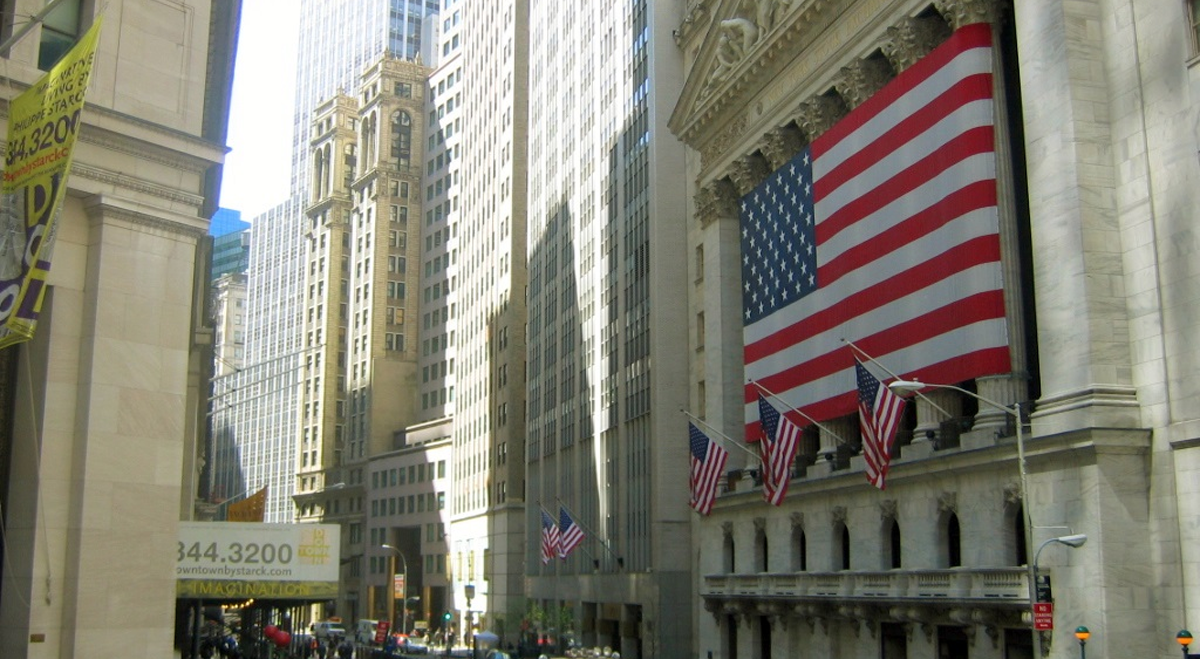
    U.S. financial markets will remain closed on Friday for the Independence Day holiday, but futures pointed to a firmer start when trading resumes. Softer-than-expected U.S. employment figures reduced expectations of an imminent Federal Reserve rate increase, helping Asian equities recover after recent losses. Investors also monitored gains among Tesla’s (NASDAQ:TSLA) Chinese suppliers and stronger-than-forecast activity in China’s services sector.

    Softer payrolls ease pressure on the Federal Reserve

    Wall Street futures strengthened after June’s labour market report suggested the U.S. economy is cooling, reducing expectations that policymakers will tighten monetary policy later this month.

    At 03:11 ET (07:11 GMT), Dow Jones futures were up 148 points, or 0.3%, S&P 500 futures had gained 30 points, or 0.4%, while Nasdaq 100 futures advanced 278 points, or 0.9%.

    The major U.S. indices ended Thursday’s shortened trading week with mixed performances. Treasury markets were relatively stable, with benchmark 10-year yields holding steady while two-year yields edged slightly lower.

    The latest Labour Department figures showed that job creation slowed more than economists had expected in June. Although the unemployment rate fell to a one-year low of 4.2%, investors interpreted the report as reducing the likelihood of another immediate interest rate increase. Earlier comments from Federal Reserve Chair Kevin Warsh, who suggested inflation risks had eased, reinforced that view.

    Deutsche Bank analysts noted that market-implied odds of a July rate hike dropped from 34% on Tuesday to just 18% by Thursday’s close.

    “Moreover, just 30 [basis points] of hikes are now priced in by the December meeting, the fewest since the Fed meeting a couple of weeks ago when the dot plot surprised in a hawkish direction,” they added.

    Technology stocks lead Asian rebound

    Asian stock markets posted broad gains as investors returned to technology shares following heavy selling earlier in the week.

    Semiconductor companies led the advance after concerns over artificial intelligence infrastructure spending had previously triggered widespread profit-taking.

    Samsung Electronics was among the session’s strongest performers after reports that Anthropic, the developer behind Claude Code, is considering developing its own AI processor with the South Korean chipmaker.

    The positive news helped South Korea’s KOSPI recover after two consecutive declines, while Japan’s Nikkei 225 and Singapore’s STI also closed higher.

    Chinese Tesla suppliers jump after delivery surprise

    Shares in several Chinese suppliers to Tesla (NASDAQ:TSLA) rose sharply after the electric vehicle manufacturer reported stronger-than-expected second-quarter deliveries, improving confidence that demand may be stabilising.

    Auto component manufacturers Ningbo Xusheng, Ningbo Tuopu and Zhejiang Sanhua all gained between 5% and 9%.

    Tesla delivered a record 480,126 vehicles during the quarter, supported by robust European demand and modest sales growth in China.

    The launch of lower-priced Model 3 and Model Y variants, together with the refreshed Model Y, helped maintain sales momentum and reinforced China’s importance as both a manufacturing base and a major end market for Tesla.

    China’s services economy remains resilient

    China’s services sector expanded faster than expected in June, according to the latest private-sector survey.

    The RatingDog Services PMI eased slightly to 54.1 from 54.4 in May but remained comfortably ahead of market expectations of 53.0.

    With the index remaining above the 50-point threshold since January 2023, the survey continued to point to sustained expansion across the sector.

    Demand strengthened both domestically and internationally, while exports of services grew at their fastest pace since October 2024.

    Businesses also increased selling prices for the first time in four months as higher input costs, linked partly to supply disruptions in the Middle East, filtered through to customers.

    Hormuz transit fees remain under consideration

    Bloomberg News reported that some European policymakers are increasingly accepting that commercial vessels may eventually have to pay transit fees to Iran and Oman to pass through the Strait of Hormuz.

    People familiar with the discussions said some Gulf Arab officials also believe a service charge is likely to emerge, although no government has formally adopted that position.

    Questions remain over both the size of any future fees and the implications such charges could have for international maritime law.

    The Strait of Hormuz has remained at the centre of geopolitical tensions since Iran effectively closed the shipping route following the joint U.S.-Israeli military operation in late February. Although oil prices initially surged, they have since retreated to around pre-conflict levels after the United States and Iran reached an interim peace agreement.

  • European stocks hit fresh highs as weaker U.S. jobs data lifts sentiment: DAX, CAC, FTSE100

    European stocks hit fresh highs as weaker U.S. jobs data lifts sentiment: DAX, CAC, FTSE100

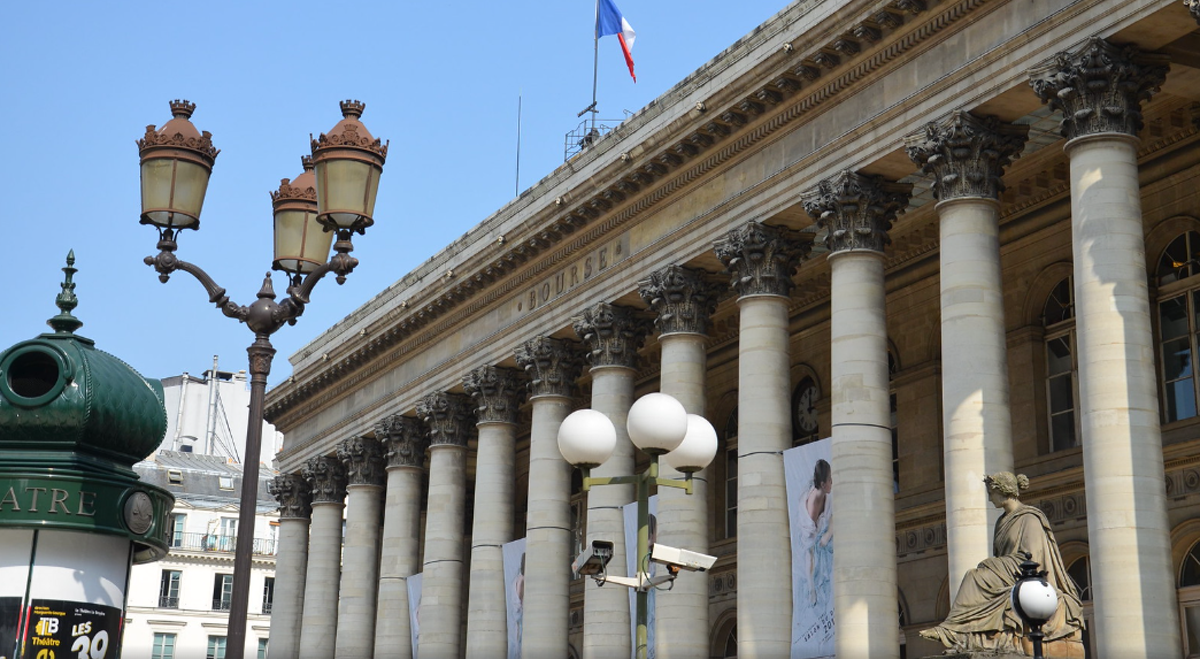
    European equity markets extended their record-setting advance on Thursday after weaker U.S. labour market data eased concerns over further near-term Federal Reserve interest rate increases, boosting investor confidence across the region.

    The pan-European STOXX 600 gained 0.5% in early trading, reaching another all-time high after also finishing at a record level in the previous session.

    Global risk appetite improved following a sharp slowdown in U.S. job creation. The softer employment figures helped calm concerns that sustained monetary tightening in the United States could further weigh on economic growth across Europe.

    A less aggressive Federal Reserve outlook is viewed as supportive for European assets because it reduces pressure on global borrowing costs, limits capital flows toward higher-yielding U.S. assets and gives the European Central Bank greater flexibility in managing its own monetary policy.

    Before the employment figures were released, traders had assigned more than a 60% probability to another Fed rate increase at the September meeting, according to CME FedWatch data. Those expectations had strengthened after recent comments from newly appointed Federal Reserve Chair Kevin Warsh. Following the payroll report, however, markets shifted their outlook, increasingly expecting policymakers to leave rates unchanged until at least October.

    ECB comments add further support

    Investor sentiment also benefited from remarks delivered during the European Central Bank’s annual forum in Sintra, Portugal.

    ECB President Christine Lagarde said that risks to euro area inflation and economic growth are becoming “more broadly balanced,” providing reassurance after last month’s 25-basis-point interest rate increase.

    The comments reinforced expectations that the ECB can continue managing its own policy path without being forced to closely mirror future Federal Reserve decisions.

    European equities head for strongest week in months

    The STOXX 600 remained on track to record its strongest weekly performance in almost two months.

    Market sentiment was also strengthened by further progress in negotiations between the United States and Iran.

    The improving geopolitical backdrop contributed to oil prices retreating toward pre-conflict levels while shipping activity continued to normalise, easing inflation pressures on European supply chains.

    Across the region, Germany’s DAX advanced 0.9% to another record high, France’s CAC 40 rose 0.3%, Italy’s FTSE MIB added 0.5%, and London’s commodity-focused FTSE 100 gained 0.3%.

    Among individual companies, Pirelli (BIT:PIRC) climbed 2% following reports that Czech investors are interested in acquiring part of Sinochem’s stake, while Auto1 Group (TG:AG1) gained 2% after J.P. Morgan added the shares to its positive catalyst watch list.

  • FTSE 100 advances as weak U.S. jobs data boosts rate-cut hopes and Iran talks remain on hold

    FTSE 100 advances as weak U.S. jobs data boosts rate-cut hopes and Iran talks remain on hold

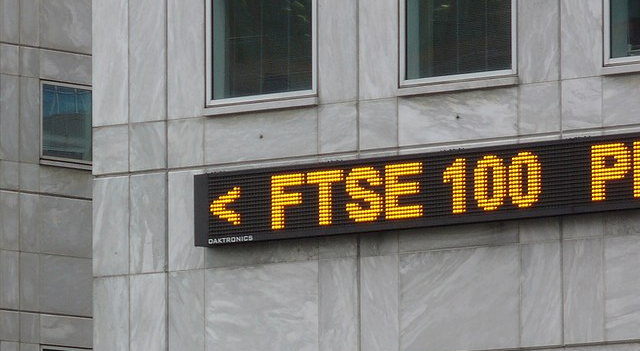
    UK equities moved higher on Friday after weaker-than-expected U.S. labour market data reinforced expectations that the Federal Reserve could take a less aggressive approach to interest rates. With U.S. markets closed for the Independence Day holiday, lighter trading volumes were also expected to increase volatility during the European afternoon.

    The FTSE 100 gained 0.29% by 03:23 ET (07:23 GMT). Germany’s DAX rose 0.75%, while France’s CAC 40 added 0.30%. Sterling strengthened 0.16% against the U.S. dollar to $1.3367. U.S. exchanges remained closed for the holiday, leaving European markets with reduced liquidity.

    The U.S. economy created 57,000 nonfarm payroll jobs in June, well below economists’ expectations of 113,000. Employment figures for April and May were also revised lower, reinforcing signs of a cooling labour market.

    Although the unemployment rate edged down to 4.2%, the decline was largely attributed to lower labour force participation rather than stronger hiring. Meanwhile, wage growth matched market forecasts.

    Negotiations between the United States and Iran have been temporarily suspended ahead of the state funeral of former Supreme Leader Ayatollah Ali Khamenei, whose body arrived at Tehran’s Grand Mosalla complex early on Friday.

    Official ceremonies are due to run from 4 July through 9 July, with Iranian officials expecting between 15 million and 20 million mourners to attend.

    Mediators from Qatar and Pakistan said discussions would resume “at the earliest possible time” once the commemorations have concluded. Iran’s Revolutionary Guard leadership also warned the U.S. and Israel against carrying out military action during the funeral procession, while Washington confirmed that a second Marine unit of more than 2,000 personnel has been deployed to the region.

    Shipping activity through the Strait of Hormuz continued to recover, reaching at least 258 vessel movements last week compared with 138 the previous week. However, traffic remains well below pre-conflict levels of around 130 ships per day.

    Prime minister-in-waiting Andy Burnham told LBC’s Andrew Marr that he would increase business rates on large out-of-town warehouses to help finance a 20% reduction in business rates for high street retailers.

    “I believe there is a case for higher business rates on warehouses,” he said, adding that he remained committed to Labour’s 2024 manifesto pledges on income tax, VAT and national insurance. Burnham also declined to identify his preferred chancellor before his expected confirmation on 20 July.

    In commodity markets, Brent crude rose 0.32% to $72.03 per barrel, while WTI crude gained 0.10% to $68.76. Gold prices climbed sharply as the weaker dollar boosted demand, with gold futures rising 1.39% to $4,183.65 an ounce and spot gold advancing 1.13% to $4,170.36.

  • U.S. payrolls in focus as futures slip, oil eases and chip stocks extend losses: Dow Jones, S&P, Nasdaq, Wall Street Futures

    U.S. payrolls in focus as futures slip, oil eases and chip stocks extend losses: Dow Jones, S&P, Nasdaq, Wall Street Futures

    U.S. stock futures traded lower on Thursday as investors awaited the release of the June non-farm payrolls report, a key economic indicator that could shape expectations for Federal Reserve policy. Falling oil prices and renewed weakness in semiconductor shares also weighed on market sentiment during the final trading session of the holiday-shortened week.

    Wall Street futures retreat ahead of key data

    As of 07:13 GMT, Dow Jones futures were down 95 points, or 0.2%, while S&P 500 futures fell 22 points, or 0.3%. Nasdaq 100 futures underperformed, dropping 250 points, or 0.8%.

    The previous session saw U.S. markets finish lower after semiconductor stocks came under renewed pressure. Reports that Meta Platforms is exploring ways to commercialise excess AI computing capacity added to concerns that demand for new chips could moderate.

    Federal Reserve Chair Kevin Warsh acknowledged that inflation risks have eased but maintained that it was too early to provide guidance on future interest rate decisions. Softer-than-expected private employment and manufacturing figures also prompted investors to reduce expectations of a near-term rate increase.

    Labour market figures could reshape Fed expectations

    The June non-farm payrolls report is expected to show that the U.S. economy added 114,000 jobs, down from 172,000 in May, while the unemployment rate is forecast to remain at 4.3%.

    Recent payroll reports have consistently exceeded expectations, reinforcing confidence in the labour market. However, weaker private-sector employment data released earlier this week has raised doubts about whether the Federal Reserve will need to tighten monetary policy further this year.

    Crude prices decline as diplomacy continues

    Oil prices continued to move lower after officials reported constructive progress in indirect negotiations between the United States and Iran.

    Although no agreement has yet been reached, comments from Qatar, President Donald Trump and Vice President JD Vance suggested discussions remain active, easing concerns over supply disruptions through the Strait of Hormuz.

    According to Deutsche Bank, “[T]he newsflow helped to bring oil prices down and ease investor concern about inflation.”

    Semiconductor sector under renewed pressure

    Technology shares across Asia weakened after reports suggested OpenAI had significantly improved the efficiency of its AI models, reducing demand for graphics processors, while Meta is evaluating a cloud platform offering spare AI computing capacity.

    The developments weighed on major chipmakers including Samsung Electronics, SK Hynix, Advantest, Tokyo Electron and Taiwan Semiconductor Manufacturing Co.

    U.S. set to introduce voluntary AI standards

    The Financial Times reported that the Trump administration may unveil voluntary guidelines for advanced artificial intelligence models as early as next week.

    The proposed framework would establish common benchmarks for evaluating frontier AI systems before launch, replacing the current case-by-case regulatory approach.

  • European stocks trade cautiously as central bank signals temper optimism: DAX, CAC, FTSE100

    European stocks trade cautiously as central bank signals temper optimism: DAX, CAC, FTSE100

    European equity markets were little changed on Thursday as investors weighed cautious comments from leading central bankers against regional economic data while awaiting the release of a closely watched U.S. employment report.

    The pan-European STOXX 600 hovered around 638.66 points in early trading after ending the previous session at its third-highest closing level on record. The benchmark gained more than 10% over the previous quarter.

    Trading across the region was subdued. Germany’s DAX slipped 0.2%, France’s CAC 40 added 0.3%, London’s FTSE 100 eased 0.1%, while Italy’s FTSE MIB traded broadly flat.

    Europe avoids technology-led sell-off

    Although technology stocks came under renewed pressure across Asian markets overnight, European equities proved relatively resilient.

    The region’s lower exposure to the world’s largest technology companies compared with U.S. and Asian markets helped cushion European indices from the latest weakness in the sector.

    However, that defensive positioning also meant European markets captured less of the powerful artificial intelligence-driven rally that propelled global equities to record highs during the previous quarter.

    Sintra comments reinforce cautious rate outlook

    Investor sentiment remained restrained following comments from policymakers attending the European Central Bank’s annual forum in Sintra, Portugal.

    Federal Reserve officials and ECB President Christine Lagarde indicated that while inflation risks are becoming more balanced, it remains too early to expect a rapid shift towards more accommodative monetary policy.

    Lloyds Bank analysts said, “The ECB has retained a cautious approach as fears of ‘second-round’ effects linger.”

    They added, “The market is pricing for another 25-basis-point hike by September, then an extended hold through to the middle of next year, pushing back against a more inflationary scenario.”

    U.S. jobs report remains the key focus

    Attention has now turned to the U.S. non-farm payrolls report, which is expected to provide fresh direction for global financial markets.

    Economists forecast that around 100,000 jobs were created in June. Investors will scrutinise the figures for clues about the Federal Reserve’s next policy moves and whether expectations for up to two interest rate cuts by the end of the year remain justified.

    Sodexo leads gainers

    Among individual stocks, Sodexo (EU:SW) climbed more than 7% after reporting stronger-than-expected third-quarter revenue and raising its full-year sales guidance.

  • Market Open: Currys Profits, Wizz Air Passenger Growth

    Market Open: Currys Profits, Wizz Air Passenger Growth

    FTSE 100 opens little changed as Currys posts stronger profits and Wizz Air reports passenger growth while Brent crude prices ease.

    Market Overview

    UK markets opened little changed, with the FTSE 100 edging 0.01 per cent lower to 10,477.76, while the Euronext 100 also slipped 0.01 per cent. Germany’s DAX outperformed, rising 0.25 per cent to 25,102.51. Overnight, the Nasdaq closed lower at 26,040.03 and the S&P 500 finished at 7,483.23. Investors weighed dovish interest rate signals against cautious European sentiment, while lower oil prices reflected improving US-Iran talks and expectations of ample crude supply.

    Against sterling, the US dollar, euro and Australian dollar strengthened slightly, while the Swiss franc and Japanese yen weakened. Bitcoin advanced slightly. In commodities, copper and gold traded lower, Brent crude declined as easing geopolitical concerns weighed on prices, and natural gas also moved lower.


    Market Numbers

    FTSE 100: Down (-0.01%), 10,477.76
    Euronext 100: Down (-0.01%), 1,906.08
    DAX: Up (+0.25%), 25,102.51
    NASDAQ: Down, 26,040.03
    S&P 500: Down, 7,483.23


    In the Headlines

    Profit Growth – Currys (LSE:CURY)
    Currys reported higher annual profits and increased shareholder returns, supported by a strong performance from its Nordic operations. The results underline improving operational momentum and provide a positive signal for investors following a period of restructuring.

    Traffic Growth – Wizz Air (LSE:WIZZ)
    Wizz Air reported 27 per cent growth in June passenger numbers and confirmed the rollout of Starlink in-flight Wi-Fi across its fleet. The update highlights continued demand strength alongside investment in customer experience.


    Currencies (vs GBP)

    USD: Up (+0.01%), $1.3278
    CHF: Down (-0.03%), Fr.1.0745
    EUR: Up (+0.01%), €1.1671
    JPY: Down (-0.02%), ¥215.8345
    AUD: Up (+0.01%), $1.9270
    Bitcoin (BTC/GBP): Up, £45,086.66


    Commodities

    Copper: Down
    Gold: Down
    Brent Crude: Down
    Natural Gas: Down

  • FTSE 100 rises as central bank optimism offsets weaker oil prices

    FTSE 100 rises as central bank optimism offsets weaker oil prices

    The FTSE 100 moved higher on Thursday after early losses faded, with investor sentiment supported by dovish comments from leading central bankers at the ECB Forum on Central Banking in Sintra. The more supportive monetary policy outlook helped offset pressure from falling oil prices as optimism grew over progress in talks between the United States and Iran.

    By 07:23 GMT, the FTSE 100 was up 0.14%, while Germany’s DAX gained 0.09% and France’s CAC 40 advanced 0.50%. Sterling strengthened 0.28% against the U.S. dollar to 1.3314.

    Central bank comments lift market sentiment

    Comments from policymakers helped improve investor confidence after senior officials signalled that interest rates may remain on hold.

    Federal Reserve Governor Kevin Warsh, European Central Bank President Christine Lagarde and Bank of England Governor Andrew Bailey all adopted a more accommodative tone during a panel discussion in Sintra. Jefferies strategist Mohit Kumar described Bailey as “probably the most clear,” arguing the UK is experiencing a “soft patch” where higher mortgage rates have “effectively tightened” monetary policy without the need for further interest rate increases.

    Lagarde also pointed to the sharp fall in energy prices, noting oil “was at $120 a few weeks ago and is now close to $70.”

    Jefferies said the discussion “supports our view of no (further) hikes this year from the Fed, ECB or BoE.”

    Oil prices fall as Iran talks make progress

    Energy markets remained under pressure after fresh signs of diplomatic progress between Washington and Tehran.

    Iran’s Deputy Foreign Minister Kazem Gharibabadi criticised a U.S.-led regional security summit in Bahrain, writing on X that “Hormuz is defined under Iran’s command, not CENTCOM” and that a military summit “cannot establish legal order and security for the Persian Gulf.”

    Meanwhile, Qatar and Pakistan said in a joint statement that “positive progress was made” during indirect talks in Doha between U.S. and Iranian officials, with further negotiations expected after the funeral processions for Iran’s former Supreme Leader.

    U.S. President Donald Trump told reporters that “the denuclearization of Iran is moving along well” and described the Doha discussions as “very good.” Vice President JD Vance also said “talks are going well,” while noting that negotiations over Iran’s nuclear programme were still at an early stage.

    Brent crude declined 1.23% to $70.69 a barrel, while WTI crude fell 1.3% to $67.69. Gold futures slipped 0.20% to $4,074.67 an ounce, although spot gold rose 0.76% to $4,062.08.

    Chip stocks pressured by Meta AI plans

    Jefferies also noted that semiconductor shares came under pressure after reports that Meta plans to monetise excess artificial intelligence computing capacity through a cloud offering.

    The development weighed on Asian technology stocks overnight, with South Korea’s KOSPI among the weakest-performing major indices.

    Currys gains after strong annual results

    Among UK-listed companies, Currys (LSE:CURY) traded higher after reporting an 18% increase in annual profit and saying trading had started strongly in the new financial year, supported by sales growth across both its UK and Nordic businesses.

  • US futures slip as markets await Warsh speech, manufacturing data and Qatar talks: Dow Jones, S&P, Nasdaq, Wall Street

    US futures slip as markets await Warsh speech, manufacturing data and Qatar talks: Dow Jones, S&P, Nasdaq, Wall Street

    Investors turn cautious at the start of the second half

    US equity futures traded lower on Wednesday as investors prepared for a busy day of economic events, including comments from Federal Reserve Chair Kevin Warsh, fresh manufacturing data and diplomatic developments involving the US and Iran.

    At 03:16 ET, Dow Jones futures were down 202 points, or 0.4%, while S&P 500 futures declined 33 points and Nasdaq 100 futures fell 195 points, representing losses of 0.4% and 0.6%, respectively.

    Wall Street finished Tuesday’s session in positive territory, with technology stocks leading gains after a volatile second quarter. The Philadelphia Semiconductor Index also posted another strong advance, completing its best quarterly performance since its launch in the early 1990s.

    Labour market strength keeps rate hike expectations alive

    Recent US economic data painted a mixed picture.

    Job openings for May exceeded forecasts, while housing and consumer confidence indicators weakened. Combined with hawkish remarks from Cleveland Fed President Beth Hammack, the stronger labour market data reinforced expectations that the Federal Reserve could still raise interest rates as early as July.

    Markets await policy clues from Kevin Warsh

    Attention will centre on Kevin Warsh’s appearance at the ECB Forum on Central Banking in Sintra later today.

    Since taking over from Jerome Powell, Warsh has suggested the Federal Reserve could reduce its reliance on forward guidance and reassess the way it communicates monetary policy.

    Investors will also be listening closely for his assessment of inflation and economic growth, particularly after easing oil prices reduced some concerns over energy-driven inflation following the preliminary US-Iran agreement.

    Geopolitics and manufacturing data remain in focus

    Diplomatic talks involving US and Iranian representatives in Qatar are also being monitored closely, although officials have confirmed that no direct high-level negotiations are currently scheduled.

    Meanwhile, economists expect the ISM Manufacturing PMI to edge down slightly to 53.8 in June from 54.0 in May, while the ADP employment report will provide another snapshot of the US labour market ahead of Thursday’s official payrolls release.

    Nike disappoints despite earnings beat

    Nike (NYSE:NKE) shares declined in premarket trading after the company warned that its turnaround remains in its early stages.

    Although quarterly revenue exceeded expectations, continued weakness in China weighed on overall performance.

    Chief Executive Elliott Hill told investors that results “aren’t there yet,” adding that the company is not “living up to our full potential.”

  • European stocks trade mixed as investors await eurozone inflation and central bank signals: DAX, CAC, FTSE100

    European stocks trade mixed as investors await eurozone inflation and central bank signals: DAX, CAC, FTSE100

    Markets pause ahead of key economic events

    European equity markets opened mixed on Wednesday as investors awaited the release of the eurozone’s latest inflation figures and a closely watched panel discussion featuring some of the world’s leading central bankers, including newly appointed Federal Reserve Chair Kevin Warsh.

    The pan-European STOXX 600 slipped 0.2% in early trading after reaching a record high on Tuesday. Germany’s DAX gained 0.2%, while France’s CAC 40 fell 0.3% and London’s FTSE 100 declined 0.2%. Spain’s IBEX 35 and Italy’s FTSE MIB both traded 0.3% lower.

    Inflation data expected to influence policy outlook

    Markets are focused on the eurozone’s preliminary inflation reading for June, with economists expecting annual headline inflation to slow to 3.0% from 3.2% in May.

    Investors will assess whether price pressures are continuing to ease following the European Central Bank’s recent interest rate increases, introduced in response to the sharp rise in energy prices triggered by the outbreak of the US-Iran conflict.

    Although crude oil prices have largely returned to levels seen before the conflict and shipping traffic through the Strait of Hormuz has improved, geopolitical developments remain a source of uncertainty.

    Reports from the Wall Street Journal suggested that US President Donald Trump recently considered resuming large-scale military action against Iran before deciding to continue diplomatic negotiations. Representatives from both countries are expected to participate in mediated talks in Doha.

    Sintra forum takes centre stage

    Attention will also turn to the ECB Forum on Central Banking in Sintra, Portugal, where senior policymakers from the world’s leading central banks are due to discuss the global economic outlook.

    The event will feature the first international appearance by Federal Reserve Chair Kevin Warsh since succeeding Jerome Powell in May.

    Investors look for clues on future interest rates

    Markets will closely examine Warsh’s remarks for further insight into the direction of US monetary policy.

    Although he was appointed by President Trump, who has repeatedly argued in favour of lower interest rates, Warsh has recently adopted a more hawkish tone, warning about the risk of persistent structural inflation.

    Investors will also analyse comments from European Central Bank President Christine Lagarde, Bank of England Governor Andrew Bailey and Bank of Canada Governor Tiff Macklem for indications of when major central banks may begin easing monetary policy as the impact of the energy crisis continues to fade.

  • FTSE 100 slips as investors await PMI data and monitor Iran-Qatar talks

    FTSE 100 slips as investors await PMI data and monitor Iran-Qatar talks

    Markets open lower ahead of key economic updates

    The FTSE 100 traded lower on Wednesday as investors adopted a cautious stance at the beginning of the new quarter, awaiting global manufacturing PMI releases, developments in Iran-Qatar negotiations and fresh comments from Bank of England Governor Andrew Bailey on the inflation outlook.

    The FTSE 100 fell 0.29% in early trading. Germany’s DAX eased 0.03%, while France’s CAC 40 declined 0.49%. Sterling also weakened against the US dollar, with GBP/USD falling 0.23% to 1.3232.

    Geopolitics and inflation remain in focus

    Investor sentiment was influenced by renewed diplomatic efforts in Doha, where Qatar’s Prime Minister met US envoys Steve Witkoff and Jared Kushner alongside Iranian negotiators for technical discussions described by Qatar’s foreign ministry as taking place “whether direct or indirect.”

    Meanwhile, Iran’s chief negotiator, Mohammad Bagher Ghalibaf, described the Strait of Hormuz as Tehran’s “greatest instrument of power,” adding that negotiations on a final agreement would not begin until the provisions of the existing memorandum of understanding had been implemented.

    Speaking to CNBC, Bank of England Governor Andrew Bailey said inflation would likely have returned to the central bank’s 2% target around April or May had it not been for the recent conflict.

    “It’s going to take longer,” Bailey said, pointing to a weakening economy and a softer labour market as factors allowing policymakers to remain patient despite some members of the Monetary Policy Committee favouring tighter monetary policy.

    UK inflation currently stands at 2.8% and is expected to rise towards 3.2% later this year as higher energy prices continue to feed through into the economy.

    UK housing market shows mixed picture

    New data from Nationwide showed annual UK house price growth accelerated to 2.2% in June from 1.7% in May, although prices were unchanged on a seasonally adjusted monthly basis. The average UK home is now valued at £277,484.

    Chief Economist Robert Gardner said the housing market had “softened a little in recent months” because of uncertainty surrounding the Middle East, higher energy prices and elevated mortgage rates. However, he noted that the Iran-US memorandum of understanding had helped reduce oil prices from recent highs, potentially easing pressure on interest rates.

    Northern Ireland remained the UK’s strongest-performing housing market with annual price growth of 8.6% during the second quarter, while the Outer South East recorded the weakest performance with growth of just 0.1%.

    Oil rises while gold extends losses

    Brent crude increased 0.25% to $73.13 a barrel, while US West Texas Intermediate crude gained 0.14% to $69.60.

    Gold prices continued to weaken, with gold futures falling 1.43% to $3,981.05 an ounce and spot gold declining 0.97% to $3,969.62.

    UK corporate highlights

    CMC Markets (LSE:CMCX) upgraded its FY2027 net operating income guidance after continued strong expansion in its B2B trading platform business.

    Topps Tiles (LSE:TPT) warned that full-year profit is expected to come in only slightly above £6.5 million as softer consumer demand and recent heatwaves weighed on trading.

    Greggs (LSE:GRG) announced that long-serving Chief Financial Officer Richard Hutton will retire at the end of 2026, with Ben Waldron appointed as his successor.

    Associated British Foods (LSE:ABF) maintained its full-year guidance outside its Sugar division after Primark delivered 3% sales growth during the third quarter.