Category: Market Summary

  • European Stocks Advance on Fresh Hopes for Middle East Peace Talks: DAX, CAC, FTSE100

    European Stocks Advance on Fresh Hopes for Middle East Peace Talks: DAX, CAC, FTSE100

    European equities moved higher on Tuesday, while the U.S. dollar weakened to a six-week low and government bond yields edged down, as investors grew more optimistic about potential progress in Middle East peace negotiations.

    Oil prices slipped back below $100 per barrel as the U.S. blockade of Iranian ports officially took effect. At the same time, reports indicated that Washington and Tehran may be preparing a second round of talks aimed at resolving the conflict.

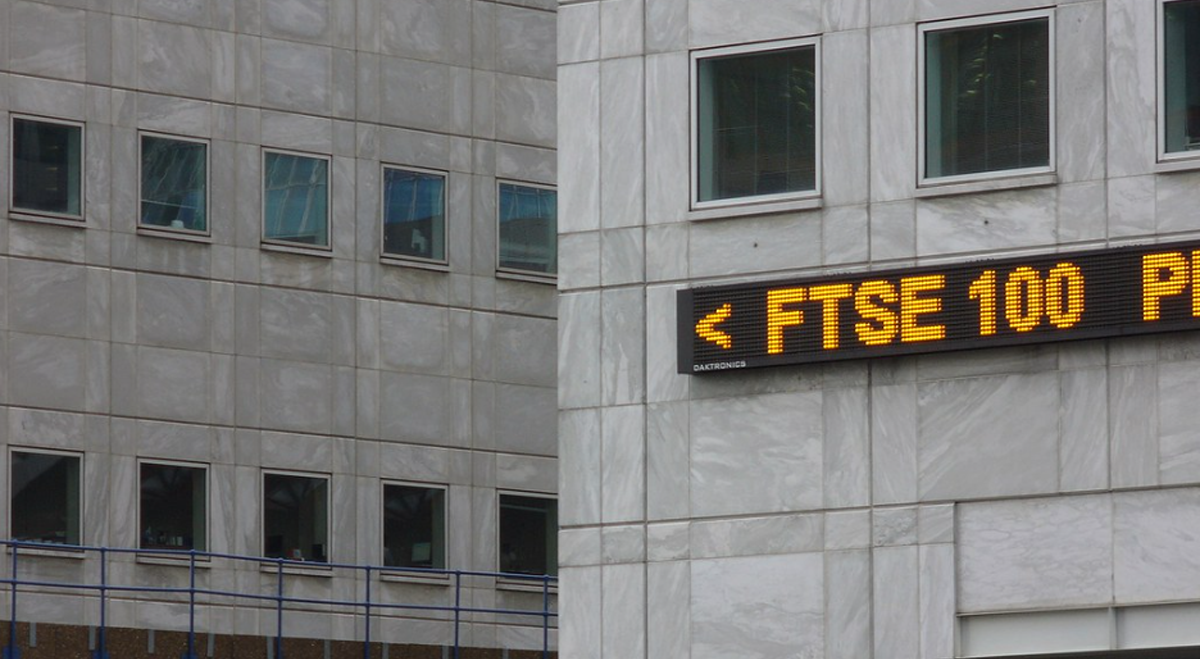
    Germany’s DAX index rose 1.2%, France’s CAC 40 gained 0.9%, and the U.K.’s FTSE 100 added 0.1%.

    Shares of LVMH (EU:MC) fell nearly 2% after the luxury group reported a 6% year-on-year decline in first-quarter 2026 revenue, citing disruption linked to the Middle East conflict.

    Eurofins Scientific (EU:ERF) jumped more than 5% after announcing an agreement to sell its electrical and electronic testing division to UL Solutions.

    Worldline (EU:WLN) dropped 1.2% after entering exclusive negotiations to divest its New Zealand payments business to Cuscal Paris La Defense.

    Shares of Publicis Groupe (EU:PUB) rose 1% after the group reaffirmed its full-year outlook, following first-quarter net revenue organic growth of 4.5%.

    Swiss technology firm Comet Holding (TG:EZP1) surged 9% after reporting strong order intake in its first-quarter results.

    Imperial Brands (LSE:IMB) slid 7.4% after warning of higher losses in its next-generation products division due to increased investment to build scale and market share.

    BP (LSE:BP.) edged down about 0.5% after the energy major said it expects upstream production in the first quarter to remain broadly flat compared with the previous period.

  • Markets Edge Higher on Iran Diplomacy Hopes; Bank Earnings Take Spotlight: Dow Jones, S&P, Nasdaq, Wall Street Futures

    Markets Edge Higher on Iran Diplomacy Hopes; Bank Earnings Take Spotlight: Dow Jones, S&P, Nasdaq, Wall Street Futures

    U.S. equity futures ticked modestly higher on Tuesday, while oil prices retreated, as investors responded to signs of possible progress in efforts to bring the Iran conflict to a lasting end. However, a U.S. blockade of Iranian ports has now entered its second day, further disrupting crude shipments through the critical Strait of Hormuz. Meanwhile, a wave of major U.S. bank earnings is set to dominate market attention, while LVMH (EU:MC) highlighted a hit to sales from the Middle East tensions.

    Futures Move Higher

    U.S. stock futures showed slight gains, supported by optimism surrounding ongoing negotiations between Washington and Tehran aimed at securing a permanent ceasefire. Investors are also bracing for a busy earnings session led by major financial institutions.

    As of 03:17 ET, Dow futures rose by 51 points, or 0.1%, S&P 500 futures added 10 points, or 0.1%, and Nasdaq 100 futures climbed 72 points, or 0.3%.

    Wall Street’s main indices had closed higher in the previous session, as initial disappointment over the lack of an immediate breakthrough in weekend talks between the U.S. and Iran began to fade. U.S. President Donald Trump said the White House had been contacted by Iranian officials and that he wants to “make a deal,” adding that Iran will not obtain a nuclear weapon.

    “[W]hile the meeting was certainly disappointing, it was hardly catastrophic, and if one looks closely, Trump seems to be pivoting aggressively away from kinetic escalation,” analysts at Vital Knowledge wrote in a note.

    They added that their overall view of the conflict remains “relatively sanguine,” although the “economic fallout from what’s already occurred” could prove “significant.”

    U.S. Port Blockade Extends

    At the same time, the U.S. blockade of Iranian ports, introduced on Monday, is adding further pressure to oil flows already constrained through the Strait of Hormuz.

    Tehran has condemned the move as an “act of piracy,” with reports indicating that roughly 15 U.S. warships are involved. British maritime authorities said access has been restricted for vessels entering or leaving Iranian ports, as well as in coastal waters across the Persian Gulf, Gulf of Oman, and parts of the Arabian Sea.

    Despite these tensions, diplomatic channels appear to be making headway. According to Reuters, the U.S. and Iran remain engaged, with some progress toward a permanent ceasefire agreement.

    Pakistan, which has emerged as a key intermediary, has offered to host a second round of talks ahead of the expiration of the current two-week truce. The initial meeting took place in Islamabad over the weekend.

    Elsewhere, Israel and Lebanon are set to begin direct peace talks in Washington, although ongoing Israeli strikes against Iran-aligned Hezbollah targets in Lebanon remain a key source of tension.

    Oil Slips Below $100

    Expectations that diplomacy could lead to easing tensions—and potentially restore smoother shipping through the Strait of Hormuz—have pushed oil prices lower, with both major benchmarks falling below $100 per barrel.

    Brent crude declined 1.5% to $97.88 a barrel, while U.S. West Texas Intermediate dropped 3.4% to $95.78 a barrel.

    Even so, the outlook remains uncertain. In its first assessment of the Iran conflict’s impact released Monday, OPEC cut its forecast for global oil demand in the second quarter by 500,000 barrels per day.

    However, the reduction was less severe than some projections, and OPEC left its full-year outlook unchanged, suggesting expectations for a rebound in consumption later in 2026.

    Bank Earnings in Focus

    Market attention is now turning to the earnings calendar, with several major U.S. banks set to report results.

    JPMorgan Chase (NYSE:JPM), Wells Fargo (NYSE:WFC), and Citigroup (NYSE:C) are due to release quarterly figures ahead of the market open, followed by Bank of America (NYSE:BAC) and Morgan Stanley (NYSE:MS) on Wednesday.

    Analysts expect results to be supported by strong trading activity and investment banking revenues, even as uncertainty linked to the Iran conflict lingers. Earlier this month, Jamie Dimon warned that the conflict could trigger commodity price shocks, keeping inflation elevated and pushing interest rates higher than current expectations.

    On Monday, Goldman Sachs (NYSE:GS) reported a 19% rise in first-quarter profit, driven by robust performance across its trading and investment banking divisions.

    LVMH Flags Sales Impact

    In Europe, shares of LVMH (EU:MC) fell in early trading after the company said the Middle East conflict had reduced group sales by at least 1%, weighing on expectations for a continued recovery in the luxury sector.

    The group, which owns brands such as Louis Vuitton and Bulgari, reported quarterly sales growth of 1%, missing forecasts for a 1.5% increase, according to Visible Alpha estimates cited by Reuters.

    Chief Financial Officer Cécile Cabanis said that “[w]hat we see today is still that demand is very much down” following disruptions to shopping activity in the Middle East since the outbreak of the Iran conflict.

    Rival Kering (EU:KER), owner of Gucci, is scheduled to report results after the close of European markets later in the day.

  • European Markets Gain as Optimism Builds Around U.S.-Iran Talks: DAX, CAC, FTSE100

    European Markets Gain as Optimism Builds Around U.S.-Iran Talks: DAX, CAC, FTSE100

    European equities moved higher at the open on Tuesday, while oil prices slipped below the $100-per-barrel mark, as investors reacted to signs of potential progress in discussions between the United States and Iran.

    According to a U.S. official cited by Reuters, negotiations between Washington and Tehran have shown signs of advancement. Meanwhile, President Donald Trump said that Iranian representatives had reached out to the White House.

    Despite this, market sentiment remained cautious after the United States introduced a new blockade targeting Iranian ports, adding uncertainty to the broader outlook.

    As of 07:11 GMT, the pan-European Stoxx 600 was up 0.6%, while Germany’s DAX rose 1.0%. France’s CAC 40 gained 0.4%, and the UK’s FTSE 100 advanced 0.3%.

    European markets followed a positive lead from Asia, where MSCI’s broad index of shares outside Japan and Japan’s Nikkei 225 both posted gains.

    In commodities, oil prices declined, with Brent crude—the global benchmark—falling 1.5% to $97.88 per barrel. U.S. West Texas Intermediate crude dropped more sharply, down 3.4% to $95.78 per barrel.

    Even so, both benchmarks remain above levels seen before the conflict, and the International Energy Agency has cautioned that prices have yet to fully reflect the scale of supply disruptions caused by the Iran conflict.

    Among individual stocks, LVMH (EU:MC) said tensions in the Middle East have reduced group sales by at least 1%, raising concerns about the pace of recovery in the luxury sector. Results from rival Kering (EU:KER) are expected after the close of trading later in the day.

  • FTSE 100 Edges Higher as Sterling Strengthens on U.S.-Iran Talks Optimism

    FTSE 100 Edges Higher as Sterling Strengthens on U.S.-Iran Talks Optimism

    UK equities traded slightly higher on Tuesday, tracking gains across European markets, while sterling strengthened against the dollar amid renewed optimism over potential talks between the United States and Iran. Reports suggest both sides are aiming to hold another round of discussions before a temporary two-week truce announced on April 7 expires, with Islamabad among the possible venues under consideration.

    By 07:27 GMT, the FTSE 100 had risen 0.2%, while the pound gained 0.2% to trade at $1.3528. Elsewhere in Europe, Germany’s DAX climbed more than 1%, and France’s CAC 40 advanced 0.5%.

    UK Market Highlights

    PageGroup (LSE:PAGE) shares dropped over 6% after the recruiter pointed to a more uncertain outlook amid geopolitical risks. First-quarter gross profit came in at £187 million, down 4.9% year-on-year but broadly in line with expectations. The company did not issue full-year guidance.

    Imperial Brands (LSE:IMB) reaffirmed its full-year outlook, despite cautioning that Middle East tensions could weigh on second-half performance. The company continues to expect at least high single-digit earnings per share growth, supported by strong tobacco pricing and expansion in next-generation products.

    BP (LSE:BP.) said its oil trading arm is on track for an “exceptional” first quarter, driven by higher oil prices following geopolitical disruptions in the Middle East, including the effective closure of the Strait of Hormuz.

    British Retail Consortium data showed UK retail sales rose 3.6% year-on-year in March, accelerating from 1.1% growth a year earlier and exceeding the 12-month average. Food sales were a key driver, increasing 6.8%, partly due to an early Easter boosting demand.

    Intertek (LSE:ITRK) announced a strategic review to assess a potential split between its Testing & Assurance and Energy & Infrastructure divisions, which generated £1.9 billion and £1.6 billion in revenue respectively in 2025.

    Oxford Instruments (LSE:OXIG) said it expects full-year results in line with expectations, supported by strong order growth in its Advanced Technologies division. Group order intake is projected to rise around 8% on an organic constant-currency basis.

    National Gas reported that the UK is expected to have sufficient gas supply to meet demand over summer 2026 under current conditions. While power generation demand for gas is forecast to fall by around 6%, this is expected to be partly offset by a 2% increase in domestic consumption.

    Overall, the market tone remains cautiously positive, supported by improving geopolitical sentiment and steady corporate updates, though uncertainty around global tensions continues to influence investor sentiment.

  • Wall Street set to open lower as U.S.-Iran tensions resurface: Dow Jones, S&P, Nasdaq, Futures

    Wall Street set to open lower as U.S.-Iran tensions resurface: Dow Jones, S&P, Nasdaq, Futures

    U.S. equity futures signaled a softer open on Monday, with markets poised to pull back after last week’s strong rally.

    Renewed concerns over escalating tensions in the Middle East are weighing on sentiment after weekend negotiations between Washington and Tehran ended without a breakthrough.

    “They have chosen not to accept our terms,” U.S. Vice President JD Vance said during a brief press appearance, while noting that discussions could still resume. Iran responded by blaming “unreasonable U.S. demands” for the lack of progress.

    Oil’s sharp rebound is also expected to pressure equities early in the session, with crude futures climbing back above the $100-per-barrel mark.

    The move higher follows comments from President Donald Trump, who said the U.S. would move to restrict shipping linked to Iran through the Strait of Hormuz after talks collapsed.

    “Effective immediately, the United States Navy, the Finest in the World, will begin the process of BLOCKADING any and all Ships trying to enter, or leave, the Strait of Hormuz,” Trump wrote on Truth Social.

    He also warned that U.S. forces are “locked and loaded” and ready to “finish up the little that is left of Iran” at an “appropriate moment.”

    “Markets are once again being pulled between competing forces, with geopolitical escalation in the Middle East reintroducing uncertainty just as investors turn their focus toward the start of earnings season,” said Daniela Hathorn, Senior Market Analyst at Capital.com.

    She added, “After a brief period of relief following ceasefire hopes, the breakdown in talks and the emergence of a ‘blockade of the blockade’ strategy by the US has pushed the narrative back toward duration risk: how long this conflict will last and how deeply it will impact the global economy.”

    Stocks ended last week on a mixed note after a relatively subdued session on Friday, following a rebound on Thursday.

    The Nasdaq Composite rose 80.48 points, or 0.4%, to close at 22,902.89, marking its highest finish in over a month. The S&P 500 slipped 7.77 points, or 0.1%, to 6,816.89, while the Dow Jones Industrial Average dropped 269.23 points, or 0.6%, to 47,916.57.

    Despite the uneven finish, all three major indexes recorded solid weekly gains, driven largely by a strong midweek rally. The Nasdaq surged 4.7% over the week, the S&P 500 gained 3.6%, and the Dow rose 3.0%.

    The Dow’s decline on Friday was partly due to weakness in Salesforce (NYSE:CRM), which fell 3.5%. Other blue chips, including Nike (NYSE:NKE), IBM (NYSE:IBM), and Verizon (NYSE:VZ), also moved lower.

    Investors remain cautious as uncertainty lingers over whether the fragile ceasefire in the Middle East can hold.

    Ahead of the weekend talks in Pakistan, Trump criticized Iran’s handling of oil shipments through the Strait of Hormuz, saying it was doing a “very poor job” and adding, “That is not the agreement we have!”

    He also addressed reports that Iran was charging fees to tankers using the waterway, warning, “They better not be and, if they are, they better stop now!”

    In a separate message, Trump said, “The Iranians don’t seem to realize they have no cards, other than a short term extortion of the World by using International Waterways. The only reason they are alive today is to negotiate!”

    On the economic front, traders largely overlooked a report from the University of Michigan showing a sharp drop in consumer sentiment in April.

    The index fell to 47.6 from 53.3 in March, well below expectations of 52.0 and marking a record low, as concerns about the Iran conflict and inflation weighed on confidence.

    Separately, data from the U.S. Department of Labor showed consumer prices rose 0.9% in March, matching forecasts.

    Sector performance was mixed overall.

    Semiconductor stocks stood out, with the Philadelphia Semiconductor Index climbing 2.3% to a record closing high.

    Gold and computer hardware shares also posted gains, while software, biotech, and healthcare stocks lagged.

  • European stocks edge lower as Hormuz tensions rise after failed talks: DAX, CAC, FTSE100

    European stocks edge lower as Hormuz tensions rise after failed talks: DAX, CAC, FTSE100

    European equity markets traded broadly weaker on Monday, following the breakdown of weekend negotiations in Islamabad and a U.S. naval move to restrict shipping linked to Iran through the Strait of Hormuz.

    Escalating geopolitical tensions lifted Brent crude above $102 per barrel, renewing concerns around inflation and the outlook for interest rates.

    Germany’s DAX fell 1.2%, France’s CAC 40 declined 0.9%, while the U.K.’s FTSE 100 slipped 0.5%.

    Vistry Group (LSE:VTY) was among the biggest fallers after naming internal candidate Adam Daniels as its new chief executive.

    National Grid (LSE:NG.) also traded lower after issuing a pre-close update ahead of its full-year results.

    In contrast, Halma (LSE:HLMA) advanced in London after the group announced the $90 million acquisition of California-based Surgistar, a specialist in ophthalmic surgical tools and devices.

  • Five market drivers to watch in the coming week

    Five market drivers to watch in the coming week

    Geopolitical tensions are setting the tone at the start of the trading week, with the U.S. decision to impose a blockade in the Strait of Hormuz fuelling volatility. The move has lifted oil prices once again, while upcoming inflation data and a packed earnings calendar could shape sentiment in the days ahead.

    1. U.S. begins Hormuz blockade

    The U.S. military has confirmed it will implement restrictions on vessels linked to Iran in the Strait of Hormuz from 10 a.m. Eastern on Monday, following an order from President Donald Trump after weekend talks with Tehran broke down.

    The Pentagon said ships “entering or departing Iranian ports and coastal areas” will be affected, while vessels not tied to Iran will still be able to transit the waterway.

    The move follows 21 hours of negotiations in Pakistan that failed to secure an extension to the fragile two-week ceasefire. Vice President JD Vance, who led the U.S. side, said Iran rejected demands to curb its nuclear program. Pakistan, which mediated the talks, urged both parties to “uphold their commitment to ceasefire.”

    Meanwhile, separate talks between Israel and Lebanon are due in Washington this week, though ongoing strikes on Hezbollah-linked targets continue to cast doubt over the durability of a broader regional truce.

    2. Oil prices surge past $100 again

    Crude markets rallied on Monday, with prices climbing back above the $100 per barrel mark.

    Brent crude rose 6.7% to $101.65, while U.S. West Texas Intermediate gained 7.1% to $103.42.

    Despite the sharp move, Pepperstone analysts described the reaction as “relatively contained,” suggesting investors largely see the blockade as a negotiating tactic rather than an immediate supply shock.

    “I’d not be at all surprised to see risk assets remain underpinned to a degree, with continued hope that a deal can be agreed likely to continue to encourage dip buying, even as crude benchmarks are likely to grind steadily higher as physical supply tightens further,” said Michael Brown, Senior Research Strategist at Pepperstone.

    Oil had briefly fallen below $100 last week after the ceasefire announcement, which came after Trump warned Iran’s “civilization” could be destroyed if the Strait of Hormuz remained closed. Even so, prices continue to trade well above pre-conflict levels.

    3. Focus turns to U.S. producer prices

    The rebound in energy costs has heightened concerns about inflation and its implications for global monetary policy.

    Investors will be watching closely for U.S. producer price index (PPI) data this week, which will reflect price trends in March—the first full month impacted by the Iran conflict.

    Recent consumer price figures already showed a notable rise, driven largely by higher fuel costs. Energy prices increased 12.5% year-on-year, up sharply from 0.5% in February.

    However, core inflation—excluding food and energy—came in below expectations at 2.6% annually and 0.2% month-on-month.

    Given this softer core reading, analysts suggest the Federal Reserve may take a measured approach when interpreting inflation data. The upcoming PPI release could provide further clarity on the outlook for interest rates.

    “A stronger-than-expected [PPI] reading would reinforce the case for a ‘higher for longer’ rate outlook, likely supporting the dollar and leaving EUR/USD’s recent rebound vulnerable to renewed downside,” said Laurence Booth, Global Head of Markets at CMC Markets.

    4. Bank earnings kick off reporting season

    The U.S. earnings season gathers momentum this week, starting with results from major financial institutions.

    Goldman Sachs (NYSE:GS) is among the first to report, with its stock up about 3% year-to-date. Trading revenues have benefited from portfolio adjustments linked to developments in artificial intelligence, while its investment banking arm has also shown growth.

    However, the conflict in Iran could weigh on outlooks. While market volatility can boost trading activity, higher commodity prices may deter companies from pursuing large transactions such as mergers and acquisitions, potentially impacting advisory revenues.

    Other banks set to report include JPMorgan Chase (NYSE:JPM), Wells Fargo (NYSE:WFC), Citigroup (NYSE:C), Bank of America (NYSE:BAC) and Morgan Stanley (NYSE:MS).

    Outside the banking sector, results are also expected from Netflix and PepsiCo.

    5. European luxury earnings in spotlight

    In Europe, attention will also turn to the luxury sector, where several major players are due to report.

    LVMH (EU:MC) will release first-quarter sales, with geopolitical developments likely to influence its outlook. Rivals Kering SA (EU:KER) and Hermès (EU:RMS) are also scheduled to report.

    Reuters has reported that luxury sales in hubs such as Dubai and Abu Dhabi have weakened due to the conflict, weighing on the roughly $400 billion sector.

    Meanwhile, ASML (EU:ASML is set to report on Wednesday, with investors focused on its ability to meet strong demand from artificial intelligence chipmakers.

  • Markets slip on Hormuz tensions as oil rises; Goldman Sachs results in focus: Dow Jones, S&P, Nasdaq, Wall Street Futures

    Markets slip on Hormuz tensions as oil rises; Goldman Sachs results in focus: Dow Jones, S&P, Nasdaq, Wall Street Futures

    U.S. equity futures pointed lower at the start of the week, as concerns over a potential naval blockade of the Strait of Hormuz and stalled talks between Washington and Tehran dampened investor sentiment. Oil prices climbed back above $100 per barrel, with markets questioning how long the fragile U.S.-Iran ceasefire can hold. Attention is also turning to upcoming earnings from Goldman Sachs (NYSE:GS), which will help kick off the U.S. reporting season, alongside results from LVMH (EU:MC).

    Futures point to a weaker open

    U.S. stock futures declined on Monday as investors weighed renewed geopolitical risks after President Donald Trump warned of a possible blockade of the Strait of Hormuz following unsuccessful weekend negotiations with Iran.

    At 03:28 ET, Dow futures were down 239 points, or 0.5%, S&P 500 futures fell 40 points, or 0.6%, and Nasdaq 100 futures dropped 168 points, or 0.7%. European and Asian markets also traded unevenly, while oil prices surged and the dollar strengthened.

    Wall Street had finished Friday on a mixed note, as investors remained cautious ahead of the high-stakes discussions in Pakistan. A temporary two-week ceasefire was agreed last week, but doubts remain over whether it can evolve into a lasting peace.

    Traders are also digesting inflation data showing a sharp rise in consumer prices in March, driven largely by higher gasoline costs tied to the energy shock from the conflict. Oil has rallied since late February, when tensions escalated and tanker movements through the Strait of Hormuz—responsible for roughly one-fifth of global oil flows—were severely disrupted.

    Trump signals move on Hormuz

    On Sunday, Trump said the U.S. Navy would impose an “immediate” blockade of the Strait to restrict shipping.

    He warned that vessels paying tolls imposed by Tehran would not be assured “safe passage on the high seas.”

    The Pentagon later clarified that restrictions would apply to ships “entering or departing Iranian ports or coastal areas,” while other vessels would still be permitted to pass through the Strait.

    The announcement follows 21 hours of talks between U.S. and Iranian officials in Pakistan, which ended without an agreement to extend the ceasefire. Vice President JD Vance, who led the U.S. delegation, said Iran had rejected demands to curb its nuclear program. Tehran has yet to respond publicly, while Pakistan—acting as mediator—urged both sides to “uphold their commitment to ceasefire.”

    Oil reclaims $100 level

    Crude prices surged again on Monday, pushing back above the $100 threshold.

    Brent crude rose 6.7% to $101.65, while U.S. West Texas Intermediate gained 7.1% to $103.42.

    Despite the rally, analysts at Pepperstone described the market response as “relatively contained,” suggesting investors see the blockade as part of a negotiating strategy.

    “While it’s clearly a risk-averse start to the trading week, […] the general market reaction can be summed up as ‘could be worse’,” said Michael Brown, Senior Research Strategist at Pepperstone.

    Oil had slipped below $100 last week following the ceasefire announcement, which came after Trump warned Iran’s “civilization” could be destroyed if the Strait remained closed. Even so, prices remain elevated compared to pre-conflict levels.

    Goldman Sachs earnings ahead

    Focus now shifts to results from major U.S. banks, starting with Goldman Sachs ahead of the opening bell.

    Shares in Goldman have risen about 3% year-to-date, supported by strong trading volumes as investors reposition portfolios amid the rise of artificial intelligence. Its investment banking division has also shown resilience.

    However, the conflict in Iran could overshadow the results. While market volatility can boost trading income, persistently high commodity prices may discourage companies from pursuing large deals such as mergers and acquisitions, potentially weighing on advisory revenues.

    Other major banks reporting this week include JPMorgan Chase (NYSE:JPM), Wells Fargo (NYSE:WFC), Citigroup (NYSE:C), Bank of America (NYSE:BAC) and Morgan Stanley (NYSE:MS).

    LVMH to report

    LVMH (EU:MC), the world’s largest luxury goods company and owner of brands such as Louis Vuitton and Dior, is set to release first-quarter sales later today, with the Middle East conflict likely to influence its outlook.

    According to Reuters, luxury sales in hubs such as Dubai and Abu Dhabi have weakened due to the conflict, affecting companies like LVMH as well as rivals including Kering SA (EU:KER) and Hermès (EU:RMS).

    At Dubai’s Mall of the Emirates, luxury sales reportedly dropped by as much as 50% in March, while footfall at Dubai Mall fell by a similar margin. In Abu Dhabi’s Galleria mall, overall sales declined by around 10%.

    Although the Middle East accounts for a relatively small share of LVMH’s revenue, analysts cited by Reuters believe the impact on profitability—reported on a half-year basis—could be more pronounced.

  • European equities slip as Hormuz blockade threat and failed Iran talks unsettle markets: DAX, CAC, FTSE100

    European equities slip as Hormuz blockade threat and failed Iran talks unsettle markets: DAX, CAC, FTSE100

    European stock markets started the week on a weaker footing, as investors reacted to the collapse of weekend negotiations between the U.S. and Iran and renewed tensions following President Donald Trump’s warning of an “immediate” blockade of the Strait of Hormuz.

    By 07:13 GMT, the pan-European Stoxx 600 index was down 0.8%. Germany’s DAX had fallen 1.2%, France’s CAC 40 declined 1.0%, and the UK’s FTSE 100 dropped 0.6%.

    Trump said on Sunday that the U.S. would move to restrict vessels entering or leaving the Strait of Hormuz, a critical global shipping route that has become a focal point in the Middle East conflict. He cautioned that any ship paying a toll imposed by Tehran would not be guaranteed “safe passage on the high seas.”

    Later, the Pentagon clarified that the restrictions would apply specifically to ships “entering or departing Iranian ports or coastal areas,” while other vessels would still be able to pass through the Strait. Around 20% of global oil supply flows through this narrow passage off Iran’s southern coast.

    “[T]he language seemed to soften what the president posted,” analysts at Vital Knowledge said in a note to clients. “What initially looked like a complete halt to all traffic now looks like it is focused only on Iranian vessels.”

    At the same time, The Wall Street Journal reported that Trump is considering limited military strikes against Iran, which analysts suggested may indicate that the administration could be “pivoting away aggressively from a resumption” of the broader bombing campaign that had been ongoing since late February.

    These developments follow 21 hours of talks between U.S. and Iranian officials in Pakistan, which ended without securing a longer-term ceasefire beyond the current two-week pause in hostilities.

    Market participants are now turning their attention to upcoming Eurozone inflation data later this week, which may shed light on how the conflict is influencing price pressures. Europe relies heavily on energy imports from the Persian Gulf, including natural gas from Qatar, where infrastructure has been affected by the expanding conflict.

    The European Central Bank has indicated it is closely monitoring inflation risks linked to the situation. Interest rate futures currently suggest expectations of around three 25-basis-point rate increases by the ECB through the end of 2026, according to LSEG data cited by Reuters.

    Oil markets reacted strongly, with Brent crude climbing back above $100 per barrel after briefly falling below that level last week following the announcement of a temporary ceasefire.

    In corporate news, shares of Kering SA (EU:KER) resumed trading after being briefly halted following a drop of more than 3% in early dealings. Morgan Stanley downgraded the stock to “equal weight” from “overweight,” noting that much of the expected turnaround appears already reflected in the share price.

    Elsewhere, travel and leisure stocks across Europe were under pressure, while Italian energy company Eni (BIT:ENI) and defence group Leonardo (BIT:LDO) both posted gains.

  • Energy shares advance globally as oil pushes back above $100 on Hormuz tensions

    Energy shares advance globally as oil pushes back above $100 on Hormuz tensions

    Global oil and gas stocks moved higher on Monday as crude prices climbed past the $100-per-barrel mark, following U.S. action to restrict maritime activity linked to Iran in the Strait of Hormuz after negotiations between Washington and Tehran broke down.

    Brent crude rose 7.3% to $102.16 per barrel by 08:35 GMT, while U.S. West Texas Intermediate jumped roughly 8% to $104.24. Both benchmarks had ended the previous session lower before rebounding sharply.

    The surge in oil prices lifted energy equities across major markets. In the U.S., ExxonMobil (NYSE:XOM) and Chevron (NYSE:CVX) each gained more than 2% in premarket trading, while ConocoPhillips (NYSE:COP) rose 3.4% and Occidental Petroleum (NYSE:OXY) added 3.1%.

    Across Europe, BP plc (LSE:BP.) and Shell plc (LSE:SHEL) both climbed around 1.4%, while TotalEnergies (EU:TTE) edged up 1.3% and Repsol (BIT:1REP) gained roughly 2%.

    U.S. President Donald Trump said on Sunday that the Navy would move to enforce a blockade in the Strait of Hormuz, escalating tensions after prolonged talks with Iran failed to yield an agreement and putting a fragile two-week ceasefire at risk. He also cautioned that fuel prices could remain elevated through the November midterm elections.

    U.S. Central Command confirmed the measure would take effect at 10 a.m. ET on Monday, targeting vessels traveling to and from Iranian ports in the Arabian Gulf and Gulf of Oman. However, ships transiting the Strait between non-Iranian ports would not be affected, according to CENTCOM.

    The latest escalation follows a brief period of calm after a ceasefire had allowed shipping routes to reopen, sending oil prices sharply lower last week before the current rebound.

    Rabobank energy strategist Joe DeLaura had warned during last week’s dip that markets were underestimating risks, arguing that futures were “far too optimistic” and that there was “so much risk to the upside” still not reflected in prices.

    “There’s permanent production loss from the shut ins in Saudi, Kuwait, UAE and Iraq. Refinery and pipeline damage plus the physical restart times, on top of the backlog of 800+ tankers trapped on the west side of the Strait,” he told Investing.com.

    “Brent futures seem to have a floor around $90, and I think no ceasefire (no easy opening of a mined strait of Hormuz) means that futures will eventually have to start matching physical markets around $120-130/bbl (or more!).”