Category: Market Summary

  • European Stocks Edge Higher as Tech Rebounds and Middle East Tensions Remain in Focus: DAX, CAC, FTSE100

    European Stocks Edge Higher as Tech Rebounds and Middle East Tensions Remain in Focus: DAX, CAC, FTSE100

    European Markets Advance Despite Ongoing Geopolitical Uncertainty

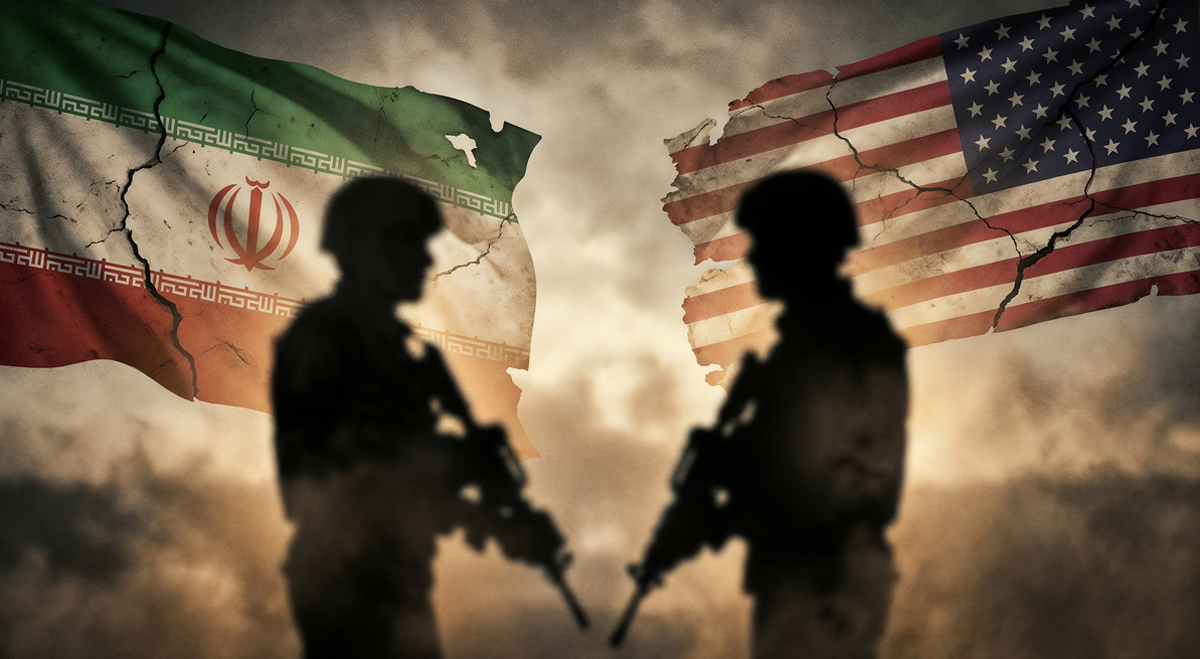
    European equity markets traded modestly higher on Thursday, supported by gains in technology stocks, while oil prices eased even after the U.S. military carried out a second consecutive day of strikes on Iranian targets. President Donald Trump said the latest escalation would be resolved quickly.

    U.S. forces reportedly struck around 90 targets across Iran, while Tehran responded with attacks targeting Gulf states.

    German Trade Data Beats Expectations

    Fresh economic data from Germany provided an additional boost to sentiment.

    Official figures showed exports rose 0.9% in May compared with the previous month, defying expectations for a 0.3% decline. The increase was largely driven by stronger shipments to the United States.

    Imports, meanwhile, unexpectedly fell 2.5%, reversing April’s 1.1% increase and marking the first monthly decline in four months.

    Major European Indices Mixed

    France’s CAC 40 advanced 0.5%, while Germany’s DAX gained 0.3%.

    The UK’s FTSE 100 underperformed, falling 0.6% as weakness in major energy companies, including BP Plc and Shell, weighed on the index.

    Company Movers

    French pharmaceutical group Ipsen (EU:IPN) moved higher after reporting positive Phase III trial results for Dysport in migraine prevention.

    Bytes Technology Group (LSE:BYIT) also posted strong gains after announcing robust trading during the first four months of its financial year through 30 June.

    German wind turbine manufacturer Nordex (TG:NDX1) surged after revealing that second-quarter wind turbine orders increased by almost one-third compared with a year earlier.

    Meanwhile, AstraZeneca (LSE:AZN) was among London’s biggest decliners after announcing that its experimental drug Wainua failed to achieve its primary objective in a late-stage clinical trial focused on reducing cardiovascular-related deaths.

  • Wall Street Futures Rise as Geopolitical Risks Persist and PepsiCo Earnings Approach: Dow Jones, S&P, Nasdaq

    Wall Street Futures Rise as Geopolitical Risks Persist and PepsiCo Earnings Approach: Dow Jones, S&P, Nasdaq

    U.S. equity futures traded higher on Thursday as investors monitored renewed military action between the United States and Iran while preparing for another busy earnings day led by PepsiCo (NASDAQ:PEP).

    Although crude oil prices eased slightly, they remained well above levels seen before the latest escalation in the Middle East, keeping concerns over inflation and global energy supplies firmly in focus.

    Futures Point to Higher Open

    As of 02:53 ET (06:53 GMT), Dow Jones futures were higher by 82 points, or 0.2%. S&P 500 futures added 0.3%, while Nasdaq 100 futures outperformed with a gain of 0.5%.

    The previous session ended mixed, with the Dow Jones Industrial Average falling 1.1% and the S&P 500 slipping 0.3%, while the Nasdaq Composite posted a modest 0.2% gain thanks to continued strength in technology stocks.

    Markets reacted cautiously after U.S. President Donald Trump said the ceasefire framework with Iran was “over”, reviving fears that higher oil prices could complicate the inflation outlook.

    Technology shares helped cushion broader losses. Nvidia extended gains after reports suggested China may allow limited domestic access to the company’s H200 AI chips.

    Minutes from the Federal Reserve’s June meeting also attracted attention. Analysts at Vital Knowledge described the overall tone as “fairly dovish tone on the monetary policy outlook”, despite policymakers remaining alert to inflation risks linked to energy prices.

    Fresh Conflict Keeps Markets on Edge

    Military operations continued overnight as the United States launched strikes against approximately 90 Iranian military targets, including air defence systems and missile facilities.

    Iran responded with attacks targeting U.S. military installations in Kuwait and Bahrain, while the Islamic Revolutionary Guards Corps warned that additional strikes could follow if further U.S. military action takes place.

    The latest exchange has raised fresh doubts over the durability of the temporary ceasefire reached in June. Negotiations remain complicated by disagreements over the Strait of Hormuz, Iran’s nuclear programme and broader regional conflicts.

    Speaking after the NATO summit, President Trump said Iran wanted to “make a deal so badly”, although Iranian officials have not publicly indicated that negotiations have resumed.

    Oil Holds Above Pre-Conflict Levels

    Brent crude traded below $78 per barrel, slipping 1.0% to $77.26 by 03:42 ET.

    Despite the decline, prices remain considerably above the roughly $71 level recorded before the latest escalation, as traders continue to price in the risk of disruption to shipping through the Strait of Hormuz, one of the world’s most important energy transport routes.

    Higher energy prices continue to cloud the inflation outlook and could influence future interest-rate decisions by major central banks.

    PepsiCo Results Take Centre Stage

    Investors are also awaiting quarterly earnings from PepsiCo before the opening bell.

    When reaffirming its annual guidance in April, Chief Financial Officer Steve Schmitt warned that the “macroeconomic environment has become more volatile and uncertain because of ongoing geopolitical conflicts.”

    Markets will be looking for updates on how higher transportation, energy and raw material costs are affecting margins. While Schmitt acknowledged that price increases remain an option, he stressed they would only be implemented if necessary.

    PepsiCo shares have gained approximately 0.2% since the beginning of the year.

    China’s Inflation Signals Uneven Recovery

    China’s latest inflation figures painted a mixed picture.

    Consumer inflation slowed to 1.0% year-on-year in June, while producer inflation accelerated to 4.1%, its strongest reading since July 2022.

    Analysts said rising prices for electronics linked to AI-related chip shortages partly offset weaker pricing across many industrial sectors.

  • Market Open: Sizewell B Extension, Computacenter Profit Growth

    Market Open: Sizewell B Extension, Computacenter Profit Growth

    FTSE 100 edges lower as Centrica backs Sizewell B extension, Computacenter forecasts stronger profits and Brent crude eases.

    Market Overview

    The FTSE 100 opened marginally lower at 10,487.89, while the Euronext 100 gained 0.16 per cent and Germany’s DAX advanced 0.44 per cent. Overnight, the Nasdaq closed higher at 25,870.65, while the S&P 500 finished lower at 7,482.71. Investor sentiment remained cautious as markets assessed renewed geopolitical tensions following the collapse of the US-Iran ceasefire, while European equities attempted to stabilise after the previous session’s sharp losses.

    Against sterling, the US dollar strengthened slightly while the Swiss franc, euro, Japanese yen and Australian dollar all edged firmer. Bitcoin was up. In commodities, copper advanced, while gold, Brent crude and natural gas all eased, with oil continuing to reflect geopolitical risks in the Middle East despite softer prices at the open.


    Market Numbers

    FTSE 100: Down (-0.01%), 10,487.89

    Euronext 100: Up (+0.16%), 1,895.27

    DAX: Up (+0.44%), 25,006.76

    NASDAQ: Up, 25,870.65

    S&P 500: Down, 7,482.71


    In the Headlines

    Nuclear agreement – Centrica (LSE:CNA)

    Centrica has agreed a 20-year contract supporting the extension of the Sizewell B nuclear power station, helping secure long-term low-carbon electricity generation and reinforcing the UK’s energy security strategy.

    Trading update – Computacenter (LSE:CCC)

    Computacenter expects first-half profit to more than double compared with 2025, reflecting stronger trading performance and indicating improving momentum across its technology services business.


    Currencies (vs GBP)

    USD: Down (-0.00%), $1.3394

    CHF: Down (-0.08%), Fr.1.0824

    EUR: Down (-0.03%), €1.1727

    JPY: Down (-0.01%), ¥217.703

    AUD: Down (-0.01%), $1.931

    Bitcoin (BTC/GBP): Up, £46,967.94


    Commodities

    Copper: Up

    Gold: Down

    Brent Crude: Down

    Natural Gas: Down

  • European Stocks Advance as Technology Sector Recovers and Investors Track Middle East Developments: DAX, CAC, FTSE100

    European Stocks Advance as Technology Sector Recovers and Investors Track Middle East Developments: DAX, CAC, FTSE100

    European equity markets moved higher in volatile trading on Thursday, supported by a strong rebound in technology shares as investors assessed the latest developments in the Middle East after U.S. President Donald Trump said Iran wanted to “make a deal”.

    The pan-European STOXX 600 index gained 0.5% to 639.12 points by 08:16 GMT. Technology and basic resources led sector performance, advancing 1.8% and 2.8% respectively.

    Semiconductor-related stocks drove much of the rally, with Siltronic (TG:WAF) surging 10.5%, Soitec (EU:SOI) rising 4.5% and ASML (EU:ASML) adding 2.6%.

    The technology sector had paused after recording its strongest quarterly performance since 2001 in June, and Thursday’s recovery suggested investors were temporarily looking beyond concerns over stretched valuations. Even so, the sector remains the weakest performer on the STOXX 600 so far this month.

    Market sentiment also received support from reports that China could permit domestic artificial intelligence companies to access Nvidia’s (NASDAQ:NVDA) H200 chips on a limited basis, raising expectations of continued investment in AI infrastructure.

    Oil prices edged lower as investors continued to monitor geopolitical developments. Energy markets remained focused on the conflict between the United States and Iran after fresh U.S. strikes followed President Trump’s statement on Wednesday that negotiations with Tehran were over, contributing to the STOXX 600’s largest one-day decline since March.

    “Positive developments around the AI trade are supporting sentiment, but it’s not simply a case of AI outweighing concerns over U.S.-Iran tensions. Investors have also become a little more immune to developments in that story, viewing them as part of what has always been a choppy path towards a broader agreement,” said Fiona Cincotta, senior market analyst at City Index.

    Spanish equities outperformed the wider European market, climbing 1.1% after recovering from a three-week low reached on Wednesday. The rebound followed President Trump’s comments describing Spain as “very generous” after his decision to halt trade with the country over its NATO contribution.

    Company Movers

    Healthcare was the weakest-performing sector, falling 1.5%, largely due to a 9.1% decline in AstraZeneca (LSE:AZN). The pharmaceutical company came under pressure after its experimental drug Wainua, developed with U.S.-based Ionis, failed to meet the primary objective of reducing cardiovascular deaths and recurrent heart complications in a late-stage clinical trial.

    Elsewhere, IT services company Computacenter (LSE:CCC) surged 11.1% after forecasting full-year results comfortably ahead of market expectations, supported by continued strong demand for AI-related infrastructure.

    Wind turbine manufacturer Nordex (TG:NDX1) gained 5% after reporting that second-quarter project orders increased year-on-year to 3,054 MW, driven by significant contract wins in the United States.

  • FTSE 100 Slips as Middle East Tensions Rise and AstraZeneca Weighs on Index

    FTSE 100 Slips as Middle East Tensions Rise and AstraZeneca Weighs on Index

    The FTSE 100 traded lower on Thursday as investors reacted to escalating tensions in the Middle East, while shares in AstraZeneca (LSE:AZN) declined sharply after disappointing late-stage clinical trial results. The UK benchmark index fell 0.49% by 03:30 ET (07:30 GMT), lagging its European counterparts. Germany’s DAX advanced 0.61%, France’s CAC 40 gained 0.45%, and sterling strengthened 0.30% against the U.S. dollar to $1.3426.

    Investor sentiment remained fragile after U.S. Central Command confirmed overnight strikes on around 90 Iranian military targets, including air defence systems, missile and drone storage facilities, and naval infrastructure along Iran’s coastline. The operation marked a second consecutive night of military action aimed at reducing Tehran’s ability to threaten commercial shipping through the Strait of Hormuz.

    Iran responded by launching attacks targeting U.S.-allied Gulf states. Kuwait said its air defence systems intercepted incoming drones and missiles, while Bahrain activated air raid sirens and urged residents to seek shelter. Iran’s Revolutionary Guard claimed responsibility for attacks on both countries, with Qatar also reported to have been targeted. No immediate reports of significant damage were released.

    The latest escalation follows comments by U.S. President Donald Trump at the NATO summit in Ankara, where he declared that last month’s ceasefire with Iran was “over” after renewed attacks on commercial tankers in the Strait of Hormuz. Speaking aboard Air Force One, Trump later said Iran had reopened communication channels, stating, “They want to make a deal so badly,” before adding, “I just don’t know if they’re worthy of making a deal.”

    Vice President JD Vance also reiterated Washington’s position during remarks in Milwaukee, saying, “If they shoot at ships, we’re going to knock the hell out of them.”

    In commodity markets, Brent crude slipped 0.53% to $77.58 a barrel, while U.S. West Texas Intermediate crude eased 0.48% to $73.11. Gold continued to benefit from safe-haven demand, with futures rising 0.85% to $4,116.92 per ounce and spot gold advancing 0.74% to $4,107.82.

    UK Market Round-Up

    AstraZeneca (LSE:AZN) came under pressure after announcing that its experimental heart treatment Wainua failed to achieve the primary endpoint in a late-stage clinical trial, limiting its plans to expand the therapy beyond its current approved use.

    Computacenter (LSE:CCC) upgraded its outlook after reporting stronger-than-expected trading, forecasting that first-half adjusted pre-tax profit will be nearly double the level recorded a year earlier. The company also expects full-year 2026 earnings to come in comfortably ahead of current market forecasts.

    Informa (LSE:INF) announced that former Reuters chief executive Tom Glocer has been appointed chair-elect and will succeed John Rishton as chair in 2027 as part of a planned leadership transition.

    Capita (LSE:CPI) warned that issues related to its Civil Service Pension Scheme contract will reduce adjusted operating profit by between £25 million and £40 million this year, while also lowering free cash flow by £35 million to £50 million.

  • AstraZeneca’s Wainua Falls Short in Phase III ATTR-CM Study Despite Positive Subgroup Signal (AVG)

    AstraZeneca’s Wainua Falls Short in Phase III ATTR-CM Study Despite Positive Subgroup Signal (AVG)

    AstraZeneca (LSE:AZN) and Ionis have announced that the Phase III CARDIO-TTRansform study evaluating Wainua (eplontersen) in adults with transthyretin-mediated amyloid cardiomyopathy (ATTR-CM) did not achieve its primary objective. The treatment failed to deliver a statistically significant reduction in cardiovascular deaths and recurrent cardiovascular events when used alongside standard stabiliser therapy. Wainua was generally well tolerated, with a safety profile consistent with previous clinical findings, and the companies intend to present the complete dataset at the upcoming European Society of Cardiology Congress.

    A predefined analysis identified a potential benefit among patients treated with Wainua as a standalone therapy, where the number of primary composite cardiovascular events was lower than in the placebo group, producing a nominally significant result. However, no meaningful treatment benefit was observed in participants who were already receiving stabiliser therapy when the trial began. The findings represent a setback for AstraZeneca’s plans to broaden Wainua’s use beyond its current approvals for hereditary transthyretin-mediated amyloid polyneuropathy, underlining the growing challenge of demonstrating additional clinical benefit as existing ATTR-CM therapies become more widely established.

    Despite the disappointing trial outcome, AstraZeneca continues to be supported by solid business fundamentals, including strong profitability, healthy margins and attractive returns. The company has also maintained its financial guidance while delivering encouraging pipeline progress. These strengths are partially offset by softer technical market momentum, a moderate valuation and short-term pressure on cash flow and debt as investment spending and payment obligations increase.

    More about AstraZeneca

    AstraZeneca is a global biopharmaceutical company focused on researching, developing and commercialising prescription medicines across Oncology, Rare Disease and BioPharmaceuticals, including Cardiovascular, Renal & Metabolism and Respiratory & Immunology. Headquartered in Cambridge, UK, the company markets innovative medicines in more than 125 countries, with its Cardiovascular, Renal & Metabolism business representing an important long-term growth platform centred on protecting organs and slowing disease progression.

    The company’s Cardiovascular, Renal & Metabolism portfolio targets diseases affecting the heart, kidneys, liver and pancreas through therapies designed to address their underlying biological mechanisms. AstraZeneca aims to improve patient outcomes by enabling earlier diagnosis and delivering more effective treatments to millions of people around the world.

  • Wall Street Futures Slip as Trump Signals End of U.S.-Iran Ceasefire: Dow Jones, S&P, Nasdaq

    Wall Street Futures Slip as Trump Signals End of U.S.-Iran Ceasefire: Dow Jones, S&P, Nasdaq

    U.S. equity futures traded lower ahead of Wednesday’s opening bell, pointing to another weak session after renewed geopolitical tensions triggered fresh risk aversion across financial markets.

    Investor sentiment deteriorated after President Donald Trump said the U.S.-Iran ceasefire was “over,” raising concerns that the conflict in the Middle East could intensify once again.

    “As far as I’m concerned, it’s over,” Trump told reporters at the NATO summit in Ankara, Turkey, calling negotiations with Iran a “waste of time.”

    The announcement pushed oil prices sharply higher, with U.S. crude futures jumping by more than 4%.

    The spike in energy prices has renewed worries about inflationary pressures and the direction of interest rates ahead of the release of the minutes from the Federal Reserve’s June policy meeting.

    Trump’s comments followed an announcement from U.S. Central Command confirming that more than 80 targets in Iran had been struck during a fresh military operation launched in response to Iran’s latest attacks on commercial vessels transiting the Strait of Hormuz.

    Iran’s Revolutionary Guards claimed they targeted U.S. military sites in Bahrain and Kuwait hours after the U.S. strikes.

    Tuesday’s session saw stocks recover from early losses for a time before selling resumed in the afternoon, leaving all three major indexes in negative territory by the close.

    The Nasdaq led the declines, reflecting broad weakness in technology shares.

    The Nasdaq fell 302.47 points, or 1.2%, to 25,818.69. The S&P 500 declined 33.58 points, or 0.5%, to 7,503.85, while the Dow Jones Industrial Average lost 130.76 points, or 0.3%, to 52,925.15.

    Semiconductor companies suffered particularly heavy losses, sending the Philadelphia Semiconductor Index down 4.7%.

    The sell-off accelerated after South Korean chipmaker Samsung Electronics (USOTC:SSNHZ) dropped nearly 7%.

    Although Samsung reported second-quarter profit that was 19 times higher than a year earlier, investors remained cautious about AI-related investment levels and future demand.

    “Although Samsung’s results were stellar, investors are getting nervous about the scale of money ploughing into AI and whether it’s a bubble waiting to burst,” said Dan Coatsworth, head of markets at AJ Bell.

    Chip stocks also weakened after Reuters reported that Chinese startup DeepSeek is developing its own AI processor.

    Networking companies also posted steep declines, pulling the NYSE Arca Networking Index down 3.7%.

    Gold miners, airlines and computer hardware manufacturers also ended the session lower, while energy, pharmaceutical and healthcare shares outperformed.

    Energy stocks gained as oil prices surged, although higher crude prices contributed to broader concerns across equity markets.

    U.S. crude futures rallied following reports of projectile attacks against several commercial vessels travelling through the Strait of Hormuz.

  • European Stocks Decline as Escalating Middle East Tensions Weigh on Markets: DAX, CAC, FTSE100

    European Stocks Decline as Escalating Middle East Tensions Weigh on Markets: DAX, CAC, FTSE100

    European equities moved lower on Wednesday, adding to the previous session’s losses as renewed conflict in the Middle East heightened inflation concerns and clouded expectations for central bank interest rate policy.

    Oil prices and government bond yields jumped after U.S. President Donald Trump declared the Iran ceasefire “is over” during the NATO summit.

    Iran’s Revolutionary Guards said they targeted U.S. military sites in Bahrain and Kuwait, hours after the U.S. launched a wave of military strikes on Iran.

    Market participants are also awaiting the release of the minutes from the first Federal Reserve meeting chaired by Kevi Warsh, hoping for further clues about the central bank’s future interest rate path.

    The U.K.’s FTSE 100 Index was down 0.9%, while France’s CAC 40 Index and Germany’s DAX Index each dropped 1.7%.

    IG Group Holdings (LSE:IGTG) declined sharply after the online trading company unveiled plans to create a new Jersey-based holding company.

    Vistry (LSE:VTY) also fell heavily after the housebuilder warned of a first-half loss and revealed plans to streamline its operations.

    Student accommodation specialist Unite Group (LSE:UTG) retreated after stating that annual rental growth is now expected to come in slightly below previous guidance.

    Property developer Hammerson (LSE:HMSO) also lost ground after announcing the disposal of £69 million of non-core assets.

    Kering (EU:KER) weakened after revealing that its Italian luxury brand Gucci had signed a 50-year exclusive beauty licensing agreement with French cosmetics group L’Oreal Co (EU:OR). L’Oreal shares were down 1 percent.

    Meanwhile, energy majors BP Plc (LSE:BP.) and Shell (LSE:SHEL) advanced strongly as Brent crude climbed above $76 per barrel for the first time in two weeks amid fears of prolonged supply disruptions.

  • Wall Street Futures Retreat as Iran Tensions Escalate and Trump Dismisses Peace Agreement: Dow Jones, S&P, Nasdaq

    Wall Street Futures Retreat as Iran Tensions Escalate and Trump Dismisses Peace Agreement: Dow Jones, S&P, Nasdaq

    U.S. equity futures traded sharply lower on Wednesday after President Donald Trump declared the interim peace framework with Iran was no longer in effect, adding to mounting geopolitical concerns that were already weighing on investor sentiment.

    By 09:03 GMT, Dow Jones futures had dropped 680 points, or 1.3%, while S&P 500 futures were down 71 points, or 0.9%. Nasdaq 100 futures also fell 381 points, or 1.3%.

    Trump Says Ceasefire Arrangement Has Ended

    Speaking during the NATO summit in Turkey, Trump said the temporary agreement with Iran had effectively collapsed, accusing Tehran of failing to honour the deal.

    “We make a deal, and everyone’s agreed. No nuclear weapons. We make a deal. They go outside, talk to the press, they say we never even talked about it. There’s something wrong with them. They’re cuckoo. As far as I’m concerned, it’s over,” Trump said.

    The comments followed reports that Iranian forces had launched attacks against U.S. military facilities in Kuwait and Bahrain in response to American military operations and Washington’s decision to revoke a sanctions waiver on Iranian oil exports.

    Investors Monitor Oil and Federal Reserve Signals

    Crude oil prices rose sharply as renewed conflict in the Middle East increased concerns over global energy supplies, fuelling expectations that higher fuel costs could add to inflationary pressures.

    Attention is now turning to the release of the Federal Reserve’s June meeting minutes, with investors looking for clues on how policymakers are assessing inflation risks, economic resilience and the outlook for interest rates under Fed Chair Kevin Warsh.

    Earnings Season Draws Closer

    U.S. markets closed lower on Tuesday, led by weakness in technology shares after Samsung Electronics (USOTC:SSNHZ) released earnings that, despite beating expectations, failed to reassure investors about demand for AI-related products and memory chips.

    The S&P 500 lost 0.5%, the Nasdaq Composite fell 1.2%, and the Dow Jones Industrial Average declined 0.3%.

    Investors are also preparing for the start of the second-quarter earnings season, which begins later this week.

  • FTSE 100 Falls as Trump Declares Iran Ceasefire Over and Oil Prices Jump

    FTSE 100 Falls as Trump Declares Iran Ceasefire Over and Oil Prices Jump

    UK equities moved sharply lower on Wednesday after U.S. President Donald Trump declared the ceasefire with Iran “over,” escalating geopolitical tensions and triggering a broad sell-off across European markets while sending oil prices sharply higher.

    The FTSE 100 fell 1.61% by 09:14 GMT, with Germany’s DAX down 2.54% and France’s CAC 40 losing 2.23%. Sterling also reversed earlier gains to trade 0.22% lower against the U.S. dollar at $1.3324.

    Middle East Tensions Intensify

    Speaking on the sidelines of the NATO summit in Ankara, Turkey, Trump described Iran’s leadership as “sick” and said dealing with the country was “a waste of time,” following overnight U.S. strikes on more than 80 Iranian targets.

    Regional tensions escalated further as Bahrain activated missile warning sirens for a third time on Wednesday after Iran and Kuwait exchanged fire. Iran’s Revolutionary Guard said it had targeted U.S. military facilities in both countries, claiming Washington had violated a ceasefire agreement, while Kuwait’s military said its air defence systems were “confronting hostile missile and drone attacks.”

    Iranian state media also reported explosions in the port city of Bushehr, home to the country’s only civilian nuclear power plant, although no casualties were reported.

    The latest developments followed accusations that Iran was responsible for attacks on three commercial vessels transiting the Strait of Hormuz.

    “U.S. Central Command forces have begun launching a series of powerful strikes against Iran to impose heavy costs,” CENTCOM said.

    The United States also revoked a sanctions waiver that had allowed Iran to export oil, prompting Iran’s foreign ministry to describe the move as a “clear violation” of last month’s memorandum.

    Parliament Speaker Mohammad Bagher Qalibaf said, “The era of bullying and extortion is over. It leads nowhere. We don’t fold.”

    Oil Extends Rally While Gold Retreats

    Oil prices surged as investors priced in increased supply risks. Brent crude climbed 6.27% to $78.78 a barrel, while West Texas Intermediate rose 6.42% to $74.99.

    ING analysts noted that the front end of the Brent futures curve had returned to backwardation, while American Petroleum Institute data showed U.S. crude inventories declined by 400,000 barrels last week, alongside larger-than-expected draws in gasoline and distillate stocks.

    Additional pressure on energy markets came from increased Ukrainian drone attacks on Russian refineries, tightening diesel supplies and lifting the ICE gasoil crack spread above $50 a barrel. European natural gas prices also strengthened, with TTF futures rising more than 4% to above €48/MWh as storage levels remained below seasonal averages.

    Gold prices moved lower as rising oil prices and shifting market sentiment dominated trading. Gold futures fell 2.27% to $4,063.70 an ounce, while spot gold declined 1.26% to $4,054.66.

    ING analysts noted that China’s central bank extended its gold-buying programme for a 20th consecutive month in June, providing longer-term support even as short-term price movements continue to reflect expectations for U.S. Federal Reserve policy ahead of this week’s FOMC minutes.

    UK Corporate Highlights

    Unite Group (LSE:UTG) said reservations for the 2026/27 academic year had reached 86% of available beds, supported by strong direct-let demand, while maintaining its full-year earnings guidance.

    Jet2 (LSE:JET2) reported that summer passenger bookings were 7.1% higher than a year earlier, with improving booking trends supported by easing geopolitical tensions.

    IG Group (LSE:IGG) announced plans to establish a Jersey-based holding company as part of a broader strategic review designed to enhance shareholder value.

    Ofcom fined Virgin Media £28 million after finding the company repeatedly made it difficult for customers to cancel contracts between 2022 and 2024.

    Severn Trent Water (LSE:SVT) was found by Ofwat to have breached wastewater obligations, although the regulator opted not to impose a financial penalty after considering the company’s remedial actions.

    Vistry (LSE:VTY) said it expects to report a first-half pre-tax loss of around £30 million and confirmed that Chief Financial Officer Tim Lawlor will step down.