Category: Top Story

  • Big Yellow Sees Modest Revenue and Profit Growth as Occupancy Trends Improve and Estate Expands

    Big Yellow Sees Modest Revenue and Profit Growth as Occupancy Trends Improve and Estate Expands

    Big Yellow Group (LSE:BYG) delivered steady progress in the quarter to 31 December 2025, with total revenue rising 2% to £52.3 million and year-to-date growth also running at 2%. Performance was underpinned by stronger pricing, as net achieved rent per square foot increased by around 3–4%, offsetting a small seasonal dip in occupancy levels.

    Closing occupancy eased to 75.4%, reflecting normal winter weakness and the impact of newly added space, but the fall in occupied area was materially smaller than seen a year earlier. On a like-for-like basis, occupancy improved quarter on quarter, supported by firmer demand from both household and business customers, with business occupancy returning to growth. Cost discipline remained evident, with like-for-like operating expenses slightly lower year to date, although management plans to reinvest some of these savings into digital marketing initiatives. For the full year, the group is guiding to adjusted EPS growth of about 2%, noting that the comparison is held back by the absence of a £4 million insurance gain booked in the prior year.

    Expansion remains a key theme, with two recently opened London stores trading well and a further two sites scheduled to open before the end of the financial year. Planning consent has now been secured for most of the company’s 13-site development pipeline. Big Yellow continues to operate with a conservative balance sheet, largely funded by variable-rate debt, which management believes leaves the group well positioned to benefit from potential interest-rate cuts and future consolidation opportunities within the self-storage sector.

    More about Big Yellow Group

    Big Yellow Group is the UK’s leading self-storage brand, operating 111 stores with a maximum lettable area of around 6.6 million square feet. The company has a development pipeline of approximately 0.9 million square feet across 13 proposed sites and focuses on prominent, accessible locations, particularly in London and surrounding commuter areas, which account for roughly three-quarters of revenue. Its estate is predominantly freehold or long leasehold, and the group emphasises technology-enabled operations, strong customer service, engaged staff and sustainability.


  • Rachel Reeves skips London Stock Exchange event amid fresh Trump tariff warning

    Rachel Reeves skips London Stock Exchange event amid fresh Trump tariff warning

    UK and European markets moved lower on Monday following a renewed threat from U.S. President Donald Trump to impose tariffs of up to 25% on eight European countries over Greenland.

    Chancellor Rachel Reeves withdrew from a scheduled appearance at the London Stock Exchange, where she had been due to mark what organisers described as a “new golden age” for the City, after Trump said tariffs would remain in place until the United States is permitted to buy Greenland.

    Her decision came as markets opened weaker, undermining the celebratory tone of the event, which had been planned after the FTSE 100 climbed above the 10,000 level for the first time.

    UK equities opened in the red, with the FTSE 100 down 0.4%, following losses across Asian markets overnight as investors shifted toward safe-haven assets such as gold and silver.

    Elsewhere in Europe, France’s CAC 40 fell 1.6%, Germany’s DAX dropped 1.4% and Spain’s IBEX 35 slid close to 1% in early trading.

    The Treasury confirmed that Reeves would not attend the Stock Exchange event in the City. Instead, she appeared alongside Prime Minister Keir Starmer at a Downing Street press conference on Monday morning. Starmer said the dispute with Trump’s administration over Greenland should be addressed through “calm discussion between allies”.

    Proceedings at the exchange went ahead without the chancellor, led by LSE chief executive Julia Hoggett, with ticker tape released as trading began.

    Trump said on Saturday that he was prepared to introduce tariffs of up to 25% on goods from Denmark, Germany, France, the Netherlands, Finland, Sweden, Norway and the UK until the U.S. is allowed to acquire Greenland.

    He added that an initial 10% tariff would take effect from 1 February “on any and all goods sent to the United States of America”, with the rate rising to 25% on 1 June.

    “There will be hundreds of different opinions on how this will all pan out but remember that the tariffs announced on ‘liberation day’ were ultimately softened a week later,” said analysts at Deutsche Bank. “That said, as it stands the tariff threats are real, and would be economically and geopolitically damaging.”

    U.S. financial markets are closed on Monday for Martin Luther King Jr Day.

  • European Markets Slide on Tariff Warnings as Greenland Dispute Escalates: DAX, CAC, FTSE100

    European Markets Slide on Tariff Warnings as Greenland Dispute Escalates: DAX, CAC, FTSE100

    European equity markets opened the week under heavy pressure after U.S. President Donald Trump warned that economic sanctions could be imposed on several European countries if they continue to oppose his proposal for the United States to acquire Greenland.

    By 08:05 GMT, Germany’s DAX was down 1.3%, France’s CAC 40 had fallen 1.6%, and the UK’s FTSE 100 was lower by 0.4%.

    Tariff threats dent risk appetite

    Over the weekend, President Trump said the U.S. is prepared to introduce tariffs on exports from eight European countries that have resisted his Greenland initiative. The group includes major economies such as France, Germany and the United Kingdom, alongside several Nordic and northern European nations.

    Trump said an initial 10% tariff would be applied from 1 February, rising to 25% in June unless an agreement is reached that would allow the U.S. to gain control of Greenland, the semi-autonomous Danish territory.

    In response, the European Union has already suspended ratification of its trade agreement with the United States. Media reports suggest Brussels could revive a €93 billion package of counter-tariffs on U.S. goods, a step that would significantly intensify tensions and raise the risk of a broader transatlantic trade conflict.

    “This latest flashpoint has heightened concerns over a potential unravelling of NATO alliances and the disruption of last year’s trade agreements with several European nations, driving risk-off sentiment in stocks and boosting safe-haven demand for gold and silver,” said Tony Sycamore, a market analyst at IG.

    The dispute puts additional focus on the World Economic Forum, which gets underway later in the session in Davos, bringing together global political and business leaders, including a sizeable U.S. delegation led by Trump himself.

    Eurozone inflation data in focus

    The key economic release for Monday is the eurozone’s December inflation report, particularly with U.S. markets closed for Martin Luther King Jr. Day.

    Headline eurozone CPI is expected to come in at 2.0% year on year, easing from 2.1% in November and aligning with the European Central Bank’s inflation target for the first time since mid-2025.

    The ECB has kept interest rates unchanged since ending its rate-cut cycle in June and signalled last month that it sees little urgency to adjust policy, citing easing inflation pressures and more resilient-than-expected growth toward the end of 2025. The central bank’s next policy meeting is scheduled for early February.

    Earlier data showed China’s economic growth slowed to a three-year low in the fourth quarter, with GDP expanding 4.5% year on year, down from 4.8% in the previous quarter.

    Corporate and sector moves

    The European corporate calendar is relatively quiet, although UK building products group Marshalls (LSE:MSLH) said full-year 2025 adjusted profit before tax was in line with market expectations, despite continued uncertainty in its end markets.

    Investor attention is also likely to turn to U.S. technology stocks trading in Europe, as these companies could face retaliatory measures from European authorities should Washington proceed with tariffs linked to the Greenland dispute.

    Oil prices ease

    Oil prices edged lower, giving back part of last week’s gains as markets assessed the growing risk of a trade war linked to Greenland.

    Brent crude futures slipped 0.1% to $59.74 a barrel, while U.S. West Texas Intermediate crude fell 0.1% to $55.95.

    Crude prices had climbed earlier last week on concerns that unrest in Iran could disrupt Middle Eastern oil supplies, a region responsible for a significant share of global production. However, much of that risk premium faded after Trump said the U.S. would not intervene militarily in the near term, prompting prices to retreat before stabilising toward the end of the week.

  • European Beverage Stocks Slide After Trump Signals New Tariffs

    European Beverage Stocks Slide After Trump Signals New Tariffs

    European beverage stocks moved lower after US President Donald Trump said he plans to introduce new tariffs on imports from the European Union and the United Kingdom, reviving trade tensions and increasing pressure on spirits producers with significant exposure to the US market.

    Shares in Diageo (LSE:DGE), Pernod Ricard (EU:RI), Rémy Cointreau (EU:RCO) and Davide Campari (BIT:CPR) were down between 1% and 3.5% by 09:15 GMT.

    Over the weekend, Trump said the US would introduce fresh tariffs starting at 10% from 1 February on imports from the UK and seven EU countries — Denmark, Finland, France, Germany, the Netherlands, Norway and Sweden. The proposed rate would then rise to 25% from 1 June.

    These measures would add to an existing tariff framework that already includes a 15% duty on European imports and a 10% levy on goods from Great Britain. Jefferies said the proposed increases would be layered on top of current tariffs, materially raising the cost burden for European spirits companies selling into the US.

    European governments have criticised the proposal and are holding emergency discussions at EU level, with reports suggesting potential counter-tariffs of up to €93 billion, according to the brokerage.

    Jefferies said the renewed tariff threat reopens a US–EU trade dispute and represents a near-term risk event for spirits makers. The analysts estimate that an additional 10% tariff would have a measurable earnings impact before any mitigation measures are taken.

    Based on company disclosures, Jefferies estimates the impact of a 10% tariff would equate to roughly 1% of group earnings for Pernod Ricard, 2.6% for Diageo, 3.9% for Campari and 12.1% for Rémy Cointreau. If tariffs were raised to 25%, the impact would deepen to around 2.4%, 6.5%, 9.7% and 30.3% respectively.

    The analysts highlighted Rémy Cointreau as the most exposed, with an estimated €30 million US tariff impact equivalent to around 18% of profits under the current regime. Pernod Ricard’s estimated €35 million drag represents about 1.5% of fiscal 2026 EBIT, while Campari’s €15 million impact — gross annualised at €35 million — equates to roughly 2.5% of group profits. Diageo has previously flagged around $200 million of gross exposure, with the ability to offset roughly half through mitigating actions, Jefferies said.

    Jefferies added that the tariff threat is likely to fuel volatility in European spirits stocks in the coming weeks as investors weigh potential earnings impacts and monitor developments in US–EU trade negotiations.

  • FTSE 100 Opens Lower as Geopolitical Tensions Weigh on European Markets

    FTSE 100 Opens Lower as Geopolitical Tensions Weigh on European Markets

    UK equities opened weaker on Monday, mirroring declines across European markets after geopolitical tensions resurfaced. Investor sentiment was dented after US President Donald Trump warned of potential sanctions against countries opposing his efforts to acquire Greenland.

    By 08:29 GMT, the FTSE 100 was down 0.1%, while sterling strengthened slightly, with GBP/USD up 0.07% at 1.33. Across Europe, Germany’s DAX was lower by around 1%, and France’s CAC 40 had fallen about 1.4%.

    UK market round-up

    Marshalls plc (LSE:MSLH) said full-year 2025 adjusted profit before tax came in at £43.6 million, in line with market expectations, with group revenue reaching £632 million despite ongoing uncertainty across its end markets. The result matched the company-compiled analyst consensus range of £41 million to £45 million and was consistent with trends outlined in its November trading update.

    Ashtead Technology Holdings plc (LSE:AT.) reported full-year 2025 revenue of approximately £203 million, up 21% from £168 million in 2024, including organic growth of 3%. The subsea technology group said its adjusted EBITA margin is expected to be at the top end of its medium-term target range, slightly ahead of market profit forecasts.

    Dowlais Group plc (LSE:DWL) said trading in 2025 exceeded previous guidance, based on unaudited results. The company expects adjusted revenue of around £5 billion for the year ended 31 December 2025, representing 3.1% growth at constant currency. Foreign exchange headwinds of around £90 million are expected to reduce reported growth to approximately 1.3%, with both Automotive and Powder Metallurgy contributing.

    M&C Saatchi plc (LSE:SAA) confirmed that its full-year 2025 performance was in line with earlier guidance despite persistent macroeconomic pressures. The group expects like-for-like net revenue to decline by around 7%, or roughly 2.5% excluding Australia, with reported net revenue of £210 million and operating profit of £26 million.

    In leadership updates, WH Smith PLC (LSE:SMWH) announced plans to appoint Leo Quinn as Executive Chairman from 7 April 2026, subject to shareholder approval. Quinn brings more than 20 years of experience leading UK-listed companies, most recently as chief executive of Balfour Beatty.

    Separately, Workspace Group PLC (LSE:WKP) said chief executive Lawrence Hutchings has stepped down with immediate effect. Charlie Green, co-founder of The Office Group (now Fora), will assume the role of CEO from 2 February.

    Shares in Big Technologies plc (LSE:BIG) surged 16.05% after the company announced a full and final settlement of the Buddi litigation. Big Technologies will pay £38.5 million to resolve claims from former Buddi Limited shareholders relating to its 2018 acquisition of Buddi.

  • M&C Saatchi Delivers 2025 Guidance and Targets Profitable Growth in 2026

    M&C Saatchi Delivers 2025 Guidance and Targets Profitable Growth in 2026

    M&C Saatchi (LSE:SAA) said its performance in 2025 was in line with prior guidance, with like-for-like net revenue expected to decline by around 7%, or approximately 2.5% when excluding Australia. Reported net revenue for the year is expected to be £210 million, alongside operating profit of £26 million.

    The group delivered £12 million of annualised cost savings in the second half of the year and ended the period with a strong balance sheet, including net cash of £13 million. Management said this financial position provides flexibility to pursue strategic opportunities and continue executing its share buyback programme.

    Commercial momentum improved during the year, supported by better pipeline conversion from newly established regional growth teams. The company secured a number of high-profile, multi-specialism mandates, including work linked to Coca-Cola’s Premier League sponsorship, UK Government strategy and development frameworks, a major Super Bowl advertising campaign, and expanded engagements with existing clients such as JP Morgan Chase and Ferrari.

    Looking ahead, M&C Saatchi said it remains confident in delivering profitable growth in 2026, despite ongoing macroeconomic uncertainty. The group cited its portfolio-led strategy, focus on higher-margin growth drivers and strong levels of client retention as key pillars underpinning its outlook.

    From a market perspective, M&C Saatchi’s investment case is supported by positive corporate developments and signs of improving financial performance, although share price technical indicators continue to suggest bearish trends. Recent insider buying by the chief executive and a strategic acquisition are viewed as notable positives, while valuation metrics point to a moderately attractive profile.

    More about M&C Saatchi plc

    M&C Saatchi plc is a London-headquartered creative solutions company that helps clients grow by maximising the reach and effectiveness of their brands. Operating a regional-first model, the group spans five core specialisms — Advertising, Issues, Passions, Consulting and Media — and serves global clients from hubs across the UK, Europe, the Middle East, Asia-Pacific and the Americas.

  • Panthera Resources Reports High-Grade Gold Results at Burkina Faso’s Bido Project

    Panthera Resources Reports High-Grade Gold Results at Burkina Faso’s Bido Project

    Panthera Resources (LSE:PAT) announced encouraging maiden reverse circulation drilling results from the Kwademen prospect at its Bido Project in Burkina Faso, confirming previously identified gold mineralisation and delivering multiple high-grade intercepts within wider mineralised intervals. The company said these zones remain open along strike and at depth, underscoring further exploration upside.

    The results follow Panthera’s completion of its earn-in, securing an 80% interest in the Bido Project, with the option to increase ownership to 100% through additional exploration expenditure. Management noted that the drilling programme was completed despite weather-related delays and technical challenges, with outcomes reinforcing the project’s potential within a well-established gold belt. The company also highlighted the strategic benefit of operating in a strong gold price environment, supported by capped royalty obligations payable to the vendor.

    From a market perspective, Panthera’s near-term outlook continues to be constrained by weak financial metrics, including the absence of revenue, ongoing operating losses and continued cash outflows, albeit alongside a relatively low level of debt. Share price technicals offer moderate support, with the stock trading above longer-term moving averages and momentum indicators broadly neutral.

    Valuation remains less compelling due to a negative earnings profile and the lack of dividend yield. That said, ongoing project advancement and recent improvements in liquidity provide some upside optionality, although this is balanced by residual arbitration-related risk.

    More about Panthera Resources Plc

    Panthera Resources Plc is a gold exploration and development company listed on AIM, with a strategic focus on advancing gold assets in West Africa and India. Its portfolio includes the Bido Project in Burkina Faso, where the company is progressing exploration activities toward potential resource definition within a highly prospective gold belt.

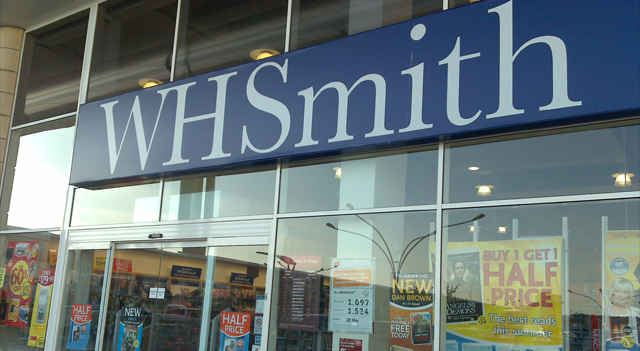
  • WH Smith Names Turnaround Specialist Leo Quinn as Executive Chairman to Lead Next Growth Phase

    WH Smith Names Turnaround Specialist Leo Quinn as Executive Chairman to Lead Next Growth Phase

    WH Smith PLC (LSE:SMWH) said it plans to appoint seasoned UK business leader Leo Quinn as Executive Chairman from 7 April 2026, subject to shareholder approval, as the retailer seeks to rebuild momentum and deliver sustainable long-term growth. Quinn will take over from Annette Court, who will step down following the company’s annual general meeting on 2 February 2026, with Senior Independent Director Simon Emeny acting as interim non-executive Chairman in the transition period.

    Quinn brings more than two decades of experience running large, publicly listed companies, having previously led groups including Balfour Beatty, QinetiQ and De La Rue. His appointment is positioned as a deliberate move by the board to strengthen strategic execution and accelerate a broader turnaround, drawing on his track record in complex operational and financial restructurings.

    To closely align his interests with those of shareholders, Quinn has committed to invest £2 million of his own capital in WH Smith shares. In addition, he will receive a performance-based share award valued at £12.25 million at grant, which could rise to twice that level if the company’s share price doubles over a five-year period. The incentive structure is designed to drive substantial shareholder value creation, potentially adding around £800 million to the company’s market capitalisation if targets are met.

    Despite the leadership change, WH Smith continues to face near-term challenges. Recent performance has been weighed down by declining revenue, pressure on margins and a net loss, alongside a highly leveraged balance sheet. Negative technical indicators have also contributed to cautious market sentiment.

    These headwinds are partly offset by resilient cash generation and an attractive dividend yield. Management guidance for FY26 points to a return to growth and improved profitability, although execution risks — particularly around regulation and North American operations — remain key considerations for investors.

    More about WH Smith

    WH Smith PLC is a global travel retailer with operations across airports, railway stations and other transport hubs worldwide. The group sells books, newspapers, magazines, convenience items and travel essentials, leveraging its well-known brand and long-standing retail heritage to expand its travel-focused business model.

  • European Stocks Slip on Greenland Concerns, Economic Updates: DAX, CAC, FTSE100

    European Stocks Slip on Greenland Concerns, Economic Updates: DAX, CAC, FTSE100

    European equity markets traded mostly lower on Friday as investors weighed fresh geopolitical developments alongside a mixed batch of economic data and corporate news.

    Concerns surrounding Greenland resurfaced after media reports indicated that European troops have begun arriving in the territory amid what has been described as a credible U.S. military threat.

    The deployment, involving forces from several European nations and other North Atlantic Treaty Organization allies, was announced after high-level talks between Danish and U.S. officials ended without agreement on Thursday.

    On the economic front, data released earlier in the day showed that German harmonized inflation slowed toward the 2% target at the end of last year.

    According to final figures from Destatis, the harmonized index of consumer prices rose 2.0% year over year in December, easing from a 2.6% increase in November. The statistical office confirmed the December reading that had been published on January 6.

    Similarly, headline consumer price inflation moderated to 1.8% from 2.3% in each of the prior two months. The latest figure marked the slowest pace since September 2024 and was in line with the preliminary estimate.

    In market performance, France’s CAC 40 was down 0.6%, Germany’s DAX slipped 0.3%, and the U.K.’s FTSE 100 eased 0.1%.

    Shares of gold producer Fresnillo (LSE:FRES) declined as easing geopolitical tensions pressured gold prices.

    Banking heavyweight HSBC (LSE:HSBA) also traded lower after announcing a strategic review of its insurance business in Singapore.

    In contrast, shares of Kloeckner & Co. (TG:KCO) surged after Worthington Steel (NYSE:WS) said it would acquire the German steel processor in a deal valued at $2.4 billion.

  • European markets edge lower as geopolitical concerns linger: DAX, CAC, FTSE100

    European markets edge lower as geopolitical concerns linger: DAX, CAC, FTSE100

    European equities moved lower on Friday, closing the week in negative territory as investors remained cautious amid persistent geopolitical uncertainty.

    At 08:02 GMT, Germany’s DAX was down 0.1%, France’s CAC 40 slipped 0.2%, and the UK’s FTSE 100 eased 0.1%.

    Greenland tensions raise downgrade concerns

    Uncertainty around Greenland remained in focus after talks earlier in the week between senior U.S. officials and the foreign ministers of Denmark and Greenland failed to produce an agreement on the future of the Arctic territory. Danish Prime Minister Mette Frederiksen said there was still a “fundamental disagreement” with the United States after President Donald Trump reiterated that the U.S. “needs” Greenland.

    Frederiksen also warned that a dispute with Washington over Greenland could threaten the future of NATO, the military alliance that includes the U.S., Denmark and most European countries.

    A weakening of the alliance could have credit implications for Europe, according to Fitch. James Longsdon, head of sovereign ratings at the agency, said on Thursday that Fitch could consider a one-notch “adjustment” to European sovereign ratings if the defence alliance were to fracture.

    He added that geographical exposure would be a key consideration. “It could be where you felt the vulnerability to a geopolitical event would be most obvious,” he said. “That’s the broad rule of thumb, so the further away you are from Russia, the least likely that is to be the case.”

    Several European countries, including Germany, France, Norway and Sweden, have already begun deploying troops to Greenland as a signal of support.

    German inflation stalls

    Earlier data showed that German consumer prices were unchanged in December, with annual inflation at 1.8%, below the European Central Bank’s medium-term target of 2.0%.

    The ECB has kept interest rates unchanged since concluding a rapid easing cycle in June and indicated last month that it sees no urgency to alter policy, citing resilient economic growth and easing inflation pressures. The central bank’s next policy meeting is scheduled for early February.

    Chipmakers remain in focus

    The European earnings calendar is relatively quiet, but semiconductor stocks are expected to stay in the spotlight following results released on Thursday by Taiwan Semiconductor Manufacturing (NYSE:TSM).

    The world’s largest contract chipmaker reported strong fourth-quarter earnings and said demand linked to artificial intelligence remained robust. The update helped lift shares of European peers on Thursday, including Dutch equipment supplier ASML (EU:ASML), ASM International (EU:ASM) and BE Semiconductor (EU:BESI).

    Oil steadies after sharp fall

    Oil prices were slightly higher on Friday, stabilising after steep losses in the previous session as fears of an imminent U.S. strike on Iran eased, reducing perceived supply risks.

    Brent crude futures rose 0.1% to $63.85 a barrel, while U.S. West Texas Intermediate crude gained 0.2% to $59.30 a barrel.

    Both benchmarks dropped more than 4% on Thursday after President Trump said Tehran’s crackdown on protesters was easing, tempering concerns about potential military action that could disrupt oil supplies. Even so, crude prices are still on track to end the week broadly flat, after reaching multi-month highs earlier in the week amid unrest in Iran.