Category: Top Story

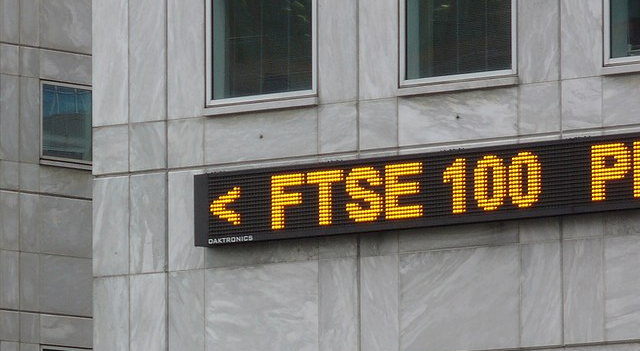
  • DAX, CAC, FTSE100, European Shares Advance as German Factory Output Surprises to the Upside

    DAX, CAC, FTSE100, European Shares Advance as German Factory Output Surprises to the Upside

    European equity markets traded mostly higher on Friday after finishing the previous session little changed, with sentiment lifted by stronger-than-expected economic data from Germany.

    Investors reacted positively to figures showing German industrial production rose for a third consecutive month in November, defying expectations and helped by a recovery in automotive output. The data added to signs that Europe’s largest economy may be stabilising toward year end.

    The benchmark indices reflected the improved mood, with France’s CAC 40 up about 1.1%, London’s FTSE 100 gaining roughly 0.8% and Germany’s DAX advancing around 0.5%.

    In corporate news, mining heavyweight Glencore (LSE:GLEN) rallied strongly, while Rio Tinto (LSE:RIO) moved lower. The two companies confirmed they are in early-stage talks over a potential combination involving some or all of their operations, with an all-share merger among the options under discussion.

    Shares in Peer American climbed after reports suggested its proposed merger with Canada’s Teck Resources is on track to secure antitrust approval in Europe.

    Gurit Holding (LSE:0QQR) surged after the Swiss composites specialist announced a five-year core materials kits supply agreement valued at around CHF 250 million.

    Herald Investment Trust (LSE:HRI) also jumped, after unveiling plans for a tender offer that would allow shareholders to sell up to 100% of their holdings at close to net asset value, a move aimed at resolving a dispute with activist investor Saba Capital.

    Shares in Halma (LSE:HLMA) moved higher after the company agreed to acquire Italian safety systems specialist Safetec Srl, strengthening its industrial safety portfolio.

    Dutch semiconductor equipment maker ASML (EU:ASML) also advanced, supported by better-than-expected fourth-quarter revenue reported by Taiwan Semiconductor Manufacturing Company, the world’s largest contract chipmaker.

    On the downside, J Sainsbury (LSE:SBRY) fell sharply after the UK’s second-largest grocer reported weaker sales at its Argos general merchandise chain during the key Christmas quarter.

  • Oil Extends Rally on Supply Risks Linked to Venezuela and Iran

    Oil Extends Rally on Supply Risks Linked to Venezuela and Iran

    Oil prices pushed higher for a second consecutive session on Friday, rising more than 1% and remaining on course for a third straight weekly gain, as markets continued to price in the risk of supply disruptions tied to Venezuela and growing unrest in Iran.

    Brent crude futures advanced about 1.3% to roughly $62.8 a barrel, while US West Texas Intermediate (WTI) crude climbed by a similar margin to around $58.5. Both benchmarks followed a sharp rebound on Thursday, when prices jumped more than 3% after two days of losses. For the week, Brent is heading for a gain of around 2.7%, with WTI up about 1.4%.

    Geopolitical uncertainty has been the dominant theme, with traders closely watching developments in Venezuela and their potential impact on global oil flows, while protests and instability in Iran have added to concerns over production. Analysts note that rising geopolitical stress is supporting prices despite expectations that the oil market could face oversupply in 2026.

    “Bottlenecks in the flow of sanctioned barrels and steady demand signals appear to counter the backdrop of an oversupplied 2026, at least for now,” said Priyanka Sachdeva, senior market analyst at Phillip Nova. “Escalation in geopolitical stress adds to the current momentum in oil prices.”

    Oil has also been supported by political risk following actions by the United States in Venezuela, including the capture of President Nicolás Maduro and statements from the Trump administration asserting control over the country’s oil sector, which could reshape export dynamics. At the same time, civil unrest in Iran, alongside fears that the Russia–Ukraine conflict could further disrupt Russian oil exports, has reinforced the risk premium in crude markets.

    “The price surge has been primarily due to Trump’s claim to control Venezuela’s oil export, which could see a price increase from previously discounted sales,” said Tina Teng, market strategist at Moomoo ANZ.

    Meanwhile, major oil producers and global trading houses are manoeuvring to secure access to Venezuelan crude under emerging US government frameworks, competing for barrels that have accumulated in storage as a result of sanctions and shipping disruptions.

    Even so, some caution remains. Global oil inventories are rising, and analysts warn that underlying oversupply could limit the sustainability of the rally unless geopolitical risks intensify further.

  • Gold Steadies Ahead of US Payrolls as Weekly Rally Holds

    Gold Steadies Ahead of US Payrolls as Weekly Rally Holds

    Gold prices were little changed in Asian trading on Friday as investors stayed on the sidelines ahead of the release of key US labour market data later in the day, while the metal remained on course for solid weekly gains supported by geopolitical risk.

    Spot gold hovered near $4,474 an ounce in early trade, while US gold futures edged slightly lower. Despite the pause, bullion was set to post a weekly advance of more than 3%, following a sharp rally at the start of the week triggered by heightened tensions between the United States and Venezuela, including the capture of President Nicolas Maduro.

    Dollar strength caps gains before data release

    The upside in gold was tempered by a stronger US dollar, which recently touched a one-month high. A firmer dollar typically weighs on the metal by making it more expensive for buyers using other currencies.

    Market participants are now focused on the US nonfarm payrolls report, which is expected to offer fresh insight into the health of the labour market and help shape expectations for the Federal Reserve’s next policy moves. The data could influence both the timing and scale of any future interest rate cuts, keeping traders cautious ahead of the release.

    Traders are increasingly pricing in the possibility of two additional US rate cuts in 2026, following the Federal Reserve’s interest rate reduction in December. Lower borrowing costs generally support gold, which does not generate yield and tends to perform better when interest rates decline.

    Geopolitics underpin safe-haven demand

    Ongoing tensions between Washington and Caracas have continued to underpin demand for safe-haven assets. While prices consolidated after the early-week surge, the prospect of a prolonged geopolitical standoff remains a supportive factor for bullion.

    Political developments in the United States also stayed in focus, after the US Senate voted to advance measures aimed at limiting further military action in Venezuela. President Donald Trump, however, said US oversight of the situation could extend for years, highlighting the risk of sustained uncertainty that may continue to benefit gold.

    Broader metals complex advances

    Elsewhere in metals markets, prices were mostly higher on Friday. Silver and platinum both edged up, while palladium surged sharply. Copper futures also advanced on both the London Metal Exchange and in the United States, pointing to broader strength across the metals complex.

  • Glencore Acknowledges Preliminary Merger Discussions With Rio Tinto

    Glencore Acknowledges Preliminary Merger Discussions With Rio Tinto

    Glencore (LSE:GLEN) has confirmed it is in early-stage discussions with rival Rio Tinto (LSE:RIO) regarding a potential combination involving part or all of their respective businesses.

    Glencore said the talks remain preliminary and highly uncertain, with no assurance that a transaction will proceed or that agreement will be reached on structure or valuation. One possible outcome under consideration could be an all-share transaction implemented via a UK court-approved scheme of arrangement, under which Rio Tinto would acquire Glencore.

    Under the UK Takeover Code, the confirmation of discussions triggers a formal timetable. Rio Tinto is required to either announce a firm intention to make an offer or confirm that it does not intend to proceed by 5 February 2026. The process places increased focus on the coming weeks and activates disclosure obligations for investors holding significant interests in either company.

    From a market perspective, the announcement has drawn attention to the contrasting financial profiles of the two groups. Glencore continues to benefit from strategic initiatives and shareholder return policies, supported by positive management commentary and technical momentum, although profitability and cash flow pressures remain a constraint. Rio Tinto, by contrast, enters the discussions with a strong balance sheet, solid cash generation, and a track record of disciplined capital management, alongside supportive technical indicators despite some near-term overbought signals.

    More about Glencore

    Glencore is a global diversified natural resources group active in the production, marketing, and trading of commodities. Its portfolio spans metals and minerals, energy products, and agricultural goods, giving it broad exposure across global commodity markets. The company’s shares are listed on the London Stock Exchange, with a secondary listing in Johannesburg.

    More about Rio Tinto

    Rio Tinto is a global mining and metals company producing commodities including iron ore, aluminium, copper, and other critical minerals used in industrial and infrastructure applications worldwide. The group operates a dual-listed company structure through listings in London and Australia, providing access to international capital markets and a geographically diversified shareholder base.

  • Sainsbury’s Extends Christmas Market Share Gains as Grocery Momentum Boosts Profit and Cash Guidance

    Sainsbury’s Extends Christmas Market Share Gains as Grocery Momentum Boosts Profit and Cash Guidance

    J Sainsbury plc (LSE:SBRY) reported a strong third-quarter trading performance for the 13 weeks to 3 January 2026, supported by continued grocery-led growth and another year of Christmas market share gains.

    Total retail sales excluding fuel rose 3.9% year on year, with like-for-like sales up 3.4%. Grocery sales increased 5.4%, marking a sixth consecutive year of Christmas market share growth, while sales in general merchandise and at Argos declined modestly over the period.

    The retailer said demand was driven by strong fresh food sales, robust performance from its premium Taste the Difference range, and record trading in convenience stores. Online grocery sales grew 14%, supported by the group’s Nectar-linked value proposition, which helped attract more customers and lift average basket sizes during the peak festive season.

    Management said continued investment in value, quality, and service under its Next Level strategy is sustaining competitive momentum. As a result, Sainsbury’s reaffirmed guidance for retail underlying operating profit of more than £1 billion for the year and upgraded free cash flow expectations to above £550 million. The group also reiterated plans to return more than £800 million to shareholders.

    Progress was also reported across strategic initiatives, including growth in the Nectar360 retail media business and ongoing transformation at Argos. Disciplined stock management and continued expansion of food retail space are expected to help the group consolidate share in a subdued general merchandise market while improving returns for investors and brand partners.

    Overall, Sainsbury’s outlook remains supported by solid operating performance and shareholder-focused actions. However, valuation levels and mixed technical indicators suggest some caution, with regulatory cost pressures and broader market challenges continuing to feature in the investment backdrop.

    More about J Sainsbury plc

    J Sainsbury plc is one of the UK’s largest food-led retailers, operating Sainsbury’s supermarkets and convenience stores alongside Argos and the Tu clothing brand. The group serves value-conscious consumers with a broad grocery offering, premium own-label ranges such as Taste the Difference, and a growing online grocery business, underpinned by its Nectar loyalty scheme and retail media platform.