Category: Top Story

  • easyJet Supports Proposed £6.90-a-Share Takeover Terms from Castlelake (EZJ)

    easyJet Supports Proposed £6.90-a-Share Takeover Terms from Castlelake (EZJ)

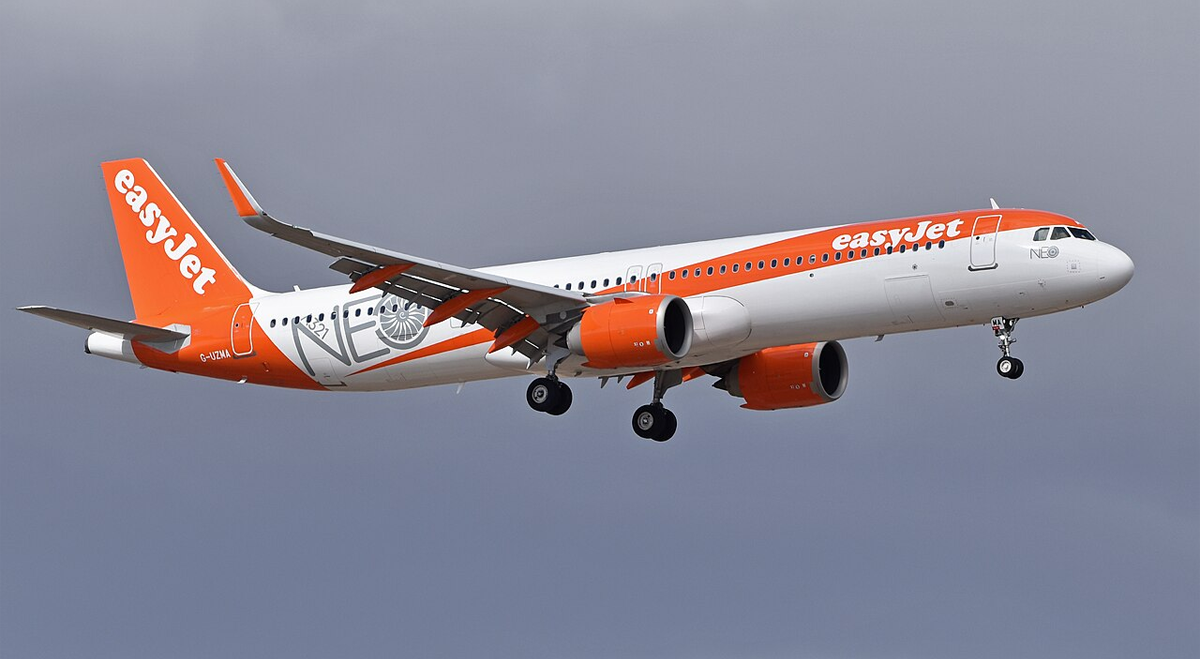
    easyJet (LSE:EZJ) has reached agreement in principle on the principal financial terms of a recommended cash offer from U.S. investment firm Castlelake, L.P. to acquire the shares it does not already own at £6.90 per share. The proposal also includes a partial unlisted share alternative for eligible shareholders.

    Following discussions with its advisers, the easyJet board said it would be prepared to recommend a formal offer to shareholders if Castlelake submits a firm bid on the agreed financial terms and the remaining transaction conditions are successfully negotiated.

    Offer Remains Subject to Further Conditions

    The potential acquisition remains conditional on several customary requirements, including the completion of satisfactory due diligence and agreement on definitive transaction documentation. As a result, there is no certainty that a binding offer will ultimately be made.

    The UK Takeover Panel has extended Castlelake’s “put up or shut up” deadline until 5.00 pm on 3 August 2026. In the meantime, the company has advised shareholders not to take any action until further announcements are issued.

    If completed, the transaction could significantly reshape easyJet’s ownership structure while supporting the airline’s long-term strategy, including continued investment in fleet modernisation.

    Outlook Supported by Improving Fundamentals

    easyJet’s outlook continues to benefit from improving profitability, a strong balance sheet and an attractive valuation, supported by a relatively low price-to-earnings ratio and dividend yield. Technical indicators also remain positive, although recent share price gains suggest momentum may be becoming stretched.

    Management’s latest earnings commentary was broadly encouraging, highlighting strong liquidity and confidence in medium-term targets. However, the company continues to monitor cost inflation and demand trends, which remain important factors for near-term performance.

    More about easyJet

    easyJet plc is one of Europe’s largest low-cost airlines, operating an extensive network of short-haul leisure and business routes across the continent. The company continues to invest in fleet renewal to improve operating efficiency, reduce emissions and strengthen its competitive position within the European aviation market.

  • ITV Agrees £1.6bn Sale of Media Business to Sky as Studios Becomes Standalone Content Group (ITV)

    ITV Agrees £1.6bn Sale of Media Business to Sky as Studios Becomes Standalone Content Group (ITV)

    ITV plc (LSE:ITV) has reached an agreement to sell its Media and Entertainment division to Sky, part of Comcast, in a transaction valued at up to £1.6 billion. The deal will combine ITV’s broadcasting and streaming operations with Sky’s pay television and streaming platforms. Under the agreement, ITV will receive £1.2 billion in cash together with ownership of Love Productions, while ITV Media & Entertainment and Sky have committed to maintaining free-to-air programming and preserving ITV’s public service broadcasting responsibilities, including national news, until at least 2034.

    Shareholder Returns and Balance Sheet Strengthened

    Following completion of the transaction, ITV expects net cash proceeds of approximately £1.05 billion after separation costs. The company intends to return around £950 million, equivalent to 25p per share, to shareholders, with the remaining proceeds earmarked for reducing debt and strengthening the balance sheet.

    Once the sale is completed, ITV Studios will operate as a standalone London-listed content production company. Its future earnings will be supported by a long-term supply agreement with ITV Media & Entertainment and Sky valued at a minimum of £2.1 billion between 2028 and 2032. The addition of Love Productions, creator of formats including The Great British Bake Off, is also expected to enhance the studio’s international content portfolio.

    Strategic Shift Towards Global Content Production

    ITV believes the transaction will unlock the full value of ITV Studios by allowing it to focus exclusively on content creation and distribution. Management expects the standalone business to deliver organic revenue growth ahead of the wider market, EBITA margins of between 13% and 15%, and strong cash generation capable of supporting future investment and shareholder returns.

    For Sky, the acquisition creates a larger UK media and entertainment business with greater scale to invest in programming, technology and streaming capabilities. The enlarged group is intended to strengthen competition with international streaming platforms while maintaining the ITV brand and fulfilling its long-term public service broadcasting commitments.

    Outlook Reflects Strategic Opportunity and Operational Challenges

    ITV’s outlook remains supported by improving revenue trends and a healthier leverage position. However, profitability and cash generation continue to face pressure, while technical indicators suggest only a modest upward trend with broadly neutral momentum. Valuation remains attractive, supported by a mid-range price-to-earnings ratio and a relatively high dividend yield.

    Recent management commentary has been cautiously optimistic, highlighting continued growth at ITV Studios, expanding digital operations and ongoing cost discipline. These positives are balanced against continued weakness in linear television advertising, margin pressure, softer cash conversion and uncertainty surrounding the strategic review of the Media & Entertainment business.

    More about ITV plc

    ITV plc is a UK media and entertainment company best known for operating one of the country’s leading public service broadcasters. Through ITV Studios, the group produces, distributes and licenses entertainment, drama and factual programming for audiences around the world, while its Media & Entertainment division has traditionally operated the ITV broadcast network, ITVX streaming platform and advertising-supported television services across the UK.

  • Ocado Confirms CEO Succession Timeline as Tim Steiner Prepares for Founder Role (OCDO)

    Ocado Confirms CEO Succession Timeline as Tim Steiner Prepares for Founder Role (OCDO)

    Ocado Group (LSE:OCDO) has outlined the next stage of its long-term leadership succession plan, confirming that founder Tim Steiner will continue as chief executive through the start of the 2028 financial year. Steiner will remain responsible for the group’s strategy, operations and growth initiatives before continuing his involvement with the business in a new capacity through 2029, supporting a measured leadership transition.

    Succession Process Underway

    The board and Steiner are jointly managing a succession process that is expected to conclude around the beginning of the 2028 financial year. Steiner will continue leading the company throughout FY2027 while the board identifies and prepares his successor.

    Following the appointment of a new chief executive, Steiner will assume a Founder role through 2029, providing strategic advice and industry expertise. The phased transition is intended to maintain continuity for employees, customers, partners and shareholders while supporting the company’s long-term growth strategy.

    Outlook Shows Improving Cash Flow but Ongoing Challenges

    Ocado’s outlook continues to improve as cash flow trends strengthen and management progresses with a clearly defined cost-reduction programme outlined during recent earnings updates. However, the business still faces challenges from weak underlying operating profitability and leverage-related financing risks.

    Technical indicators remain moderately positive, although they do not yet point to a firmly established long-term uptrend. Valuation also appears relatively attractive, but this is tempered by continued earnings volatility and fluctuating cash generation.

    More about Ocado Group

    Ocado Group plc is a technology-led online grocery and retail solutions provider that develops automated warehousing, fulfilment and software systems for supermarkets and e-commerce partners around the world. Alongside its own online grocery operations, the company licenses the Ocado Smart Platform, enabling retailers to improve logistics through robotics, automation and data-driven fulfilment technology.

    Founded by Tim Steiner and his co-founders, Ocado has evolved from a UK online supermarket into a global technology business serving major food retailers through long-term partnerships. The group focuses on helping retailers deliver more efficient, scalable and automated online grocery services.

  • AI-Powered Trading Platforms Gain Momentum Across Leading Brokerages

    AI-Powered Trading Platforms Gain Momentum Across Leading Brokerages

    Artificial intelligence is becoming an increasingly important feature of online investing as major brokerage firms continue introducing new AI-driven trading solutions, according to research published by Jefferies.

    Coinbase Global Inc (NASDAQ:COIN), eToro Group Ltd (NASDAQ:ETOR) and Robinhood Markets Inc (NASDAQ:HOOD) have recently unveiled autonomous AI agents capable of analysing markets, building portfolios and executing trades automatically within user-defined limits. These systems are built on Model Context Protocol (MCP) technology, enabling large language models such as Claude and GPT to communicate directly with brokerage platforms.

    Robinhood’s service currently focuses on equities and requires users to open a dedicated agentic trading account. The broker said more than 50,000 customers signed up within weeks of launch, with daily trading activity reaching millions of dollars across stocks and options.

    eToro’s Tori assistant offers trading across equities, commodities, cryptocurrencies, ETFs and foreign exchange. According to the company, the platform completed more than 500,000 trades during its first year while attracting more than one-third of eligible club members.

    Coinbase currently supports cryptocurrency spot and derivatives trading through its AI tools and intends to broaden coverage further. The company said its AI ecosystem generated more than US$4 million in revenue through Virtuals agents and over US$30 million in earnings on Banker during June.

    Interactive Brokers Group Inc (NASDAQ:IBKR) has opted for a more cautious approach, launching a platform that assists with investment research but still requires traders to approve every order under its “human in the middle” framework.

    Meanwhile, The Trade Desk Inc (NASDAQ:TW) and Charles Schwab Corp (NYSE:SCHW) are focusing on conversational AI tools designed to analyse portfolios and answer market questions rather than execute trades.

    Jefferies noted that references to artificial intelligence during earnings calls among the six companies nearly doubled during the first quarter of 2026 compared with the previous quarter, underlining how rapidly AI is becoming embedded across the brokerage sector.

  • AI-Driven Cyber Threats Could Become Banking’s Biggest Risk, JPMorgan Says

    AI-Driven Cyber Threats Could Become Banking’s Biggest Risk, JPMorgan Says

    JPMorgan believes cyber risk is emerging as one of the most underestimated threats facing the banking industry, warning that advances in artificial intelligence could make future cyber-driven liquidity crises more severe than traditional credit shocks.

    According to analyst Kian Abouhossein, cutting-edge AI models such as Mythos and GPT-5.5 are dramatically shortening the time needed to identify previously undiscovered software vulnerabilities, reducing banks’ ability to respond before systems are compromised.

    “Significantly reduce the timeline for discovering previously unknown zero-day vulnerabilities from months and years to hours,” the report said.

    Rather than focusing primarily on regulatory capital, JPMorgan argued that supervisors should place greater importance on operational resilience.

    “Looking at cybersecurity risk through the lens of the capital framework is not the best approach,” Abouhossein wrote, recommending broader resilience testing and liquidity stress scenarios that simulate rapid deposit withdrawals triggered by cyber incidents.

    The bank also highlighted the amplifying role of social media, warning it could fuel “unprecedented volatility in deposit flows” during a cyber crisis, similar to the market dynamics witnessed during Credit Suisse’s collapse.

    JPMorgan believes U.S. banks currently hold an advantage because of larger technology investments and faster adoption of advanced AI capabilities, while European lenders remain comparatively more exposed.

    The report concluded that banks with larger, stickier deposit franchises could increasingly command valuation premiums, adding that U.S. globally systemic banks may deserve higher valuations than European and Japanese peers because investors are likely to place greater value on stronger cyber preparedness.

  • JPMorgan sees AI chip stocks facing new challenges as cloud giants improve returns

    JPMorgan sees AI chip stocks facing new challenges as cloud giants improve returns

    Gap between chipmakers and hyperscalers may narrow

    JPMorgan believes the prolonged outperformance of artificial intelligence semiconductor companies over hyperscale cloud providers is unlikely to persist indefinitely, arguing that the current performance gap could become increasingly difficult to justify.

    In a research note, analyst Nikolaos Panigirtzoglou described two potential outcomes that could bring the two sectors closer together.

    Better AI monetization could benefit hyperscalers

    Under JPMorgan’s preferred scenario, hyperscalers, AI model developers and corporate users generate stronger revenues and profits from artificial intelligence investments.

    The bank said this would enable them to “catch up, capturing a bigger share of the overall AI value-added pie.”

    Alternatively, if semiconductor companies continue to capture a disproportionate share of AI spending, the resulting pressure on customers’ profitability could “start to depress capex intentions” and “eventually act as a headwind to demand for the semiconductor companies’ products.”

    Capital spending outlook remains a key risk

    While JPMorgan continues to favour the more constructive scenario, it pointed out that many analysts expect hyperscaler capital expenditure growth to slow sharply from next year.

    The bank noted that this consensus, “taken at face value would tilt towards the negative scenario.”

    Extended rally leaves semiconductor sector exposed

    AI chipmakers and memory producers have consistently outperformed hyperscalers since September, according to JPMorgan.

    Although the trend has rewarded investors, the bank warned that the sector could become more vulnerable if expectations for future AI investment begin to cool.

    Broader market observations

    JPMorgan also forecasts U.S. money creation to rise from $1.6 trillion in 2025 to $1.8 trillion in 2026.

    Separately, the bank cautioned that MicroStrategy has “introduced avoidable two-way risk into crypto markets inducing more uncertainty and volatility.”

  • Global M&A reaches record highs as mega-deals reshape corporate landscape

    Global M&A reaches record highs as mega-deals reshape corporate landscape

    Deal values surge despite fewer transactions

    Global mergers and acquisitions activity posted a record-breaking first half of 2026, fuelled by a wave of transformational mega-deals as companies took advantage of improved regulatory conditions and readily available financing to pursue long-term strategic growth.

    LSEG data showed announced transactions totalled $2.8 trillion during the first six months of the year, up 48% from the same period in 2025 and the strongest year-to-date performance since records began in 1980.

    While deal values climbed sharply, overall activity slowed. Approximately 24,000 transactions were announced during the period, down 9% year over year and marking the weakest first-half deal count in six years.

    Large transactions dominate the market

    The M&A market was overwhelmingly driven by blockbuster acquisitions.

    According to LSEG, 47 deals valued above $10 billion were announced during the first half, representing more than $1.3 trillion in combined value. Those transactions accounted for nearly half of total global M&A value, setting a new record for the contribution made by mega-deals.

    Notable transactions included NextEra Energy’s (NYSE:NEE) $66.8 billion acquisition of Dominion Energy (NYSE:D) and SpaceX’s (NASDAQ:SPCX) approximately $60 billion acquisition of Cursor.

    “Corporates have shown tremendous resilience in the face of geopolitical, monetary, macroeconomic, and even microeconomic volatility,” said Jay Hofmann, JPMorgan’s North America co-head of mergers and acquisitions.

    He added that financing “is available in size,” enabling companies to secure strategic assets that will help them “to navigate change and put themselves in the best position for the future.”

    Companies prioritise scale and strategic growth

    Advisers say corporate executives are increasingly focused on pursuing transformational acquisitions rather than smaller transactions.

    Ivan Farman, co-head of Global M&A at Bank of America, said companies recognise that completing a $1 billion transaction often requires a similar level of effort as negotiating a much larger acquisition.

    “Reflects a growing view that a $1 billion to $3 billion deal takes just as much time as a larger one, so when an opportunity for a big transaction arises, companies see this as the moment to act.”

    According to bankers, investors continue rewarding businesses that expand their competitive advantages through greater scale and strategic focus.

    “Bigger companies that have bigger moats and a bigger competitive advantage are trading at much better multiples than smaller companies,” Farman said.

    “Long held aspirational or dream deals are now being actively rallied around, with CEOs and management teams pushing them forward to their boards.”

    Regulatory shifts encourage confidence

    Many dealmakers believe global M&A activity could eventually exceed the post-pandemic boom recorded in 2021 as governments become more receptive to major corporate combinations.

    European policymakers are considering reforms designed to encourage the creation of regional industrial champions, while investment bankers believe the Trump administration is more willing to approve large-scale mergers in the United States.

    Meanwhile, proposed changes to Japan’s corporate governance code are expected to encourage cash-rich companies to deploy capital more aggressively through acquisitions.

    “Momentum has actually started to accelerate behind the scenes over the last six weeks with a growing pipeline of cross-border, strategic deals,” said Jan Weber, Morgan Stanley’s head of mergers and acquisitions for Europe, the Middle East and Africa.

    “It feels like a lot of the indicators are on green for more M&A and boards feel that they need to act. I do think we are working towards the next peak,” Weber added.

    Ed Wittig, Goldman Sachs’ co-head of Asia Pacific mergers and acquisitions, said businesses remain focused on expanding through strategic combinations.

    “There’s strong enthusiasm around synergies, and markets are rewarding those that execute well,” he said.

    Corporate breakups gain momentum

    Restructuring activity has also accelerated as companies streamline operations and sharpen their strategic focus.

    Among the most significant announcements were Comcast’s (NASDAQ:CMCSA) planned separation of NBCUniversal, Honeywell’s (NASDAQ:HON) proposed three-way split and the sale of Unilever Foods to McCormick & Co (NYSE:MCK).

    “The market is struggling more than ever to embrace businesses that are inordinately diversified,” said Akeel Sachak, global head of consumer at Rothschild & Co.

    “There was an era where diversity was applauded as a way of mitigating risk, but nowadays investors are more cautious because it creates undue complexity and a lack of focus from management.”

    Technology remains the centre of dealmaking

    Robust financing conditions continued supporting acquisition activity throughout the first half of the year.

    Global issuance of investment-grade corporate debt reached $3.4 trillion, up 10% year over year and the highest first-half total ever recorded by LSEG.

    Technology remained the largest sector for mergers and acquisitions, generating $649 billion in announced transactions.

    “AI or AI adjacent industries are one half of the equation, particularly in the U.S. The other half is the HALO side, heavy assets, low obsolescence, big infrastructure and big industry that will continue no matter what impact AI has,” said Sam Newhouse, global vice chair of Latham & Watkins’ M&A and Private Equity Practice.

    Cross-border activity continues to strengthen

    International dealmaking also recorded its strongest opening to a year since 2018.

    Cross-border transactions totalled $893 billion during the first half of 2026, representing a 62% increase from a year earlier.

    The United States remained the leading destination for overseas acquirers, accounting for around 25% of all cross-border transactions, while the United Kingdom ranked second.

    “There are a lot more UK corporates looking outward as well rather than just the UK being taken out,” said Kirshlen Moodley, head of UK M&A for BNP Paribas.
  • Gold slump accelerates as rising yields and stronger dollar weigh on prices

    Gold slump accelerates as rising yields and stronger dollar weigh on prices

    Gold prices are approaching their weakest quarterly performance in more than a decade after falling roughly 24% from January’s record highs, as higher real interest rates and a stronger U.S. dollar continue to pressure investor demand.

    The August Gold Futures contract was trading at US$4,031.70 on Tuesday, leaving bullion on track for its largest quarterly decline since April 2013.

    Investors favour downside protection

    Market sentiment has deteriorated as traders increasingly hedge against additional losses.

    For the first time since 2016, gold’s put/call skew has turned positive, signalling stronger demand for downside protection than for upside exposure.

    Goldman Sachs commodities executive Samantha Dart described the shift as a significant change in positioning but argued that the longer-term investment case remains intact.

    “Gold is not done,” she wrote in a note published on 29 June. “We continue to see further upside, driven by both structural and eventually cyclical factors. Structurally, EM central bank diversification — following the 2022 freezing of Russia’s reserves — remains the anchor of our $4,900/toz end 2026 forecast.”

    Central bank demand continues to underpin the market

    An OMFIF survey found that more central banks now intend to reduce dollar holdings than increase them over the coming decade, while a net 30% expect to raise their gold allocations within the next two years.

    The report stated that gold “has moved to the centre of reserve management strategy.”

    OMFIF Senior Economist Yara Aziz added that “the old assumption that public investors can wait for the environment to normalise looks increasingly unrealistic.”

  • Market Open: Craneware FY26 Warning, Strategic Minerals Redmoor Approval

    Market Open: Craneware FY26 Warning, Strategic Minerals Redmoor Approval

    FTSE 100 opens steady as European markets rise. Craneware cuts FY26 outlook, Strategic Minerals advances Redmoor, while Brent crude edges higher.

    Market Overview

    UK markets opened mixed, with the FTSE 100 edging slightly lower to 10,652.81, while the Euronext 100 gained 0.02 per cent to 1,921.52 and Germany’s DAX advanced 0.75 per cent to 25,772.81. Overnight, the Nasdaq closed lower at 25,832.67, while the S&P 500 finished broadly unchanged at 7,483.24. Market sentiment was supported by weaker US payroll data and easing geopolitical concerns following progress in Iran-related discussions, although investors remained cautious ahead of further economic data.

    Commodity markets were mixed, with copper and Brent crude higher while gold and natural gas eased. Bitcoin rose slightly against sterling. Currency markets were largely flat versus the pound, reflecting limited movement as investors weighed improving supply expectations in the oil market alongside a softer US economic backdrop.


    Market Numbers

    FTSE 100: Down (-0.001%), 10,652.81
    Euronext 100: Up (+0.02%), 1,921.52
    DAX: Up (+0.75%), 25,772.81
    NASDAQ: Down, 25,832.67
    S&P 500: Up, 7,483.24


    In the Headlines

    FY26 Outlook Warning – Craneware (LSE:CRW)

    Craneware warned that its financial performance for FY26 will fall below market expectations after delays in recognising revenue from eligible 340B drug activity and the deferral of several enterprise contracts. The company said customer demand remains strong and described the setback as a timing issue rather than a deterioration in underlying business conditions.

    Cornwall Drilling Approval – Strategic Minerals (LSE:SML)

    Strategic Minerals has received approval for a major drilling programme at the Redmoor tungsten, tin and copper project in Cornwall. The campaign is intended to expand the project’s resource base and marks an important step in advancing Redmoor towards future development.


    Currencies (vs GBP)

    USD: Unchanged (0.00%), $1.33381
    CHF: Unchanged (0.00%), Fr.1.07297
    EUR: Unchanged (0.00%), €1.1677
    JPY: Unchanged (0.00%), ¥215.355
    AUD: Unchanged (0.00%), $1.92887
    Bitcoin (BTC/GBP): Up, £46,180.40


    Commodities

    Copper: Up
    Gold: Down
    Brent Crude: Up
    Natural Gas: Down

  • U.S. holiday leaves Wall Street quiet as weaker jobs data lifts global markets: Dow Jones, S&P, Nasdaq, Futures

    U.S. holiday leaves Wall Street quiet as weaker jobs data lifts global markets: Dow Jones, S&P, Nasdaq, Futures

    U.S. financial markets will remain closed on Friday for the Independence Day holiday, but futures pointed to a firmer start when trading resumes. Softer-than-expected U.S. employment figures reduced expectations of an imminent Federal Reserve rate increase, helping Asian equities recover after recent losses. Investors also monitored gains among Tesla’s (NASDAQ:TSLA) Chinese suppliers and stronger-than-forecast activity in China’s services sector.

    Softer payrolls ease pressure on the Federal Reserve

    Wall Street futures strengthened after June’s labour market report suggested the U.S. economy is cooling, reducing expectations that policymakers will tighten monetary policy later this month.

    At 03:11 ET (07:11 GMT), Dow Jones futures were up 148 points, or 0.3%, S&P 500 futures had gained 30 points, or 0.4%, while Nasdaq 100 futures advanced 278 points, or 0.9%.

    The major U.S. indices ended Thursday’s shortened trading week with mixed performances. Treasury markets were relatively stable, with benchmark 10-year yields holding steady while two-year yields edged slightly lower.

    The latest Labour Department figures showed that job creation slowed more than economists had expected in June. Although the unemployment rate fell to a one-year low of 4.2%, investors interpreted the report as reducing the likelihood of another immediate interest rate increase. Earlier comments from Federal Reserve Chair Kevin Warsh, who suggested inflation risks had eased, reinforced that view.

    Deutsche Bank analysts noted that market-implied odds of a July rate hike dropped from 34% on Tuesday to just 18% by Thursday’s close.

    “Moreover, just 30 [basis points] of hikes are now priced in by the December meeting, the fewest since the Fed meeting a couple of weeks ago when the dot plot surprised in a hawkish direction,” they added.

    Technology stocks lead Asian rebound

    Asian stock markets posted broad gains as investors returned to technology shares following heavy selling earlier in the week.

    Semiconductor companies led the advance after concerns over artificial intelligence infrastructure spending had previously triggered widespread profit-taking.

    Samsung Electronics was among the session’s strongest performers after reports that Anthropic, the developer behind Claude Code, is considering developing its own AI processor with the South Korean chipmaker.

    The positive news helped South Korea’s KOSPI recover after two consecutive declines, while Japan’s Nikkei 225 and Singapore’s STI also closed higher.

    Chinese Tesla suppliers jump after delivery surprise

    Shares in several Chinese suppliers to Tesla (NASDAQ:TSLA) rose sharply after the electric vehicle manufacturer reported stronger-than-expected second-quarter deliveries, improving confidence that demand may be stabilising.

    Auto component manufacturers Ningbo Xusheng, Ningbo Tuopu and Zhejiang Sanhua all gained between 5% and 9%.

    Tesla delivered a record 480,126 vehicles during the quarter, supported by robust European demand and modest sales growth in China.

    The launch of lower-priced Model 3 and Model Y variants, together with the refreshed Model Y, helped maintain sales momentum and reinforced China’s importance as both a manufacturing base and a major end market for Tesla.

    China’s services economy remains resilient

    China’s services sector expanded faster than expected in June, according to the latest private-sector survey.

    The RatingDog Services PMI eased slightly to 54.1 from 54.4 in May but remained comfortably ahead of market expectations of 53.0.

    With the index remaining above the 50-point threshold since January 2023, the survey continued to point to sustained expansion across the sector.

    Demand strengthened both domestically and internationally, while exports of services grew at their fastest pace since October 2024.

    Businesses also increased selling prices for the first time in four months as higher input costs, linked partly to supply disruptions in the Middle East, filtered through to customers.

    Hormuz transit fees remain under consideration

    Bloomberg News reported that some European policymakers are increasingly accepting that commercial vessels may eventually have to pay transit fees to Iran and Oman to pass through the Strait of Hormuz.

    People familiar with the discussions said some Gulf Arab officials also believe a service charge is likely to emerge, although no government has formally adopted that position.

    Questions remain over both the size of any future fees and the implications such charges could have for international maritime law.

    The Strait of Hormuz has remained at the centre of geopolitical tensions since Iran effectively closed the shipping route following the joint U.S.-Israeli military operation in late February. Although oil prices initially surged, they have since retreated to around pre-conflict levels after the United States and Iran reached an interim peace agreement.