Category: Top Story

  • Silver Miners and Investors Find Promise in Mining-Friendly, Underdeveloped Bolivia

    Silver Miners and Investors Find Promise in Mining-Friendly, Underdeveloped Bolivia

    As the world’s need for electronic devices and renewable energy accelerates, silver is hitting record highs in demand and pricing, and the surge shows no signs of easing.

    This article is disseminated on behalf of New Pacific Metals Corp. It is intended to inform investors and should not be taken as a recommendation or financial advice.

    The nonstop need for silver continues increasing its value for investors, but high demand also puts pressure on limited supplies. A few producers are stepping up their output, ready to accommodate global needs.

    “Silver is indispensable to everyday life and the global economy,” said Jalen Yuan, CEO of New Pacific Metals Corp. (AMEX:NEWP) (TSX:NUAG) “Dedicated silver exploration and development is taking on increasing urgency for its power to deliver consistent returns in a fluctuating market while also promising better lives for people the world over.”

    Silver on the upswing

    At the end of 2025, silver prices reached all-time highs above $60 an ounce, and in and after peaking at over $120 per ounce in January 2026, it remained over $75 per ounce.

    What’s driving industrial demand? In essence, anything with an on/off switch probably needs silver – and silver only. Industry requires silver for its unparalleled conductive qualities, and unlike copper and other metals, alternatives are scarce.

    Silver is essential for the growing electronics and sustainability sectors. Industry is now consuming 59 percent of the world’s silver output, applying it to:

    • Solar energy panels. Silver converts sunlight to electrons and carries the electricity generated. Despite a slowdown in U.S. incentives, global solar installations rose by 33 percent in 2024 and are expected to continue rising in the low double digits through 2029, according to Solar Power Europe.
    • Electronic devices. One-third of the world’s silver goes toward electronics, creating electrical pathways and facilitating light-touch on/off switches in cellphones, tablets, toys, and more.
    • AI and data centers. The data centers powering AI have become the fastest-growing electronics category. They need silver for cloud infrastructures, high-speed networking, and cooling systems.
    • Automotives. Electric vehicles consume twice the silver of gas-powered vehicles for their additional electrical systems and power management components. Half all vehicles sold by 2035 are expected to be EVs, predicts the International Energy Association.
    • Wearables. Increasingly, smart rings, watches, pendants, and even clothing are monitoring biometrics, sleep, activity, and personal air quality.

    “As we become more connected in society, we become more reliant on electronic devices, and demand for silver is going to stay very strong,” said Trevor Keel, technical director, the Silver Institute.

    A geopolitical player

    While industrial demand rises, silver is also gaining popularity as a safe haven for investors seeking certainty amid the global political strife. Since the U.S. Geological Survey listed silver as a “critical mineral” essential to national security, some analysts expect stockpiling by the U.S. and other nations.

    Precious metals analyst David Morgan suggested the possibility of a 3x rise in silver prices from their mid-2025 levels. Metals markets, he said, are moving “at a sprint,” as institutions and the public seek them out to hedge against currency disruption.

    The confluence of surging demand for silver and political uncertainty “is enough to more than move the needle on continued safe-haven demand for gold and silver,” said Kitco News analyst Jim Wyckoff.

    Global mine production reached a seven-year high of 844 million ounces in 2025, according to the Silver Institute, but like a bathtub that drains faster than it fills, it isn’t enough. The World Silver Survey projects a shortfall of 118 million ounces in 2026.

    “In short, silver supply is sticky, but demand is anything but,” said Amit Pabari, managing director, CR Forex Advisors.

    Bolivia to the forefront

    A look at Mining.com’s top 20 silver-producing regions, including Poland, Mexico, and Russia, shows an array of barriers in silver production. Mining companies encounter strikes, land use disputes with communities, and logistical challenges. One leading company changed its domicile and sold its Russian assets to evade U.S. sanctions in 2023.

    In this atmosphere, Bolivia is emerging as a safe and stable supplier of the silver the world needs. Bolivia is the world’s fourth-largest silver producing country, rich with minerals and, unlike Mexico and other silver regions, underexplored geographically, with limited modern exploration. Mining exports doubled year-over-year in 2020, and a new, mining-friendly government is inviting foreign investment.

    New Pacific Metals, a Canadian exploration and development company advancing precious metal projects in Bolivia, owns two of the world’s largest undeveloped open pitable silver projects, positioning the company as a major future supplier to meet global demand.

    New Pacific’s permitting-stage Silver Sand project in Bolivia’s Potosi region could become one of the world’s largest pure silver mines, with the potential to produce about 12 million ounces of silver annually at all-in sustaining costs of below $11 an ounce.

    New Pacific’s Carangas Silver–Gold Project in Oruro strengthens the company’s portfolio through scale, robust economics, and regional exploration potential. Major steps expected at Carangas in 2026 include a 30,000-meter drilling program to upgrade and expand gold and silver resources, finalization of a community agreement, advancing the environmental license through strong government engagement and community partnerships, complete conversion from an exploration license to an exploitation license, and an updated preliminary economic assessment to include a gold zone.

    When underway, Carangas’ development could add about 6.6 million ounces to annual supply.

    Combined, the Silver Sand and Carangas Silver-Gold projects could produce as much or more silver output than many established global producers. The strong economic fundamentals of the projects are evident in high internal rates of return and low all-in sustaining costs per ounce of silver.

    With more than a decade of operating experience in Bolivia, New Pacific has earned the confidence of stakeholders and shareholders, including major ownership shares by industry leaders Silvercorp Metals, at 28 percent, and Pan American Silver, at 12 percent. The commitment of highly reputable industry players demonstrates their confidence in the projects while assuring strategic and technical backing. Headquartered in Vancouver, British Columbia, the company’s shares trade on the Canadian Securities Exchange under NUAG and on the New York Stock Exchange under NEWP.

    “The New Pacific Metals strategy for strong ROI in Bolivia is built on careful project identification and acquisition, thorough geological study, well-planned drilling, and long-term shareholder value creation,” said Yuan. “Our corporate social responsibility team is constantly on the ground, building respectful ties with local and national stakeholders. With its extensive commitments and strategic approach to bringing the Silver Sand and Carangas projects to fruition, New Pacific offers investors a rare opportunity to capitalize on an underdeveloped region now poised for significant contributions to meeting the world’s demand for silver.”

    For more information, please visit newpacificmetals.com/welcome.

  • European Shares Advance as Tech Fears Fade and Deal Activity Lifts Sentiment: DAX, CAC, FTSE100

    European Shares Advance as Tech Fears Fade and Deal Activity Lifts Sentiment: DAX, CAC, FTSE100

    European equities traded mostly higher on Monday as concerns around the technology sector subsided and a series of merger-and-acquisition headlines helped buoy investor confidence.

    The macroeconomic calendar was relatively quiet, though the latest KPMG/REC Report on Jobs showed that permanent job placements in the U.K. fell again in January amid subdued demand and employer worries over costs. That said, the rate of decline slowed to its mildest pace in 18 months, offering a small note of reassurance.

    By mid-morning, the U.K.’s FTSE 100 was down 0.2%, while France’s CAC 40 edged up 0.1% and Germany’s DAX gained 0.5%.

    Italy’s banking sector provided notable upside, with UniCredit (BIT:UCG) jumping after posting a record net profit of €10.6 billion for 2025.

    In the technology space, STMicroelectronics (BIT:STMMI) surged after announcing an expanded strategic partnership with Amazon Web Services.

    Deal news also drove sharp moves elsewhere. Shares in InPost (EU:INPST) rallied strongly after a consortium led by Advent, alongside FedEx, agreed to acquire the Polish parcel locker group at €15.60 per share.

    In the healthcare sector, Novo Nordisk (NYSE:NVO) climbed after U.S. telehealth group Hims & Hers said it would withdraw its copycat weight-loss pill from the market.

    Not all stocks joined the rally, however. NatWest (LSE:NWG) shares moved lower after the British lender announced a deal to acquire private equity-backed wealth manager Evelyn Partners.

  • European Markets Open Higher in Earnings-Heavy Week, UniCredit in the Spotlight: DAX, CAC, FTSE100

    European Markets Open Higher in Earnings-Heavy Week, UniCredit in the Spotlight: DAX, CAC, FTSE100

    European equities moved modestly higher on Monday, kicking off a packed week that features a fresh round of corporate earnings alongside a series of high-impact economic data releases.

    By 08:05 GMT, Germany’s DAX was up 0.5%, France’s CAC 40 had added 0.1%, and the UK’s FTSE 100 was trading 0.2% higher.

    UniCredit sets the tone for bank earnings

    The European earnings season is gaining momentum, with several large-cap names and major banks due to report in the days ahead. The pan-European Stoxx 600 index is hovering close to record levels, having logged seven positive weeks out of the past eight, as quarterly results have generally been well received.

    UniCredit (BIT:UCG) was a standout, after reporting record net profit of €10.6 billion for 2025, representing a 14% increase year on year. Italy’s second-largest lender also outlined ambitious medium-term goals, targeting €13 billion in net profit by 2028 and committing to €30 billion of shareholder returns over the next three years.

    The bank has deployed several billion euros from its surplus capital to build significant stakes in Germany’s Commerzbank and Greece’s Alpha Bank, stopping short of full acquisitions but positioning itself as a key shareholder in both institutions.

    This week also brings results from Commerzbank (TG:CBK), alongside UK peers Barclays (LSE:BARC) and NatWest Group (LSE:NWG).

    Beyond the banking sector, earnings updates are due from a wide range of blue-chip companies, including Koninklijke Philips (EU:PHIA), AstraZeneca (LSE:AZN), TotalEnergies (EU:TTE), Heineken (EU:HEIA), Mercedes-Benz Group (TG:MBG), Siemens (TG:SIE) and L’Oreal (EU:OR).

    U.S. data in focus

    Away from company results, investors will also be digesting fresh growth figures from both the eurozone and the UK. The main attention, however, is on the United States, where several key economic indicators are due after being delayed by a brief government shutdown.

    January’s nonfarm payrolls report and consumer price index data are scheduled for later in the week, and will be closely watched for insight into the resilience of the U.S. economy. The releases follow the nomination of Kevin Warsh as the next chair of the Federal Reserve, adding further significance to the data.

    Oil prices ease on diplomatic signals

    Oil prices edged lower on Monday after the U.S. and Iran agreed to continue negotiations over Tehran’s nuclear programme, easing concerns about potential supply disruptions in the Middle East.

    Brent crude futures slipped 0.9% to $67.46 a barrel, while U.S. West Texas Intermediate fell by the same margin to $62.98 a barrel. Both benchmarks declined by more than 2% last week, marking their first weekly drop in seven weeks, as geopolitical tensions showed signs of cooling.

    Officials from both countries said indirect talks held in Oman on Friday would continue, reducing fears of a military escalation in a region that plays a critical role in global oil supply.

  • Markets Look to Earnings and Data This Week as Japan PM’s Election Bet Pays Off: Dow Jones, S&P, Nasdaq, Wall Street Futures

    Markets Look to Earnings and Data This Week as Japan PM’s Election Bet Pays Off: Dow Jones, S&P, Nasdaq, Wall Street Futures

    U.S. equity futures were modestly higher at the start of the week, as investors prepared for a heavy run of corporate earnings and closely watched economic releases that had been delayed. Semiconductor group Onsemi is among the first major names due to report on Monday, while Japanese equities climbed after Prime Minister Sanae Takaichi secured a decisive election victory.

    Futures edge higher

    Wall Street futures pointed slightly upward early Monday ahead of a week packed with earnings updates and key macro data. By 03:43 ET, Dow futures were up 87 points, or 0.2%, S&P 500 futures had added 6 points, or 0.1%, and Nasdaq 100 futures were ahead by 13 points, also 0.1%.

    The move followed a strong finish to last week, when U.S. stocks rebounded from earlier losses driven by concerns that artificial intelligence could disrupt parts of the software sector. On Friday, the Dow Jones Industrial Average closed above the 50,000 mark for the first time, while the S&P 500 gained nearly 2% and the Nasdaq Composite advanced around 2.2%.

    Not all mega-cap stocks participated in the rally. Shares of Amazon (NASDAQ:AMZN) fell 5.6% as investors reacted cautiously to signals that the company plans to significantly ramp up spending on AI. Other large technology groups, including Alphabet (NASDAQ:GOOG), have also outlined aggressive investment plans to remain competitive in AI, though questions persist over how quickly these investments will deliver sustainable returns.

    ON Semi to report

    Earnings attention on Monday turns to ON Semiconductor (NASDAQ:ON), which is set to release quarterly results after the closing bell. The chipmaker previously issued fourth-quarter revenue and profit guidance broadly in line with market expectations.

    Demand for ON Semi’s power management solutions used in AI data centres has helped offset softer conditions in the automotive sector, where weaker electric vehicle demand in North America and Europe has reduced spending on silicon carbide components.

    Consensus estimates compiled by Bloomberg suggest adjusted earnings per share of $0.63 on revenue of $1.53 billion.

    Later in the week, investors will also hear from a number of other technology-focused companies, including Datadog (NASDAQ:DDOG), Spotify (NYSE:SPOT), Cisco (NASDAQ:CSCO) and Applied Materials (NASDAQ:AMAT).

    Japan PM scores big win

    Outside the U.S., Asian markets advanced after Japanese Prime Minister Sanae Takaichi secured a major victory in a snap election held over the weekend. The vote came just 110 days after Takaichi became Japan’s first female prime minister, making the gamble a high-stakes one.

    According to reports, her Liberal Democratic Party won such strong support that it achieved a rare supermajority in the lower house of parliament. The outcome appears to clear the way for Takaichi to pursue plans for increased government spending and tax cuts, supported by what observers see as a stable political environment.

    “Calm may be on the way for Japan’s markets now the election is out of the way,” said Thomas Mathews, Head of Asia Pacific Markets at Capital Economics. He added that a recent sell-off in Japanese government bonds, which had unsettled global markets, is unlikely to persist, while the yen is expected to strengthen.

    Gold rises

    Gold prices moved higher in European trading, with silver also advancing, following sharp swings in precious metals markets last week. Those moves were driven by a mix of subdued safe-haven demand, profit-taking and uncertainty around the outlook for U.S. monetary policy.

    Investors are now focused on several key U.S. economic indicators due this week, notably nonfarm payrolls and consumer price index inflation data. Both releases are closely watched by the Federal Reserve when assessing the path for interest rates.

    Some haven demand eased after signs of progress in talks between the U.S. and Iran over the weekend, with both sides indicating a willingness to continue discussions on Tehran’s nuclear programme.

    Oil slips

    Oil prices declined as easing geopolitical tensions weighed on sentiment. Comments from Washington and Tehran suggesting that indirect nuclear negotiations will continue helped reduce fears of an imminent escalation in the Middle East.

    A firm U.S. dollar ahead of major economic data releases also pressured crude prices, which had already fallen about 2% last week. Investors are also awaiting fresh economic data from China, the world’s largest oil importer.

    Brent futures were last down 1.1% at $67.32 a barrel, while West Texas Intermediate crude slipped 1.0% to $62.92 a barrel.

    The U.S. and Iran said over the weekend that talks held in Oman on Friday were constructive and would continue, helping to temper concerns of military conflict after earlier U.S. naval deployments to the region.

  • FTSE 100 Opens Higher as UK and European Shares Advance, Sterling Edges Lower; Plus500 Spotlight

    FTSE 100 Opens Higher as UK and European Shares Advance, Sterling Edges Lower; Plus500 Spotlight

    UK equities moved higher at the start of the week, tracking gains across European markets, while sterling eased slightly against the U.S. dollar in early trading.

    By 08:12 GMT, the FTSE 100 was up 0.4%, while the pound slipped 0.07% versus the dollar to 1.3603. European markets also posted solid gains, with Germany’s DAX rising 0.8% and France’s CAC 40 adding 0.4%.

    UK market round-up

    Plus500 Ltd (LSE:PLUS) was in focus after the trading platform said it expects its 2026 performance to come in ahead of market expectations, following stronger-than-anticipated results for 2025. Growth was supported by institutional partnerships linked to U.S. prediction markets and increasing exposure to higher-value customers. The group reported full-year revenue of $792.4 million, up 3% year on year, while net profit also increased 3% to $281.3 million. Basic earnings per share rose 10% to $3.93 from $3.56.

    In the banking sector, NatWest Group PLC (LSE:NWG) announced an agreement to acquire wealth manager Evelyn Partners for £2.7 billion. The deal will merge Evelyn’s £69 billion of assets under management with NatWest’s existing £59 billion, creating a combined £127 billion in assets under management and administration. NatWest also unveiled a £750 million share buyback alongside the transaction.

    Elsewhere, Phoenix Global Mining Ltd (LSE:PXC) confirmed the immediate suspension of Executive Chairman Marcus Edwards-Jones and Chief Financial Officer Richard Wilkins. The board is investigating allegations relating to their recent conduct and historic payments made to Lloyd Edwards-Jones S.A.S., the company’s former corporate finance adviser.

    In the advertising sector, WPP is reportedly preparing to combine its three main creative agencies under a single brand, according to the Financial Times, as part of a wider effort to simplify its operating structure.

    On the regulatory front, the UK’s Financial Conduct Authority said it plans to publish more comprehensive trading data for London-listed shares in a bid to address what it sees as significant under-reporting of market liquidity. The regulator is considering collecting data from all trading venues, including exchanges, dark pools and off-exchange platforms, to present a fuller picture of UK market activity. Simon Walls, the FCA’s interim director of markets, told the Financial Times that current liquidity measures can be misleading because they rely heavily on London Stock Exchange order book data while excluding a substantial volume of trading activity elsewhere.

  • Jefferies Downgrades Greggs to “hold” as Weight-Loss Drugs Weigh on Volumes

    Jefferies Downgrades Greggs to “hold” as Weight-Loss Drugs Weigh on Volumes

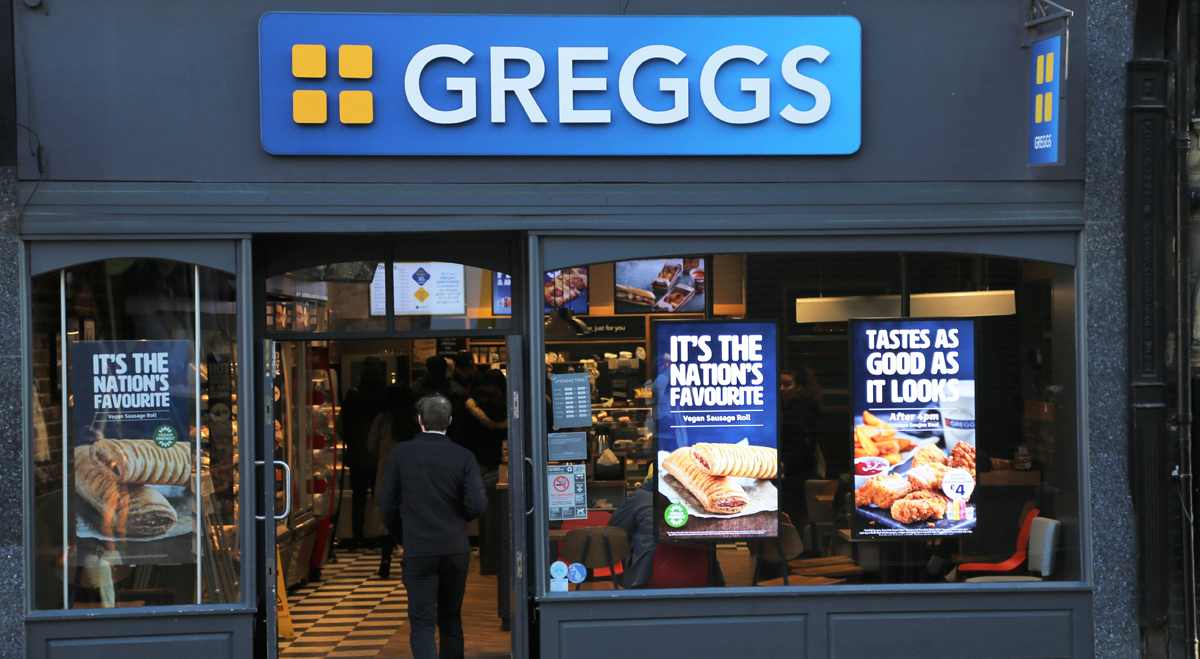
    Jefferies has cut its rating on Greggs (LSE:GRG) to “hold” from “buy” and reduced its price target sharply to 1,610p from 2,500p, arguing that the growing use of weight-loss medications is creating a structural drag on demand. The downgrade comes after what the broker describes as around 18 months of declining sales volumes, with the shares falling more than 3% on Monday. Greggs is currently trading at around 1,675p.

    The analysts said they now view the rapid adoption of GLP-1 receptor agonists, including drugs such as Mounjaro and Wegovy, as a “noticeable headwind” for the bakery chain. As a result, Jefferies has materially lowered its medium-term expectations, cutting like-for-like (LFL) sales growth assumptions from 4.5% to 2.5%, largely due to an expectation that volumes will remain under pressure.

    According to the broker, Greggs’ trading momentum has been weakening since mid-2024, with LFL sales gradually decelerating and volumes consistently turning negative. The company’s reported Q4 2025 LFL growth of 2.9% also missed management’s guidance of around 4%, despite more normalised weather conditions. With price increases contributing an estimated 5–6 percentage points to LFL growth, Jefferies infers that underlying volumes are still falling by roughly 2% to 3%.

    While management has pointed to softer consumer spending and adverse weather, including Storm Eowyn in January 2025 and the UK’s warmest summer on record, Jefferies said these factors do not fully explain either the scale or the persistence of the slowdown.

    The broker highlighted data from IQVIA indicating that the number of UK users of Mounjaro and Wegovy reached 2.5 million by July 2025, a near-70% increase in just four months and a fivefold rise year-on-year. Jefferies believes current usage may now be close to 4 million people, equivalent to about 7.5% of the UK adult population.

    Studies cited by the analysts suggest GLP-1 users typically cut daily calorie intake by 25% to 30%, or roughly 1,000 calories per day for higher-intake consumers. The largest reductions are seen in savoury, salty, high-fat and calorie-dense foods, categories that overlap heavily with Greggs’ core offer.

    Although Jefferies acknowledges that GLP-1 users tend to skew older, female and higher income than Greggs’ average customer, it argues that the overlap could be disproportionately harmful. The analysts said that “Where the two Venn diagrams intersect” sits a group of high-BMI consumers who are likely “some of Greggs’ best customers,” warning that these individuals could move “from being amongst Greggs’ most valued, to potentially never spending a penny with the business again.”

    The report also notes comments from Greggs chief executive Roisin Currie, who said in January 2026 there was “no doubt” that weight-loss drugs were having an impact on the business.

    Reflecting what it sees as a structural challenge, Jefferies now forecasts EBIT margins to decline by 50 basis points in FY26 and a further 30 basis points in FY27. Pre-tax profit for FY26 is projected at £171 million, broadly flat compared with an estimated £170 million in FY25.

  • Wetherspoon Reaffirms Assistance Dog Policy Following Safety Debate

    Wetherspoon Reaffirms Assistance Dog Policy Following Safety Debate

    J D Wetherspoon (LSE:JDW) has reiterated its policy on dogs in its pubs after a BBC report questioned whether its approach could conflict with equality legislation. The company said it welcomes assistance dogs but requires owners to provide evidence of training from Assistance Dogs UK, arguing that the policy is designed to balance accessibility for disabled customers with its legal responsibility to safeguard staff and other patrons.

    The pub operator pointed to a rise in dog-related incidents both nationally and across its own estate, noting that reported staff dog bites increased from one case in 2020 to 15 in 2025. Chairman Tim Martin said that allowing dogs entry first and relying on staff to assess behaviour afterwards, as recommended by Assistance Dogs UK, increases the risk of incidents. He added that Wetherspoon’s requirement for documentation is consistent with other regulatory checks, such as proof-of-age requirements or blue-badge verification for parking.

    From a market perspective, Wetherspoon’s shares continue to be underpinned by supportive technical indicators and a valuation that investors view as reasonable. While trading performance has shown signs of recovery, elevated debt levels and a history of cash flow volatility remain areas of concern. Limited recent earnings call commentary and a lack of major corporate events restrict further insight into near-term strategy.

    More about J D Wetherspoon

    J D Wetherspoon is a UK-based pub group that owns and operates venues across the country, focusing on offering food and drink at accessible prices. The company emphasises individually designed pubs, consistent service standards, and maintaining its estate to appeal to a broad and diverse customer base.

  • Plus500 Grows Profits, Expands Non-OTC Business and Pushes Further Into Prediction Markets

    Plus500 Grows Profits, Expands Non-OTC Business and Pushes Further Into Prediction Markets

    Plus500 (LSE:PLUS) delivered a solid performance in 2025, with revenue increasing 3% to $792.4m and EBITDA rising 2% to $348.1m, reflecting tight cost control and continued operating discipline. The group ended the year debt-free with around $0.8bn in cash, while its focus on higher-value, longer-tenure clients drove a sharp rise in average deposits per active customer and lifted ARPU to a record level. This supported $187.5m of shareholder returns through dividends and share buybacks.

    Strategically, the company continued to diversify its revenue base, scaling its non-OTC operations beyond $100m in annual revenue and increasing customer segregated funds to more than $0.9bn. Plus500 also expanded its institutional footprint through additional clearing memberships, a new partnership with Topstep, and the completion of the Mehta Equities acquisition in India. Expansion into prediction markets, including roles linked to CME Group, FanDuel and Kalshi, alongside new regulatory licences in Canada, the UAE, Japan and Colombia, further strengthens its positioning as a provider of global market infrastructure.

    Management believes these initiatives leave the group well placed for continued progress in 2026, supported by a broader product mix and expanding geographic reach. From an investment perspective, Plus500’s outlook is underpinned by strong profitability, low leverage and healthy cash generation, complemented by a reasonable valuation and attractive dividend yield. Technical indicators point to a strong upward trend, although very overbought momentum suggests an increased risk of near-term pullbacks.

    More about Plus500

    Plus500 is a global multi-asset fintech group operating proprietary, technology-driven trading platforms for retail and institutional clients. The company offers both OTC and non-OTC products across derivatives, futures and, increasingly, prediction markets, while continuing to expand its regulated presence across North America, Europe, Asia, the Middle East, India and Latin America.

  • Centrica Generates £80m+ From Disposal of European Energy Solutions Assets

    Centrica Generates £80m+ From Disposal of European Energy Solutions Assets

    Centrica (LSE:CAN) has completed the sale of a number of non-core European energy solutions operations, raising proceeds in excess of £80m. The divestments cover businesses in Italy, the Netherlands and Hungary, along with the Panoramic Power unit, and form part of the group’s ongoing efforts to simplify and refocus its portfolio.

    The Italian and Dutch operations have been sold to Joulz, a portfolio company of 3i Infrastructure, while the Hungarian business has been transferred through a management buyout. The transactions mark another step in Centrica’s programme of exiting activities deemed non-core to its long-term strategy.

    Chief executive Chris O’Shea said the disposals are designed to sharpen the focus of Centrica Business on priority growth and innovation areas, improving the group’s capacity to pursue new opportunities in its key markets. The move follows recent asset sales at Spirit Energy and highlights Centrica’s broader strategy of recycling capital from non-core assets into future investment. This includes increased exposure to large-scale, long-term infrastructure projects such as Sizewell C and the Grain LNG terminal, supporting a more infrastructure-weighted earnings and capital allocation profile over time.

    From an investment perspective, Centrica’s outlook is supported by positive corporate actions, notably its ongoing share buyback programme and targeted strategic investments, which underpin shareholder returns. These positives are partially offset by valuation challenges linked to a negative price-to-earnings ratio and mixed technical signals in the shares.

    More about Centrica

    Centrica plc is a UK-listed energy group supplying electricity, gas and related services to residential and business customers. The company is steadily reshaping its portfolio, recycling capital from non-core operations into areas it views as strategic growth priorities, including regulated and contracted assets such as nuclear and LNG infrastructure.

  • NatWest Agrees £2.7bn Evelyn Partners Deal and Unveils £750m Share Buyback

    NatWest Agrees £2.7bn Evelyn Partners Deal and Unveils £750m Share Buyback

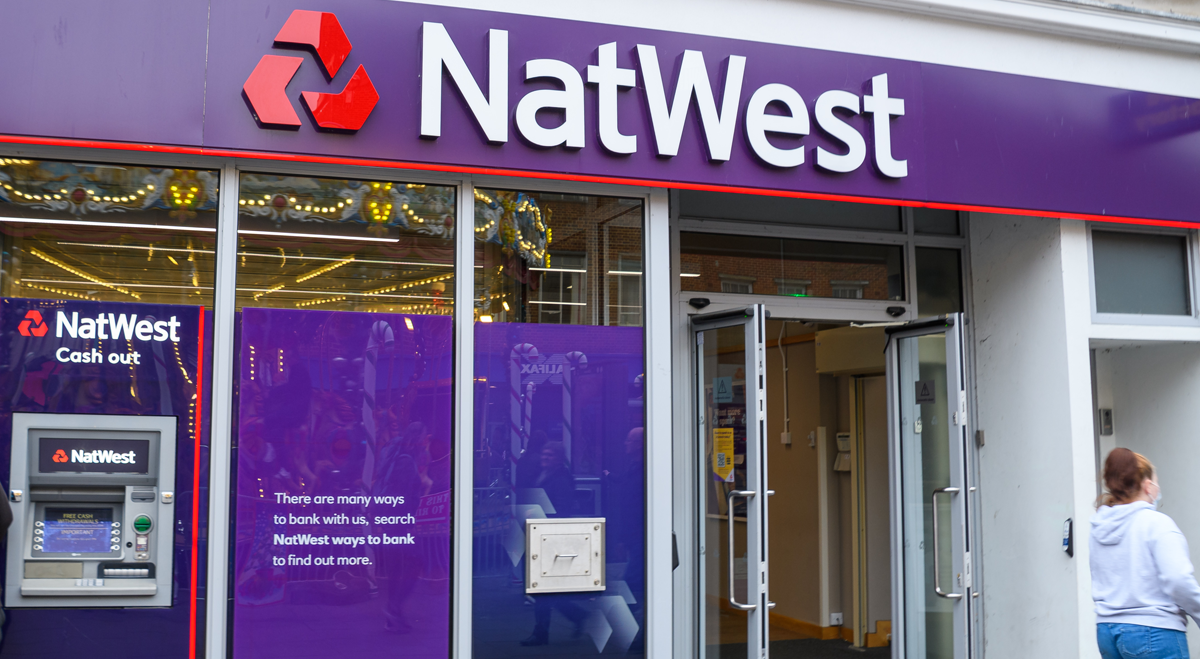
    NatWest Group (LSE:NWG) has reached an agreement to acquire UK wealth manager Evelyn Partners for an enterprise value of £2.7bn and announced a £750m share buyback, a move it says will establish the UK’s leading private banking and wealth management platform. The transaction, which will be funded from existing resources, is expected to complete in summer 2026 subject to regulatory approvals.

    The acquisition will combine Evelyn Partners’ £69bn of assets under management and administration with NatWest’s existing £59bn, creating a combined £127bn AUMA and £188bn in total customer assets and liabilities. Evelyn Partners has delivered annual AUMA growth of more than 7% and reported £179m of EBITDA in 2025, supported by an integrated offering spanning financial planning, discretionary investment management, and direct-to-consumer services.

    NatWest expects the enlarged business to lift fee income by around 20% ahead of revenue synergies and generate approximately £100m in annual cost savings, with an estimated £150m required to realise those efficiencies. The group said the deal should be accretive to earnings growth and return on tangible equity in its first year, despite an anticipated impact of roughly 130 basis points on its CET1 capital ratio.

    From a market perspective, NatWest’s outlook is underpinned by strong technical signals and an attractive valuation profile. Recent earnings commentary and positive corporate developments further support sentiment, although some volatility in cash flow remains a moderating factor for the overall investment case.

    More about NatWest Group

    NatWest Group is a major UK banking group focused on retail and commercial banking, savings and lending, and an expanding private banking and wealth management franchise. Serving around 20 million customers, the group is targeting growth in fee-based, capital-light activities through the continued development of wealth management and investment services across the UK.