Blog

  • Shell Signals Q1 2026 Outlook as Middle East Tensions and Margin Strength Shape Performance

    Shell Signals Q1 2026 Outlook as Middle East Tensions and Margin Strength Shape Performance

    Shell (LSE:SHEL) has released guidance for the first quarter of 2026, outlining expected performance across its major business units while acknowledging increased uncertainty tied to ongoing disruption in the Middle East. The company expects Integrated Gas production to ease due to lower volumes from Qatar, although this decline should be partly offset by the continued ramp-up of LNG Canada. Meanwhile, group working capital is likely to experience significant swings as commodity price volatility intensifies.

    Upstream output is forecast to edge lower following the addition of the Adura joint venture. At the same time, refining margins are projected to strengthen to roughly $17 per barrel, supported by improved refinery and chemicals utilisation rates. Marketing adjusted earnings are anticipated to rise well above last year’s level, while the Trading & Optimisation division is expected to deliver results that are either in line with or meaningfully stronger than prior periods across most segments. The group also expects non-cash net debt to increase as variable components tied to long-term shipping leases rise in the current macroeconomic environment.

    The outlook reflects resilient underlying financial performance and reinforces management’s earnings-call messaging around cost reductions, disciplined capital spending, and shareholder distributions. Although technical indicators remain strong, they appear somewhat stretched. Valuation remains moderate with an approximate 3% yield, but softer recent free-cash-flow momentum and operational challenges—including chemicals segment pressures, safety considerations, and a declining reserve life—may limit near-term upside.

    More about Shell (UK)

    Shell is a global integrated energy company with operations spanning upstream oil and gas production, liquefied natural gas, refining, petrochemicals, fuels marketing, and power generation. The group is expanding its involvement in renewable energy and broader energy solutions, although its financial performance continues to be closely linked to commodity price cycles and operational execution across its diversified portfolio.

  • How MedPal AI Scaled to 40,000+ Prescriptions in Months, and What Comes Next

    How MedPal AI Scaled to 40,000+ Prescriptions in Months, and What Comes Next

    In a healthcare system often defined by long waiting times and rising costs, the idea of instant, affordable access to medical care can feel out of reach. Yet MedPal AI (LSE:MPAL), led by CEO Jason Drummond, is attempting to redefine that reality, and doing so at remarkable speed.

    Since launching in November, the company has scaled from zero to more than 41,000 monthly prescriptions in just five months. Along the way, it has processed over 200,000 orders, all with minimal marketing. For investors and industry observers alike, the question is no longer whether demand exists, but whether such rapid growth can translate into sustainable profitability.

    A Technology-Driven Healthcare Model

    At the heart of MedPal AI’s growth is a simple but ambitious idea: make healthcare instantly accessible and affordable for everyone.

    The company’s platform integrates multiple layers of technology into a single, seamless experience. Users begin with an app that acts as a central hub for their health data, pulling in information from wearable devices and uploaded medical records.

    This data is then analysed by advanced AI systems capable of identifying potential health issues or recommending improvements. The platform connects users to clinicians who can approve treatments, before prescriptions are fulfilled through a highly automated dispensing system.

    The result is a dramatically streamlined process. While patients in the UK may wait up to two weeks to see a GP, MedPal AI can connect users to a clinician in minutes.

    Driving Down Costs Through Automation

    One of the most striking aspects of the model is its pricing. For a monthly fee of £3.99, users gain access to the app, clinical consultations, and medication.

    This is made possible by shifting the revenue focus toward pharmaceutical dispensing, where the company reports gross margins exceeding 34%.

    Operational efficiency is the key differentiator. Traditional pharmacies can take 10 to 15 minutes to process a prescription. MedPal AI’s robotic dispensing systems, by contrast, can handle hundreds per minute. The company is further investing in a 20,000-square-foot automated facility designed to drive costs even lower and support continued scale.

    The Path to Profitability

    Despite its rapid expansion, MedPal AI is not yet profitable, but the roadmap is clear.

    According to management, the business is expected to reach break-even at around 75,000 monthly prescription items. With reported month-on-month growth exceeding 27%, that milestone could be reached in the near term.

    Annualised revenue has already surpassed £5 million within months of launch, highlighting strong early traction and significant operational leverage as volumes increase.

    External Validation and Market Expectations

    As the company scales, external research coverage is beginning to shape investor expectations.

    Optimo Research initiated coverage on MedPal AI in late 2025, signalling growing institutional interest in the story.

    More recently, Optimo Research has suggested a price target of 41.57p, reflecting confidence in the company’s growth trajectory and the scalability of its model. While these projections are not company guidance, they provide a useful benchmark for how the market may begin to value the business as execution continues.

    Growth Outlook

    Looking ahead, forecasts referenced in external research point to revenues of approximately £6-7 million in the current financial year, followed by a potential increase to around £40 million the following year.

    These projections align closely with MedPal AI’s current growth rate and momentum. Strong trading updates, rapid order volume expansion, and increasing market visibility all suggest that demand for digitally enabled healthcare solutions is accelerating.

    A Critical Inflection Point

    MedPal AI is now entering a pivotal phase.

    The early challenge, proving demand and achieving rapid scale, has largely been met. The next stage will determine whether the company can convert that growth into consistent profitability while maintaining operational efficiency.

    For investors, this transition is key. Growth alone is not enough; sustainable margins and scalable infrastructure will ultimately define long-term value.

    With its combination of AI-driven diagnostics, clinician access, and robotic dispensing, MedPal AI presents a compelling model for the future of healthcare delivery.

    The next 12 to 24 months will determine whether that model can fully deliver on its promise.

    For more information visit https://www.medpal.ai/

  • Wall Street Futures Indicate Lower Opening as Investors Monitor Iran Deadline: Dow Jones, S&P, Nasdaq

    Wall Street Futures Indicate Lower Opening as Investors Monitor Iran Deadline: Dow Jones, S&P, Nasdaq

    U.S. stock futures were pointing to a weaker start for markets on Tuesday, suggesting equities could retreat after several sessions of gains.

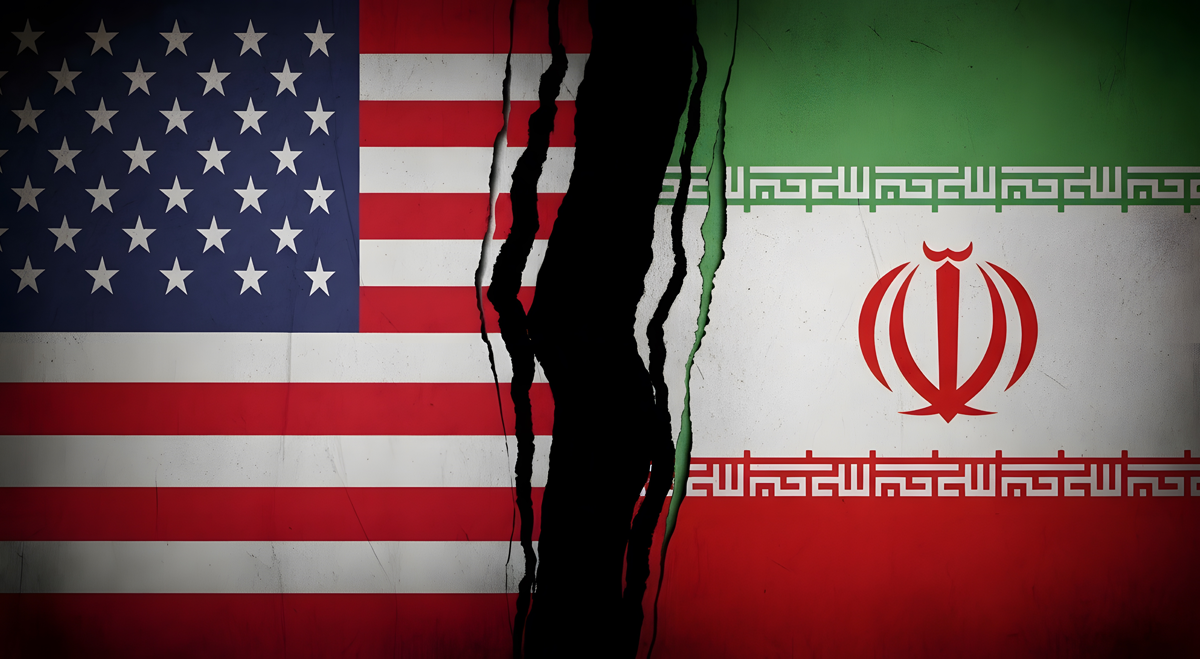
    Investor caution comes as markets track developments in the Middle East ahead of an 8 p.m. ET deadline set by U.S. President Donald Trump for Iran to reach an agreement.

    Trump warned that the United States could strike Iranian infrastructure—including power plants and bridges—if Tehran fails to secure a deal and reopen the Strait of Hormuz, a vital corridor for global oil shipments.

    In a recent post on Truth Social, Trump intensified his rhetoric, writing, “A whole civilization will die tonight, never to be brought back again. I don’t want that to happen, but it probably will.”

    The president also suggested that a “different, smarter, and less radicalized” leadership had taken power in Iran, raising the possibility of a dramatic political shift.

    “WHO KNOWS?” Trump wrote, adding further uncertainty for financial markets. “We will find out tonight, one of the most important moments in the long and complex history of the World.”

    On Monday, stocks moved unevenly throughout the trading session but generally maintained an upward bias, ultimately closing mostly higher and extending the strong rally seen last week.

    By the end of the session, the major indices were near their intraday highs. The Nasdaq rose 117.16 points, or 0.5%, to 21,996.34. The S&P 500 advanced 29.14 points, or 0.4%, to 6,611.83, while the Dow Jones Industrial Average gained 165.21 points, or 0.4%, finishing at 46,669.88.

    Although the positive momentum from the previous week continued, investors appeared hesitant to take aggressive positions amid uncertainty about the potential escalation of the conflict between the United States and Iran following Trump’s latest threats.

    In a strongly worded Truth Social post on Easter Sunday morning, Trump again warned that U.S. forces could target Iranian power plants and bridges if the Strait of Hormuz is not reopened before Tuesday evening’s deadline.

    Oil prices initially extended last Thursday’s surge in response to Trump’s remarks but later eased after reports emerged of indirect negotiations between Washington and Tehran aimed at reaching a ceasefire.

    Axios reported, citing four U.S., Israeli and regional sources, that the United States, Iran and regional mediators are discussing terms for a possible 45-day ceasefire that could pave the way toward a lasting resolution to the conflict.

    Reuters also said that Washington and Tehran are evaluating a potential framework to end the five-week-old conflict, although the report noted that Iran has resisted pressure to quickly reopen the Strait of Hormuz.

    According to a source familiar with the discussions, a proposal brokered by Pakistan calls for an immediate ceasefire followed by talks on a broader peace agreement to be finalized within 15 to 20 days.

    However, a senior Iranian official told Reuters that Iran would not reopen the Strait of Hormuz as part of a temporary ceasefire and would not accept deadlines or pressure to reach a deal.

    Meanwhile, a White House official told CNBC that Trump has “not signed off” on the proposed 45-day ceasefire, although the president offered limited details about the negotiations during a press conference.

    Despite Monday’s overall market gains, most sectors recorded only modest movements.

    Retail stocks stood out with stronger performance, as the Dow Jones U.S. Retail Index rose 1.1%.

    Transportation, semiconductor and brokerage shares also posted gains, while pharmaceutical stocks moved lower.

  • European stocks trade sideways as markets await Trump’s Iran deadline: DAX, CAC, FTSE100

    European stocks trade sideways as markets await Trump’s Iran deadline: DAX, CAC, FTSE100

    European equity markets were broadly flat on Tuesday as investors monitored developments in the Middle East ahead of a deadline set by U.S. President Donald Trump for Iran to reach an agreement.

    Trump expanded his warning toward Tehran, saying the United States could target infrastructure such as power plants and bridges if Iran fails to secure a deal and reopen the Strait of Hormuz, a key route for global energy shipments.

    The euro edged slightly higher against the U.S. dollar after revised data showed marginally stronger private-sector activity in the eurozone during March.

    Final figures from S&P Global indicated that the eurozone composite purchasing managers’ index was revised upward to 50.7 from a preliminary estimate of 50.5 published two weeks earlier.

    In the United Kingdom, the PMI composite output index came in at 50.3 in March, down from 53.7 recorded in February.

    Across major European markets, France’s CAC 40 was up around 0.4%, while the U.K.’s FTSE 100 was little changed and Germany’s DAX slipped about 0.1%.

    Banking stocks posted gains, with Commerzbank (TG:CBK), Deutsche Bank (TG:DBK), BNP Paribas (EU:BNP), Credit Agricole (EU:ACA) and Societe Generale (EU:GLE) rising between 1% and 2%.

    Dutch lender ING (EU:INGA) advanced about 1.2% after ending an agreement related to its Russian operations.

    Shares of Universal Music Group (EU:UMG) surged roughly 13% after Bill Ackman’s Pershing Square Capital unveiled an offer to acquire the world’s largest music company in a transaction valued at approximately €55.75 billion ($64.31 billion).

    Sanofi (EU:SAN) gained about 1% after the French pharmaceutical group said that lunsekimig achieved both the primary and key secondary endpoints in two Phase II clinical trials evaluating the investigational bispecific pentavalent nanobody.

    Hunting Plc (LSE:HTG), a precision engineering company, rose 1.3% after securing nearly $68 million in orders tied to a new offshore development project in Guyana.

    Meanwhile, ASML Holding (EU:ASML) fell 2.8% after U.S. lawmakers introduced legislation aimed at restricting the sale of advanced semiconductor manufacturing equipment to China.

  • Senior plc accepts £1.28 billion takeover offer from Tinicum and Blackstone

    Senior plc accepts £1.28 billion takeover offer from Tinicum and Blackstone

    Senior plc (LSE:SNR) said Tuesday that its board has agreed to a recommended all-cash takeover by Zeus UK Bidco Limited, an acquisition vehicle backed by investment funds managed by Tinicum Incorporated and Blackstone Inc.

    Under the proposed transaction, Senior shareholders will receive 300 pence per share, made up of 297.85 pence in cash and a final dividend of 2.15 pence for the 2025 financial year. The cash component represents a 36.6% premium to the company’s six-month volume-weighted average share price and a 2.8% premium to the closing price of 289.80 pence recorded on Wednesday.

    The offer values Senior’s total issued share capital at about £1.28 billion on a fully diluted basis and implies an enterprise value of roughly £1.40 billion. The valuation equates to around 15.2 times the company’s adjusted EBITDA and 22.0 times its adjusted operating profit for the year ended December 31, 2025.

    Senior’s board, which received financial advice from Lazard, said it considers the terms of the transaction fair and reasonable and intends to recommend that shareholders approve the deal at both the court meeting and the general meeting. Directors have already committed to vote in favor of the proposal with their combined holding of 2,620,740 shares, representing approximately 0.6% of the company’s issued share capital.

    Zeus UK Bidco has also secured an irrevocable undertaking from Alantra to support the scheme with its holding of 72,307,009 shares, equivalent to around 17.2% of Senior’s share capital. Together with the directors’ shares, this brings total committed support for the transaction to approximately 17.9%.

    The acquiring consortium plans to combine Senior with AeroFlow Technologies, a company recently acquired by Tinicum, under common ownership. According to the consortium, the integration would create complementary aerospace capabilities and strengthen earnings resilience.

    Completion of the deal is subject to shareholder approval and will be carried out through a court-sanctioned scheme of arrangement under Part 26 of the UK Companies Act. The formal scheme document is expected to be issued within 28 days.

  • Oil prices rise again as Trump’s Iran deadline nears and ceasefire hopes fade

    Oil prices rise again as Trump’s Iran deadline nears and ceasefire hopes fade

    Oil prices pushed higher during Asian trading on Tuesday as markets prepared for the possibility of escalating tensions in the Middle East ahead of U.S. President Donald Trump’s deadline for Iran to reopen the Strait of Hormuz.

    At 03:15 ET (07:15 GMT), Brent crude futures for June delivery had gained 1.5% to $111.37 per barrel, while U.S. West Texas Intermediate (WTI) crude futures climbed 2.2% to $114.85 per barrel.

    The increases marked the third consecutive day of gains, driven by mounting concerns over the Strait of Hormuz—a crucial maritime passage that typically handles around one-fifth of global oil shipments.

    On Monday, Iran rejected a U.S.-supported proposal that included a 45-day ceasefire and a gradual reopening of the strait, along with broader negotiations over sanctions relief and post-conflict reconstruction.

    Instead, Tehran demanded a permanent ceasefire, binding guarantees against future attacks, the lifting of sanctions, and compensation for damages.

    Trump reiterated that the Tuesday deadline of 8 p.m. ET would not be extended and warned that failure to comply could lead to U.S. military strikes targeting Iranian infrastructure, including bridges and power plants.

    He said Iran could be “taken out” quickly, emphasizing the increasing risk of a broader regional escalation.

    The sharper tone in Washington has left energy markets on edge, with traders factoring in the risk of further supply disruptions across the Gulf.

    Media reports indicated that Iran and Israel exchanged attacks on Tuesday, highlighting the lack of progress toward a diplomatic resolution.

    Recent disruptions to tanker traffic have already tightened expectations for global supply and increased the risk premium embedded in oil prices.

    Although OPEC+ has announced modest production increases, analysts say the additional output is unlikely to materialize in practice due to ongoing logistical and operational constraints.

    “With the Strait of Hormuz effectively shut, higher quotas remain largely notional for producers, including Iraq, Kuwait, Saudi Arabia and the UAE, until the route reopens,” ING analysts said in a note.

  • Gold rises modestly while dollar softens ahead of Trump’s Iran deadline

    Gold rises modestly while dollar softens ahead of Trump’s Iran deadline

    Gold prices posted modest gains on Tuesday while the U.S. dollar slipped, as investors remained cautious ahead of the deadline set by President Donald Trump for Iran to reopen the Strait of Hormuz.

    At 05:04 ET (09:04 GMT), spot gold was up 0.8% at $4,685.54 per ounce, while gold futures for June delivery climbed 0.6% to $4,710.84 per ounce.

    Trump warned that the United States would target “every bridge” and “power plant” in Iran if Tehran fails to meet his Tuesday deadline of 8 p.m. ET to agree to a deal reopening the Strait of Hormuz. The strategic waterway—through which roughly one-fifth of global oil supply flows—has effectively been closed to tanker traffic, pushing oil prices higher and raising concerns about inflation and the global economic outlook.

    Iran has called for a comprehensive agreement that includes sanctions relief, security guarantees and compensation for damages. However, media reports suggest Washington is unlikely to accept those terms.

    If new U.S. strikes take place, Trump said Iran would need “100 years to rebuild.”

    Despite the tough rhetoric, Trump also indicated that diplomacy could still end the conflict, which began in late February after joint U.S. and Israeli attacks on Iran.

    Gold also drew support from ongoing purchases by China’s central bank, which extended its gold-buying streak to a seventeenth consecutive month. The People’s Bank of China reported holdings of 74.38 million fine troy ounces at the end of March, compared with 74.22 million in February.

    Gold still under pressure over the past month

    Even with Tuesday’s gains, gold prices have declined over the past month as rising energy costs have strengthened expectations that central banks could keep interest rates elevated for longer. Because gold does not generate yield, it often struggles in environments where borrowing costs remain high.

    Another factor weighing on the metal has been the stronger U.S. dollar. The greenback has benefited from safe-haven demand as investors seek stability amid geopolitical tensions, making dollar-denominated gold more expensive for buyers using other currencies.

    On Tuesday, the dollar index, which measures the U.S. currency against a basket of major rivals, fell by 0.2%.

    However, the dollar remains roughly 0.8% higher over the past month. During the same period, spot gold has declined by more than 8%.

  • Goldman trims copper outlook amid weaker demand but keeps long-term bullish stance

    Goldman trims copper outlook amid weaker demand but keeps long-term bullish stance

    Goldman Sachs has slightly lowered its forecast for average copper prices in 2026, now expecting the metal to trade at around $12,650 per tonne compared with its previous estimate of $12,850. The revision reflects softer demand expectations linked to slower global economic growth, although the bank continues to see strong long-term support for copper from electrification trends.

    The bank now estimates the global copper market will record a surplus of roughly 490,000 tonnes this year, up from its earlier projection of 380,000 tonnes. At the same time, Goldman reduced its forecast for global refined copper demand growth to 1.6% year-on-year from 2%. The adjustment follows the bank’s economists estimating that the recent energy price shock tied to disruptions in the Middle East could shave about 0.4 percentage points off global GDP growth.

    Goldman said the downward adjustment to copper demand is less pronounced than the revision applied to aluminium, reflecting copper’s increasingly structural importance in the global economy.

    “This is a smaller demand revision than aluminium because of the increasingly strategic and structural nature of copper demand, making it less sensitive to global economic cycles,” analysts led by Aurelia Waltham said.

    In the near term, Goldman expects copper prices to remain volatile but believes the market could stabilize if macroeconomic conditions improve.

    In its base-case scenario—which assumes that energy shipments through the Strait of Hormuz begin recovering from mid-April—the bank forecasts copper prices to average about $12,700 per tonne in the second quarter of 2026. Prices are then expected to gradually move toward Goldman’s fair value estimate of roughly $12,000 per tonne during the second half of the year.

    The bank also warned that current copper prices may be running ahead of underlying fundamentals. Even after a pullback in March, copper still trades well above Goldman’s estimated fair value for 2026 of around $11,100 per tonne, leaving the metal “vulnerable to another move lower should the economic outlook deteriorate and investors de-risk.”

    Goldman added that its forecasts do not yet account for potential supply disruptions linked to tensions in the Middle East. For example, the Democratic Republic of the Congo (DRC), which produces about 15% of global mined copper, depends on sulfur shipments passing through the Strait of Hormuz for a critical stage of its production process.

    Industry feedback cited by the bank suggests that producers in the DRC typically maintain sulfuric acid inventories covering up to three months of operations. As a result, a short disruption would likely have limited consequences, although a prolonged interruption could tighten supply and reduce the projected surplus.

    Looking further ahead, Goldman left its long-term forecast unchanged and continues to expect copper prices to reach $15,000 per tonne by 2035. The analysts argued that geopolitical tensions in the Middle East could reinforce the electrification theme, noting that power grids and energy infrastructure are projected to account for around 60% of global copper demand growth in their forecasts through 2030.

  • Markets watch Iran deadline as futures slip, Broadcom surges on Google partnership: Dow Jones, S&P, Nasdaq, Wall Street

    Markets watch Iran deadline as futures slip, Broadcom surges on Google partnership: Dow Jones, S&P, Nasdaq, Wall Street

    U.S. equity futures moved lower early Tuesday while oil prices stayed above $110 a barrel, as investors focused on the approaching deadline set by President Donald Trump for Iran to accept a ceasefire agreement. Trump signaled that diplomacy remains possible but warned the United States could strike key Iranian infrastructure—including bridges and power plants—if no deal is reached by Tuesday evening. In corporate developments, Broadcom (NASDAQ:AVGO) shares jumped after announcing a new partnership with Google, while Samsung Electronics (USOTC:SSNHZ) released strong preliminary earnings.

    U.S. futures edge lower

    U.S. stock futures declined on Tuesday morning as markets turned cautious ahead of Trump’s ultimatum to Iran to agree to a ceasefire or face significant military action targeting infrastructure.

    By 03:15 ET, Dow futures had fallen 104 points, or 0.2%. Futures tied to the S&P 500 dropped 25 points, or 0.4%, while Nasdaq 100 futures slid 118 points, or 0.5%.

    Despite the overnight decline in futures, the three major U.S. stock indices closed the previous trading session higher as investors searched for signs that negotiations might bring an end to the conflict that has lasted for more than a month.

    At the same time, markets continued to evaluate the economic effects of the war. Data released Monday showed that U.S. services activity expanded in March but at a slower pace than economists expected. Employment in the sector declined, and the prices-paid component—an indicator of inflationary pressures—rose to its highest level since October 2022.

    Investors were also watching developments in the $1.8 trillion private credit market. Shares of Blue Owl Capital (NYSE:OWL), which has been closely associated with concerns in that sector, fell to a record closing low after the company announced restrictions on withdrawals from two of its funds following a rise in redemption requests.

    Oil holds above $110

    Oil markets remained elevated as tanker traffic through the Strait of Hormuz continued to face major disruption.

    Brent crude futures, the global benchmark, climbed 1.5% to $111.45 per barrel, while U.S. West Texas Intermediate crude futures rose 2.4% to $115.14 per barrel.

    The Strait of Hormuz, a key shipping corridor off Iran’s southern coastline through which roughly one-fifth of global oil supply normally passes, has been largely closed to tanker movements for weeks, raising fears of a significant disruption to global energy flows. Many Asian economies depend heavily on energy shipments through the strait, while European countries also rely on natural gas supplies originating from the Persian Gulf.

    Speaking to reporters Monday, Trump said any ceasefire agreement must include Iran’s commitment to reopen the shipping route. If Tehran fails to meet the Tuesday deadline of 8 p.m. Eastern time, he warned that U.S. strikes would target bridges and power plants so severely that Iran would need “100 years to rebuild.”

    Even so, Trump suggested that diplomacy remains possible, saying Iran would “like to make a deal.”

    Broadcom rises after Google agreement

    Broadcom shares surged in after-hours trading after the semiconductor company announced a long-term partnership with Google to develop and support custom processors optimized for artificial intelligence applications.

    The company also said it will provide networking hardware and other infrastructure components for Google’s AI systems through 2031.

    In a separate arrangement, Broadcom agreed to grant AI startup Anthropic access to around 3.5 gigawatts of computing power built on Google’s AI processors beginning next year.

    Analysts at Vital Knowledge said the deals point to “upside risk to Broadcom’s” earlier projection that artificial intelligence could generate more than $100 billion in revenue by 2027.

    Samsung forecasts strong profit growth

    Samsung Electronics reported preliminary guidance on Tuesday pointing to a sharp increase in first-quarter profits, fueled by strong demand for AI-related semiconductors that boosted its chip division.

    The company said operating profit for the January–March period is expected to reach approximately 57.2 trillion won ($38 billion), more than eight times the 6.69 trillion won recorded during the same quarter a year earlier.

    Revenue is projected to reach about 133 trillion won, compared with 79.14 trillion won in the prior-year period.

    The forecast highlights a strong recovery in the memory chip market, where demand for high-bandwidth memory (HBM) and other AI-focused semiconductors has surged as generative AI technologies continue to expand rapidly.

    Pershing Square targets Universal Music Group

    Meanwhile, shares of Universal Music Group (EU:UMG) soared more than 14% in Amsterdam after Bill Ackman’s Pershing Square Capital announced a proposal to acquire the music company in a cash-and-stock transaction valued at more than €55 billion.

    Pershing Square said the plan involves merging Universal with Pershing Square Sparc Holdings to create a new Nevada-based entity that would shift the company’s listing to the New York Stock Exchange. Universal Music Group began trading in Amsterdam in 2021 following its spin-off from media conglomerate Vivendi (EU:VIV).

    Ackman said in a statement that Universal’s share price has “languished due to a combination of issues that are unrelated” to the underlying business and could be “addressed with this transaction.”

    Shares of European media groups including Vivendi and Bollore (EU:BOL) also rallied following the announcement of Pershing Square’s proposal.

  • FTSE 100 edges higher as markets reopen, investors watch Trump’s Iran deadline

    FTSE 100 edges higher as markets reopen, investors watch Trump’s Iran deadline

    UK equities opened slightly higher on Tuesday as trading resumed following the Easter holiday, while the pound weakened against the dollar as investors monitored geopolitical developments surrounding U.S. President Donald Trump’s deadline for Iran. European markets showed a mixed performance.

    At 07:08 GMT, the FTSE 100 blue-chip index was up 0.09%, while sterling slipped 0.06% against the U.S. dollar to trade at 1.3237.

    Elsewhere in Europe, Germany’s DAX was broadly unchanged, while France’s CAC 40 advanced by 0.5%.

    UK market highlights

    Preliminary industry data published on Tuesday indicated that new car registrations in the UK increased by around 6% in March.

    Sales of battery electric vehicles (BEVs) reached a record level during the month, according to the Society of Motor Manufacturers and Traders. Fully electric cars accounted for approximately 23% of total registrations, although this remains below the UK government’s target of 33% by 2026.

    Meanwhile, WH Smith PLC (LSE:SMWH) said Leo Quinn has formally taken on the role of Executive Chair after shareholders approved the appointment at the company’s General Meeting on March 12.

    Andrew Harrison stepped down from the board with immediate effect and will return to his previous role as chief executive of the group’s UK division.