Blog

  • DAX, CAC, FTSE100, European Markets Edge Lower Despite Global Rebound

    DAX, CAC, FTSE100, European Markets Edge Lower Despite Global Rebound

    European equities slipped slightly on Thursday, with regional benchmarks trading in the red despite overnight strength in Asia and a rebound on Wall Street.

    Losses across the continent were contained after new data showed that Germany’s industrial production returned to growth in September, led by a recovery in the automotive sector.

    According to Destatis, output rose 1.3% month-on-month, rebounding from a 3.7% decline in August, signaling that Europe’s largest economy may be regaining some momentum.

    At mid-morning, the CAC 40 in France fell 0.6%, the DAX in Germany eased 0.2%, and the FTSE 100 in the U.K. edged down 0.1%.

    In corporate developments, A.P. Møller-Mærsk (TG:DP4A) shares dropped sharply after the Danish shipping giant posted a decline in third-quarter net income, citing weaker freight rates and ongoing global trade challenges.

    Commerzbank (TG:CBK) moved higher even though its Q3 earnings came in below analysts’ forecasts, while Skanska (TG:SKNB) slumped after the Swedish builder reported profit short of market expectations.

    In contrast, Zalando (BIT:1ZAL) surged after a strong third quarter boosted by its July 2025 acquisition of About You, which strengthened its presence in the online fashion market.

    Henkel (TG:HEN) also climbed after the consumer goods and adhesives manufacturer reported solid organic sales growth in the quarter.

    Elsewhere, ArcelorMittal (EU:MT) advanced after reporting a 31.35% increase in net income for the September quarter, while Swisscom (TG:SWJ) gained on the back of a 36.9% jump in revenue to CHF 11.175 billion in the first nine months of 2025.

    Meanwhile, AstraZeneca (LSE:AZN) traded higher after the British pharmaceutical group reaffirmed its full-year outlook.

  • Dow Jones, S&P, Nasdaq, Wall Street Futures, U.S. Stocks Set to Extend Rally as Traders Eye Bargains

    Dow Jones, S&P, Nasdaq, Wall Street Futures, U.S. Stocks Set to Extend Rally as Traders Eye Bargains

    U.S. equity futures pointed slightly higher early Thursday, suggesting Wall Street could build on the previous session’s gains as investors cautiously wade back into the market.

    The major indexes are poised to edge up in early trading, with some traders looking to scoop up stocks at relatively attractive levels even after Wednesday’s rebound. Despite recent strength, the S&P 500, Nasdaq, and Dow remain well below last week’s record highs.

    Concerns over a potential AI-driven bubble and a near-term correction continue to linger, but overall momentum still appears tilted to the upside.

    Economic news remains limited amid the ongoing U.S. government shutdown, though new data from Challenger, Gray & Christmas showed a sharp rise in corporate layoffs last month.

    According to the report, U.S. employers announced 153,074 job cuts in October, up 183% from September’s 54,064 and 175% higher than the 55,597 cuts seen a year earlier.

    “Some industries are correcting after the hiring boom of the pandemic, but this comes as AI adoption, softening consumer and corporate spending, and rising costs drive belt-tightening and hiring freezes,” said Andy Challenger, workplace expert and chief revenue officer at the firm.

    He added, “Those laid off now are finding it harder to quickly secure new roles, which could further loosen the labor market.”

    So far this year, employers have announced more than 1.09 million job cuts, the highest level for the first ten months of a year since 2020.

    Company movers

    Snap (NYSE: SNAP) shares surged nearly 20% in premarket trading after the social media company unveiled a $500 million share buyback program and issued upbeat fourth-quarter revenue guidance.

    AppLovin (NASDAQ: APP) also gained premarket after reporting better-than-expected third-quarter earnings, while DoorDash (NASDAQ: DASH) tumbled over 10% after missing profit forecasts.

    Market recap

    Following Tuesday’s selloff, stocks rallied through most of Wednesday’s session before pulling back slightly late in the day. Even so, the major indexes ended higher:

    • Nasdaq rose 0.7% to 23,499.80
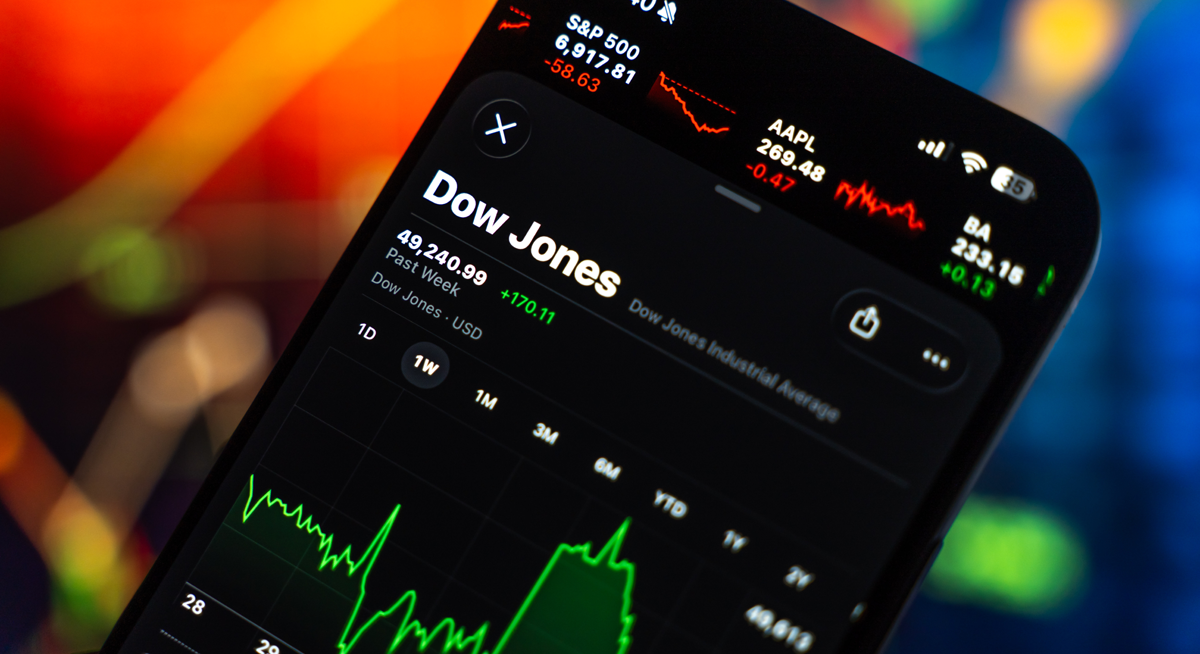
    • Dow Jones added 0.5% to 47,311.00
    • S&P 500 climbed 0.4% to 6,796.29

    Much of Wednesday’s strength was driven by bargain hunting after Tuesday’s steep drop, which stemmed partly from valuation worries. Sentiment was also helped by upbeat U.S. economic data.

    ADP reported that private sector employment increased by 42,000 jobs in October, rebounding from a 29,000-job decline the prior month. Economists had expected a gain of only 25,000 jobs.

    Meanwhile, the Institute for Supply Management (ISM) said its services PMI rose to 52.4 in October, up from 50.0 in September — the strongest level since February — signaling renewed expansion in the sector.

    Despite a late-session pullback, several sectors showed notable strength. Airline stocks soared, with the NYSE Arca Airline Index up 5.8%, while biotech, semiconductor, and computer hardware shares also posted solid gains. In contrast, housing and software stocks moved lower, even as gold miners benefited from firmer metal prices.

  • Oil Prices Rise as Oversupply Worries Recede Despite Demand Weakness

    Oil Prices Rise as Oversupply Worries Recede Despite Demand Weakness

    Crude oil prices edged higher on Thursday, recovering slightly after settling at two-week lows in the previous session, as fears of an oversupplied market eased.

    By 07:53 GMT, Brent crude futures climbed 24 cents, or 0.38%, to $63.76 per barrel, while U.S. West Texas Intermediate (WTI) futures gained 25 cents, or 0.42%, to $59.85 per barrel.

    Global oil benchmarks ended their third consecutive monthly decline in October, pressured by concerns of excess supply as both OPEC and non-OPEC producers ramped up output.

    However, sentiment began to shift toward the end of the month after sanctions imposed by the U.S. and the U.K. on major Russian oil companies prompted traders to scale back their bearish bets, Haitong Securities noted.

    The firm added that OPEC+’s decision to delay additional production hikes until the first quarter of next year also helped ease oversupply fears.

    Still, worries over sluggish demand continue to weigh on the market.

    According to J.P. Morgan, global oil consumption has risen by 850,000 barrels per day so far this year through November 4 — slightly below its previous forecast of 900,000 barrels per day.

    “High-frequency indicators suggest that U.S. oil consumption remains subdued,” the bank said, citing weak travel activity and a slowdown in container shipping volumes.

    Oil prices had fallen in the prior session after data from the U.S. Energy Information Administration showed that domestic crude inventories jumped by 5.2 million barrels last week to 421.2 million barrels, far exceeding forecasts for a modest 603,000-barrel build.

    “We think that downward pressure on oil prices will prevail, supporting our below-consensus forecast of $60 per barrel by end-25 and $50 per barrel by end-26,” Capital Economics said in a note.

    Meanwhile, Saudi Arabia — the world’s largest oil exporter — cut the price of its crude for Asian customers for December delivery, responding to ample global supply as OPEC+ producers continue to boost output.

  • Gold Holds Firm as Dollar Eases and U.S. Shutdown Adds Uncertainty

    Gold Holds Firm as Dollar Eases and U.S. Shutdown Adds Uncertainty

    Gold prices held onto gains during Asian trading on Thursday, stabilizing after a sharp rise of more than 1% in the previous session. A softer U.S. dollar and continued uncertainty surrounding the prolonged U.S. government shutdown helped sustain investor demand for the safe-haven metal.

    Spot gold rose 0.2% to $3,988.79 per ounce by 00:37 ET (05:37 GMT), while U.S. gold futures inched up 0.1% to $3,995.70 per ounce.

    The metal had surged 1.3% in the prior session amid heightened risk aversion and renewed concerns about a possible stock market bubble.

    Gold Steadies as Dollar Retreats; Shutdown Stays in Focus

    The U.S. Dollar Index fell 0.2% in Asian trading, extending losses as investors shifted back into risk assets after a brief sell-off in tech stocks earlier this week. Wednesday’s rebound on Wall Street eased concerns about stretched valuations in the sector.

    Even so, the ongoing U.S. government shutdown — now the longest in history — continues to cast a shadow over markets. The suspension of key federal economic data releases has left traders dependent on private-sector reports, complicating efforts to assess the strength of the U.S. economy.

    Meanwhile, labor market data remained resilient. The latest ADP report showed that private-sector employment rose by 42,000 in October, nearly double economists’ expectations.

    The stronger jobs data tempered hopes for a Federal Reserve rate cut in December. Since gold offers no yield, expectations of higher-for-longer rates tend to limit its upside.

    Adding to market caution, the U.S. Supreme Court this week began hearings on the legality of tariffs enacted under former President Donald Trump — a case that could have lasting implications for trade policy, inflation, and supply chains.

    “We remain positive on our gold outlook, despite the recent pullback in prices, with key supports, including central bank and safe haven demand, still in place,” ING analysts said in a note.

    “Although trade tensions have recently eased, significant geopolitical uncertainty persists, driving demand for safe assets,” they added.

    Other Metals Trade in Narrow Ranges

    Broader metals markets remained subdued. Silver futures edged up 0.2% to $48.12 per ounce, while platinum futures were steady at $1,564.60 per ounce.

    On the industrial side, benchmark copper futures on the London Metal Exchange gained 0.4% to $10,771.20 per ton, and U.S. copper futures rose 0.6% to $5.02 per pound.

  • Dollar Eases After Recent Rally, Pound Strengthens Ahead of Bank of England Decision

    Dollar Eases After Recent Rally, Pound Strengthens Ahead of Bank of England Decision

    The U.S. dollar slipped slightly on Thursday, taking a breather after hitting multi-month highs earlier in the week, while the British pound firmed in anticipation of the Bank of England’s latest policy announcement.

    At 04:10 ET (09:10 GMT), the Dollar Index — which measures the greenback against six major peers — traded down 0.3% at 99.772, having reached its strongest level since April earlier this week.

    Dollar Pulls Back After Rally

    The dollar saw a mild correction in early Thursday trading, retreating from its recent highs as upbeat U.S. labor figures lifted risk appetite and reduced demand for the safe-haven currency.

    The greenback’s recent strength has been underpinned by rising expectations that the Federal Reserve will hold off on cutting interest rates in December, especially after Chair Jerome Powell cautioned that a rate reduction “was not a given” for the year’s final meeting.

    “While we note signs that the dollar rally is running out of steam, it’s equally true that markets are lacking a compelling story to rebuild dollar shorts,” said analysts at ING in a research note. “The lack of data and cautious Fed communication means there aren’t many in sight. We expect some rangebound trading today, with lingering risks of correction in the dollar based on short-term overvaluation.”

    Sterling Firms Ahead of BOE Decision

    In Europe, GBP/USD climbed 0.2% to 1.3072, supported by a softer dollar as traders awaited the Bank of England’s policy decision.

    The U.K. central bank is widely expected to keep its benchmark rate unchanged at 4.0%, as Britain continues to grapple with the highest inflation among the G7 nations.

    However, the outcome is not entirely certain. Signs of easing inflation pressures and expectations that Chancellor Rachel Reeves will raise taxes in the upcoming budget could influence the tone of the meeting.

    “Markets are pricing in a 25% probability of a Bank of England cut today,” said ING. “Our call is for a hold, as a single positive inflation print shouldn’t be enough to bring an MPC majority behind a cut.”

    “But the vote split could be 6-3 or perhaps a more dovish 5-4, which would signal the bar isn’t high for a cut in December.”

    Meanwhile, EUR/USD rose 0.2% to 1.1520 after hitting a three-month low earlier this week.

    German industrial production figures came in weaker than forecast, increasing 1.3% in September compared to the expected 3%, highlighting sluggish activity in Europe’s largest economy.

    That said, “EUR/USD is trading well within undervaluation territory, as the dollar rally has extended beyond what can be justified by short-term drivers such as rate differentials and equities,” noted ING.

    BOJ Rate Hike Expectations Grow

    In Asia, USD/JPY fell 0.3% to 153.74, with the yen finding support from stronger wage growth data.

    Wages rose 1.9% in September, up sharply from 1.3% in August — the weakest level in a year. The improvement adds pressure on the Bank of Japan to raise interest rates. The latest figures came just a day after minutes from the BOJ’s September meeting revealed that policymakers are increasingly open to a rate hike in the coming months.

    Elsewhere, USD/CNY slipped 0.1% to 7.1224 after the People’s Bank of China set a slightly stronger daily midpoint, while AUD/USD edged up 0.1% to 0.6510 following robust export and trade balance data for September.

  • Dow Jones, S&P, Nasdaq, Wall Street Futures, Supreme Court Questions Tariff Powers; Tesla Shareholder Vote and Qualcomm Warning Stir Markets

    Dow Jones, S&P, Nasdaq, Wall Street Futures, Supreme Court Questions Tariff Powers; Tesla Shareholder Vote and Qualcomm Warning Stir Markets

    U.S. stock futures edged lower on Thursday as investors assessed a mix of corporate updates and policy developments, including skepticism from the Supreme Court over presidential tariff powers and an upcoming shareholder vote on Tesla (NASDAQ:TSLA) CEO Elon Musk’s massive pay package.

    Futures Dip Slightly

    After a rebound in the previous session, U.S. stock futures traded slightly weaker early Thursday, with investors cautious amid concerns about high valuations. By 02:27 ET, Dow futures slipped 42 points (0.1%), S&P 500 futures were down 7 points (0.1%), and Nasdaq 100 futures lost 47 points (0.2%).

    Major U.S. indices rose on Wednesday, led by gains in large-cap technology stocks, which helped calm fears that valuations—especially in the AI-driven tech sector—had become excessive. Optimism was also supported by alternative data pointing to resilient U.S. economic conditions in October, even as the ongoing government shutdown has delayed official reports.

    Media reports indicated that lawmakers in Washington could reach an agreement to end the shutdown by the weekend. Should it persist, Transportation Secretary Sean Duffy warned that air travel capacity across 40 major U.S. airports would be cut by 10% starting Friday.

    Supreme Court Voices Doubt Over IEEPA Tariffs

    Markets also reacted to signs of skepticism from the Supreme Court’s conservative supermajority regarding former President Donald Trump’s use of emergency economic powers to impose broad tariffs.

    The justices began hearing arguments on the 1977 International Emergency Economic Powers Act (IEEPA), which Trump had invoked as the legal basis for the duties. Lower courts previously ruled that the president had exceeded his authority.

    Debate has centered on whether the court’s 6–3 conservative majority—including three Trump appointees—will uphold or strike down the tariffs. Historically, the court has often sided with expanding executive authority during Trump’s second term.

    Chief Justice John Roberts, however, questioned the IEEPA’s application to tariffs, noting that “the tariffs represented a tax on Americans” and adding that “that has always been the core power of Congress.”

    Prediction markets saw reduced bets on the tariffs surviving the fall, though analysts at Vital Knowledge warned that overturning the levies could introduce new economic uncertainty. Meanwhile, Trump officials hinted they may use alternative legal tools to sustain the trade war if the measures are struck down.

    Qualcomm Warns of Potential Samsung Business Loss

    Qualcomm (NASDAQ:QCOM) shares fell more than 3% in after-hours trading after the company warned it may lose part of its business from key customer Samsung Electronics next year.

    The disclosure overshadowed quarterly results that beat Wall Street expectations, boosted by demand for premium smartphones. Qualcomm supplies modem chips that power mobile data connectivity in many of these devices.

    Samsung, a major buyer of Qualcomm’s chips for its Galaxy S25 models, may reduce its reliance on the company for future phones. Reuters reported that CEO Cristiano Amon said Qualcomm is preparing for a smaller role in Samsung’s next-generation devices.

    Elsewhere, chip designer Arm Holdings (NASDAQ:ARM) delivered a stronger-than-expected fiscal third-quarter outlook, supported by rising AI-related spending across the tech sector. Shares of the U.K.-based firm rose in after-hours trading.

    Tesla Shareholders to Vote on Musk’s $1 Trillion Pay Package

    Tesla shareholders are set to vote Thursday on a record compensation plan for CEO Elon Musk, though not all investors are supportive.

    Earlier this week, Norway’s sovereign wealth fund—the world’s largest—announced it would reject the proposed $1 trillion package, citing concerns over its size and structure. Norges Bank Investment Management, which manages $1.9 trillion in assets, said that while it “appreciate[s] the significant value created under Mr. Musk’s visionary role,” it remains “concerned about the total size of the award, dilution, and lack of mitigation of key person risk.”

    Tesla’s board warned that a rejection could risk Musk leaving the company, which might put pressure on the stock.

    Bank of England Decision Looms

    Attention also turns to the Bank of England’s policy announcement later today, where expectations remain divided. Most analysts forecast the central bank will keep its benchmark rate unchanged at 4.0%, although markets still see roughly a one-in-three chance of a 25-basis-point rate cut.

    Holding rates steady would mark a pause in the easing cycle that began last year, yet some economists believe a modest reduction could be on the table following weaker-than-expected—but still high—inflation and wage figures.

    The BoE has lowered rates every three months since August 2024, though it’s unclear whether this pace will continue. Governor Andrew Bailey cautioned in September that the outlook ahead is “more uncertain.”

  • DAX, CAC, FTSE100, European Stocks Edge Lower as Earnings and Bank of England Decision Take Center Stage

    DAX, CAC, FTSE100, European Stocks Edge Lower as Earnings and Bank of England Decision Take Center Stage

    European markets opened slightly weaker on Thursday as investors weighed another wave of corporate earnings and awaited a closely watched monetary policy decision from the Bank of England.

    At 08:05 GMT, Germany’s DAX slipped 0.2%, France’s CAC 40 fell 0.3%, and the UK’s FTSE 100 was down 0.1%.

    Earnings Remain in Focus

    Confidence has cautiously returned to global equity markets following a subdued start to the week, helped by stronger-than-expected U.S. economic data that eased concerns about stretched valuations.

    In Europe, sentiment has been supported by a perception that the corporate outlook is improving, with many companies delivering results that have defied investors’ worst fears. Still, with the region’s major indices hovering near record highs, traders continue to take profits amid a heavy earnings calendar.

    Commerzbank (TG:CBK) announced a share buyback of up to €1 billion after reporting its highest-ever nine-month operating profit, reflecting strong momentum across its core businesses.

    BT Group (LSE:BT.A) posted a 3% decline in second-quarter revenue, with its Openreach division—responsible for the UK’s fixed-line network—losing 242,000 broadband customers during the quarter, a sharper drop than the 205,000 expected. The company attributed the losses to “stiff competition and a weaker broadband market.”

    AstraZeneca (LSE:AZN) reported stronger-than-anticipated third-quarter earnings, driven by solid growth in its oncology, cardiovascular, and renal treatments, while maintaining its full-year guidance unchanged.

    Volvo Car (BIT:1VOLVB) said it aims for a long-term operating margin above 8% as part of a strategic overhaul, expanding cooperation with majority shareholder Geely to reduce costs and strengthen cash generation.

    Skanska (TG:SKNB) posted higher third-quarter profits despite significant property impairments in the U.S., as its core construction operations delivered stronger-than-expected margins.

    Bank of England Policy Decision Ahead

    Attention now turns to the Bank of England, which is set to announce its latest interest rate decision later in the session. Economists broadly expect the central bank to keep rates unchanged at 4.0%, as the UK continues to post the highest inflation rate among G7 economies.

    However, the decision is not seen as guaranteed. Recent signs of easing inflation and expectations that Chancellor Rachel Reeves will raise taxes in the upcoming budget have created additional uncertainty. Earlier this week, Reeves acknowledged that she would have to make “hard choices” to safeguard public services while reducing national debt—comments seen as paving the way for fiscal tightening.

    Elsewhere, German industrial production rose 1.3% in September, missing forecasts for a 3% increase and highlighting continued weakness in Europe’s largest economy.

    Oil Prices Steady After Recent Declines

    Crude oil prices stabilized Thursday following steep losses, as fears of oversupply and softer demand continued to weigh on sentiment. Brent futures were up 0.3% at $63.68 per barrel, while U.S. West Texas Intermediate gained 0.3% to $59.80.

    Both benchmarks fell about 1% on Wednesday and posted their third consecutive monthly decline in October. Market concerns persist over weaker U.S. fuel demand amid a prolonged government shutdown and expectations of a supply glut next year. According to the U.S. Energy Information Administration, U.S. crude inventories rose by 5.2 million barrels last week to 421.2 million, far exceeding expectations for an increase of just 603,000 barrels.

  • National Grid Exceeds Expectations with 6% Half-Year Earnings Growth and Record Investment

    National Grid Exceeds Expectations with 6% Half-Year Earnings Growth and Record Investment

    National Grid plc (LSE:NG.) reported a 6% increase in underlying earnings per share to 29.8p for the six months ended 30 September 2025, beating analyst forecasts as the company continues to execute its record energy infrastructure investment program across the UK and the US. Underlying operating profit rose 13% at constant currency to £2.29 billion, supported by robust performance in its regulated businesses.

    The power network operator invested a record £5.1 billion during the half-year, up 12% at constant currency, as part of its ongoing efforts to expand and modernize its electricity grids. “Our financial performance reflects another period of strong operational delivery in line with our five-year financial frame,” said Chief Executive John Pettigrew. “We continue to deliver for our customers, investing a record £5 billion this half, and we are on track to invest over £11 billion this year.”

    In the UK, Electricity Transmission profits rose 17% to £846 million, while the company’s U.S. businesses delivered significant growth—New York up 61% to £443 million and New England up 29% to £292 million. These gains were partly offset by a 4% decline in UK Electricity Distribution profit to £551 million.

    Management indicated that full-year underlying EPS remains on track to grow within its 6–8% target range from the 2024/25 baseline of 73.3p, suggesting upside potential to the current consensus estimate of 77.1p, even amid currency headwinds. The board declared an interim dividend of 16.35p per share, representing a 3% year-on-year increase.

    National Grid has continued to streamline its operations, completing the sale of National Grid Renewables and agreeing to divest Grain LNG. The company also secured supply chain partnerships covering more than three-quarters of its £60 billion five-year investment plan, including an £8 billion Electricity Transmission Partnership for substation construction and a £12 billion HVDC framework for UK civil works.

    “This investment in our networks is critical to ensuring resilience, enabling economic growth, supporting cleaner energy, and meeting rising power demand,” Pettigrew added.

    More about National Grid plc

    National Grid plc is one of the world’s largest publicly listed utility companies, operating electricity and gas transmission and distribution networks in the UK and the northeastern United States. The company plays a key role in advancing the energy transition through large-scale investments in renewable integration, grid modernization, and decarbonization infrastructure. Its strategy focuses on delivering sustainable, long-term value while supporting reliable, affordable energy for millions of customers.

  • Smith+Nephew Shares Slide After Q3 Sales Fall Short of Expectations

    Smith+Nephew Shares Slide After Q3 Sales Fall Short of Expectations

    Smith & Nephew PLC (LSE:SN.) saw its shares drop 7.6% on Thursday after posting third-quarter results that came in below analyst forecasts, despite reaffirming its full-year guidance. The medical technology group reported underlying revenue growth of 5.0%—missing the consensus estimate of 6.3%—as weakness in U.S. knee implant sales and a slower-than-expected recovery in Sports Medicine offset gains in its wound care division.

    Revenue for the three months ended 27 September 2025 totaled $1.50 billion, up 5.0% on an underlying basis and 6.3% on a reported basis, including a 1.3% positive currency impact. The results marked a slowdown from the 6.7% growth recorded in the prior quarter, even as year-over-year comparisons eased.

    Chief Executive Officer Deepak Nath said, “Our third-quarter results again demonstrate how the 12-Point Plan has improved Smith+Nephew’s revenue growth profile, keeping us on track to meet our full-year outlook for revenue growth and a step-up in trading profit margin. As we approach the end of the 12-Point Plan, our business is undoubtedly in a better place.”

    By segment, Orthopaedics revenue rose 4.1%, missing expectations of 6.2%, with U.S. Knee Implants down 2.3% amid ongoing portfolio rationalization. This was partly offset by a 6.3% rise in U.S. Hip Implants, supported by the successful rollout of the CATALYSTEM Primary Hip System. Sports Medicine & ENT grew 5.1%, below the 7.2% forecast, as recovery from China’s Volume-Based Procurement (VBP) program lagged. Advanced Wound Management was the strongest performer, climbing 6.0%—ahead of expectations—driven by a 12.2% increase in Advanced Wound Bioactives.

    Despite the top-line miss, Smith+Nephew reaffirmed its guidance for around 5% underlying revenue growth and a trading profit margin between 19% and 20%. The company also raised its free cash flow forecast to approximately $750 million, up from the previous target of more than $600 million, citing improved working capital management and operational efficiencies. In addition, Smith+Nephew confirmed the completion of its $500 million share buyback program on 7 October.

    More about Smith & Nephew PLC

    Smith & Nephew PLC is a global medical technology company specializing in advanced wound management, orthopaedics, and sports medicine solutions. Headquartered in London, the company operates in more than 100 countries, providing innovative surgical and medical products that improve patient outcomes and enhance recovery times. Its growth strategy focuses on expanding in high-demand markets and improving profitability through operational discipline and portfolio optimization.

  • Watches of Switzerland Shares Jump on Strong U.S. Growth and Robust First-Half Results

    Watches of Switzerland Shares Jump on Strong U.S. Growth and Robust First-Half Results

    Watches of Switzerland Group PLC (LSE:WOSG) saw its shares rise 4.9% on Thursday after reporting a strong first-half performance for fiscal 2026, fueled by exceptional growth in the U.S. market. Group revenue reached £845 million for the six months, representing a 10% increase at constant currency and topping analyst expectations of £825 million. U.S. sales were the standout contributor, surging 20% in constant currency—double market forecasts—while UK revenue rose 2% amid a “challenging retail environment.”

    Adjusted EBIT is expected to come in between £66 million and £68 million, slightly below consensus of £68.3 million, with operating margins approximately 50 basis points lower year-on-year. Chief Executive Officer Brian Duffy said, “We have delivered a strong first half, with group revenue up 10% in constant currency, showing continued momentum across the business, disciplined execution, and improved market trends.”

    Despite the introduction of a 39% tariff on Swiss watch imports to the U.S. since August 7, Watches of Switzerland reaffirmed its full-year guidance for constant currency sales growth between 6% and 10%, noting no significant shift in consumer behavior. Luxury watch sales grew 10% at constant currency, while luxury jewelry rose by the same percentage and now accounts for 12% of total revenue. E-commerce sales were also strong, up 16% year-on-year.

    The group continues to invest in its retail network, completing several flagship refurbishments and opening new boutiques during the first half, with additional high-profile store launches planned for the second half of the fiscal year. “While we remain mindful of ongoing economic and geopolitical uncertainties, including the impact of U.S. tariffs, we are confident in delivering another year of strong growth and in consolidating our leadership in luxury watch and jewelry retailing,” Duffy added.

    More about Watches of Switzerland Group PLC

    Watches of Switzerland Group PLC is a leading luxury watch and jewelry retailer with operations in the UK, U.S., and Europe. The company represents major Swiss brands including Rolex, Patek Philippe, and Omega, offering both in-store and online experiences. Through continued investment in digital innovation and high-end retail spaces, the group aims to strengthen its position as a global leader in the luxury timepiece and jewelry sector.