Blog

  • Aquis Stock Exchange Weekly Highlights 23.01.26

    Aquis Stock Exchange Weekly Highlights 23.01.26

    Sulnox Group PLC (AQSE:SNOX) announced that it has secured its second patent in South Africa, marking its fourth in the significant fuel oil reclamation market and extending protection to 49 countries worldwide. Read more

    Astrid Intelligence Plc (AQSE:ASTR) has acquired TaoFi, a decentralised exchange and liquidity infrastructure platform operating within the Bittensor ecosystem from Subnet 10.

    Mark Creaser, CEO, commented: “The acquisition of TaoFi represents a further step in Astrid’s transition into an infrastructure-led operating company, with an expanding portfolio of protocol-critical assets that enable decentralised AI networks to function efficiently and at scale.” Read more

    Ethtry PLC (AQSE:ETHY) announced that it has entered into a partnership with AMINA Bank AG, a crypto bank with global reach regulated by the Swiss Financial Market Supervisory Authority.

    Patrick Chopard, CEO, commented:“As Ethtry continues to build its operating platform, this partnership provides us with institutional support and trusted infrastructure that aligns closely with our governance standards and long-term strategic vision.” Read more

    ProBiotix Health plc (AQSE:PBX) provided a trading update for the financial year ended 31 December 2025 highlighting that sales increased by 45% to £2.7m (2024: £1.9m) and gross profit increased by 46% to £1.5m (2024: £1m).

    Steen Andersen, CEO, said: “The growth trajectory of ProBiotix continues apace, with notable growth in a number of territories, driven by increasing awareness of our products.” Read more

    Connecting Excellence Group Plc (AQSE:XCE) announced that further to the statement made on 5 January 2026, it has now received settlement of 10 Bitcoin for the first XCE BTC Bond, issued on 31 December 2025. Read more

    All Aquis Stock Exchange Announcements

  • Crude Prices Advance After Trump Signals Naval Move Toward Iran

    Crude Prices Advance After Trump Signals Naval Move Toward Iran

    Oil prices moved higher during Asian trading on Friday after U.S. President Donald Trump suggested that American naval forces were being positioned near Iran, fuelling fresh concerns over potential supply disruptions from a key Middle Eastern producer.

    While crude had dipped earlier in the week, prices remained on track for a fifth consecutive weekly gain. Traders have increasingly priced in geopolitical risk, alongside expectations of firmer demand, as global tensions heighten the threat of interruptions to oil flows.

    Brent crude futures for March delivery climbed 0.9% to $64.62 a barrel, while U.S. West Texas Intermediate futures also rose 0.9% to $59.89 a barrel by 22:48 ET (03:48 GMT).

    Trump highlights ‘armada’ deployment

    Speaking to reporters aboard Air Force One on Thursday night, Trump said the United States had dispatched a fleet toward Iran and warned Tehran against escalating domestic crackdowns or reviving its nuclear programme.

    “We have an armada… heading in that direction, and maybe we won’t have to use it,” Trump told reporters. “I’d rather not see anything happen, but we’re watching them very closely,” Trump said.

    Media reports indicated that a U.S. aircraft carrier and several destroyers are expected to reach the Middle East in the coming days, reigniting fears of renewed military confrontation in the region.

    Iran is among the largest oil producers within the Organization of the Petroleum Exporting Countries and is also a major supplier to China, the world’s biggest crude importer. Any military action involving the United States would likely disrupt Iranian oil exports.

    The country has faced nationwide protests since January against the ruling Nezam, with reports suggesting that thousands were killed during the latest unrest.

    Fifth weekly gain in sight

    On a weekly basis, oil prices were up between 0.6% and 0.8% after a volatile stretch, as investors also responded to shifting signals from Washington on Greenland.

    Additional support came from modestly positive economic data out of China and the International Energy Agency’s decision to lift its oil demand outlook for 2026. Crude has also attracted bargain hunters following a weak showing through much of 2025.

    A softer U.S. dollar further underpinned prices, with markets continuing to expect the Federal Reserve to cut interest rates later this year, a dynamic that tends to support dollar-denominated commodities.

  • Gold Pushes Toward $5,000 as Safe-Haven Demand Accelerates, Silver Surges

    Gold Pushes Toward $5,000 as Safe-Haven Demand Accelerates, Silver Surges

    Gold prices are edging closer to the $5,000-an-ounce mark, propelled by a resurgence in geopolitical risk and growing unease over the independence of the U.S. Federal Reserve — dynamics that have pressured the dollar and intensified flows into hard-asset safe havens.

    Spot gold climbed to a fresh record of $4,967.48 an ounce, extending weekly gains to roughly 8%, while February futures traded at $6,969.69. Silver followed closely behind, jumping to an all-time high of $99.38 an ounce in spot trading.

    After posting its strongest annual performance since 1979, gold’s momentum has remained striking. The metal is up a further 15% so far this year, supported by renewed criticism of the Federal Reserve from U.S. President Donald Trump, U.S. military action in Venezuela and renewed rhetoric around annexing Greenland. Together, these developments have revived what investors describe as the “degrade trade,” characterised by a retreat from government bonds and fiat currencies in favour of alternative stores of value such as gold.

    “Gold is going through a gradual repricing as fractures emerge in the post-war, rules-based global order,” said Yuxuan Tang, head of Asia macro strategy at JP Morgan Private Bank. “More investors are coming to view gold as a dependable hedge against these difficult-to-measure regime-change risks,” he added.

    Supply constraints are adding to price sensitivity. “Gold supply is not sufficient to absorb U.S. market and political tensions, which makes price ceilings particularly fragile,” said Ahmad Assiri, a strategist at Pepperstone Ltd Group.

    Central-bank demand continues to provide a powerful tailwind. Poland’s central bank — currently the world’s largest buyer of gold — approved plans this week to acquire an additional 150 tonnes amid rising geopolitical uncertainty. At the same time, India’s holdings of U.S. Treasuries have fallen to a five-year low, while allocations to gold and other alternative assets have increased, reflecting a broader effort by some major economies to diversify away from the world’s largest bond market.

    Investors are also closely watching Washington. Markets are awaiting President Trump’s nomination for the next Federal Reserve chair after he said discussions with candidates had concluded and reiterated that he has a preferred choice. A more dovish appointment would likely reinforce expectations for additional rate cuts this year — a supportive backdrop for precious metals following three consecutive reductions.

    Geopolitical negotiations remain in focus as well, with markets tracking talks between Russian President Vladimir Putin and U.S. envoys Steve Witkoff and Jared Kushner on a proposed peace plan aimed at ending the war in Ukraine.

    Bullish momentum has prompted major banks to lift their forecasts. Goldman Sachs recently raised its year-end gold price target to $5,400 an ounce from $4,900, citing strong demand from private investors and central banks. The bank said the rally is being driven by persistent inflows into Western ETFs and continued purchases by emerging-market central banks, estimated at around 70 tonnes per year in 2026, as part of an ongoing currency-diversification trend.

    JP Morgan forecasts an average gold price of around $5,055 in the fourth quarter of 2026, underpinned by still-elevated official-sector demand of roughly 755 tonnes annually — well above pre-2022 levels — and a gradual reallocation toward gold within institutional portfolios.

    Other global lenders, including UBS, Bank of America, Morgan Stanley and Deutsche Bank, are clustering around 2026 price targets of $4,800 to $5,000 an ounce. Some projections anticipate a sustained move above $5,000 between late 2026 and 2027, supported by persistent geopolitical strain, concerns over global debt sustainability, a potential revival in ETF inflows and mine supply struggling to keep pace.

    Strategists increasingly argue that gold is “breaking historical norms.” Following its surge in 2025 and fresh highs in 2026, the metal is widely viewed as a potential top-performing asset again this year. Still, analysts warn that any easing of fiscal or monetary stress — or waning demand for macro hedges — could trigger profit-taking and introduce sharper volatility along the path to projected price levels.

    Silver, riding gold’s rally, has more than tripled over the past year. The metal has also been supported by an unprecedented short squeeze and a surge in retail buying, forcing banks and refiners to scramble to meet exceptional physical demand.

    Uncertainty around potential changes to China’s export-licensing regime has further amplified scarcity concerns, while volatility remains elevated even after the United States refrained from imposing broad tariffs on imports of key minerals, including silver and platinum.

    According to Robert Gottlieb, a former precious-metals trader, elevated prices and sharp market swings have fundamentally altered risk-taking behaviour across the banking sector. Banks now “have to cut their positions significantly, which results in higher volatility and wider spreads,” he said.

  • Intel Reports Q4 Loss, TikTok Reshapes U.S. Operations, Gold Breaks Records: Dow Jones, S&P, Nasdaq, Wall Street Futures

    Intel Reports Q4 Loss, TikTok Reshapes U.S. Operations, Gold Breaks Records: Dow Jones, S&P, Nasdaq, Wall Street Futures

    U.S. equity futures moved cautiously on Friday as investors balanced a heavy flow of corporate earnings and economic signals against easing geopolitical frictions between the United States and Europe. Intel (NASDAQ:INTL) posted a fourth-quarter loss and warned of additional pressure from supply constraints linked to booming demand from artificial intelligence data centres. At the same time, TikTok outlined a new joint venture designed to preserve its U.S. presence. Elsewhere, the Bank of Japan held interest rates steady while signalling a tightening bias, and gold surged to fresh record highs.

    Futures trade near flat

    Stock index futures in the U.S. hovered just below unchanged levels following a volatile week dominated by trade and geopolitical headlines. At 03:50 ET, Dow futures were down 33 points, or 0.1%, S&P 500 futures slipped 4 points, or 0.1%, and Nasdaq 100 futures declined 43 points, or 0.2%.

    Wall Street ended higher in the previous session after President Donald Trump retreated from plans to impose additional tariffs on a number of European countries as early as February 1. Trump said on Thursday that the U.S. had secured full and permanent access to Greenland after talks with NATO allies. However, the lack of clarity around the agreement and Washington’s earlier demands regarding the semi-autonomous Danish territory continued to raise concerns among European officials.

    As tensions over Greenland appeared to ease, market focus shifted back to an intensifying earnings season and the Federal Reserve’s policy decision scheduled for next week.

    Intel flags tougher conditions

    Intel shares fell sharply in extended trading after the chipmaker reported a loss for the fourth quarter and issued a cautious outlook for the current period. The company recorded a net loss of $333 million in the final quarter of its fiscal year, undershooting market expectations despite recent backing from major investors such as Nvidia and support from the U.S. government.

    Management highlighted surging demand from AI-driven data centres as a key factor behind ongoing supply shortages across the semiconductor industry. Chief Financial Officer David Zinsner said these constraints could persist well into 2026.

    For the first quarter, Intel now expects a loss of $0.21 per share, underlining the scale of the challenge facing Chief Executive Lip-Bu Tan as the company competes in an AI chip market dominated by Nvidia and rival Advanced Micro Devices. Investors were also left wanting more detail, as Intel deferred updates on customers for its foundry business and offered limited information on uptake of its next-generation 14A manufacturing technology.

    “[T]here weren’t any customer announcements made for the 14A […] while some investors were hoping for a big name, like possibly Apple,” analysts at Vital Knowledge said in a note.

    TikTok announces U.S. joint venture

    TikTok said it will move forward with a Trump administration-backed joint venture that will allow the widely used short-form video app to continue operating in the United States. The platform has long been under scrutiny from U.S. lawmakers, who have raised concerns that its ownership structure — with parent company ByteDance based in China — poses risks to national security and data privacy.

    Trump previously sought to ban TikTok in 2020 and later opted not to enforce a 2024 law passed by Congress that required ByteDance to divest its U.S. assets or face a nationwide ban. Under the new arrangement, TikTok’s U.S. operations will be managed by a newly created entity viewed as more aligned with Washington, with a mandate to protect user data and strengthen cybersecurity.

    U.S. and international investors, including Oracle (NYSE:ORCL), private equity firm Silver Lake and Abu Dhabi-based MGX, will hold 80.1% of the joint venture, while ByteDance will retain a 20% stake. Trump, who has credited TikTok with helping him secure a second term in office, said the app “will now be owned by a group of Great American Patriots and Investors.”

    Bank of Japan keeps rates unchanged

    The Bank of Japan left interest rates unchanged on Friday, maintaining its benchmark overnight call rate at 0.75% following a rate increase in December. Eight of the nine members of the policy board supported the decision, while board member Hajime Takata dissented in favour of a 25 basis point hike.

    While the pause was widely anticipated, the central bank upgraded its economic growth and inflation forecasts, citing expectations of increased fiscal support. Policymakers reiterated that rates would continue to rise if growth and inflation develop in line with projections, as they seek to anchor inflation around the 2% target.

    The BOJ raised its real GDP growth forecast for fiscal 2025 to a range of 0.8% to 0.9%, up from its earlier estimate of 0.6% to 0.8%.

    “Given that the real policy rate is still deeply negative, further policy tightening is therefore all but guaranteed,” Capital Economics analysts said, adding that they expect the central bank to move before at least July.

    “Granted, the looming sharp fall in headline inflation puts the Bank in an awkward position, particularly if [Prime Minister Sanae] Takaichi also suspends the sales tax on food. But looking past those distortions, price pressures will remain firm.”

    Gold surges to record highs

    Gold prices climbed to record levels in Asian trading on Friday, edging closer to the closely watched $5,000-an-ounce mark after Trump’s comments on Iran boosted demand for safe-haven assets. Silver and platinum also reached fresh highs.

    Spot gold rose as much as 0.7% to a record $4,967.48 an ounce, while February gold futures advanced more than 1% to $4,969.69. Spot silver jumped nearly 3% to $99.0275, and spot platinum gained almost 1% to $2,692.31 an ounce.

  • European Markets Drift Lower as Geopolitical Risks Dominate End of Volatile Week: DAX, CAC, FTSE100

    European Markets Drift Lower as Geopolitical Risks Dominate End of Volatile Week: DAX, CAC, FTSE100

    European equities traded mostly lower on Friday, with investors remaining cautious as heightened geopolitical tensions continued to weigh on sentiment toward the end of a turbulent week.

    By 08:10 GMT, Germany’s DAX was down 0.1% and France’s CAC 40 slipped 0.2%, while the UK’s FTSE 100 edged 0.2% higher.

    Elevated political uncertainty

    European stocks had rebounded on Thursday after U.S. President Donald Trump softened his stance on imposing trade tariffs tied to gaining ownership of Greenland, the autonomous Danish territory. Even so, all three major indices remained on track for weekly losses as political risks continued to overshadow markets.

    Geopolitical concerns intensified after Trump raised the prospect of military action against Iran, telling reporters aboard Air Force One late Thursday that the United States had naval forces moving toward the region. “We have an armada… heading in that direction, and maybe we won’t have to use it,” Trump said. “I’d rather not see anything happen, but we’re watching them very closely,” he added, warning Tehran against killing protestors or resuming its nuclear programme.

    Meanwhile, Ukrainian President Volodymyr Zelenskyy criticised Europe’s response to rising geopolitical threats during his speech at the World Economic Forum in Davos, Switzerland. He accused Europe of being “lost” while trying to persuade Trump to “change” and back the continent, rather than acting collectively to defend itself.

    Tensions were further compounded by the decision of most European countries not to participate in Trump’s proposed “Board of Peace,” originally intended to oversee the demilitarisation and reconstruction of Gaza. Concerns were raised over the body’s structure and whether it could ultimately rival the United Nations.

    UK retail sales surprise

    Later in the session, investors were set to assess a fresh round of economic indicators, including January PMI readings for the euro area, as signs of a tentative recovery emerge.

    Ahead of those releases, UK retail sales delivered an upside surprise, rising 0.4% in December from November as shoppers returned to stores after declines in October and November. Economists surveyed by Reuters had forecast a 0.1% monthly fall.

    Corporate updates in focus

    In European company news, Ericsson (BIT:1ERICB) announced plans for a substantial share buyback and a higher dividend, after a surge in net cash helped offset weak conditions in the mobile networks market.

    UK defence group Babcock International Group (LSE:BAB) said it remains on track to achieve its full-year margin target of 8%, supported by strong organic revenue growth in the third quarter, with potential upside linked to progress on its Indonesian Arrowhead programme.

    Meanwhile, Pets at Home Group Plc (LSE:PETS) confirmed that Sarah Pollard will join the company in March as chief financial officer designate.

    Investor attention was also firmly on the technology sector after Intel (NASDAQ:INTC) issued weaker-than-expected first-quarter revenue and profit guidance late Thursday. The outlook triggered a sharp sell-off in extended U.S. trading, with the chipmaker citing difficulties aligning supply with surging demand for traditional server chips used in artificial intelligence data centres.

    Oil prices head for weekly gains

    Oil prices rose on Friday and were on course for a fifth consecutive weekly gain, driven by fears of supply disruptions following Trump’s comments on Iran.

    Brent crude futures climbed 0.5% to $64.39 a barrel, while U.S. West Texas Intermediate rose 0.6% to $59.69. Both benchmarks were tracking weekly gains of just under 1%.

    Reports indicated that a U.S. aircraft carrier and several destroyers were expected to arrive in the Middle East in the coming days, heightening concerns of renewed military conflict. Iran remains one of the largest oil producers within the Organization of Petroleum Exporting Countries and a key supplier to major importer China.

  • FTSE 100 Rises as UK Shares Outperform Europe; Retail Sales Data in Spotlight

    FTSE 100 Rises as UK Shares Outperform Europe; Retail Sales Data in Spotlight

    UK equities traded higher on Friday morning, bucking a broader decline across European markets, as investors reacted to stronger-than-expected retail sales figures ahead of the Bank of England’s upcoming interest rate decision.

    By 0823 GMT, the FTSE 100 was up 0.3%, while sterling edged slightly lower, with GBP/USD down 0.04% at 1.3488. In contrast, continental markets remained under pressure, with Germany’s DAX and France’s CAC 40 both slipping 0.1%.

    UK roundup

    UK retail sales rose 0.4% month on month in December, rebounding from a decline in November, according to figures released Friday by the Office for National Statistics. The increase comfortably exceeded economists’ expectations for flat growth. On an annual basis, sales climbed 2.5%, accelerating from a revised 1.8% rise in November and well ahead of the 1.0% forecast.

    In company news, C&C Group plc (LSE:CCR) revised down its profit expectations for the 2026 financial year, now guiding for adjusted operating profit of between €70 million and €73 million. The drinks producer pointed to subdued consumer confidence following the UK’s November Budget, which weighed on customer activity in November and early December.

    Elsewhere, Babcock International Group (LSE:BAB) said on Thursday that strong organic revenue growth continued through the third quarter, leaving the defence contractor on track to achieve its full-year operating margin target of 8%. The group also confirmed that chief executive David Lockwood will retire, with a successor already chosen from within its Nuclear division.

    Asset manager Record plc (LSE:REC) reported that assets under management increased to $115.9 billion at the end of December, up from $110.3 billion at the end of September. The company said the rise was driven by positive net inflows and growth in underlying assets, partly offset by foreign exchange movements.

    In executive updates, Pets at Home Group Plc (LSE:PETS) confirmed that Sarah Pollard will join the group as chief financial officer designate on March 23, 2026. She will succeed Mike Iddon, who is set to step down from the board on March 27, 2026, when Pollard will formally assume the roles of CFO and executive director.

  • Magnum Alleges ‘Serious Misconduct’ by Former Ben & Jerry’s Chair as Board Shrinks Further

    Magnum Alleges ‘Serious Misconduct’ by Former Ben & Jerry’s Chair as Board Shrinks Further

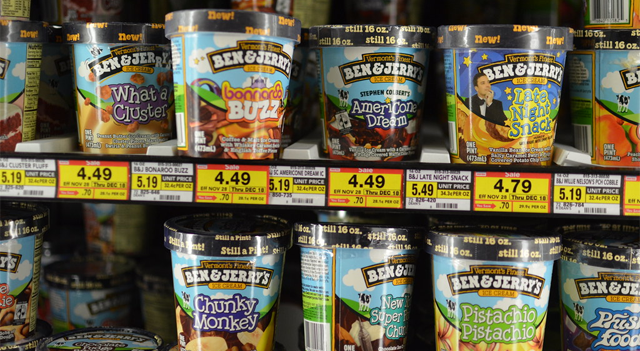
    A long-running dispute over Ben & Jerry’s social mission and governance intensified this week after The Magnum Ice Cream Company (LSE:MICC) accused the ice cream brand’s former board chair of misconduct and disclosed that Ben & Jerry’s board has been reduced from eight directors to just two.

    Magnum became Ben & Jerry’s parent company in December, when Unilever spun off its ice cream division into the newly listed group, while retaining a 19.9% ownership stake. Unilever originally acquired the Vermont-based, socially focused ice cream maker in 2000.

    Since 2024, Ben & Jerry’s and its independent board have been locked in legal proceedings against Unilever — and now Magnum — in a U.S. District Court in New York. The lawsuit alleges that the parent companies sought to erode the brand’s progressive social mission and weaken the independence of its board.

    In a court filing dated January 20, Magnum said that only Ben & Jerry’s chief executive and a Unilever-appointed director now remain on the board. Former board chair Anuradha Mittal was removed in mid-December after Magnum determined she was no longer fit to serve, while two veteran directors stepped down following the introduction of nine-year term limits.

    According to the filing, Magnum said Mittal “had engaged in serious misconduct that rendered her ineligible to serve on the board” and cited an Ernst & Young audit of the Ben & Jerry’s Foundation — a separate U.S. nonprofit funded by the brand — which raised concerns over potential conflicts of interest.

    Magnum also said that the three remaining independent directors failed to certify compliance with its code of business integrity and declined to undergo mandatory compliance training, resulting in their departure from the board as of January 1. The company added that it shared key audit findings with the foundation in September.

    Mittal has rejected Magnum’s claims, accusing both Magnum and Unilever of attempting to discredit her and undermine the board’s authority. “Magnum’s midnight purge of independent directors who provide oversight authority and holding hostage charitable funds— all while they continue to conceal the audit report and scope of work — speak for themselves,” Mittal said in a statement on Thursday.

    Magnum described the ongoing litigation as “regrettable” and said it remains committed to supporting Ben & Jerry’s operations. “We look forward to the development of a refreshed Board with a majority of Independent Directors, led by an Independent Director,” the company said in a statement.

    The company further alleged that the Ben & Jerry’s Foundation had repeatedly issued grants to organisations where trustees — including Mittal — held senior roles and received compensation or other benefits. The foundation, for its part, said it had “become collateral damage” amid the escalating dispute.

    Tensions between Ben & Jerry’s and its parent companies first became public in 2021, when the ice cream maker announced it would stop selling products in Israeli-occupied West Bank territories — a move that marked the beginning of a deepening rift over governance and values.

  • Eurozone Activity Expands Again in January as Confidence Improves

    Eurozone Activity Expands Again in January as Confidence Improves

    Eurozone private sector activity continued to grow in January, matching the modest pace recorded in December, according to the latest HCOB Flash Eurozone Composite PMI figures published on Friday. The Composite PMI Output Index held steady at 51.5, extending the current expansion streak to 13 months, though growth remained at the joint-slowest rate since September.

    Momentum in the services sector eased, with the index slipping to a four-month low of 51.9 from 52.4 in December. By contrast, manufacturing output moved back into expansion at 50.2 after contracting in the previous month. The headline Manufacturing PMI rose to 49.4 from 48.8, a two-month high but still consistent with overall contraction.

    Price signals showed renewed pressure. Input costs increased at their fastest pace in almost a year, while output price inflation climbed to its strongest level since April 2024, driven mainly by services. Despite this, analysts at ING said that “Even though inflation has remained remarkably benign in recent months despite all the economic turmoil, the PMI does indicate increasing price pressures again. That being said, the moves are not nearly enough to sway the ECB from its expectations to hold rates for the foreseeable future,” according to ING analysts.

    Demand conditions were mixed. New orders rose for a sixth consecutive month, although growth slowed to its weakest pace since September 2025. Export orders continued to fall, though the rate of decline moderated compared with December.

    Labour market trends softened, with eurozone firms cutting employment for the first time in four months. The contraction was concentrated in Germany, where job losses were the most pronounced since November 2009, excluding the pandemic period. Employment continued to rise in France and across the rest of the currency bloc.

    Business sentiment improved notably. Overall confidence climbed to a 20-month high in January, while manufacturing optimism reached its strongest level in nearly four years. Sentiment strengthened in both Germany and France but edged lower in other eurozone countries.

    Commenting on the data, Dr. Cyrus de la Rubia, Chief Economist at Hamburg Commercial Bank, described the recovery as “rather feeble” and said the survey points to “more of the same in the months to come.” He added that rising services inflation could support the European Central Bank’s decision to keep interest rates unchanged, with some policymakers potentially favouring rate increases over cuts.

    Regionally, the data suggested that Germany began 2026 on a growth footing, while France recorded a month-on-month contraction in output, which may be linked to political challenges surrounding the approval of the 2026 budget.

  • eEnergy Delivers Profit Uplift and Record Order Book as Framework Strategy Accelerates Growth

    eEnergy Delivers Profit Uplift and Record Order Book as Framework Strategy Accelerates Growth

    eEnergy Group plc (LSE:EAAS) has reported a sharp improvement in profitability for the year ended 31 December 2025, with adjusted EBITDA rising 183% to £1.7 million. Revenue eased to £23.0 million after around £4.0 million of anticipated sales slipped into the first half of 2026, but this timing effect was more than offset by stronger margins, improved operational leverage and tighter cost control.

    Gross margins strengthened during the period, while net debt reduced to £1.6 million despite additional borrowing. The group ended the year with a record £14.0 million of contracted and awarded work and a £127 million investment-grade pipeline, supported by large framework-led wins across NHS trusts, local authorities and a major government-backed solar and battery project delivered in partnership with Mace. The strategy has enabled eEnergy to broaden its customer base beyond education into healthcare and commercial markets.

    Operationally, the company secured an exclusive £100 million off-balance-sheet funding facility with Redaptive and retained access to a £40 million NatWest facility for public sector projects. eEnergy also launched its SolarLife operations and maintenance service, adding a recurring revenue component to its offering. Looking ahead, the board has upgraded guidance for 2026 to £34.0 million of revenue and £4.5 million of adjusted EBITDA, with management expecting strong cash generation as working capital unwinds. Growth is expected to be further supported by the rollout of a new Energy Performance Contract model, described as the first of its kind in the UK and potentially transformative for NHS customers, alongside a strengthened board and expanding framework coverage.

    Despite the operational progress, the company’s overall outlook remains tempered by historical financial weakness and soft technical indicators. While recent corporate developments are supportive, valuation remains under pressure due to a negative price-to-earnings ratio and the absence of dividend income.

    More about eEnergy Group

    eEnergy Group plc is a UK-based Energy-as-a-Service provider that designs, funds and delivers energy infrastructure upgrades, including solar PV, LED lighting, battery storage and EV charging, across multi-site estates with no upfront cost. The company focuses on the education, healthcare, local authority and commercial sectors, using framework agreements and off-balance-sheet funding partnerships to deploy projects at scale.

  • Babcock Reinforces FY26 Confidence on Indonesia Contract, Naval Momentum and Buyback Progress

    Babcock Reinforces FY26 Confidence on Indonesia Contract, Naval Momentum and Buyback Progress

    Babcock International Group (LSE:BAB) has reported continued strong financial and operational momentum for the nine months ended 31 December 2025, supported by solid organic revenue growth, improving underlying operating margins and high revenue visibility, with the majority of full-year revenue already secured under contract. The performance underpins management’s confidence in delivering its targeted 8% operating margin in FY26.

    Growth was led by robust activity across the Nuclear, Aviation and Marine divisions, including clean energy projects, submarine support work, increased volumes within the LGE and Skynet programmes, and the ramp-up of France’s Mentor 2 aviation contract. These gains more than offset weaker performance in the Land segment, where activity was impacted by lower rail-related volumes.

    Operationally, Babcock highlighted a series of strategic contract wins and milestones. These included its selection as prime industrial partner for Indonesia’s £4 billion Maritime Partnership Programme, the signing of a letter of intent for two additional Arrowhead 140 licence agreements, continued progress on the Type 31 frigate build at Rosyth, and an expanded partnership with HII to manufacture assemblies for US Virginia-class submarines under the AUKUS framework. The group is also advancing initiatives to support the Royal Navy’s transition toward autonomous and hybrid naval operations.

    Elsewhere, Babcock continues to ramp up delivery under its £1 billion DSG Land contract, has begun supplying Jackal 3 vehicles to the British Army, and remains in discussions regarding a potential extension to its Future Maritime Support Programme. Capital returns remain a priority, with £90 million already returned as part of a £200 million share buyback programme. The company also confirmed a planned leadership transition, with chief executive David Lockwood set to retire by the end of 2026 and Nuclear division head Harry Holt named as his successor, signalling a focus on continuity.

    From an outlook perspective, Babcock is supported by strengthening financial performance, solid cash conversion and a confidence-boosting earnings update that reaffirmed margin targets. Technical indicators point to an established upward trend, although overbought conditions suggest elevated near-term risk. Valuation remains the primary constraint, reflecting a higher price-to-earnings ratio and a relatively low dividend yield.

    More about Babcock International

    Babcock International Group is a UK-based engineering services company operating across the defence, nuclear, aviation and critical infrastructure sectors. The group provides complex asset management, support and training services, with particular strength in naval shipbuilding and support, nuclear submarine maintenance, military vehicle programmes and aviation support for government and commercial clients worldwide.