Blog

  • Aquis Stock Exchange Weekly Highlights 16.03.26

    Aquis Stock Exchange Weekly Highlights 16.03.26

    Sulnox Group Plc(AQSE:SNOX) announced the results of an independent laboratory evaluation of Sulnox Eco™ by a marine fuels testing organisation.

    Ben Richardson, CEO, said: “Independent verification by a leading marine fuels laboratory confirms that Sulnox Eco remains fully compatible with the latest ISO marine fuel standard while also demonstrating measurable benefits for emerging biofuels. As renewable fuels become an established part of the global fuel mix, these findings reinforce Sulnox Eco’s position as a low-risk drop-in solution capable of supporting both conventional and renewable fuels.” Read more

    Zentra Group Plc(AQSE:ZNT) announced that the sale of the One Heritage Tower site in Salford has completed. As development manager to the project, the Company has earned a sales fee of £350,000. Read more

    Shepherd Neame Ltd(AQSE:SHEP) reported its results for the 26 weeks ended 27 December 2025 highlighting revenue for the period of £84.7m [H1 2025: £85.0m] and statutory profit before tax increased by 2.7% to £4.4m [H1 2025: £4.3m]. The company declared an interim dividend of 4.5p. Read more

    Stack BTC Plc(AQSE:STAK) has raised £1.9m through a placing, a Company subscription, and WRAP Retail Offer of new ordinary shares. The Company says the net proceeds will be utilised to commence its M&A strategy, buy further Bitcoin to advance the Bitcoin treasury strategy and build a portfolio of high-quality, cash-generative businesses. Read more

  • Nativo Resources Plc Advances Toward 2026 Gold Production with High-Grade Bonanza Results

    Nativo Resources Plc Advances Toward 2026 Gold Production with High-Grade Bonanza Results

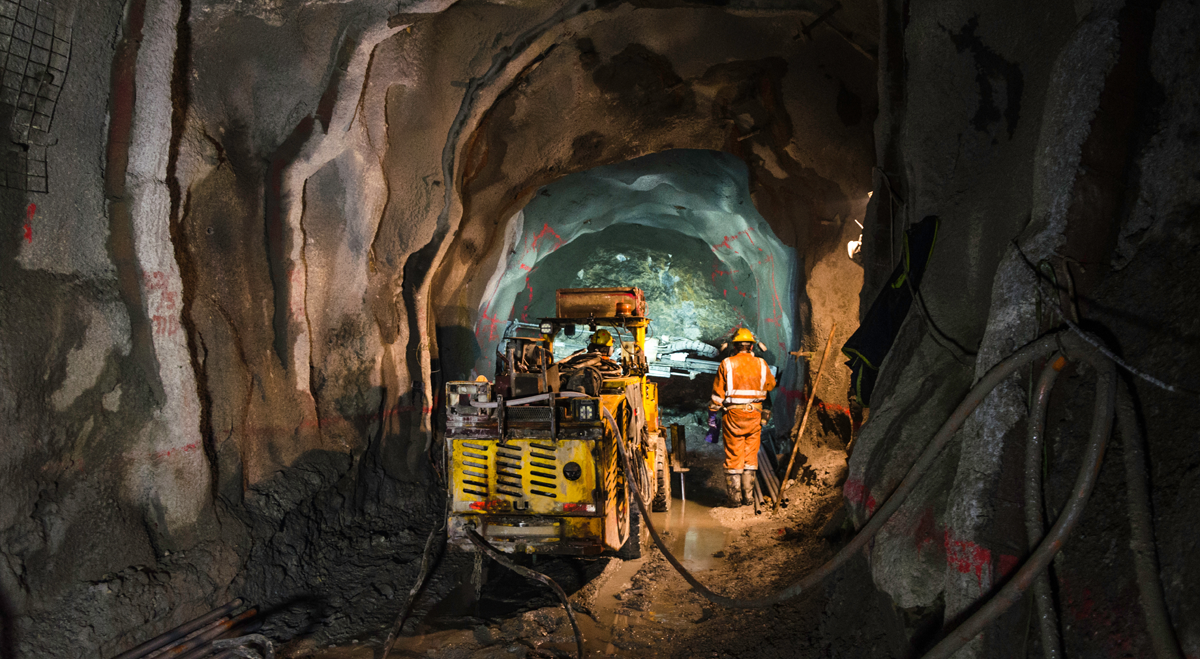
    Nativo Resources Plc (LSE:NTVO) is moving decisively toward its planned gold production timeline in 2026, following the successful restart of underground development and mining activities at its Bonanza vein project. The milestone marks a pivotal step in the company’s transition from redevelopment to production, supported by encouraging high-grade sampling results and a clear three-pillar growth strategy.

    In a recent interview, CEO Stephen Birrell and Executive Chairman Christian Yates outlined the company’s progress and near-term priorities. Having secured the mine in 2024, Nativo initiated early-stage production during late 2024 and into 2025 before pausing operations to focus on redevelopment. That phase has now positioned the company on the brink of recommencing production.

    Yates emphasized that the past several months have been dedicated to reopening and optimizing the mine, alongside extensive sampling and mine planning. The goal has been to better understand how to efficiently extract high-grade material from the project’s narrow vein geological structure. With this groundwork largely complete, the company is now approaching a key inflection point.

    Nativo’s broader strategy is built on three core pillars. The first is small-scale primary mining at the Bonanza site, utilizing artisanal-style techniques suited to the vein’s structure. The second is the construction and expansion of a gold processing plant, targeted for completion over the summer and commissioning in the third quarter of this year. The third, longer-term pillar involves securing and reprocessing legacy gold tailings deposits.

    A major highlight of the update is the latest sampling data from the Bonanza vein, which returned grades of up to 40.2 grams per tonne of gold. According to Birrell, these results are particularly significant because they validate the company’s existing geological model. Built using extensive historical datasets—including geophysical surveys, drilling, and prior sampling—the model has now been reinforced by systematic sampling conducted at two-metre intervals.

    Rather than challenging assumptions, the new data confirms them. This alignment between model and real-world results provides strong evidence for the presence of high-grade ore shoots distributed along the vein and extending at depth. Birrell noted that these shoots could reach depths of up to 300 metres, reinforcing the project’s long-term potential.

    Mining at Bonanza follows a “resue” method, a selective technique that involves carefully removing surrounding waste rock to isolate the valuable vein material. This approach allows miners to follow the vein precisely while minimizing dilution, ultimately improving the economic viability of the operation.

    Looking ahead, Nativo plans to continue extending underground galleries along the vein while also exploring deeper sections. As miners encounter high-grade zones, they will test their vertical continuity by digging downward to assess how far these shoots extend.

    Beyond the current mine, the company is also identifying new opportunities within its concession area. Trenching work conducted in late 2024 has already revealed three to four additional prospective zones. These targets will be explored using a straightforward approach: initial trenching, followed by shaft development to evaluate mineralization.

    With production restart imminent, a processing plant on the horizon, and multiple exploration targets emerging, Nativo Resources Plc appears well-positioned to build momentum over the coming months. Investors will be watching closely as the company advances toward its Q2 2026 gold sales target, supported by both operational progress and a growing understanding of its high-grade resource base.

    For more information please visit – https://www.nativoresources.com/

  • Middle East Tensions Could Continue to Pressure Wall Street: Dow Jones, S&P, Nasdaq, Futures

    Middle East Tensions Could Continue to Pressure Wall Street: Dow Jones, S&P, Nasdaq, Futures

    U.S. stock futures indicate a weaker start to trading on Thursday, pointing to additional losses after equities faced heavy selling pressure in the previous session.

    Investor sentiment is being dampened by concerns about the escalating conflict in the Middle East following attacks on key energy infrastructure throughout the region.

    Israel launched strikes on Iran’s South Pars natural gas fields and oil facilities in Asaluyeh, while an Iranian missile strike targeting Qatar’s Ras Laffan energy complex reportedly caused “extensive damage,” according to the country’s state-run energy company.

    In a post on Truth Social, President Donald Trump warned that the United States could “massively blow up the entirety of the South Pars Gas Field at an amount of strength and power that Iran has never seen or witnessed before” if additional attacks are carried out against Qatar.

    Brent crude futures, which surged to nearly $120 per barrel after the latest developments, have since retreated slightly but remain above $113 per barrel.

    Stocks fell sharply during Wednesday’s trading session, reversing most of the gains recorded in the previous two days. All three major U.S. indices finished firmly in negative territory, with the Dow Jones Industrial Average and the S&P 500 approaching their lowest levels in nearly four months.

    By the closing bell, the indices had recovered modestly from their intraday lows. The Dow dropped 768.11 points, or 1.6%, ending the day at 46,225.15. The Nasdaq Composite declined 327.11 points, or 1.5%, to 22,152.42, while the S&P 500 fell 91.39 points, or 1.4%, to close at 6,624.70.

    After an early decline, selling pressure intensified later in the session following a negative reaction to remarks by Federal Reserve Chair Jerome Powell after the central bank confirmed its widely anticipated decision to keep interest rates unchanged.

    Speaking at the post-meeting press conference, Powell said the United States is seeing “some progress on inflation,” but “not as much as we had hoped.”

    Although the Fed’s latest projections still suggest the possibility of a quarter-point rate cut later this year, Powell cautioned that “you won’t see the rate cut” unless inflation continues to move lower.

    Powell also highlighted the difficult balance facing policymakers, stating that “the risks to the labor market are to the downside, which would call for lower rates, and the risks to inflation are to the upside, which would call for higher rates or not cutting anyway.”

    The Fed’s comments followed its decision to maintain the target range for the federal funds rate at 3.50% to 3.75%, after also leaving rates unchanged at its January meeting.

    Most Fed officials supported keeping rates steady, although Fed Governor Stephen I. Miran once again favored lowering rates by a quarter percentage point.

    Earlier market weakness had already been triggered by a report from the U.S. Labor Department showing producer prices rose more sharply than expected in February.

    The department said its producer price index for final demand increased by 0.7% in February after rising 0.5% in January. Economists had anticipated a smaller gain of 0.3%.

    The report also showed that the annual increase in producer prices accelerated to 3.4% in February from 2.9% in January, while economists had expected the yearly pace to remain unchanged.

    Combined with the recent surge in crude oil prices tied to the Middle East conflict, the data has heightened concerns about the outlook for inflation.

    Gold-related stocks dropped sharply as the price of the precious metal declined, pushing the NYSE Arca Gold Bugs Index down 6.4% to its lowest closing level in two months.

    Airline stocks also experienced notable weakness, with the NYSE Arca Airline Index falling 3.0%.

    Telecommunications shares were also under pressure, dragging the NYSE Arca North American Telecom Index down 2.7%.

    Housing, retail and pharmaceutical stocks also posted notable declines, joining most other major sectors in moving lower.

  • European Stocks Slide as Oil Prices Jump: DAX, CAC, FTSE100

    European Stocks Slide as Oil Prices Jump: DAX, CAC, FTSE100

    European equity markets declined sharply on Thursday after Brent crude climbed above $115 per barrel following Iranian strikes on energy infrastructure in the Middle East.

    Key energy sites across the region have increasingly become targets as the conflict between Iran and the U.S.-Israeli alliance moves into its 19th day.

    On the economic front, the Bank of England’s Monetary Policy Committee voted “unanimously” to leave its benchmark interest rate unchanged at 3.75 percent.

    Data from the Office for National Statistics showed that the U.K. unemployment rate held steady while wage growth slowed in the three months ending in January.

    The unemployment rate remained at 5.2 percent during the November-to-January period. Job vacancies fell by 6,000 to 721,000 compared with the previous three-month period ending in November.

    Across the region’s major markets, Germany’s DAX Index dropped 2.9 percent, Britain’s FTSE 100 Index fell 2.7 percent and France’s CAC 40 Index declined 2.2 percent.

    Banking shares were among the biggest losers, with Commerzbank (TG:CBK), Deutsche Bank (TG:DBK), BNP Paribas (EU:BNP) and Barclays (LSE:BARC) all registering notable declines.

    German kitchen equipment maker Rational AG (TG:RAA) also slid after reporting lower fourth-quarter profit due to currency-related pressures.

    Real estate company Vonovia (TG:VNA) moved lower as well after announcing a decline in full-year revenue.

    Meanwhile, specialty chemicals producer Lanxess (TG:LXS) dropped sharply after reporting a wider net loss for the fourth quarter and unveiling additional cost-cutting measures planned for 2026.

  • Oil rallies as Brent climbs above $115 and WTI approaches $100 on escalating Iran tensions

    Oil rallies as Brent climbs above $115 and WTI approaches $100 on escalating Iran tensions

    Oil prices surged on Thursday as intensifying attacks on energy infrastructure across the Middle East raised concerns about potential supply disruptions linked to the widening U.S.–Israel conflict with Iran. The latest developments have expanded worries beyond the Strait of Hormuz, highlighting broader risks to global energy supply networks.

    Brent crude futures jumped 8.4% to $116.35 per barrel by 05:07 ET (09:07 GMT), while U.S. West Texas Intermediate crude futures rose 1.4% to $97.64 per barrel, briefly touching $100.02 during trading.

    The rally was also supported by a Reuters report indicating that the United States was considering deploying thousands of troops to the Middle East, fueling speculation over the scale and consequences of a possible ground operation involving Iran.

    Jefferies analysts expect tensions to remain elevated in the coming weeks, though they believe both sides may attempt to expose each other’s strategic weak points before eventually moving toward negotiations from a stronger position.

    “A realistic scenario would be that the US puts boots on the ground to take over the Kharg island and force Iran into negotiations,” Jefferies’ Mohit Kumar said in a note.

    Oil extends rally after strikes on energy assets

    Crude prices continued their sharp advance from the previous session after reports indicated that Israel had struck facilities at Iran’s South Pars field — the world’s largest natural gas field.

    Iran responded with attacks on energy installations in Qatar, the United Arab Emirates and Saudi Arabia.

    Tehran had previously warned that it could target several major energy facilities in the region, including Saudi Arabia’s SAMREF and Jubail complexes, the United Arab Emirates’ Al Hisn gas field and Qatar’s Ras Laffan refinery.

    U.S. President Donald Trump said in a strongly worded post on social media that Washington had not been informed about Israel’s strike on South Pars and warned Iran against carrying out further retaliatory actions.

    Trump added that Israel would not strike South Pars again and warned that the United States would “massively blow up” the gas field if Iran responded with additional retaliation.

    Supply disruption fears remain elevated

    The possibility of further attacks on oil and gas infrastructure across the Middle East has intensified concerns about supply disruptions linked to the Iran conflict, particularly as Tehran continues to keep the Strait of Hormuz — a vital corridor for global oil shipments — largely closed.

    Reuters reported late Wednesday that the Trump administration was considering sending thousands of troops to the region, with one potential objective being to safeguard tanker traffic through the Strait of Hormuz.

    The report also said Washington was evaluating the option of deploying forces to Iran’s Kharg Island after military targets near the oil export hub were struck last week.

    “With the US–Iran confrontation now in its third week, there is still no credible path to de‐escalation. Vessel traffic through the Strait of Hormuz remains severely restricted,” OCBC analysts said in a note.

    “Prolonged shipping paralysis is forcing Gulf producers into output shut‐ins, heightening the risk that temporary disruptions evolve into more persistent supply losses.”

    Oil prices climbed despite the strength of the U.S. dollar and growing concerns that rising energy costs could push central banks toward a more hawkish stance. The Federal Reserve on Wednesday highlighted uncertainty surrounding energy-driven inflation, while U.S. producer price data also came in above expectations.

    Crude markets also brushed aside figures showing an unexpected weekly increase in U.S. oil inventories.

    Earlier this week, the oil rally briefly paused after reports that Iraqi and Kurdish authorities had agreed to resume crude flows through Turkey’s Ceyhan export terminal. Major economies were also reported to be considering releasing crude from emergency reserves to help offset supply disruptions tied to the Iran conflict.

  • Gold remains below $4,900/oz as rate outlook and inflation worries weigh on demand

    Gold remains below $4,900/oz as rate outlook and inflation worries weigh on demand

    Gold prices posted modest gains in Asian trading on Thursday but stayed well under key levels as investors weighed uncertainty surrounding interest rates and the possible inflationary fallout from the U.S.–Israel conflict with Iran.

    Stronger-than-expected U.S. producer price data, along with warnings from the Federal Reserve about rising inflation risks, pressured bullion on Wednesday. Prices fell sharply, slipping far below the closely watched $5,000-per-ounce mark and hitting their lowest level in more than a month.

    By 01:47 ET (05:47 GMT), spot gold was up 0.2% at $4,833.60 per ounce, while gold futures were down 1.3% at $4,834.04 per ounce.

    Gold drops below $5,000/oz after U.S. inflation data and Fed remarks

    Gold moved out of the $5,000–$5,200 per ounce range that had held for almost a month after the Federal Reserve opted to keep interest rates unchanged on Wednesday and pointed to uncertainty over how the Iran conflict could influence inflation.

    The policy decision came shortly after the release of February’s producer price index, which showed stronger price pressures than economists had anticipated.

    Together, the PPI data and the Fed’s comments have clouded the outlook for U.S. monetary policy. Market expectations now suggest that the central bank has little room to cut interest rates in the near term. According to CME FedWatch data, investors do not expect a rate cut until at least September.

    This outlook has weighed on gold prices, offsetting much of the safe-haven buying triggered by the conflict in the Middle East. The precious metal has struggled to regain momentum since the start of the Iran war.

    “The market is effectively trading less on geopolitical hedging demand and more on the worries of higher inflation risks delaying Fed cut trajectory,” OCBC analysts wrote in a note.

    “While safe-haven flows may still offer intermittent support, they are being offset by the drag from rising real yields.”

    Other precious metals also weakened on Thursday, extending declines from the previous session. Spot platinum slipped 0.6% to $2,012.68 per ounce, while spot silver fell 0.7% to $74.8325 per ounce.

    Like gold, both metals have largely lagged the broader market since late February.

    Rising oil prices add pressure despite geopolitical tensions

    Gold has underperformed this week even as oil prices continued to climb amid the escalating U.S.–Israel conflict with Iran.

    The situation intensified on Wednesday after Israel struck the South Pars gas field — the largest gas field in the world — triggering a strong response from Iran. Tehran retaliated by attacking several key energy facilities across the Middle East and continuing strikes on targets in Israel.

    The inflationary implications of the conflict have become a major concern for investors and a key factor weighing on gold. Global oil and gas prices have surged as Iran kept the Strait of Hormuz closed, while energy production in parts of the Middle East has slowed due to military activity and shipping disruptions.

    These developments have raised fears of higher inflation and a more hawkish stance from central banks worldwide — conditions that typically dampen demand for gold.

    “Unless there is a meaningful shift lower in USD, real yields or a clear re-pricing back towards Fed easing, gold may struggle to sustain upside momentum,” OCBC analysts said.

    In addition to the Federal Reserve, several other major central banks are due to announce interest rate decisions on Thursday. The Bank of Japan has already kept its policy unchanged, while the European Central Bank, the Bank of England and the Swiss National Bank are scheduled to release their decisions later in the day.

  • Oil and gas surge, Fed keeps rates steady, Micron slides – market drivers in focus: Dow Jones, S&P, Nasdaq, Wall Street Futures

    Oil and gas surge, Fed keeps rates steady, Micron slides – market drivers in focus: Dow Jones, S&P, Nasdaq, Wall Street Futures

    U.S. equity futures moved lower on Thursday as escalating attacks on energy infrastructure in the Middle East sent oil prices sharply higher. The Federal Reserve kept its interest rate outlook unchanged, leaving open the possibility of a rate cut later this year, though Chair Jerome Powell cautioned investors against placing too much weight on the projections. Several other major central banks are also expected to keep borrowing costs unchanged as uncertainty surrounding the conflict with Iran persists. Meanwhile, shares of Micron (NASDAQ:MU) declined in premarket trading after the chipmaker unveiled plans for a significant increase in capital spending.

    Futures point to weaker open

    Futures tied to the major U.S. stock benchmarks signaled a softer start to trading after renewed strikes on key oil facilities in the Middle East drove crude prices higher.

    At 04:16 ET, Dow futures were down 38 points, or 0.15%. S&P 500 futures slipped 11 points, or 0.2%, while Nasdaq 100 futures dropped 67 points, or 0.3%.

    The main U.S. indices had already ended Wednesday’s session sharply lower after an attack on the South Pars oil field, located in the Iranian portion of the world’s largest natural gas reserve. Iran retaliated by targeting gas infrastructure in Qatar and Saudi Arabia, raising concerns that hostilities involving Iran, the United States and Israel could escalate into a broader regional conflict.

    The strikes pushed energy prices upward, intensifying fears of renewed inflationary pressure across global economies. Investors are watching central bank policy decisions this week for signals on how policymakers expect inflation and interest rates to evolve in the coming months.

    Adding to these concerns, U.S. producer price inflation data for February came in stronger than expected, suggesting that price pressures were already lingering in the U.S. economy before the escalation of the Iran conflict.

    By the close of Wednesday’s trading, the Dow Jones Industrial Average had fallen 1.6%, the S&P 500 declined 1.4%, and the Nasdaq Composite dropped 1.5%.

    Oil climbs past $112 per barrel

    Oil prices continued to surge, with Brent crude futures — the global benchmark — rising well above $112 per barrel.

    At 04:40 ET, Brent had jumped 7.8% to $115.78 per barrel, an increase of roughly $8. U.S. West Texas Intermediate crude futures rose 1.6% to $97.01 per barrel. The spread between WTI and Brent has widened to its largest level in over a decade, partly due to releases from the U.S. strategic petroleum reserve.

    European gas prices also surged by more than 25% after Iranian strikes hit Ras Laffan in Qatar, the world’s largest liquefied natural gas production hub, which alone accounts for about one-fifth of global LNG supply.

    “The move to strike Iranian energy assets is odd, given that the U.S. administration has been trying over the last couple of weeks to ease the upward pressure on oil prices,” analysts at ING said in a statement.

    However, President Donald Trump denied that either the United States or Qatar had any role in the strike on South Pars, saying the attack was carried out by Israel.

    The latest attacks on energy infrastructure have added further strain to oil markets already dealing with disruptions around the Strait of Hormuz. Roughly 20% of the world’s oil shipments pass through the narrow waterway south of Iran, but many vessels have avoided the route due to fears of potential Iranian retaliation.

    There are few signs that the three-week-old conflict is easing. According to Reuters, U.S. officials are considering deploying thousands of additional troops to reinforce operations in the Middle East.

    Fed leaves rates unchanged

    Despite the surge in oil prices clouding the inflation outlook, the Federal Reserve’s policy decision on Wednesday left the door open to possible rate cuts later this year.

    Lower interest rates can help stimulate economic growth and support a weakening labor market, though they also carry the risk of reigniting inflation.

    In the Fed’s latest quarterly projections, 12 of the 19 policymakers indicated they still expect at least one rate reduction in 2026, the same outlook presented in December.

    However, speaking after the central bank left rates unchanged within the 3.5%–3.75% range, Powell warned that investors should treat the projections with caution “even more than usual.”

    He suggested that current borrowing costs are near a neutral level — neither stimulating nor restricting economic activity — implying limited room for rate cuts, especially if energy-driven inflation persists.

    Global central banks under watch

    The Bank of Japan also kept its policy rate unchanged on Thursday, as widely anticipated, while warning about the inflationary risks associated with rising energy prices.

    The BOJ maintained its overnight call rate at 0.75% following an almost unanimous decision by its nine-member policy board. Board member Hajime Takata was the only dissenter, advocating a 25 basis point rate hike amid increasing inflation risks.

    Officials highlighted risks to price stability over the medium and long term, noting that higher oil prices pose a particular challenge for Japan, which relies heavily on imported energy passing through the Strait of Hormuz.

    “Risks to the outlook include the future course of the situation in the Middle East as well as developments in crude prices,” the BOJ said in a statement.

    Economists at Capital Economics said the BOJ’s remarks also suggested that further rate increases could be considered if inflation continues to strengthen.

    Later in the session, investors will turn their attention to policy announcements from the European Central Bank and the Bank of England, both of which are also expected to keep interest rates unchanged. Switzerland’s central bank likewise left rates on hold, citing increased economic uncertainty stemming from the Iran conflict.

    Micron earnings

    Micron Technology reported a sharp jump in revenue and profits for its fiscal second quarter, but its shares fell more than 4% in premarket trading after the company announced plans to significantly boost spending on manufacturing capacity.

    The chipmaker said it plans to invest more than $25 billion in new fabrication facilities in fiscal 2026, about $5 billion more than previously forecast.

    Micron reported adjusted earnings per share of $12.20 for the quarter ended Feb. 26, compared with $1.56 a year earlier and well above analyst expectations of $8.79. Revenue surged 196% year-on-year to $23.86 billion from $8.05 billion, exceeding estimates of $19.19 billion.

    Gross margin reached a record 74.9%, rising 18 percentage points from the prior quarter.

    “In the AI era, memory has become a strategic asset for our customers, and we are investing in our global manufacturing footprint to support their growing demand,” Chief Executive Sanjay Mehrotra said.

  • European stocks start lower as investors await central bank decisions and monitor oil surge: DAX, CAC, FTSE100

    European stocks start lower as investors await central bank decisions and monitor oil surge: DAX, CAC, FTSE100

    European equity markets opened in negative territory on Thursday as investors remained cautious ahead of several major central bank interest rate announcements while closely following geopolitical developments in the Middle East.

    At 08:17 GMT, the pan-European Stoxx 600 index was down 1.2%. Germany’s DAX declined 1.6%, France’s CAC 40 fell 1.1%, and the UK’s FTSE 100 slipped 1.2%.

    Market attention is focused on policy decisions expected later in the day from the European Central Bank and the Bank of England. Investors are looking for clues from policymakers on how the ongoing conflict involving Iran could affect economic conditions across Europe.

    Both the ECB and the BoE are widely expected to keep interest rates unchanged, following a similar stance taken by several other major central banks on Wednesday. The Federal Reserve, the Bank of Japan and the Bank of Canada all opted to hold rates steady, although they warned that inflationary pressures could increase if the joint U.S.–Israeli military action against Iran evolves into a prolonged conflict.

    Central banks now face the delicate challenge of managing inflation risks without undermining economic growth — a situation reminiscent of the energy shock triggered by Russia’s full-scale invasion of Ukraine in 2022.

    As a result, concerns about stagflation, characterized by weak economic activity combined with elevated inflation, have intensified. Investors have responded by adopting a more defensive stance, scaling back expectations for near-term interest rate cuts, reducing exposure to equities and increasing allocations to the U.S. dollar.

    Oil climbs above $110 per barrel

    Oil markets also extended their rally, with Brent crude, the global benchmark, rising above $110 per barrel.

    The latest jump followed Iranian attacks on energy infrastructure in the Middle East, including facilities linked to the strategically important South Pars gas field.

    “Supply risks continue to grow in energy markets amid an escalation in attacks on Persian Gulf energy infrastructure,” analysts at ING said in a note.

    By 06:59 GMT, Brent crude futures had surged 6.0% to $113.74 per barrel, while U.S. West Texas Intermediate crude was up 1.0% at $96.26 per barrel. WTI has recently traded at its widest discount to Brent in more than ten years, partly due to releases from the U.S. strategic petroleum reserve.

  • FTSE 100 declines before Bank of England decision as Brent crude surges above $114

    FTSE 100 declines before Bank of England decision as Brent crude surges above $114

    UK equities moved lower on Thursday ahead of the Bank of England’s interest rate decision, while oil prices surged as tensions in the Middle East intensified. Brent crude climbed to about $114 per barrel, heightening investor concerns about inflation and global economic stability. The latest UK labour data showed unemployment holding steady while wage growth slowed to around 3.9%.

    At 08:32 GMT, the benchmark FTSE 100 index was down 1.6%. Meanwhile, the British pound edged slightly higher against the dollar, with GBP/USD rising 0.01% to 1.3258.

    Elsewhere in Europe, markets were also under pressure. Germany’s DAX dropped 2.03%, while France’s CAC 40 declined by 1.5%.

    Global market developments

    Federal Reserve Chair Jerome Powell delivered a relatively hawkish message, indicating that inflation must decline further before policymakers consider cutting interest rates. His remarks dampened expectations for a near-term shift toward monetary easing.

    In Asia, the Bank of Japan left its interest rates unchanged overnight, although one policymaker dissented from the decision.

    Both the European Central Bank and the Bank of England are widely expected to keep interest rates unchanged later on Thursday. Such decisions would extend the broader pause in policy adjustments among major global central banks after several institutions also held rates steady earlier in the week.

    Middle East developments

    Geopolitical risks intensified after Israel launched a strike on Iran’s South Pars gas field. Iran responded by targeting energy infrastructure in Qatar and the United Arab Emirates.

    Tehran also warned that energy facilities in other Gulf countries could become targets for additional retaliatory actions, raising fears of wider disruption in global energy markets.

    UK corporate updates

    LSL Property Services (LSE:LSL) reported underlying operating profit of £32.6 million for fiscal 2025, slightly above analysts’ expectations of £32.2 million. The company reiterated its outlook for further profit growth in 2026, reporting a return on capital employed of 35% and net cash of £27.8 million. It also declared a total dividend of 11.4 pence per share and previously announced a £12 million share buyback programme in January.

    DFS Furniture plc (LSE:DFS) reaffirmed its full-year profit guidance of £43–50 million, despite noting weaker customer traffic recently due to adverse weather conditions. The retailer reported first-half revenue of £547.7 million, an 8.6% increase year on year, while pre-tax profit rose 82% to £31 million.

    Eurocell (LSE:ECEL) posted preliminary 2025 revenue growth of 13%, largely driven by its acquisition of Alunet. Adjusted operating profit rose 6% during the year, though adjusted pre-tax profit declined 5% to £19 million as a result of higher financing costs.

    Central Asia Metals (LSE:CAML) reported revenue of $229.9 million for 2025, exceeding the consensus estimate of $224.9 million from analysts. However, the company recorded a net loss after booking a $117.8 million impairment charge at its Sasa mine. Adjusted free cash flow reached $56 million and EBITDA totalled $101.8 million, representing a 44% margin.

    Capital Ltd (LSE:CAPD) reported a sharp increase in annual profitability, with net profit after tax jumping 318% to $71 million in 2025. Revenue slipped slightly by 0.6%, while adjusted EBITDA rose 1.1% as the company continued expanding its mining services and investment portfolio.

  • Eurocell posts 13% revenue rise in 2025 despite subdued UK construction demand

    Eurocell posts 13% revenue rise in 2025 despite subdued UK construction demand

    Eurocell (LSE:ECEL), the UK manufacturer of windows and doors, reported preliminary revenue growth of 13% for 2025, largely supported by the contribution from its Alunet acquisition.

    Adjusted operating profit increased by 6% over the year, while adjusted pre-tax profit slipped 5% to £19 million, mainly reflecting higher financing costs. Basic earnings per share were reported at £0.10, with pre-tax profit of £12.2 million and EBIT of £17.3 million.

    During the year, Eurocell completed a £5 million share buyback programme and raised its total dividend payout.

    The acquisition of Alunet, finalised in March 2025, made a strong contribution to both revenue and adjusted operating profit. However, underlying sales volumes declined by 2%, as weaker market conditions—particularly within the repair, maintenance and improvement (RMI) segment—continued to weigh on demand.

    The company said it was able to counter cost inflation and pricing pressure through tight cost control and operational efficiencies.

    Looking ahead, Eurocell said the potential implications of the situation in the Middle East remain uncertain, though it continues to view the medium- and long-term outlook for the UK construction sector as positive.

    Demand in the RMI market is expected to remain relatively weak in 2026. Eurocell said it intends to continue share buybacks depending on market conditions and the strength of its balance sheet.

    The company also expects Alunet to deliver another year of strong growth in 2026.