Blog

  • Dow Jones, S&P, Nasdaq, Futures, AI Momentum Supports Wall Street Amid Government Shutdown

    Dow Jones, S&P, Nasdaq, Futures, AI Momentum Supports Wall Street Amid Government Shutdown

    U.S. stock futures point to a higher open Thursday, as investors look to extend gains from the past few sessions.

    Positive sentiment around artificial intelligence is helping tech stocks maintain strength. Nasdaq 100 futures rose 0.6% ahead of the open, reflecting investor enthusiasm.

    Leading AI companies are showing notable pre-market moves. Nvidia (NASDAQ:NVDA) climbed 1.4%, while Advanced Micro Devices (NASDAQ:AMD) and Broadcom (NASDAQ:AVGO) jumped 3.2% and 3.5%, respectively.

    The surge follows reports that OpenAI’s recent share sale values the company at $500 billion. By selling around $6.6 billion in stock, current and former employees helped the ChatGPT owner surpass SpaceX as the world’s most valuable private company.

    “Reports suggest there was appetite for nearly twice as many as the actual number of shares on offer,” said Russ Mould, investment director at AJ Bell.

    Investors are also largely ignoring the ongoing U.S. government shutdown, which has delayed releases of weekly jobless claims and factory orders.

    Stocks initially fell on Wednesday but recovered strongly over the trading session. The major indexes climbed from session lows to end in positive territory.

    The Nasdaq rose 95.15 points, or 0.4%, to 22,755.16, the S&P 500 gained 22.74 points, or 0.3%, to 6,711.20, and the Dow added 43.21 points, or 0.1%, to 46,441.10.

    This marked the fourth consecutive session of gains, with the Dow and S&P 500 hitting new record closing highs.

    The early pullback followed the U.S. government shutdown after Congress failed to approve a temporary spending bill.

    Democrats insist that any stop-gap funding include extended Obamacare tax credits, while Republicans argue this should be debated after the bill is passed.

    Some of the early pressure was offset by optimism about interest rate prospects after private-sector employment data were released.

    ADP reported a surprising decline of 32,000 jobs in September, with August revised down to a 3,000-job loss. Economists had forecast a gain of 50,000 jobs, contrasting with the initial 54,000 added in August.

    Bill Adams, Chief Economist at Comerica Bank, noted, “The ADP report could have outsize influence on the Federal Reserve’s next interest rate decision if the shutdown lasts long enough to keep the Fed from seeing the September jobs report before their next meeting later this month.”

    Analysts also pointed out that past government shutdowns have historically had limited impact on markets.

    “On average, the S&P 500 has historically been about flat during shutdowns, with a slightly higher probability of gains vs. losses since 1976,” said Jeff Buchbinder, Chief Equity Strategist for LPL Financial.

    He added, “Considering that most of the losses came during the late 1970s, and the biggest decline during a shutdown since 1980 was 2.2%, history suggests stocks have a good chance of going higher during this shutdown, though past performance does not guarantee future results.”

    Pharmaceuticals extended their previous session rally, pushing the NYSE Arca Pharmaceutical Index up 5.4% to its strongest close in almost seven months.

    Computer hardware stocks followed suit, with the NYSE Arca Computer Hardware Index spiking 3.9% to a record closing high.

    Biotech shares surged as well, with the NYSE Arca Biotechnology Index up 3.2% to a record close amid widespread strength in the sector.

    Healthcare, semiconductor, and steel stocks gained steadily, while airlines and financials saw notable declines.

    This content is for informational purposes only and does not constitute financial, investment, or other professional advice. It should not be considered a recommendation to buy or sell any securities or financial instruments. All investments involve risk, including the potential loss of principal. Past performance is not indicative of future results. You should conduct your own research and consult with a qualified financial advisor before making any investment decisions.

  • Experian slides as Fair Isaac unveils mortgage initiative challenging credit bureaus

    Experian slides as Fair Isaac unveils mortgage initiative challenging credit bureaus

    Shares of Experian (LSE:EXPN) tumbled 7.1% in London trading on Thursday after Fair Isaac, the U.S. analytics software company best known for its FICO scores, introduced a new mortgage-focused program that could reduce the role of traditional credit agencies.

    Announced on Wednesday, the FICO® Mortgage Direct License Program is aimed at lessening lenders’ dependence on the three nationwide credit bureaus. The initiative allows tri-merge resellers to calculate and deliver FICO scores directly to clients, cutting out the middle step of relying on credit-reporting firms.

    The launch poses a potential threat to the established business model of credit agencies such as Experian, as mortgage lenders may now have an alternative route to obtain borrower credit data without going through the traditional bureau system.

    This content is for informational purposes only and does not constitute financial, investment, or other professional advice. It should not be considered a recommendation to buy or sell any securities or financial instruments. All investments involve risk, including the potential loss of principal. Past performance is not indicative of future results. You should conduct your own research and consult with a qualified financial advisor before making any investment decisions.

  • Dow Jones, S&P, Nasdaq, Wall Street Futures, OpenAI Valuation, Challenger Layoffs, and Market Drivers Under the Microscope

    Dow Jones, S&P, Nasdaq, Wall Street Futures, OpenAI Valuation, Challenger Layoffs, and Market Drivers Under the Microscope

    U.S. stock futures pointed mostly higher Thursday, as weaker-than-expected private payroll figures fueled expectations for additional Federal Reserve rate cuts, despite uncertainty from the ongoing U.S. government shutdown. ChatGPT creator OpenAI is reportedly valued at $500 billion following a secondary stock sale, making it the world’s top startup by valuation. Meanwhile, Challenger layoffs data is set to gain extra attention, as the government closure may delay key labor market releases.

    Futures edge upward

    By 03:14 ET, Dow futures were nearly flat, while S&P 500 and Nasdaq 100 futures were up 0.1% and 0.2%, respectively. Investors largely dismissed the ongoing U.S. shutdown, instead focusing on the weak private employment report as a potential signal for more Fed rate cuts this year.

    The previous session saw Wall Street’s main indexes climb, boosted by gains in the health care sector. The rally started earlier in the week when Pfizer (NYSE:PFE) announced a deal with President Donald Trump to reduce prescription drug prices in Medicaid in exchange for tariff relief. Trump suggested other pharmaceutical companies could follow a similar path.

    Shares of AES (NYSE:AES) jumped, helping lift the S&P 500, after reports that BlackRock-owned Global Infrastructure Partners is close to acquiring the utility company for $38 billion. Lithium Americas Corp (NYSE:LAC) also rose after the U.S. Department of Energy acquired a 5% stake in its joint venture with General Motors (NYSE:GM).

    OpenAI hits $500 billion

    OpenAI’s valuation reached $500 billion after a secondary share sale of around $6.6 billion, according to reports citing sources familiar with the transaction. The deal positions OpenAI above Elon Musk’s SpaceX, previously valued at roughly $400 billion.

    Bloomberg News noted that current and former employees sold shares to investors including Thrive Capital, SoftBank, Dragoneer Investment Group, Abu Dhabi’s MGX, and T. Rowe Price. OpenAI had been valued at $300 billion following a $40 billion funding round led by Japan’s SoftBank Group. Secondary sales are a common method for U.S. startups to provide liquidity for employees and retain talent. The sale fell short of the $10 billion-plus initially offered, reflecting staff confidence in the company’s long-term prospects.

    Dollar reacts to Supreme Court ruling

    The U.S. dollar traded close to flat after the Supreme Court blocked Trump’s attempt to remove Fed Governor Lisa Cook immediately, instead scheduling oral arguments in January.

    “Markets weren’t deeply impacted by the firing attempt and are reacting modestly to the ruling, though it does signal stronger institutional protection for the Fed than other agencies,” ING analysts noted.

    Despite early gains, the dollar index, which measures the greenback against a basket of rival currencies, fell 0.1% Thursday, marking a fourth consecutive day of declines.

    Challenger layoffs in focus

    The ongoing government shutdown could delay key economic indicators, including Friday’s nonfarm payrolls report. As a result, private releases such as Thursday’s Challenger layoffs data are drawing extra attention.

    Earlier this week, the ADP National Employment Report recorded the largest decline in private payrolls in two and a half years during September. Job openings edged up slightly in August, even as hiring declined.

    The Fed has monitored labor market data closely to guide monetary policy. Borrowing costs were reduced by 25 basis points last month, with officials emphasizing support for a slowing jobs market despite persistent inflation. Chicago Fed President Austan Goolsbee suggested central bankers may need to rely on alternative data sources before their October 16-17 meeting.

    Gold holds near record levels

    Gold remained near historic highs Thursday as safe-haven demand was supported by the government shutdown and prospects for further rate cuts. Spot gold steadied at $3,867.97 per ounce, while December futures slipped 0.1% to $3,892.15/oz by 04:04 ET.

    The U.S. government is expected to remain closed for at least three days, disrupting federal operations nationwide. Lawmakers in the Senate have shown little progress toward reaching an agreement on a spending bill. Prolonged closure could impact the economy by interrupting essential services, and Trump’s threats to terminate additional federal workers could add pressure on the labor market.

    This content is for informational purposes only and does not constitute financial, investment, or other professional advice. It should not be considered a recommendation to buy or sell any securities or financial instruments. All investments involve risk, including the potential loss of principal. Past performance is not indicative of future results. You should conduct your own research and consult with a qualified financial advisor before making any investment decisions.

  • Oil edges higher on Russia sanctions fears, but supply concerns weigh

    Oil edges higher on Russia sanctions fears, but supply concerns weigh

    Oil prices ticked up on Thursday after three days of losses, supported by worries over potential tighter sanctions on Russian crude, though persistent oversupply concerns limited the upside.

    Brent crude futures added 20 cents, or 0.31%, to $65.55 a barrel at 06:31 GMT, while U.S. West Texas Intermediate (WTI) climbed 20 cents, or 0.32%, to $61.98 a barrel. Some analysts attributed the gains to a technical rebound following a roughly 1% decline for both Brent and WTI in the previous session, with Brent closing at its lowest level since June 5 and WTI since May 30.

    “Buying interest emerged as WTI neared its $60 support level, while heightened geopolitical risks and speculation about tighter sanctions on Russian crude also lent support,” said Hiroyuki Kikukawa, chief strategist at Nissan Securities Investment.

    The Group of Seven (G7) finance ministers announced Wednesday that they would target parties continuing to purchase Russian oil or facilitating circumvention. In addition, the U.S. will provide Ukraine with intelligence to conduct long-range missile strikes on Russian energy infrastructure, according to Reuters, confirming a Wall Street Journal report. The move is expected to help Ukraine hit refineries, pipelines, and other energy assets to reduce Moscow’s revenue.

    Chinese stockpiling, given its status as the world’s top crude importer, also supported prices, preventing a deeper decline.

    However, concerns about the global economy amid the U.S. government shutdown, coupled with anticipated higher OPEC+ production, capped gains. U.S. President Donald Trump’s administration froze $26 billion for Democratic-leaning states, leveraging the shutdown to target political priorities.

    On the supply side, sources familiar with OPEC+ discussions said the alliance could boost November production by up to 500,000 barrels per day—triple October’s increase—as Saudi Arabia aims to regain market share, even as demand in the U.S. and Asia begins to ease.

    Data from the U.S. Energy Information Administration (EIA) showed crude, gasoline, and distillate inventories rose last week amid softer refining activity and demand. Crude stockpiles increased by 1.8 million barrels to 416.5 million for the week ending September 26, above the 1-million-barrel rise expected in a Reuters poll.

    This content is for informational purposes only and does not constitute financial, investment, or other professional advice. It should not be considered a recommendation to buy or sell any securities or financial instruments. All investments involve risk, including the potential loss of principal. Past performance is not indicative of future results. You should conduct your own research and consult with a qualified financial advisor before making any investment decisions.

  • Gold Holds Near Record Levels Amid US Shutdown and Rate Cut Expectations

    Gold Holds Near Record Levels Amid US Shutdown and Rate Cut Expectations

    Gold prices remained close to all-time highs in Asian trading on Thursday, supported by haven demand amid the ongoing U.S. government shutdown and mounting expectations of further Federal Reserve rate cuts.

    The yellow metal reached a series of peaks this week following the partial U.S. government closure, which came after Congress failed to approve a new spending bill. The shutdown has delayed the release of crucial labor market data, leaving markets uncertain about the future path of interest rates.

    Spot gold traded steady at $3,864.63 an ounce, while December gold futures dipped 0.2% to $3,889.65/oz by 00:45 ET (04:45 GMT). On Wednesday, spot gold briefly hit a record $3,895.33/oz.

    US Government Shutdown Disrupts Data, Payrolls Delayed

    The federal shutdown is expected to last at least three days, affecting multiple government operations. Lawmakers in the Senate have made little progress toward reaching an agreement on funding.

    A prolonged closure could impact the U.S. economy, with potential disruptions in essential services, while President Donald Trump’s warnings to dismiss additional federal employees may add strain to the labor sector. Nonfarm payrolls, initially scheduled for release this Friday, are now likely to be postponed until next week.

    Private payroll data released Wednesday indicated continued cooling in the labor market, reinforcing expectations of additional Fed rate cuts. This sentiment has pressured the dollar while supporting precious metals.

    Other metals eased slightly on Thursday after strong gains earlier in the week. Spot platinum stabilized at $1,563.46/oz, with futures slipping 0.2% to $1,572.35/oz, after both metals reached more than a decade-high earlier.

    Industrial metals also advanced, with LME copper up 0.4% at $10,422.05/ton and COMEX copper rising 0.4% to $4.9145/lb.

    Markets Pricing in Fed Rate Cut

    Market indicators suggest a 97% probability of a 25-basis-point Fed cut later in October, and a 3% chance of a larger 50-bps reduction, according to CME FedWatch. Recent economic data show a slowing U.S. economy, particularly in the labor market, following September’s 25-bps rate cut due to cooling job growth.

    However, several Fed officials have cautioned that persistent inflation may limit further cuts. Data released last week showed the core PCE price index, the Fed’s preferred inflation measure, rose as expected in August, remaining above the 2% annual target.

    This content is for informational purposes only and does not constitute financial, investment, or other professional advice. It should not be considered a recommendation to buy or sell any securities or financial instruments. All investments involve risk, including the potential loss of principal. Past performance is not indicative of future results. You should conduct your own research and consult with a qualified financial advisor before making any investment decisions.

  • Pepperstone and Swiset Partner to Launch Trading Competitions

    Pepperstone and Swiset Partner to Launch Trading Competitions

    • The agreement is designed to give Introducing Brokers access to branded contests to support client retention.
    • As part of the deal, Swiset’s Competitions Engine and Community Module will be integrated into Pepperstone’s platform.

    Swiset, a technology provider for brokers and proprietary trading firms, has teamed up with Pepperstone to deliver trading competitions and community engagement solutions across its global network.

    Through this collaboration, Introducing Brokers (IBs) and traders will gain access to branded contests and scalable tools aimed at enhancing interaction and retention.

    Competitions Engine and Community Module

    Under the agreement, Swiset’s Competitions Engine and Community Module will become part of Pepperstone’s offerings. This technology enables brokers to host contests with real-time performance tracking and built-in community features. Pepperstone noted that the initiative aligns with its commitment to providing new engagement tools for clients worldwide.

    Commenting on the partnership, James Perry-Keene, Head of Strategic Partnerships at Pepperstone, said:
    “Pepperstone’s strategic partnership with Swiset marks a significant step forward in delivering dynamic, engaging, and scalable CFD and FX trading competitions across global markets.”

    He added:
    “By integrating Swiset’s Competitions Engine and Community Module, we’re empowering traders and Introducing Brokers (IBs) with tools to independently manage contests, track performance, and foster vibrant trading communities.”

    Rising Popularity of Trading Competitions

    Trading competitions are gaining momentum among brokers as a way to keep traders engaged and active. These contests allow participants to test strategies in live markets while competing against peers, supporting both client retention and stronger community connections.

    Swiset CEO Camilo Tobar emphasized the company’s vision, saying:
    “Our vision has always been to create technology that not only powers competitions but also builds stronger bridges between brokers, IBs, and traders.”

    He continued:
    “Partnering with Pepperstone allows us to scale this vision and provide brokers with a proven solution to drive acquisition, retention, and community engagement.”

    Founded in Australia in 2010, Pepperstone now serves clients in more than 160 countries and operates under seven regulatory licenses, including the FCA, ASIC, and CySEC. Swiset, meanwhile, specializes in competition and community tools for brokers and proprietary trading firms.

    Disclaimer:This content is for informational purposes only and does not constitute financial, investment, or other professional advice. It should not be considered a recommendation to buy or sell any securities or financial instruments. All investments involve risk, including the potential loss of principal. Past performance is not indicative of future results. You should conduct your own research and consult with a qualified financial advisor before making any investment decisions.

  • Dollar Slides Amid U.S. Shutdown, Euro Strengthens

    Dollar Slides Amid U.S. Shutdown, Euro Strengthens

    The U.S. dollar weakened Thursday, extending a four-day decline as investors weighed the impact of the ongoing U.S. government shutdown and the prospect of further Federal Reserve easing.

    At 04:15 ET (08:15 GMT), the Dollar Index, which measures the greenback against six major currencies, slipped 0.1% to 97.272, following a series of losses that pushed it to one-week lows over the past four sessions.

    Prolonged Dollar Weakness Likely

    The shutdown was triggered after a last-minute spending bill supported by Republicans failed to pass the Senate. With deep political divisions persisting, there is no clear resolution in sight, and the impasse could continue for an extended period.

    Polymarket, a betting platform, currently suggests the highest probability for a shutdown lasting one to two weeks, though there is a 34% chance of a longer closure, with more than $1.2 million wagered.

    As a result, Friday’s highly anticipated nonfarm payrolls report is unlikely to be released on schedule, heightening the focus on Wednesday’s weak ADP private payrolls data. According to ADP, U.S. private payrolls fell unexpectedly by 32,000 in September, following a downward revision of 3,000 in August.

    This slowdown in the labor market increases the possibility of additional Fed rate cuts at the remaining policy meetings this year, following last month’s reduction. Fed funds futures now indicate a 99% likelihood of a 25-basis-point cut later this month, up from 96.2% the previous day, according to CME Group’s FedWatch tool.

    The dollar received some support earlier after the U.S. Supreme Court confirmed it will hear arguments in January regarding President Donald Trump’s attempt to remove Federal Reserve Governor Lisa Cook, allowing her to remain in her post for now.

    Euro Strengthens on Ukraine Support News

    In Europe, EUR/USD climbed 0.2% to 1.1751, bolstered by a Wall Street Journal report that the U.S. will provide intelligence to Ukraine for long-range missile strikes on Russian energy infrastructure, potentially limiting Moscow’s revenue streams.

    The latest eurozone unemployment data for August is expected to remain steady at 6.2%, while inflation edged up to 2.2% from 2% in the previous month, suggesting that the European Central Bank will likely maintain its policy stance.

    GBP/USD rose 0.1% to 1.3497, with the pound benefiting from the dollar’s softness.

    Yen and Other Currencies

    USD/JPY remained mostly flat at 147.01 after four consecutive sessions of declines. ING analysts had noted before the shutdown that “the yen could emerge as an outperformer as a hedge to the U.S. entering a government shutdown.”

    AUD/USD added 0.2% to 0.6625 after data showed Australian household spending edged up only slightly in August amid a decline in goods purchases.

    USD/CNY traded near 7.1196 as markets anticipate a meeting in four weeks between Chinese President Xi Jinping and U.S. President Trump. Chinese markets are closed for the Golden Week holiday.

    This content is for informational purposes only and does not constitute financial, investment, or other professional advice. It should not be considered a recommendation to buy or sell any securities or financial instruments. All investments involve risk, including the potential loss of principal. Past performance is not indicative of future results. You should conduct your own research and consult with a qualified financial advisor before making any investment decisions.

  • DAX, CAC, FTSE100, European Stocks Rise on Hopes of Fed Rate Cuts

    DAX, CAC, FTSE100, European Stocks Rise on Hopes of Fed Rate Cuts

    European shares climbed on Thursday, extending gains from the previous session amid growing expectations of further U.S. Federal Reserve monetary easing.

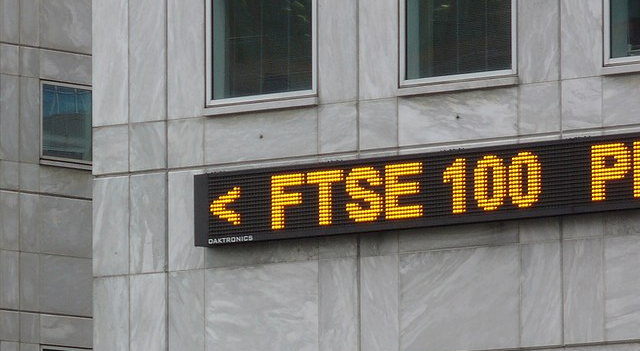
    At 07:05 GMT, Germany’s DAX advanced 0.5%, France’s CAC 40 added 0.9%, and the U.K.’s FTSE 100 rose 0.2%.

    Market Expectations for Fed Action

    The three major European indices posted roughly 1% gains on Wednesday, ahead of a positive close on Wall Street. Investor sentiment was boosted by a weaker-than-expected ADP employment report, which reinforced expectations of quarter-point rate cuts at the remaining Federal Reserve policy meetings this year.

    In the U.S., much of the government shut down Wednesday after an eleventh-hour Republican-backed spending bill failed to pass the Senate. This pause in operations will halt the release of official data for the immediate term, including Friday’s closely watched nonfarm payrolls report, focusing attention on the weak ADP numbers.

    Eurozone Economic Data

    Later in the session, a series of central bankers, including ECB Vice-President Luis De Guindos and ECB board member Patrick Montagner, are scheduled to speak at various forums. The eurozone unemployment rate for August is also due, expected to remain steady at 6.2%. Recent data showed eurozone inflation rising to 2.2% in September from 2.0% in August, supporting the European Central Bank’s decision to hold rates for a third consecutive meeting on 30 October.

    Corporate News

    Renault (EU:RNO) drew attention after Bloomberg reported discussions with China’s Chery Automobile regarding a potential partnership in South America. The talks reportedly cover Colombia and Argentina, where Chery could access Renault’s factories in exchange for capital investment and product design support.

    Oil Markets

    Oil prices edged higher Thursday, rebounding from near four-month lows amid renewed concerns over tighter sanctions on Russian crude. Brent futures rose 0.1% to $65.41 a barrel, while U.S. West Texas Intermediate crude advanced 0.1% to $61.83 a barrel. Both benchmarks had fallen about 1% in the previous session, with Brent closing at its lowest since 5 June and WTI since 30 May.

    The Group of Seven finance ministers said Wednesday they will increase pressure on Russia by targeting those continuing to buy Russian oil and entities facilitating circumvention. Additionally, the Wall Street Journal reported that the U.S. plans to provide Ukraine with intelligence for long-range missile strikes on Russian energy infrastructure, aiming to reduce Kremlin revenue from oil sales.

    This content is for informational purposes only and does not constitute financial, investment, or other professional advice. It should not be considered a recommendation to buy or sell any securities or financial instruments. All investments involve risk, including the potential loss of principal. Past performance is not indicative of future results. You should conduct your own research and consult with a qualified financial advisor before making any investment decisions.

  • SSE Shares Slide 2% as H1 EPS Guidance Misses Analyst Expectations

    SSE Shares Slide 2% as H1 EPS Guidance Misses Analyst Expectations

    Shares of SSE Plc (LSE:SSE) fell over 2% on Thursday after the energy company projected a decline in first-half earnings per share for the 2025–26 fiscal year.

    The UK-based utility forecast H1 2025–26 EPS of 33p to 37p, consistent with typical seasonal averages but placing the midpoint at roughly 23% of Jefferies’ full-year EPS estimate of 156p, which the brokerage described as “a small negative.”

    SSE indicated that full-year performance is expected to remain broadly unchanged, though no formal guidance was provided. Adjusted first-half capital expenditure is projected to rise approximately 60% year-on-year to £1.1 billion, reflecting continued acceleration of Networks spending. Total H1 capex is expected to reach around £1.5 billion, while net debt and hybrid capital are forecast at about £11.5 billion, slightly below Jefferies’ FY25/26 projection of £11.8 billion.

    In the renewables segment, the company reported strong second-quarter output, offsetting weaker first-quarter performance due to adverse weather. SSE expects total first-half renewable generation of approximately 5.3 TWh, down 2% year-on-year, with second-quarter output flat at 2.8 TWh.

    The company also provided updates on its investment program. SSE submitted the final major ASTI consent application and received planning approval for the Netherton Hub in Aberdeenshire. Major consent was also secured for the Berwick Bank offshore wind farm, clearing the way for potential participation in the UK AR7 auction round.

    Jefferies maintained its full-year EPS range for 2026/27 at 175p–200p. Analysts described the first-half midpoint as “on the low end,” reflecting modest near-term earnings pressure despite ongoing capital deployment.

    SSE’s guidance highlights continued investments in networks and renewables, alongside weather-driven variability in output. The company reiterated that first-half results are in line with seasonal trends, which typically account for 20–30% of annual earnings in the first six months.

    This content is for informational purposes only and does not constitute financial, investment, or other professional advice. It should not be considered a recommendation to buy or sell any securities or financial instruments. All investments involve risk, including the potential loss of principal. Past performance is not indicative of future results. You should conduct your own research and consult with a qualified financial advisor before making any investment decisions.

  • National Grid Reports H1 Trading in Line with Expectations, Maintains Guidance

    National Grid Reports H1 Trading in Line with Expectations, Maintains Guidance

    National Grid Plc (LSE:NG.) reported on Thursday that its first-half fiscal 2026 trading results are in line with expectations, reiterating the guidance provided at the end of fiscal 2025.

    The pre-close statement from the electricity and gas utility company confirms performance consistent with previously communicated targets, with full-year EPS guidance positioned at the lower end of a 6–8% growth range. Consensus forecasts currently suggest around 5% year-over-year growth, slightly below National Grid’s guidance.

    Morgan Stanley noted that consensus EPS of 76.9p remains under the lower bound of the company’s guided range of 77.7p. “We see consensus already reflecting a cautious ~1.35 FX assumption (vs company assumed 1.3 for the year),” the brokerage said.

    The analysts explained that the difference between consensus and guidance largely reflects translation effects and could put upward pressure on estimates if foreign exchange rates move closer to the company’s assumption.

    In the UK, electricity distribution and transmission are expected to be roughly evenly split between H1 and H2. In the U.S., a typical second-half skew is anticipated, although less pronounced than last year due to a reduced impact from storms, Morgan Stanley added. The company’s ET-3 Final Determination is anticipated in early December.

    Morgan Stanley indicated that they do not expect revisions to full-year consensus EPS at this stage. “We would not expect any revisions to street estimates on average at this stage given consensus mean EPS already below bottom end of 6-8%/yr EPS growth range,” the analysts said. They added that any future adjustments would likely be influenced by foreign exchange developments rather than operational performance.

    Full-year guidance remains unchanged from the FY25 close in May. Analysts also pointed out that the gap between consensus and company guidance is fully accounted for by translation effects. “We see scope for potential upward pressure on consensus should FX trend closer to 1.3 and hence translation impact less than consensus currently reflecting. Note this is purely a translation impact.”

    This content is for informational purposes only and does not constitute financial, investment, or other professional advice. It should not be considered a recommendation to buy or sell any securities or financial instruments. All investments involve risk, including the potential loss of principal. Past performance is not indicative of future results. You should conduct your own research and consult with a qualified financial advisor before making any investment decisions.