Blog

  • Dow Jones, S&P, Nasdaq, Wall Street, U.S. Futures Steady as Markets Hold Back Before Fed Rate Announcement

    Dow Jones, S&P, Nasdaq, Wall Street, U.S. Futures Steady as Markets Hold Back Before Fed Rate Announcement

    U.S. stock index futures were little changed early Tuesday, indicating a flat start for Wall Street as traders tread carefully ahead of Wednesday’s Federal Reserve decision.

    After a modest retreat in the prior session, investors appear unwilling to take strong directional bets. While a 25-basis-point rate cut is widely anticipated, the outlook for interest rates heading into 2026 remains clouded with uncertainty.

    CME Group’s FedWatch tool shows an 87.4% probability of the Fed trimming rates on Wednesday, alongside a 67.5% chance policymakers keep rates unchanged at the January meeting. This split underscores doubts about how aggressive the central bank will be in the months ahead.

    Market participants are expected to scrutinize the Fed’s statement and Chair Jerome Powell’s comments for insight into whether more easing is likely.

    Shortly after trading begins, the Labor Department will release October’s job-openings data, offering a fresh read on labor-market conditions.

    Monday’s market action saw stocks jump at the open before momentum faded. All three major indexes slid into negative territory by the afternoon despite a brief mid-day rebound attempt. The Dow dropped 215.67 points (0.5%) to 47,739.32, the Nasdaq slipped 0.1% to 23,545.90, and the S&P 500 fell 0.4% to 6,846.51.

    The downturn followed a stretch of strong gains, with both the Nasdaq and S&P 500 closing at one-month highs last Friday, prompting some profit-taking. Trading volumes remained muted with the Fed decision approaching.

    Dan Coatsworth, head of markets at AJ Bell, warned that expectations may limit the market’s reaction, stating: “Markets may not rally if we get a 25 basis-point cut, given how investors are already expecting it to happen.” He added: “Instead, markets are only likely to move in a large way up or down if we don’t get a cut or if the cut is much bigger than expected.”

    Sector performance was mixed Monday. Gold miners were sharply lower, driving the NYSE Arca Gold Bugs Index down 2.1%. Biotech shares also weakened, pulling the NYSE Arca Biotechnology Index down 1.6%.

    Utilities, natural gas, and healthcare names struggled as well, while networking, hardware, and semiconductor stocks managed to show relative strength.


  • DAX, CAC, FTSE100, European Markets Trade Mixed as Investors Await Fed Rate Announcement

    DAX, CAC, FTSE100, European Markets Trade Mixed as Investors Await Fed Rate Announcement

    European equities showed little clear direction on Tuesday, with traders hesitant to take strong positions ahead of Wednesday’s closely watched U.S. Federal Reserve interest rate decision.

    The Fed is widely expected to deliver a 25-basis-point rate cut, although the trajectory for policy in 2026 remains uncertain.

    In regional economic data, Germany’s trade balance improved in October, helped by a small rise in exports and a pullback in imports, according to figures released by the federal statistics office.

    Exports edged up 0.1% month-on-month—far below September’s 1.5% rebound—while imports fell 1.2% after a sharp 5.1% rise the previous month. This pushed the country’s trade surplus higher, reaching €16.9 billion compared with €15.3 billion in September.

    Later in the session, investors will turn their focus to U.S. JOLTS job openings data for October, which could offer fresh insight into the labor market’s strength.

    Market performance across Europe was uneven: Germany’s DAX gained 0.3%, the UK’s FTSE 100 hovered just below unchanged, and France’s CAC 40 slipped 0.6%.

    In corporate news, ThyssenKrupp (TG:TKA) tumbled after warning of a difficult operating environment and projecting a potential net loss of up to €800 million in 2026.

    British American Tobacco (LSE:BATS) also traded sharply lower after stating that 2026 results are expected to land at the bottom of its medium-term guidance range.

    Shares of Chemring Group (LSE:CHG) weakened as well, following an update indicating higher-than-planned expenses tied to the company’s expansion efforts in Norway.

    On a more positive note, German wind turbine maker Nordex (BIT:1NDX) advanced after securing new orders in France and Belgium.

  • Oil Extends Losses as Markets Weigh Ukraine Peace Talks and Fed Decision

    Oil Extends Losses as Markets Weigh Ukraine Peace Talks and Fed Decision

    Oil prices slipped again on Tuesday, adding to the sharp decline seen at the start of the week, as traders monitored developments in Ukraine peace negotiations, ongoing concerns about global oversupply, and the upcoming U.S. interest rate decision.

    By 0717 GMT, Brent crude futures were down 7 cents, or 0.1%, at $62.42 a barrel, while U.S. West Texas Intermediate dipped 13 cents, or 0.2%, to $58.75.

    Monday’s losses — more than $1 per barrel — followed Iraq’s move to restore output at Lukoil’s massive West Qurna-2 field, one of the largest oil-producing sites globally.

    Ukraine plans to present a revised peace framework to Washington after discussions in London between President Volodymyr Zelenskiy and leaders from France, Germany, and the U.K.

    Tim Waterer, chief market analyst at KCM Trade, noted the market’s hesitancy: “Oil is keeping to a tight trading range until we get a better idea of which way the peace talks will go.”

    He added: “If the talks break down, we expect oil to move higher, or if progress is made, and there is a likelihood of Russian supply to the global energy market resuming, prices would be expected to drop.”

    Sources familiar with ongoing discussions said G7 nations and the European Union are weighing a shift from a price cap on Russian oil exports to a full maritime services ban to further curb Moscow’s revenue.

    Another potential catalyst is due next week, as analysts look toward December’s monthly oil market report from the International Energy Agency.

    Kelvin Wong, senior market analyst at OANDA, said: “The next (market) driver is likely to be the IEA monthly oil market report for December, released on 11 December, which it has predicted a record surplus in the oil market in 2026, highlighted in previous outlook reports.” He noted that if the IEA reiterates these surplus concerns, WTI could slip toward the $56.80–$57.50 support range.

    Attention is also turning to Wednesday’s Federal Reserve meeting, where markets currently assign an 87% chance of a 25-basis-point rate cut.

    While lower borrowing costs typically bolster oil demand, analysts warn that broader price action remains heavily influenced by expectations of oversupply.

    Priyanka Sachdeva, senior market analyst at Phillip Nova, remarked: “Although markets are largely invested in upcoming FED policy decision on Wednesday for a possible 25bp cut, something that could lend short-term support at the lower end of the $60–65 band, the broader price structure remains anchored by expectations of an oversupplied 2026 (oil market).”

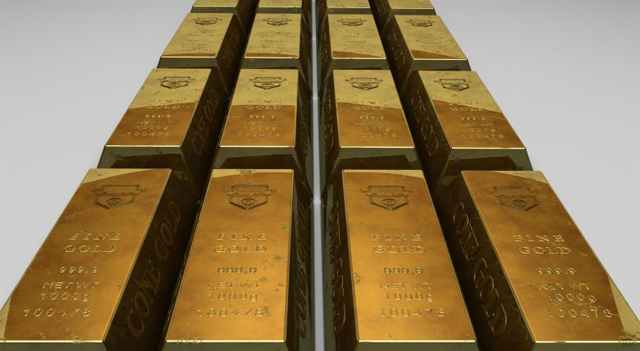
  • Gold Holds Steady as Traders Brace for Fed; Silver Trades Near All-Time Highs

    Gold Holds Steady as Traders Brace for Fed; Silver Trades Near All-Time Highs

    Gold prices were little changed in Asia on Tuesday as investors stayed on the sidelines ahead of this week’s Federal Reserve meeting, where policymakers are widely expected to deliver another interest rate cut.

    Although the metal has softened slightly in early December, gold remains supported by four consecutive months of strong gains, fueled by optimism over easing U.S. monetary policy. Other precious metals also saw muted moves, while silver continued to hover just shy of record levels after a sharp rally last week.

    Spot gold slipped 0.1% to $4,186.18 per ounce, and February gold futures inched down to $4,215.40/oz at 00:04 ET (05:04 GMT).

    Market eyes Fed cut, but tone still unclear

    Most analysts expect the Federal Reserve to trim interest rates by 25 basis points when it concludes its two-day meeting on Wednesday.

    Expectations strengthened after last week’s data showed a modest decline in the PCE price index, the Fed’s preferred inflation gauge.

    However, OCBC analysts noted growing chatter around the possibility of a “hawkish hold” in recent weeks, particularly because the Fed will be making its decision without the usual flow of updated economic data for October and November.

    Even so, anticipation of lower borrowing costs has boosted gold in recent months, as reduced yields on U.S. debt generally increase demand for non-yielding assets.

    Other precious metals were steady on Tuesday but have enjoyed solid upward momentum lately. Spot platinum traded at $1,651.81/oz, while silver continued to outperform.

    Silver steadies near landmark highs

    Spot silver hovered around $58.1/oz, holding close to last week’s record of $59.3474/oz.

    The metal — frequently viewed as a defensive alternative to gold — has surged amid heavy speculative buying driven by expectations of tightening supply. Its appeal also strengthened after the U.S. officially classified silver as a critical mineral.

    Silver prices have more than doubled this year, far outpacing gold, as the high cost of bullion has encouraged investors to diversify their safe-haven exposure.

  • Dollar Holds Steady Before Fed Decision; Euro Strengthens as Aussie Rises

    Dollar Holds Steady Before Fed Decision; Euro Strengthens as Aussie Rises

    The U.S. dollar was little changed on Tuesday as investors awaited the Federal Reserve’s final policy decision of the year, while the Australian dollar firmed after a more hawkish tone from the Reserve Bank of Australia.

    At 04:00 ET (09:00 GMT), the Dollar Index — a measure of the greenback against six major peers — edged slightly lower to 99.042.

    Markets brace for a potential “hawkish” cut

    The Fed begins its two-day policy meeting later today, and markets broadly expect a 25-basis-point rate cut when Wednesday’s decision is released.

    Fed funds futures put the likelihood of a reduction at just under 90%, according to CME’s FedWatch.

    Still, significant uncertainty remains over what the Fed may signal regarding next year’s policy path, particularly with the announcement of a new Fed Chair expected soon.

    As ING analysts noted, “There are now high expectations of a ’hawkish cut’ at Wednesday evening’s FOMC decision. With market pricing of further Fed easing still vulnerable, we suspect the dollar’s downside is limited into the Fed meeting.”

    The JOLTS job-openings report, due later Tuesday, is unlikely to play a major role in the Fed’s current deliberations given its October reference period.

    Euro picks up after German export surprise

    The euro edged higher, with EUR/USD rising 0.1% to 1.1645, after Germany posted a small but unexpected increase in exports. Shipments grew 0.1% month-on-month in October, defying forecasts of a 0.5% decline.

    The gain was driven by EU trade, while exports to China and the U.S. fell sharply. The data adds to signs that the eurozone’s largest economy may be stabilizing.

    However, ING warned that “failure to pass a social security budget in the French parliament today would be greeted negatively by markets and could re-insert some political risk back into the euro.”

    GBP/USD rose 0.2% to 1.3348 ahead of Friday’s GDP release and next week’s Bank of England meeting.

    Aussie dollar climbs after RBA signals inflation risks

    In Asia, the Australian dollar strengthened, with AUD/USD up 0.3% to 0.6638. The Reserve Bank of Australia held its cash rate at 3.60%, as widely anticipated, but delivered a firmer message on inflation.

    The RBA said inflation risks had “tilted to the upside” and warned that stronger-than-expected domestic demand could add pressure on capacity — prompting policymakers to remain cautious and assess how persistent price pressures may be.

    The central bank’s previous easing cycle now appears on hold for the time being, with core inflation still sticky.

    Elsewhere, USD/CNY dipped slightly to 7.0702, while USD/JPY climbed 0.3% to 156.29 after a powerful 7.5-magnitude earthquake struck northeast Japan, triggering evacuations and initial tsunami warnings that were later downgraded.

  • Dow Jones, S&P, Nasdaq, Wall Street Futures, Fed Meeting Kicks Off; Paramount Ups the Stakes for WBD as Markets Search for Direction

    Dow Jones, S&P, Nasdaq, Wall Street Futures, Fed Meeting Kicks Off; Paramount Ups the Stakes for WBD as Markets Search for Direction

    U.S. stock futures were slightly positive early Tuesday, with investors preparing for what could become one of the Federal Reserve’s most debated decisions in recent years. At the same time, markets were absorbing a major escalation in the takeover battle for Warner Bros Discovery (NASDAQ:WBD), new clarity on Nvidia’s (NASDAQ:NVDA) export permissions, and a modest pullback in Bitcoin (COIN:BTCUSD).

    Futures move marginally higher

    Equity futures hovered just above unchanged as traders positioned themselves ahead of Wednesday’s Fed announcement.

    As of 02:55 ET, Dow futures were up 26 points (0.1%), S&P 500 futures added 8 points (0.1%), and Nasdaq 100 futures gained 26 points (0.1%).

    Monday’s session ended in the red across the major U.S. indices, weighed down by rising Treasury yields. The benchmark 10-year yield climbed further after a strong earthquake struck near Japan, adding to volatility.

    Tech earnings also loom large this week, with Oracle (NYSE:ORCL) and Broadcom (NASDAQ:AVGO) set to report as investors digest concerns around heavy, often debt-funded AI investment.

    Among individual movers, Confluent (NASDAQ:CFLT) surged after IBM (NYSE:IBM) announced plans to acquire the company, while Tesla (NASDAQ:TSLA) slipped 3% following a downbeat forecast from Morgan Stanley.

    Paramount drops hostile $108.4B bid for Warner Bros Discovery

    The effort to acquire Warner Bros Discovery has intensified dramatically.

    Just days after reports suggested Netflix (NASDAQ:NFLX) had secured a $72 billion equity deal for its TV, film, and streaming operations, Paramount Skydance revealed a hostile bid valued at $108.4 billion. The offer represents a 139% premium to WBD’s pre-negotiation valuation and seeks to acquire the entire company, including its cable networks.

    Warner’s board said Monday it will evaluate Paramount’s proposal but reaffirmed its backing for the Netflix agreement, advising the company not to act on the rival offer at this stage.

    Trump administration clears Nvidia to ship H200 chips to China

    President Donald Trump said the U.S. will now allow Nvidia to export its H200 processors to China and collect a 25% fee on those sales.

    The decision marks a softening of earlier export curbs that limited Nvidia to selling only the lower-tier H20 chip into China due to U.S. national-security concerns. The H200 is thought to be roughly six times more powerful than the H20, according to Reuters citing the Institute for Progress.

    However, Beijing’s crackdown on domestic firms using U.S. technology could limit the commercial benefits of the policy shift.

    Nvidia shares rose in after-hours trading, extending Monday’s 3% advance.

    Fed begins two-day meeting with rate cut expected

    Investor focus has now shifted firmly to the Fed’s latest two-day policy meeting, which is widely expected to conclude with a 25-basis-point rate cut.

    The odds of such a move have strengthened following soft economic data showing job-market stress, a modest uptick in consumer spending, and persistent inflation. FedWatch currently places the probability near 89%.

    Still, policymakers could choose to hold steady, especially as some officials have questioned whether delivering a third cut since September is appropriate given the lack of fresh economic data during the record-breaking government shutdown.

    Analysts say this could become one of the most contentious Fed decisions in years.

    Bitcoin softens ahead of Fed decision

    Bitcoin edged lower as traders avoided making bold bets before Wednesday’s announcement.

    Lower interest rates typically weaken the U.S. dollar and trim yields on cash and bonds, a dynamic that can make non-yielding assets such as Bitcoin more appealing. But 2025 has been marked by sharp price swings tied to debates over monetary policy, tariffs, and artificial intelligence.

    These moves have reinforced the view that Bitcoin’s correlation with equity-market risk has strengthened significantly.

  • DAX, CAC, FTSE100, European Stocks Hold Steady as Markets Await Fed Meeting; German Exports Tick Higher

    DAX, CAC, FTSE100, European Stocks Hold Steady as Markets Await Fed Meeting; German Exports Tick Higher

    European equities moved mostly sideways on Tuesday as investors looked ahead to the start of the U.S. Federal Reserve’s two-day policy meeting later in the session.

    By 08:02 GMT, Germany’s DAX was up 0.2%, France’s CAC 40 gained 0.1%, while the UK’s FTSE 100 slipped 0.1%.

    Fed meeting in focus

    Federal Reserve policymakers convene later today, with markets broadly expecting an interest rate cut on Wednesday. Since the move is largely priced in, attention is turning to Chair Jerome Powell’s guidance on the pace of potential easing in 2026.

    Current market pricing implies 77 basis points of cuts through the end of next year, suggesting two reductions after December remain anticipated.

    Analysts at Vital Knowledge said: “The Fed is widely expected to cut rates on Wednesday, but the forward guidance that day could pivot in a hawkish direction. In aggregate, monetary policy globally is shifting out of an easing phase with the Fed set to go on pause for (at least) the first few meetings of 2026.”

    The decision will help set the tone for upcoming central bank announcements in Europe.
    • The Swiss National Bank delivers its update Thursday.
    • The Bank of England, European Central Bank, Norges Bank, and Riksbank follow next week.

    Earlier Tuesday, the Reserve Bank of Australia held rates steady but issued a hawkish warning amid renewed domestic inflation pressures.

    German exports edge up

    Germany’s exports rose 0.1% in October from the previous month, according to federal statistics office data—defying expectations for a 0.5% decline.

    Corporate highlights

    Thyssenkrupp (TG:TKA) returned to profit in its fourth quarter after reporting a loss a year earlier.
    However, the group still expects lower sales and a net loss in 2026, citing uncertainty around the global economy: “the future development of the global economy is still uncertain.”

    Novartis (BIT:1NOVN) entered a partnership with Relation Therapeutics, a deal worth up to $1.7 billion, aimed at accelerating drug-target discovery for allergic diseases.

    Renault (EU:RNO) formed a strategic alliance with Ford (NYSE:F) to develop affordable electric vehicles, with production expected to begin in 2028.

    Oil Prices Ease

    Crude prices extended their decline on Tuesday as traders monitored diplomatic efforts to end the war in Ukraine.

    • Brent crude fell 0.1% to $62.44 per barrel
    • WTI slipped 0.1% to $58.81 per barrel

    Both benchmarks lost about 2% on Monday after Iraq restored output at the West Qurna-2 field, a key source of national exports.

    Ukraine, meanwhile, signaled it will deliver a revised peace proposal to the U.S. following talks in London between President Volodymyr Zelenskiy and leaders of France, Germany, and the UK. Any progress toward a negotiated resolution could reduce some of the geopolitical risk premium currently baked into oil prices.

  • FTSE 100 Edges Lower as Pound Strengthens; Moonpig Rises, Chemring Slips

    FTSE 100 Edges Lower as Pound Strengthens; Moonpig Rises, Chemring Slips

    UK equities dipped slightly on Tuesday, even as the pound moved higher against the dollar, while most major European indices traded firmly in positive territory.

    By 08:27 GMT, the FTSE 100 was down 0.08%. Sterling strengthened, with GBP/USD up 0.07% at 1.33. Germany’s DAX gained 0.4%, and France’s CAC 40 added 0.2%.

    UK market highlights

    Ashtead Group PLC (LSE:AHT) reported modest top-line growth for the half-year ending 31 October and reiterated its full-year guidance. Group revenue rose 1% to $5.76 billion, while rental revenue increased 2%. Adjusted EBITDA fell 2% to $2.66 billion and adjusted operating profit declined 5% to $1.47 billion, reflecting a 3% rise in depreciation compared with last year.

    Moonpig Group PLC (LSE:MOON) jumped more than 6% after announcing adjusted EPS of 6.9 pence for the first half, up 13.1% year-on-year. Adjusted EBITDA climbed 7.7% to £45 million, driven by improved trading, operating leverage, and a £30 million share buyback programme.

    Moonpig also disclosed changes in leadership: CEO Nickyl Raithatha will step down on 31 December, with Catherine Faiers assuming the role on 2 March 2026. The board said Raithatha leaves “the business in excellent shape and well positioned to continue to deliver against its strategic objectives.”

    British American Tobacco PLC (LSE:BATS) reaffirmed its 2026 growth ambitions but warned that performance is likely to fall at the lower end of its 3%–5% revenue growth target. For 2025, BAT anticipates roughly 2% revenue and adjusted profit growth, alongside an acceleration to double-digit gains in its New Category segment in the second half.

    Chemring Group PLC (LSE:CHG) declined 2.2% after disclosing higher-than-forecast costs connected to its Norwegian expansion. Even so, full-year results remained solid: revenue for the year to 31 October rose 1.9% to £497.5 million, while underlying operating profit increased 6% to £73.5 million.

    In pharmaceuticals, Novartis AG (BIT:1NOVN) announced a partnership with UK-based Relation Therapeutics Ltd. worth up to $1.7 billion. The collaboration aims to accelerate the discovery of drug targets for allergic diseases by combining Novartis’s immuno-dermatology expertise with Relation’s AI-powered platform, which interprets patient-derived data to uncover genetic disease drivers. Relation CEO David Roblin said the partnership will enhance their ability to translate biological insights into breakthrough therapies.

  • Magnum Ice Cream Co. Begins Trading After Unilever Spinoff; J.P. Morgan Initiates Coverage at “Neutral”

    Magnum Ice Cream Co. Begins Trading After Unilever Spinoff; J.P. Morgan Initiates Coverage at “Neutral”

    The Magnum Ice Cream Company (LSE:MICC) made its debut as an independent, publicly traded company following its separation from Unilever. J.P. Morgan initiated coverage with a “neutral” rating and set a €14 price target for December 2027. The stock finished at €12.84 on December 8, 2025.

    J.P. Morgan analysts said the newly listed group offers a solid medium- to long-term earnings growth story, but they cautioned that transition-related cost pressures could weigh on results through 2025 and 2026 as the business adjusts to operating on a standalone basis.

    The brokerage projects 6% compound annual EPS growth from 2025 to 2029, supported by a global ice cream category that historically expands by 3% to 4% annually.

    Analysts expect Magnum Ice Cream Co. to stay within its own guidance of 3%–5% like-for-like sales growth and annual EBITDA margin expansion of 40–60 basis points through 2026–2030. However, short-term profitability is likely to dip as the company absorbs costs from technology transition agreements and consolidates its India operations.

    J.P. Morgan forecasts EBITDA margins of 16.4% in 2025 (down 50 bps from 2024) and 16.8% in 2026 (up 40 bps). On revenue, analysts expect 5% like-for-like growth in 2025, slowing to 2.9% in 2026 due to weaker pricing power, tougher comparisons, and softer consumer spending. They also warned that broader use of GLP-1 weight-loss drugs could dampen category demand.

    Shares currently trade at 11.3× estimated 2027 earnings and 7.4× 2027 EV/EBITDA, roughly in line with European food and beverage peers. J.P. Morgan said the valuation reflects a company still proving itself as a standalone listed operator, with exposure to a single product category and meaningful seasonal fluctuations.

    The analysts highlighted significant longer-term margin potential if the company can close the gap with competitor Froneri by achieving €500 million in targeted gross supply-chain efficiencies. Froneri’s EBITDA margin rose from 12.7% in 2017 to 21.5% in 2024, while Magnum posted 16.9% in 2024.

    J.P. Morgan’s €14 December 2027 price target is based on a discounted cash flow model that assumes 1.5% terminal growth and a 10% WACC.

  • Henry Boot Sells 329 Housing Plots Across Two Major Land Deals

    Henry Boot Sells 329 Housing Plots Across Two Major Land Deals

    Henry Boot PLC (LSE:BOOT) announced Tuesday that its Hallam Land division has finalized the sale of 329 residential plots through two separate transactions.

    In the first deal, 156 plots in Hambleton, North Yorkshire, were sold to Barratt Redrow. The second involved the sale of 173 plots in Haverhill, Suffolk, to Bloor Homes. According to the company, both disposals generated strong returns, with ungeared IRRs of 66% for Hambleton and 45% for Haverhill.

    Henry Boot had been promoting the Hambleton land since 2022, and the site secured outline planning permission in January 2025 after a successful appeal. The project includes 10% affordable housing and delivers a 19.5% biodiversity net gain.

    The Haverhill plots form part of a broader development of 2,500 homes that received planning consent in 2018. The masterplan also includes schools, local centres, and green space. Hallam Land still holds 627 additional plots at the site for future disposal.

    With these transactions, Henry Boot’s plot sales for 2025 now total 3,591, underscoring continued demand from housebuilders for consented land.

    Tim Roberts, CEO at Henry Boot, said: “Hallam Land’s strength lies in its ability to create value by securing planning consent for complex sites that might otherwise be difficult to unlock for new homes. These transactions take the total plot sales for the year to 3,591, and demonstrates that housebuilders remain keen to acquire well located, consented land. It gives us reason for optimism as we look ahead to 2026.”