Blog

  • M.P. Evans Delivers Strong H1 2025 Results with Focus on Own Crop Production

    M.P. Evans Delivers Strong H1 2025 Results with Focus on Own Crop Production

    M.P. Evans Group PLC (LSE:MPE) reported a 50% increase in operating profit for the first half of 2025, supported by a strategic shift toward maximizing the use of its own harvested crops and benefiting from favorable commodity prices. The company recorded a 13% rise in mill-gate crude palm oil (CPO) prices and a 10% increase in certified sustainable CPO output. Alongside these gains, M.P. Evans also generated a solid net cash surplus.

    The group expanded its land portfolio with the acquisition of additional planted hectares and strengthened governance with the appointment of new board members, positioning itself for continued operational growth.

    Analysts point to the company’s strong financial results—highlighted by revenue expansion, profitability, and disciplined cash flow management—as the main drivers of its positive outlook. Technical signals show a neutral to mildly positive trajectory, while valuation metrics suggest the stock is reasonably priced and offers a healthy dividend yield. The absence of earnings call updates or major corporate events did not materially affect the overall assessment.

    About M.P. Evans

    M.P. Evans Group PLC is dedicated to the sustainable production of Indonesian palm oil. Its strategy emphasizes increasing reliance on its own crop yields while reducing purchased inputs, thereby enhancing both the quality and sustainability of its products.

    This content is for informational purposes only and does not constitute financial, investment, or other professional advice. It should not be considered a recommendation to buy or sell any securities or financial instruments. All investments involve risk, including the potential loss of principal. Past performance is not indicative of future results. You should conduct your own research and consult with a qualified financial advisor before making any investment decisions.

  • Thor Energy Imposes ASX Trading Halt Ahead of Potential Project Sale Update

    Thor Energy Imposes ASX Trading Halt Ahead of Potential Project Sale Update

    Thor Energy Plc (LSE:THR) has suspended trading of its shares on the Australian Securities Exchange (ASX) while it prepares an announcement regarding a possible project divestment. The halt will remain in place until either the disclosure is made or until trading resumes on 17 September 2025. Shares on London’s AIM market are unaffected, underscoring the potential significance of this strategic development for the company’s future operations and market positioning.

    The company’s overall stock profile continues to be weighed down by financial strains, including an absence of revenue and ongoing liquidity pressures. Technical signals remain bearish, and valuation metrics point to additional challenges. Even so, Thor’s involvement in clean energy initiatives provides some longer-term growth potential, offering a counterbalance to near-term concerns.

    About Thor Energy Plc

    Thor Energy Plc focuses on the exploration of hydrogen and helium, key resources for advancing the global clean energy transition. Its portfolio also extends to uranium and other strategic energy-related metals.

    This content is for informational purposes only and does not constitute financial, investment, or other professional advice. It should not be considered a recommendation to buy or sell any securities or financial instruments. All investments involve risk, including the potential loss of principal. Past performance is not indicative of future results. You should conduct your own research and consult with a qualified financial advisor before making any investment decisions.

  • Windar Photonics Delivers Revenue Growth and Broadens Global Footprint in H1 2025

    Windar Photonics Delivers Revenue Growth and Broadens Global Footprint in H1 2025

    Windar Photonics (LSE:WPHO) posted an 18% rise in first-half 2025 revenue, reaching €2.7 million. Growth was fueled by increasing market demand and targeted investments in both marketing and production capacity. While the company contended with currency fluctuations and uncertainty linked to U.S. import tariffs, it successfully secured new contracts and deepened its presence in North America and Asia.

    A key milestone during the period was Windar’s relocation to a larger manufacturing site in Copenhagen, boosting output capacity by five times. With a robust sales pipeline and the upcoming release of its Nexus TPM module, the company is positioning itself for the next phase of expansion. Its strategic emphasis on turbine optimization and monitoring technologies is expected to further strengthen its competitive edge and support sustained long-term growth.

    Despite this progress, Windar’s outlook is tempered by challenges in profitability and valuation. Analysts highlight a negative P/E ratio and the absence of dividend returns as headwinds, though technical indicators point to a modestly positive price trend with limited momentum.

    About Windar Photonics

    Windar Photonics develops advanced LiDAR-based wind sensor technologies, including the WindEye and WindTimizer systems, as well as the Nexus OS software platform. These innovations are designed to maximize wind turbine efficiency by increasing energy output and reducing operating costs, supporting global efforts to optimize renewable energy performance.

    This content is for informational purposes only and does not constitute financial, investment, or other professional advice. It should not be considered a recommendation to buy or sell any securities or financial instruments. All investments involve risk, including the potential loss of principal. Past performance is not indicative of future results. You should conduct your own research and consult with a qualified financial advisor before making any investment decisions.

  • Craneware Posts Robust FY25 Results with Strong Revenue and Profit Gains

    Craneware Posts Robust FY25 Results with Strong Revenue and Profit Gains

    Craneware plc (LSE:CRW) delivered a solid performance in fiscal year 2025, reporting revenue growth of 9% to $205.7 million and a 12% increase in adjusted EBITDA, which reached $65.3 million. Statutory profit before tax surged by 52%, supported by stronger customer retention and a strengthened position in the U.S. healthcare sector.

    The company credited its success to ongoing investment in research and development, the integration of its customer-facing operations, and its strategic collaboration with Microsoft. New AI-driven tools and the shift of its Trisus Platform revenues toward a recurring model are expected to support future expansion. Management signaled optimism for fiscal year 2026, pointing to accelerating growth prospects.

    While Craneware’s financial momentum and strategic achievements are clear, analysts note that its elevated valuation and mixed technical signals may temper enthusiasm among value-oriented investors. Nevertheless, the company’s initiatives, strong balance sheet, and consistent execution suggest it is well-positioned for continued progress.

    About Craneware

    Craneware plc specializes in financial and operational transformation for healthcare providers. Through its Trisus cloud ecosystem, the company delivers technologies that enhance efficiency, strengthen financial sustainability, and enable long-term growth. As a long-standing Microsoft partner, Craneware develops solutions that streamline healthcare finance and operations, reinforcing its role as a trusted industry partner.

    This content is for informational purposes only and does not constitute financial, investment, or other professional advice. It should not be considered a recommendation to buy or sell any securities or financial instruments. All investments involve risk, including the potential loss of principal. Past performance is not indicative of future results. You should conduct your own research and consult with a qualified financial advisor before making any investment decisions.

  • Red Rock Resources Shares Gain on £1m Royalty Sale

    Red Rock Resources Shares Gain on £1m Royalty Sale

    Red Rock Resources PLC (LSE:RRR) saw its shares climb on Friday after announcing the sale of its royalty over gold production from the El Limon mine in Colombia to Soma Gold Corp, in a deal valued at £1 million in cash.

    Alongside the cash consideration, Red Rock will receive 200,000 share subscription rights in Soma, exercisable at C$2.00 over a 36-month period.

    The royalty — held since 2015 but dormant in recent years — was expected to resume payments this year. It comprised a 3% net smelter return royalty, capped at US$2 million, and an additional 0.5% royalty capped at US$1 million.

    “The sale of the royalty back to the mine owner provides Red Rock with funds to reduce liabilities and strengthen working capital,” said chair Andrew Bell.

    In London, Red Rock shares were trading 15% higher at 0.035p.

    This content is for informational purposes only and does not constitute financial, investment, or other professional advice. It should not be considered a recommendation to buy or sell any securities or financial instruments. All investments involve risk, including the potential loss of principal. Past performance is not indicative of future results. You should conduct your own research and consult with a qualified financial advisor before making any investment decisions.

  • ATOME PLC Secures 10-Year Offtake Deal with Yara for Paraguay Fertiliser Project

    ATOME PLC Secures 10-Year Offtake Deal with Yara for Paraguay Fertiliser Project

    ATOME PLC (LSE:ATOM) announced it has signed a definitive 10-year offtake agreement with Yara International covering the entire annual output — 260,000 tonnes — from its Villeta low-carbon fertiliser project in Paraguay.

    The company said the deal marks the final commercial milestone before a final investment decision, expected later this year. Construction of the US$630 million facility is scheduled to start in the fourth quarter of 2025.

    Building on preliminary terms disclosed in July, the agreement also includes an option to extend beyond the initial decade.

    “This partnership with Yara, now confirmed in its final form, is a landmark step in delivering our Villeta Project,” said ATOME chief executive Olivier Mussat. “We’re proud to be part of what is the world’s largest low-carbon fertiliser supply agreement. Alongside Villeta, we continue to work with leading partners and offtakers to distribute our green molecules, disrupt traditional commodity markets, and support a cleaner, more sustainable future.”

    Chrystel Monthean, Yara’s executive vice president for the Americas, added: “Yara’s ambition is to help grow a nature-positive food future, profitably. By securing locally produced fertiliser made with renewable energy, we’ll strengthen our portfolio and, combined with our agronomic expertise, respond competitively to market demand. We look forward to developing this long-term strategic relationship with ATOME.”

    This content is for informational purposes only and does not constitute financial, investment, or other professional advice. It should not be considered a recommendation to buy or sell any securities or financial instruments. All investments involve risk, including the potential loss of principal. Past performance is not indicative of future results. You should conduct your own research and consult with a qualified financial advisor before making any investment decisions.

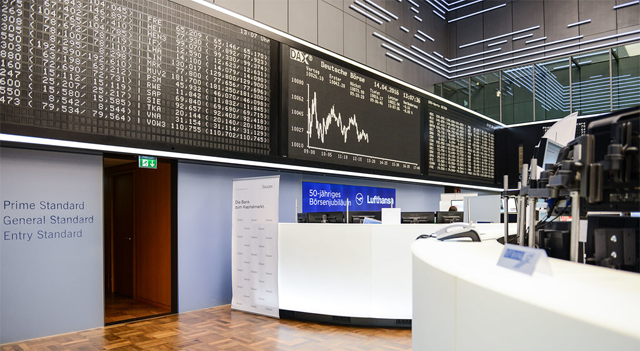
  • DAX, CAC, FTSE100, European Stocks Edge Higher Amid ECB Anticipation

    DAX, CAC, FTSE100, European Stocks Edge Higher Amid ECB Anticipation

    European equities mostly advanced on Thursday as investors focused on France’s political tensions and the European Central Bank’s expected decision to keep interest rates steady.

    Large-scale protests erupted in France as newly appointed Prime Minister Sébastien Lecornu assumes office, facing public anger over budget cuts and ongoing political unrest.

    Markets are also keeping an eye on upcoming U.S. consumer price data, following a surprisingly positive report on producer prices released yesterday.

    The French CAC 40 rose 0.9%, London’s FTSE 100 gained 0.5%, and Germany’s DAX climbed 0.3%.

    On the corporate front, British gambling technology firm Playtech (LSE:PTEC) jumped after reporting solid first-half results and signaling it is on track to surpass full-year targets.

    Trainline (LSE:TRN), the online ticketing platform, also advanced following a strong first-half trading update.

    Paris-listed Technip Energies (EU:TE) saw gains after agreeing to acquire the Advanced Materials & Catalysts division of U.S.-based Ecovyst for $556 million.

    Pharma giant Sanofi (EU:SAN) rose as its SAR402663 therapy received fast track designation in the U.S. for treating neovascular age-related macular degeneration.

    This content is for informational purposes only and does not constitute financial, investment, or other professional advice. It should not be considered a recommendation to buy or sell any securities or financial instruments. All investments involve risk, including the potential loss of principal. Past performance is not indicative of future results. You should conduct your own research and consult with a qualified financial advisor before making any investment decisions.

  • Dow Jones, S&P, Nasdaq, Wall Street, U.S. Futures Point to Sideways Opening as Investors Digest Key Economic Data

    Dow Jones, S&P, Nasdaq, Wall Street, U.S. Futures Point to Sideways Opening as Investors Digest Key Economic Data

    U.S. stock futures are indicating a relatively flat start on Thursday, as traders assess recent inflation and employment figures.

    Earlier in the session, futures suggested a modestly positive open, but the momentum faded following the release of consumer price and jobless claims reports.

    The Labor Department revealed that U.S. consumer prices rose 0.4% in August, slightly higher than the expected 0.3%, following a 0.2% increase in July. The annual inflation rate accelerated to 2.9%, up from 2.7%, in line with economist forecasts. Core inflation, excluding food and energy, was up 0.3% for the month, keeping the yearly rate steady at 3.1%.

    Meanwhile, first-time unemployment claims unexpectedly increased to 263,000 in the week ending September 6th, a rise of 27,000 from the revised 236,000 figure for the previous week. Economists had predicted a slight decline to 235,000. This is the highest level of initial claims since late October 2021.

    These mixed signals could reinforce expectations for a Federal Reserve rate cut next week, but they also raise questions about the possibility of slowing economic growth or stagflation.

    During Wednesday’s session, stocks started the day higher but gave up gains as trading progressed. The S&P 500 advanced 19.43 points, or 0.3%, to 6,532.04, while the Nasdaq inched up 6.57 points to 21,886.06. Conversely, the Dow Jones Industrial Average fell 220.42 points, or 0.5%, to 45,490.92, pressured by Apple (NASDAQ:AAPL) following its product launches and by declines in Salesforce (NYSE:CRM) and Amazon (NASDAQ:AMZN).

    Markets initially reacted positively to producer price data, which showed a 0.1% decline in August, surprising analysts who had expected a 0.3% increase. Year-over-year producer price growth slowed to 2.6% from 3.1% in July.

    Investor optimism was further fueled by a strong rally in Oracle shares, up 36%, as the company projected cloud infrastructure revenue to surge from $10.3 billion in fiscal 2025 to $144 billion by 2030, despite reporting slightly weaker first-quarter earnings.

    The semiconductor sector also saw notable gains, lifting the Philadelphia Semiconductor Index 2.4% to a record closing high. Taiwan Semiconductor (NYSE:TSM) jumped 3.8% after reporting strong August revenues.

    Gold stocks followed suit, pushing the NYSE Arca Gold Bugs Index up 2.2%. Energy, natural gas, and utility stocks performed strongly, while retail and biotech sectors also showed upward movement.

    This content is for informational purposes only and does not constitute financial, investment, or other professional advice. It should not be considered a recommendation to buy or sell any securities or financial instruments. All investments involve risk, including the potential loss of principal. Past performance is not indicative of future results. You should conduct your own research and consult with a qualified financial advisor before making any investment decisions.

  • What the Magnum spin-off means for Unilever

    What the Magnum spin-off means for Unilever

    Unilever (LSE:ULVR) is moving forward with its plan to carve out its ice cream unit, confirming that Magnum will be listed as a separate company by mid-November.

    The restructuring represents one of the most significant changes to Unilever’s portfolio in recent years. Still, analysts believe the broader financial impact on the group will be relatively modest.

    Barclays estimates that the separation will remove about 13% of 2024 sales, 10.5% of EBITDA and 9% of EBIT from Unilever’s accounts. “This is unlikely to be a material,” the brokerage noted, adding that once ice cream is separated, Unilever’s EBIT margin could rise by nearly 100 basis points.

    The leaner group will also experience fewer seasonal swings in performance, giving management greater scope to concentrate on higher-growth areas such as Beauty & Wellbeing.

    Unilever intends to keep a minority holding of under 20% in Magnum for as long as five years, with plans to gradually sell that stake. Barclays said the proceeds “will be sold down in an orderly manner to maintain capital flexibility through a reduction in group net debt.” The bank expects most of the initial proceeds from Magnum’s debt to be returned to Unilever in the form of a special dividend, which would be directed primarily toward reducing borrowings.

    Unilever’s leverage is expected to remain close to 2x after the split, leaving its credit profile intact. Magnum, meanwhile, will launch with net leverage around 2.4x on €1.3 billion of EBITDA, backed by €3.8 billion in gross debt. Moody’s assigned it a Baa2 rating, while S&P rated it BBB.

    Barclays also highlighted that while Unilever has already refinanced €1.9 billion in bonds maturing in 2026, it faces a “maturity tower” in 2027 and 2028, when €3.4 billion comes due. Proceeds from the demerger could provide breathing room. “For Unilver Remainco to reach a 2.0x leverage ratio, we calculate it only needs to reduce debt by c.€1.5-2.0bn,” the bank said, suggesting that some proceeds might also be returned to shareholders.

    Still, Barclays emphasized that the transaction will not significantly affect bond spreads. “The Magnum spin-off is unlikely to be a material spread driver, in our view, as Unilever’s rating and leverage target remain unchanged,” the brokerage said.

    In its latest half-year update, Unilever reported €30.1 billion in sales, up 3.4% organically, with its Power Brands contributing more than 75% of revenue. EBIT slipped 4.8% to €5.8 billion, with margins narrowing to 19.3% on higher brand spending. Free cash flow fell to €1.1 billion, hit by separation-related expenses and working capital, while net debt climbed to €26.4 billion, pushing leverage to 2.1x.

    The group reaffirmed its guidance for 2025, targeting 3–5% underlying sales growth, margin gains and leverage around 2x.

    Magnum, on the other hand, is set to debut as the world’s largest publicly traded ice cream business, with €7.9 billion in 2024 sales and a roughly 21% global retail market share. Despite its scale, the brand’s margins remain below those of broader consumer staples peers due to industry-specific supply chain challenges. Agencies view its outlook as supported by strong branding and diversification, but tempered by seasonality and sensitivity to commodity costs.

    For Unilever, the spin-off offers a more streamlined focus and a small boost to margins, without altering its overall financial footing. As Barclays concluded, “current spread valuations look fair, with EUR bonds trading well in line with rating peers like PEP and KO.”

    This content is for informational purposes only and does not constitute financial, investment, or other professional advice. It should not be considered a recommendation to buy or sell any securities or financial instruments. All investments involve risk, including the potential loss of principal. Past performance is not indicative of future results. You should conduct your own research and consult with a qualified financial advisor before making any investment decisions.

  • ECB Holds Rates Steady as Policymakers Weigh Growth and Political Risks

    ECB Holds Rates Steady as Policymakers Weigh Growth and Political Risks

    The European Central Bank left interest rates unchanged on Thursday, in line with expectations, choosing caution as inflation hovers near target but economic and political uncertainties cloud the outlook.

    In June, the ECB cut its key deposit rate to 2%, down from a record 4% within just a year, marking the start of an easing cycle. Since then, however, the central bank has opted to pause, with consumer prices now only slightly above its 2% goal following the post-pandemic inflation spike and fallout from Russia’s war in Ukraine.

    Markets are now looking closely at the ECB’s new economic projections. Analysts anticipate modest upward revisions to 2025 growth and inflation, though views on the 2026 outlook remain mixed.

    Uncertainty looms on several fronts. The European Union’s recent agreement with Washington on 15% tariffs is broadly aligned with the ECB’s base case of 10%, but the real effect on growth will only become clear in the coming months. Meanwhile, the possibility of U.S. regulators tightening scrutiny on European pharmaceutical companies adds another layer of risk.

    Political tensions in France also complicate the picture. The eurozone’s second-largest economy saw a new prime minister appointed this week after unpopular austerity measures triggered public backlash, raising concerns about stability.

    Should financial markets come under renewed stress, investors may question whether the ECB could step in with its Transmission Protection Instrument, designed to shield vulnerable sovereign debt.

    For now, traders assign roughly a 70% chance that one more rate cut could come by next summer, suggesting the door remains open.

    “While we still have some sympathy for another, rather preemptive, rate cut to avoid unwarranted euro strengthening and inflation undershooting, we also see a majority at the ECB not sharing this view and instead stressing signs of resilience and recent hard data,” analysts at ING wrote in a note.

    This content is for informational purposes only and does not constitute financial, investment, or other professional advice. It should not be considered a recommendation to buy or sell any securities or financial instruments. All investments involve risk, including the potential loss of principal. Past performance is not indicative of future results. You should conduct your own research and consult with a qualified financial advisor before making any investment decisions.