Blog

  • FTSE 100 edges higher as corporate earnings drive moves; pound holds firm

    FTSE 100 edges higher as corporate earnings drive moves; pound holds firm

    London’s blue-chip index posted modest gains on Wednesday, lifted by company earnings reports, while the pound extended its recent strength and broader European markets also traded in positive territory.

    By 11:40 GMT, the FTSE 100 was up 0.2%, with sterling climbing 0.04% against the U.S. dollar to trade at 1.35. On the continent, the DAX in Germany added 0.03%, and France’s CAC 40 advanced 0.5%.

    Stock movers: AB Foods slumps, Serica and Warpaint drop, Wickes and Anglo climb

    Shares in Associated British Foods PLC (LSE:ABF) fell 10% after the group unveiled full-year results showing disappointing performance at Primark, alongside weaker margins in several divisions.

    Primark’s sales for the year are expected to grow just 1%, with like-for-like revenue in the second half projected to fall about 2%. That includes a 2.4% decline in Q3 and an anticipated 2% slide in Q4, compared with analyst forecasts of a 1% drop for the half-year.

    Elsewhere, Serica Energy PLC (LSE:SQZ) plunged more than 11% after cutting its 2025 production outlook.

    In contrast, Wickes Group PLC (LSE:WIX) rose 3% after reporting adjusted pre-tax profit of £27.3 million for the first half of 2025, up 16.7% from the prior year. Revenue climbed 5.6% to £847.9 million, with like-for-like sales gaining 4.5%. The retailer reaffirmed its full-year guidance, saying it remains “comfortable with current consensus expectations” for adjusted profit before tax of £48.2 million despite higher expected costs later this year.

    Warpaint London PLC (LSE:W7L) shed 18% after lowering its full-year outlook, even as first-half revenue rose 8%.

    Meanwhile, Anglo American PLC (LSE:AAL) gained over 2%, boosted by optimism surrounding its merger with Teck Resources Ltd (NYSE:TECK). Berenberg also upgraded the miner’s rating to “hold” from “sell.”

    FCA considers new rules for contactless payments

    Separately, the Financial Conduct Authority opened a consultation on proposals that would let card issuers set their own contactless transaction limits. The regulator said the move could allow consumers to make higher-value purchases without needing a PIN and foster greater innovation in payments by replacing the current universal cap with flexible, customer-focused thresholds.

    This content is for informational purposes only and does not constitute financial, investment, or other professional advice. It should not be considered a recommendation to buy or sell any securities or financial instruments. All investments involve risk, including the potential loss of principal. Past performance is not indicative of future results. You should conduct your own research and consult with a qualified financial advisor before making any investment decisions.

  • ExxonMobil Predicts EU Will Commit to Long-Term U.S. Gas Contracts

    ExxonMobil Predicts EU Will Commit to Long-Term U.S. Gas Contracts

    ExxonMobil (NYSE:XOM) anticipates that the European Union will enter into multi-decade agreements to purchase U.S. natural gas, reinforcing the bloc’s broader commitment to American energy, according to a Financial Times report on Wednesday.

    The EU pledged in July to acquire $750 billion worth of U.S. energy by 2028 under a comprehensive trade framework with Washington.

    Peter Clarke, senior vice president of Exxon’s liquefied natural gas (LNG) division, told the Financial Times that Europe’s expanding LNG infrastructure makes it “logical” for the region to pursue long-term supply agreements.

    He noted that approximately 80% of Exxon’s LNG sales are currently tied to similar multi-year contracts.

    Describing Europe as “the most important market” for U.S. LNG exports, Clarke added that the next step for the continent will be “to figure out how it supports long-term contracting,” according to the report.

    This content is for informational purposes only and does not constitute financial, investment, or other professional advice. It should not be considered a recommendation to buy or sell any securities or financial instruments. All investments involve risk, including the potential loss of principal. Past performance is not indicative of future results. You should conduct your own research and consult with a qualified financial advisor before making any investment decisions.

  • Dollar steadies ahead of inflation readings; euro under pressure

    Dollar steadies ahead of inflation readings; euro under pressure

    The U.S. dollar ticked slightly higher on Wednesday, stabilizing after recent losses as markets prepared for crucial inflation figures that could shape the Federal Reserve’s monetary policy path in the months ahead.

    At 04:45 ET (08:45 GMT), the Dollar Index, which measures the greenback against six major currencies, was up 0.1% at 97.820, following a 0.3% gain on Tuesday. Still, the index has fallen around 10% so far in 2025, with volatile U.S. trade policies and expectations of interest rate cuts weighing on the dollar.

    Dollar edges up amid geopolitical concerns

    The currency has recovered modestly this week after a sharp selloff late last week, while geopolitical tensions resurfaced following Poland’s scrambling of national and NATO air defenses to intercept drones during a Russian attack on western Ukraine.

    However, the dollar remains pressured after weak U.S. employment data. The Bureau of Labor Statistics recently acknowledged that it overestimated payrolls by a staggering 911,000 in the 12 months to March 2025, signaling a cooling labor market.

    This makes a Federal Reserve rate cut next week almost certain, although this week’s inflation reports could influence the size and trajectory of any policy easing. U.S. producer price inflation is due Wednesday, followed by consumer price inflation on Thursday.

    Traders are pricing in a 25-basis-point cut next week, with a 5% probability assigned to a larger 50-basis-point reduction.

    “The prospect of the Fed cutting rates by 125-150bp over the next nine months can only support leverage and demand that asset managers remain fully invested to earn their fees. This is a benign, bearish environment for the dollar,” analysts at ING said in a note.

    Euro under pressure from French politics

    In Europe, the euro slid 0.2% to 1.1692 against the dollar, after a 0.5% drop in the previous session, following French President Emmanuel Macron’s appointment of loyalist Sébastien Lecornu as prime minister on Tuesday.

    Lecornu’s nomination signals Macron’s intent to continue with a minority government while preserving his pro-business reform agenda, a stance that has contributed to ongoing political uncertainty this year. In an unusual move, Macron instructed Lecornu to consult all parliamentary forces to seek compromises on the budget and other policies before forming his cabinet.

    “Uncertainty in French politics has seen the OAT:Bund 10-year government spread settle above 80bp. French 10-year government borrowing costs now match those of Italy,” ING added.

    GBP/USD held steady at 1.3524.

    “Next week’s Bank of England rate meeting should, in theory, keep sterling supported unless upcoming jobs and CPI releases very much surprise on the downside,” ING said.

    Yuan and Asian currencies

    USD/JPY rose 0.1% to 147.48, recovering after volatility linked to the abrupt resignation of Japanese Prime Minister Shigeru Ishiba. USD/CNY slipped 0.1% to 7.1217, remaining near recent highs after a series of strong fixings.

    China’s CPI declined 0.4% in August, more than expected, reflecting weakening domestic demand and private consumption as government subsidies waned. Producer prices fell 2.8% as forecast, marking the 35th consecutive month of decline. Wednesday’s data reinforced the ongoing disinflationary trend, compounded by economic uncertainty and U.S. tariff pressures.

    Commodity-linked currencies supported

    AUD/USD gained 0.2% to 0.6602, with the Australian dollar benefiting from higher commodity prices. Oil climbed on renewed Middle East tensions, while copper prices advanced following the closure of a major mine in Indonesia, which could tighten global supply.

    This content is for informational purposes only and does not constitute financial, investment, or other professional advice. It should not be considered a recommendation to buy or sell any securities or financial instruments. All investments involve risk, including the potential loss of principal. Past performance is not indicative of future results. You should conduct your own research and consult with a qualified financial advisor before making any investment decisions.

  • DAX, CAC, FTSE100, European Markets Gain as Global Inflation Outlook Captures Attention

    DAX, CAC, FTSE100, European Markets Gain as Global Inflation Outlook Captures Attention

    European equities climbed Wednesday, supported by strong Wall Street gains overnight, as investors turned their attention to global inflation trends.

    By 07:15 GMT, Germany’s DAX index rose 0.5%, France’s CAC 40 advanced 0.4%, and the U.K.’s FTSE 100 added 0.2%.

    Inflation Data in Focus

    Investor sentiment in Europe received a lift after all three major U.S. indices closed at record highs on Tuesday, fueled by expectations of a Federal Reserve interest rate cut next week. Markets have largely priced in some easing of U.S. monetary policy, but key inflation readings later Wednesday and Thursday could influence whether the Fed opts for the traditional 25-basis-point cut or a larger 50-bps reduction.

    The latest U.S. producer price index is due later in the day, preceding Thursday’s more closely watched consumer price index release. Economists anticipate monthly gains of 0.3% across the board, which would push the annual headline CPI to 2.9%, with the core rate expected to remain at 3.1%.

    Meanwhile, Chinese data showed consumer prices dropped more than expected in August, as government stimulus struggled to offset persistent deflation, while producer prices declined for a 35th consecutive month.

    Political Developments in France

    In France, President Emmanuel Macron appointed Sebastien Lecornu as the new prime minister on Tuesday, signaling his commitment to pursuing a minority government that preserves his pro-business reforms. In an unusual move, Macron asked Lecornu to hold discussions with all parliamentary parties to seek compromises on budget and policy matters before forming his cabinet.

    French markets will face another test on Friday when Fitch Ratings reviews France’s AA- rating with a negative outlook. Moody’s downgraded the country last year after the previous government fell.

    Economic Data Across Europe

    Spanish industrial production increased 2.5% year-on-year in July, up from the revised 1.9% in June. Italy is expected to release similar data later Wednesday, with minimal monthly growth projected.

    Corporate Highlights

    Retailer Inditex reported weaker-than-expected Q2 sales but noted that growth accelerated in August, as it navigates cautious consumer behavior in key markets, including the U.S. Swiss insurer Baloise (TG:BLON) posted a 25.5% rise in net profit for H1 2025, with stronger non-life results and higher investment income offsetting weaker life premiums.

    Novo Nordisk (NYSE:NVO), maker of Wegovy, announced a workforce reduction of 9,000 jobs, about 11.5% of its staff, in a restructuring aimed at streamlining operations amid pressure from U.S. rival Eli Lilly. Oracle Corporation (NYSE:ORCL) shares surged after the market close on news that its Oracle Cloud Infrastructure division expects booked revenue to exceed half a trillion dollars, driven by strong demand for its cost-efficient cloud services.

    Oil Markets Respond to Geopolitical Tensions

    Oil prices rose as geopolitical risks in the Middle East intensified and the possibility of additional restrictions on Russian oil threatened global supply. As of 03:15 ET, Brent crude futures were up 1% at $67.02 a barrel, while U.S. West Texas Intermediate rose 1% to $63.26 a barrel.

    Prices jumped in the previous session after Israel targeted Hamas leadership in Doha, prompting concerns over the stability of peace talks, while Reuters reported that President Trump urged the European Union to impose high tariffs on India and China over Russian energy purchases. Trump has already applied 50% tariffs on India and reportedly suggested 100% tariffs on both New Delhi and Beijing. While the move aims to pressure Russia to end its conflict in Ukraine, it could also constrain global supply if major buyers India and China comply, though both nations have signaled limited intention to halt Russian oil imports.

    This content is for informational purposes only and does not constitute financial, investment, or other professional advice. It should not be considered a recommendation to buy or sell any securities or financial instruments. All investments involve risk, including the potential loss of principal. Past performance is not indicative of future results. You should conduct your own research and consult with a qualified financial advisor before making any investment decisions.

  • Gore Street Energy Storage Reports Flat NAV as Operations Remain Soft

    Gore Street Energy Storage Reports Flat NAV as Operations Remain Soft

    Gore Street Energy Storage Fund PLC (LSE:GSF) reported a net asset value (NAV) of 102.8p per share for the quarter ending June 30, 2025, unchanged from the previous period, as ongoing operational challenges continued to limit dividend coverage.

    The company’s quarterly results revealed that an uncovered dividend reduced NAV by 0.8p per share, which was largely offset by positive adjustments in valuation assumptions, adding 0.9p per share.

    Operational performance remained subdued, with net cash generation totaling just £1 million after accounting for debt and fund expenses. Dividend coverage for the quarter fell to around 0.2 times, a notable drop from the 0.42 times recorded for fiscal year 2025, despite a reduced quarterly payout of 1p per share.

    The weaker performance was mainly linked to difficulties in the Texas (ERCOT) market, though a modest rebound in the third quarter is expected as operational capacity ramps up.

    Gore Street’s shares are trading at a 41% discount to NAV, wider than the renewable energy peer group average of approximately 29%.

    At the end of the quarter, the company reported net debt of £70.5 million, including £51.4 million in cash against £121.9 million in debt, with an additional £42.9 million of borrowing headroom. Net debt has since fallen to £64 million following the receipt of the first tranche of U.S. investment tax credits (ITCs).

    The fund reiterated its fiscal year 2026 dividend guidance of 2.25p per share following the reduction announced in July. Gore Street also expects to pay a 3p per share special dividend in H2 2025 after realizing proceeds from the sale of U.S. ITCs.

    The portfolio is now fully operational, with the DogFish and Big Enderby projects coming online after reporting delays had previously affected NAV by 0.4p per share.

    In-house asset optimization has been extended to three ERCOT assets, with optimized capacity now representing 28% of the total portfolio. The company reported approximately 20% outperformance relative to Modo benchmarks across the optimized assets.

    This content is for informational purposes only and does not constitute financial, investment, or other professional advice. It should not be considered a recommendation to buy or sell any securities or financial instruments. All investments involve risk, including the potential loss of principal. Past performance is not indicative of future results. You should conduct your own research and consult with a qualified financial advisor before making any investment decisions.

  • Gold Holds Near Record Levels as Markets Eye Potential Fed Rate Cut

    Gold Holds Near Record Levels as Markets Eye Potential Fed Rate Cut

    Gold prices edged higher in Asian trading on Wednesday, remaining just below the record peaks set in the previous session, amid mounting expectations that the Federal Reserve will lower interest rates next week.

    As of 02:17 ET (06:17 GMT), spot gold was up 0.5% at $3,646.14 per ounce, following Tuesday’s all-time high of $3,674.09/oz. December gold futures were largely unchanged at $3,684.60/oz after briefly surpassing $3,700 in the prior session.

    Year-to-date, gold has climbed nearly 40%, supported by safe-haven demand driven by President Donald Trump’s trade policies and strong central bank buying.

    Fed Rate Cut Bets Strengthened by Jobs Revision

    Recent U.S. labor data revealed that the economy added 911,000 fewer jobs over the past year than initially reported, signaling a slowdown in payroll growth and a cooling labor market. This reinforced expectations for a 25-basis-point Fed rate cut, with a smaller probability of a 50-basis-point reduction. Lower interest rates tend to lift gold and other metals by making yield-bearing bonds less attractive.

    “Monetary policy expectations are now likely to become the primary driver for gold’s direction,” ING analysts commented in a recent note.

    ANZ raised its year-end gold forecast to $3,800 per ounce from $3,600, projecting that bullion could reach around $4,000 by June 2026. “Macroeconomic challenges and tension arising from tariffs and sanctions are encouraging investors to hedge risks by allocating more funds to gold,” ANZ analysts added.

    Other Metals Show Strength; China CPI in Focus

    Precious metals also gained on Wednesday. Platinum futures rose 0.8% to $1,387.60/oz, while silver futures jumped nearly 1% to $41.725/oz, staying close to last week’s highest level since August 2011.

    “Silver is also gaining traction, as investors increase their exposure to gold through silver investments,” ANZ analysts noted.

    Copper markets were firmer as well, with London Metal Exchange benchmark copper up 0.3% to $9,960.50 per ton, and U.S. copper futures up 0.3% to $4.59 per pound.

    Meanwhile, Chinese data highlighted ongoing deflationary pressures in the world’s second-largest economy. Consumer prices fell more than expected in August, as government stimulus failed to counter entrenched deflation, while producer prices declined for the 35th consecutive month.

    This content is for informational purposes only and does not constitute financial, investment, or other professional advice. It should not be considered a recommendation to buy or sell any securities or financial instruments. All investments involve risk, including the potential loss of principal. Past performance is not indicative of future results. You should conduct your own research and consult with a qualified financial advisor before making any investment decisions.

  • Cadence Secures Funding Agreement to Reopen Azteca Plant in Brazil

    Cadence Secures Funding Agreement to Reopen Azteca Plant in Brazil

    Cadence Minerals Plc (LSE:KDNC) has entered into a Heads of Terms arrangement with a global shipping and trading firm to finance the restart of the Azteca Plant, part of the Amapá Iron Ore Project in Brazil, the company announced Tuesday.

    Under the deal, US$4.6 million will be provided through a pre-payment offtake structure, with Cadence contributing roughly 10-15% of the total. The funds will be allocated to licensing, refurbishing, and restarting the plant, as well as covering initial working capital requirements.

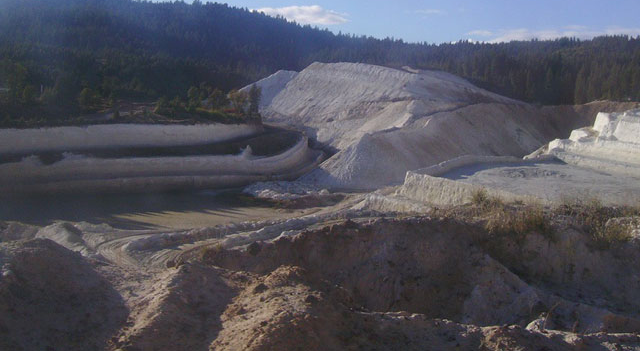
    The Azteca Plant is expected to generate approximately 380,000 tonnes annually of 65% Fe concentrate, using around 2 million tonnes of high-grade tailings from Dyke 5 as feedstock. The company estimates operating costs at US$37 per tonne on a Free on Board basis, rising to US$79 per tonne on a Cost and Freight basis into China, compared with current market prices near US$120 per tonne.

    Cadence Minerals CEO Kiran Morzaria said: “This agreement marks an important milestone in the staged development strategy at Amapá, providing a pathway to early cash flow through the restart of the Azteca Plant. Cadence will receive a direct return on its investment as production commences, while free cash flow from Azteca will support advancement of the larger 5.5 Mtpa DR-grade project.

    “Restarting operations also reinforces Amapá’s social licence to operate and demonstrates to investors and partners that the project is once again a producing asset with near-term cash flow and long-term growth potential. This operational credibility is an essential step in unlocking the full value of Amapá while delivering tangible returns to our shareholders.”

    The funding package is split into two portions: US$3.45 million for plant refurbishment and US$1.15 million for working capital. Cadence anticipates the structure will yield around a 70% Internal Rate of Return on its share of the investment, with repayments tied to the tonnes of iron ore shipped.

    Once operational, the Azteca Plant is expected to be cash flow positive from its first shipment, supporting the development of the larger 5.5 million tonnes per annum Direct Reduction-grade project at Amapá. First production is projected about three months after license approval, following the completion of remaining studies and permits.

    Cadence currently holds a 35.7% equity stake in the Amapá Project, reflecting a total investment of roughly US$15.5 million as of June 2025.

    This content is for informational purposes only and does not constitute financial, investment, or other professional advice. It should not be considered a recommendation to buy or sell any securities or financial instruments. All investments involve risk, including the potential loss of principal. Past performance is not indicative of future results. You should conduct your own research and consult with a qualified financial advisor before making any investment decisions.

  • Oil Prices Climb Amid Israeli Strikes in Qatar and Potential US-Russia Sanctions

    Oil Prices Climb Amid Israeli Strikes in Qatar and Potential US-Russia Sanctions

    Oil prices gained in Asian trading on Wednesday as tensions in the Middle East escalated following Israel’s strike on Hamas positions in Qatar, raising concerns about possible supply disruptions.

    Prices were further supported by the likelihood of additional U.S. sanctions on Russian oil, after reports indicated that President Donald Trump urged further restrictions on Russian energy buyers.

    Brent crude for October delivery increased 0.7% to $66.92 a barrel, while West Texas Intermediate (WTI) futures also rose 0.7% to $62.72 a barrel by 21:41 ET (01:41 GMT). Both benchmarks were on track for a fourth consecutive day of gains, bolstered by OPEC+’s smaller-than-expected output hike over the weekend.

    Israel Targets Hamas in Qatar

    Late Tuesday, Israel announced an attack on Hamas leadership in Doha, drawing criticism from both Qatari and U.S. officials, who warned that the strike could jeopardize ongoing peace negotiations.

    Oil had surged nearly 2% on Tuesday after the strike but pared some gains after U.S. authorities stated that a similar attack would not occur again. Trump told reporters he was “very unhappy” about the strike and promised a full statement on Wednesday.

    Qatar, a U.S. security partner hosting the al-Udeid Air Base—the largest American military facility in the Middle East—along with Egypt, has served as a mediator in talks between Israel and Hamas.

    Hamas claimed that Israel failed in its attempt to assassinate its negotiating team, though the group confirmed five casualties from the strike. The attack casts uncertainty over future peace talks, leaving the door open for continued military operations by Israel, mostly concentrated in the Gaza Strip, heightening market concerns about Middle East stability.

    U.S.-Russia Sanctions and Trade Measures in Focus

    The possibility of further U.S. sanctions against Russia also helped push oil prices higher. Reuters reported that Trump has urged the European Union to impose steep tariffs on India and China over their purchases of Russian energy.

    Trump has already enacted 50% tariffs on India and reportedly called for 100% tariffs on both New Delhi and Beijing. “Such a move could cut off some sources of revenue for Russia and pressure Moscow into ending its long-running war with Ukraine,” analysts noted.

    Additional restrictions on Russian oil could tighten global supply, especially if major buyers such as India and China comply with Western pressure. However, both countries have so far indicated little intention to reduce their purchases.

    Beyond geopolitical concerns, traders were also paying attention to U.S. inventory figures. The American Petroleum Institute reported that U.S. crude stocks increased by 1.25 million barrels in the week ending September 5.

    This content is for informational purposes only and does not constitute financial, investment, or other professional advice. It should not be considered a recommendation to buy or sell any securities or financial instruments. All investments involve risk, including the potential loss of principal. Past performance is not indicative of future results. You should conduct your own research and consult with a qualified financial advisor before making any investment decisions.

  • Dow Jones, S&P, Nasdaq, Wall Street Futures,  PPI Data Incoming; Oracle Sees Backlog Surge; Novo Nordisk Announces Job Cuts

    Dow Jones, S&P, Nasdaq, Wall Street Futures,  PPI Data Incoming; Oracle Sees Backlog Surge; Novo Nordisk Announces Job Cuts

    U.S. stock futures showed mixed signals as investors prepared for new inflation data. Economists forecast that the annualized producer price index (PPI) for final demand in August will match July’s pace, underlining persistent inflation pressures ahead of the Federal Reserve’s critical interest rate decision next week. Meanwhile, Oracle (NYSE:ORCL) projected a blockbuster booked revenue forecast, sending shares sharply higher in pre-market trading, and Novo Nordisk unveiled plans for significant workforce reductions.

    Futures Mixed

    On Wednesday, U.S. stock futures oscillated near the flatline as traders digested Oracle’s earnings and awaited key inflation figures. By 03:38 ET, S&P 500 futures had risen 21 points (0.3%), Nasdaq 100 futures added 70 points (0.3%), and Dow futures remained largely unchanged.

    The main U.S. indexes gained in the previous session, supported by speculation that the Federal Reserve may cut rates next week. A downward revision to U.S. employment figures for the year ending March hinted at a potential labor market cooling even before President Donald Trump imposed sweeping import tariffs in April. Following the data, bets on a Fed rate reduction of at least 25 basis points at its September 16-17 meeting remained largely unchanged, while Treasury yields, which move inversely to prices, increased.

    “The [Bureau of Labor Statistics] revision strengthened the case for Fed easing, but Powell already has plenty of labor justification to cut […] and the actual number […] didn’t deviate from the rough consensus range,” analysts at Vital Knowledge said in a note.

    PPI Ahead

    Markets are turning their attention to the August PPI release, the first major inflation gauge for the final month of Q3. A separate consumer price index is expected on Thursday. Economists predict the PPI will show a 3.3% annualized rise, matching July’s figure.

    Persistent price increases could heighten concerns that, as employment conditions soften, the Fed faces a delicate balancing act: controlling inflation while promoting maximum employment. Still, analysts at ING said the data should pose “no barrier” to a Fed rate cut, noting that policymakers have signaled a potential reduction to support the labor market, despite inflation risks.

    Fears of Trump potentially encroaching on the Fed’s independence eased temporarily after a federal judge ruled that the president cannot fire Fed Governor Lisa Cook.

    Oracle Shares Soar as Backlog Expands

    Oracle shares jumped in after-hours trading after the company revealed a stellar booked revenue forecast for its AI-enhanced cloud unit. The stock rose more than 30% in Frankfurt trading.

    Oracle now expects its Cloud Infrastructure division to surpass $500 billion in booked revenue, a sign of strong demand for its AI-driven offerings. CEO Safra Catz said the company has made popular AI reasoning models—including OpenAI’s ChatGPT and xAI’s Grok—available to customers.

    Remaining performance obligations (RPO), Oracle’s key booked revenue metric, surged 359% year-over-year to $455 billion for the quarter ending August 31. Catz predicted that “several additional multi-billion-dollar” clients will be signed in the coming months.

    “RPO stole the show […], reinforcing confidence in Oracle’s acceleration narrative,” analysts at Jefferies said in a note.

    However, Oracle’s overall fiscal Q1 performance was mixed, with adjusted EPS of $1.47 and revenue of $14.93 billion, slightly below FactSet estimates of $1.48 per share and $15.04 billion.

    Novo Nordisk to Cut 11% of Workforce

    Novo Nordisk (NYSE:NVO) announced plans to cut 9,000 jobs globally as it aims to reduce costs and streamline operations for its Wegovy weight-loss and Ozempic diabetes treatments. The reductions represent roughly 11.5% of its 78,400-strong workforce, with around 5,000 positions in Denmark. Copenhagen-listed shares rose in early trading.

    The company expects the restructuring to deliver annual savings of 8 billion Danish crowns ($1.27 billion) by 2026, though it anticipates one-off charges of 9 billion crowns in Q3. About 1 billion crowns in savings are projected for Q4. The savings will be reinvested into growth opportunities in diabetes and obesity, Novo said.

    CEO Mike Doustdar, who assumed leadership last month, said the changes will simplify the organization and sharpen focus on diabetes and obesity, the company’s largest business segments.

    Oil Prices Rise

    Oil prices climbed amid geopolitical tensions in the Middle East and concerns that further restrictions on Russian crude could tighten global supply. As of 03:39 ET, Brent futures rose 0.7% to $66.86 a barrel, while WTI futures increased 0.8% to $63.10 a barrel.

    Markets reacted to reports that Israel targeted Hamas leadership in Doha, raising regional tensions, as well as Trump’s push for steep EU tariffs on India and China over Russian energy imports. These tariffs, if implemented, could constrain supply if major buyers acquiesce, though both countries have indicated little intent to halt Russian purchases.

    Additionally, Poland reported shooting down Russian drones during a widespread attack in western Ukraine, calling the incident an “act of aggression.”

    This content is for informational purposes only and does not constitute financial, investment, or other professional advice. It should not be considered a recommendation to buy or sell any securities or financial instruments. All investments involve risk, including the potential loss of principal. Past performance is not indicative of future results. You should conduct your own research and consult with a qualified financial advisor before making any investment decisions.

  • Vistry Group Positioned for Growth Amid Affordable Housing Programme

    Vistry Group Positioned for Growth Amid Affordable Housing Programme

    Vistry Group PLC (LSE:VTY) reported H1 2025 results in line with expectations, navigating a challenging market environment. The company is strategically set to benefit from the UK’s £39 billion Social and Affordable Homes Programme, designed to increase affordable housing supply over the next decade. Vistry has strengthened its balance sheet by reducing net debt and extending refinancing facilities through 2028. Looking ahead, the company anticipates a strong second half, supported by a healthy pipeline of developments and a long-term joint venture with Homes England.

    The company’s outlook is underpinned by solid revenue growth and a strong equity position, though profit margins and leverage present challenges. Technical indicators suggest neutral to bearish momentum, and the stock’s valuation appears elevated, which may limit its investment appeal.

    About Vistry Group

    Vistry Group PLC operates in the construction sector, specializing in social and affordable housing development. The company leverages strategic partnerships to deliver housing projects and aims to capitalize on government initiatives to expand affordable housing.

    This content is for informational purposes only and does not constitute financial, investment, or other professional advice. It should not be considered a recommendation to buy or sell any securities or financial instruments. All investments involve risk, including the potential loss of principal. Past performance is not indicative of future results. You should conduct your own research and consult with a qualified financial advisor before making any investment decisions.