Blog

  • Bodycote Sees Mild Revenue Lift as Efficiency Drive Advances

    Bodycote Sees Mild Revenue Lift as Efficiency Drive Advances

    Bodycote (LSE:BOY) posted a slight 2.2% rise in organic revenue across its core operations during the four months to October 2025, a period marked by ongoing weakness in both Automotive and broader Industrial markets. Even so, the group continues to push ahead with its Optimise programme — a restructuring initiative that includes the disposal of 10 sites in France and selective plant closures — designed to tighten operational discipline and support profitability over time.

    Momentum remained stronger in Aerospace & Defence, where demand helped offset softer trading elsewhere. Management is also leaning into higher-value growth areas, including expanded Precision Heat Treatment capabilities and additional HIP capacity, while signalling that disciplined acquisitions may complement its long-term strategy. Collectively, these initiatives aim to lift execution quality and reshape the business toward more resilient earnings.

    Financially, Bodycote’s picture is mixed. Cash generation remains healthy, but margins have come under pressure, and leverage has edged higher. Market sentiment is similarly cautious: technical indicators suggest a bearish tilt, and an elevated P/E ratio continues to prompt valuation questions. With no recent earnings calls or corporate actions to adjust expectations, the company’s near-term outlook rests largely on its operational progress and sector trends.

    More about Bodycote

    Bodycote is a global leader in specialist thermal processing, delivering technologies that strengthen and enhance the performance of metals and alloys. Its services support critical sectors including Aerospace & Defence, Automotive, and Industrial markets, helping customers improve durability, reliability, and material efficiency across a range of applications.

  • Will the Fed skip a rate cut in December?

    Will the Fed skip a rate cut in December?

    There’s less than a month left until the Fed’s final meeting of the year, and investors’ hopes for another rate cut are fading fast, at least according to the CME FedWatch Tool. Back in October, markets were pricing in almost a 100% chance of a cut; now that probability has dropped below 45%.

    Even the end of the longest U.S. government shutdown in history didn’t help, and no wonder. Since no data was collected during that period, we won’t receive a flood of new reports, which means the Fed will have little new information on which to base its monetary policy decisions.

    The rhetoric of Fed officials doesn’t help. For instance, the Kansas City Fed President warned that further rate cuts could entrench higher inflation rather than support the labor market. Meanwhile, Cleveland Fed President Beth Hammack indicated that she does not favor another rate cut in the near term.

    This week, the speakers include Philip Jefferson, Christopher Waller, Michael Barr, Stephen Miran, and Lisa Cook. If they collectively signal that inflation concerns outweigh worries about slowing employment, risk appetite could continue to decline, hurting the S&P 500 index along the way.

    The same story applies to the minutes from the last FOMC meeting. 

    With Chair Powell making it clear in the press conference that we shouldn’t assume a December rate cut, the minutes are likely to come across as hawkish. As for the long-delayed September jobs report, which is set to be released this week, its impact should be fairly limited given that the data is already somewhat outdated.

    Last but not least, the fact that Trump went “TACO” again and exempted food products from tariffs could actually be a worrying sign. At first glance, it appears to be a move to curb inflation and support purchasing power. But it might really suggest that everyday consumers are feeling significant pressure.

    The good news is that expectations for rate cuts have dropped quickly, although they could rise just as fast.

  • DAX, CAC, FTSE100, European Stocks Slip as AI Bubble Fears Weigh on Sentiment

    DAX, CAC, FTSE100, European Stocks Slip as AI Bubble Fears Weigh on Sentiment

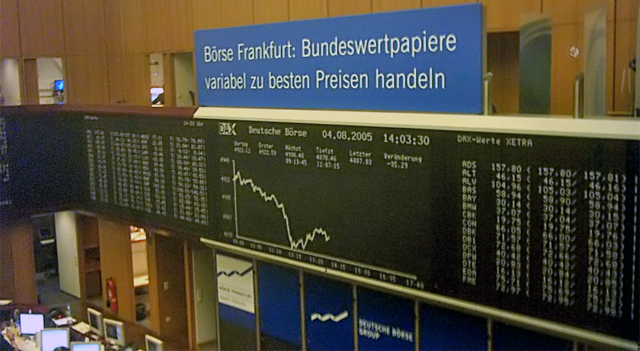
    European equity markets moved mostly lower on Monday, as renewed anxiety over a potential artificial-intelligence bubble and slowing global growth pressured risk appetite.

    With few immediate catalysts on the calendar, investors turned their attention to upcoming U.S. economic releases and earnings from AI favorite Nvidia (NASDAQ:NVDA), which are expected to help set the tone for markets this week.

    By midday, Germany’s DAX had fallen 0.7%, France’s CAC 40 was down 0.5%, and London’s FTSE 100 slipped 0.3%.

    In corporate developments, SIG Group shares jumped after the Swiss packaging specialist named Mikko Keto as its new Chief Executive Officer.

    Sandoz (LSE:0SAN) also traded higher after announcing that TYRUKO (natalizumab-sztn) is now available to patients in the United States.

    Meanwhile, British defense and security firm QinetiQ (LSE:QQ.) advanced following the launch of the second phase of its share buyback program.

  • Dow Jones, S&P, Nasdaq, Wall Street Futures, U.S. Stocks Seen Opening Flat as Markets Await Delayed Data and Nvidia Earnings

    Dow Jones, S&P, Nasdaq, Wall Street Futures, U.S. Stocks Seen Opening Flat as Markets Await Delayed Data and Nvidia Earnings

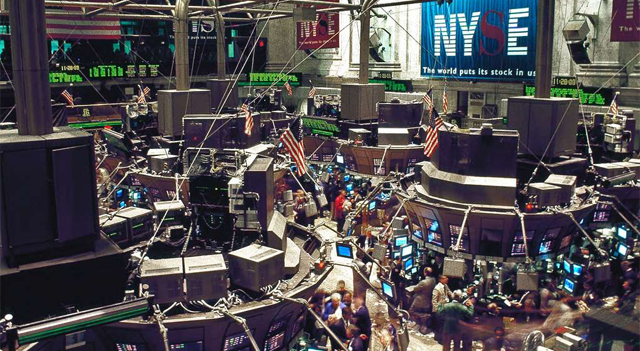
    U.S. equity futures pointed to a muted start on Monday, suggesting the major indexes may struggle for direction as traders brace for a wave of delayed economic releases and closely watched results from Nvidia later this week.

    The recent government shutdown stalled several key data publications, leaving investors hesitant to take large positions until fresh numbers begin to roll out. The first of these will arrive this morning, when the Commerce Department publishes its postponed August construction spending report.

    Additional backlog releases—including factory orders, August trade figures, and the September employment report—are also slated for the coming days. Even though these updates will be somewhat dated, they may still shape expectations for the Federal Reserve’s policy meeting in December.

    According to CME Group’s FedWatch Tool, markets currently assign a 57.4% probability that the Fed leaves rates unchanged next month versus a 42.6% chance of another 25-basis-point cut.

    Nvidia, long a standout of the AI trade, is also set to command investor attention. The chipmaker will report third-quarter earnings Wednesday after the bell, and given ongoing anxiety over stretched AI valuations, its outlook could heavily influence broader market sentiment.

    Stocks experienced notable swings last week. After a steep selloff Thursday, markets fell again Friday morning before mounting a sharp intraday rebound. The Nasdaq and S&P 500 briefly pushed into positive territory, ultimately closing near flat for the day, while the Dow extended its pullback from Wednesday’s record high.

    For the week, the indexes were mixed: the Nasdaq slipped 0.5%, the S&P 500 ticked up 0.1%, and the Dow gained 0.3%.

    Tech shares initially remained under pressure Friday due to continued valuation concerns, but major names like Nvidia, Palantir, and Tesla managed to reverse early losses as the session progressed. Still, uncertainty surrounding the Fed’s next move kept many buyers cautious, especially after policymakers hinted that missing economic data could complicate the December decision.

    Elsewhere, airline stocks deepened Thursday’s losses, dragging the NYSE Arca Airline Index down 2.0%, while retail shares also weakened. In contrast, energy stocks rallied alongside higher crude prices, and hardware and software names rebounded after leading Thursday’s decline.

  • Cadence Minerals Reports Progress on Offtake Financing for Azteca Plant

    Cadence Minerals Reports Progress on Offtake Financing for Azteca Plant

    Cadence Minerals (LSE:KDNC) released an update on the ongoing Offtake Financing discussions for its Azteca processing plant, noting that recent findings have supported the company’s assumptions in negotiations. According to the update, non-systematic grab samples collected from the plant’s tailings confirmed iron grades in line with expectations, satisfying the prospective offtaker and allowing the financing process to move ahead without the need for additional sampling.

    The samples—taken exclusively for due-diligence review—were prepared and analysed by an independent accredited laboratory using industry-standard methodologies and appropriate QA/QC protocols. Cadence emphasized that the material was not used for geological modelling, technical assessments, or resource estimation.

    The company said the development aligns with its broader strategy to secure funding arrangements and reinforce its competitive position within the minerals sector.

    More about Cadence Minerals

    Cadence Minerals is engaged in mineral exploration and development, with a focus on iron ore and related mineral projects. The company aims to advance its assets through strategic partnerships, targeted investment, and financing structures designed to enhance long-term operational and commercial performance.

  • WPP Shares Jump Over 3% Following Reports of Interest from Potential Buyers

    WPP Shares Jump Over 3% Following Reports of Interest from Potential Buyers

    WPP Plc (LSE:WPP), the struggling British advertising and communications giant, saw its stock climb more than 3% on Monday after new reports suggested that the company may be drawing attention from both industry players and private-equity firms.

    According to The Times, early takeover interest has emerged from French rival Havas N.V. as well as investment heavyweights Apollo Global Management and KKR & Co.. While no formal bids have been confirmed, sources indicated that potential buyers are evaluating a range of scenarios—including a full acquisition, a significant minority stake, or targeted purchases of select WPP divisions.

    The market reaction is particularly notable given WPP’s recent slump. The group’s shares have plunged more than 60% so far this year, leaving the company valued at roughly £3 billion—a staggering fall for a business that once dominated the global advertising landscape.

    WPP is currently in the midst of an extensive overhaul under new CEO Cindy Rose, who is pushing to reshape the company around data, technology, and AI-driven marketing solutions. The renewed M&A chatter follows a recent profit warning tied to a 5.9% drop in like-for-like net revenue, intensifying speculation that a change of ownership could accelerate the turnaround.

    The interest from potential buyers also highlights WPP’s weakened position. Once a symbol of industry power, the firm now trades near multi-decade lows, with several hedge funds holding substantial short positions in anticipation of further declines.

    Still, uncertainty remains high. No suitor has publicly confirmed an active bid, and reports suggest that at least one—Apollo—has denied ongoing negotiations. Analysts warn that any transaction would face meaningful execution challenges, from WPP’s large debt load to the complexity of integrating its sprawling global operations.

    Yet a deal could unlock hidden value. WPP has already proven this through selective divestments, including the $1.7 billion sale of its majority stake in FGS Global to KKR, a transaction that significantly eased its leverage burden. Investors will also be watching movements among major shareholders, with RWC Asset Management recently boosting its holdings to more than 5.2% of voting rights.

  • Rare earths: New crisis looms due to widespread yttrium shortage

    Rare earths: New crisis looms due to widespread yttrium shortage

    New Rare Earths Crisis Coming Caused By Shortage Of Yttrium

    A new crisis is emerging in the rare earths sector as global supplies of yttrium tighten sharply, raising alarms over potential shortages and steep price spikes that could affect industries such as aerospace, energy, and semiconductor manufacturing.

    Yttrium—an element extracted from rare earth minerals—has become increasingly scarce after China, the world’s dominant supplier, introduced export restrictions in April. These measures, applied to yttrium and six other rare earth elements, were imposed as a countermeasure to U.S. tariffs.

    Although last month’s meeting between U.S. President Donald Trump and China’s President Xi Jinping temporarily boosted expectations of smoother trade in critical minerals, the underlying dispute remains unresolved.

    While Beijing has relaxed certain rare earth curbs, the April restrictions continue to apply, leaving U.S. manufacturers uncertain about future access in the absence of a broader agreement between the two countries.

    Industry participants and Argus analyst Ellie Saklatvla say the licensing requirements—forcing exporters to secure permits from Chinese authorities—have significantly slowed the flow of yttrium out of the country. So far, only small-volume licenses have been granted, and delivery times remain heavily delayed, Saklatvla added.

    Scramble for Yttrium

    According to Saklatvla, “China’s export controls have undoubtedly sparked a rush for yttrium.”

    Prices reflect the strain: in Europe, yttrium oxide—used in thermal barrier coatings—has skyrocketed 4,400% since January, reaching $270 per kilogram, Argus data shows. In China, prices of around $7 per kilogram initially jumped 16% this year, though they have since begun to ease.

    The U.S. Aerospace Industries Association (AIA) stressed that yttrium is a vital input for next-generation jet engines and said it is cooperating with the U.S. government to boost domestic sourcing. As Dak Hardwick, the group’s vice president for international affairs, put it: “Currently, our supply chain is heavily dependent on imports from China – a dependence that has fueled rising costs in the face of growing shortages.”

    The semiconductor sector is also alarmed, two industry sources said, noting yttrium’s crucial role as both a protective coating and insulator. One source summarized the urgency bluntly as “9 out of 10.”

    Beyond aircraft engines and chips, yttrium-based thermal coatings are widely used in gas-fired power plants to safeguard turbine blades from extreme heat.

  • DAX, CAC, FTSE100, European Shares Dip as Global Growth Worries Deepen; Nvidia Earnings Loom Large

    DAX, CAC, FTSE100, European Shares Dip as Global Growth Worries Deepen; Nvidia Earnings Loom Large

    European stock markets edged lower on Monday, kicking off the week on a cautious note as investors grappled with renewed global growth concerns and awaited earnings from AI leader Nvidia.

    At 08:02 GMT, Germany’s DAX hovered near the flatline, while France’s CAC 40 slipped 0.1% and London’s FTSE 100 declined 0.2%.

    Global growth jitters

    The downbeat tone follows a rough week for European equities, which closed sharply lower on Friday amid mounting fears of a potential AI-driven market bubble and broader weakness in the world economy.

    Fresh signs of slowing momentum emerged over the weekend after data showed Japan’s economy contracted at the fastest pace since Q2 2024.

    Japan’s GDP dropped 1.8% year-on-year for the July–September period, with a quarterly fall of 0.4% as private consumption weakened and exports were hit by elevated U.S. tariffs.

    Late-week figures had already revealed persistent softness in China—the world’s second-largest economy—while the prolonged U.S. federal shutdown is expected to weigh on fourth-quarter activity in the United States.

    In Europe, recent releases showed the U.K. economy shrinking in September, while the eurozone expanded only 0.2% in the third quarter compared to the previous three months.

    Nvidia earnings in focus

    In corporate news, the headline event this week will be Nvidia’s (NASDAQ:NVDA) quarterly earnings, due after Wednesday’s market close. The results are viewed as a critical test of the AI rally.

    Analysts expect fiscal third-quarter earnings per share to jump 53.8% year over year, according to LSEG, with optimism around future sales also rising—setting a high bar for a company already valued at roughly $5 trillion.

    More caution entered the market after filings showed billionaire investor Peter Thiel sold his nearly $100 million Nvidia stake.

    Concerns over stretched tech valuations triggered selling pressure across the sector in late October and early November.

    Elsewhere in Europe, Monday’s corporate schedule is relatively light.

    Dutch tech group Prosus (EU:PRX) said it expects first-half fiscal 2026 earnings per share to climb up to 37%, helped by improved profitability and gains tied to Tencent.

    Meanwhile, French beauty giant L’Oréal (EU:OR) disclosed a minority investment in Chinese mass-market skincare brand Lan—its second strategic move in China in recent months as domestic brands grow rapidly.

    Oil slips as supply fears ease

    Crude prices edged down after Russia’s Novorossiysk port resumed crude shipments, easing immediate worries about supply disruptions.

    Brent fell 0.7% to $63.97 a barrel, while U.S. WTI dipped 0.7% to $59.51.

    Both benchmarks had jumped more than 2% on Friday after Ukrainian strikes hit Novorossiysk and a nearby CPC terminal, briefly halting exports equal to around 2% of global supply.
    By Sunday, tanker-tracking data indicated that shipments had restarted.

  • Dow Jones, S&P, Nasdaq, Wall Street Futures, U.S. data releases set to resume; Nvidia earnings take center stage: what’s moving markets

    Dow Jones, S&P, Nasdaq, Wall Street Futures, U.S. data releases set to resume; Nvidia earnings take center stage: what’s moving markets

    U.S. equity futures pushed higher on Monday as investors prepared for a packed week marked by the long-awaited return of official economic data and a crucial earnings report from tech giant Nvidia (NASDAQ:NVDA). With September labor figures finally scheduled for release after delays caused by the extended government shutdown, and Nvidia poised to update investors on the state of the AI boom, traders are bracing for potential market-moving news. Meanwhile, Japan posted its first economic contraction in six quarters, and both gold and oil prices traded broadly lower.

    Futures advance

    U.S. futures signaled a stronger start to the week, with expectations building ahead of fresh data and Nvidia’s high-profile results.

    By 02:51 ET, Dow futures were up 88 points (0.2%), S&P 500 futures climbed 38 points (0.6%), and Nasdaq 100 futures jumped 223 points (0.9%).

    Market sentiment received an additional lift from signs that President Donald Trump may be easing his tariff stance. After Friday’s market close, the White House revealed plans to scale back duties on several food imports, with Trump noting affordability concerns.

    Prices for items like beef, fruit, and coffee were “a little bit high,” Trump said.

    Separately, the U.S. and Switzerland struck a deal to cut tariffs on Swiss exports to 15% from 39%, in return for a $200 billion U.S. investment commitment by 2028.

    This followed a mixed session for major U.S. indexes, although the Nasdaq Composite outperformed on a rebound in tech shares, calming some fears over inflated AI-driven valuations.

    U.S. data flow to restart

    Attention is now turning to the economic calendar, which has lacked key releases for weeks due to the record-length shutdown.

    With the government reopened, delayed reports on inflation and jobs will begin to surface. One of the most anticipated releases will be September’s nonfarm payrolls report on Thursday, though White House comments suggest the October update may be incomplete.

    These numbers will be crucial as the Federal Reserve prepares for its final 2025 policy meeting in December.

    The Fed cut rates at its last two meetings, but with officials “flying blind” in the absence of updated data, markets increasingly expect policymakers to keep rates unchanged next month.

    Nvidia earnings on deck

    The headline corporate event this week will be Nvidia’s quarterly earnings, due Wednesday after the close. The chipmaker — whose share price has skyrocketed about 1,000% since the debut of OpenAI’s ChatGPT — has become the market’s primary AI bellwether. Its results may provide more direction for investors than even the delayed jobs report.

    With valuations elevated and numerous tech deals centered on Nvidia hardware, worries about an AI-driven bubble have been rising.

    Retail giants Home Depot (NYSE:HD), Target (NYSE:TGT), and Walmart (NYSE:WMT) will also publish earnings, offering clues to holiday-season consumer demand.

    Japan’s economy contracts

    Japan’s GDP shrank in Q3 2025, with exports — especially autos — hampered by steep U.S. tariffs. The economy contracted 1.8% year-over-year, a smaller drop than expected but still marking the first decline in six quarters.

    Economists noted that although the downturn was anticipated, its shallower-than-feared depth suggests the slump may be temporary. Private consumption remained muted due to stubborn inflation, while capital spending was the lone bright spot, indicating firms are still investing despite trade pressures.

    Focus now shifts to Prime Minister Sanae Takaichi’s upcoming fiscal stimulus plans.

    Gold and oil soften

    Gold prices weakened further as traders continued dialing back expectations for a December Fed rate cut. A stronger dollar and rising risk aversion compounded the pressure.

    Oil prices also slipped after Russia’s Novorossiysk port resumed crude loadings, calming immediate supply concerns.

    Both benchmarks had rallied more than 2% on Friday following Ukrainian strikes on Novorossiysk and a Caspian Pipeline Consortium facility. But by Sunday, tanker-tracking data showed shipments had resumed.


  • Dollar Inches Higher Ahead of Key U.S. Data; Yen Weakens After GDP Report

    Dollar Inches Higher Ahead of Key U.S. Data; Yen Weakens After GDP Report

    The U.S. dollar posted modest gains on Monday, trading with a steady tone as investors looked ahead to a series of important U.S. economic releases now that the government shutdown has ended. The Federal Reserve’s final policy meeting of the year, set for next month, also remains in focus.

    At 04:00 ET (09:00 GMT), the Dollar Index—which measures the greenback against six major currencies—was up 0.1% at 99.282, rebounding after a weekly decline.

    Dollar steadies as markets await fresh economic signals

    Traders are gearing up for a string of U.S. data releases this week, including Thursday’s widely watched September nonfarm payrolls report, seen as a key indicator of the strength of the world’s largest economy.

    The government shutdown delayed numerous data publications, leaving both markets and Federal Reserve policymakers with limited visibility on recent economic trends.

    “In a week when we should finally start to see US data releases coming through, it is important to note that the outcome of the next Fed rate decision in December looks better priced at a 50% chance of a cut,” analysts at ING wrote.

    “That means that the dollar probably does not have to rally too much on the FOMC minutes released this Wednesday and can take its cue from Thursday’s jobs report.”

    A packed lineup of Fed speakers is also on the agenda this week.

    “A repeat of the Fed’s recent message that it should not rush into further rate cuts and some uncertainty as to where the neutral policy rate actually sits is probably a mild dollar positive,” ING added.

    Euro slips after recent highs

    In Europe, EUR/USD fell 0.2% to 1.1601, drifting away from last week’s two-week peak. The next major reading for the euro will be Friday’s flash November PMIs.

    “Remember, these have been holding up quite well and are suggesting that businesses could be learning to live with the uncertain international environment here,” ING noted.

    “The stronger dollar has dragged EUR/USD back to 1.1600. We would expect some demand to come in should it correct lower to the 1.1560/80 area.”

    GBP/USD edged down 0.1% to 1.3162, with sterling stabilizing after sharp volatility late last week following news that Finance Minister Rachel Reeves does not plan to raise income tax in the upcoming budget. Reeves still faces the challenge of finding tens of billions of pounds to meet fiscal goals in the November 26 budget.

    Yen weakens after Japan reports contraction

    In Asia, USD/JPY moved up 0.1% to 154.68 after new figures showed that Japan’s economy shrank at an annualized pace of 1.8% in the third quarter. While the decline was smaller than the expected 2.5% drop, it still underscored softening momentum.

    Quarter-on-quarter GDP slipped 0.4%, slightly better than forecasts but consistent with weakening activity. Exports were hit by the impact of newly imposed U.S. tariffs, and household spending remained subdued under persistent inflation pressures.

    The one bright spot came from capital expenditure, which increased—suggesting that businesses are continuing to invest despite global trade challenges.

    Elsewhere, USD/CNY rose 0.1% to 7.1045, while AUD/USD added 0.1% to reach 0.6534.