Blog

  • Gold Ticks Higher but Holds Range as Focus Stays on Iran Blockade and U.S. Inflation Data

    Gold Ticks Higher but Holds Range as Focus Stays on Iran Blockade and U.S. Inflation Data

    Gold prices edged up on Tuesday but continued to trade within a narrow range, as investors weighed the implications of a U.S. naval blockade targeting Iran while also awaiting key inflation data from the United States.

    Despite the modest uptick, bullion has largely remained confined to the same band seen over the past week, with concerns over inflation tied to the Iran conflict offsetting traditional safe-haven demand for gold and other precious metals.

    Spot gold rose 0.5% to $4,762.42 an ounce at 01:42 ET (05:42 GMT), while gold futures gained 0.4% to $4,784.05 per ounce. Over the last week, spot prices have mostly fluctuated between roughly $4,700 and $4,900 per ounce.

    Other precious metals also posted gains, with spot silver advancing 1.4% to $76.6375 per ounce and platinum climbing 0.6% to $2,087.69 per ounce.

    Weaker Dollar Offers Support as Iran Blockade Develops

    Gold and broader metals were supported by a softer U.S. dollar, as markets responded to tentative signs of easing tensions in the Iran conflict following the launch of the U.S. naval blockade.

    Multiple reports indicated that Washington and Tehran remain open to further talks after weekend negotiations in Pakistan failed to produce a breakthrough. Bloomberg reported that officials from both sides are considering another round of discussions before the current two-week ceasefire expires next week.

    U.S. Vice President JD Vance, who led the Pakistan talks, struck a cautiously optimistic tone, saying progress had been made and that it will ultimately be up to Iran to determine whether a deal can be reached.

    The dollar slipped as investor risk appetite improved on hopes for a ceasefire, although any agreement still appears distant. Risk-sensitive assets, particularly equities, recorded solid gains at the start of the week.

    Markets Look to U.S. Inflation Data for Direction

    Attention now turns to U.S. producer price index (PPI) data due later Tuesday, which is expected to provide further insight into inflation dynamics in the world’s largest economy.

    The data will be closely watched for signs of an energy-driven increase in price pressures during March, especially after last week’s consumer price index figures showed a sharp rise in inflation.

    The outbreak of the Iran conflict has significantly disrupted global energy markets, pushing oil and gas prices higher after Tehran restricted access to the key shipping corridor of the Strait of Hormuz.

    The resulting surge in energy costs has fueled concerns that inflation could remain elevated, potentially prompting the Federal Reserve and other major central banks to maintain a more hawkish stance in the months ahead.

    These inflation concerns have weighed on gold, pulling prices back from record highs reached in late January.
  • Markets Edge Higher on Iran Diplomacy Hopes; Bank Earnings Take Spotlight: Dow Jones, S&P, Nasdaq, Wall Street Futures

    Markets Edge Higher on Iran Diplomacy Hopes; Bank Earnings Take Spotlight: Dow Jones, S&P, Nasdaq, Wall Street Futures

    U.S. equity futures ticked modestly higher on Tuesday, while oil prices retreated, as investors responded to signs of possible progress in efforts to bring the Iran conflict to a lasting end. However, a U.S. blockade of Iranian ports has now entered its second day, further disrupting crude shipments through the critical Strait of Hormuz. Meanwhile, a wave of major U.S. bank earnings is set to dominate market attention, while LVMH (EU:MC) highlighted a hit to sales from the Middle East tensions.

    Futures Move Higher

    U.S. stock futures showed slight gains, supported by optimism surrounding ongoing negotiations between Washington and Tehran aimed at securing a permanent ceasefire. Investors are also bracing for a busy earnings session led by major financial institutions.

    As of 03:17 ET, Dow futures rose by 51 points, or 0.1%, S&P 500 futures added 10 points, or 0.1%, and Nasdaq 100 futures climbed 72 points, or 0.3%.

    Wall Street’s main indices had closed higher in the previous session, as initial disappointment over the lack of an immediate breakthrough in weekend talks between the U.S. and Iran began to fade. U.S. President Donald Trump said the White House had been contacted by Iranian officials and that he wants to “make a deal,” adding that Iran will not obtain a nuclear weapon.

    “[W]hile the meeting was certainly disappointing, it was hardly catastrophic, and if one looks closely, Trump seems to be pivoting aggressively away from kinetic escalation,” analysts at Vital Knowledge wrote in a note.

    They added that their overall view of the conflict remains “relatively sanguine,” although the “economic fallout from what’s already occurred” could prove “significant.”

    U.S. Port Blockade Extends

    At the same time, the U.S. blockade of Iranian ports, introduced on Monday, is adding further pressure to oil flows already constrained through the Strait of Hormuz.

    Tehran has condemned the move as an “act of piracy,” with reports indicating that roughly 15 U.S. warships are involved. British maritime authorities said access has been restricted for vessels entering or leaving Iranian ports, as well as in coastal waters across the Persian Gulf, Gulf of Oman, and parts of the Arabian Sea.

    Despite these tensions, diplomatic channels appear to be making headway. According to Reuters, the U.S. and Iran remain engaged, with some progress toward a permanent ceasefire agreement.

    Pakistan, which has emerged as a key intermediary, has offered to host a second round of talks ahead of the expiration of the current two-week truce. The initial meeting took place in Islamabad over the weekend.

    Elsewhere, Israel and Lebanon are set to begin direct peace talks in Washington, although ongoing Israeli strikes against Iran-aligned Hezbollah targets in Lebanon remain a key source of tension.

    Oil Slips Below $100

    Expectations that diplomacy could lead to easing tensions—and potentially restore smoother shipping through the Strait of Hormuz—have pushed oil prices lower, with both major benchmarks falling below $100 per barrel.

    Brent crude declined 1.5% to $97.88 a barrel, while U.S. West Texas Intermediate dropped 3.4% to $95.78 a barrel.

    Even so, the outlook remains uncertain. In its first assessment of the Iran conflict’s impact released Monday, OPEC cut its forecast for global oil demand in the second quarter by 500,000 barrels per day.

    However, the reduction was less severe than some projections, and OPEC left its full-year outlook unchanged, suggesting expectations for a rebound in consumption later in 2026.

    Bank Earnings in Focus

    Market attention is now turning to the earnings calendar, with several major U.S. banks set to report results.

    JPMorgan Chase (NYSE:JPM), Wells Fargo (NYSE:WFC), and Citigroup (NYSE:C) are due to release quarterly figures ahead of the market open, followed by Bank of America (NYSE:BAC) and Morgan Stanley (NYSE:MS) on Wednesday.

    Analysts expect results to be supported by strong trading activity and investment banking revenues, even as uncertainty linked to the Iran conflict lingers. Earlier this month, Jamie Dimon warned that the conflict could trigger commodity price shocks, keeping inflation elevated and pushing interest rates higher than current expectations.

    On Monday, Goldman Sachs (NYSE:GS) reported a 19% rise in first-quarter profit, driven by robust performance across its trading and investment banking divisions.

    LVMH Flags Sales Impact

    In Europe, shares of LVMH (EU:MC) fell in early trading after the company said the Middle East conflict had reduced group sales by at least 1%, weighing on expectations for a continued recovery in the luxury sector.

    The group, which owns brands such as Louis Vuitton and Bulgari, reported quarterly sales growth of 1%, missing forecasts for a 1.5% increase, according to Visible Alpha estimates cited by Reuters.

    Chief Financial Officer Cécile Cabanis said that “[w]hat we see today is still that demand is very much down” following disruptions to shopping activity in the Middle East since the outbreak of the Iran conflict.

    Rival Kering (EU:KER), owner of Gucci, is scheduled to report results after the close of European markets later in the day.

  • European Markets Gain as Optimism Builds Around U.S.-Iran Talks: DAX, CAC, FTSE100

    European Markets Gain as Optimism Builds Around U.S.-Iran Talks: DAX, CAC, FTSE100

    European equities moved higher at the open on Tuesday, while oil prices slipped below the $100-per-barrel mark, as investors reacted to signs of potential progress in discussions between the United States and Iran.

    According to a U.S. official cited by Reuters, negotiations between Washington and Tehran have shown signs of advancement. Meanwhile, President Donald Trump said that Iranian representatives had reached out to the White House.

    Despite this, market sentiment remained cautious after the United States introduced a new blockade targeting Iranian ports, adding uncertainty to the broader outlook.

    As of 07:11 GMT, the pan-European Stoxx 600 was up 0.6%, while Germany’s DAX rose 1.0%. France’s CAC 40 gained 0.4%, and the UK’s FTSE 100 advanced 0.3%.

    European markets followed a positive lead from Asia, where MSCI’s broad index of shares outside Japan and Japan’s Nikkei 225 both posted gains.

    In commodities, oil prices declined, with Brent crude—the global benchmark—falling 1.5% to $97.88 per barrel. U.S. West Texas Intermediate crude dropped more sharply, down 3.4% to $95.78 per barrel.

    Even so, both benchmarks remain above levels seen before the conflict, and the International Energy Agency has cautioned that prices have yet to fully reflect the scale of supply disruptions caused by the Iran conflict.

    Among individual stocks, LVMH (EU:MC) said tensions in the Middle East have reduced group sales by at least 1%, raising concerns about the pace of recovery in the luxury sector. Results from rival Kering (EU:KER) are expected after the close of trading later in the day.

  • LVMH Shares Drop as Middle East Conflict Weighs on Q1 Sales

    LVMH Shares Drop as Middle East Conflict Weighs on Q1 Sales

    LVMH Moët Hennessy Louis Vuitton SE (EU:MC) saw its shares fall more than 2% on Tuesday after reporting first-quarter revenue that came in below expectations, as tensions in the Middle East weighed on key divisions such as fashion and cosmetics, offsetting stronger performances in watches and spirits.

    The Paris-listed luxury group recorded organic revenue growth of 1% for the three months to March, missing analyst forecasts of 1.95%. Total revenue reached €19.1 billion, also below the €19.6 billion consensus estimate.

    Its core Fashion & Leather Goods division, the group’s largest profit driver, declined 2% on an organic basis to €9.25 billion, falling short of expectations for broadly stable performance.

    LVMH indicated that the Middle East conflict reduced group growth by around one percentage point during the quarter, with demand weakening notably in March.

    “The trend in the US and with the American clientele is quite homogeneous on the quarter… we didn’t see any specific disruption linked to the start of the conflict,” said Jean-Jacques Guiony, who added that European consumers had remained “quite resilient.”

    Among divisions, Watches & Jewelry stood out with 7% organic growth, outperforming the 4.2% consensus, supported by strong demand for Tiffany’s HardWear collection. Wines & Spirits also delivered a solid performance, rising 5% and beating expectations for a slight decline, helped by favourable timing of the Chinese New Year.

    Regionally, Asia excluding Japan grew 7%, exceeding forecasts, while the United States posted modest growth of 3%. Europe lagged, with revenue declining 3%, performing worse than expected.

    The Perfumes & Cosmetics division was flat on an organic basis, missing projections for nearly 2% growth, although Dior benefited from strong demand for foundation products and women’s fragrances.

    Selective Retailing rose 4%, below the 6.2% consensus estimate. Sephora delivered solid like-for-like growth across most markets, while DFS continued to weigh on performance due to asset disposals in Greater China and reduced activity at U.S. airport concessions. Sephora also showed sequential improvement in China, which management described as its strongest quarterly performance since 2023, although overall conditions in the market remained weak.

    Analysts at Jefferies, who rate LVMH as “hold” with a €510 price target, said the results highlighted the Middle East conflict as a significant headwind, particularly for fashion and Sephora due to their exposure to tourism-driven markets. They also noted that makeup and fragrance have been identified by management as key near-term growth areas.

    “LVMH remains vigilant yet confident at the start of the year,” the company said.

  • FTSE 100 Edges Higher as Sterling Strengthens on U.S.-Iran Talks Optimism

    FTSE 100 Edges Higher as Sterling Strengthens on U.S.-Iran Talks Optimism

    UK equities traded slightly higher on Tuesday, tracking gains across European markets, while sterling strengthened against the dollar amid renewed optimism over potential talks between the United States and Iran. Reports suggest both sides are aiming to hold another round of discussions before a temporary two-week truce announced on April 7 expires, with Islamabad among the possible venues under consideration.

    By 07:27 GMT, the FTSE 100 had risen 0.2%, while the pound gained 0.2% to trade at $1.3528. Elsewhere in Europe, Germany’s DAX climbed more than 1%, and France’s CAC 40 advanced 0.5%.

    UK Market Highlights

    PageGroup (LSE:PAGE) shares dropped over 6% after the recruiter pointed to a more uncertain outlook amid geopolitical risks. First-quarter gross profit came in at £187 million, down 4.9% year-on-year but broadly in line with expectations. The company did not issue full-year guidance.

    Imperial Brands (LSE:IMB) reaffirmed its full-year outlook, despite cautioning that Middle East tensions could weigh on second-half performance. The company continues to expect at least high single-digit earnings per share growth, supported by strong tobacco pricing and expansion in next-generation products.

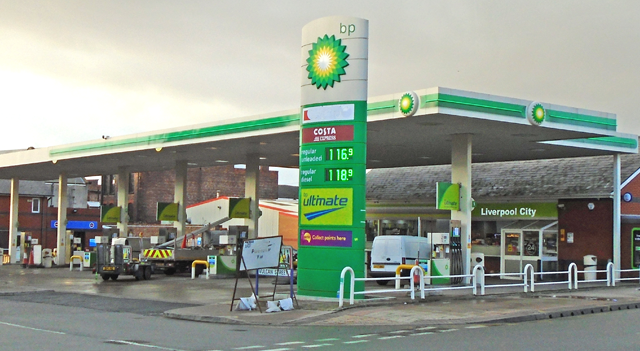
    BP (LSE:BP.) said its oil trading arm is on track for an “exceptional” first quarter, driven by higher oil prices following geopolitical disruptions in the Middle East, including the effective closure of the Strait of Hormuz.

    British Retail Consortium data showed UK retail sales rose 3.6% year-on-year in March, accelerating from 1.1% growth a year earlier and exceeding the 12-month average. Food sales were a key driver, increasing 6.8%, partly due to an early Easter boosting demand.

    Intertek (LSE:ITRK) announced a strategic review to assess a potential split between its Testing & Assurance and Energy & Infrastructure divisions, which generated £1.9 billion and £1.6 billion in revenue respectively in 2025.

    Oxford Instruments (LSE:OXIG) said it expects full-year results in line with expectations, supported by strong order growth in its Advanced Technologies division. Group order intake is projected to rise around 8% on an organic constant-currency basis.

    National Gas reported that the UK is expected to have sufficient gas supply to meet demand over summer 2026 under current conditions. While power generation demand for gas is forecast to fall by around 6%, this is expected to be partly offset by a 2% increase in domestic consumption.

    Overall, the market tone remains cautiously positive, supported by improving geopolitical sentiment and steady corporate updates, though uncertainty around global tensions continues to influence investor sentiment.

  • Intertek Jumps on Break-Up Review and Strong Q1 Growth Beat

    Intertek Jumps on Break-Up Review and Strong Q1 Growth Beat

    Intertek (LSE:ITRK) announced it has launched a strategic review to assess a potential separation of its business, while also reporting first-quarter organic growth ahead of expectations. The update sent shares more than 13% higher in early London trading.

    The FTSE 100 group is considering splitting its operations into two standalone entities: Intertek Testing & Assurance, which includes consumer products, corporate assurance, and health and safety services, and its Energy & Infrastructure division. In 2025, these units generated revenues of £1.9 billion and £1.6 billion respectively.

    The review process, expected to conclude by mid-2027, will explore options including a sale or demerger. Management noted that both divisions could be “better positioned as separate businesses to unlock their full potential.”

    Chief Executive André Lacroix said the company has reached a scale where greater simplification and sharper strategic focus could help accelerate growth. He added that the group is “energised” by the review and sees a “significant value growth opportunity” for shareholders.

    According to Annelies Vermeulen of Morgan Stanley, the move had been under consideration for some time, with the timing now seen as appropriate to allow the company to become more focused and drive stronger growth in its core areas.

    Alongside the strategic update, Intertek reported like-for-like revenue growth of 5.4% at constant currency for the first quarter, exceeding the 3.4% consensus forecast from Visible Alpha. Corporate Assurance led performance with 10.8% growth, followed by Consumer Products at 6.5%, while the World of Energy division was broadly flat.

    “While quarterly periods are not directly comparable, we note 1Q organic of +5.4% is sequentially better vs +1.9% 4Q (Nov-Dec), despite a slightly more challenging comp in the 1Q Jan-Apr period last year,” Vermeulen noted.

    Intertek left its full-year outlook unchanged, continuing to target mid-single-digit like-for-like revenue growth, margin expansion, and strong free cash flow generation through 2026.

  • BP Expects “Exceptional” Q1 Trading Performance but Flags Higher Net Debt

    BP Expects “Exceptional” Q1 Trading Performance but Flags Higher Net Debt

    BP (LSE:BP.) said its oil trading division is set to deliver an “exceptional” performance in the first quarter of 2026, driven by a sharp rise in oil prices following the U.S.-Israeli military campaign against Iran. Disruptions in the Middle East have significantly impacted global energy markets, particularly after the effective closure of the Strait of Hormuz restricted flows of Gulf crude, prompting traders and refiners to seek alternative supplies and pushing prices higher.

    In its latest trading update, BP indicated that its oil trading arm is expected to achieve “exceptional” results for the quarter, marking a strong rebound from a “weak” performance in the final quarter of 2025.

    The company also warned that net debt is set to increase, with projections in the range of $25 billion to $27 billion, compared with just over $22 billion at the end of the previous quarter.
    “This is driven primarily by a significant working capital build in the range of $4 to 7 billion, largely due to the price environment,” BP said.

    Upstream production for the first quarter is expected to remain “broadly flat compared to the fourth quarter of 2025,” reflecting stable output levels despite market volatility.

    The update marks the first since Meg O’Neill assumed the role of Chief Executive Officer on April 1. She has been tasked with streamlining operations, increasing oil and gas production, and divesting underperforming clean energy assets.

    O’Neill succeeds Murray Auchincloss, who departed last year after Albert Manifold determined that the company’s transformation efforts were progressing too slowly.

  • KEFI Secures Funding and Advances Tulu Kapi Gold Project Development

    KEFI Secures Funding and Advances Tulu Kapi Gold Project Development

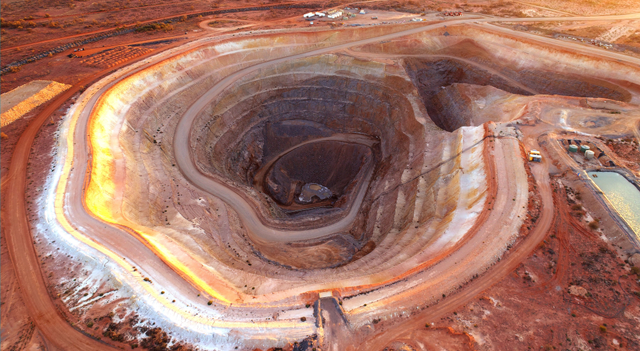
    KEFI Gold and Copper (LSE:KEFI) has confirmed that, subject to shareholder approval, it has secured financing and initiated development of the Tulu Kapi gold project in Ethiopia. The company describes the project as one of Africa’s most attractive gold developments in terms of grade, recovery rates, and potential margins.

    The project has received strong backing from both new and existing investors, as well as support from development finance institutions including Trade and Development Bank and Africa Finance Corporation. Key contractors such as Lycopodium and BCM Group are also involved. Tulu Kapi has been officially designated a Strategic Priority Project by the Ethiopian government, highlighting its national importance.

    Management expects the project to reach first production by mid-2028, with projected average EBITDA ranging between £264 million and £520 million over the first three years of operations, based on gold prices between $3,000 and $5,000 per ounce. Alongside Tulu Kapi, KEFI plans to explore additional similar opportunities within Ethiopia and continue developing its broader portfolio of critical materials assets in both Ethiopia and Saudi Arabia.

    From an investment perspective, the company remains constrained by weak financial fundamentals, including a lack of revenue, ongoing losses, and continued cash outflows. However, technical indicators show some positive momentum, with the share price trading above key moving averages and a favourable trend profile. Valuation remains challenged due to negative earnings and the absence of a dividend.

    More about KEFI Gold and Copper

    KEFI Gold and Copper plc is an AIM-listed exploration and development company focused on gold and copper assets in Ethiopia and Saudi Arabia. Its flagship Tulu Kapi project is a cornerstone asset with Strategic Priority status, while the group continues to expand its portfolio across both regions, targeting long-term growth in precious and critical metals.

  • Gulf Marine Services Reports Strong 2025 Growth but Holds Back Dividend

    Gulf Marine Services Reports Strong 2025 Growth but Holds Back Dividend

    Gulf Marine Services (LSE:GMS) delivered its fifth straight year of double-digit growth in 2025, with revenue rising 12% to $188.1 million and adjusted EBITDA also increasing 12% to $112.9 million. Performance was driven by higher day rates and the addition of a leased large vessel, although overall fleet utilisation declined. Adjusted net profit reached $41.8 million, while leverage improved to 1.39x following a reduction in net bank debt. The company’s backlog also expanded significantly to $606 million.

    Despite these gains, reported net profit was affected by impairment charges and a higher tax burden. The board opted not to declare a dividend, citing rising geopolitical tensions in the Gulf region that have disrupted operations and created uncertainty around near-term conditions. As a result, the company is reassessing its 2026 guidance while continuing to invest in fleet expansion to support longer-term growth.

    From an investment perspective, Gulf Marine Services benefits from strong revenue momentum, solid margins, and healthy cash generation, alongside a relatively low valuation based on earnings. Technical indicators also point to a sustained upward trend in the share price. However, elevated momentum signals, such as high RSI and stochastic readings, suggest the stock may be overbought, increasing the likelihood of a short-term pullback.

    More about Gulf Marine Services

    Gulf Marine Services is a leading operator of self-propelled, self-elevating support vessels serving the offshore energy sector, with a primary focus on the Gulf and broader Middle East. The company operates a fleet of 13 owned vessels, supplemented by leased units, providing critical support for oil and gas operations. Its business is underpinned by high utilisation rates, improving day rates, and a growing backlog of multi-year contracts.

  • Orosur Identifies New Gold Zone at Anzá as Exploration Activity Intensifies

    Orosur Identifies New Gold Zone at Anzá as Exploration Activity Intensifies

    Orosur Mining (LSE:OMI) has announced the discovery of a new gold-bearing zone located roughly 100 metres غرب of its Pepas deposit at the Anzá Project in Colombia. Recent drill holes, PEP082 and PEP083, returned wide, near-surface intercepts with high grades, showing geological similarities to the existing Pepas mineralisation. The company is currently undertaking orientation drilling to better understand the extent of the zone before moving to broader step-out drilling, while early observations from follow-up holes indicate continued mineralised structures.

    In parallel with this discovery, Orosur has resumed drilling at the APTA prospect, where close to 39,000 metres of historical drilling has already outlined a large epithermal gold system. This target is considered geologically comparable to Pepas but located at greater depth, offering additional upside potential.

    To further support exploration, the company has launched a drone-based airborne magnetic survey covering the southern portion of the Anzá project, including the APTA and El Cedro areas. The survey is expected to refine drill targeting and improve geological understanding, forming part of a broader increase in exploration activity aimed at expanding the project’s resource base and enhancing its long-term development potential.

    More about Orosur Mining

    Orosur Mining Inc. is a gold exploration and development company listed on both TSXV and AIM. Its primary focus is the wholly owned Anzá Project in Colombia’s Mid-Cauca gold belt, a region known for significant gold deposits. The project spans approximately 330 km² and includes key prospects such as Pepas, APTA, and the El Cedro porphyry cluster, positioning the company within a highly prospective Andean mining district.