Blog

  • Five key themes shaping markets in the week ahead

    Five key themes shaping markets in the week ahead

    Investors face a shortened trading week, with U.S. equity markets closed on Monday for Martin Luther King Jr. Day. Attention is expected to intensify as the week unfolds, driven by fresh tariff threats from President Donald Trump, pivotal rulings pending at the U.S. Supreme Court, and earnings updates from major corporations including Netflix (NASDAQ:NFLX) and Intel (NASDAQ:INTC). Markets may also gain more clarity on Trump’s housing affordability agenda as November’s midterm elections draw closer.

    1. Europe braces for a response to Trump’s Greenland tariff threat

    European officials are expected to hold talks later this week on how to respond to Trump’s proposed tariffs, with reports indicating that EU policymakers are weighing forceful countermeasures if the duties are implemented.

    Over the weekend, Trump said the United States would impose 10% tariffs on imports from eight European countries — Denmark, Sweden, France, Germany, the Netherlands, Finland, Norway and the United Kingdom — unless Washington is allowed to purchase Greenland. He warned that the tariffs would increase to 25% in June should no agreement be reached over the semi-autonomous Danish territory.

    Trump has justified the proposal on national security grounds, but European governments have pushed back strongly, describing the move as an act of coercion.

    Ahead of an emergency EU summit scheduled for Thursday in Brussels, officials are reportedly preparing to discuss options including tariffs on €93 billion worth of U.S. goods. Another potential tool under consideration is the EU’s “Anti-Coercion Tool,” which could restrict U.S. access to investment, financial services and parts of the services trade.

    Analysts say the situation underscores how uncertainty around Trump’s trade agenda — a recurring theme throughout 2025 — may worsen.

    “If the past year has shown anything, it is that the macroeconomic effects of tariffs are both uncertain and non-linear,” said Neil Shearing, Group Chief Economist at Capital Economics.

    Shearing expects the economic impact to be “modest,” trimming “a few tenths of a percentage point” from growth in the affected economies while adding a similar amount to U.S. inflation. However, he cautioned that the political fallout could be “far greater,” warning that any attempt by the U.S. to seize Greenland through force or pressure would cause “potentially irreparable damage” to NATO.

    2. Supreme Court rulings loom large for markets

    Trump’s latest tariff threat coincides with heightened focus on the U.S. Supreme Court, which is widely expected to rule soon on the legality of the president’s broad use of tariffs.

    Investors largely anticipate that the court will strike down Trump’s reliance on a 1970s-era international emergency economic powers law to impose the levies. Data from betting platform Polymarket currently implies only a 31% chance that the justices will side with Trump.

    Although the administration has signaled it may explore alternative legal avenues to impose tariffs, analysts warn that such moves would only deepen uncertainty around U.S. trade policy, including the newly proposed Greenland-related duties.

    Separately, the Supreme Court is set to hear arguments on Wednesday in a case stemming from Trump’s attempt to remove Federal Reserve Governor Lisa Cook. Cook filed a lawsuit in August after Trump sought to dismiss her over alleged mortgage fraud, a move widely seen as an effort to undermine the Fed’s independence.

    “[The Supreme Court] has been a relative friend of the Fed in terms of defending it from White House interference, and investors are hoping that remains the case during the Cook hearing,” analysts at Vital Knowledge said.

    3. Netflix earnings take center stage

    On the earnings front, Netflix is scheduled to report quarterly results after the U.S. market close on Tuesday.

    Bloomberg consensus forecasts point to earnings per share of $0.55 on revenue of $11.96 billion. Still, investor focus may shift quickly to any commentary on Netflix’s reported interest in acquiring Warner Bros. Discovery — a bid that faces competition from Paramount Skydance.

    The contest for Warner Bros. is expected to drag on for months and could face regulatory scrutiny in both the U.S. and Europe. Netflix has targeted the studio, which owns HBO Max and franchises such as “Harry Potter” and “Friends”, as a way to accelerate revenue growth. Despite successes like “Stranger Things” and recent moves into live sports, the company continues to face pressure to deliver returns on its heavy investments in advertising and gaming.

    4. Intel reports as turnaround efforts continue

    Intel is set to release its results after Wall Street closes on Thursday.

    Under CEO Lip-Bu Tan, the chipmaker has focused on cost reductions and balance sheet repair as competition intensifies in the PC and server processor markets. Efforts to gain traction in the artificial intelligence chip space have so far yielded limited success.

    Intel received a significant boost last year when Nvidia (NASDAQ:NVDA), SoftBank (USOTC:SFTBY) and the U.S. government invested in the company. Nvidia, notably, acquired $5 billion worth of Intel shares in December.

    Earlier this month, Intel also introduced a new AI chip designed for laptops, aiming to reassure investors about products built using its next-generation manufacturing technology.

    5. More details expected on Trump’s housing strategy

    The Trump administration is expected to provide additional information on its plans to improve housing affordability, a key voter issue ahead of the midterm elections later this year.

    High mortgage rates and elevated home prices have discouraged many Americans from entering the housing market. Last week, White House economic adviser Kevin Hassett said the administration plans to allow the use of retirement savings for down payments on homes. He added that Trump “will put the final plan out” during his appearance at the World Economic Forum in Davos this week.

    Trump has also floated other cost-cutting measures, including restricting institutional investors from purchasing single-family homes, directing Fannie Mae and Freddie Mac to buy $200 billion in mortgage bonds, and imposing a cap on credit-card interest rates.

  • Luxury shares slide in Europe as Trump tariff threat reignites trade fears

    Luxury shares slide in Europe as Trump tariff threat reignites trade fears

    European luxury stocks moved sharply lower on Monday after U.S. President Donald Trump raised the prospect of new import tariffs on European goods, reviving worries about renewed transatlantic trade tensions.

    The luxury sector underperformed the broader market as investors grew cautious that higher U.S. duties could weigh on demand in one of the industry’s most important end markets. With luxury highly exposed to discretionary spending and global trade flows, the sector is particularly sensitive to policy uncertainty.

    Shares in LVMH (EU:MC), the world’s largest luxury group, fell around 4%, while Hermès (EU:RMS) dropped roughly 3.1%. Kering slid close to 2.8% amid renewed concerns over export growth, as of 10:20 GMT. Eyewear specialist EssilorLuxottica (EU:EL) declined by about 1%.

    In Switzerland, Richemont (BIT:1CFR) and Swatch Group (LSE:0QM4) traded between 2% and 3.7% lower. Italian luxury names were also under pressure, with Moncler (BIT:MONC) and Brunello Cucinelli (BIT:BC) down between 2.1% and 2.5%.

    Elsewhere, Ferrari (BIT:RACE) slipped about 2.3%, while jewellery maker Pandora (TG:3P7) fell roughly 2.6%. In London, British luxury brand Burberry (LSE:BBRY) was down around 2.6%.

    Trump said over the weekend that he was considering new tariffs on European imports, reigniting fears of a trade dispute at a time when the luxury industry is already facing uneven demand in China and a slowing global economy.

    Analysts warned that tariff uncertainty could cloud earnings visibility for luxury groups, many of which derive a significant share of revenues from U.S. consumers and cross-border sales.

    Adding to the pressure, Goldman Sachs downgraded LVMH to “equal-weight” from “overweight”, arguing that the stock’s valuation leaves limited scope for further upside despite improving brand momentum. The bank said stronger performance at Louis Vuitton and Dior should support better-than-expected fourth-quarter sales, but cautioned that currency movements, potential tariff headwinds and ongoing weakness in the wines and spirits division present downside risks to 2026 earnings expectations.

  • Falconedge Unveils Bitcoin Treasury Yield Strategy, Offering Shareholders Compounded Balance Sheet Growth

    Falconedge Unveils Bitcoin Treasury Yield Strategy, Offering Shareholders Compounded Balance Sheet Growth

    Falconedge (AQSE:EDGE) is stepping into the spotlight with the launch of its Bitcoin yield strategy designed to generate sustainable monthly returns while minimising volatility and counterparty risk. The strategy positions the firm at the intersection of traditional finance and Bitcoin-native innovation, creating a compounding yield on their balance sheet, accelerating the growth of Bitcoin on their balance sheet to benefit shareholders.

    In a recent appearance on The Watch List, Falconedge CEO Roy Kashi joined host Ricki Lee to explain how the company’s Bitcoin treasury strategy complements its long-standing advisory business and strengthens shareholder value.

    A Bitcoin Strategy Built on Institutional Experience

    While newly established, Falconedge inherits a powerful know how and legacy from Falcon Investment Management, one of the UK’s pioneers in regulated crypto investing, An award-winning firm ranked first in Europe in 2025 by HFM for hedge fund infrastructure and digital asset regulatory hosting, Falcon Investment Management oversaw the 1st regulated Crypto fund in the UK in 2018.

    Falconedge offers advisory services to both traditional and crypto-focused managers, with 6 funds already signed up and several more under discussion.
    Rather than treating Bitcoin as a speculative trading asset, Falconedge integrates it into its balance sheet in a structured, risk-aware way.

    1.29% Monthly Yield

    Falconedge recently reported a fully verified  1.29% net monthly Bitcoin yield, a figure that immediately caught attention. But according to Kashi, the real story is how that yield is expected to be compounded generated .

    “This strategy reflects Falconedge’s disciplined approach to financial and capital efficiency, with a clear focus on long-term value creation. It underpins our broader objective to set new standards for responsible, transparent, and regulated cryptocurrency yield generation.”

    Compounding Growth for Shareholders

    Looking ahead, Falconedge expects the Bitcoin yield strategy to become a major contributor to revenue and earnings over time, especially as its Bitcoin balance sheet grows.

    “As Bitcoin grows, and as we grow our Bitcoin balance sheet, that yield compounds,” Kashi said. “That creates a powerful short and long-term effect.”

    The company also plans to accept in the future Bitcoins from external providers and DAT’s , offering them a yield on assets that would otherwise sit idle. The spread between what Falconedge earns and what it pays out is then reinvested into buying more Bitcoin for shareholders, reinforcing a flywheel of compounding value.

    Bridging Traditional Finance and Digital Assets

    Falconedge’s strategy reflects a broader shift in treasury management: Bitcoin is no longer just a speculative bet, it’s becoming a yield-generating treasury asset.

    By combining institutional Advisory services with Bitcoin-native structures, whilst being able to run a very lean, cost effective operation,  Falconedge is positioning itself as a multi-income generating business, offering shareholders the opportunity to be part of a business that has the ability to grow, regardless of market conditions and sentiment in the Bitcoin universe.

    As more companies holding Bitcoin in the balance sheet desperately look for reliable ways to generate income from digital assets, Falconedge’s model offers a glimpse into what the future of Bitcoin treasury management could look like.

  • Aquis Stock Exchange Weekly Highlights 19.01.26

    Aquis Stock Exchange Weekly Highlights 19.01.26

    Ajax Resources PLC (AQSE:AJAX) announced that drilling activities have commenced at the Eureka Gold and Copper Project, located in the Province of Jujuy, Argentina. The initial drilling programme will comprise of approximately 10 diamond drill holes for a total of 1,500 metres of diamond drilling.

    Ippolito Cattaneo, CEO, said: “The commencement of drilling at Eureka represents an important milestone for Ajax. Opportunities to drill test a project with a 400-year history of copper and gold production that has never previously been drilled are uncommon.” Read more

    Zentra Group Plc (AQSE:ZNT)has entered into a joint venture with property management professional, Connor Moylan, forming a new subsidiary, ZPAS Limited. The formation of ZPAS is intended to improve the scalability, operational focus and quality of the Group’s Assured Shorthold Tenancy lettings and management activities. Read more

    Falconedge PLC (AQSE:EDGE) announced a 1.29% Bitcoin Yield for December, marking the first month of its Bitcoin Yield Strategy.

    Roy Kashi, CEO, commented: “These impressive results from our first month of yield allocation, independently verified by NAV Consulting, demonstrate the strength of our treasury strategy and our commitment to disciplined balance sheet enhancement.” Read more

    The Smarter Web Company Plc (AQSE:SWC) announced that it has raised gross proceeds of £1.67m in aggregate through the placing of subscription shares in accordance with the terms of the Subscription Agreement announced on 24 December 2025. Read more

    Ethtry PLC (AQSE:ETHY) announced the equity investment and partnership with the Liechtenstein Trust Integrity Network (LTIN). LTIN’s delivers sovereign blockchain infrastructure, offering enterprises regulatory certainty, institutional-grade security and data sovereignty through GDPR-compliant data processing, while operating on 100% renewable energy.

    Patrick Chopard, CEO, said: “By positioning Ethtry at the forefront of LTIN’s staking process, we will support the integration of advanced technologies and the development of cross-network capabilities that enhance interoperability.” Read more

    Sulnox Group PLC (AQSE:SNOX) announced that it has secured a patent in Vietnam.

    Ben Richardson, CEO, commented: “Backed by this timely addition to our intellectual property portfolio, we are excited to lend our expertise, experience and innovation to Vietnam’s green transition. This is a fast growing market within Asia, with a forward-thinking mindset.” Read more

    For the latest news and updates from Aquis please visit – https://www.aquis.eu/news

  • Oil eases as Iran tensions cool, trimming geopolitical risk premium

    Oil eases as Iran tensions cool, trimming geopolitical risk premium

    Oil prices moved lower on Monday after gains in the previous session, as signs that unrest in Iran was subsiding reduced fears of a U.S. military response that could disrupt supplies from the key Middle Eastern producer.

    Brent crude was trading at $63.85 a barrel at 0734 GMT, down 28 cents, or 0.44%. U.S. West Texas Intermediate crude for February slipped 36 cents, or 0.61%, to $59.08 a barrel. With the February contract expiring on Tuesday, the more actively traded March contract was down 24 cents, or 0.40%, at $59.10.

    Protests in Iran sparked by economic hardship appear to have been brought under control following a violent crackdown that officials say left 5,000 people dead.

    U.S. President Donald Trump appeared to soften his earlier stance on intervention, saying on social media that Iran had halted mass executions of protesters, although no such plans were officially announced by Tehran. The remarks helped ease concerns that Washington might launch military action capable of interrupting oil exports from Iran, the fourth-largest producer in OPEC.

    The pullback signalled a further retreat from the multi-month highs reached last week, even though prices still ended higher on Friday. At the same time, the repositioning of U.S. military assets toward the Gulf continues to underline lingering geopolitical uncertainty.

    “The pullback followed a swift unwind of the ‘Iran premium’ that had driven prices to 12-week highs, triggered by signs of easing in Iran’s crackdown on protesters,” IG market analyst Tony Sycamore said in a note.

    He added that the decline was reinforced by U.S. inventory data showing a sizeable build in crude stocks, adding to bearish pressure on the supply side.

    U.S. financial markets are closed on Monday for the Martin Luther King Jr. Day holiday.

    Figures released last week by the Energy Information Administration showed U.S. crude inventories increased by 3.4 million barrels in the week ended January 9, compared with expectations in a Reuters poll for a 1.7 million-barrel draw.

    Markets are also watching developments in Venezuela after Trump said the United States would take over the country’s oil industry following the capture of Nicolas Maduro. The U.S. energy secretary told Reuters on Friday that Washington is moving quickly to grant Chevron an expanded licence to produce in Venezuela.

    However, investors remain cautious about the scope for a rapid ramp-up in Venezuelan output.

    “Venezuela and Ukraine remain on the back burner,” said Vandana Hari, founder of oil market analysis firm Vanda Insights.
    “Expect rangebound movement for the rest of the day, with U.S. markets closed.”

    Separately, government data released Monday showed China’s refinery throughput rose 4.1% year on year in 2025, while crude oil production increased 1.5% from 2024, with both reaching record levels.

  • Gold powers to fresh records as Greenland tariff dispute drives safe-haven flows

    Gold powers to fresh records as Greenland tariff dispute drives safe-haven flows

    Gold prices surged to new all-time highs in Asian trading on Monday, pushing close to $4,700 an ounce, as investors piled into defensive assets following U.S. President Donald Trump’s threat to impose fresh tariffs on several European countries over his push to gain control of Greenland.

    Spot gold rose 1.6% to $4,667.33 an ounce by 02:26 ET (07:26 GMT), after earlier touching a record intraday high of $4,690.75. U.S. gold futures also set a new peak at $4,697.71 an ounce.

    Tariff tensions and Fed rate outlook underpin rally

    Gold extended last week’s strong advance after Trump said over the weekend that the United States would introduce new tariffs on eight European nations that have opposed Washington’s Greenland proposal.

    Under the plan, a 10% tariff would be imposed from 1 February on goods from the affected countries, with the rate rising to 25% in June if no agreement is reached. The countries named include France, Germany and the United Kingdom, along with several Nordic and northern European states.

    The announcement drew swift criticism from European officials and reignited fears of a wider transatlantic trade confrontation, prompting investors to seek safety in precious metals.

    The geopolitical backdrop has added to a supportive environment for gold, which has already benefited in recent weeks from growing expectations that the Federal Reserve will begin cutting interest rates later this year. Softer U.S. economic data and signs that inflation pressures are easing have reinforced bets on policy easing, lowering the opportunity cost of holding non-yielding assets such as gold.

    Silver prices also surged, rising more than 4% to a fresh record high of $94.03 an ounce, buoyed by both safe-haven demand and its importance in industrial uses.

    Platinum joined the rally, climbing over 1% to $2,358.69 an ounce, supported by increasing investor interest in physical commodities.

    Copper advances on resilient China growth

    In the industrial metals space, copper prices moved higher after data showed China’s economy met Beijing’s 5% growth target for 2025, easing concerns about demand from the world’s largest copper consumer.

    Benchmark copper futures on the London Metal Exchange gained 0.6% to $12,881.0 a tonne. Copper has also been lifted by the broader rally in physical assets seen toward the end of 2025, as investors position for stronger long-term demand linked to expanding global investment in data centres.

    Chinese figures showed that GDP growth in the December quarter came in slightly above expectations, reinforcing confidence in the economy’s resilience — a constructive signal for global copper demand.

    However, the data also highlighted an uneven recovery, with exports remaining the primary growth driver while business investment and household spending lagged. This imbalance has kept hopes alive for further stimulus from Beijing, with the People’s Bank of China set to announce a key lending rate decision on Tuesday.

  • Bitcoin retreats below recent highs as Greenland tariff tensions sap risk appetite

    Bitcoin retreats below recent highs as Greenland tariff tensions sap risk appetite

    Bitcoin (COIN:BTCUSD) weakened during Asian trading on Monday, giving back part of last week’s gains as renewed tariff threats from U.S. President Donald Trump — linked to his push over Greenland — weighed on global risk sentiment.

    The pullback in Bitcoin spread across the broader crypto market, where several tokens came under pressure as investors locked in profits following last week’s rebound.

    The world’s largest cryptocurrency fell 2.8% to $92,519.6 by 00:56 ET (05:56 GMT). Bitcoin had climbed about 5% over the previous week, but has since slipped back below those recent peaks.

    Market sentiment was further dented by delays to a highly anticipated U.S. bill intended to set out a clearer regulatory framework for the crypto industry. Lawmakers postponed debate after objections from industry participants, most notably Coinbase, adding to near-term uncertainty.

    Tariff threats over Greenland hit risk assets

    Trump said the U.S. plans to impose import tariffs of up to 25% on several major European economies — including Denmark, France and the UK — until an agreement is reached allowing Washington to take control of Greenland.

    European leaders have rejected the proposal, with France reportedly preparing economic countermeasures against the United States. The standoff triggered sharp declines across global risk-sensitive assets, as investors grew concerned about strains within NATO and the possibility of more direct U.S. action related to Greenland.

    Trump has long argued that Greenland is critical to U.S. national security and has also raised the possibility of military intervention in the Danish territory. These remarks carried added weight after the U.S. incursion into Venezuela in early 2026.

    Although cryptocurrencies are not directly affected by tariffs or geopolitical disputes, such developments typically reduce the risk appetite that supports investment in speculative assets. Trump’s tariff threats throughout 2025 were accompanied by repeated bouts of risk aversion in crypto markets.

    Heightened caution has also driven some investors toward traditional safe havens such as gold, at the expense of digital assets.

    Liquidations surge across crypto markets

    The shift in sentiment triggered heavy liquidations across crypto markets, with $869.5 million in positions wiped out over the past 24 hours, according to Coinglass.

    Long positions accounted for the majority of the losses. Bitcoin alone saw around $229.5 million in liquidations, while Ether and Solana recorded approximately $154.6 million and $60.5 million, respectively.

    The selloff effectively erased most of the tentative recovery seen over the previous week, underscoring how fragile sentiment remains across the crypto sector.

    Altcoins extend losses

    Most major cryptocurrencies traded lower alongside Bitcoin.

    Ether slipped 3.5% to $3,199.06, while XRP fell 4.7% to move back below the $2 level. Solana dropped 6.6%, and Cardano and BNB declined 7.8% and 2.3%, respectively.

    Losses were also widespread among memecoins, with Dogecoin down 7.4% and $TRUMP sliding 6.4%.

  • Markets retreat as Greenland tariff threat resurfaces and China growth eases: Dow Jones, S&P, Nasdaq, Wall Street Futures

    Markets retreat as Greenland tariff threat resurfaces and China growth eases: Dow Jones, S&P, Nasdaq, Wall Street Futures

    Global markets moved lower as investors reacted to President Donald Trump’s renewed threat to impose tariffs tied to his push for U.S. control of Greenland, while fresh data pointed to a slowdown in China’s economy at the end of the year. European officials weighed possible countermeasures, gold surged to new highs and oil prices edged down as traders assessed the risk of escalating trade and geopolitical tensions.

    U.S. futures and global equities slide

    U.S. equity futures fell sharply on Monday after Trump warned that tariffs could be imposed on a number of European countries unless Washington is allowed to acquire Greenland.

    By 03:05 ET, Dow futures were down 404 points, or 0.8%, S&P 500 futures had dropped 66 points, or 1.0%, and Nasdaq 100 futures were lower by 336 points, or 1.3%.

    With U.S. cash markets closed for Martin Luther King Jr. Day, the immediate reaction played out in futures trading, while risk aversion spread across European and Asian equity markets.

    In a research note, analysts at ING said Trump’s comments — coming after broad-based tariffs imposed last year — have pushed trade tensions into “an entirely new dimension — one driven less by economic logic and more by political motives.”

    “The experience of the past 12 months has taught us not to overreact, as not all bold or dramatic announcements have ultimately been implemented. The uncomfortable truth, however, is that some of them have,” the analysts, including Carsten Brzeski and Bert Colijn, wrote.

    Europe considers retaliation over Greenland tariffs

    European leaders agreed over the weekend to intensify discussions on how to respond to Trump’s tariff threats, with media reports suggesting Brussels is considering tough retaliatory measures if the duties are enacted.

    On Saturday, Trump said the U.S. would impose 10% tariffs on exports from eight European countries — Denmark, Sweden, France, Germany, the Netherlands, Finland, Norway and the United Kingdom — until the United States is able to purchase Greenland. He added that the rate would rise to 25% if the effort to acquire the vast, semi-autonomous Danish territory fails.

    Trump has argued that securing Greenland is necessary for U.S. national security, a claim European governments have rejected, describing the approach as blackmail.

    Ahead of an emergency EU summit scheduled for Thursday in Brussels, member states are expected to debate a range of responses. Options reportedly include a €93 billion package of tariffs on U.S. imports and possible use of the bloc’s “Anti-Coercion Tool,” which could restrict U.S. access to European investment, banking and services markets. Reuters, citing an EU source, said the tariff option currently has the broadest support.

    The renewed tariff threat has also cast uncertainty over the future of the U.S.–EU trade agreement reached last year, with European officials indicating they cannot proceed while Washington pursues control of Greenland.

    “At this point, the outcome of these new trade tensions is unclear, but what has long been evident is that there is no such thing as trade or tariff certainty anymore,” the ING analysts said.

    Gold and silver hit fresh highs

    Gold prices jumped to record levels during Asian trading as investors sought safe havens following Trump’s latest tariff warning.

    Spot gold rose 1.6% to $4,667.33 an ounce by 02:26 ET (07:26 GMT), after touching an all-time high of $4,690.75 earlier in the session. U.S. gold futures also reached a new peak at $4,697.71 an ounce.

    Silver outperformed, climbing more than 4% to a record $94.03 an ounce, supported by both safe-haven flows and its industrial demand profile.

    Oil prices ease

    Oil prices slipped, giving back part of last week’s gains as markets weighed the growing risk of a trade dispute linked to Greenland.

    Brent crude futures fell 0.1% to $59.74 a barrel, while U.S. West Texas Intermediate crude slipped 0.1% to $55.95 a barrel.

    Crude had rallied earlier last week on concerns that unrest in Iran could disrupt supplies from the Middle East, which accounts for a significant share of global production. Much of that risk premium faded after Trump said there would be no immediate U.S. military intervention, prompting a pullback before prices stabilised toward the end of the week.

    China meets growth target despite slowdown

    China’s economy expanded slightly more than expected in the fourth quarter of 2025, according to data released Monday, as stimulus measures and a recovery in consumption helped the country hit its annual growth goal.

    Gross domestic product grew 4.5% year on year in the October–December period, matching forecasts but slowing from 4.8% in the previous quarter, marking the weakest pace in three years. On a quarter-on-quarter basis, growth came in at 1.2%, marginally above expectations of 1.1%.

    The result brought full-year 2025 growth to 5%, in line with Beijing’s target. Policymakers are widely expected to maintain the same goal going forward, even as China grapples with renewed U.S. trade tensions, subdued consumer spending and a prolonged downturn in the property sector.

  • European Markets Slide on Tariff Warnings as Greenland Dispute Escalates: DAX, CAC, FTSE100

    European Markets Slide on Tariff Warnings as Greenland Dispute Escalates: DAX, CAC, FTSE100

    European equity markets opened the week under heavy pressure after U.S. President Donald Trump warned that economic sanctions could be imposed on several European countries if they continue to oppose his proposal for the United States to acquire Greenland.

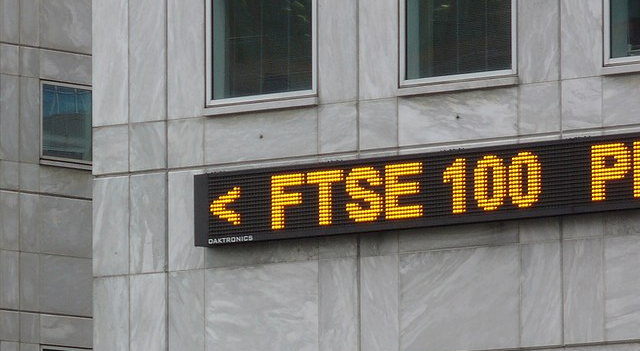
    By 08:05 GMT, Germany’s DAX was down 1.3%, France’s CAC 40 had fallen 1.6%, and the UK’s FTSE 100 was lower by 0.4%.

    Tariff threats dent risk appetite

    Over the weekend, President Trump said the U.S. is prepared to introduce tariffs on exports from eight European countries that have resisted his Greenland initiative. The group includes major economies such as France, Germany and the United Kingdom, alongside several Nordic and northern European nations.

    Trump said an initial 10% tariff would be applied from 1 February, rising to 25% in June unless an agreement is reached that would allow the U.S. to gain control of Greenland, the semi-autonomous Danish territory.

    In response, the European Union has already suspended ratification of its trade agreement with the United States. Media reports suggest Brussels could revive a €93 billion package of counter-tariffs on U.S. goods, a step that would significantly intensify tensions and raise the risk of a broader transatlantic trade conflict.

    “This latest flashpoint has heightened concerns over a potential unravelling of NATO alliances and the disruption of last year’s trade agreements with several European nations, driving risk-off sentiment in stocks and boosting safe-haven demand for gold and silver,” said Tony Sycamore, a market analyst at IG.

    The dispute puts additional focus on the World Economic Forum, which gets underway later in the session in Davos, bringing together global political and business leaders, including a sizeable U.S. delegation led by Trump himself.

    Eurozone inflation data in focus

    The key economic release for Monday is the eurozone’s December inflation report, particularly with U.S. markets closed for Martin Luther King Jr. Day.

    Headline eurozone CPI is expected to come in at 2.0% year on year, easing from 2.1% in November and aligning with the European Central Bank’s inflation target for the first time since mid-2025.

    The ECB has kept interest rates unchanged since ending its rate-cut cycle in June and signalled last month that it sees little urgency to adjust policy, citing easing inflation pressures and more resilient-than-expected growth toward the end of 2025. The central bank’s next policy meeting is scheduled for early February.

    Earlier data showed China’s economic growth slowed to a three-year low in the fourth quarter, with GDP expanding 4.5% year on year, down from 4.8% in the previous quarter.

    Corporate and sector moves

    The European corporate calendar is relatively quiet, although UK building products group Marshalls (LSE:MSLH) said full-year 2025 adjusted profit before tax was in line with market expectations, despite continued uncertainty in its end markets.

    Investor attention is also likely to turn to U.S. technology stocks trading in Europe, as these companies could face retaliatory measures from European authorities should Washington proceed with tariffs linked to the Greenland dispute.

    Oil prices ease

    Oil prices edged lower, giving back part of last week’s gains as markets assessed the growing risk of a trade war linked to Greenland.

    Brent crude futures slipped 0.1% to $59.74 a barrel, while U.S. West Texas Intermediate crude fell 0.1% to $55.95.

    Crude prices had climbed earlier last week on concerns that unrest in Iran could disrupt Middle Eastern oil supplies, a region responsible for a significant share of global production. However, much of that risk premium faded after Trump said the U.S. would not intervene militarily in the near term, prompting prices to retreat before stabilising toward the end of the week.

  • European Beverage Stocks Slide After Trump Signals New Tariffs

    European Beverage Stocks Slide After Trump Signals New Tariffs

    European beverage stocks moved lower after US President Donald Trump said he plans to introduce new tariffs on imports from the European Union and the United Kingdom, reviving trade tensions and increasing pressure on spirits producers with significant exposure to the US market.

    Shares in Diageo (LSE:DGE), Pernod Ricard (EU:RI), Rémy Cointreau (EU:RCO) and Davide Campari (BIT:CPR) were down between 1% and 3.5% by 09:15 GMT.

    Over the weekend, Trump said the US would introduce fresh tariffs starting at 10% from 1 February on imports from the UK and seven EU countries — Denmark, Finland, France, Germany, the Netherlands, Norway and Sweden. The proposed rate would then rise to 25% from 1 June.

    These measures would add to an existing tariff framework that already includes a 15% duty on European imports and a 10% levy on goods from Great Britain. Jefferies said the proposed increases would be layered on top of current tariffs, materially raising the cost burden for European spirits companies selling into the US.

    European governments have criticised the proposal and are holding emergency discussions at EU level, with reports suggesting potential counter-tariffs of up to €93 billion, according to the brokerage.

    Jefferies said the renewed tariff threat reopens a US–EU trade dispute and represents a near-term risk event for spirits makers. The analysts estimate that an additional 10% tariff would have a measurable earnings impact before any mitigation measures are taken.

    Based on company disclosures, Jefferies estimates the impact of a 10% tariff would equate to roughly 1% of group earnings for Pernod Ricard, 2.6% for Diageo, 3.9% for Campari and 12.1% for Rémy Cointreau. If tariffs were raised to 25%, the impact would deepen to around 2.4%, 6.5%, 9.7% and 30.3% respectively.

    The analysts highlighted Rémy Cointreau as the most exposed, with an estimated €30 million US tariff impact equivalent to around 18% of profits under the current regime. Pernod Ricard’s estimated €35 million drag represents about 1.5% of fiscal 2026 EBIT, while Campari’s €15 million impact — gross annualised at €35 million — equates to roughly 2.5% of group profits. Diageo has previously flagged around $200 million of gross exposure, with the ability to offset roughly half through mitigating actions, Jefferies said.

    Jefferies added that the tariff threat is likely to fuel volatility in European spirits stocks in the coming weeks as investors weigh potential earnings impacts and monitor developments in US–EU trade negotiations.