Blog

  • DAX, CAC, FTSE100, European Stocks Edge Near Record Highs as Trade Optimism Builds

    DAX, CAC, FTSE100, European Stocks Edge Near Record Highs as Trade Optimism Builds

    European markets traded close to record levels on Monday, buoyed by renewed optimism following signs of easing trade tensions between the U.S. and China.

    Investors are also gearing up for a packed week of central bank activity, with upcoming interest rate decisions from the Federal Reserve, European Central Bank, and Bank of Japan. Markets are pricing in a 25 basis point rate cut from the Fed, while the ECB and BOJ are widely expected to keep their policies unchanged.

    Earnings season remains in focus as major U.S. technology firms, including Apple Inc. (NASDAQ:AAPL) and Microsoft Corp. (NASDAQ:MSFT), prepare to release their quarterly results.

    In European trading, the FTSE 100 rose 0.1%, while the DAX hovered just below flat and the CAC 40 slipped 0.1%.

    Shares of Porsche AG (BIT:1PORS) climbed despite the automaker reporting a 96% plunge in profits over the first nine months of 2025. The sharp decline was tied to heavy restructuring costs as the company pulled back on its electric vehicle strategy and faced weaker demand in China.

    Meanwhile, Novartis (NYSE:NVS) shares moved lower after the Swiss drugmaker confirmed a $12 billion cash acquisition of Avidity Biosciences (NASDAQ:RNA).

    London-based lender HSBC Holdings (LSE:HSBA) also declined after revealing a $1.1 billion provision related to an appeal loss in a Madoff lawsuit during its third-quarter results.

  • Dow Jones, S&P, Nasdaq, Wall Street, Futures Climb as US–China Trade Breakthrough and Big Earnings Lift Sentiment

    Dow Jones, S&P, Nasdaq, Wall Street, Futures Climb as US–China Trade Breakthrough and Big Earnings Lift Sentiment

    U.S. stock futures advanced on Monday, supported by optimism over progress in trade negotiations between the United States and China, as well as a busy earnings and central bank calendar. Officials on both sides said they had forged a framework deal ahead of a long-anticipated meeting between the two countries’ leaders. Meanwhile, Donald Trump suggested a decision on who will replace Jerome Powell as the next Fed chair could be made by year-end.

    Futures Rise

    Wall Street futures opened the week in positive territory, setting the stage for a potentially strong few days marked by key earnings releases and major monetary policy decisions around the globe, including from the Federal Reserve.

    By 03:58 ET, Dow futures were up 323 points (+0.7%), S&P 500 futures rose 58 points (+0.9%), and Nasdaq 100 futures gained 285 points (+1.1%). All three major U.S. indexes closed at record highs on Friday, buoyed by softer-than-expected inflation data, which strengthened expectations for an interest rate cut at the Fed’s two-day policy meeting starting Tuesday. CME’s FedWatch Tool indicates over a 95% probability of another cut at the central bank’s December meeting.

    Corporate earnings have been broadly encouraging, offering insight into the economy despite the lack of fresh government data due to the prolonged federal shutdown. Analysts now expect S&P 500 third-quarter earnings to grow 10.4% year-on-year, up from 8.8% in early October, according to LSEG data cited by Reuters.

    Trade Framework Fuels Optimism

    Market sentiment was further boosted by hopes of a trade breakthrough between Washington and Beijing. On Sunday, negotiators from both sides announced they had reached a framework agreement on tariffs and other issues, ahead of Thursday’s high-profile meeting between Trump and Xi Jinping in South Korea.

    Speaking in Malaysia, U.S. trade representative Jamieson Greer said talks were nearing the stage where the “final details” could be presented to the two leaders. Chinese lead negotiator Li Chenggang added that a “preliminary consensus” was achieved after “candid and in-depth discussions.”

    The discussions come amid heightened trade tensions after Trump threatened triple-digit tariffs in response to Beijing’s rare earth export restrictions. U.S. Treasury Secretary Scott Bessent, however, told ABC’s This Week he believes the tariffs “will be averted” and that China is prepared to make “concessions” on export controls.

    Trump Signals Fed Chair Pick by Year-End

    Beyond trade, Trump said he expects to reveal his pick to replace Powell by the end of the year. Although Powell was nominated by Trump in 2017, the president has frequently criticized the Fed’s cautious approach to monetary policy and urged faster, deeper rate cuts.

    Bessent said the administration is preparing a “good slate” of candidates “right after Thanksgiving.” Those under consideration reportedly include Kevin Hassett, Kevin Warsh, Christopher Waller, Michelle Bowman and Rick Rieder. Powell’s current term ends in May 2026, though he could remain a Fed governor until 2028.

    Earnings Season Kicks Off

    Earnings season heats up with Keurig Dr Pepper (NASDAQ:KDP) kicking things off. Bloomberg estimates forecast adjusted EPS of $0.54 on revenue of $4.15 billion. Investors will be looking for updated guidance after rivals PepsiCo (NASDAQ:PEP) and The Coca-Cola Company (NYSE:KO) reported gains driven by a weaker dollar.

    Trump’s decision to impose an additional 10% tariff on Canadian goods over the weekend could also affect Keurig Dr Pepper’s operations in Canada.

    Later this week, earnings from major tech firms will take center stage. Reports from Alphabet Inc. (NASDAQ:GOOG), Meta Platforms (NASDAQ:META), and Microsoft (NASDAQ:MSFT) are expected on Wednesday, followed by Apple Inc. (NASDAQ:AAPL) and Amazon.com, Inc. (NASDAQ:AMZN) on Thursday.

    Gold Dips as Risk Appetite Grows

    Gold prices extended their decline, pressured by easing U.S.–China tensions and improving investor sentiment. Spot gold fell 1.3% to $4,060.80 an ounce by 00:44 ET, while U.S. gold futures slid 1.6% to $4,072.60 an ounce.

    Despite the drop, expectations of a quarter-point Fed rate cut have limited further losses, as non-yielding assets like gold tend to benefit from lower interest rates. The metal recently ended a nine-week winning streak after hitting record highs above $4,300/oz.
  • Oil Gains as US–China Trade Breakthrough Lifts Sentiment

    Oil Gains as US–China Trade Breakthrough Lifts Sentiment

    Oil prices climbed on Monday after economic officials from the United States and China outlined a trade-deal framework, easing concerns that escalating tariffs and export restrictions between the two largest oil consumers might weigh on global growth.

    Brent crude futures rose 47 cents, or 0.71%, to $66.41 a barrel by 06:29 GMT, while U.S. West Texas Intermediate crude gained 44 cents, or 0.72%, to $61.94. Last week, both benchmarks rallied sharply — 8.9% and 7.7%, respectively — following fresh U.S. and EU sanctions on Russia.

    According to Haitong Securities, sentiment has improved thanks to new sanctions on Russia and the easing of U.S.–China trade tensions, countering earlier oversupply worries that pushed oil prices lower in October.

    U.S. Treasury Secretary Scott Bessent said on Sunday that U.S. and Chinese officials hashed out a “very substantial framework” for a trade deal, paving the way for President Donald Trump and President Xi Jinping to meet later this week to discuss trade cooperation.

    Bessent noted the framework would avoid 100% U.S. tariffs on Chinese goods and secure a deferral of China’s rare-earth export controls.

    Trump added that he remained optimistic about reaching an agreement with Beijing and expected to hold meetings both in China and the United States.

    “I think we’re going to have a deal with China,” Trump said. “We’re going to meet them later in China and we’re going to meet them in the U.S., either Washington or Mar-a-Lago.”

    Analyst Tony Sycamore of IG Group said the framework eased concerns that Russia might counter fresh U.S. sanctions on Rosneft and Lukoil by offering deeper discounts and using shadow fleets to attract buyers.

    “However, if sanctions on Russian energy are less effective than expected, oversupply pressures could return to the market,” said Haitong Securities analyst Yang An.

  • Gold Extends Losses as Easing US–China Tensions Weigh on Safe-Haven Demand

    Gold Extends Losses as Easing US–China Tensions Weigh on Safe-Haven Demand

    Gold prices continued to fall during Asian trading on Monday, adding to last week’s decline as improving sentiment over U.S.–China trade negotiations dampened demand for safe-haven assets. Traders are also focused on the upcoming Federal Reserve policy decision, with markets widely anticipating a rate cut later this week.

    Spot gold slipped 1.3% to $4,060.80 per ounce by 00:44 ET (04:44 GMT), while U.S. gold futures fell 1.6% to $4,072.60. The yellow metal recently ended a nine-week rally after hitting record highs above $4,300/oz, as traders booked profits amid easing geopolitical risks and expectations of monetary stimulus.

    Trade Breakthrough Pressures Gold

    The pullback follows progress in trade talks after U.S. and Chinese negotiators reached a preliminary framework over the weekend on the sidelines of ASEAN meetings in Malaysia. The agreement is set to be finalized when Donald Trump and Xi Jinping meet in South Korea later this week, aiming to extend the trade truce and potentially pave the way for a broader deal.

    “The threat of the 100% tariff has gone away, as has the threat of the Chinese initiating a worldwide export control regime,” said U.S. Treasury official Scott Bessent, suggesting that the risk of renewed trade escalation had eased.

    Improved risk appetite has weighed on gold’s safe-haven appeal.

    Fed Rate Cut Expectations Provide Some Support

    Losses in gold remain limited, however, by expectations that the Fed will lower rates at its October 29 meeting. A softer-than-expected U.S. CPI report last week strengthened the case for a 25-basis-point cut, with investors now awaiting signals on whether further easing may follow before year-end.

    Lower interest rates typically support gold by reducing the opportunity cost of holding non-yielding assets and pressuring the U.S. dollar, making the metal more attractive to international buyers.

    Broader Precious Metals Dip as Copper Surges

    Other precious metals also moved lower on Monday, dragged down by the risk-on sentiment. Silver futures declined 1.4% to $47.91 per ounce, while platinum futures eased 0.9% to $1,587.10 per ounce.

    In contrast, copper prices climbed sharply. Benchmark copper futures on the London Metal Exchange advanced over 1% to hit a record high of $11,078.00 per ton, while U.S. copper futures gained 1.4% to $5.19 per pound. The rally has been supported by the ongoing shutdown of Freeport-McMoRan Inc.’s Grasberg mine in Indonesia since early September, as well as optimism surrounding a potential U.S.–China trade agreement.

  • Ford Finalizes £4.6 Billion Pension Risk Transfer with Legal & General

    Ford Finalizes £4.6 Billion Pension Risk Transfer with Legal & General

    Legal & General (LSE:LGEN) has signed a landmark agreement to assume £4.6 billion ($6 billion) in pension liabilities from Ford Motor Company (NYSE:F), according to a report from the Financial Times citing executives from both firms.

    The deal covers the pension benefits of approximately 35,000 members enrolled in two of Ford’s UK schemes — the Ford Hourly Paid Contributory Pension Fund and the Ford Salaried Contributory Pension Fund.

    This is among the largest pension risk transfer transactions ever executed in the UK, reflecting a growing trend among corporations to offload long-term pension obligations to insurers with dedicated expertise in managing such liabilities.

    For Ford, the agreement provides balance sheet relief by removing a significant financial burden, while ensuring the security of retirement benefits for tens of thousands of employees and retirees.

  • DAX, CAC, FTSE100, European Stocks Steady as Trade Talks, Tech Earnings and Fed Meeting Take Center Stage

    DAX, CAC, FTSE100, European Stocks Steady as Trade Talks, Tech Earnings and Fed Meeting Take Center Stage

    European equities opened the week on a stable note, with investors closely watching several major catalysts including upcoming central bank policy meetings, high-level U.S.–China trade talks, and a heavy slate of corporate earnings.

    At 07:15 GMT, Germany’s DAX rose 0.2%, France’s CAC 40 slipped 0.1%, and the UK’s FTSE 100 traded largely flat.

    U.S.–China Trade Framework

    Market sentiment improved late last week after news emerged that Donald Trump is set to meet Xi Jinping during next week’s APEC summit in South Korea. Negotiators from both sides have reportedly agreed on the framework of a trade deal for the leaders to finalize.

    A successful agreement could pause steep U.S. tariffs on Chinese goods and ease restrictions on rare earth exports, helping to calm investor concerns over trade tensions that have weighed on the global outlook.

    “I’ve got a lot of respect for President Xi and I think we’re going to come away with a deal,” Trump told reporters aboard Air Force One.

    Fed to Lead Central Bank Parade

    Market expectations for a U.S. interest rate cut have strengthened after annual inflation fell to 3% in September, below forecasts. According to the CME FedWatch tool, traders are pricing in a 96% probability that the Federal Reserve will cut rates by 25 basis points at its meeting this week.

    Other major policy meetings include the Bank of Japan and Bank of Canada, while the European Central Bank is widely expected to hold rates steady, given inflation remains near its 2% target and growth appears stable.

    Investors will also be monitoring the upcoming German Ifo business sentiment data for further signals of economic confidence in the eurozone’s largest economy.

    Mega-Tech Earnings in Spotlight

    Corporate earnings are another key focus this week, particularly in the U.S., where several mega-cap technology firms are set to report. Results are expected from Microsoft (NASDAQ:MSFT), Apple (NASDAQ:AAPL), Alphabet (NASDAQ:GOOGL), Amazon (NASDAQ:AMZN), and Meta Platforms (NASDAQ:META), five members of the so-called “Magnificent Seven.”

    In total, around one-third of S&P 500 constituents are scheduled to release earnings this week, including Eli Lilly and Company (NYSE:LLY), Exxon Mobil (NYSE:XOM), Chevron Corporation (NYSE:CVX), Visa Inc. (NYSE:V), and Mastercard Incorporated (NYSE:MA).

    In Europe, Galp Energia (EU:GALP) reported a 53% jump in third-quarter net income, driven by stronger refining margins and higher commercial and trading results.

    Crude Supported by Trade Talk Progress

    Oil prices steadied on Monday, extending last week’s gains as optimism over U.S.–China trade progress helped ease concerns of further economic fallout between the world’s two largest economies.

    Brent crude futures slipped 0.1% to $65.17 a barrel, while U.S. West Texas Intermediate crude futures also fell 0.1% to $61.48 a barrel.

    Crude has strengthened in recent sessions after the U.S. imposed new restrictions on Russia’s oil industry, targeting its largest energy firms. Signs of easing trade tensions have provided additional support, helping to stabilize the market following earlier volatility.

  • FTSE 100 Holds Steady as Trade Optimism Lifts European Markets

    FTSE 100 Holds Steady as Trade Optimism Lifts European Markets

    The FTSE 100 opened largely unchanged on Monday, with sentiment supported by renewed optimism around U.S.–China trade negotiations. As of 07:10 GMT, the index dipped slightly by 0.02%, while the British pound strengthened 0.01% against the dollar to 1.33. European markets moved higher, with Germany’s DAX up 0.4% and France’s CAC 40 gaining 0.1%.

    Greencore–Bakkavor Merger Faces Regulator Scrutiny

    The Competition and Markets Authority (CMA) has expressed concerns over the proposed £1.2 billion merger between Greencore (LSE:GNC) and Bakkavor Group PLC (LSE:BAKK). The regulator warned that the deal may reduce competition in the supply of own-label chilled sauces, where both companies currently compete. Both firms are key suppliers in the UK’s ready-made food sector, and the CMA’s review could lead to a deeper investigation if remedies are not proposed.

    HSBC Sets Aside $1.1 Billion for Madoff-Linked Lawsuit

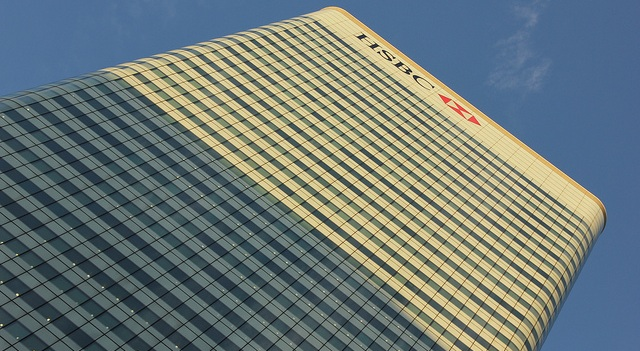
    HSBC Holdings PLC (LSE:HSBA) has allocated $1.1 billion to address a lawsuit in Luxembourg tied to Bernard Madoff’s Ponzi scheme. The legal action, brought by Herald Fund SPC, seeks restitution of securities and cash linked to the Bernard L. Madoff Investment Securities LLC fraud. The Luxembourg Court of Cassation recently denied HSBC’s appeal on the securities restitution claim but upheld its appeal on the cash claim.

  • Greencore–Bakkavor Merger Draws Scrutiny from UK Competition Regulator

    Greencore–Bakkavor Merger Draws Scrutiny from UK Competition Regulator

    The Competition and Markets Authority (CMA) has raised concerns over the proposed £1.2 billion ($1.61 billion) merger between Greencore (LSE:GNC) and Bakkavor Group PLC (LSE:BAKK), warning that the deal could reduce competition in the supply of own-label chilled sauces in the UK.

    Both companies are major players in the country’s ready-made food sector, supplying retailer-branded products to supermarkets and food service providers. The regulator specifically pointed to potential competitive harm in the retailer own-brand chilled sauces segment, where Greencore and Bakkavor are currently direct competitors.

    The CMA’s concerns could lead to a deeper Phase 2 investigation if the companies do not propose suitable remedies to address the competition issues. The outcome of this review could have significant implications for consolidation within the UK food manufacturing industry.

    More about Greencore and Bakkavor

    Greencore is a leading UK convenience food manufacturer specializing in ready-made sandwiches, salads, chilled prepared meals, and sauces. Bakkavor Group PLC is a major international fresh prepared food producer with operations in the UK, U.S., and China. Both companies supply many of the country’s largest supermarket chains with own-label products.

  • RBC Flags Limited Upside for Unilever Despite Upcoming Ice Cream Demerger

    RBC Flags Limited Upside for Unilever Despite Upcoming Ice Cream Demerger

    RBC Capital Markets has maintained a cautious stance on Unilever Plc (LSE:ULVR), arguing that the company’s planned spin-off of its ice cream division, The Magnum Ice Cream Company (TMICC), is unlikely to deliver meaningful value creation. In a recent research note, analyst James Edwardes Jones reaffirmed an “underperform” rating with a price target of GBp 3,900 — around 14% below the current trading price of GBp 4,689.

    RBC estimates that the separation will cut Unilever’s group EBITDA by 11–13% and reduce earnings per share by 1–3% over 2026–2027, even after planned share consolidation. The brokerage set a fair value of £38 per share based on an adjusted present value model, slightly below its price target, reinforcing its cautious view.

    Although the demerger is expected to sharpen Unilever’s focus on its Beauty & Wellbeing segment, it also involves divesting its strongest-performing business. TMICC, which includes leading brands such as Magnum and Cornetto, currently has a market leadership score of around 250 compared with just over 100 for the remainder of Unilever’s portfolio. RBC highlighted that this would leave the company less dominant in its core markets.

    Another area of concern is stranded costs—overheads tied to the departing unit—representing roughly 13% of ice cream revenue. While Unilever has outlined €800 million in productivity savings to mitigate this, RBC believes margin improvement will be difficult in a less favorable cost environment.

    The report also questioned Unilever’s ability to meet its midterm target of 4–6% organic sales growth, with RBC forecasting just 2% annual volume growth. It noted that roughly a quarter of Unilever’s portfolio remains tied to non-core brands, adding to the challenge.

    For TMICC as a standalone entity, RBC expects moderate upside, led by its away-from-home business, which benefits from higher margins and stronger structural growth. However, its at-home segment faces intense competition from private labels, particularly in the U.S., where store brands already hold about 18% market share.

    Overall, RBC’s analysis suggests that while the spin-off may offer operational clarity, it removes Unilever’s most competitively advantaged business without significantly boosting growth or valuation.

  • HSBC Allocates $1.1 Billion for Legal Case Linked to Madoff Scheme

    HSBC Allocates $1.1 Billion for Legal Case Linked to Madoff Scheme

    HSBC Holdings (LSE:HSBA) has set aside $1.1 billion to cover potential liabilities arising from a lawsuit in Luxembourg connected to Bernard Madoff’s Ponzi scheme, one of the largest financial frauds in U.S. history. The legal action involves a claim brought by Herald Fund SPC seeking restitution of securities and cash related to the Bernard L. Madoff Investment Securities LLC fraud.

    The Luxembourg Court of Cassation recently denied HSBC’s appeal regarding Herald’s securities restitution claim but accepted the subsidiary’s appeal on the cash restitution claim. The bank confirmed that it continues to defend the case through its subsidiary, while the reserve aims to ensure sufficient coverage for potential outcomes.

    More about HSBC

    HSBC Holdings is one of the world’s largest banking and financial services organizations, headquartered in London. It serves customers globally through retail banking, wealth management, commercial banking, and investment banking operations. The bank has a strong international presence across Europe, Asia, the Americas, the Middle East, and Africa.