Blog

  • Fevertree grows revenue and broadens product mix as U.S. transition pressures margins

    Fevertree grows revenue and broadens product mix as U.S. transition pressures margins

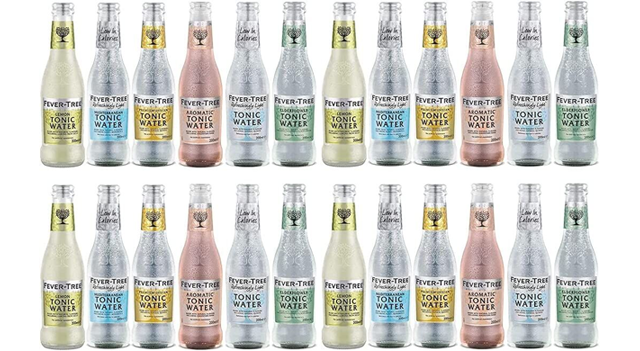
    Fevertree Drinks plc (LSE:FEVR) delivered modest revenue expansion in 2025, with Fever-Tree branded sales rising 4% at constant currency and showing stronger momentum in the second half of the year. Adjusted EBITDA declined 16%, reflecting the impact of the company’s new U.S. partnership structure, transition-related expenses and higher marketing investment.

    The group continued to diversify its portfolio beyond tonic water, which now accounts for about 45% of total revenue. Performance in the United States remained robust during the transition to the company’s distribution partnership with Molson Coors. In Europe, the business recorded market share gains, while ginger beer sales grew at a double-digit rate, reinforcing the brand’s broader product momentum.

    Profitability was affected by softer conditions in the U.K. on-trade channel, along with a cautious provision related to a possible U.K. packaging levy. Despite these pressures, management reiterated confidence in the company’s ability to generate cash and confirmed that its ongoing share buyback program remains in place. The company also maintained that its 2026 outlook aligns with current market expectations.

    Fevertree Drinks’ near-term outlook continues to be supported by solid financial performance and favourable corporate developments, particularly the ongoing share repurchase program. However, the company’s relatively high valuation and mixed technical signals temper the overall outlook. In addition, the lack of recent earnings call commentary makes it harder to fully assess management’s forward guidance and investor sentiment.

    More about Fevertree Drinks

    Fevertree Drinks plc is a premium mixer and soft drinks company best known for its Fever-Tree brand. Its portfolio includes tonic waters, ginger beers and a range of mixers designed to complement premium spirits. The group is increasingly expanding beyond tonic into a broader line-up of premium soft drinks aimed at adult social occasions, and has established strong market positions in the U.K., U.S., Europe and selected international markets.

  • Central banks are turning hawkish again

    Central banks are turning hawkish again

    Summing up last week’s central bank meetings in one sentence, rising energy prices driven by tensions in the Middle East could push inflation higher, but it’s still too early to assess the scale or duration of the impact on the economy — so for now, it’s a wait-and-see approach, with a tightening bias if things escalate.

    Starting with the Fed, the regulator held rates steady at 3.5–3.75% as expected, it flagged the Middle East situation as “uncertain,” raised its 2026 inflation forecast from 2.4% to 2.7%, and nudged the long-run neutral rate up to 3.1%. No wonder the S&P 500, Nasdaq, and Dow Jones all ended Wednesday in the red.

    The fact that Powell said he does not plan to step down as Fed Chair while the investigation is ongoing and will remain in his role until a successor is appointed also didn’t help the case. For reference, his term on the Board runs through 2028, so Trump won’t be able to push the central bank’s agenda in his favor for much longer.

    In Europe, the ECB, although leaving interest rates unchanged for the sixth straight meeting, has several officials openly discussing a potential hike in April. In a stress scenario, inflation could reach 6.3% within a year. Meanwhile, markets have fully priced in three quarter-point hikes this year.

    In the UK, expectations are even more aggressive, with four hikes now priced into swaps. Japan, in turn, remains on its gradual tightening path, signaling that as long as real rates stay deeply negative, rate hikes will continue. That said, this was already the baseline even beforу Iran war, thus nothing materially new here.

    Australia was the only one to take action, delivering another 25bp hike to 4.1%. 

    In short, most central banks are tightening cautiously. Now, if Iran were to block the Strait of Hormuz, hawkish rhetoric suggests regulators could take direct action, which could further hurt markets.

  • Futures point to strong rebound as Trump cites “productive” U.S.-Iran discussions: Dow Jones, S&P, Nasdaq, Wall Street

    Futures point to strong rebound as Trump cites “productive” U.S.-Iran discussions: Dow Jones, S&P, Nasdaq, Wall Street

    U.S. stock index futures are signaling a strong gain at the open on Monday, indicating that equities could bounce back after the sharp losses recorded in recent sessions.

    Investors may be tempted to re-enter the market following the recent downturn that pushed both the Nasdaq and the S&P 500 to their lowest closing levels in more than six months.

    The improved outlook for markets follows comments from U.S. President Donald Trump, who stepped back from earlier warnings that the United States would “obliterate” Iran’s power plants if Tehran failed to reopen the Strait of Hormuz.

    In a post on Truth Social, Trump said Washington and Tehran had held “very good and productive conversations regarding a complete and total resolution of our hostilities in the Middle East.”

    He added that he had instructed the War Department to delay any military strikes on Iranian power plants and energy infrastructure for five days.

    Previously, Trump had threatened that the United States would “obliterate” Iran’s power plants if the Strait of Hormuz was not reopened within 48 hours and said he had no interest in negotiating with Tehran.

    Iran responded by warning it would target energy and water infrastructure throughout the Gulf if Washington carried out the threatened attacks.

    Although oil prices fell sharply after Trump’s latest remarks, Iran’s state-linked Fars news agency later reported that Tehran was not engaged in direct negotiations with the United States, either directly or through intermediaries.

    Wall Street extended losses on Friday

    Stocks fell significantly during Friday’s session, adding to declines from earlier in the week and sending the Nasdaq and the S&P 500 to their lowest closing levels in more than six months.

    Both the Dow and the Nasdaq briefly slipped into correction territory — defined as a drop of 10% from recent peaks — before trimming some of their losses late in the day.

    Technology stocks led the retreat, with the Nasdaq falling 443.08 points, or 2.0%, to 21,647.61. The S&P 500 declined 100.01 points, or 1.5%, to 6,506.48, while the Dow Jones Industrial Average dropped 443.96 points, or 1.0%, to 45,577.47.

    These declines erased the earlier strength seen at the start of the week. For the week as a whole, the S&P 500 fell 1.9%, while both the Dow and the Nasdaq lost 2.1%.

    Oil volatility continues to steer markets

    The downturn on Wall Street came amid ongoing volatility in oil markets, which has been a major driver of trading in recent days.

    Crude oil for May delivery has fluctuated sharply during the session but was recently climbing nearly 3% in electronic trading.

    Prices initially surged after reports of fresh attacks on energy facilities in the Middle East, but the gains faded after reports suggested Washington may consider easing sanctions on certain Iranian oil exports in order to boost supply and lower prices.

    However, prices turned higher again following remarks from Trump during an interview with MS Now’s Stephanie Ruhle, in which he suggested the United States would continue striking Iran until it could “never rebuild.”

    Trump later told reporters he was not interested in a ceasefire with Iran, saying, “You don’t do a ceasefire when you’re literally obliterating the other side.”

    Despite the sharp swings in recent sessions, oil prices remain well above levels seen before the conflict began, raising concerns about inflation and the outlook for interest rates.

    Data from CME Group’s FedWatch Tool currently suggests that the Federal Reserve is unlikely to cut rates this year, with some probability that borrowing costs could even rise by year-end.

    Tech and rate-sensitive sectors under pressure

    Computer hardware stocks were among the hardest hit on Friday. The NYSE Arca Computer Hardware Index fell 6.0% after closing at a record high in the previous session.

    Super Micro Computer (NASDAQ:SMCI) led the sector’s losses, plunging 33.3% after U.S. prosecutors charged several employees of the company with smuggling Nvidia (NASDAQ:NVDA) chips into China.

    Networking stocks also experienced heavy selling, with the NYSE Arca Networking Index dropping 4.6%. The index had also closed at a record high the day before.

    Utilities — a sector sensitive to interest rates — also weakened significantly, sending the Dow Jones Utility Average down 3.7% to its lowest closing level in more than a month.

    Gold miners, commercial real estate companies and airline stocks also posted notable losses amid the broad selling pressure across Wall Street.
  • European stocks recover after Trump eases stance on Iran power plant threats: DAX, CAC, FTSE100

    European stocks recover after Trump eases stance on Iran power plant threats: DAX, CAC, FTSE100

    European equity markets staged a strong recovery on Monday after opening the session with steep losses.

    The U.K.’s FTSE 100 Index edged up 0.1%, while France’s CAC 40 climbed 1.3% and Germany’s DAX advanced 1.7%.

    The rebound followed comments from U.S. President Donald Trump, who stepped back from earlier threats to “obliterate” Iran’s power plants if the country failed to reopen the Strait of Hormuz.

    In a post on Truth Social, Trump said the United States and Iran had engaged in “very good and productive conversations regarding a complete and total resolution of our hostilities in the Middle East.”

    He added that he had instructed the War Department to delay any planned military strikes against Iran’s power plants and energy infrastructure for five days.

    Earlier, the president had warned that the U.S. would “obliterate” Iranian power plants if Tehran did not reopen the Strait of Hormuz within 48 hours, and he had also suggested he was not interested in negotiating with Iran.

    Iran responded by warning it would target energy and water infrastructure across the Gulf if Washington carried out the threatened strikes.

    Oil prices fell sharply following Trump’s latest comments. However, Iran’s official Fars news agency later reported that Tehran was not involved in any direct talks with the United States, either directly or through intermediaries.

    Among individual companies, shares of Metall Zug Group (LSE:0QLX) dropped sharply after the Swiss medical device manufacturer suspended its dividend following a loss in fiscal 2025 caused by one-off charges and weaker net sales.

    Steelmaker Salzgitter (TG:SZG) also moved significantly lower after reporting a pre-tax loss of €28 million for 2025.

    French food company Danone (EU:BN) declined after announcing an agreement to acquire U.K.-based fortified drinks producer Huel.

    Meanwhile, Delivery Hero (TG:DHER) surged after the German online food delivery group agreed to sell its Taiwan delivery business to Grab Holdings for $600 million, with the proceeds earmarked for debt reduction.

  • Gold rebounds from session lows after Trump delays Iran strikes following “productive” talks

    Gold rebounds from session lows after Trump delays Iran strikes following “productive” talks

    Gold prices recovered some of their earlier losses after U.S. President Donald Trump said Washington had held “good and productive” discussions with Iran and decided to delay any planned strikes against Iranian power plants and energy infrastructure for five days.

    The move follows warnings from Tehran that it would attack Israeli power facilities and infrastructure supporting U.S. bases across the Gulf if its own energy network were targeted. Earlier in the day, gold had fallen sharply, effectively erasing most of the metal’s gains for the year.

    However, Iran’s Fars news agency reported — citing a source — that there had been no direct or indirect communication with the United States, contradicting Trump’s claim that the talks with Tehran had been “productive.”

    Events over the weekend had already raised the risk of escalation. Trump issued a 48-hour ultimatum demanding that Iran reopen the Strait of Hormuz, while Tehran warned it would retaliate if the threat were carried out.

    Spot gold was down 3.1% at $4,352.5 per ounce by 08:03 ET (12:03 GMT), while gold futures slipped 4.7% to $4,388.29 per ounce. Earlier in the session, spot prices had touched their lowest level since late December.

    Spot silver declined 1% to $67.16 per ounce.

    “Keep in mind that even if fighting ended right now, the economic fallout from the last several weeks will still be substantial, but at least now there is a line of sight toward resolution,” Vital Knowledge analyst Adam Crisafulli said in a note.

    Trump issues 48-hour ultimatum to Iran

    Over the weekend, Trump warned that Iran had 48 hours to reopen the Strait of Hormuz or the United States would “obliterate” critical energy infrastructure in the country.

    Iran responded by threatening to strike key energy and water infrastructure across the Middle East and warned that it would fully shut the strait.

    Reports indicated that hostilities between Iran and Israel continued through the weekend, with the conflict now entering its fourth week.

    Trump’s deadline — especially if Washington follows through on its threat — could mark a significant escalation in the war, particularly if Iran responds with retaliatory attacks.

    Even so, gold has struggled to benefit from the heightened geopolitical tensions tied to the conflict.

    Gold pressured by inflation and rate concerns

    Concerns about the inflationary consequences of the Iran war have weighed heavily on gold prices over the past several weeks, pushing the metal well below key levels and limiting its ability to rebound.

    Markets worry that a prolonged conflict could push global inflation higher through rising energy costs, potentially prompting major central banks to adopt a more aggressive stance on interest rates.

    Those concerns intensified last week after both the European Central Bank and the Bank of England indicated that rate hikes could still occur this year.

    The Federal Reserve did not signal any plans for rate increases, but investors have steadily reduced expectations for rate cuts by the central bank this year.

    “The market is trading less on geopolitical hedging flows and more on fears that stickier inflation could prompt a more hawkish central bank stance,” analysts at OCBC said in a note.

    However, they added that the long-term drivers supporting gold remain intact and that prices could strengthen again in the near future.

  • Oil tumbles and stocks rebound after Trump signals progress in talks to end war

    Oil tumbles and stocks rebound after Trump signals progress in talks to end war

    Oil prices dropped sharply and stock markets recovered after U.S. President Donald Trump said Washington and Tehran had held “very good and productive” discussions aimed at ending the conflict in the Middle East.

    Following the remarks, Brent crude prices initially plunged by about 13%, while the FTSE 100 index rebounded after earlier falling by more than 2%.

    Trump said on social media that he would “POSTPONE ANY AND ALL MILITARY STRIKES AGAINST IRANIAN POWER PLANTS AND ENERGY INFRASTRUCTURE” for five days.

    Just days earlier, on Saturday, the president had warned he would “obliterate” Iran’s power plants if the Strait of Hormuz — a key global shipping route — was not reopened. Iran had responded by threatening to target vital infrastructure across the region.

    Those statements over the weekend had unsettled financial markets and intensified concerns that the U.S.-Israeli war with Iran could turn into a prolonged conflict.

    Since the war began on February 28, Iran has effectively blocked the Strait of Hormuz, one of the world’s busiest routes for oil shipments.

    Roughly 20% of global oil and liquefied natural gas flows normally pass through the waterway, and the conflict has pushed fuel prices sharply higher worldwide.

    Earlier on Monday, International Energy Agency (IEA) Executive Director Fatih Birol warned the war could lead to the most severe energy crisis the world has seen in decades.

    Birol compared the current turmoil with the energy shocks of the 1970s as well as the disruption triggered by Russia’s 2022 invasion of Ukraine.

    “This crisis as things stand is now two oil crises and one gas crash put all together,” he said while speaking at an event in Australia.

    At one point on Monday, Brent crude had climbed as high as $113 per barrel before falling sharply following Trump’s latest comments.

    Prices dropped to a low of $97.47 per barrel before partially recovering to around $104. Before the conflict began, Brent had been trading at roughly $72 per barrel.

    As oil retreated, equity markets moved higher. London’s FTSE 100 initially rose to show a gain of about 0.5%, though it later pulled back to trade around 0.3% lower on the day.

    Germany’s DAX index climbed 1.5%, while France’s CAC 40 gained 1%. Earlier in the session, both indices had been down close to 2%.

    Asian markets, which had already closed before Trump’s latest comments, experienced sharp declines.

    Japan’s Nikkei index ended the day down 3.5%, while South Korea’s Kospi index fell 6.5%. Both economies have been particularly sensitive to the conflict because they rely heavily on oil and gas shipments that typically pass through the Strait of Hormuz.

    The war has already disrupted global energy supplies, driving prices higher and creating fuel shortages in some areas.

    The surge in oil and gas prices since the conflict began has also raised concerns that household energy bills in the UK could rise significantly later this year.

    UK Prime Minister Sir Keir Starmer spoke with Trump on Sunday, and the two leaders discussed the need to reopen the Strait of Hormuz.

    Later on Monday, Starmer is expected to chair a meeting of the government’s emergency Cobra committee, which will also be attended by Bank of England Governor Andrew Bailey.

    The meeting — scheduled before Trump’s latest announcement — is expected to focus on energy security, supply chain resilience and the potential impact of the war on living costs.

    UK government borrowing costs have climbed sharply in recent days, reaching their highest levels since the 2008 financial crisis on Friday.

    On Monday, the yield on 10-year UK government bonds rose as high as 5.12% before easing back to about 4.88% after Trump’s comments.

  • UK gambling stocks rally after U.S. bill targets sports betting on prediction markets

    UK gambling stocks rally after U.S. bill targets sports betting on prediction markets

    Shares of UK-listed gambling companies jumped on Monday after U.S. lawmakers introduced bipartisan legislation aimed at preventing prediction market platforms from offering contracts tied to sports betting, according to a report from the Wall Street Journal.

    By 12:25 GMT, Flutter Entertainment (LSE:FLTR) — which owns the major U.S. sportsbook FanDuel — had surged 7.6%. Rival Entain (LSE:ENT), the London-listed operator behind Ladbrokes and the BetMGM joint venture, rose 6.4%.

    The Wall Street Journal reported that Senators Adam Schiff and John Curtis are preparing legislation that would prohibit entities regulated by the Commodity Futures Trading Commission, including platforms such as Kalshi and Polymarket, from offering contracts linked to sporting events or casino-style games.

    Kalshi has indicated that sports-related wagers account for roughly 90% of its trading activity. Because these platforms operate as federally regulated exchanges, they have been able to avoid state-level gambling licensing rules — an advantage that has pressured the share prices of traditional betting operators in both the U.S. and Europe in recent months.

    Regulatory scrutiny is also increasing at the state level. Arizona has filed a 20-count criminal case against Kalshi, while authorities in 11 states have issued cease-and-desist orders targeting the platform.

    Flutter’s FanDuel currently holds about 43% of the U.S. sports betting market, while Entain’s BetMGM joint venture generated $2.8 billion in revenue in 2025.

  • Goodwin shares plunge 46% after contract setbacks and Middle East order delays

    Goodwin shares plunge 46% after contract setbacks and Middle East order delays

    Shares of Goodwin PLC (LSE:GDWN) fell sharply, dropping 45.8% after the company revealed it had lost two major contracts worth more than £60 million in total within its Mechanical Engineering Division.

    The engineering group said its subsidiary Easat was unsuccessful in a bid to supply 20 coastal radar antenna and transceiver systems for installations off Estonia, a project valued at roughly €18 million.

    In addition, Goodwin International failed to secure a contract with Sellafield worth more than £45 million. The company said the outcome was unexpected, noting it had submitted what it described as a strong technical proposal and continues to deliver Self Shielded Boxes and 63 Element Racks in compliance with requirements.

    At the end of February, Goodwin reported a firm fixed orderbook of £288 million. While overall trading performance remains broadly in line with the company’s October 2025 update, the loss of the contracts represents a setback for the Mechanical Engineering Division.

    Within the Refractory Engineering Division, market conditions remain largely unchanged. The company said persistently high gold and silver prices are continuing to dampen sentiment in jewellery casting markets, while weaker consumer confidence is also affecting spending patterns.

    Goodwin noted that none of its valve orders linked to LNG projects in the Middle East or the United States have been cancelled or paused in production. However, some large Middle East customers have asked for shipment delays due to the current geopolitical situation in the Gulf, which could shift the timing of related revenue.

    The company is moving forward with plans to expand its foundry facility to accommodate a new automated moulding line, pending final planning approval.

    Regarding its Duvelco high-technology products, Goodwin said no commercial sales have been recorded so far, although ongoing engagement with the market is expected to result in initial revenue contributions in the financial year ending 2027.

    The Board is also reviewing a potential return to its previous dividend policy, which capped distributions at 38% of post-tax profit plus depreciation and amortisation, or lower, citing heightened geopolitical uncertainty worldwide.

  • U.S. crude climbs 3% after Iran threatens Gulf power infrastructure following Trump warning

    U.S. crude climbs 3% after Iran threatens Gulf power infrastructure following Trump warning

    Oil prices advanced on Monday after Iran’s Revolutionary Guards warned they could strike Israel’s power plants and energy infrastructure supplying U.S. bases across the Middle East if Iran’s electricity facilities come under attack.

    As of 07:31 GMT, Brent crude futures were up $1.57 at $113.76 per barrel. U.S. West Texas Intermediate rose $3.09, or 3.15%, to $101.32 per barrel. Both benchmarks experienced volatile trading during early Asian hours, briefly slipping by $1 after initially gaining around $1.

    The surge in WTI also helped narrow its discount to Brent, which had widened to its largest level in 13 years last week.

    “Oil sentiment may lurch on threats and rhetoric in the near term, but its more durable direction will continue to be shaped by the state of Middle East oil flows,” said Vandana Hari, founder of oil market analysis firm Vanda Insights.

    On Saturday, U.S. President Donald Trump warned that Washington could “obliterate” Iran’s power plants if Tehran does not fully reopen the Strait of Hormuz within 48 hours. The threat came less than a day after Trump suggested the war — now in its fourth week — could be “winding down.”

    “It clearly means more escalation, which means higher oil prices. Some are incorrectly thinking, however, that Iran may cave,” said Amrita Sen, founder of Energy Aspects.

    “Trump is trying to show he can out-escalate and that way ends in scorched earth for Gulf infrastructure.”

    According to Fatih Birol, executive director of the International Energy Agency, the Middle East crisis represents a “very severe” shock to global energy markets and could surpass the scale of the oil crises of the 1970s combined.

    The conflict has already damaged key energy facilities in the Gulf and has nearly stopped shipping through the Strait of Hormuz, a vital chokepoint that handles roughly 20% of global oil and liquefied natural gas flows.

    Russia said Monday it opposes any attempt to block the Strait of Hormuz but added that the issue must be considered within the wider global context, according to comments from the Russian Foreign Ministry reported by Interfax.

    Analysts estimate that between 7 million and 10 million barrels per day of Middle Eastern oil production could be at risk as the conflict continues.

    Iraq has declared force majeure across all oilfields operated by foreign companies, according to three energy officials.

    Production at Basra Oil Company has been reduced to 900,000 barrels per day from 3.3 million barrels per day, Iraqi Oil Minister Hayan Abdel-Ghani said in a statement issued by the ministry.

    Meanwhile, traders say Indian refiners are preparing to resume purchases of Iranian crude, while refiners in other parts of Asia are also evaluating similar steps.

  • Gold slides to four-month lows

    Gold slides to four-month lows

    Gold prices have dropped sharply as escalating tensions in the Middle East heighten concerns about inflation and reinforce expectations that central banks could raise interest rates.

    Earlier today, spot gold fell to $4,234 per ounce, representing a decline of roughly 5%, while gold futures dropped 7% to $4,267 per ounce.

    The traditional safe-haven metal has been under significant pressure in recent days. Prices sank more than 10% last week — marking the steepest weekly decline since February 1983 — and gold has now fallen more than 20% from the record high of $5,594.82 reached on January 29.

    Other precious metals also moved sharply lower this morning. Spot silver slid 9% to $62.7 per ounce, while spot platinum dropped 7% to $1,787.

    Over the weekend, U.S. President Donald Trump issued Iran a two-day ultimatum to reopen the Strait of Hormuz or risk strikes targeting its power plants.

    Iran responded that it would “completely” shut the strategic waterway and target its energy, IT and desalination infrastructure if its power facilities were attacked.

    Tensions surrounding the Strait of Hormuz continue to support oil prices. West Texas Intermediate crude traded at $100.64 per barrel (+2.6%), while Brent crude rose to $113.71 (+1.35%).

    “The scale of the gold price collapse is not unprecedented, but the pace of the sell-off has been much faster than on many other historical occasions,” said Wayne Gordon, a financial advisor in the wealth management division of UBS Group AG.

    David Wilson, director of commodity strategy at BNP Paribas SA, said the metal’s reaction to the current macroeconomic shock resembles patterns seen in previous crises. “If you look at the three previous economic shock cycles (in 2008, 2020, and 2022), gold initially fell as markets reacted to the news, with investors typically selling assets to hold U.S. dollars,” he said, noting that each of those periods was later followed by a sustained rally.

    Since the conflict began, surging energy prices have pushed investors to anticipate potential rate hikes from the Federal Reserve and other major central banks, including the European Central Bank. This has created headwinds for gold, which has just experienced its steepest weekly drop in more than forty years.

    While rising inflation typically boosts gold’s appeal as a safe-haven asset, higher interest rates tend to weigh on the metal because it does not generate yield.

    “Despite the escalation of the war with Iran, gold prices have declined since the start of the conflict, highlighting how macroeconomic factors, particularly interest rates, the US dollar, and multi-asset positioning, continue to dominate near-term price dynamics,” Ewa Manthey, commodities strategist at ING, said in a note. She added: “This pattern is consistent with previous shock episodes, where liquidity needs tend to prevail over safe-haven demand in the initial stages.”

    Manthey also noted that geopolitical developments on their own rarely drive gold prices over the long term. “More generally, geopolitics alone rarely impacts gold prices in a sustained manner,” she said. “What matters is how such shocks impact inflation, monetary policy, and the dollar. In the short term, a stronger U.S. dollar and gold’s high liquidity can make it a source of financing during times of stress.”

    Johan Jooste, CEO of Pangaea Wealth AG, argued that the recent decline reflects investors’ need for liquidity. “Gold has a liquidity problem,” he said. “The rapid sell-off was driven by investors’ need for liquidity, and if the war were to continue to escalate, the precious metal would further increase its downside risk,” Jooste concluded.