
Blog

  • Dow Jones, S&P, Nasdaq, Futures, Futures Signal Strong Start on Wall Street as AI Stocks Lead Rally

    Dow Jones, S&P, Nasdaq, Futures, Futures Signal Strong Start on Wall Street as AI Stocks Lead Rally

    U.S. stock futures pointed to a higher open on Thursday, indicating Wall Street may extend its gains from Wednesday’s volatile but mostly upbeat session.

    A renewed wave of enthusiasm around artificial intelligence is driving early momentum. Taiwan Semiconductor (NYSE:TSM) climbed 2.3% in pre-market trading after reporting stronger-than-expected third-quarter earnings, powered by robust demand for AI chips.

    The company, a key supplier to Nvidia (NASDAQ:NVDA), also lifted its full-year revenue outlook and reaffirmed plans to invest up to $42 billion in capital expenditures by year-end. The upbeat outlook sent shares of Nvidia and Broadcom (NASDAQ:AVGO) higher in pre-market trading as well.

    Another notable gainer was Salesforce (NYSE:CRM), a component of the Dow. Shares jumped 6.5% before the opening bell after the cloud software company forecast more than $60 billion in revenue by 2030, beating Wall Street expectations.

    Wednesday’s trading session saw large swings, continuing the heightened volatility from earlier in the week. The major indexes fluctuated around the flat line throughout the day before finishing mixed. The Dow Jones Industrial Average fell 17.15 points, or less than 0.1%, to 46,253.31. The S&P 500 advanced 26.75 points, or 0.4%, to 6,671.06, while the Nasdaq Composite gained 148.38 points, or 0.7%, to 22,679.08.

    This volatility reflected investors balancing upbeat earnings reports with concerns over U.S.–China trade tensions and stretched equity valuations.

    Financial stocks helped support the broader market. Morgan Stanley (NYSE:MS) rose 4.7% to a record close after beating third-quarter earnings estimates. Bank of America (NYSE:BAS) added 4.4% after reporting results that topped analyst forecasts on both revenue and profit.

    Chip equipment maker ASML (NASDAQ:ASML) also traded higher. Although its quarterly results were mixed, the company said it expects 2026 sales to surpass 2025 levels, lifting sentiment across the semiconductor sector.

    Investors also remained attentive to any remarks from Donald Trump regarding U.S.–China trade relations, a key driver of recent market moves.

    On the economic front, the Federal Reserve Bank of New York reported a sharp rebound in regional manufacturing activity in October. Its general business conditions index jumped to 10.7 from -8.7 in September, well above the forecast of -1.8. A reading above zero signals growth.

    Meanwhile, the Federal Reserve’s Beige Book indicated that overall U.S. economic activity has remained mostly unchanged since early September. Three districts reported slight to modest growth, five saw no change, and four noted a slight softening.

    Gold and tech stocks added strength to the market. Gold miners rallied as the precious metal hit record highs, sending the NYSE Arca Gold Bugs Index up 4.1% to an all-time closing high. Hardware and semiconductor shares also advanced, with the NYSE Arca Computer Hardware Index and Philadelphia Semiconductor Index climbing 4.0% and 3.0%, respectively.

    Additional gains were seen across commercial real estate, oil services, and biotechnology, underscoring broad-based market strength ahead of the opening bell.

    This content is for informational purposes only and does not constitute financial, investment, or other professional advice. It should not be considered a recommendation to buy or sell any securities or financial instruments. All investments involve risk, including the potential loss of principal. Past performance is not indicative of future results. You should conduct your own research and consult with a qualified financial advisor before making any investment decisions.
    Some portions of this content may have been generated or assisted by artificial intelligence (AI) tools and been reviewed for accuracy and quality by our editorial team.

  • DAX, CAC, FTSE100, European Stocks Mixed as Rare Earth Dispute and Fed Cut Bets Weigh on Sentiment

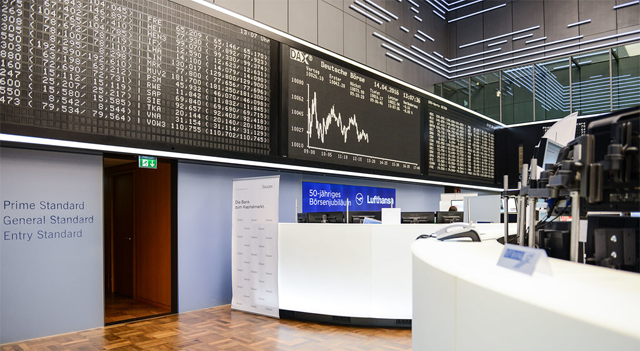
    DAX, CAC, FTSE100, European Stocks Mixed as Rare Earth Dispute and Fed Cut Bets Weigh on Sentiment

    European equity markets posted a mixed performance on Thursday, as investors balanced escalating U.S.-China trade frictions over rare earth export controls against rising expectations of imminent rate cuts from the U.S. Federal Reserve.

    The CAC 40 climbed 0.9%, supported by gains in major French names, while the DAX hovered just below flat and the FTSE 100 slipped 0.2%.

    Among individual movers, Dragerwerk (TG:DRW3) rallied after the German medical and safety technology group upgraded its full-year outlook, buoyed by stronger quarterly results. Sartorius (EU:DIM) also rose sharply after lifting its annual guidance.

    In France, Pernod Ricard (EU:RI) advanced as the spirits group signaled an improved sales outlook for fiscal 2026 following a challenging first quarter.

    Swiss food and beverage giant Nestlé (BIT:1NESN) spiked after unveiling a restructuring plan that includes 16,000 job cuts worldwide over two years, part of a strategy to trim costs and boost revenue.

    Conversely, (LSE:WTB) slumped after reporting a 7% decline in half-year profit, weighing on the FTSE 100.

    The broader market mood remains cautious, with geopolitical risks and monetary policy expectations pulling investor sentiment in opposite directions.

    This content is for informational purposes only and does not constitute financial, investment, or other professional advice. It should not be considered a recommendation to buy or sell any securities or financial instruments. All investments involve risk, including the potential loss of principal. Past performance is not indicative of future results. You should conduct your own research and consult with a qualified financial advisor before making any investment decisions.
    Some portions of this content may have been generated or assisted by artificial intelligence (AI) tools and been reviewed for accuracy and quality by our editorial team.

  • FTSE 100 slips as pound strengthens; modest GDP growth and Whitbread drags

    FTSE 100 slips as pound strengthens; modest GDP growth and Whitbread drags

    U.K. equities edged lower on Thursday afternoon as the pound gained ground against the U.S. dollar, with fresh economic data pointing to a slight rebound in economic activity.

    By 11:44 GMT, the FTSE 100 had dropped 0.3%, while the pound rose 0.2% to trade at 1.34 against the dollar. On the Continent, Germany’s DAX slipped 0.1%, whereas France’s CAC 40 advanced around 1%.

    U.K. economy shows slight uptick

    The U.K. economy returned to modest growth in August, expanding 0.1% month-on-month after stagnating in July, according to figures released by the Office for National Statistics. The improvement comes as Chancellor Rachel Reeves prepares to unveil the autumn budget.

    Corporate highlights: Whitbread weighs on index

    • Whitbread PLC (LSE:WTB) shares fell after the hospitality group released first-half 2026 results. Although adjusted profit before tax came in at £316 million — 4% above consensus estimates of £305 million — the company flagged higher domestic costs and lowered its outlook for Germany. Revenue for the six months to September declined 2% year-on-year to £1.54 billion, slightly exceeding the £1.53 billion expected. Adjusted earnings per share stood at 133.7p, down 2% annually but above the 129p consensus.
    • Travis Perkins PLC (LSE:TPK) delivered a stronger-than-expected performance in Q3, with like-for-like sales rising 1.8% compared to analyst expectations of 0.5%. The Merchanting division grew like-for-like sales by 1.7%, underpinned by a 2.5% increase in volumes, offsetting a 0.8% decline in price and mix.
    • Croda (LSE:CRDA) shares climbed after the chemical producer posted better-than-expected third-quarter results and reiterated its full-year outlook. Group sales reached £425 million versus expectations of £417 million, marking a 4.4% annual increase and 6.5% growth at constant currency, supported by steady demand.

    Regulatory developments

    In regulatory news, the Competition and Markets Authority (CMA) launched a consultation on revised merger remedies guidance. The updated framework aims to increase flexibility while preserving consumer protections, aligning with the CMA’s “4Ps” strategy — pace, predictability, proportionality and process — designed to foster economic growth and boost business confidence.

    This content is for informational purposes only and does not constitute financial, investment, or other professional advice. It should not be considered a recommendation to buy or sell any securities or financial instruments. All investments involve risk, including the potential loss of principal. Past performance is not indicative of future results. You should conduct your own research and consult with a qualified financial advisor before making any investment decisions.
    Some portions of this content may have been generated or assisted by artificial intelligence (AI) tools and been reviewed for accuracy and quality by our editorial team.

  • Endeavour to Announce Its Q3 Results on 13 November 2025

    Endeavour to Announce Its Q3 Results on 13 November 2025

    Endeavour Mining plc (LSE:EDV) expects to release its Q3 2025 financial results on Thursday 13 November 2025, before the LSE market open.

    Management will host a conference call and webcast on the same day, Thursday 13 November, at 8:30 am EST/ 1:30 pm GMT to discuss the Company’s financial results, providing an opportunity for analysts and investors to engage with the management. This announcement is part of Endeavour’s ongoing efforts to maintain transparency with its stakeholders and could impact investor sentiment and market performance.

    The webcast can be accessed here.

    Analysts and investors are invited to participate and ask questions by registering for the conference call dial-in by clicking here.

    The conference call and webcast will be available for playback on Endeavour’s website.

    More about Endeavour Mining

    Endeavour Mining plc is a prominent company in the mining industry, primarily focused on gold production. It operates several mines across West Africa and is listed on the London Stock Exchange, Toronto Stock Exchange, and OTCQX markets.

    This content is for informational purposes only and does not constitute financial, investment, or other professional advice. It should not be considered a recommendation to buy or sell any securities or financial instruments. All investments involve risk, including the potential loss of principal. Past performance is not indicative of future results. You should conduct your own research and consult with a qualified financial advisor before making any investment decisions.
    Some portions of this content may have been generated or assisted by artificial intelligence (AI) tools and been reviewed for accuracy and quality by our editorial team.

  • Campari shares climb as Pernod Ricard delivers upbeat outlook

    Campari shares climb as Pernod Ricard delivers upbeat outlook

    Campari (BIT:CPR) is gaining ground on the Borsa Italiana after Pernod Ricard (EU:RI) published its quarterly results, accompanied by a confident forecast for the months ahead.

    Campari’s stock rose 3% within the first hour of trading, reaching €5.636 — its highest level since last Friday. This rebound helps trim year-to-date losses to around 8%, compared to €6.10 at the start of January.

    Meanwhile in Paris, Pernod Ricard shares are also in the spotlight, up 2% and trading above €85. The world’s second-largest Western spirits producer after Diageo reported revenue of €2.38 billion for its fiscal first quarter, beating consensus expectations. This result came despite a negative currency impact of €143 million and a €54 million perimeter effect linked to the sale of its wine business.

    The French group reaffirmed its expectation of stronger sales for the fiscal year ending June 30, 2026, with growth expected to be concentrated in the second half of the year. It also reiterated its plan to deliver €1 billion in operating efficiencies by 2029, aiming to defend margins and boost cash generation. These forecasts came even as first-quarter sales declined 7.6%, reflecting weak demand and inventory reductions in China and the U.S.

    Pernod Ricard anticipates a recovery in the second half of the year, helped by higher cognac sales in duty-free stores and easier year-on-year comparisons. Still, the group remains cautious about China ahead of the Lunar New Year period in mid-February.

    The company’s performance was dented by a 16% drop in U.S. sales and a 27% fall in China, partly offset by growth in India (+3%) and solid results in Canada, Turkey, Japan, and South Africa. By region, sales declined 12% in the Americas, 7% in Asia and the rest of the world, 4% in Europe, and 15% in Travel Retail.

    “Pernod Ricard’s ‘soft’ results reflect broader inventory reduction trends in the United States and China, confirming the challenging macroeconomic environment for premium spirits at the start of fiscal 2026,” analysts at WebSim Intermonte explained. However, they added, “Pernod’s improved sell-out in the United States and resilience in secondary markets (Canada, Japan, Turkey, South Africa) are encouraging signs that underlying consumer demand remains intact.”

    For Campari, “this could imply a relatively better structure, especially if it is able to record positive organic growth in the same period,” according to the company.

    “Overall, although short-term challenges persist in the US, the medium-term read-across remains positive, with Campari likely to show greater resilience thanks to its diversified mix of brands and geographies,” Intermonte added.

    “Pernod Ricard’s data is weak, although we believe the scenario outlined is already largely priced into the current valuations of the two stocks. Both have been in the red since the beginning of the year and have lost over 60% of their value since their record peak in 2023,” the experts concluded.

    This content is for informational purposes only and does not constitute financial, investment, or other professional advice. It should not be considered a recommendation to buy or sell any securities or financial instruments. All investments involve risk, including the potential loss of principal. Past performance is not indicative of future results. You should conduct your own research and consult with a qualified financial advisor before making any investment decisions.
    Some portions of this content may have been generated or assisted by artificial intelligence (AI) tools and been reviewed for accuracy and quality by our editorial team.

  • Rare Earths Dispute Intensifies as U.S. and China Exchange Accusations

    Rare Earths Dispute Intensifies as U.S. and China Exchange Accusations

    The standoff between Washington and Beijing over rare earth exports escalated on Thursday, as Chinese state media pushed back forcefully against U.S. criticism of Beijing’s latest export controls.

    In a detailed response, Chinese outlets released a seven-point rebuttal to U.S. demands to scrap the new restrictions, which are set to take effect on November 8. The exchange underscores deepening tensions between the world’s two largest economies as they edge closer to a high-stakes meeting between their leaders.

    U.S. Trade Representative Jamieson Greer on Wednesday called China’s new rare earth export restrictions “a global supply-chain power grab,” suggesting that Beijing could defuse President Donald Trump’s threat to reimpose triple-digit tariffs on Chinese goods by abandoning the measures.

    Beijing insists it gave advance notice to Washington and argues the new licensing system is aligned with export control standards “long in place in other major economies.”

    The current war of words has been simmering since a September phone call between Trump and Xi Jinping, after which both sides accused each other of inflaming tensions ahead of their anticipated bilateral meeting.

    Beijing attributes the rising hostility to the U.S. Commerce Department’s surprise expansion of its Entity List in late September, targeting Chinese and foreign companies allegedly bypassing U.S. export controls on chipmaking tools and other advanced technologies.

    Washington, meanwhile, points to Beijing’s new critical minerals measures, which Trump described as “shocking,” as the trigger for the escalation.

    “The United States has long overstated national security concerns and abused controls, adopting discriminatory practices against China,” stated one of the seven infographics published by People’s Daily, the official newspaper of the ruling Communist Party. It also highlighted that Washington maintains a control list of over 3,000 items, compared to roughly 900 on China’s list.

    “Implementing such export controls is consistent with international practice,” the same poster emphasized, reiterating Beijing’s justification for the move.

    Washington itself has enforced similar export control measures since the 1950s and has increasingly used them to block foreign semiconductor firms from supplying Chinese customers with U.S.-origin technology.

    “Washington should not be surprised by China’s ’tit-for-tat’,” argued an editorial in Global Times, a tabloid affiliated with People’s Daily and often a bellwether for Beijing’s next steps.

    “The sudden shift in the trade atmosphere caught many by surprise, yet that’s not surprising,” the editorial continued.

    “The direct trigger for this round of tension was Washington’s breach of promises – an all-too familiar pattern.”

    This content is for informational purposes only and does not constitute financial, investment, or other professional advice. It should not be considered a recommendation to buy or sell any securities or financial instruments. All investments involve risk, including the potential loss of principal. Past performance is not indicative of future results. You should conduct your own research and consult with a qualified financial advisor before making any investment decisions.
    Some portions of this content may have been generated or assisted by artificial intelligence (AI) tools and been reviewed for accuracy and quality by our editorial team.
  • Dollar Weakens on Fed Cut Bets as Euro Hits One-Week Peak

    Dollar Weakens on Fed Cut Bets as Euro Hits One-Week Peak

    The U.S. dollar edged lower in early Thursday trading, weighed down by growing market expectations of additional interest rate cuts by the Federal Reserve, while signs of easing political tensions in France pushed the euro to its highest level in a week.

    At 04:45 ET (08:45 GMT), the U.S. Dollar Index — which measures the greenback against six major currencies — was down 0.2% at 98.342, putting it on track for a weekly loss of around 0.3%.

    Markets Brace for More Fed Easing

    Investors are increasingly confident that the U.S. central bank will follow its recent rate cut with further monetary easing, as data continues to point to slower economic growth.

    Fed Chair Jerome Powell warned earlier this week that the U.S. labor market is under mounting strain, stating that “the downside risks to employment have risen.”

    The Fed’s Beige Book — a closely watched economic survey — also highlighted a slight loss of momentum across the U.S. economy over the past eight weeks.

    “Last night’s release of the Fed’s Beige Book suggests the Fed will have enough evidence to cut rates at the end of the month – even if official data releases remain suspended because of the government shutdown,” analysts at ING said in a note.

    Futures markets now fully price in a 25 basis-point cut at the Fed’s October 28–29 meeting and another in December, with three more cuts expected in 2026, according to LSEG data.

    Last month, the Fed lowered its benchmark rate for the first time since December, bringing the federal funds target range down to 4.00%–4.25%.

    Traders are also keeping a close eye on the trade standoff between Washington and Beijing, ahead of a meeting between Presidents Donald Trump and Xi Jinping at the APEC summit in South Korea at the end of October.

    “The question for financial markets is whether China’s proposed export controls on rare earths are merely part of a bargaining ploy to achieve greater concessions from the U.S. Or really whether it is a threat which would stick and greatly disrupt global supply chains, given rare earths’ role in products like semiconductors,” ING added.

    Euro Strengthens on French Political Relief

    The euro traded higher, with EUR/USD climbing 0.1% to 1.1659 — its strongest level in a week — after signs that French Prime Minister Sébastien Lecornu is likely to survive two no-confidence votes later Thursday by agreeing to delay pension reform, a key demand from the Socialist Party.

    “The euro and French government bonds see this as good news for the short term, although for the longer term the reversal of pension reforms merely makes the job of fiscal consolidation that much harder,” ING said.

    “It’s hard to see EUR/USD breaking above the 1.1685/1730 area in the near term. However, the longer EUR/USD can consolidate here, the closer it comes to the seasonally bullish period of November and especially December. We retain a 1.20 year-end call.”

    Sterling Rises as U.K. Returns to Growth

    GBP/USD advanced 0.3% to 1.3436 after fresh data showed a slight rebound in the British economy in August. According to the Office for National Statistics, U.K. GDP grew by 0.1% month-on-month, following flat growth in July.

    Yen Advances on Political Uncertainty

    USD/JPY slipped marginally to 151.06 as doubts grew over the leadership of Sanae Takaichi. Although Takaichi was elected head of the ruling Liberal Democratic Party (Japan), opposition parties are reportedly considering putting forward their own prime ministerial candidate.

    Takaichi’s path to leadership has also been complicated by the sudden withdrawal of coalition partner Komeito last week.

    USD/CNY eased slightly to 7.1253 as the Chinese currency stabilized, supported by a series of strong midpoint fixes by the People’s Bank of China.

    Trade tensions remain a key factor after Trump recently threatened to impose 100% tariffs on Chinese imports.

    Aussie Falls After Weak Jobs Report

    AUD/USD dipped 0.1% to 0.6503 after September labor data disappointed. Australian employment growth came in below expectations, and unemployment unexpectedly rose to a four-year high, with August figures revised downward.

    The weak report reinforced bets that the Reserve Bank of Australia may move to cut rates in early November in an effort to stabilize the labor market.

    This content is for informational purposes only and does not constitute financial, investment, or other professional advice. It should not be considered a recommendation to buy or sell any securities or financial instruments. All investments involve risk, including the potential loss of principal. Past performance is not indicative of future results. You should conduct your own research and consult with a qualified financial advisor before making any investment decisions.
    Some portions of this content may have been generated or assisted by artificial intelligence (AI) tools and been reviewed for accuracy and quality by our editorial team.

  • Gold Extends Record-Breaking Rally Past $4,200 as Traders Bet on Fed Cuts

    Gold Extends Record-Breaking Rally Past $4,200 as Traders Bet on Fed Cuts

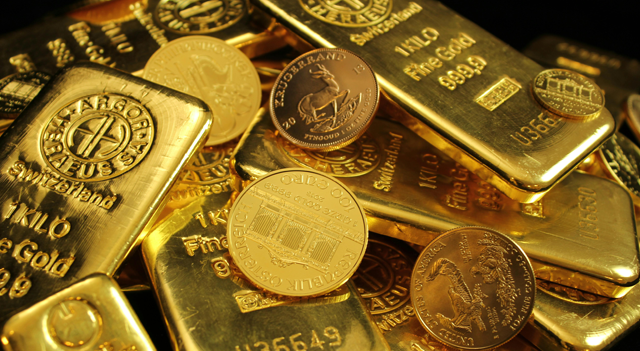
    Gold prices surged to fresh all-time highs in Asian trading on Thursday, extending their winning streak to a fourth consecutive session. Rising expectations of U.S. Federal Reserve interest rate cuts, heightened U.S.-China trade tensions, and lingering political uncertainty drove investors toward the safe-haven asset.

    Spot gold advanced 0.7% to $4,237.87 an ounce at 00:25 ET (04:25 GMT), after briefly touching $4,241.99 earlier in the session. U.S. Gold Futures climbed 1.2% to $4,252.59. So far this week, the metal has rallied more than 5%, continuing a powerful uptrend that began in early October.

    Fed Policy Bets and Geopolitical Frictions Lift Gold

    Market participants are now almost fully pricing in a 25 basis-point rate cut from the Fed in October, with another expected in December, following a more dovish tone from Chair Jerome Powell earlier this week.

    The Federal Reserve’s Beige Book, released Wednesday, signaled that “U.S. economic activity was little changed in recent weeks,” with many firms citing weaker demand and persistent cost pressures. It also pointed to “early signs of cooling” in the labor market.

    This more muted outlook reinforced expectations of a Fed pivot to support growth, which typically boosts gold’s appeal as yields retreat.

    Rising trade tensions between Washington and Beijing also supported demand, after the U.S. threatened new tariffs on Chinese-made goods and China responded with expanded export controls on rare earth materials. This renewed friction raised concerns about a wider trade conflict, prompting a flight to safe-haven assets.

    Meanwhile, the prolonged U.S. government shutdown—now entering its third week—has added to investor anxiety, delaying key economic data and amplifying fiscal concerns.

    ANZ Sees Prices Reaching $4,400 by Year-End

    Analysts at ANZ said gold’s upward momentum could continue in the coming months, supported by ongoing geopolitical risks and monetary easing by the Fed.

    “While comparisons are being made to the 1980’s price peak, the current price rise is underpinned by structural drivers, indicating that elevated prices will likely sustain,” analysts wrote.

    They forecast that gold could climb to $4,400 an ounce by the end of 2025 and reach a peak of around $4,600 by mid-2026 before easing in the latter half of that year.

    Other Metals Trade in Tight Ranges

    Elsewhere, movements in other precious and base metals were muted despite a weaker U.S. dollar.

    Silver rose 0.3% to $53.13 per ounce, just below this week’s record highs of $53.6, while Silver Futures gained more than 1%. “The factors driving gold are also supporting silver’s momentum. Investors who missed the rally in gold prices are now turning their attention to the white metal for exposure,” ANZ analysts added.

    Platinum Futures were steady at $1,698.00 per ounce.

    On the base metals side, Benchmark Copper Futures on the London Metal Exchange held flat at $10,616.20 a ton, while U.S. Copper Futures rose 0.2% to $4.98 a pound.

    This content is for informational purposes only and does not constitute financial, investment, or other professional advice. It should not be considered a recommendation to buy or sell any securities or financial instruments. All investments involve risk, including the potential loss of principal. Past performance is not indicative of future results. You should conduct your own research and consult with a qualified financial advisor before making any investment decisions.
    Some portions of this content may have been generated or assisted by artificial intelligence (AI) tools and been reviewed for accuracy and quality by our editorial team.

  • Oil Prices Climb After Trump Says India Will Halt Russian Purchases

    Oil Prices Climb After Trump Says India Will Halt Russian Purchases

    Oil prices advanced on Thursday, climbing around 1%, after U.S. President Donald Trump said that Indian Prime Minister Narendra Modi had pledged to stop buying oil from Russia — a move that could tighten supplies in other markets.

    Brent crude futures rose 56 cents, or 0.9%, to $62.47 a barrel by 06:55 GMT, while U.S. West Texas Intermediate (WTI) futures increased 58 cents, or 1%, to $58.85.

    Market Background and Geopolitics

    Both oil benchmarks had touched their lowest levels since early May in the previous session, weighed down by renewed U.S.-China trade tensions and a warning from the International Energy Agency (IEA) about a potential supply glut in 2026 as OPEC+ and its competitors increase output amid weakening demand.

    Trump said on Wednesday that India — which relies on Russia for about one-third of its oil imports — would halt purchases from Moscow. He added that the U.S. would next aim to convince China to do the same, as Washington steps up its efforts to choke off Russia’s energy revenues and push for a negotiated peace agreement in Ukraine.

    India’s Response and Supply Implications

    India’s foreign ministry responded Thursday, emphasizing that the country’s “two main goals were to ensure stable energy prices and secure supply,” but made no reference to Trump’s comments.

    According to three sources cited by Reuters, some Indian refiners are already preparing to reduce imports of Russian crude gradually.

    U.S. Treasury Secretary Scott Bessent also said Wednesday that he had told Japanese Finance Minister Katsunobu Kato the Trump administration expects Japan to follow suit and stop importing Russian energy.

    India and China remain the two largest buyers of Russian seaborne crude, which has been sanctioned by the U.S. and EU. Modi has for months pushed back against U.S. pressure, arguing that Russian oil imports are essential for India’s energy security.

    “At the margin, this is a positive development for the crude oil price as it would remove a big buyer (India) of Russian oil,” said Tony Sycamore, market analyst at IG Group.

    Sanctions and Inventory Data in Focus

    The U.K. government also unveiled a fresh round of sanctions targeting Rosneft and Lukoil, two of Russia’s largest energy producers. The measures affect four oil terminals, Chinese private refiner Shandong Yulong Petrochemical, 44 “shadow fleet” tankers carrying Russian oil, and Nayara Energy Limited, a Russian-owned refinery in India.

    Later in the day, markets will turn their attention to U.S. stockpile figures from the U.S. Energy Information Administration (EIA), following mixed data earlier this week from the American Petroleum Institute (API).

    API data showed U.S. crude inventories rising by 7.36 million barrels in the week ending October 10, gasoline stocks up by 2.99 million barrels, and distillate inventories down by 4.79 million barrels. While falling distillate stocks hint at stronger diesel demand, the increase in crude and gasoline supplies points to continued weakness in overall U.S. fuel consumption.

    Analysts currently expect U.S. crude inventories to have increased by roughly 0.3 million barrels last week.

    This content is for informational purposes only and does not constitute financial, investment, or other professional advice. It should not be considered a recommendation to buy or sell any securities or financial instruments. All investments involve risk, including the potential loss of principal. Past performance is not indicative of future results. You should conduct your own research and consult with a qualified financial advisor before making any investment decisions.
    Some portions of this content may have been generated or assisted by artificial intelligence (AI) tools and been reviewed for accuracy and quality by our editorial team.

  • Dow Jones, S&P, Nasdaq, Wall Street Futures, TSMC Earnings Smash Records, Oracle Analyst Day in Focus, Gold Hits New Peak

    Dow Jones, S&P, Nasdaq, Wall Street Futures, TSMC Earnings Smash Records, Oracle Analyst Day in Focus, Gold Hits New Peak

    U.S. equity futures moved slightly higher early Thursday, as strong corporate results and renewed geopolitical tensions shaped sentiment across global markets. Chipmaking giant Taiwan Semiconductor Manufacturing Company (NYSE:TSM) delivered a record-breaking third quarter on booming AI demand, while Oracle Corporation (NYSE:ORCL) prepared to give updated guidance at its closely watched analyst meeting. Meanwhile, gold climbed to another all-time high.

    Futures Edge Higher

    By 02:51 ET, Dow futures were up 58 points (0.1%), S&P 500 futures gained 12 points (0.2%), and Nasdaq 100 futures added 88 points (0.4%).

    On Wednesday, the S&P 500 and the Nasdaq Composite advanced, while the Dow Jones Industrial Average slipped slightly, as early gains softened throughout the session. Markets were digesting upbeat earnings from ASML Holding N.V., Bank of America, and Morgan Stanley.

    Geopolitical tensions also remained in the spotlight. A report in the The Wall Street Journal suggested Beijing is “willing to hold a firmer line” in negotiations with Washington, expecting that sustained uncertainty could pressure markets and push President Donald Trump toward a deal.

    U.S. Treasury Secretary Scott Bessent said that “equity volatility would not alter the Trump administration’s stance” but emphasized that the White House does not seek to escalate tensions further. He added that Trump remains open to meeting President Xi Jinping in South Korea later this month.

    TSMC Posts Record Q3 Profit

    Taiwan Semiconductor Manufacturing Company reported its highest-ever third-quarter profit, powered by surging demand for AI chips.

    The chipmaker — which counts Nvidia Corporation (NASDAQ:NVDA) and Apple Inc. (NASDAQ:AAPL) among its key clients — posted a net profit of T$452.30 billion ($14.75 billion) for the three months ended September 30, surpassing the T$417.7 billion estimate from Reuters/LSEG.

    Revenue rose 30% year-on-year to T$989.92 billion ($32.30 billion), while gross margin reached 59.5%. TSMC forecast that AI-driven demand would accelerate further, projecting current-quarter revenue growth of up to 24%. It also reaffirmed its capital spending outlook of up to $42 billion in 2025, despite potential tariff and currency risks.

    Oracle Analyst Meeting in Spotlight

    Oracle Corporation will meet with analysts Thursday during the final day of its AI conference in Las Vegas.

    Analysts at Vital Knowledge said they expect the company to issue fresh financial guidance, noting that “the real focus will be on margins and cash flow.” Oracle’s dual CEOs recently reaffirmed their commitment to massive data center investments, telling the Wall Street Journal that these are crucial to “bolster the computing capacity needed to make AI models more useful for businesses.”

    Earlier this week, Oracle announced that its cloud services would be powered by Advanced Micro Devices’ (NASDAQ:AMD) upcoming MI450 AI chips. Last month, the company’s shares jumped after revealing an additional $317 billion in future contract revenue, much of it linked to its deal with OpenAI.

    Philly Fed Data Ahead

    Investors will also be watching Thursday’s release of the Federal Reserve Bank of Philadelphia manufacturing index, expected to come in at 8.6 in October, down from 23.2 in September. A positive reading still signals expansion.

    The prolonged U.S. government shutdown has delayed the publication of key economic reports, pushing policymakers to rely on alternative indicators. On Wednesday, the Fed’s “Beige Book” showed little change in economic activity and stable employment, but highlighted signs of “increased layoffs and a pullback in spending by lower- and middle-class households.”

    Gold Hits Another Record

    Gold prices extended their rally to fresh record highs, lifted by rising expectations of rate cuts from the Federal Reserve System and escalating U.S.-China tensions.

    Spot gold gained 0.5% to $4,230.48 per ounce by 03:48 ET, after touching $4,241.99 earlier in the session. U.S. gold futures climbed 1.0% to $4,244.71. The metal has surged more than 6% over the past week.

    Markets are pricing in a near-certain 25 basis-point cut in October, followed by another in December, after Fed Chair Jerome Powell adopted a more dovish tone this week. Lower interest rates typically boost demand for non-yielding assets like gold.

    This content is for informational purposes only and does not constitute financial, investment, or other professional advice. It should not be considered a recommendation to buy or sell any securities or financial instruments. All investments involve risk, including the potential loss of principal. Past performance is not indicative of future results. You should conduct your own research and consult with a qualified financial advisor before making any investment decisions.
    Some portions of this content may have been generated or assisted by artificial intelligence (AI) tools and been reviewed for accuracy and quality by our editorial team.