Blog

  • Dowlais Signals 2025 Results Ahead of Guidance as Margins and Cash Generation Improve

    Dowlais Signals 2025 Results Ahead of Guidance as Margins and Cash Generation Improve

    Dowlais Group plc (LSE:DWL) said its trading performance in 2025 is expected to come in ahead of previous guidance, supported by stronger margins and improved cash flow. Based on unaudited figures, the group anticipates adjusted revenue of approximately £5 billion, reflecting year-on-year growth of 3.1% at constant exchange rates and 1.3% on a reported basis, after accounting for foreign exchange headwinds.

    Adjusted operating profit is forecast to be at least £370 million, representing a 14% increase year on year. This is expected to translate into an adjusted operating margin of no less than 7.4%, marking an improvement of at least 80 basis points. Both the Automotive and Powder Metallurgy divisions contributed to the margin expansion, highlighting broad-based operational progress across the group.

    Management said the improved profitability reflects the benefits of global footprint restructuring, commercial recoveries following earlier volume losses and ongoing performance improvement initiatives. These gains more than offset operational inefficiencies experienced at two North American facilities. In addition, adjusted free cash flow is expected to reach at least £100 million, exceeding the prior year, supported by higher operating profit, reduced capital expenditure and one-off cash inflows from asset disposals and customer advance payments.

    While the company has faced financial pressures historically, including revenue declines and operational losses, recent trading momentum has been more encouraging. The shares have shown positive technical trends, and a series of strategic corporate developments — including board-level changes and potential consolidation opportunities — are viewed as supportive of the longer-term outlook. A relatively high dividend yield also remains a point of interest for income-focused investors.

    More about Dowlais Group PLC

    Dowlais Group plc is a specialist engineering group serving the global automotive industry through its Automotive and Powder Metallurgy segments. The company supplies engineered components and systems to vehicle manufacturers worldwide, with a strategic focus on improving operational efficiency, optimising its global manufacturing footprint and delivering sustainable margin improvement across its core businesses.

  • Harworth Delivers £110m FY2025 Sales as Portfolio Continues Shift Toward Prime Industrial Assets

    Harworth Delivers £110m FY2025 Sales as Portfolio Continues Shift Toward Prime Industrial Assets

    Harworth Group (LSE:HWG) reported headline sales of £110.2 million for FY2025, supported by 25 completed transactions covering £58.2 million of industrial and logistics disposals and £52.0 million of residential plot sales. Activity took place against a challenging macroeconomic backdrop, with a delayed UK Budget pushing a number of transactions toward the latter part of the financial year.

    During the period, the group sold five core industrial and logistics investment assets with a combined area of 0.8 million square feet for £47.7 million. These disposals were completed at a blended net initial yield of 7.6% and at prices above mid-2025 book values. As a result, the proportion of the investment portfolio classified as Grade A assets increased to 75% by value, reflecting Harworth’s ongoing focus on upgrading portfolio quality.

    In the residential segment, Harworth disposed of 1,837 plots, broadly in line with historic sales volumes. However, these transactions were completed at a discount to book value, highlighting the impact of current market conditions. Management reiterated its disciplined capital recycling approach, with a continued focus on keeping leverage below 20% and increasing the weighting of industrial and logistics assets to around 85% of the portfolio over time. The group also indicated that reinvestment into higher-quality development opportunities remains central to driving future growth and further portfolio enhancement.

    From a financial standpoint, Harworth’s performance benefited from solid revenue growth and improved profitability, underpinning a positive investment case. Valuation metrics remain supportive, with a reasonable earnings multiple and an attractive dividend yield, while recent corporate activity has reinforced confidence in the company’s strategic direction.

    That said, technical indicators point to broadly neutral share price momentum, and cash flow dynamics continue to represent an area for improvement as the group executes its long-term strategy.

    More about Harworth

    Harworth Group plc is a UK-based regeneration specialist, strategic landowner and developer focused on the industrial & logistics and residential sectors. The company owns, develops and manages more than 15,000 acres across over 100 sites across the North of England and the Midlands, transforming large, complex sites into modern industrial and logistics developments and serviced land for residential use, with a long-term focus on creating sustainable places, jobs and communities.

  • Panthera Resources Reports High-Grade Gold Results at Burkina Faso’s Bido Project

    Panthera Resources Reports High-Grade Gold Results at Burkina Faso’s Bido Project

    Panthera Resources (LSE:PAT) announced encouraging maiden reverse circulation drilling results from the Kwademen prospect at its Bido Project in Burkina Faso, confirming previously identified gold mineralisation and delivering multiple high-grade intercepts within wider mineralised intervals. The company said these zones remain open along strike and at depth, underscoring further exploration upside.

    The results follow Panthera’s completion of its earn-in, securing an 80% interest in the Bido Project, with the option to increase ownership to 100% through additional exploration expenditure. Management noted that the drilling programme was completed despite weather-related delays and technical challenges, with outcomes reinforcing the project’s potential within a well-established gold belt. The company also highlighted the strategic benefit of operating in a strong gold price environment, supported by capped royalty obligations payable to the vendor.

    From a market perspective, Panthera’s near-term outlook continues to be constrained by weak financial metrics, including the absence of revenue, ongoing operating losses and continued cash outflows, albeit alongside a relatively low level of debt. Share price technicals offer moderate support, with the stock trading above longer-term moving averages and momentum indicators broadly neutral.

    Valuation remains less compelling due to a negative earnings profile and the lack of dividend yield. That said, ongoing project advancement and recent improvements in liquidity provide some upside optionality, although this is balanced by residual arbitration-related risk.

    More about Panthera Resources Plc

    Panthera Resources Plc is a gold exploration and development company listed on AIM, with a strategic focus on advancing gold assets in West Africa and India. Its portfolio includes the Bido Project in Burkina Faso, where the company is progressing exploration activities toward potential resource definition within a highly prospective gold belt.

  • WH Smith Names Turnaround Specialist Leo Quinn as Executive Chairman to Lead Next Growth Phase

    WH Smith Names Turnaround Specialist Leo Quinn as Executive Chairman to Lead Next Growth Phase

    WH Smith PLC (LSE:SMWH) said it plans to appoint seasoned UK business leader Leo Quinn as Executive Chairman from 7 April 2026, subject to shareholder approval, as the retailer seeks to rebuild momentum and deliver sustainable long-term growth. Quinn will take over from Annette Court, who will step down following the company’s annual general meeting on 2 February 2026, with Senior Independent Director Simon Emeny acting as interim non-executive Chairman in the transition period.

    Quinn brings more than two decades of experience running large, publicly listed companies, having previously led groups including Balfour Beatty, QinetiQ and De La Rue. His appointment is positioned as a deliberate move by the board to strengthen strategic execution and accelerate a broader turnaround, drawing on his track record in complex operational and financial restructurings.

    To closely align his interests with those of shareholders, Quinn has committed to invest £2 million of his own capital in WH Smith shares. In addition, he will receive a performance-based share award valued at £12.25 million at grant, which could rise to twice that level if the company’s share price doubles over a five-year period. The incentive structure is designed to drive substantial shareholder value creation, potentially adding around £800 million to the company’s market capitalisation if targets are met.

    Despite the leadership change, WH Smith continues to face near-term challenges. Recent performance has been weighed down by declining revenue, pressure on margins and a net loss, alongside a highly leveraged balance sheet. Negative technical indicators have also contributed to cautious market sentiment.

    These headwinds are partly offset by resilient cash generation and an attractive dividend yield. Management guidance for FY26 points to a return to growth and improved profitability, although execution risks — particularly around regulation and North American operations — remain key considerations for investors.

    More about WH Smith

    WH Smith PLC is a global travel retailer with operations across airports, railway stations and other transport hubs worldwide. The group sells books, newspapers, magazines, convenience items and travel essentials, leveraging its well-known brand and long-standing retail heritage to expand its travel-focused business model.

  • Wall Street Futures Signal Modest Gains at the Open: Dow Jones, S&P, Nasdaq

    Wall Street Futures Signal Modest Gains at the Open: Dow Jones, S&P, Nasdaq

    U.S. equity index futures were pointing to a slightly higher start on Friday, suggesting stocks could build on the rebound recorded in the previous session.

    Markets may continue to find support from Thursday’s upward move, which was fueled by a positive response to earnings from companies including Taiwan Semiconductor (NYSE:TSM), Goldman Sachs (NYSE:GS) and Morgan (NYSE:MS).

    Even so, buying appetite could remain restrained as investors stay alert to mounting geopolitical risks around the globe.

    President Donald Trump’s remarks about taking control of Greenland remain in focus, particularly after European troops arrived in the territory as a show of backing.

    Traders are also closely tracking developments in Venezuela, unrest in Iran, and the ongoing conflict between Russia and Ukraine.

    After posting solid gains for much of Thursday’s session, equities pared some of their advances later in the day but still finished largely higher.

    All three major indexes closed in positive territory, recovering part of the losses seen over the prior two sessions.

    The Dow rose 292.81 points, or 0.6%, to 49,442.44, the Nasdaq added 58.27 points, or 0.3%, to 23,530.02, and the S&P 500 climbed 17.87 points, or 0.3%, to 6,944.47.

    Early momentum on Wall Street was driven in part by strong interest in Taiwan Semiconductor (TSM), whose shares surged 4.4% following upbeat earnings.

    The chipmaker rallied after reporting a sharp rise in fourth-quarter profits and unveiling capital expenditure plans that topped expectations, bolstering confidence in the artificial intelligence theme.

    “After last week’s revenue update it was an open secret that TSMC would be reporting a record quarter but the details are still striking,” said Russ Mould, investment director at AJ Bell.

    “Not least the levels of capital expenditure TSMC is committing to, suggesting it is fully confident the AI boom has legs,” he added. “This is underlined by the company’s guidance for 30% growth in 2026.”

    Sentiment also received a boost from U.S. labor market data, after the Labor Department reported an unexpected drop in first-time unemployment claims for the week ended January 10.

    According to the Labor Department, initial jobless claims declined to 198,000, down 9,000 from the previous week’s revised figure of 207,000.

    Economists had forecast claims would rise to 215,000 from the previously reported 208,000.

    Airline stocks were among the strongest performers, with the NYSE Arca Airline Index jumping 2.6%.

    Semiconductor stocks also remained firm more broadly, as reflected by a 1.8% gain in the Philadelphia Semiconductor Index.

    Financials, networking, and utilities also posted solid advances, while pharmaceutical, oil, and biotechnology stocks lagged behind.

  • European Stocks Slip on Greenland Concerns, Economic Updates: DAX, CAC, FTSE100

    European Stocks Slip on Greenland Concerns, Economic Updates: DAX, CAC, FTSE100

    European equity markets traded mostly lower on Friday as investors weighed fresh geopolitical developments alongside a mixed batch of economic data and corporate news.

    Concerns surrounding Greenland resurfaced after media reports indicated that European troops have begun arriving in the territory amid what has been described as a credible U.S. military threat.

    The deployment, involving forces from several European nations and other North Atlantic Treaty Organization allies, was announced after high-level talks between Danish and U.S. officials ended without agreement on Thursday.

    On the economic front, data released earlier in the day showed that German harmonized inflation slowed toward the 2% target at the end of last year.

    According to final figures from Destatis, the harmonized index of consumer prices rose 2.0% year over year in December, easing from a 2.6% increase in November. The statistical office confirmed the December reading that had been published on January 6.

    Similarly, headline consumer price inflation moderated to 1.8% from 2.3% in each of the prior two months. The latest figure marked the slowest pace since September 2024 and was in line with the preliminary estimate.

    In market performance, France’s CAC 40 was down 0.6%, Germany’s DAX slipped 0.3%, and the U.K.’s FTSE 100 eased 0.1%.

    Shares of gold producer Fresnillo (LSE:FRES) declined as easing geopolitical tensions pressured gold prices.

    Banking heavyweight HSBC (LSE:HSBA) also traded lower after announcing a strategic review of its insurance business in Singapore.

    In contrast, shares of Kloeckner & Co. (TG:KCO) surged after Worthington Steel (NYSE:WS) said it would acquire the German steel processor in a deal valued at $2.4 billion.

  • Oil prices tick higher as traders weigh supply concerns

    Oil prices tick higher as traders weigh supply concerns

    Oil prices edged up on Friday as traders continued to assess potential supply-side risks, even as the likelihood of a U.S. military strike on Iran appeared to diminish.

    Brent crude rose 5 cents, or 0.1%, to $63.81 a barrel, while U.S. West Texas Intermediate added 8 cents, or 0.1%, to $59.27 a barrel by 0749 GMT.

    Earlier in the week, both benchmarks climbed to multi-month highs after protests intensified in Iran and U.S. President Donald Trump hinted at possible strikes against the country. Despite some easing since then, Brent remained on course for a fourth consecutive weekly increase.

    “Given the potential political upheaval in Iran, oil prices are likely to experience greater volatility as markets digest the potential for supply disruptions,” BMI analysts said in a note to clients.

    Late on Thursday, Trump said that Tehran’s crackdown on protesters appeared to be easing, which helped calm fears of military action that could threaten oil supplies.

    “While (Iranian supply) risks have eased somewhat, they remain significant, keeping the market nervous in the short term,” IG analysts said in a client note.

    “Any escalation with Iran will also raise concerns about potential disruption to oil flows through the Strait of Hormuz, a chokepoint where around 20m b/d passes,” they added.

    Even so, analysts remained cautious about the broader supply outlook for the rest of the year, despite earlier expectations from OPEC that the market would remain balanced.

    “Sentiment is driving markets, but the impact of headlines is always short-lived, especially when fundamentals look comfortable in the backseat,” said Phillip Nova senior market analyst Priyanka Sachdeva.

    “Despite the steady drumbeat of geopolitical risks and macro speculation, the underlying balance still points to ample supply … unless we see a genuine revival in Chinese demand or a meaningful bottleneck in physical barrel flows, oil looks range-bound, with Brent broadly hovering between $57 and $67.”

    On Wednesday, OPEC said global oil supply and demand are expected to stay balanced in 2026, with demand growth in 2027 projected to match this year’s pace.

    Looking ahead, market participants expect near-term price action to remain driven by geopolitical developments and macroeconomic signals.

    Immediate catalysts for the oil market are likely to include developments in Iran and the release of key Chinese economic data next week, said OANDA senior market analyst Kelvin Wong, who added that WTI crude is expected to trade sideways in the near term within a $55.75 to $63.00 per barrel range.

  • Gold holds near recent highs after upbeat U.S. jobs data; weekly advance still likely

    Gold holds near recent highs after upbeat U.S. jobs data; weekly advance still likely

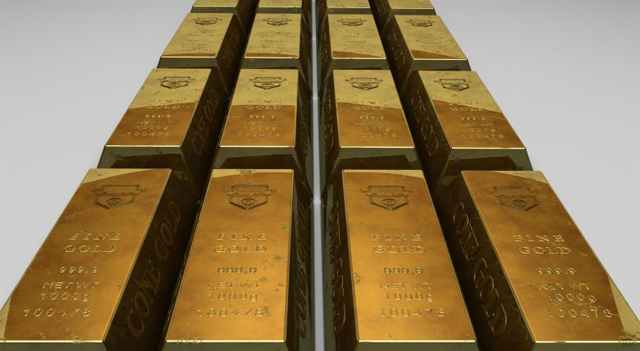
    Gold prices were little changed on Friday, hovering below the record levels reached earlier in the week, as upbeat U.S. labor market data reduced expectations for near-term interest rate cuts by the Federal Reserve. At the same time, easing geopolitical concerns tied to Iran diminished demand for safe-haven assets.

    Spot gold slipped 0.1% to $4,608.55 an ounce by 02:11 ET (07:11 GMT), while U.S. Gold Futures eased 0.2% to $4,611.10.

    The precious metal has pulled back from Wednesday’s all-time high of $4,642.72 per ounce. Despite the mild retreat, gold remained on course to post a weekly gain of around 2%.

    Strong U.S. data reshapes rate expectations

    Market sentiment shifted after fresh data showed that initial jobless claims in the United States fell more than anticipated last week, highlighting the continued strength of the labor market.

    The stronger-than-expected figures reinforced the view that the Federal Reserve could keep borrowing costs elevated for longer, prompting investors to push back expectations for interest rate cuts later this year.

    Higher interest rates generally weigh on assets like gold that do not offer yield, as they increase the opportunity cost of holding bullion.

    Following the data release, the U.S. Dollar Index climbed to its highest level in six weeks against a basket of major currencies, adding further pressure to gold by making it more expensive for overseas buyers.

    Reduced Iran risks limit safe-haven demand

    Gold had rallied earlier in the week as investors sought shelter amid heightened geopolitical uncertainty linked to unrest in Iran.

    Widespread protests and government crackdowns had raised fears of escalation and potential supply disruptions, supporting demand for precious metals.

    However, those concerns eased after U.S. President Donald Trump softened his previously hawkish stance on possible military intervention, signaling a more cautious approach and citing reports that violent crackdowns on demonstrators may be subsiding.

    Broader metals weaken

    Other precious and industrial metals traded lower on Friday, weighed down by the stronger U.S. dollar.

    Silver fell 1.7% to $90.87 per ounce, while platinum futures dropped 2.1% to $2,361.31 per ounce.

    In base metals, benchmark copper futures on the London Metal Exchange declined 1.7% to $12,907.20 a ton, while U.S. copper futures slid 1.8% to $5.88 a pound.

  • U.S. futures advance as TSMC results reinforce AI optimism; banks set to report: Dow Jones, S&P, Nasdaq, Wall Street

    U.S. futures advance as TSMC results reinforce AI optimism; banks set to report: Dow Jones, S&P, Nasdaq, Wall Street

    Futures tied to major U.S. equity benchmarks edged higher after Taiwan Semiconductor Manufacturing Co. (NYSE:TSM) delivered strong earnings that lifted market sentiment in the previous session. Shares of the world’s largest contract chipmaker rose in Taiwan trading, while investors prepared for a fresh wave of quarterly results from U.S. banks. In commodities, gold eased back from record levels and oil prices stabilized following sharp recent declines.

    Futures move higher

    U.S. stock futures pointed upward early Friday as enthusiasm surrounding artificial intelligence gained renewed traction following TSMC’s blowout earnings earlier in the week.

    At 03:03 ET, Dow futures were up 88 points, or 0.2%, S&P 500 futures rose 25 points, or 0.4%, and Nasdaq 100 futures advanced 138 points, or 0.5%.

    Wall Street’s main indexes surged on Thursday, with TSMC’s earnings acting as a catalyst for gains across AI-related stocks such as Nvidia, Applied Materials, and Advanced Micro Devices, alongside European counterparts including ASM International and ASML.

    That said, analysts at Vital Knowledge noted that momentum cooled from intraday highs, as several long-established software companies — including Salesforce — came under pressure due to “ongoing ripple effects” stemming from the introduction of new AI products by firms such as Anthropic and Alibaba.

    U.S. economic data released during the session was broadly supportive, but also pushed interest rate expectations in a more hawkish direction. Markets have increasingly priced in that the Federal Reserve’s next rate cut may not occur until July, a shift that helped drive bond yields higher.

    Geopolitical factors also lingered in the background. Comments from U.S. President Donald Trump suggesting that tensions with Iran were easing weighed on oil prices, even as new friction emerged in Greenland, where several NATO countries have deployed troops following claims from the White House that the United States “needs” to acquire the semi-autonomous Danish territory.

    TSMC gains in Taipei

    Shares of TSMC climbed in Taipei on Friday after the company reported stronger-than-expected quarterly results and reiterated robust demand from the artificial intelligence sector.

    The stock rose nearly 3% to close at T$1,740.0. Meanwhile, its U.S.-listed shares edged higher in after-hours trading, following a 4.4% gain on Thursday.

    The chipmaker posted a record quarterly profit, exceeding expectations as demand for its advanced chips remained elevated due to AI-related applications. Chief Executive Officer C.C. Wei indicated that the AI boom shows little sign of slowing, saying that despite anticipated higher costs in 2026, TSMC’s earnings outlook remains positive.

    TSMC is a key supplier to major U.S. technology companies such as Nvidia and Apple, and has been a primary beneficiary of the AI-driven surge in global semiconductor demand in recent years.

    Bank earnings in focus

    Attention now turns to upcoming earnings releases from several U.S. financial institutions.

    PNC Financial Services (NYSE:PNC), State Street (NYSE:STT), and M&T Bank (NYSE:MTB) are all scheduled to report quarterly results before the opening bell on Wall Street.

    Earnings reports from the largest U.S. banks earlier this week highlighted how volatile financial markets in 2025 supported trading activity. A renewed pickup in dealmaking also lifted investment banking fees, with Morgan Stanley’s finance chief noting an acceleration in the pipeline of mergers and initial public offerings. JPMorgan Chase’s CFO added that “strong client engagement” is expected to extend into 2026.

    According to Vital Knowledge, large banks have “spoken positively about the macro landscape,” reinforcing expectations that the U.S. economy can remain resilient this year despite ongoing global uncertainties.

    Gold pulls back

    Gold prices slipped modestly, retreating from record highs reached earlier in the week, as resilient U.S. labor market data reduced expectations for imminent Federal Reserve rate cuts and easing tensions around Iran dampened demand for safe-haven assets.

    Spot gold was down 0.2% at $4,605.20 per ounce, while U.S. Gold Futures fell 0.3% to $4,608.86.

    Although bullion pulled back from Wednesday’s record high of $4,642.72 per ounce, it remained on track to post a weekly gain of around 2%.

    Oil stabilizes

    Oil prices edged higher, consolidating after steep losses in the previous session as concerns about an immediate U.S. military strike on Iran subsided, easing supply-related fears.

    Brent crude futures rose 0.1% to $63.84 a barrel, while U.S. West Texas Intermediate crude gained 0.2% to $59.30 a barrel.

    Both benchmarks had fallen more than 4% a day earlier after President Trump said Tehran’s crackdown on protesters was easing, reducing worries over potential disruptions to oil supplies. Despite the rebound, crude prices remain on track to finish the week largely unchanged after hitting multi-month highs earlier amid heightened unrest in Iran.

  • European markets edge lower as geopolitical concerns linger: DAX, CAC, FTSE100

    European markets edge lower as geopolitical concerns linger: DAX, CAC, FTSE100

    European equities moved lower on Friday, closing the week in negative territory as investors remained cautious amid persistent geopolitical uncertainty.

    At 08:02 GMT, Germany’s DAX was down 0.1%, France’s CAC 40 slipped 0.2%, and the UK’s FTSE 100 eased 0.1%.

    Greenland tensions raise downgrade concerns

    Uncertainty around Greenland remained in focus after talks earlier in the week between senior U.S. officials and the foreign ministers of Denmark and Greenland failed to produce an agreement on the future of the Arctic territory. Danish Prime Minister Mette Frederiksen said there was still a “fundamental disagreement” with the United States after President Donald Trump reiterated that the U.S. “needs” Greenland.

    Frederiksen also warned that a dispute with Washington over Greenland could threaten the future of NATO, the military alliance that includes the U.S., Denmark and most European countries.

    A weakening of the alliance could have credit implications for Europe, according to Fitch. James Longsdon, head of sovereign ratings at the agency, said on Thursday that Fitch could consider a one-notch “adjustment” to European sovereign ratings if the defence alliance were to fracture.

    He added that geographical exposure would be a key consideration. “It could be where you felt the vulnerability to a geopolitical event would be most obvious,” he said. “That’s the broad rule of thumb, so the further away you are from Russia, the least likely that is to be the case.”

    Several European countries, including Germany, France, Norway and Sweden, have already begun deploying troops to Greenland as a signal of support.

    German inflation stalls

    Earlier data showed that German consumer prices were unchanged in December, with annual inflation at 1.8%, below the European Central Bank’s medium-term target of 2.0%.

    The ECB has kept interest rates unchanged since concluding a rapid easing cycle in June and indicated last month that it sees no urgency to alter policy, citing resilient economic growth and easing inflation pressures. The central bank’s next policy meeting is scheduled for early February.

    Chipmakers remain in focus

    The European earnings calendar is relatively quiet, but semiconductor stocks are expected to stay in the spotlight following results released on Thursday by Taiwan Semiconductor Manufacturing (NYSE:TSM).

    The world’s largest contract chipmaker reported strong fourth-quarter earnings and said demand linked to artificial intelligence remained robust. The update helped lift shares of European peers on Thursday, including Dutch equipment supplier ASML (EU:ASML), ASM International (EU:ASM) and BE Semiconductor (EU:BESI).

    Oil steadies after sharp fall

    Oil prices were slightly higher on Friday, stabilising after steep losses in the previous session as fears of an imminent U.S. strike on Iran eased, reducing perceived supply risks.

    Brent crude futures rose 0.1% to $63.85 a barrel, while U.S. West Texas Intermediate crude gained 0.2% to $59.30 a barrel.

    Both benchmarks dropped more than 4% on Thursday after President Trump said Tehran’s crackdown on protesters was easing, tempering concerns about potential military action that could disrupt oil supplies. Even so, crude prices are still on track to end the week broadly flat, after reaching multi-month highs earlier in the week amid unrest in Iran.