U.S. equity futures surged on Monday after President Donald Trump signaled a less confrontational stance toward Beijing over the weekend, easing investor anxiety about a renewed escalation in trade tensions. While Trump reiterated his ability to impose steep new tariffs on China, he also stressed he was not looking to “hurt” the country. Strong Chinese export data added to the optimism, though broader concerns about the global outlook linger. Gold soared to new record highs as investors sought safety, while oil prices rebounded from recent lows.
Futures surge
Wall Street futures climbed sharply at the start of the week, buoyed by signs that Trump may be adopting a more conciliatory approach after rattling markets on Friday with new tariff threats against China.
By 03:19 ET, Dow futures were up 468 points (1.0%), S&P 500 futures rose 96 points (1.5%), and Nasdaq 100 futures jumped 472 points (1.9%).
Friday’s selloff came after Trump’s social media posts revived fears of a full-blown trade war between the world’s two largest economies. Following Beijing’s announcement of expanded export controls on rare earth materials, Trump said he would impose additional 100% tariffs on Chinese goods bound for the U.S. He also warned of new U.S. export restrictions on “any and all critical software” by November 1 and suggested that there was no longer a reason to meet with Chinese counterpart Xi Jinping at a planned summit in South Korea later this month — though the meeting was not called off entirely.
The remarks reignited concerns over a tariff escalation that had largely subsided since the tentative truce reached earlier this year.
Trump says U.S. not looking to “hurt” China
Over the weekend, Trump struck a more reassuring tone, insisting that the U.S. was not aiming to “hurt” China.
Beijing defended its export controls on rare earth elements as a response to what it described as U.S. aggression but refrained from imposing new tariffs.
“This latest dispute could still blow over if cool heads prevail,” analysts at Capital Economics wrote, noting that the upcoming meeting between Trump and Xi could serve as “an off-ramp.” They cautioned, however, that “both sides may dig in their heels, expecting their opponent to fold first,” and pointed out that while China has weathered U.S. tariffs better than expected, further escalation could have serious economic consequences.
On Sunday, the U.S. Trade Representative said Washington reached out to China for a phone call after the rare earth announcement, but Beijing postponed the conversation. Chinese officials also criticized Washington for “double standards,” pointing to U.S. trade blacklists and port fee measures.
China exports surpass expectations
Chinese export growth came in stronger than forecast in September, even as the threat of renewed trade tensions with Washington clouded the economic outlook.
Exports from the world’s second-largest economy grew 8.3% year-on-year, beating expectations of 6% and accelerating sharply from August’s 4.4% increase.
“This resilience shows that China has strengthened trade with the rest of the world amid U.S. protectionism,” ING analysts said.
Beijing has diversified its export markets to reduce reliance on U.S. trade, helping it stay on track for 5% annual GDP growth. However, Trump’s threat of triple-digit tariffs could still put pressure on this strategy.
Gold’s new record
Gold prices hit another all-time high Monday, approaching $4,100 an ounce, as investors flocked to safe-haven assets amid ongoing geopolitical uncertainty.
Spot gold rose 1.3% to $4,070.29 an ounce by 02:53 ET (05:53 GMT), after reaching a record $4,078.05 earlier in the session. U.S. Gold Futures climbed 1.6% to $4,089.45 per ounce.
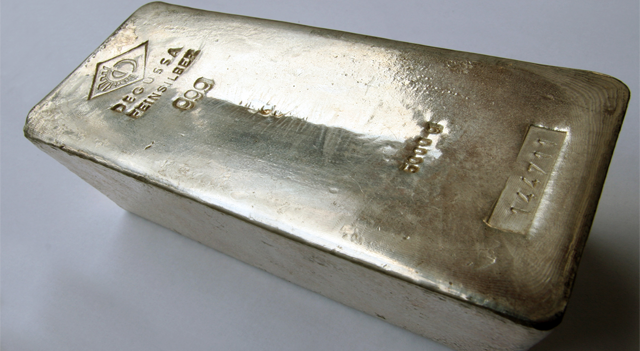
Silver also reached a new peak, riding the momentum in the precious metals market. Bullion prices surged after Trump’s tariff remarks rattled financial markets Friday, underscoring gold’s role as a haven during periods of political and economic volatility. While Trump’s softened stance eased some concerns, traders remained cautious about further policy swings from the White House.
Oil bounces after touching five-month lows
Oil prices also climbed after dropping to their lowest levels in five months during the previous session, as investors bet on a possible easing of trade tensions between Washington and Beijing.
Brent crude futures rose 1.6% to $63.72 a barrel by 03:47 ET, while U.S. West Texas Intermediate futures gained 1.6% to $59.83.
On Friday, both benchmarks had closed at their weakest since May 7, down 3.82% and 4.24%, respectively. WTI settlement will occur on Tuesday due to a U.S. holiday on Monday.
Analysts noted that easing tensions in Gaza also contributed to stabilizing oil prices. Over the weekend, Hamas released the first group of Israeli hostages as part of the initial phase of a ceasefire agreement brokered by the U.S., a move that could help reduce supply concerns in the Middle East.
This content is for informational purposes only and does not constitute financial, investment, or other professional advice. It should not be considered a recommendation to buy or sell any securities or financial instruments. All investments involve risk, including the potential loss of principal. Past performance is not indicative of future results. You should conduct your own research and consult with a qualified financial advisor before making any investment decisions.
Some portions of this content may have been generated or assisted by artificial intelligence (AI) tools and been reviewed for accuracy and quality by our editorial team.