Blog

  • Gold Outlook Softens as Higher Rates and Dollar Strength Pressure Prices

    Gold Outlook Softens as Higher Rates and Dollar Strength Pressure Prices

    Key Takeaways

    • Gold’s decline from record highs has led analysts to lower near-term price targets.
    • Markets have shifted their focus from geopolitical risks toward interest rates and financial conditions.
    • Higher Treasury yields and a stronger dollar remain the primary headwinds for the metal.
    • ETF inflows have reversed after a strong start to the year.
    • Central bank purchases continue to provide an important source of underlying support.

    Gold’s retreat in recent months has forced investors to reconsider expectations for the precious metal.

    After setting fresh record highs earlier this year, gold has experienced a notable correction as higher bond yields, a stronger U.S. dollar and softer investor demand have combined to pressure prices.

    The decline may appear counterintuitive given ongoing geopolitical tensions and continued accumulation by central banks. However, the market’s focus has increasingly shifted toward the implications of tighter financial conditions and the prospect that interest rates may remain elevated for longer.

    Analysts Cut Price Expectations

    As macroeconomic headwinds persist, some market observers have revised their forecasts lower.

    One analyst now expects average gold prices of $4,300 per ounce in the third quarter of 2026 and $4,600 per ounce in the fourth quarter, compared with previous projections of $4,850 and $5,000 per ounce.

    Although expectations for future Fed policy remain mixed, the current environment of elevated yields and dollar strength is expected to remain challenging for gold.

    Monetary Policy Repricing Drives the Sell-Off

    The correction has largely been fueled by a reassessment of interest-rate expectations.

    Investors have become less confident that monetary easing will arrive as quickly as previously anticipated, leading to higher Treasury yields and renewed support for the dollar.

    Because gold offers no income stream, it often struggles when real yields move higher and alternative assets become more attractive.

    ETF Demand Loses Momentum

    Exchange-traded fund investors played a major role in gold’s advance earlier in the year.

    That support has weakened considerably.

    Profit-taking accelerated after investors reassessed the outlook for interest rates, causing ETF holdings to retreat from their recent highs.

    Although some stabilization has emerged in recent weeks, ETF demand is no longer providing the same powerful tailwind that helped drive the rally.

    Central Banks Continue Buying

    Official-sector demand remains one of the brightest spots for the market.

    Central banks purchased approximately 244 tonnes of gold during the first quarter of 2026, extending a trend that has been in place for several years.

    China continued adding to reserves, while Poland and several emerging-market nations also remained active buyers.

    Survey data suggest this trend is likely to continue as countries pursue reserve diversification strategies.

    Long-Term Bullish Drivers Remain

    Despite the weaker near-term outlook, the broader investment case for gold remains largely unchanged.

    Central bank accumulation, geopolitical uncertainty and diversification trends continue to support the market over the long run.

    The recent correction reflects cyclical challenges rather than structural weakness.

    As a result, many analysts continue to see a constructive long-term outlook for gold, even if the path forward proves slower and more volatile than previously expected.


  • Oil Storage Expansion May Create a New Wave of Global Demand

    Oil Storage Expansion May Create a New Wave of Global Demand

    Key Takeaways

    • The Hormuz disruption exposed weaknesses in energy security strategies across many oil-importing nations.
    • Planned reserve expansions in Asia-Pacific could require hundreds of millions of barrels to fill.
    • Replenishing emergency stockpiles and building new reserves may create demand approaching 1 billion barrels over time.
    • Exporters such as Saudi Arabia are also exploring larger storage networks to protect future sales.

    The recent disruption in the Strait of Hormuz has triggered a major reassessment of energy security among oil-importing countries.

    The temporary loss of more than 10 million barrels per day of crude exports from the Persian Gulf highlighted the risks associated with relying heavily on global supply chains and vulnerable shipping routes.

    As governments seek to reduce those risks, a growing number are investing in larger strategic and commercial petroleum reserves.

    Energy Security Takes Priority

    For decades, many policymakers assumed that a complete closure of the Strait of Hormuz was highly unlikely.

    The latest crisis challenged that assumption and demonstrated how quickly supply disruptions can affect global energy markets.

    The resulting shortages across Asia, combined with declining emergency inventories in the United States and elsewhere, have strengthened the case for larger stockpiles.

    Expanded storage capacity could help reduce volatility and provide governments with greater flexibility during future crises.

    Reserve Building Could Add Significant Demand

    The process of creating larger reserves requires substantial physical volumes of oil.

    Storage projects currently under consideration in India, Australia, Singapore and Pakistan alone could require around 500 million barrels to fill.

    In addition, countries participating in coordinated emergency stock releases will eventually need to replace the hundreds of millions of barrels drawn down during the latest crisis.

    When combined with efforts to rebuild commercial inventories, total demand linked to reserve accumulation could approach 1 billion barrels over several years.

    That additional buying may become an important source of support for oil markets in the medium term.

    Asia Leads New Storage Initiatives

    India has moved aggressively to strengthen its reserve system after discovering that existing stockpiles cover only a limited period of domestic demand.

    Pakistan, Singapore and Australia are pursuing similar strategies, with each country seeking to improve resilience against future disruptions.

    These investments reflect a broader shift in thinking, where energy security is increasingly viewed as a strategic necessity rather than a contingency measure.

    Exporters Adapt to a New Reality

    Oil-producing nations are also adjusting their strategies.

    Saudi Arabia is examining opportunities to expand storage infrastructure outside its borders, enabling it to continue serving customers even if transportation bottlenecks emerge.

    Aramco Chairman Yasir Al-Rumayyan recently emphasized the company’s ambitions, stating:

    “We are thinking seriously of having larger storage facilities all over the world.”

    The response from both importers and exporters suggests that the Hormuz crisis may have lasting consequences.

    Beyond highlighting supply risks, it may ultimately create a powerful new source of oil demand as countries and companies race to build and fill strategic storage facilities around the globe.

  • The Market Is Starting to Ask Tougher Questions

    The Market Is Starting to Ask Tougher Questions

    For much of the past two years, investors have embraced a remarkably optimistic view of the future. Artificial intelligence was expected to drive productivity, boost corporate earnings, support economic growth and justify unprecedented levels of investment.

    Lately, that confidence has begun to crack.

    Technology and semiconductor stocks have come under pressure across global markets, with investors becoming less willing to assume that every dollar spent on AI will automatically generate attractive returns.

    Major chipmakers such as Nvidia (NASDAQ:NVDA), AMD (NASDAQ:AMD), Intel (NASDAQ:INTC) and Micron (NASDAQ:MU), once viewed as near-certain beneficiaries of the AI boom, have led recent declines. SpaceX (NASDAQ:SPCX) has also suffered a sharp pullback, highlighting a broader shift in sentiment toward some of the market’s most crowded growth trades.

    The change is not really about AI itself. It is about expectations.

    Markets had largely embraced a best-case scenario, leaving little room for delays, execution risks or economic setbacks. Now investors are revisiting the assumptions that drove valuations higher.

    Questions about profitability, return on investment and the pace of monetisation are becoming more important than projections of future technological disruption.

    At the same time, economic risks that were pushed into the background are returning to the discussion. Growth remains uneven, borrowing costs are still elevated, and geopolitical uncertainty continues to influence business and consumer confidence.

    The AI trade also became heavily crowded. Many portfolios concentrated in the same technology leaders, creating conditions where even a modest change in sentiment can produce outsized moves.

    This does not necessarily signal a major market crisis. Instead, it looks more like a healthy reassessment of risk and reward.

    Investors are being reminded that while technology can reshape the economy, valuations still matter and earnings ultimately drive long-term performance.

    The market is adjusting expectations. Given how high those expectations had become, that adjustment may be both necessary and healthy.

  • Qatar Signals LNG Output Recovery as Hormuz Conditions Improve

    Qatar Signals LNG Output Recovery as Hormuz Conditions Improve

    Key Takeaways

    • Qatar expects LNG production to rebound substantially within weeks.
    • QatarEnergy is preparing to restore operations as shipping conditions improve in the Strait of Hormuz.
    • Officials are pushing for better communication mechanisms to protect commercial vessels navigating the region.
    • A return of Qatari LNG exports could help ease supply concerns across global natural gas markets.

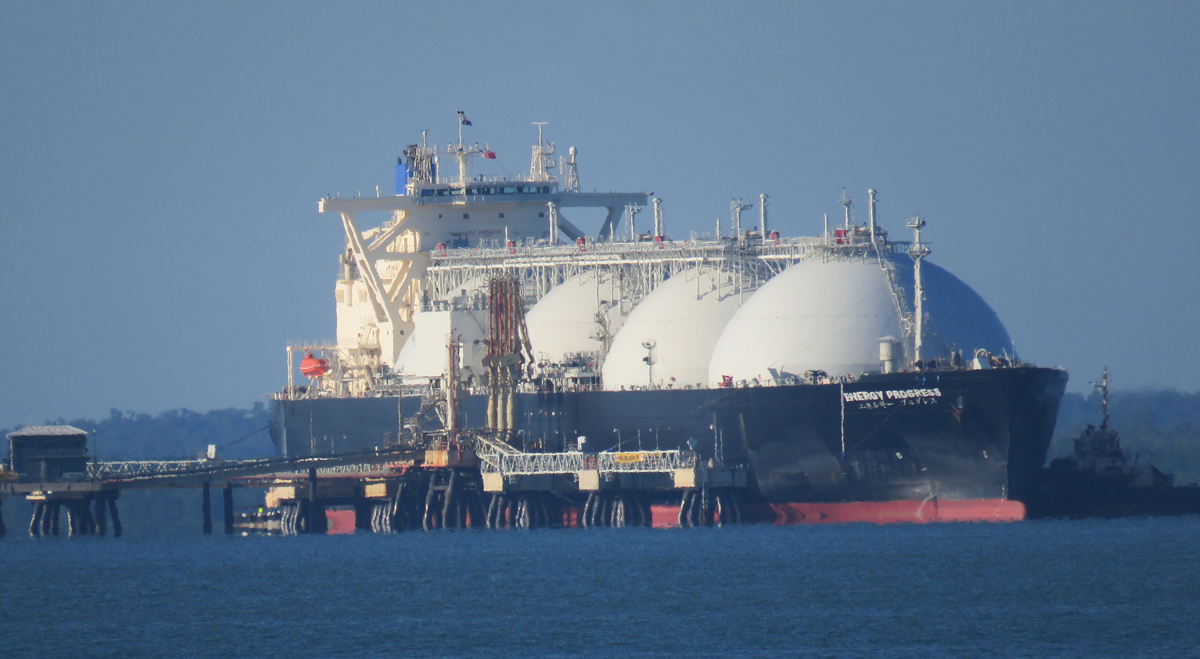
    Qatar has indicated that its liquefied natural gas industry is on track for a significant recovery following months of disruption caused by regional conflict and shipping challenges.

    Prime Minister Sheikh Mohammed bin Abdulrahman al-Thani told the Financial Times that production levels should return close to normal within weeks, excluding facilities that suffered direct damage.

    “Within a few weeks, production will come back to normal, except the damaged facility,” he said. “Our teams have been mobilised already for a few weeks. QatarEnergy is preparing for operations to come back to normal as soon as the situation in the strait normalises.”

    Recovery Efforts Accelerate

    The country’s LNG sector has been operating below normal levels since attacks on the Ras Laffan complex forced Qatar to suspend some export activities and declare force majeure on shipments.

    QatarEnergy has since focused on restoring facilities and preparing for a gradual return to normal production.

    Management believes that a sustained improvement in maritime conditions will allow a rapid increase in output.

    Proposal for U.S.-Iran Shipping Hotline

    The Qatari prime minister also stressed the need for stronger coordination between Iran and the United States to safeguard commercial shipping.

    He proposed a direct communication line that would help verify threats and reduce confusion for vessels operating in the Strait of Hormuz while mine-clearing operations continue.

    According to Al-Thani, false messages and unauthorized communications have occasionally created uncertainty for shipping companies.

    Right now, he said, “anyone who just wants to mess around” could tap communication systems for the shipping industry and tell ships “‘Go back, we are going to fire, we are the IRGC [Iran’s Revolutionary Guards]’.”

    “That’s what we are getting sometimes,” Al-Thani explained. “So the hotline’s purpose is to make sure that any ship that gets any type of threat is to be verified by Iran… and to let the ship pass safely.”

    Capacity Expected to Recover in Stages

    QatarEnergy recently indicated that roughly half of its LNG production capacity could return within a month of the restoration of safe navigation through Hormuz.

    Industry sources have suggested that production could reach approximately 80% of capacity within two months.

    The timeline has attracted considerable attention from energy markets, given Qatar’s critical role in global LNG supply.

    Tanker Activity Points to Progress

    Recent reports that LNG carriers linked to Qatar are returning to the Persian Gulf have reinforced expectations that exports may soon increase.

    The movement of vessels is viewed as one of the clearest signs yet that energy flows through the region are beginning to normalize.

    Global Gas Markets Watch Closely

    The recovery of Qatari LNG production could become an important factor for natural gas markets worldwide.

    Additional supply would help ease concerns over shortages, improve market confidence and potentially reduce price volatility following months of uncertainty.

    Although challenges remain, investors are increasingly optimistic that one of the world’s most important LNG exporters is moving steadily toward a full operational recovery.

  • Alan Greenspan’s Legacy Still Shapes Markets Today

    Alan Greenspan’s Legacy Still Shapes Markets Today

    Alan Greenspan, who served as chairman of the Federal Reserve for nearly two decades between 1987 and 2006, died on Monday at the age of 100. While many assessments of his career focus on his stewardship of monetary policy, one of his most significant contributions to modern markets may be the expectation that the Federal Reserve will intervene whenever financial conditions deteriorate sharply.

    That belief, widely known as the “Fed Put,” continues to influence investor behavior decades after it first emerged. The idea suggests that when market stress becomes severe enough, the central bank will provide support through liquidity measures, rate cuts, or other policy actions.

    The roots of the Fed Put are often traced back to the collapse of Long-Term Capital Management in 1998. The hedge fund, which relied heavily on leverage and employed several Nobel Prize-winning economists, found itself on the brink of failure. Its potential collapse threatened to spread losses throughout the financial system.

    Greenspan helped facilitate a private-sector solution while the Fed simultaneously lowered interest rates by 75 basis points within six weeks. Policymakers also made clear that liquidity would be available if needed. Markets stabilized, but the episode left a lasting impression. Rather than concluding that excessive leverage was dangerous, many investors came away believing that the financial system’s largest participants would ultimately receive support.

    That expectation has resurfaced repeatedly. During the technology crash of the early 2000s, the financial crisis of 2008, and the pandemic turmoil of 2020, the Federal Reserve responded aggressively to restore confidence and market functioning.

    For many investors, Greenspan’s most enduring legacy is therefore the assumption that the central bank stands ready to act as a backstop during periods of extreme stress.

    The Challenges of Using Beta

    Beta remains one of the most popular measures for evaluating investment risk. It seeks to quantify how sensitive a stock or portfolio is to movements in the broader market.

    Investors frequently rely on beta when making allocation decisions. A higher beta may appeal to those expecting rising markets, while a lower beta can be attractive during periods of uncertainty.

    However, beta is far from a perfect metric.

    Its value depends heavily on the data and methodology used. Analysts can calculate beta using daily, weekly, or monthly returns, and over various historical periods. Those choices can lead to dramatically different results.

    Micron (NASDAQ:MU) provides a useful example. Depending on the time frame and data frequency selected, its beta can range from 1.82 to 5.39. Although every reading suggests greater volatility than the overall market, the magnitude differs substantially.

    Even a more stable company such as Procter & Gamble (NYSE:PG) produces varying beta estimates. Some calculations indicate a slightly negative beta, while others place it above 0.40.

    These differences highlight an important point: beta should be viewed as a range rather than a precise measure. Examining multiple time horizons and calculation methods can provide a more balanced assessment of risk.

    Investors should also remember that beta is backward-looking. Future events, changing market dynamics, and shifts in company fundamentals can all influence how a stock behaves relative to the market, regardless of what historical beta figures suggest.

  • Unlocking Hidden Value: How Strategic Acquisition Transformed Buccaneer Energy’s Growth Story

    Unlocking Hidden Value: How Strategic Acquisition Transformed Buccaneer Energy’s Growth Story

    In the energy sector, value creation often gets associated with large-scale discoveries or dramatic production breakthroughs. Yet sometimes, the most meaningful gains come from disciplined strategy, selective acquisitions, and the ability to recognise potential that others overlook.

    A recent update from Buccaneer Energy (LSE:BUCE) highlights exactly this kind of approach, one that turns a modest acquisition into a significant driver of long-term shareholder value.

    From $425,000 to $2.5 Million: A Case of Strategic Integration

    One of the standout developments discussed by CEO Paul Welch is the company’s March acquisition, an asset purchased for approximately $425,000 that has since been independently revalued at around $2.5 million.

    Rather than relying on speculation or market re-rating alone, this uplift is grounded in operational integration. The acquired asset was not simply added to the portfolio; it was actively incorporated into a broader enhanced recovery project already underway within the business.

    This integration proved critical. While the previous owner was not positioned to participate in the development plan, Buccaneer Energy was able to align the asset with its existing infrastructure and strategy, unlocking value that had previously gone unrealised.

    What’s Driving the Broader 35% Increase in Value?

    Alongside the acquisition, Buccaneer Energy also reported a 35% increase in proved net present value, rising to $11.7 million. Two key factors are driving this uplift:

    First, the March acquisition added both reserves and daily production capacity that were not previously reflected in the company’s asset base. This immediately strengthened the company’s production profile and future cash flow potential.

    Second, a more favourable commodity price environment played a supporting role. The updated reserves evaluation used a price deck starting at around $70, compared to $58 in the prior assessment. This change alone materially enhanced the valuation of existing reserves.

    Together, these factors reinforced a stronger financial outlook, but management has been clear that the acquisition itself was the primary catalyst.

    A Focus on Cash Flow, Reinvestment, and Shareholder Value

    For investors, the most important takeaway is not just the increase in valuation, but what it represents for future performance.

    According to Paul Welch, the uplift in value is expected to translate into stronger cash generation over the next 12 months. Importantly, this cash is not viewed as an endpoint, but as a tool for reinvestment, feeding back into the business to support further development and growth.

    This disciplined reinvestment strategy is central to how value is expected to compound over time. Rather than extracting short-term gains, the focus remains on expanding the productive base of the company and allowing value to accrue steadily to shareholders.

    A Strategy Built on Fit, Not Just Price

    Perhaps the most notable aspect of Buccaneer Energy’s approach is how it reframes the idea of acquisitions. Instead of pursuing assets purely on valuation metrics, the company prioritises strategic fit.

    In the case of the March acquisition, the asset’s true value was unlocked because it aligned with an existing enhanced recovery project. This compatibility allowed the company to increase reserves, boost production, and raise its equity exposure within the broader project.

    As management outlined, this is not a one-off tactic but part of a broader pipeline strategy, identifying assets that can be improved through integration rather than passive ownership.

    Looking Ahead

    With a strengthened asset base, improved reserves valuation, and a clear operational strategy, Buccaneer Energy is positioning itself around a simple but powerful principle: value is often created after acquisition, not at the point of purchase.

    If successfully replicated, this approach could continue to support growth in both production and valuation, driven less by market timing and more by execution discipline.

    For more information, visit Buccaneer Energy.

  • EasyJet shares rise on renewed Castlelake takeover interest after fourth bid rejected

    EasyJet shares rise on renewed Castlelake takeover interest after fourth bid rejected

    easyJet PLC (LSE:EZJ) shares climbed 5.5% to 569p, near a one-year high, after the airline rejected a fourth takeover proposal from US private equity firm Castlelake but agreed to provide limited due diligence access.

    The budget carrier said the San Francisco-based firm “hopes to be able to further improve its value following access to limited commercial information”.

    The latest proposal, valuing easyJet at 650p per share, was submitted on Tuesday and follows a previously disclosed 625p approach made public earlier in the week. It also includes a partial alternative allowing shareholders to receive unlisted, non-transferable, non-voting equity in the acquisition vehicle instead of cash.

    The offer represents a significant premium to the 392.4p “undisturbed” share price at the end of May, though only around 10% above highs seen last summer.

    Under the proposed structure, the bidding consortium would be 49% owned by Castlelake and co-investors including Brookfield Asset Management (TSX:BAM, NYSE:BAM), with the remaining 51% held by EU nationals, including former easyJet and Ryanair executive Peter Bellew and aviation investor Mark Breen.

    However, easyJet’s board said the fourth proposal “continues to substantially undervalue the company and its prospects” and raised concerns over deliverability, ownership structure, and regulatory timelines.

    Directors have previously argued that Castlelake is attempting to acquire the airline at an undervalue, pointing to strong underlying performance, including 46% profit growth over the past two years and a medium-term target of at least £1 billion in annual profit.

    The UK Takeover Panel has extended Castlelake’s “put up or shut up” deadline by nine days to 5 July, giving the firm more time to either make a firm offer or walk away.

    easyJet shares had fallen to four-year lows in March and April amid concerns over rising jet fuel costs and uncertainty linked to the Iran conflict, which weighed on booking patterns and widened first-half loss expectations.

    Analyst Chris Beauchamp at IG said the deadline extension has been interpreted by markets as a sign that a deal remains possible, with investors anticipating a potential improved offer, helping support recent share price strength.

  • 3i Group rises as Action sales growth holds up better than feared

    3i Group rises as Action sales growth holds up better than feared

    3i Group PLC (LSE:III) shares jumped 10% to 2,499p after the private equity investor said its largest holding, Action, was still on track for a solid second quarter despite a moderation in like-for-like sales growth.

    Ahead of its annual general meeting, the FTSE 100 firm reported that the European discount retailer posted like-for-like sales growth of 3.3% for the year to 21 June.

    That compares with 3.6% growth in the first quarter and sits slightly below previous full-year guidance of 4% to 5%.

    Action has opened 105 new stores so far this year, keeping it on track to meet its target of at least 400 openings, according to chief executive Simon Borrows.

    He added that Action is expected to deliver “a good quarter of profit growth” and ended the period with a cash balance of €699 million, following a €450 million dividend payout in May.

    Borrows also said the rest of 3i’s private equity portfolio continued to perform in line with expectations, with steady underlying momentum across its investments.

    3i shares had previously reached an all-time high near 4,500p last autumn, driven by strong performance at Action, before sliding to two-and-a-half-year lows below 1,900p in recent months.

    Earlier this month, Citi analysts suggested the market was implicitly pricing Action on just 2.2% medium-term like-for-like sales growth.

  • Caspian Sunrise shares rise 8% as Kazakhstan drilling programme expands

    Caspian Sunrise shares rise 8% as Kazakhstan drilling programme expands

    Caspian Sunrise PLC (LSE:CASP), the Kazakhstan-focused oil and gas company, saw its shares climb 8% to 2.16p after announcing an expanded and accelerated drilling programme at its BNG Contract Area.

    The company said encouraging results from the Yelemes Deep structure prompted it to bring forward additional drilling plans and expand its activity.

    Three further deep wells are now planned at the structure, with Deep Wells 701 and 707 expected to be spudded in July 2026.

    The move follows progress at Deep Well 803, which has been deepened to 3,927 metres and previously produced oil during testing from a Lower Triassic sandstone reservoir.

    Caspian Sunrise intends to perforate and test additional intervals at the well to potentially boost output, although it cautioned that the deeper target zone has not yet been fully penetrated or tested.

    Deep Well 701 is planned to reach 5,000 metres, targeting Permian and Carboniferous reservoirs, including a Moscowian interval that previously produced around 107 barrels of oil per day at a nearby well.

    Deep Well 707 will be drilled to 3,500 metres to test a fault-related structure, while a third well, Deep Well 703, is scheduled for the second half of 2026.

    That well is intended to support a potential reserves upgrade under Kazakhstan’s classification system and will also target an interval that flowed more than 1,000 barrels per day in nearby testing.

    A separate shallow well is also planned at the Airshagyl structure to assess a palaeochannel feature identified through seismic data.

    The Yelemes Deep licence was renewed in December 2025 as an appraisal licence, requiring the drilling of three deep wells by the end of 2027 in order to qualify for a 25-year production licence.

    The company also confirmed it has received independent reserve estimates for the Yelemes area under Kazakh state methodology, although these have yet to be approved by the national reserves commission.

  • Moonpig shares surge 18% as profit, revenue and dividend all rise

    Moonpig shares surge 18% as profit, revenue and dividend all rise

    Moonpig Group PLC (LSE:MOON), the online cards and gifting business, saw its shares jump 18% to 242.2p after reporting stronger revenue, higher profits, robust cash generation and a 25% increase in its dividend.

    Revenue for the year to 30 April 2026 rose 6.5% to £373 million, while adjusted earnings per share increased 19.5% to 18p.

    Reported profit before tax soared to £68.9 million, up from £3 million the previous year, when results were heavily impacted by £64.6 million in adjusting items.

    The board proposed a 25% rise in the total dividend to 3.75p per share.

    Growth was driven by the core Moonpig brand, where revenue climbed 8.6%, while its Dutch arm Greetz posted constant currency growth of 1.5%.

    Active customers across both brands increased to 12.3 million, up from 12 million a year earlier, while average order value rose 5.7%, supported by customers trading up to higher-value gifts, including new ranges from Next and Boots, as well as larger card formats and increased use of tracked UK delivery.

    Adjusted EBITDA rose 8.1% to £104.6 million, with margins slightly improving to 28%, while free cash flow increased 11.2% to £73.5 million.

    The company also completed £60 million of share buybacks during the year and plans to repurchase up to a further £65 million in the current financial year.

    Chief executive Catherine Faiers, who took over in March, said the group’s brands, customer data and operational strength provide a strong platform for long-term growth and shareholder returns.

    Panmure Liberum reiterated its “buy” rating and 300p price target, arguing the shares remain undervalued given strong cash generation and a free cash flow yield of around 9%.

    Trading since the start of the new financial year has been in line with expectations, with forecasts for the year to April 2027 unchanged.