Blog

  • Guardian Metal Steps Up Nevada Tungsten Strategy with U.S. Defense Funding

    Guardian Metal Steps Up Nevada Tungsten Strategy with U.S. Defense Funding

    Guardian Metal Resources Plc (LSE:GMET) has outlined accelerated progress across its Nevada tungsten portfolio, supported by a US$6.2 million grant from the U.S. Department of Defense and a US$21 million equity placing. During the interim period, the company finalised an updated Technical Summary and Mineral Resource Estimate for its Pilot Mountain project, lifting open-pit constrained indicated resources by 16% compared with the 2018 assessment and moving the asset closer to a pre-feasibility stage.

    Field activity remains active at Tempiute, where drilling campaigns and environmental baseline studies are under way. The group has also expanded its land position at both Pilot North and Tempiute through additional claim acquisitions, strengthening the broader tungsten opportunity. Beyond tungsten, Guardian Metal progressed exploration work targeting copper, gold and lithium across its Garfield, Golconda, Kibby Basin and Stonewall properties.

    Financially, total assets increased to US$37.6 million during the period, despite a wider interim loss, as capital inflows bolstered the balance sheet. The company also became a participant in several U.S. defense-aligned industry groups, reinforcing its ambition to help rebuild a domestic tungsten supply chain amid heightened strategic focus on critical minerals.

    From an outlook perspective, performance continues to be constrained by limited revenue generation, expanding losses and rising cash outflows, although the group maintains a debt-free position. Market technicals offer more constructive signals, with a sustained upward trend and positive price momentum. Nevertheless, valuation metrics remain pressured by negative earnings and the absence of dividend support.

    More about Guardian Metal Resources Plc

    Guardian Metal Resources Plc is a strategic minerals exploration and development company focused on restoring U.S.-sourced tungsten production and enhancing American supply chain security for defense-critical metals. The company is advancing two flagship Nevada projects: Pilot Mountain, one of the largest undeveloped tungsten deposits in the United States, and Tempiute, historically the nation’s largest producing tungsten mine.

  • Thruvision Lands First UK Deals Under Subscription-Based Security Model

    Thruvision Lands First UK Deals Under Subscription-Based Security Model

    Thruvision Group plc (LSE:THRU) has recorded its first UK orders under its newly introduced “Screening as a Service” offering, a subscription-based model that provides customers with access to its walk-through security systems, along with ongoing support and training, in exchange for a fixed monthly payment. The structure is intended to eliminate significant upfront capital expenditure, enabling organisations to implement advanced screening capabilities more rapidly and with greater budget flexibility.

    The initial contracts represent an important step in the deployment of the company’s revised commercial strategy. Management views the early uptake as evidence of growing appetite for more adaptable procurement frameworks within the security screening sector. By shifting toward a subscription format, Thruvision aims to widen adoption of its technology and attract organisations seeking to modernise security infrastructure without committing to large capital outlays.

    From a financial standpoint, the company’s near-term outlook remains constrained by weaker fundamentals, including falling revenues and ongoing losses. While technical indicators suggest a broadly neutral trend, valuation metrics continue to reflect the pressure associated with sustained negative earnings. The absence of recent earnings call disclosures or major corporate events means those elements do not materially affect the overall assessment.

    More about Thruvision Group plc

    Thruvision Group plc is an international designer, manufacturer and supplier of walk-through security screening solutions deployed by government and commercial customers across more than 30 countries. Its AI-enabled systems are capable of identifying concealed metallic and non-metallic threats in real time, facilitating efficient and non-intrusive people screening. The company operates offices and production facilities in both the UK and the United States.

  • Tees Valley Lithium Advances Recovery and Compliance Strategy Through New UK Alliances

    Tees Valley Lithium Advances Recovery and Compliance Strategy Through New UK Alliances

    Alkemy Capital Investments Plc (LSE:ALK) has moved to strengthen the operational and compliance profile of its Tees Valley Lithium (TVL) project by entering into new UK-based partnerships focused on lithium recovery, recycled supply, and digital traceability. The agreements are designed to lift processing efficiency, cut waste, and reinforce the refinery’s credentials as a low-carbon, regulation-ready supplier to Europe’s battery and automotive industries.

    TVL has signed a memorandum of understanding with Watercycle Technologies to introduce modular, on-site lithium recovery systems at its proposed refinery. The initiative could enable the recovery of roughly 800 tonnes of lithium carbonate equivalent each year—representing an estimated $16 million in potential value. In parallel, a separate framework arrangement outlines the supply of up to 50,000 tonnes of recycled lithium feedstock over a five-year period beginning in 2028, bolstering long-term feedstock security.

    In addition, TVL has partnered with Circulor to implement batch-level digital tracking across its materials supply chain. The system will monitor provenance and recycled content, positioning the company to surpass upcoming EU Battery Regulation requirements for recycled lithium. The traceability platform is also aligned with standards adopted by major original equipment manufacturers, including Volvo, Ford, and Panasonic, enhancing TVL’s appeal to leading battery and EV producers.

    From an investment perspective, the company’s outlook remains weighed down by financial headwinds. Alkemy continues to report limited revenue generation, sustained operating losses, negative free cash flow, and a balance sheet showing negative equity alongside rising debt levels.

    However, market technical indicators provide some counterbalance, pointing to a firm upward trend and strengthening price momentum. Despite this, valuation metrics remain under pressure due to the group’s loss-making position and the absence of dividend support.

    More about Alkemy Capital Investments Plc

    Alkemy Capital Investments Plc is a UK-based developer of infrastructure projects tied to critical minerals essential for the energy transition. Through its wholly owned Tees Valley Lithium subsidiary, the company is progressing plans to establish what is intended to be Europe’s first standalone lithium hydroxide refinery, supplying battery-grade lithium chemicals to the region’s electric vehicle supply chain.

  • French drinks stocks retreat as China signals potential tariffs on EU alcohol

    French drinks stocks retreat as China signals potential tariffs on EU alcohol

    Shares of French spirits producers Pernod Ricard (EU:RI) and Rémy Cointreau (EU:RCO) declined on Wednesday after fresh data confirmed another year of falling wine and spirits exports, while China hinted at possible additional trade action targeting European alcoholic beverages.

    New figures showed that France’s wine and spirits exports dropped for a third consecutive year, with volumes falling to their lowest level in more than 20 years. Shipments to China recorded a steep decline, and exports to the United States also weakened.

    Yuyuan Tantian – a social media account linked to Chinese state broadcaster CCTV – reported that China could open investigations into French wine or introduce “reciprocal tariffs” on certain EU goods if France urges the European Union to impose new tariffs on Chinese imports.

    The comments followed the publication of a French government policy paper on Monday suggesting the EU consider a blanket 30% tariff on Chinese goods or a 30% depreciation of the euro against the renminbi as a response to rising imports.

    Beijing has already initiated anti-dumping probes into European brandy, including products shipped by Pernod Ricard and Rémy Cointreau. Earlier stages of the investigation saw provisional duties applied to selected European spirits.

    France remains the top exporter of cognac to China, with the country representing a key destination for its high-end spirits sales.

  • Upbeat Jobs Report Signals Potential Rebound for U.S. Markets: Dow Jones, S&P, Nasdaq, Wall Street Futures

    Upbeat Jobs Report Signals Potential Rebound for U.S. Markets: Dow Jones, S&P, Nasdaq, Wall Street Futures

    U.S. stock futures were trading higher early Wednesday, pointing to a positive start on Wall Street after a muted and directionless session the day before.

    The move comes in response to fresh data from the Labor Department showing that job growth in January significantly outpaced expectations.

    Nonfarm payrolls increased by 130,000 last month, following a downward revision to December’s figure, which now shows a gain of 48,000 jobs.

    Forecasters had anticipated an increase of 70,000 positions, compared with the originally reported 50,000 for December.

    Meanwhile, the unemployment rate ticked down to 4.3% from 4.4%, defying expectations that it would remain unchanged.

    The stronger-than-expected employment figures may boost confidence in the resilience of the U.S. economy, though they could also dampen hopes for imminent interest rate cuts by the Federal Reserve.

    Attention now turns to Friday’s release of consumer price index data, which may provide further insight into the direction of monetary policy.

    On Tuesday, markets struggled to gain traction after two prior days of gains. The Dow Jones Industrial Average briefly touched a new intraday record, but broader indices failed to build sustained momentum.

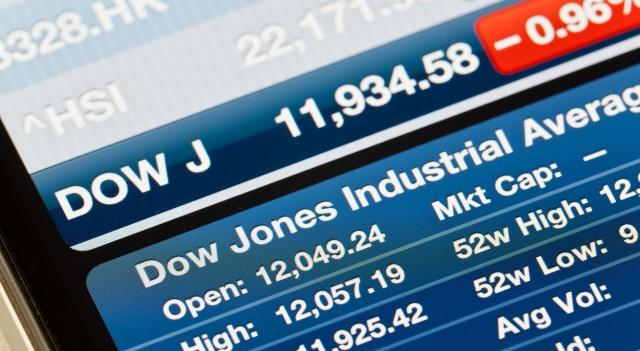
    At the close, the Dow rose 52.27 points, or 0.1%, to 50,188.13. In contrast, the S&P 500 declined 23.01 points, or 0.3%, to 6,941.81, and the Nasdaq Composite fell 136.20 points, or 0.6%, to 23,102.47.

    The lack of conviction reflected investor caution ahead of the monthly jobs release.

    Traders also largely dismissed a Commerce Department report showing retail sales were unexpectedly flat in December.

    Retail activity showed virtually no change after a 0.6% increase in November, missing projections for a 0.4% gain.

    Excluding motor vehicles and parts, sales were similarly stagnant following a 0.4% rise the previous month. Economists had looked for a 0.3% increase.

    “The December retail sales report shows that consumers paused their spending at the end of the holiday season after a strong spending spree in October and November,” said Nationwide Chief Economist Kathy Bostjancic.

    She added, “The stagnant retail sales in December provides a soft hand-off to Q1 consumer spending, but we look for a surge in tax refunds, estimated to be $50 billion higher than last year, and the still strong wealth effect will buoy consumer spending in Q1 and support solid GDP growth.”

    In separate data, import prices edged higher in December, in line with market expectations.

    Housing-related stocks led gains as Treasury yields declined, pushing the Philadelphia Housing Sector Index up 3.4% to its highest close in five months.

    Other rate-sensitive sectors also advanced, with the Dow Jones Utility Average climbing 1.9% and the Dow Jones U.S. Real Estate Index rising 1.3%.

    On the downside, brokerage shares retreated sharply, sending the NYSE Arca Broker/Dealer Index down 2.5% after reaching a record high in the prior session.

    Technology hardware, airline, and oil services stocks also posted notable losses during the day.

  • European markets mixed as tech weighs; earnings drive stock moves: DAX, CAC, FTSE100

    European markets mixed as tech weighs; earnings drive stock moves: DAX, CAC, FTSE100

    European equities traded in mixed fashion on Wednesday, with investors reacting to a fresh wave of corporate earnings. Technology names faced selling pressure after Dassault flagged ongoing weakness in the European automotive sector.

    The U.K.’s FTSE 100 Index advanced 0.8%, while France’s CAC 40 hovered around flat levels. Germany’s DAX Index slipped 0.3%.

    Among individual movers, TotalEnergies (EU:TTE) gained 1.3% after the energy group lifted its final 2025 dividend by 5.6% to €3.40 per share.

    In contrast, software company Dassault Systemes (EU:DSY) plunged 20% following weaker-than-expected fourth-quarter results and a subdued outlook for the year ahead.

    Dutch recruitment specialist Randstad (EU:RAND) dropped 8.5% after issuing cautious guidance for the first quarter.

    Supermarket operator Ahold Delhaize (EU:AD) climbed 7% as its fourth-quarter earnings topped market forecasts.

    Heineken (EU:HEIA) rose 5.3% despite announcing plans to cut up to 6,000 jobs globally as it navigates a challenging demand environment.

    German bank Commerzbank (TG:CBK) fell 3%, even after posting a record €4.5 billion operating result for the 2025 fiscal year.

    Siemens Energy (TG:SIE) rallied 6% after reporting that first-quarter profit nearly tripled, supported by strong AI-related demand for gas turbines and grid infrastructure equipment.

    Thyssenkrupp Nucera (TG:NCH2), a producer of electrolysers, edged up 1.1% after reaffirming its FY26 guidance.

    Swiss elevator manufacturer Schindler Holding (TG:SHR) slid 8% after forecasting low- to mid-single-digit revenue growth in local currencies for 2026.

    In London, engineering firm Renishaw (LSE:RSW) advanced 2.7% on stronger-than-expected half-year figures.

    Housebuilder Barratt Redrow (LSE:BTRW) declined 6.3% after reporting first-half profits that missed expectations.

    Meanwhile, shares of London Stock Exchange Group (LSE:LSEG) rose 2.5% amid reports that activist investor Elliott Management has taken a sizable position in the company.

  • Oil edges higher as U.S.–Iran uncertainty lingers and Indian demand improves

    Oil edges higher as U.S.–Iran uncertainty lingers and Indian demand improves

    Oil prices climbed on Wednesday, supported by persistent geopolitical tension surrounding delicate negotiations between the United States and Iran, while improving demand from India and signs of a shrinking supply surplus also lent support.

    Brent crude futures rose 57 cents, or 0.83%, to $69.37 a barrel by 0711 GMT. U.S. West Texas Intermediate crude gained 56 cents, or 0.88%, to $64.52.

    “Oil retains a bullish tail-risk bid as US-Iran talks continue but remain fragile, keeping the Strait of Hormuz risk premium supported amid ongoing sanctions pressure, tariff threats tied to Iranian trade, and heightened U.S. regional military posture,” LSEG analysts said in a report.

    Iran’s foreign ministry spokesperson said Tuesday that recent nuclear discussions with Washington allowed Tehran to evaluate the seriousness of the U.S. stance and revealed enough common ground to maintain diplomatic engagement.

    Officials from Iran and the United States met in Oman last week in an attempt to revive negotiations, after President Donald Trump deployed naval forces to the region — a move that raised concerns about potential military escalation.

    Prices initially dipped after Oman’s foreign minister described the talks as productive. However, sentiment shifted after reports suggested the U.S. could send a second aircraft carrier to the Middle East if negotiations fail, according to ANZ analysts.

    Trump confirmed on Tuesday that he is considering dispatching another carrier, even as both sides prepare to resume talks aimed at avoiding renewed conflict.

    Beyond geopolitical risks, supply fundamentals also provided support. The market has been gradually absorbing excess crude that accumulated in the final quarter of 2025.

    “With mainstream oil on water returning to normal levels and demand for it in India rising, oil prices are likely to remain supported in the near term,” said Xavier Tang, a market analyst at Vortexa.

    Indian refiners are reportedly curbing purchases of Russian crude as New Delhi seeks to finalize a trade agreement with Washington, leading to higher imports from the Middle East and West Africa.

    Investors are also watching for weekly U.S. inventory figures from the Energy Information Administration.

    A Reuters survey showed analysts expect crude stockpiles to have increased by around 800,000 barrels in the week to February 6, while distillate and gasoline inventories are seen falling by roughly 1.3 million and 400,000 barrels, respectively.

    Separate data from the American Petroleum Institute indicated that U.S. crude inventories surged by 13.4 million barrels in the same week, according to market sources.

  • Gold, silver rebound on weak U.S. retail sales; labor data in spotlight

    Gold, silver rebound on weak U.S. retail sales; labor data in spotlight

    Gold and silver prices moved higher in Asian trading on Wednesday after softer-than-expected U.S. retail sales figures reinforced views that economic momentum may be slowing. Investors are now awaiting the latest U.S. payrolls data for clearer direction.

    While precious metals have posted gains this week, trading has remained volatile following a sharp retreat from record highs set in late January. Even with a weaker dollar and softer economic readings, bullion has struggled to stage a sustained recovery. Meanwhile, ongoing geopolitical uncertainty in the Middle East has failed to significantly boost safe-haven demand.

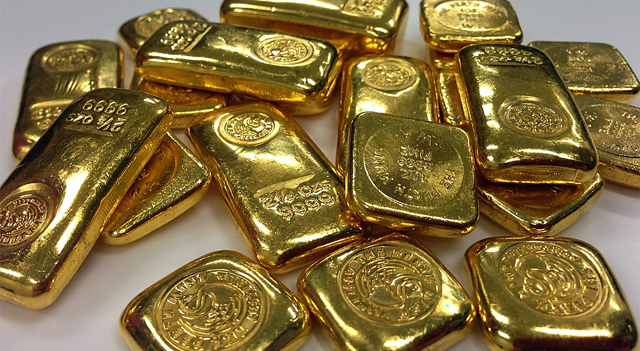
    Spot gold climbed 0.6% to $5,052.11 per ounce, while April gold futures rose 0.9% to $5,076.40 as of 01:02 ET (06:02 GMT). Prices remain roughly $600 below their recent peak levels.

    Spot silver gained 1.7% to $82.1375 per ounce, and platinum advanced 2.1% to $2,130.63 per ounce.

    Softer data pressures dollar, supports metals

    Gold and other precious metals slipped modestly on Tuesday but rebounded after U.S. December retail sales came in below expectations.

    Analysts at ANZ said gold’s earlier rally had stalled amid concerns the metal had “run too hard, too fast.”

    “With speculative positioning now largely washed out of the market, traders are looking for the next catalyst for another run higher. Weak economic data in the US prompted some buying,” ANZ analysts added.

    The retail sales figures suggested that consumer spending in the U.S. is beginning to cool, against a backdrop of persistent inflation and strains in the labor market. Continued softness in spending could weigh on overall economic growth.

    Expectations that the Federal Reserve might respond with further rate cuts later this year pushed U.S. Treasury yields lower, while the dollar struggled to regain ground after earlier losses. The dollar index slipped another 0.2% in Asian trading.

    Payrolls and inflation data ahead

    Markets are now focused on the upcoming nonfarm payrolls report, which may provide a clearer picture of labor market conditions. Signs of ongoing weakness would likely fuel speculation about additional monetary easing.

    Lower interest rates generally favor gold and other non-yielding assets by reducing the opportunity cost of holding them.

    However, uncertainty over the Fed’s policy path remains elevated, particularly after President Donald Trump nominated Kevin Warsh as the next central bank chair. Warsh is widely viewed as less dovish, a perception that has weighed on metals since late January.

    Beyond payrolls, attention will also turn to Friday’s consumer price index data. Labor market trends and inflation remain the Federal Reserve’s primary considerations in setting interest rates.

  • Bitcoin slips under $67,000 ahead of U.S. payrolls report

    Bitcoin slips under $67,000 ahead of U.S. payrolls report

    Bitcoin (COIN:BTCUSD) moved lower in Wednesday’s Asian session, falling back beneath the $67,000 level as traders positioned cautiously before the release of U.S. employment data that could influence expectations for Federal Reserve policy.

    The world’s largest cryptocurrency by market capitalization was down 2.6% at $67,126.7 as of 02:46 ET (07:46 GMT).

    Although Bitcoin recently rebounded from last week’s slide toward $60,000, it has struggled to hold gains above the $70,000 mark, highlighting ongoing volatility and hesitant investor sentiment across the digital asset space.

    Payrolls report takes center stage

    Markets are awaiting the January U.S. nonfarm payrolls report, which was delayed due to a brief government shutdown last week.

    Economists project that approximately 70,000 jobs were added in January, with the unemployment rate expected to remain steady at around 4.4%.

    Investors are also preparing for Friday’s Consumer Price Index (CPI) release, which may offer additional clues about inflation trends and the likely timing of any future Fed rate adjustments.

    Data from the CME FedWatch tool suggest that traders broadly expect the Federal Reserve to keep interest rates unchanged until June, following three consecutive cuts late last year.

    Ordinarily, expectations of lower interest rates tend to support risk-oriented assets such as cryptocurrencies, since declining yields reduce the appeal of holding cash and fixed-income instruments. However, this time Bitcoin has failed to mount a sustained rally despite easing policy, with analysts pointing to tighter liquidity conditions, diminished institutional flows, and cooling speculative demand as key headwinds.

    Robinhood pressured by crypto slowdown

    Shares of Robinhood Markets, Inc. (NASDAQ:HOOD) fell sharply in extended trading after the brokerage reported quarterly results that missed Wall Street forecasts, largely due to weaker cryptocurrency trading activity.

    The company posted fourth-quarter revenue of roughly $1.28 billion, below analysts’ expectations of $1.40 billion. A steep drop in crypto-related revenue offset strength in stock and options trading.

    Robinhood’s stock declined more than 8% in after-hours dealings.

    Altcoins extend losses; XRP down 4%

    Losses were not limited to Bitcoin. Major alternative cryptocurrencies also trended lower amid the cautious tone.

    Ethereum, the second-largest token, fell 2.7% to $1,952.92.

    XRP, the third-largest cryptocurrency by market value, dropped 4% to $1.36.

    Solana and Polygon each lost 4.1%, while Cardano slipped 2.5%. Meme token Dogecoin retreated by 3%.

  • U.S. payrolls awaited; Ford absorbs $900 million tariff setback – key market drivers: Dow Jones, S&P, Nasdaq, Wall Street Futures

    U.S. payrolls awaited; Ford absorbs $900 million tariff setback – key market drivers: Dow Jones, S&P, Nasdaq, Wall Street Futures

    U.S. equity futures moved modestly higher early Wednesday as investors positioned for a delayed monthly employment report and continued to digest a heavy slate of corporate earnings.

    At 02:33 ET, Dow futures were up 91 points, or 0.2%. S&P 500 futures rose 12 points, also 0.2%, while Nasdaq 100 futures added 48 points, or 0.2%.

    The Dow Jones Industrial Average closed at a fresh all-time high on Tuesday, but the broader S&P 500 and the tech-focused Nasdaq Composite ended lower, weighed down in part by renewed debate over the disruptive impact of emerging artificial intelligence tools.

    Financial stocks were under pressure after wealth-management start-up Altruis unveiled an AI-powered tax planning solution. The Charles Schwab Corporation (NYSE:SCHW) slid more than 7%, while Raymond James Financial, Inc. (NYSE:RJF) posted its steepest single-day drop since the height of the 2020 pandemic turmoil.

    The weakness mirrored recent AI-driven selloffs in insurance brokers and software names, highlighting broader concerns that the fast-evolving technology could significantly reshape multiple industries. Still, some analysts argue that market anxiety may be running ahead of fundamentals.

    Soft retail sales data also dampened sentiment, prompting speculation that U.S. growth could moderate in 2026. Expectations for a more dovish Federal Reserve stance increased, with CME FedWatch indicating a rising probability of an April rate cut.

    Focus turns to U.S. jobs report

    The main event of the day is the delayed January employment report.

    Economists forecast that the U.S. economy added approximately 66,000 jobs last month, compared with 50,000 in December.

    At its latest policy meeting, the Federal Reserve described the labor market as “stabilizing” after a period of sluggishness. That assessment, combined with inflation that remains elevated but steady, led policymakers to hold interest rates in the 3.5%–3.75% range.

    Earlier this week, White House economic adviser Kevin Hassett warned that advances in artificial intelligence could weigh on job growth in the coming months, even as productivity improves.

    With uncertainty surrounding both employment trends and inflation — the Fed’s dual mandates — the outlook for 2026 remains unclear. The payrolls data, along with Friday’s consumer price index, may offer further guidance on the likely trajectory of interest rates.

    “Today’s jobs report is a pivotal event for the [foreign exchange] market. A materially weak print would likely pave the way for markets to price in a cut in April,” analysts at ING Groep N.V. said.

    Ford forecasts strong year despite tariff-related hit

    Ford Motor Company (NYSE:F) shares edged higher in extended trading after the automaker delivered profit and cash flow projections that exceeded expectations.

    Ford guided for annual operating income of about $9 billion, above the roughly $8.85 billion anticipated by analysts. It also forecast free cash flow of $5.5 billion, topping market estimates.

    However, the company reported a fourth-quarter operating loss of $11.1 billion — the largest in its history — after booking a $900 million charge tied to a delay in implementing a tariff-relief program introduced during the Trump administration.

    Chief Financial Officer Sherry House said the company was informed of the “unexpected” change “very late” in 2025.

    Takeover tensions around Warner

    Separately, developments continued in the high-profile takeover battle involving Warner Bros. Discovery, Inc. (NASDAQ:WBD).

    According to the Wall Street Journal, activist investor Ancora Holdings has accumulated a stake worth roughly $200 million and is preparing to urge Warner to reject a sweeping offer from Netflix, Inc. (NASDAQ:NFLX) for its film and television assets and HBO Max streaming service.

    The report said Ancora may argue that Warner has not sufficiently engaged with a competing proposal from Paramount Skydance, led by David Ellison, which seeks to acquire the entire company rather than selected divisions.

    Paramount has reportedly enhanced its bid by offering additional cash to Warner shareholders for each quarter the transaction remains incomplete and by covering any breakup fee associated with terminating the Netflix agreement. Nonetheless, its total offer — including debt — remains at $108.4 billion.

    Gold and oil advance

    Gold prices strengthened after weak U.S. retail sales data fueled expectations of slowing economic momentum, sharpening focus on the upcoming payrolls release.

    Spot gold rose 0.4% to $5,047.08 per ounce, while futures gained 0.8% to $5,071.34, though prices remained below recent record highs.

    Oil markets also moved higher. Brent crude climbed 1.2% to $69.64 per barrel, and U.S. West Texas Intermediate crude added 1.3% to $64.81 per barrel.